





Need help?
Talk to trip expert

Manaslu Region
Introduction to the Manaslu Region
The Manaslu Region is in the north-central part of Nepal in the high Himalayan range. The region is dominated by Mount Manaslu at 8,163 meters, which is the eighth-highest in the world. This region is famous for its virgin landscapes and tranquil trekking trails. Most treks through this area take about two weeks and provide a rewarding high mountain experience.
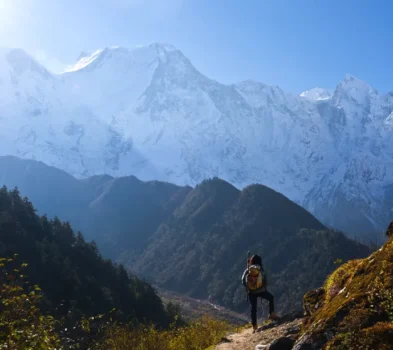
The journey starts in warm lower valleys where there are green fields and rivers. As trekkers ascend, the trail slowly rises into the alpine. Hillsides are covered with forests of rhododendron and pine – a scenic environment for walking.
Along the way, trekkers cross a high mountain pass such as Larkya La (5,106 meters). Small Buddhist monasteries and places of prayer can be seen frequently on ridges and near villages.
Local people warmly welcome visitors and provide simple rest stops along the trail. The trekking route is also quiet and has an authentic feel compared to busier areas. From many points, trekkers can have excellent views of Manaslu and other peaks like Himal Chuli, Ganesh Himal, too.
Glacial lakes and waterfalls, and cold mountain streams, add to the beauty of the journey. Glaciers and snowmelt contribute significantly to the rivers of the region, and rare wildlife such as snow leopards inhabit the higher areas. Each day brings new scenery and physical challenges, and this trek is truly a Himalayan adventure.
Trekking permits are mandatory in the Manaslu Region. Trekkers must obtain a Manaslu Restricted Area Permit, Manaslu Conservation Area Permit (MCAP), and Annapurna Conservation Area Permit (ACAP). A licensed guide is compulsory.
Geography and Natural Wonders of the Manaslu Region
The geography of the Manaslu Region is varied and dramatic. The trekking route goes along the Budhi Gandaki River through deep valleys and narrow gorges. Elevation increases gradually from about 700 meters at the trailhead to 5,106 meters at the Larkya La Pass. In the lower elevations, terraced farmland and subtropical forests cover the hillsides.
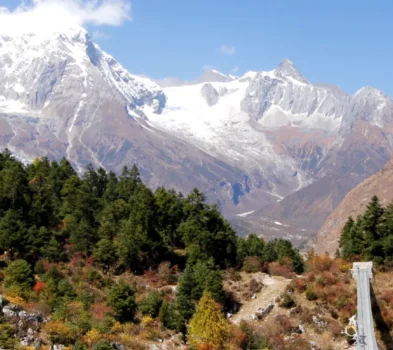
Mid-hill parts have dense forests of bamboo and oak. At a higher elevation, pine and fir forests increase. Above the tree line, the landscape becomes open country of wide grasslands and rocky fields. Glaciers occupy the higher valleys and feed the icy streams all over the region. One of the most notable natural features along the route is the Larkya Glacier.
Snow feeds rivers and clear glacial lakes often along the trail. Birendra Tal, situated at 4,035 meters, is an example of a famous lake, which is known for its picturesque turquoise color.
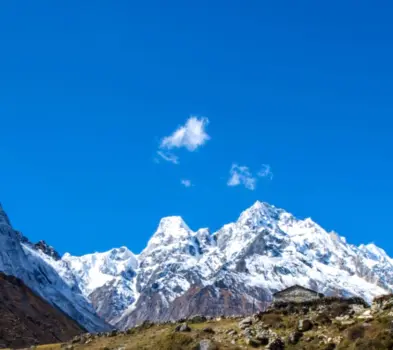
Towering mountains rise sharply from the valleys, providing a dramatic skyline. Peaks like Mount Manaslu, Himal Chuli, Ngadi Chuli, and Ganesh Himal are dominant features of the horizon.
The region is also abundant in animals. Himalayan thar can commonly be seen grazing on steep slopes. Colorful pheasants can be found in the forests, and red pandas inhabit forested mid-elevations, while snow leopards roam higher alpine areas. This combination of harsh terrain, glaciers, forests, and wildlife makes the Manaslu Region one of the most amazing natural areas in Nepal.
Culture and Local Communities of Manaslu Region
The Manaslu Region contains communities with strong cultural traditions. Most residents are of Gurung, Tibetan, or ethnically related groups. Villages comprise stone houses built to withstand cold mountain weather. Many people still wear traditional clothes in their daily life and at festivals.
Buddhism plays an important role in the region. Monasteries, prayer flags, mani walls, and chortens can be seen in almost every village. Local families cultivate crops such as barley, potatoes, and vegetables on steep terraced land. Yaks and sheep are reared for milk, wool, and transportation.
Meals are simple and nourishing, with dal bhat being the most common meal. Butter tea is also served widely, especially in higher villages. Festivals like Losar and Tihar unite people through prayer, music, and dance. These celebrations are a reflection of the close connection people have spiritually with the mountains.
Villagers are known to be friendly and hospitable. Trekkers are regularly invited to have tea or meals in local homes. These moments provide meaningful insight into day-to-day Himalayan life. Life here goes at a slow pace, and there are strong community bonds here. The warmth of the local people is a great value addition to the trekking experience.
Food and Accommodation Experience of the Manaslu Region
Accommodation along the Manaslu trek is very basic but comfortable. Trekkers generally stay in local teahouses in small villages along the trail. Rooms typically contain bunk beds, mattresses, blankets, and pillows. Most teahouses offer simple twin-sharing rooms, especially at lower elevations, except in the higher villages.
Dining is done in a common hall where trekkers and hosts come together. Bathroom facilities are communal and typically consist of squat toilets. Warm showers are few and far between as the altitude rises. Many lodges use only solar lighting or kerosene lamps in the evening. Carrying a warm sleeping bag is recommended because of cold night temperatures.
Meals are good and filling for long days of trekking. This dish, called dal bhat, is served, which gives good energy. Other items on the menu are vegetable curries, noodles, momos, and soups like thukpa. Tibetan bread, chapatis, and pancakes are also available in some of the lodges.
Fresh meat is rare at higher altitudes, and protein is derived mostly from lentils, beans, eggs, and local cheese. Tea (butter tea and black tea) is widely offered. It is useful to bring in additional snacks in the form of biscuits or energy bars. Teahouse hosts do their best to accommodate special requests as much as possible, making the stay comfortable despite the remote setting.
Why Choose Manaslu Region
The Manaslu Region is perfect for those trekkers who are looking for a quieter and more remote adventure. The trails are much less visited than the popular routes, and trekkers benefit from the peaceful enjoyment of nature. Much of the region is protected as a conservation area, which helps preserve the region’s forests, wildlife, and traditional lifestyles.
Each day on the trail, there is impressive scenery of towering peaks, deep river valleys, and high mountain passes. Crossing Larkya La Pass is a major highlight of the trip and will bring unforgettable views of the surrounding eight-thousand-meter mountains. The remoteness of the region lends a great deal of adventure throughout the trek.
Cultural experiences are another reason to choose Manaslu. Villages preserve traditional Tibetan-influenced customs, and daily life is almost unchanged by modern tourism. Local guides provide knowledge about history, beliefs, and traditions. Simple lodges and caring hosts are available to trekkers throughout the journey.
Many trekkers feel that Manaslu is equal in beauty to Everest and Annapurna, though it has a more peaceful ambiance. The combination of solitude, culture, and dramatic landscapes makes the Manaslu Region a rewarding choice for experienced hikers and nature lovers.
Best Time to Visit the Manaslu Region
The most suitable seasons to trek in the Manaslu Region are the spring and autumn. Spring, from March to May, has warmer temperatures and the blooming of the rhododendron forests. Skies tend to be clear with excellent mountain views.
Autumn, between late September and November, brings stable weather and crisp air. The daytime temperatures are comfortable, and visibility is often quite good. Both seasons are suitable for trekking and safer passage over the high mountain passes.
Heavy rains and cloudy weather characterize the summer monsoon season. Trails may become muddy, and there may be landslides. Trekking at this time is not usually advised. Winter months are cold, especially above 3,000 meters, and snowfall can obstruct high passes. Some lodges may close during this time.
For fewer crowds, early spring or late autumn can be good options, though cold nights should be expected. Proper preparation and weather awareness are important at all times while trekking in the Manaslu Region.


