notification

Great News, From June 2025 Mount Kailash is open for individuals holding Indian Passports

Is It Safe to Travel to Tibet in 2026? What Every Traveler Should Know

Introduction

Tibet is referred to as the “Roof of the World” because of its spiritual mysticism and stunning Himalayas. However, many travelers are concerned with a question: Is it safe to travel to Tibet in 2026? Because of its remoteness and political environment.

Let’s go with the question: Is it safe to travel to Tibet? Various areas in Tibet are safe to travel to and are considered a safe place to spend your holiday. You will rarely encounter theft and physical violence in Tibet. However, safety has some important conditions and regulations that all visitors should follow.

Most of the safety risks associated with Tibet do not come from criminal acts but from the natural aspects of Tibet, such as elevation, atmospheric conditions, severe weather, and rough roads. To maximize safety, travelers should beware of altitude sickness and unpredictable weather before traveling and secure their own health and travel plans.

In this blog post, we will explore “Is it safe to travel to Tibet?” in-depth and provide essential updates, changes in travel regulations, and best practice travel tips to help assure your travels will be safe and fun in 2026. Whether traveling solo, with kids, or in a group, this is what all travelers to Tibet need to know.

Tibet Group Joining Tour 2025 2026
Tibet-Group-Joining-Tour-2026-2027

Is Tibet Safe for Tourists in 2026?

Is it safe to travel to Tibet in 2026? Yes, for the most part. Tibet is still one of the safest places to visit in the world, with little crime and a calm environment for tourists looking to experience this culturally and geographically rich location. The dangers lie more from natural occurrences than crime.

Tibetan people are very friendly, polite, and hospitable. Their behavior is based on Buddhist values. You will be welcomed with warmth and feel respected without having a visitor feeling. This is supported by many travelers who have visited Tibet, adding a feeling of safety and comfort.

There are strict government restrictions regarding travel to Tibet. Travel for foreigners is not possible to a certain degree of independence. It is necessary to arrange travel in Tibet through registered local tour operators, who will arrange all of your travel permits, guides, and vehicles for you. This is necessary to ensure that your safety and requirements are met, while taking the logistical burden off the international traveler.

Traveling with a registered tour operator is mandatory. They will keep you safe, help minimize altitude sickness, and arrange all your permits. Guided travel will prevent you from traveling in an unauthorized manner and will ensure that you adhere to government rules and regulations.

Every traveler should anticipate higher elevation conditions and plan accordingly for their health. One should hydrate, ascend to higher elevation gradually, and sleep more upon arrival to minimize one’s risk of sickness. You should travel responsibly with guides that respect you and are competent about conditions in your local courses. It is the combination that makes visiting Tibet in 2026 safe and memorable.
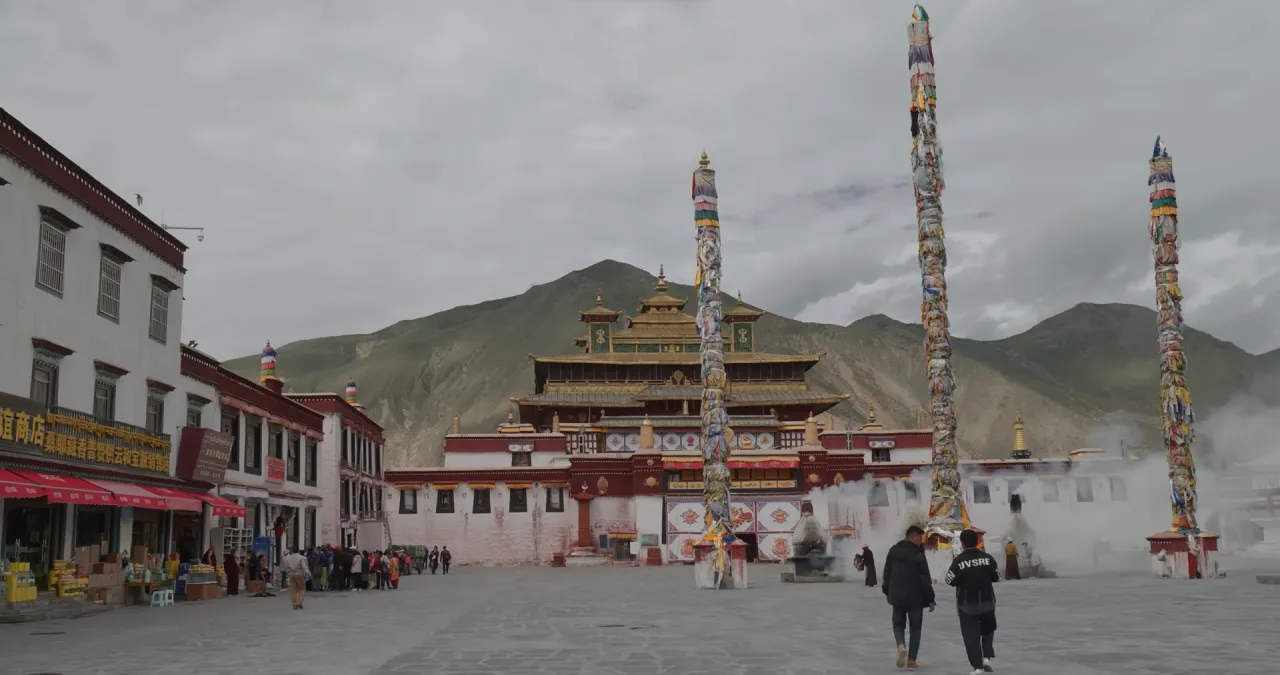
Tibet Monastery
Tibet Monastery

Political Sensitivity and Travel Restrictions

Many people have a question: Is it safe to travel to Tibet with its political Sensitivity and Travel Restrictions? The answer is that the country is still politically sensitive because of its history of Chinese control since 1950.

China annexed Tibet using the Seventeen Point Agreement, confirming that it held occupancy rights for Tibet and could establish sovereignty while promising Tibetan autonomy. Whether this is a political and social truth is still the subject of controversy.

The Chinese government governs Tibet directly through the Communist Party and firmly asserts direct control over political and social issues. Tibetans’ cultural and religious freedoms have been officially restricted to Tibetans with frayed autonomy. In addition, Tiananmen Square or Tank Man expresses sentiments of political and social grievance arising from the influx of Han Chinese into Tibet.

Travel is restricted for all foreigners. All individuals are prohibited from traveling independently in Tibet. Before arriving, all travelers must obtain a Tibet Travel Permit to enter the region and travel with registered tour operators.

There are restrictions on borders and politically sensitive areas. However, Lhasa, Shigatse, and Yamdrok Lake are safe areas to travel with tour operators, but the military buffer entry points and monasteries are restricted from entering.

Obtaining a Tibet Travel Permit is mandatory for all visiting foreigners. The Tibet Travel Permit is arranged through tour operators after submitting a valid Chinese visa. You cannot enter Tibet without this document.

Health and Altitude Safety in Tibet

Is it safe to travel to Tibet in 2026 regarding health and altitude? As already stated, Tibet’s height, especially Lhasa at 3,650 meters (12,000 feet), can be risky for travelers. You can get altitude sickness.

It is recommended to acclimatize by staying 2 to 3 days at intermediate altitudes such as Lhasa or Shigatse before ascending beyond. Refrain from sweating, drink an ample water supply, and eat carbohydrate-rich meals to keep energy up. Avoid alcohol and tobacco products, as these can dehydrate the traveler and hinder oxygen absorption.

You should bring medications such as Diamox during travel in case any emergencies occur. Additionally, also bring ibuprofen or paracetamol for Headaches. Visit a doctor before traveling for medical checkups.

Medical support and Emergency Services are scarce in remote areas in Tibet, so it’s even more important to keep an eye on your symptoms carefully. With severe altitude sickness, you will need to descend immediately and see a physician.

When travelling with professionals or a tour Group Company, a registered company with guides who have experience will have access to oxygen supplies and follow procedures in emergencies that assist with safety for travelers.

Is Solo Travel Allowed and Safe in Tibet?

Is it safe to travel to Tibet in 2026 solo? No, you cannot travel solo, the independent way in Tibet. All foreigners must travel with a group tour or be escorted by a registered and licensed guide. This is the law in Tibet, and there are strict government policies in place regarding this.

Both group tours and guided tours are very safe ways to travel. Private tours with a licensed guide offer preferential safety and convenience. In addition to the safety advantages, there is less risk of altitude sickness. In a group tour, you’re often safer traveling with other people, but a private guide is better for the overall travel experience.

The mandated guided-tour method keeps the traveler safe by making it much harder to break regulations, stray into restricted areas, or find oneself unassisted during an emergency. Licensed guides will manage your permits, provide cultural knowledge based on their expertise, and respond quickly if you have altitude or health issues. A professionally licensed guide will allow travel in Tibet to be more functional and safe.

Permits & Regulations You Must Know

It’s a requirement to obtain a Tibet Travel Permit before entering Tibet in 2026, which is to be obtained through a registered travel agency, as they apply and do all the paperwork. To apply for a Tibet Travel Permit, you must have a valid passport and a Chinese visa.

An Alien Travel Permit is another permit that you may need to visit any restricted region or area outside of Lhasa. You may also need a Military Permit for any remote areas along the border, primarily sensitive areas. A tour operator will organize every permit you are required to have.

As we’ve stated before, registered travel agencies will help manage any permits and paperwork required. They apply to the Tibet Tourism Bureau, arrange the itinerary, and keep track of the necessary regulations imposed by the government while traveling in Tibet. An independent trip to Tibet without a travel agency is illegal.

Traveling in Tibet without the proper permits is illegal, and you can be denied entry, fined, detained in jail, or sent back. There are checkpoints that are situated all throughout Tibet that monitor permits. Unauthorized travel without the necessary permits can have serious consequences. Always ensure you have the necessary permits before your trip to Tibet.
The Short Tibet Tour is a unique journey that will take you through awe-inspiring holy sites, ancient monasteries, fantastic landscapes, […]
5 Days
Easy

US$ 2500

View Detail

Safety Around Key Destinations

Lhasa is generally considered safe and tourist-friendly in 2026. There are a few secure places in Lhasa, including Barkhor Street and Potala Square. The hospitality from the locals, as well as heightened security checks for the protection of tourists, make Lhasa a suitable area for acclimation.

When traveling to Shigatse, Gyantse, and Namtso Lake with an Authorized guide or travel permit, they are generally considered safe places for tourists and will help keep you safe in the region. Compliance with these rules means that you will have a legitimate reason to enter a controlled area of China.

Tibet is an isolated place, so you need a guided tour to travel and a proper time for acclimatization. Additionally, carry documents, emergency snacks, and gear to help you while traveling.

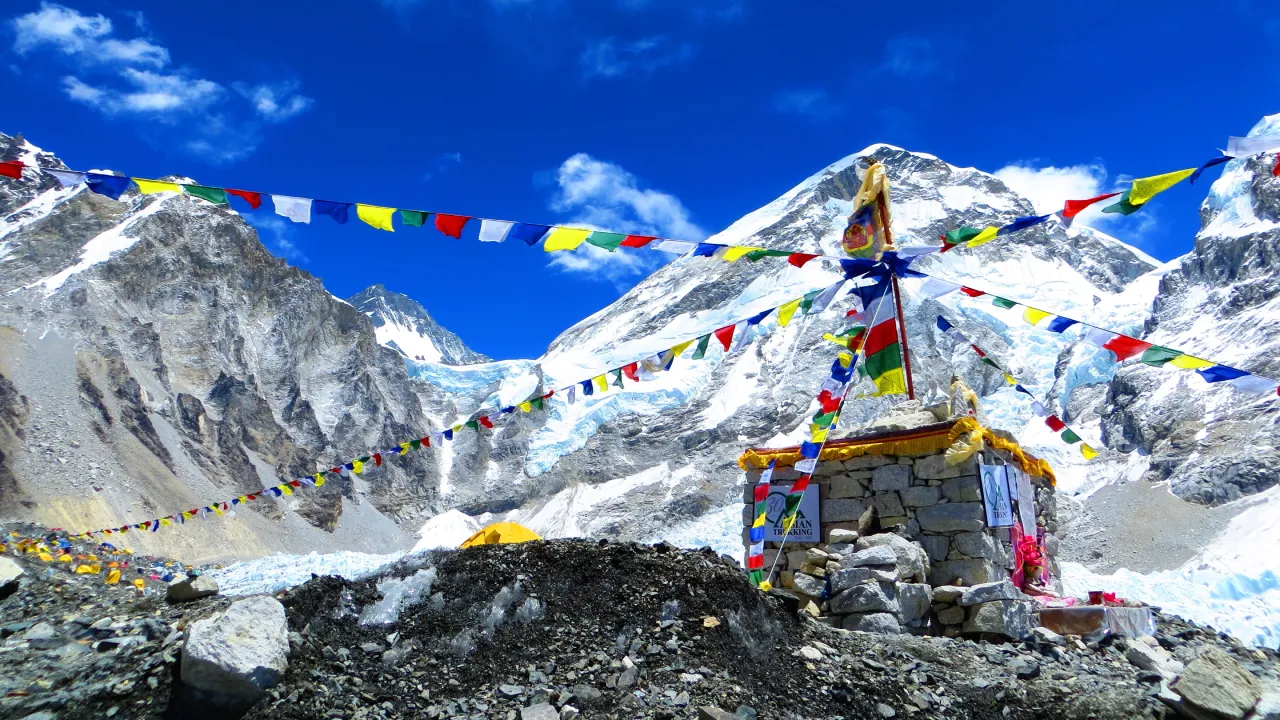
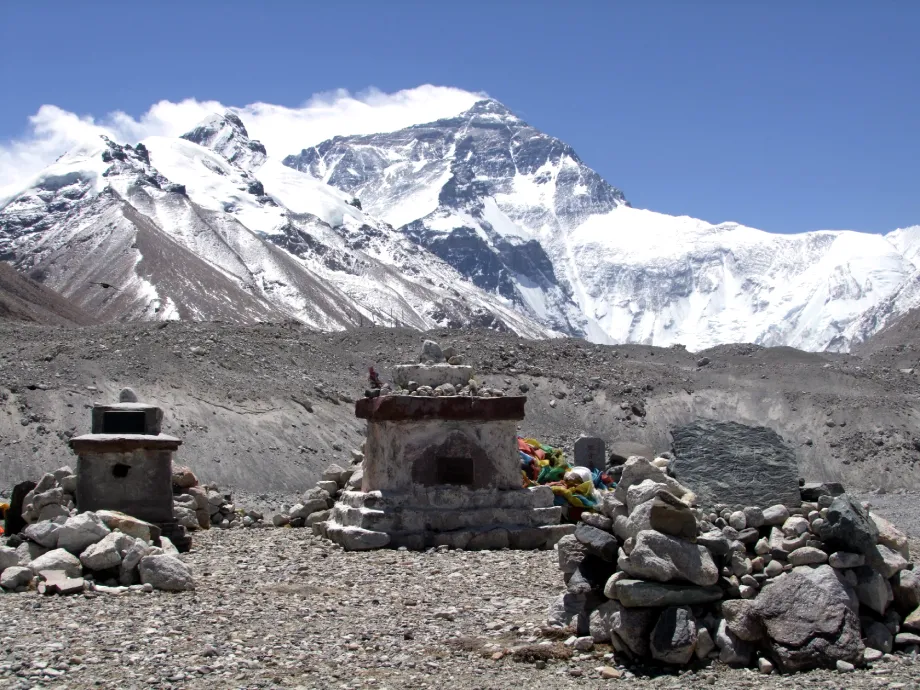
Weather, altitude, and logistics challenges make travel difficult in tourist areas such as Everest Base Camp (North). This is only possible with permits, guided tours, and physical preparations. Travel will be difficult in the remote area and at altitude; also, road conditions vary and are known to be rough.

The road conditions across Tibet will vary. Visitors will experience paved highways close to big cities, and rough, unpaved, and winding mountain roads in rural areas. Transportation can be slow and bumpy; reliable transportation and experienced drivers are a must. Plan for delays and a lack of transportation options and infrastructure for tourists, especially outside popular tourist areas.

Natural Risks & Climate Considerations

Are you wondering if it’s safe to travel to Tibet in 2026, considering natural risks and climate? Earthquake risks have not been a problem in Tibet in the recent past, and after such a long time with no seismic activity, earthquake risk is low for an adventure seeker such as you. The geological environment is a rugged terrain. Rugged terrain has some degree of tectonic stability.

The weather is extremely harsh in Tibet. Winter is very severe, often with heavy snow and freezing temperatures, which will disrupt travel plans. However, April to October offer a milder and calmer environment.

The monsoon season runs from July to September, and heavy rains typically bring landslides and sometimes damage to remote roads and infrastructure. Sources have stated that heavy rains can result in difficulties along unpaved and mountainous routes.

It is important to honor Tibetan Buddhism and the monasteries. You should always dress modestly by covering your shoulders and knees. As you travel, please be aware of local customs. For example, walk clockwise around sacred sites. Before photographing monks and ceremonies, be sure you ask permission, as they are not always open to photography.

Use care not to photograph people or rituals that could offend, unless you have permission. While in major religious sites, never use a flash, and if you are asked to take a photograph with a local, do not pay them. Paying someone for the photograph is disrespectful and perpetuates bad behavior.

The laws around political speech and protests are strictly regulated in Tibet. You should not discuss any publicly or online about Tibetan independence, the Dalai Lama, or any issues regarding the government. These actions could lead to legal problems for you and for locals, as the range of surveillance is serious.

The Internet and communications are heavily regulated and even more subject to government censorship. Many international sites are blocked, which include Facebook, Twitter, Google, and YouTube.

So are you searching for an adventure that is genuinely worthy of the name? Then here it is: our Tibet […]
8 Days
Easy

US$ 2400

View Detail

Travel Insurance & Emergency Contacts

Travel insurance is essential while traveling to Tibet to cover medical emergencies, evacuation, and trip cancellations. It will cover protection from altitude sickness, accidents, and unexpected changes, giving you peace of mind while traveling in an unpredictable terrain.

Insurance should have medical coverage, emergency evacuation, trip cancellations, loss of luggage, and altitude sickness. This travel insurance should be purchased before you travel from your home country to supplement any insurance that covers your time in Tibet.

If your situation has escalated to a legal problem or if it becomes necessary to contact a consulate, it is mandatory to have the number handy.

Emergency numbers:

Police: 110

Ambulance: 120

Weather emergency: 121

Final Safety Tips for a Worry-Free Tibet Journey

  • Book your tours with a registered tour company because they will get you all the necessary permits, licensed guides, and handle logistics.
  • Plan your tour in spring and fall.
  • Always keep your documents and permits with you to avoid legal risks during the tour.
  • Acclimatize, stay hydrated, and travel slowly to minimize altitude risks.
  • Learn a few basic Tibetan or Chinese phrases. This will help with communication, but it will also show that you respect the local culture

Conclusion

A visit in Tibet 2026 is safe if you follow the rules from the government, apply for and obtain the necessary permits for travel, and use approved guides. It is all about respecting the people and culture of Tibet, and if you are prepared for the altitude and complete all of the above, your trip to Tibet in 2026 can be a safe and pleasant experience.

Ultimately, the benefits of traveling to Tibet – the unique lifestyle and culture of the people, the extraordinary natural landscape, available adventures, and a very sacred spiritual place will outweigh any manageable risk. Don’t let the fear of travel deter you. Travel wisely, have the adventure of a lifetime, and experience the mystique of the Roof of the World this year!

Frequently Asked Question

Can Americans travel to Tibet in 2026?

Yes, Americans can travel to Tibet in 2026 as long as they have a valid Chinese visa and a Tibet Travel Permit obtained through a registered tour operator.

Is Everest Base Camp in Tibet safe to visit?

Yes, the Everest Base Camp in Tibet is safe if you join the guided tour and get proper permits.

Do I need a guide to travel in Tibet?

Yes, you need a guide to travel in Tibet to ensure your safety and comply with regulations and permit requirements.

What should I do if I get altitude sickness in Tibet?

Travel slowly, hydrate, rest, carry preventative medication (Acetazolamide), descend without delay, and get medical attention immediately if you are feeling worse.

Is Tibet safer than Nepal?

Tibet has strict rules, and you must travel with a guided tour for safety. Whereas in Nepal, there is more freedom to travel independently with less risk. Although both have risks from terrain and altitude, preparations will reduce the risks.
How Long is the Everest Base Camp Trek Duration, Routes & Tips (2026 Update)

The Everest Base Camp Trek is one of the most popular Himalayan adventures, drawing thousands of trekkers each year. Many people have queries about how long the Everest Base Camp trek is; the answer is 12 to 14 days. The standard routes to Everest Base will take around 12 to 14 days, but the duration severely depends on the chosen routes.

The standard route will cover the distance from Lukla to Everest Base Camp; however, there are other routes, such as the Jiri to Everest Base Camp route and the Helicopter return route. The duration of each route varies. All the routes have enough acclimatization, which allows you to rest during the walk.

The standard Everest Base Camp trek route is used by many trekkers, and this route covers 80 miles in a round trip. The trek takes a good chunk of the possible days for the proper acclimatization of trekkers, slightly in advance of the big altitude gain. This route will take about 8 days to reach Everest Base Camp and then 4 to 5 days to trek back to Lukla.

For 2026, the classic trek route to Everest Base Camp will still be most popular, starting from Lukla after flying from Kathmandu. This trek will take you to various Sherpa villages such as Phakding, Namche Bazaar, Dingboche, and Tengboche, where you can take days for acclimatization.

The total trekking distance on the classic route is approximately 130 km (round trip). There are no major new routes and no changes to flight conditions to highlight, specifically in 2026-2027; however, acclimatization and planning are vital to complete a good and safe experience with the trek to Everest Base Camp (EBC). 

Everest Base Camp Trek is not an ordinary journey, and thus, you may have watched many films on YouTube about […]
14 Days
Moderate

US$ 1300

View Detail

Standard Duration of the Everest Base Camp Trek

The main duration for trekking to Everest Base Camp is often 12 to 14 days – this includes all trekking days and days of rest for acclimatization. Most itineraries will spend 8 to 9 days trekking to Everest Base Camp (EBC) from Lukla, and we suggest a Slow and Easy ascent to avoid the potential for Acute Mountain Sickness.

The return trip will be in the 3 to 4 day range since going down takes less time and is not as taxing on the body. There are acclimatization days, generally taken at Namche Bazaar and Dingboche, which are essential to rest the body and also give you time to acclimatize to thin air and help your body adapt to lower oxygen levels and improve safety at high altitude.

Everest Base camp Trek
Everest Base Camp Trek

Rest days are likely to affect the total duration, and it is important for you to understand that if you add just one acclimatization day, possibly two, you have added two days to your journey and received safety and comfort. If you omit these days, it cuts days off the journey but increases the likelihood of altitude sickness and has an overall impact to reduce your enjoyment factor.

Overall, the long Everest Base Camp trek differs because of the itinerary; however, it will be completed in between 12 to 14 days. These days will allow for a balance of trekking pace, acclimatization, and enjoyment.

Route Options and Duration Variations

Classic Route (Lukla to EBC and back)

The Classic route to Everest Base Camp can be completed in 12 to 14 days. These routes have acclimatization stops in Namche Bazaar and Dingboche, which reduce the likelihood of altitude sickness.

You will get an opportunity to explore the Sherpa village, monasteries, and their culture. You will walk in a variety of terrains on this trek, covering about 130km. The trek provides steady altitude gains and then descents while providing safety and comfort.

EBC Trek with Helicopter Return

This option can be done in an 8 to 11 days trek, providing trekkers with 3-4 fewer testing days than a standard round trip. The trekker will trek from Lukla to EBC and then will be flown via helicopter, scenic flight back to Lukla or Kathmandu.

Selecting a helicopter back is good for trekkers who are short on time and want to eliminate extra exhaustion and trepidation. Although it may be more expensive to fly back from base camp via helicopter, especially if compared with a traditional trek, the opportunity for comfort and convenience is unrivaled.

Helicopter exit eliminates retracing steps and has the added benefit of lower fatigue after a night at base camp. This trend has become increasingly popular with trekkers who are short on time.

Jiri to Everest Base Camp Route

From Jiri, this itinerary will take about 18-22 days compared to 11-14 days on the classic route, essentially adding a week on the classic path. Comparatively, this is a longer route but is less less-travelled routes, takes you to different cultural areas and diverse landscapes.

However, this trekking route requires good physical stamina and endurance. This trek will end with a return flight to Kathmandu from Lukla with lifelong memories.

Gokyo Lakes + EBC via Cho La Pass

This trek consists of many side trips and is intended for trekkers in the 17-20 day range, with beautiful alternate routes at the Gokyo Lakes and the glacier route at Cho La Pass.

The expedition is not only visually stunning, but also has challenges that require some added acclimatization. You are rewarded with amazing mountain capes and unique high-altitude glacial lakes. You will pass through sections along glaciers, which is exciting, but certainly requires good balance and proper footwear.

You ultimately navigate to Everest Base Camp and then descend using the classic route, elevating this experience from the average trek and allowing for a distinctive experience from the average itinerary.

Three Passes Trek including EBC

For having an amazing journey, you can take the Three Passes Trek, which is an 18 – 21+ day trek consisting of three Passes – Renjo La, Cho La, and Kongma La. Expect steep ascents, exposed ridgelines, and total immersion in every major valley in the Everest region. Trekkers will require excellent fitness and acclimatization for this trek.

The Three Passes trek brings together the best of remote trails and main trading routes, and highlights, as well as outstanding views. It has all the elements for experienced, adventurous trekkers.

The Everest Three High Passes Trek is one of the most exciting and complete trekking adventures in the Everest region […]
19 Days
Difficult

US$ 1600

View Detail

Factors Affecting Trek Duration

Altitude acclimatization needs are an important factor in how long the Everest Base Camp trek; extra rest days at altitude will help avoid altitude sickness and will help guarantee safety and peace of mind when doing the trek. A good adaptation to high altitude will help most trekkers feel comfortable and enjoy the journey.

Similarly, your prior mountaineering experience and physical fitness will also affect how long the Everest Base Camp trek is. Experienced trekkers can walk at a faster pace compared to inexperienced trekkers, and the inexperienced trekker may need a longer time to recover and adapt in the Himalayas.

Weather and trail conditions also determine the duration to complete the Everest Base Camp trek. Mountain weather is erratic and changes frequently, which causes flight delays and, therefore, indirectly contributes to how long the Everest Base Camp trek takes.

Lastly, flight delays, walking pace, and side trips also affect the duration to complete the trek. It is important to stay flexible in planning to have successful outcomes for trekkers.

View from Kalapatthar

Sample Itineraries

14-Day Standard Itinerary (Lukla – EBC – Lukla)

Day 1:  Arrived in Kathmandu

Day 2: Fly to Lukla from Kathmandu and trek to Phakding (2,652m)

Day 3: Trek to Namche (3,440m) from Phakding

Day 4: Acclimatization day at Namche Bazaar.

Day 5: Trek to Tengboche (3,870m) from Namche

Day 6: Trek to Dingboche (4,360m) from Tengboche

Day 7: Acclimatization day at Dingboche

Day 8: Trek to Lobuche (4,940m) from Dingboche

Day 9: Trek from Lobuche to Gorekshep, visit to Everest Base Camp (5,364m), and return to Gorekshep

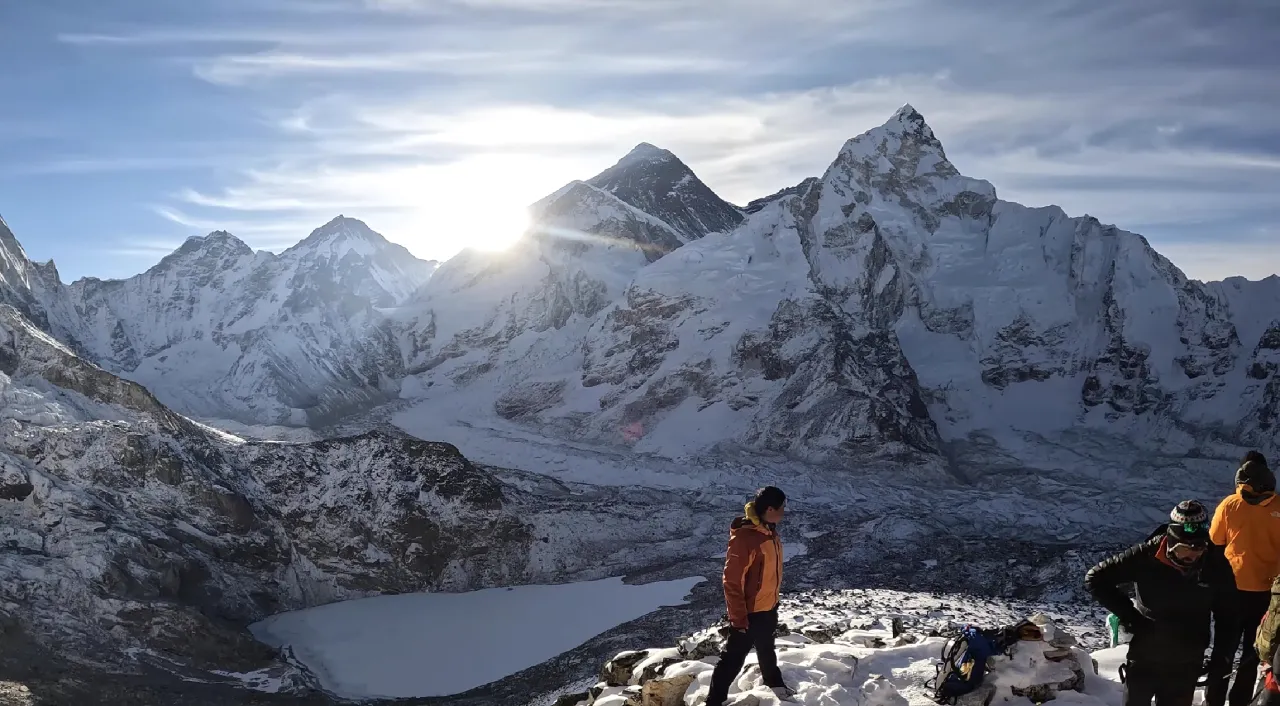
Day 10: Trek in the morning to 8,545-meter Kala Patthar and then descend to 4,240-meter Pheriche

Day 11: descend to Namche

Day 12: Descend to Lukla

Day 13: fly from Lukla to Kathmandu

Day 14: Departure

11-Day EBC Trek with Helicopter Return

Day 1: Arrive Kathmandu

Day 2: Fly to Lukla from Kathmandu and trek to Phakding (2,652m)

Day 3: Trek from Phakding to Namche Bazaar

Day 4: Acclimatization day in Namche Bazaar

Day 5: Trek from Namche Bazaar to Tengboche

Day 6: Trek from Tengboche to Dingboche

Day 7: Acclimatization day in Dingboche

Day 8: Trek from Dingboche to Lobuche

Day 9: Trek from Lobuche to Gorak Shep, visit Everest Base Camp

Day 10: Fly from Gorekshep to Kathmandu (via Kala Patthar or direct)

Day 11: Depart from Kathmandu

Are you looking for something unique when going to the timeless Everest Base Camp? If yes, then come with us […]
12 Days
Moderate

US$ 2800

View Detail

21-Day Three Passes Trek with EBC

Day 1: Arrive in Kathmandu

Day 2: Fly to Lukla from Kathmandu and trek to Phakding (2,652m)

Day 3: Trek from Phakding to Namche Bazaar

Day 4: Acclimatization day in Namche Bazaar

Day 5: Trek to Thame (3,800m)

Day 6-7: Trek and acclimatization in Lungden (4,380m)

Day 8: Cross Renjo La Pass (5,360m) to Gokyo

Day 9: After reaching Gokyo Ri peak (5,360m), trek to Thagnak

Day 10: Cross Cho La Pass (5,420m) to Dzongla

Day 11: Trek from Dzongla to Lobuche

Day 12: Trek to Gorak Shep and visit Everest Base Camp

Day 13: Hike in the morning to Kala Patthar to witness the sunrise, then descend to Lobuche

Day 14: Trek from Kongma La Pass (5,535m) to Chhukung

Day 15: Trek from Chhukung to Dingboche

Day 16: Trek from Dingboche to Tengboche

Day 17: Trek from Tengboche to Namche Bazaar

Day 18: Descend to Lukla

Day 19: Fly from Lukla to Kathmandu

Day 20: Backup extra day in Kathmandu (flights and rest)

Day 21: Depart

Tips for Choosing the Right Trek Duration

  • Take your schedule at a relaxed pace and leave some extra days in case you have to adjust to altitude or unexpected circumstances.
  • Include at least one, if not two, days of travel buffer for delays.
  • Be realistic about your present fitness and previous trekking experience; it will help you determine the best itinerary and pace for your abilities.
  • Consider your trekking goals, whether you want a scenic trek, a tough adventure, or just a fast summit to Everest Base Camp, and let this inform your route and timing.
  • Think about whether you want to add rest or acclimatization days at high-altitude locations like Namche Bazaar or Dingboche to heighten your chances of a successful trek.
  • Look at a number of options in advance if you are thinking about alternative options to the trail, such as the Three Passes or Gokyo lakes, as they will require more time and stamina.
  • Listen to your body and adjust your trek duration as needed for a safer and more enjoyable Everest Base Camp trek experience.

Conclusion

The Everest Base Camp trek can be done anywhere from 8 to 21 days by taking different routes. No matter what type of Comfort & Challenges you want Everest Base Camp tour package also offers you helicopter rides and trekking.

Nevertheless, you need to plan out the itinerary that will suit your Objectives, Time, and Fitness level. Whatever routes you take for your Everest Base Camp trek, you will make lifelong Himalayan memories on each different route.

Frequently Asked Questions (FAQs)

How many days does the Everest Base Camp trek take?

The Everest Base Camp trek takes approximately 12 to 14 days, and that includes acclimatization days and travel days.

What is the shortest duration to complete the Everest Base Camp trek?

The shortest duration is around 8 to 10 days, but usually with a helicopter return to bypass the trek time.

Can I complete the EBC trek in 10 days or less?

Yes, the EBC trek can be done in 10 days or less by speeding up the itinerary and by taking a helicopter back from Base Camp.

What’s the best duration for proper acclimatization?

The best duration for doing the EBC trek is 12 to 14 days. You will have acclimatization rest days in Namche Bazaar and Dingboche which will give you the best chance for safe acclimatization.

How long is the actual walking distance to Everest Base Camp?

The real distance you trek to Everest Base Camp is about 130 kilometers (return trip), and daily walking distances are on average 10 to 15 km in total.

How many hours per day do you walk on the EBC trek?

Trekkers walk an average of 5 to 7 hours per day, 10 to 15 kilometers per day on variable terrain and altitude.

Does taking a helicopter back reduce the trek duration?

Yes, you could save 3 to 4 days off the trek if you were to have a helicopter return from Everest Base Camp, but that would take you over your original trek cost.

What’s the duration of the Three Passes Trek, including Everest Base Camp?

The Three Passes Trek, including Everest Base Camp, usually takes about 18 to 21+ days, as there are three high passes.

How long does the Jiri to Everest Base Camp route take?

The route takes about 18 to 22 days.

Is 14 days enough for a comfortable EBC trek?

Yes, 14 days is usually plenty of time to do a comfortable Everest Base Camp trek based on proper acclimatizing over 14 days at a reasonable walking pace.

Mount Everest Fee Increase to US$ 15,000

Increase in Permit Fees for Mount Everest Climbing: A Detailed Analysis

The Government of Nepal has announced a significant increase in the permit fees for climbing Mount Everest, marking the first hike in nearly a decade. This decision, which will raise the cost of climbing permits by over 35%, underscores Mount Everest expeditions’ economic and cultural significance to Nepal and their impact on mountaineers worldwide. This comprehensive analysis delves into the details of this fee hike, its implications, and the broader context surrounding Mount Everest expeditions.

Mount Everest: The World’s Tallest Peak

Mount Everestsituated in the Everest region, stands at 8,848 meters (29,029 feet) above sea level, making it the highest mountain on Earth. Located in the Mahalangur Himal sub-range of the Himalayas, it straddles the border between Nepal and the Tibet Autonomous Region of China. The mountain’s Nepali name is “Sagarmatha,” meaning “Goddess of the Sky,” while in Tibetan, it is known as “Chomolungma,” or “Holy Mother.”

Historical Significance

Mount Everest has captivated the imagination of explorers and climbers for centuries. The first successful ascent was achieved on May 29, 1953, by Sir Edmund Hillary of New Zealand and Tenzing Norgay, a Sherpa from Nepal, via the South Col route. This monumental achievement cemented Everest’s reputation as the ultimate challenge for mountaineers.

Climatic and Geographic Features

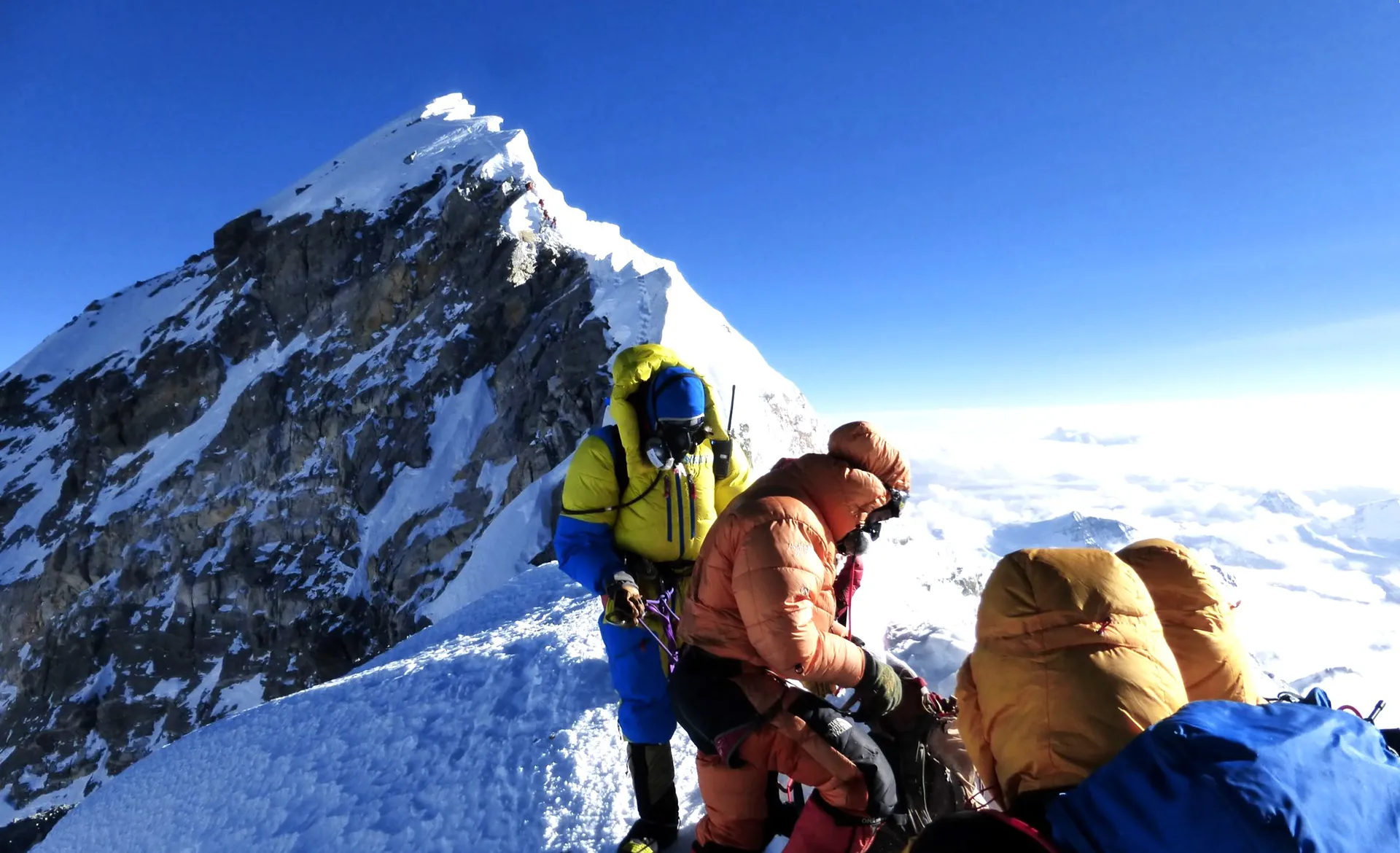
Mount Everest’s formidable environment presents climbers with extreme challenges. Temperatures can plummet to -60°C (-76°F) at the summit, and winds often exceed 100 mph. The mountain’s high-altitude conditions include low oxygen levels, leading to severe risks such as altitude sickness, frostbite, and hypothermia. Despite these dangers, thousands of climbers attempt the ascent each year, driven by the allure of conquering the world’s highest peak.

Announcement of the Increase

On January 24, 2025, Narayan Prasad Regmi, Director General of Nepal’s Department of Tourism, announced a 36% increase in climbing permit fees for Mount Everest. Effective from September, the new rates apply to different climbing seasons:

  • April-May (Peak Season): Permit fees will rise from $11,000 to $15,000.
  • September-November (Autumn Season): Fees will increase to $7,500.
  • December-February (Winter Season): Fees will rise to $3,750.

This increase, the first in nearly a decade, was implemented after years of deliberation.

Rationale for the Fee Hike

  1. Revenue Generation: Permit fees are a vital source of income for Nepal. The funds contribute to maintaining national parks, supporting local communities, and bolstering the country’s economy.
  2. Increased Operational Costs: Over the years, the cost of managing Everest expeditions has risen, including the need for better infrastructure, rescue operations, and environmental conservation.
  3. Inflation and Currency Adjustments: The previous fee structure, unchanged for nearly a decade, no longer reflected the economic realities of maintaining climbing routes and providing essential services.

Nepal’s economy heavily relies on tourism, with Mount Everest as a cornerstone attraction. Each year, approximately 300 permits are issued for Everest climbs during the peak season. In addition to permit fees, climbers spend money on logistical support, guides, porters, and other services, significantly boosting local incomes.

  1. Employment Opportunities: Thousands of Nepalis, including Sherpas, guides, cooks, and porters, depend on Everest expeditions for their livelihoods. The permit fee hike aims to ensure fair compensation for their invaluable contributions.
  2. National Revenue: In 2024 alone, tourism generated over $700 million for Nepal, with a substantial portion coming from mountaineering activities.

Cultural Importance

Mount Everest holds deep spiritual significance for the Sherpa people and other Himalayan communities. It is considered a sacred place, and climbing it is both a physical and spiritual journey.

Mountaineers from all over the world are no doubt drawn by the vertigo and unattainable height of Mount Everest. If […]
58 Days
Challenging

US$ 43000

View Detail

Implications of the Fee Increase

For Mountaineers

The fee increase is unlikely to deter serious climbers, as the overall cost of an Everest expedition—often exceeding $40,000—makes the permit fee just one component. However, it may impact budget-conscious climbers or smaller expedition groups.

For Expedition Organizers

Expedition companies will need to adjust their pricing structures, potentially making guided tours more expensive. Larger operators, who cater to affluent clients, are less likely to be affected than smaller outfits serving budget climbers.

For the Environment

Higher fees may help fund critical conservation efforts. The influx of climbers has strained Everest’s fragile ecosystem, leading to problems like waste accumulation and environmental degradation. Increased revenue could support cleanup operations and sustainable tourism initiatives.

Challenges and Opportunities

Addressing Overcrowding

Everest’s popularity has led to overcrowding, particularly during the peak season. Long queues at the summit pose safety risks and diminish the climbing experience. The fee hike could potentially reduce the number of climbers, alleviating congestion.

Enhancing Safety Measures

Higher fees could enable better safety protocols, including improved weather forecasting, rescue operations, and medical facilities at base camps.

Promoting Alternative Routes and Seasons

The Department of Tourism aims to promote less crowded climbing seasons (autumn and winter) by implementing proportional fee increases. This strategy could help distribute climbers more evenly throughout the year.

Historical and Modern Expeditions

Landmark Ascents

Since Hillary and Tenzing’s first successful ascent, over 6,000 climbers have reached Everest’s summit. Notable achievements include Reinhold Messner and Peter Habeler’s oxygen-free ascent in 1978 and Junko Tabei’s historic climb as the first woman to summit Everest in 1975.

Contemporary Challenges

Modern expeditions face challenges such as climate change, which is melting glaciers and destabilizing routes. Additionally, the commercialization of Everest has sparked debates about the ethics of allowing inexperienced climbers to attempt the ascent.

Conclusion

The decision to raise climbing permit fees for Mount Everest reflects Nepal’s commitment to preserving its most iconic natural resource while ensuring sustainable economic growth. Although the increase may raise costs for climbers, it also presents opportunities to enhance safety, reduce environmental impact, and promote equitable tourism practices. Mount Everest’s allure remains undiminished, inspiring adventurers and contributing to Nepal’s rich cultural and economic tapestry.

Nepal Trekking Company

Nepal Trekking Company is defined as the term for making a long journey across geographically difficult countries on foot, usually for pleasure. Trekking is the most adventurous activity and is very popular in the world. The most famous trekking route in the world. Nepal Trekking is walking for long distances over multiple days. The other key detail is that treks have the substantial infrastructure of wide trails, guest houses, and food stops. Hiking and backpacking are wilderness experiences, whereas trekking is defined by infrastructure on the trail. Trekking is much more commercial now. Most of the trekking is easier to organize and beginner-friendly due to the fact that carrying all your life isn’t necessary, and having meal stops along makes the experience a little less strenuous. Trekkers often have porters and guides or can purchase the necessary supplies as they travel. Everest RegionAnnapurna RegionManaslu Region, and Langtang Region are the popular trekking destinations of Nepal. Trekking may be individual or in a group.

There are many trekking agencies in Nepal, and most of them have a license from the Nepal government and private institutions. Himalayan Adventure Treks & Tours has been operating for a long time and is involved in a well-respected and established company among its clients and employees. Over the years, we have built a wealth of experience and knowledge, enabling us to provide incredible Trekking in Nepal, Tour in NepalJungle Adventure ActivitiesHelicopter tourMountain FlightNepal Classic TourLuxury ToursRoyal Enfield Motorbike TourPeak Climbing, mountaineering expeditions and tours for groups and individual travelers Specialized in NepalTibet, and Bhutan.
Our company is committed to environmental and social to remote areas where we currently offer trips and tours supporting innovative sustainable development, preserving cultural heritage, and protecting nature through travel and tourism. As proof, this committed team donates 5% of their total profits to social foundations to help poor students, to encourage them to go to school in a remote village area in Nepal.
Our team in Himalayan Adventure Treks & Tours prides itself on planning outstanding and unforgettable trips, tailored to every individual’s needs and wishes. We have developed fantastic itineraries emphasizing the culture and scenic beauty of our destinations, which can be customized to fit all of our clients’ expectations. We strive to provide exceptional service to our clients, whom we do not think of as customers but rather as members of our family.
Himalayan Adventure Treks & Tours is officially recognized and licensed by the Ministry of Culture, Tourism and Civil Aviation (MOCTCA), Nepal Tourism Board (NTB) the Government of Nepal. Additionally, our company is an active member of the Trekking Agencies Association of Nepal (TAAN), the Nepal Mountaineering Association (NMA), Kathmandu Environmental Education Project (KEEP), and the Village Tourism Promotion Forum Nepal (VITOF)

The first trek was recorded in 1822 by wagon. Trekking may include camping or a teahouse. The best way to experience Nepal is to walk through the beaten trails or virgin tracks.

Nepal is the ultimate destination for trekkers. Nepal has been called a trekker’s paradise because of the Terrain, Mountains, hills, and the Terai, the most spectacular routes in the world. Trekking in Nepal is as much a cultural experience as a Himalayan adventure. Nepal trek varies from expedition, high altitude treks to simple, easy-paced walks.

Druk Path Trek

The Druk Path Trek is a stunning high-altitude trekking adventure in Bhutan that connects Paro to Thimphu through spectacular landscapes, ancient monasteries, and remote mountain lakes. This 7-day trek is one of the most popular short treks in Bhutan, offering a mix of cultural exploration and breathtaking views of the Himalayan mountain range, including peaks such as Jomolhari (7,326m) and Gangkar Puensum (7,570m), the world’s highest unclimbed mountain. The trek leads through dense rhododendron forests, alpine meadows, and yak pastures, while also passing by sacred lakes like Jimilangtsho and Simkotra Tsho. The trail features secluded monasteries, including Jele Dzong and Phajodhing Monastery, providing insight into Bhutan’s spiritual traditions. This moderately challenging trek is ideal for those looking to experience Bhutan’s pristine landscapes and vibrant culture within a short timeframe.

Detailed Itinerary

Day 01: Arrival in Paro (2,280m/7,480ft)

Upon arrival at Paro International Airport, you will be greeted by your guide and transferred to your hotel. Paro is home to Bhutan’s only international airport and is surrounded by breathtaking mountains and traditional Bhutanese architecture. Depending on your arrival time, you may visit Paro Dzong (Rinpung Dzong), a fortress-monastery with rich historical significance, and the National Museum (Ta Dzong), which houses a collection of ancient Bhutanese artifacts. In the evening, enjoy a traditional Bhutanese dinner and prepare for the next day’s acclimatization hike.

Day 02: Sightseeing and Acclimatization Hike to Tiger’s Nest Monastery (3,180m/10,433ft) – 4 to 5 hours (5km) trek

After breakfast, embark on a challenging but rewarding hike to the iconic Taktsang Monastery, known as Tiger’s Nest. The 5 km trek ascends through lush pine forests, with prayer flags and fluttering chortens enhancing the spiritual atmosphere. The monastery clings dramatically to a 900-meter cliff, offering breathtaking views of the Paro Valley. After exploring the monastery, trek back down and return to your hotel in Paro for rest and preparation for the upcoming trek.

Day 03: Drive to Ta Dzong (2,487m/8,159ft) and trek to Jele Dzong (3,400m) – 4 to 5 hours (10km) trek

Begin the Druk Path trek with a short drive to Ta Dzong, the starting point of the Druk Path Trek. The trail ascends through forests of blue pine and fir, offering stunning views of the Paro Valley below. After a steady climb, you will reach Jele Dzong (3,400m), an ancient monastery overlooking the valley. On a clear day, you can see Mount Jomolhari (7,326m) and camp overnight near Jele Dzong.

Day 04: Trek from Jele Dzong (3,400m/11,154ft) to Jangchulakha (3,650m/11,975ft) – 3 to 4 hours (10km) trek

Today’s Druk Path Trek trail follows a ridge, offering panoramic views of Paro and the surrounding snow-capped peaks. The path passes through dense rhododendron forests, where you may spot yaks grazing. The ascent is gradual, making it a relatively easy day. Arrive at Jangchulakha, a beautiful campsite surrounded by alpine meadows.

Day 05: Trek from Jangchulakha (3,650m/11,975ft) to Jimilangtsho (3,870m/12,696ft) – 4 to 5 hours (11km) trek

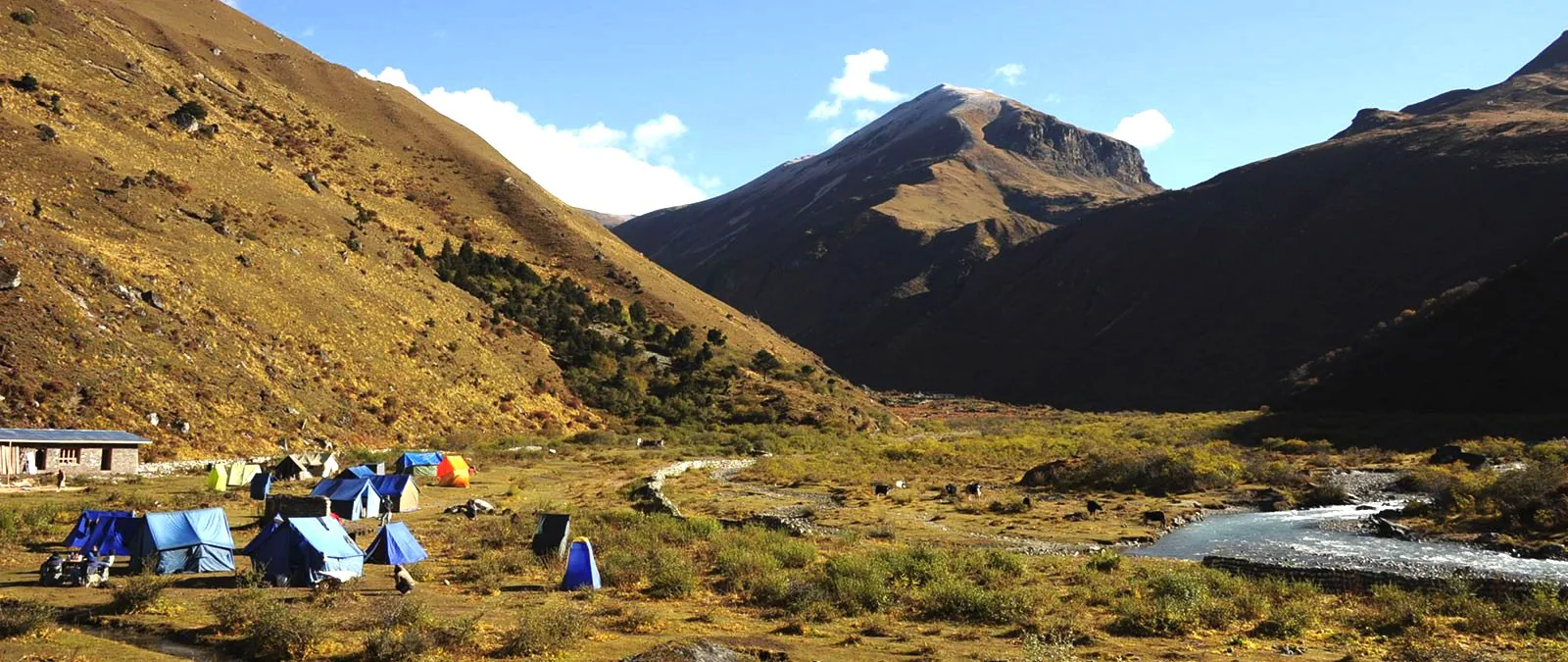
The Druk Path trek continues along the ridge with stunning views of the Himalayas. The trail descends slightly before reaching Jimilangtsho Lake, a sacred and scenic high-altitude lake known for its crystal-clear waters and large trout. Camp overnight near the lake.

Day 06: Trek from Jimilangtsho (3,870m/12,696ft) to Simkotra Tsho (4,110m/13,484ft) – 4 to 5 hours (11km) trek

Today’s trail passes through rugged terrain, yak herder camps, and pristine alpine landscapes. As you ascend towards Simkotra Tsho Lake, the highest point of the trek, enjoy views of distant peaks and experience the tranquility of the Bhutanese wilderness. Camp overnight near the lake.

Day 07: Trek from Simkotra Tsho (4,110m/13,484ft) to Thimphu via Phajodhing – 5 to 6 hours (14km) trek

The final trekking day descends towards Thimphu, Bhutan’s capital. Along the way, visit Phajodhing Monastery, a historic meditation retreat. The trail offers panoramic views of the Thimphu Valley. Upon reaching Thimphu, transfer to your hotel and enjoy a relaxing evening.

Day 08: Drive from Thimphu to Paro and Departure

After breakfast, drive back to Paro International Airport for your departure. Bid farewell to Bhutan, carrying unforgettable memories of the Druk Path Trek.

Many visitors to Bhutan often limit their journey to Paro, Thimphu, and Punakha, but there is a whole lot more […]
6 Days
Moderate

US$ 3000

View Detail

Trek Difficulty

The Druk Path Trek is a moderate trek suitable for trekkers with some prior hiking experience. The highest altitude reached is 4,110m (13,484ft), which may cause altitude sickness for some trekkers. The trail includes gradual ascents and descents, making it manageable for most fit individuals.

Trek Cost

The cost of the Druk Path trek varies based on season, group size, and tour operator. On average, expect to pay $2,500 – $3,500 per person, including permits, accommodation, meals, a guide, and transport.

Physical Fitness Requirement

Trekkers should be in good physical condition, capable of hiking 4-6 hours per day on mountainous terrain. Pre-trek preparation should include cardio exercises, strength training, and altitude acclimatization.

Best Time for Trekking

The best seasons for the Druk Path Trek are spring (March-May) and autumn (September-November) when the weather is clear, offering spectacular mountain views and comfortable trekking conditions.

Equipment List for Druk Path Trek

  • Waterproof trekking boots
  • Warm layers and a windproof jacket
  • Sleeping bag (rated for -10°C)
  • Trekking poles
  • Sunglasses and sunscreen
  • Headlamp with extra batteries
  • First aid kit and personal medications

Visa Procedure

Visitors to Bhutan must apply for a visa through a licensed Bhutanese tour operator. The visa costs $40 and is processed upon prepayment of the tour package. Upon approval, you will receive a visa clearance letter, and the visa will be stamped upon arrival in Bhutan.

If you want a theme of your travel to be adventure and discovery, then look no further, for our Paradise […]
10 Days
Moderate

US$ 3000

View Detail

Conclusion

The Druk Path Trek is a mesmerizing journey through Bhutan’s pristine landscapes, offering trekkers an unforgettable experience of nature, culture, and adventure. This moderate trek, spanning around 6 days, connects Paro to Thimphu, taking travelers through high mountain passes, serene alpine lakes, and lush forests filled with rhododendrons and blue pine trees. The trek provides stunning panoramic views of the Himalayas, including Mount Jomolhari (7,326m) and other snow-capped peaks.

One of the key highlights of the Druk Path trek is the series of turquoise alpine lakes, such as Jimilang Tsho, Simkotra Tsho, and Janetso, which are home to large trout fish. Trekkers will also pass through traditional yak herder camps, offering a glimpse into the nomadic lifestyle of the Bhutanese highlanders. The journey is enriched with visits to ancient monasteries, such as the Phajoding Monastery, which offers a spiritual retreat amid the breathtaking surroundings.

Despite its moderate difficulty level, the Druk Path trek can be challenging due to high-altitude climbs, with the highest point being Labana Pass at 4,230m (13,877ft). However, acclimatization is manageable, as the daily trekking distances are relatively short. The trail offers diverse landscapes, transitioning from dense forests and ridges to open meadows, creating an ever-changing backdrop for trekkers.

One of the most rewarding aspects of the Druk Path Trek is the opportunity to experience Bhutan’s untouched natural beauty, combined with the country’s rich cultural heritage. The trek is best undertaken in spring (March to May) and autumn (September to November) when the weather is clear, and the mountain views are at their best. The crisp mountain air, clear blue skies, and vibrant wildflowers in spring make the trek particularly enchanting.

Ending in Bhutan’s capital, Thimphu, the trek allows travelers to explore the city’s cultural landmarks, such as the Tashichho Dzong, Memorial Chorten, and Buddha Dordenma Statue. The trek serves as a perfect introduction to Bhutan, balancing adventure and cultural immersion. Unlike other treks in the Himalayas, the Druk Path Trek remains uncrowded, preserving its pristine charm and making it an excellent choice for those seeking solitude in nature.

Overall, the Druk Path Trek is a spectacular journey that showcases Bhutan’s unparalleled beauty, spirituality, and traditional way of life. Whether you are an experienced trekker or a first-time adventurer, this trek provides an ideal blend of challenge, scenic grandeur, and cultural discovery. It is a trek that leaves an indelible impression, making it one of the most cherished hiking experiences in Bhutan.

Free Travel Guide
Your Perfect, Personalized Journey Awaits
profile
Bhagwat Simkhada Seasoned Travel Expert with Years of Experience