

Duration
8 Days

Kathmandu Pokhara Chitwan Tour


Trip Grade
Easy
Group Size
1-16 People
Max Altitude
1,400m. / 4,593ft.
Best Season
Mar- May/ Sept- Nov
Activity
Multiple Activities
Meals
Breakfast, Lunch & Dinner
Accommodation
Hotels & Resorts
Transportation
Private Vehicle
Trip Customization
On request (click here)
8 Days
Price starts
US$ 600
We offer group price for private travelers


Highlights of Kathmandu Pokhara Chitwan Tour
- UNESCO heritage in Kathmandu: Explore Kathmandu (Durbar Square, colored temples, and palaces), Boudhnath Stupa, and Pashupatinath Temple.
- Sarangkot sunrise: Sunrise view on the Annapurna range through Sarangkot hill.
- Phewa Lake boat ride: A serene boat ride on picturesque Phewa Lake in Pokhara, where mountains mirror themselves.
- White water rafting on the Trisuli River: enjoy gentle rapids, peaceful stretches, and beautiful river scenery before heading to Chitwan.
- Davis Falls and Peace Pagoda: Go to the Davis (Devi) Falls in Pokhara and go to the Peace Pagoda stupa on the other end of the lake.
- Jungle safari: Two days of wilderness culture at Chitwan National Park. Take a jeep safari or guided jungle walk to see one-horned rhinos, monkeys, deer, and birds.
- Tharu cultural village: Visit a traditional Tharu village and have an evening dance performance.
- Complete package travel: Hotel, transfers in a private vehicle, and meals (according to the program) will provide a trouble-free tour.
Trip Introduction
This 8-day Kathmandu Pokhara Chitwan tour is a blend of culture, nature, and wildlife. You will see the old temples and palaces in Kathmandu, the serene city of Pokhara with its lake, and the jungle of warm Chitwan National Park.
You will be guided through bustling markets in Kathmandu and explore some of the best places, including Durbar Square, Bodhnath Stupa, and Pashupatinath Temple. These destinations are the home of the spiritual and cultural Nepal.
Then a scenic drive leads up through the Himalayan foothills and along the Trisuli River. All trip preparations are handled for you so you can simply sit back and enjoy the terraced fields, small villages, and the sights around the Annapurna mountains.
You can spend time in the beautiful environment of a peaceful climate in a lovely city called Pokhara, which is located on the shores of the Phewa Lake. The views of the sunrise from the lakeside and from the Sarangkot hill are awe-inspiring. You can also have a short boat ride to Barahi Temple or just have a gentle walk to a mountain scenery viewpoint.
The next destination after Pokhara is the Chitwan National Park. Here you will spend two nights in an excellent nature lodge, including all the meals. You will be part of a guided safari on an elephant or a jeep to search for wildlife in the thick forest.
Rhinos, deer, monkeys, and brightly coloured birds are a common sight. Or have the luck to see a Bengal tiger. This is because a serene ride on the Rapti River will allow you to view crocodiles and water birds at a safe, but close distance. During evenings, you have an opportunity to watch a Tharu cultural show and visit a local village to know more about the way of living of local people.
Throughout this Kathmandu Pokhara Chitwan tour, you will notice the beautiful contrasts of Nepal. Kathmandu is located at around one thousand three hundred and fifty meters, Pokhara is at about eight hundred and twenty meters, and Chitwan sits on the warm lowland plains at around one hundred and fifty to four hundred meters.
Himalayan Adventure Treks will take care of transportation, permits, and hotels. You will be accommodated in the hotels and lodges of Kathmandu and Pokhara cities, and a convenient lodge in Chitwan. You will have friendly English-speaking guides who will assist you at every stage, instead of worrying about the steps to follow; you can sit and enjoy the ride.
Join us on this Kathmandu Pokhara Chitwan tour to experience the culture, scenery, and wildlife of Nepal in one peaceful and well-organized trip.
Outline Itinerary of Kathmandu Pokhara Chitwan Tour
Day 01: Arrival in Kathmandu
Day 02: Kathmandu Sightseeing (1,400m)
Day 03: Drive from Kathmandu to Chitwan, with white water Rafting (415m)
Day 04: Chitwan Jungle Safari (415m)
Day 05: Chitwan to Pokhara (822m)
Day 06: Pokhara Sightseeing (822m)
Day 07: Drive back to Kathmandu (1,350m)
Day 08: Departure
Our guests sharing their experiences (Photo/Video Gallery)


Detail itinerary of Kathmandu Pokhara Chitwan Tour
01
Day 01: Arrival in Kathmandu
Once you reach the Tribhuvan International Airport, a representative of the company will meet you and take you to your hotel.
You will have a brief ride through the vibrant roads of Kathmandu. Once you have checked in, you will get a chance to relax or have a stroll in Thamel, which is an attractive locality and has numerous shops and small restaurants.
You will find local food such as dal bhat and momos, and numerous cafes where you can sit. The Himalayas welcome you lightly with the cool Kathmandu air at an altitude of 1,350 meters.
During the evening, you will also get to meet your guide and other travelers during a friendly welcome briefing, as well as dinner. You will spend the night in Kathmandu.

Activity: Airport Pickup, 30 min

Max. Altitude: 1,400m/4,593ft. Kathmandu

Accommodation: Hotel
02
Day 02: Kathmandu Sightseeing (1,400m)
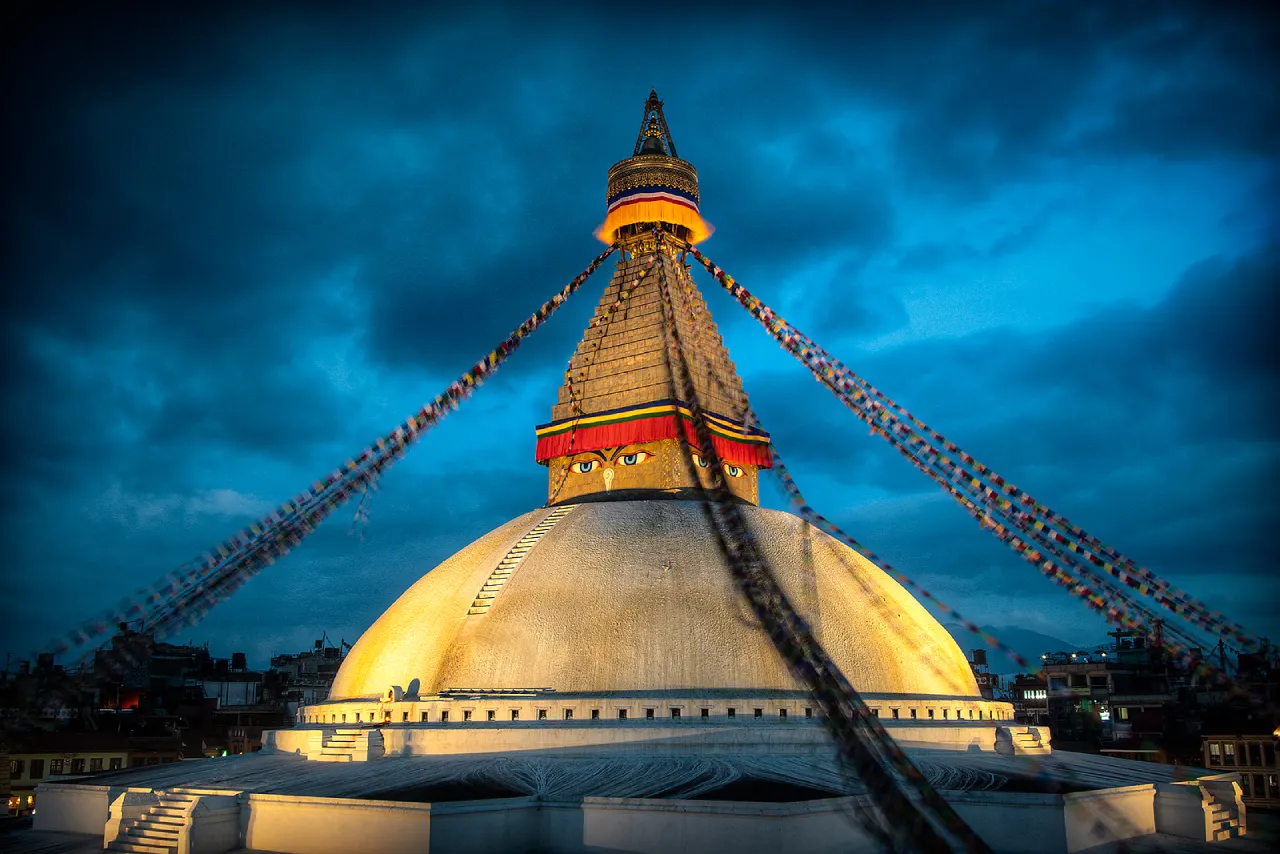
After breakfast, you will begin the second day of your Kathmandu Pokhara Chitwan tour. You will go to Bodhnath Stupa, a lovely Buddhist site where pilgrims go around the pedestal turning prayer wheels.
Then you will visit Pashupatinath Temple, which is the most significant Hindu Temple in Nepal.
You will visit Kathmandu Durbar Square with its antique palaces and hewn temples after a simple Nepali lunch.
Later in the afternoon, you will be back at your hotel. You can spend the evening having dinner alone or shopping in Thamel. You will spend the night in Kathmandu.
Activity: Sightseeing, 5-6 hours
Max. Altitude: 1,400m/4,593ft. Kathmandu

Meal: Breakfast, Lunch
Accommodation: Hotel
03
Day 03: Drive from Kathmandu to Chitwan, with white water Rafting (415m)
After breakfast, you will leave Kathmandu and start your drive to Chitwan. The pass goes on to Nagdhunga and then follows a road that passes through forested hills to the Trisuli River.
Your rafting team will receive you here, show you the basics of safety, and get you into the river.
The rafting is smooth and entertaining, with minor rapids, stretches, beautiful scenery of hills, beaches, and small villages situated on the riversides. Halfway, you will take a lunch by the edge of the river.
Once the rafting part is done, you will proceed to the plains of Chitwan, which have warm weather.
In the afternoon, you will reach your jungle lodge in Sauraha. You will have dinner, refresh, and have time to relax.
The quiet jungle nature provides a relaxed evening, which will set you up for the wildlife adventure that is yet to come. Spend the night in the Chitwan lodge.
Activity: 6 hrs
Max. Altitude: 1,450m/4,757ft. Chitwan National Park
Meal: Breakfast, Lunch & Dinner
Accommodation: Resort
04
Day 04: Chitwan Jungle Safari (415m)
You will wake up early and spend the whole day on a safari. You will join a jeep safari with trained naturalists with trained naturalists at sunrise.
You will also find rhinos, deer, monkeys, and beautiful birds. In the morning, you will go to a nearby Tharu village to get to know about the local life after having breakfast at the lodge.
You will have lunch in the lodge. You will continue the safari activities in the afternoon with a second jeep drive or a short nature walk.
You will also pay a visit to the Elephant Breeding Center. You will spend the evening at the lodge with dinner and stay overnight in Chitwan National Park.
Activity: Jungle Safari, 6-7 hours
Max. Altitude: 450m/1,476ft. Chitwan National Park
Meal: Breakfast, Lunch & Dinner
Accommodation: Resort
05
Day 05: Chitwan to Pokhara (822m)
You will drive to Pokhara after breakfast. The highway goes through hill villages and lovely river valleys.
You will have your lunch in a modest cafe, and a pleasant sight. The closer you come to Pokhara, the more you will start noticing the peaks of the Annapurna and Dhaulagiri ranges.
You will reach Pokhara in the afternoon and stay in your hotel, close to Phewa Lake. You will be free to walk along the lakeside or to ride so easily in a boat.
You will have dinner in a restaurant with a lake view in the evening. You will spend the night in Pokhara.
Activity: 6 hrs drive
Max. Altitude: 1,000m/3,281ft. Pokhara
Meal: Breakfast, Lunch
Accommodation: Hotel
06
Day 06: Pokhara Sightseeing (822m)
Today, you will wake up early in the morning to take an optional sunrise tour to Sarangkot. In case the sky is clear, you will have a beautiful sunrise over the Annapurna mountains.
The next thing to do is to visit the World Peace Pagoda, Davis Falls, and Gupteshwor Cave after eating breakfast at your hotel.
You will then go back to the lakeside after lunch, either on a peaceful walk or on a relaxing boat ride. Pokhara has a nice evening, and you will love the serene environment. You will spend the night in Pokhara.
Activity: 6-7hrs drive
Max. Altitude: 1,590m/5,217ft. Pokhara
Meal: Breakfast, Lunch
Accommodation: Hotel
07
Day 07: Drive back to Kathmandu (1,350m)
After breakfast, you will drive back to Kathmandu along the same scenic highway. You will have lunch on the way.
You may visit Manakamana Temple on your own initiative by the cable car, if you like. Later in the afternoon, you will arrive at Kathmandu and check into a hotel.
You will be free to relax or sightsee. During the evening, you will have a goodbye dinner with the group. You will spend the night in Kathmandu.
Activity: Drive, 6-7 hours
Max. Altitude: 1,350m/4,429ft. Kathmandu
Meal: Breakfast, Lunch
Accommodation: Hotel
08
Day 08: Departure
Your memorable Kathmandu Pokhara Chitwan tour will end today. You will be able to spend free time after breakfast and before transferring to the airport.
We will drive you to Tribhuvan International Airport to take off. We hope that you have a safe and wonderful trip, and we look forward to seeing you again in Nepal.
Activity: Airport drop, 30 min
Max. Altitude: 1,400m/4,593ft. Kathmandu Airport
Meal: Breakfast

Note:
If you have your own private group and want to make your trip private, we can run the custom trip all the day as per your requirements and group size.
Includes and Excludes
What are included with package?
- Pick up from Airport and Transfer to the hotel: Upon your arrival in Kathmandu, you will be picked up at the airport and transferred to your hotel for check-in.
- Three Nights 3-star hotel in Kathmandu with Breakfast: You will stay in a 3-star hotel in Kathmandu for three nights, with breakfast included each day.
- Two Nights 3-star hotel in Pokhara with Breakfast: The package includes two nights in a 3-star hotel in Pokhara, including breakfast.
- Two Nights 3-star hotel in Chitwan with full board meals: Accommodation in a 3-star hotel in Chitwan for two nights with full board meals (Breakfast, Lunch, and Dinner) included.
- Activities in Chitwan National Park: The package includes various activities such as jungle safaris, bird watching, and canoe rides in Chitwan National Park.
- National park fees for all activities in Chitwan National Park: The fees required for entry into Chitwan National Park and participation in the activities will be covered.
- White Water Rafting with lunch (Day Trip): The package includes a white water rafting experience in Trishuli river, which includes lunch during the day trip.
- All overland transfers using a private vehicle: All transportation between destinations will be provided by a private vehicle, ensuring a comfortable and convenient journey.
- Kathmandu and Chitwan sightseeing tours accompanied by a local guide fluent in the English language: You will have a professional, local guide for your sightseeing tours in Kathmandu and Chitwan, ensuring a rich and informative experience.
- Last Night’s farewell dinner at an authentic Nepalese restaurant with a cultural performance: On the last evening, enjoy a farewell dinner at a traditional Nepalese restaurant with a cultural performance, giving you a memorable conclusion to your trip.
What are not included with package?
- Beverages and alcoholic drinks: Any drinks other than the standard meals provided (such as tea, coffee, bottled water, or alcoholic beverages) are not included in the package.
- Entrance fees: While activities in Chitwan National Park and sightseeing tours are covered, any additional entrance fees for monuments, temples, or attractions outside of the planned tours will be your responsibility.
- Extension of any other tours/accommodation: If you decide to extend your stay or add additional tours beyond the scheduled itinerary, these costs will not be covered.
- All kinds of personal expenses: Any personal expenses such as phone calls, laundry, souvenirs, bar bills, tips or any other personal needs will be your responsibility.
Pick Your Suitable Date
US$ 600
Book a Private Trip
Private & Group Discount Price
-
1 -
1 personUS$ 1400
-
2 -
2 peopleUS$ 1000
-
3 -
5 peopleUS$ 900
-
6 -
10 peopleUS$ 700
-
11 + people
9999
US$ 600
1 Travelers x US $ 2000
Total Cost:
US$ 1400
Route Map & Altitude Chart
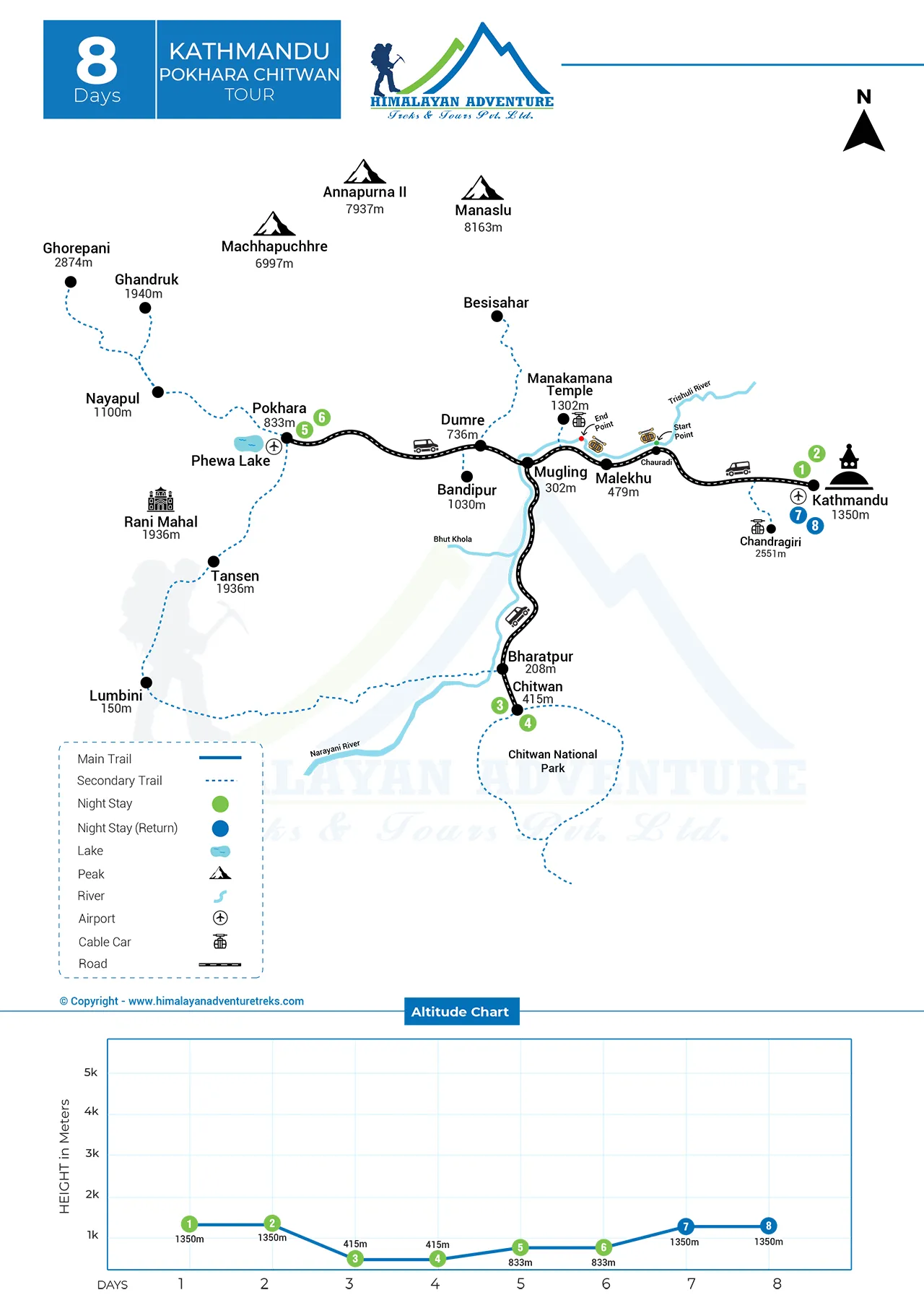
Kathmandu
Start/End point
Kathmandu
Trip Information
Weather and Best Season for the Tour
The Kathmandu Pokhara Chitwan tour is ideal in spring (March–May) and autumn (Sept–Nov), when the weather is clear and mild. During these seasons, the temperature at Kathmandu and Pokhara during the day is approximately 15 25 °C, and the nights are cool (5-10 °C), and the scenery of the mountains is normally clear. The spring is full of wildflowers and green hills, and autumn is full of fresh air and colorful festivals.
Monsoon (June–Aug) brings heavy rain across Nepal. Chitwan’s jungles become lush but muddy, and highway travel slows under downpours. Pokhara and Kathmandu get frequent showers; humidity is high and warm (often 30°C).
Rain gear and quick-dry clothing are needed if you travel then. Winter (Dec–Feb) is cooler and drier. Kathmandu’s nights can dip near freezing (especially Dec/Jan), though days are sunny.
Pokhara remains mild (20°C daytime) with cooler nights. Chitwan’s winter nights can be cool, but days are pleasant. All seasons are good, but spring and autumn are suggested when you want to sightsee easily and see a clear view. Bring: a rain jacket and warm clothes on cold nights.
Food & Drink during the Tour
Food on this Kathmandu Pokhara Chitwan tour package is hearty and flavorful. The Nepali cuisine is built on dal bhat (lentils and rice) along with vegetables, curry, and pickles. Breakfast in hotels often includes Nepali and Western options: eggs, porridge, toast, or Tibetan thukpa noodle soup.
Popular dishes include momos (steamed dumplings), curries, and soups. You will also try regional specialties: river fish (trout) in Pokhara, and Tharu-style grilled meats in Chitwan. Vegetarians will find many dishes that use lentils, beans, and vegetables – just inform us of any dietary needs in advance.
You should avoid drinking tap water. Your hotels will serve filtered or bottled water, and you can also take water purification tablets if you wish. Try to drink as much as possible, particularly during hot or dry seasons.
In towns, tea, including ginger tea or masala chai, is generally safe to drink. We would like to recommend that you do not consume raw salads because it might be washed or prepared using unhygienic water.
Altitude Sickness and Suggestions
The Kathmandu Pokhara Chitwan tour stays at relatively low elevations, so altitude sickness is not a concern for most travelers. Kathmandu (1,350m) and Pokhara (822m) are at moderate altitudes, and Chitwan (150–415m) is lowland.
Even a quick trip to Sarangkot (1,590m) poses little risk for acute mountain sickness. Symptoms like headache or nausea usually occur above 2,500–3,000m, which this itinerary does not reach.
Nonetheless, individual sensitivity varies. General advice is to stay hydrated (drink 2–3 liters of water per day) and avoid heavy exertion on the first day. On arrival in Kathmandu, rest and let your body adjust.
Avoid alcohol for the first night, and eat light meals. Chewing ginger or pine nuts is a traditional remedy locals use for slight discomfort. If you have a history of altitude issues or plan to trek higher after this tour, consult a doctor about medication (e.g., acetazolamide) before travel. Our guides will monitor everyone’s well-being; just inform them if you feel unwell so they can assist or slow the pace.
Visa and Permits
All visitors need a tourist visa to enter Nepal. However, Nepal has a visa on arrival at Kathmandu Tribhuvan International Airport. The existing rates (which may vary) are around 30 USD per 15 days, 50 USD per 30 days, and 125 USD per 90 days.
You will fill out a form on the flight or at the airport, then pay the fee in cash (USD, EUR, etc.) or credit card at the visa counter. You need a passport valid for at least 6 months and with at least 2 blank pages.
It’s wise to bring a passport-size photo, although e-Visa applicants upload an image, and on-arrival counters often take a photo. Alternatively, you can apply for an e-Visa online (Nepal Immigration website) before departure.
For this tour, no special trekking permits are required, since we do not enter restricted mountain regions. However, entrance fees to Chitwan National Park are included in the package.
When you check into your jungle lodge, park permits and conservation fees will already be arranged by Himalayan Adventure Treks. In case you have any additional side trips (such as a wildlife outing outside the park or other activities, such as rafting or wildlife reserves), please inform us so that we can recommend any extra permits or fees.
Always bring with you a copy of your visa and permit papers; your guide will assist in the preservation of these documents.
Health & Safety
Nepal is mostly safe for tourists, although good common sense can be used to make the travelling trouble-free. Pick pocketing or petty theft may happen in busy markets in such cities as Kathmandu and Pokhara. Keep valuables (passport, electronics) secured and use hotel safes.
Don’t leave bags unattended. Drinking water and sanitation are the biggest health concerns. Never drink tap water; brush teeth with bottled or boiled water. Avoid ice or raw foods that may have been washed in local water. Carry hand sanitizer for restrooms.
In Chitwan’s jungle, insect-borne illness is a concern. Dengue or malaria (low but exists) can be transmitted by mosquitoes. Apply DEET insect repellent to exposed skin and think about long sleeves/pants during the time of dawn/evening.
Sleep under a net if provided. If you have any respiratory or heart conditions, be cautious in hot or humid weather; take it easy and stay hydrated. Traveling with a basic first-aid kit (plasters, painkillers, diarrhea medicine) is wise.
Transportation
Transportation throughout the Kathmandu Pokhara Chitwan tour package is by private vehicle. For each road segment (Kathmandu–Chitwan, Chitwan–Pokhara, Pokhara–Kathmandu), we provide a comfortable air-conditioned van or coach with a professional driver. The drives are scenic but can be long and winding. We stop for rest, meals, and photo breaks on the way, making the journey part of the experience.
Within cities, short transfers (hotel to airport or hotel to dinner) are done by taxi or van. Many attractions in Kathmandu and Pokhara are close enough for short walks or quick rickshaw rides; your guide will help with these if needed (rickshaws are cheap and common). All vehicles have seat belts – please use them.
Helicopter flights are not included (though flights between Kathmandu and Pokhara can be arranged as an extra if you prefer to avoid driving). In any case, the included road travel allows you to see rural Nepal and local life en route, which is part of the adventure. Fuel, tolls, and driver costs are covered in the tour price.
Travel Insurance
Travel insurance is strongly recommended and often required. We advise you to get a comprehensive policy that covers at least the Kathmandu Pokhara Chitwan tour duration plus extensions. It should include medical emergencies, evacuation, and trip cancellation.
Emergency helicopter rescue in mountainous areas can cost tens of thousands of dollars – insurance will cover this. The tour organizer may request proof of insurance before departure.
Look for a policy that covers the total trip cost (in case you must cancel) and includes emergency medical care in Nepal. Keep a copy of your insurance documents (physical and email/phone for 24-hour assistance) with you. Check that your policy covers adventure activities (like jungle safari, river trips) if you plan to do any beyond the standard itinerary.
We will not be able to assist financially if you need medical care, so confirm your insurance is in order before traveling. Remember, travel insurance must be purchased before the trip starts and cannot be bought on arrival in Nepal.
Your Extra Expenses on the Trip
The above list is just a few of the items that will be included in the tour price, though you will need to budget a few dollars of your own. Here are the common ones:
- Meals and beverages: In the itinerary, included meals are mentioned (mainly breakfasts and some lunches). Any other food, snacks, soft drinks, and alcohol are optional. A meal at Kathmandu or Pokhara restaurants will cost approximately 5–10 dollars. Sodas or bottled water are approximately $0.50–1.00. Coffee or tea is around $1.
- Tipping: Not a part of the tour price, but it is customary in Nepal. We recommend about $3–5 USD per day for your guide and $1–2 per day for your driver. Tips for hotel staff and waiters (10% if service is not included) are appreciated. These are voluntary but expected in Nepali tourism.
- Souvenirs & personal: Souvenir shopping (carpets, handicrafts, pashmina, trekking gear) is up to you. Bargaining is common in markets. Budget a bit extra if you want handicrafts. Also, any additional activities (an Everest flight, paragliding, extra rafting, spa) would cost extra (ranging from $50–200).
- Communication & miscellaneous: Most hotels have free Wi-Fi. If you want mobile data, buy a Nepali SIM card (around $3–5 for a basic pack) and top up as needed. You may pay small fees for laundry or phone calls at hotels.
- Laundry & extras: Hotels charge a small fee for laundry or late check-out. You’ll need cash for these as well.
Have US dollars or Euros to exchange for Nepalese rupees (use banks or ATMs for the best rate). Chitwan and some towns have limited ATM access, so stock up in Kathmandu/Pokhara. In short, aside from the listed inclusions, carry some cash for meals, tips, souvenirs, and optional activities.
Language & Communication
Nepali is the official language of Nepal, but English is widely used in tourism. Your guide and hotel staff will speak fluent English, and most signs/menus in Kathmandu Pokhara and Chitwan are in English or Roman script. You will also hear Hindi, Newari, and various regional tongues among locals.
As a visitor, learning a few Nepali phrases can be fun and appreciated: for example, “Namaste” (pronounced nah-mah-stay) is a polite greeting meaning “hello” and “goodbye,” and “Dhaniyaabad” (dhah-nyah-bahd) means “thank you.” However, it is not necessary to speak Nepali; you’ll get by fine with English in all tourist areas.
Most hotels and cafés offer free Wi-Fi. Mobile networks (3G/4G) cover Kathmandu, Pokhara, and highway routes, though coverage in the deep jungle is spotty. To stay connected, you can buy a local SIM card (Ncell or NTC) at the airport or a city shop (make sure your phone is unlocked).
Data plans in Nepal are inexpensive. You can use messaging apps (WhatsApp/Viber) to call home cheaply. Just remember that electricity and internet service can occasionally be unstable; bring your charger and enjoy offline time in nature, too.
Nepalese people are generally warm and friendly, and a smile goes a long way. Avoid gestures like pointing at people or calling someone out in public. Reaching out to pat an elephant or monkey is also frowned upon.
In temples and homes, remove your shoes. Following these simple communication tips will help you feel at home. Your guide will also help translate and explain local customs as you travel.
Don’ts on this Trip
During the Kathmandu Pokhara Chitwan tour package, it is important to follow local customs so your journey remains smooth and respectful. You are also expected to dress modestly at temples and never expose your shoulders and knees, but take off your hats and footwear when walking into holy locations.
Touching the head of people is not allowed; the head is considered a sacred part of the body and should never be touched without permission before capturing close-up shots of local people, monks, or villagers.
Shooting photographs at the burning ground of Pashupatinath or within temple shrines is not permitted. Nepal does not show affection publicly, and thus, greetings should be kept minimal with a nice Namaste.
When you need to gesture, try to avoid pointing with your fingers and use a gentle open hand. Maintain cleanliness in the environment by means of not littering and minimizing the use of single-use plastics.
To ensure your safety, you should never walk alone in the Chitwan jungle and should always stick with your guide. You are also not to drink tap water or eat unpeeled fruit. With these few rules in mind, you will stay safe, comfortable, and respectful, and will also have a pleasant experience of warmer communication with local people during your trip.
Trip Extension
If you have extra days, Nepal offers many wonderful extensions beyond the Kathmandu Pokhara Chitwan tour:
Everest or Annapurna Flights: You may include a scenic mountain flight. An Everest Panorama Flight takes off from Kathmandu; it is a 1-hour expedition that offers a surreal aerial perspective of Mount Everest and other mountains. At Pokhara, other flights also display Machhapuchhre and Annapurna. These are the short flights that are best in the early morning.
Treks: Extend into a trek. Based in Pokhara, a 3- to 7-day hike to Ghorepani (Poon Hill) or the Base Camp of Annapurna is to be considered. Treks can be made to Langtang Valley or Gosainkunda Lake (5-7 days) out of Kathmandu. We can secure the permits, porters, and guides for these adventures in case you want to explore further.
Lumbini (Buddha was born): Drive or fly south to Lumbini in Rupandehi District (6-7 hours to Pokhara by road or short flight to nearby airport). Visit the Maya Devi Temple complex and monastic areas – a significant sacred place.
Cultural tours: Free days in Kathmandu Valley: explore the medieval squares of Bhaktapur, or drive to Nagarkot to see the sunrise over the Himalayas, or visit Bandipur village. You might as well use Chitwan stay to visit Bardia National Park (west Nepal) to see more wildlife.
International side trips: Nepal borders Bhutan and India. In case you want to keep traveling, we can assist in linking you to Kathmandu country tours or Pokhara tours.
We have added nights or activities, which we can tailor to your interests. It could be a cooking lesson, an additional trek, or resting in a resort; we will assist you in designing a personalized extension to your tour package.
Photography & Drone Rules
Nepal offers stunning photo opportunities, but please observe local rules. You may take pictures freely in most scenic areas. Nevertheless, never photograph without seeking permission, particularly of monks or villagers, and never take photos of people bathing, or in prayer.
At religious sites, follow signage: for example, no photography is allowed inside some temple sanctums, and you cannot photograph the cremation ceremonies at Pashupatinath.
Drone usage: The use of drones in Nepal is strictly controlled. It is not possible to fly a drone in Kathmandu Valley (heritage areas) or Chitwan National Park without permission. To obtain a drone permit, the Nepalese aviation authorities will need to approve the application in paperwork.
For simplicity, we recommend leaving your drone packed during the tour. If you do fly one, stay well away from temples, crowds, and wildlife. The guide will inform you when and where photography is allowed.
In short, enjoy capturing landscapes, temples, and people with respect. Our guide will help you identify the best photo spots and let you know if any area is off-limits to photography. This way, you’ll return home with beautiful memories and great pictures of your Kathmandu Pokhara Chitwan tour.
Cultural Festivals on the Trail
Nepal is a country that has numerous festivals on an annual basis. During the dates of your traveling, you may experience colorful local festivals. As an example, the largest Hindu festival in Nepal is Dashain (Sept/Oct), attended by the general population and families. Tihar (Oct/Nov), the festival of lights (Diwali), is the season when towns are lit up with oil lamps and people venerate animals such as cows and dogs.
Holi (March) is the spring festival of colours, and people play around throwing coloured powders. The Indra Jatra (Sept) dance in Kathmandu has masked dances in Durbar Square. In Chitwan, the Tharu New Year, called Tharu Maghi (Jan), is celebrated through traditional dances and feasts. You can also visit Buddhist celebrations such as Losar (Tibetan New Year, around Feb) or Buddha Jayanti (May, Buddha birthday), provided that they coincide.
These festivals are a source of color and meaning to everyday life. If one falls during your tour, feel free to observe respectfully – you might be offered sweets or a simple blessing. Just remember that crowds or temple ceremonies may make some sites busier or temporarily closed. Your guide will keep you informed if we pass through any festivals, so you can enjoy the experience safely.
Tips for First-Time Visitors
On the Kathmandu Pokhara Chitwan tour package, travelers often find these tips helpful:
- Wear many layers: In the morning/ evening, it can be cold (this happens particularly in Kathmandu), whereas in the afternoon, it gets hot. Bring a light jacket, T-shirts, and at least one warm-up sweater/ fleece. It is good to carry a raincoat or umbrella in summer.
- Carry small cash: ATMs are common in cities but not in villages or Chitwan. Have enough Nepalese rupees (NPR) or USD for souvenirs, tips, and meals in smaller places. Notify your bank before travel so your cards work abroad.
- Dress modestly: Cover knees and shoulders at temples. When off-duty, western casual is fine, but always keep legs/arms covered at shrines or in villages. A sunhat and sunscreen are strongly recommended for mountain sun.
- Sturdy shoes: Bring comfortable walking shoes or sandals with a good grip. You will walk on uneven surfaces (old streets, forest trails), so avoid flimsy footwear.
- Sun and bugs: Sunscreen, lip balm, and sunglasses will protect you in higher-altitude sun. In Chitwan, carry mosquito repellent, especially for dusk safari rides.
- Essentials: Pack personal items (toiletries, prescription meds, hand sanitizer) – these are available but sometimes limited in small shops. Carry tissues for public restrooms.
- Electricity: Nepal uses 230V, round-pin outlets (type C/D). Power outages occur, so bring a phone charger and maybe a power bank. Most hotels have good water pressure, but bring swimwear if you want to swim in your hotel pool.
- Behavior: Nepalis are friendly and soft-spoken. A quick “Namaste” (hands together in greeting) goes a long way. Always request permission before taking someone’s photo. Do not raise your voice in the open air. It is okay to bargain in stores, but in a good mood.
- Lastly, breathe and have fun. Many things run on “Nepal time,” which means schedules can be relaxed. Try to stay flexible and enjoy the slower pace. Learn to take the time and be hospitable. When you want to learn more about something or your preferences, please ask your guide at any point in time. We want to make it a safe and enjoyable first-time visit to Nepal.
Major Attractions
The Kathmandu Pokhara Chitwan tour package covers these major attractions:
World Heritage sites in Kathmandu include Kathmandu Durbar Square (a square in the royal palace with temples), the giant Bodhnath Stupa, and Pashupatinath Temple (a Hindu temple on the Bagmati River).
- Phewa Lake (Pokhara): This is a beautiful lake where one can go boating, see the reflections of mountains in the lake, and there is also the island of Barahi Temple.
- Sarangkot: A hilltop-based viewpoint that provides panoramic views of the sunrise of the Annapurna and Machhapuchhre (Fishtail) mountains.
- Davis Fall & Gupteshwor Cave: the popular waterfall (Devi Fall) of Pokhara that falls into a cave, and the cave shrine.
- Peace Pagoda: This is a white Buddhist stupa located at the top of the hill overlooking Pokhara, the lake, and the Himalaya.
- Chitwan National Park: the national wildlife park of Nepal (UNESCO site), which is full of jungle and grassland.
- Jungle Safaris: in Chitwan, you can go on an elephant-back or jeep safari, a jungle walk, and a canoe tour on the Rapti River, where you see rhinos, deer, monkeys, crocodiles, and hundreds of bird species.
- Tharu Cultural Experience: Trip to the Tharu village, where traditional stilt houses, handicrafts, and folk dance held in Nepal in the Terai region are on display.
These destinations bring attention to Nepal and culture, nature, and adventure. At every stop, your guide will offer you some insights, and you can make the best out of this full-fledged tour.
Essential Packing List for Kathmandu Pokhara Chitwan Tour
Traveling is mostly about enjoying and experiencing the destination, however, if you want to get the most from your little holiday, then appropriate travel gear is also a must.
It may seem a chore to you, but some of the items and equipment are such that you would hate to be without them. Here, we have listed some must-have gear that will take up very small space in your backpack and is also legal to travel with.
- Your Passport
- Visa
- Passport Photos
- Local Currency
- Credit or Debit Cards
- Emergency Contact Info
- Booking Information
- Health Insurance
- First Aid Kit
The backpack is a more comfortable, easy-to-carry, manageable, and convenient option than carrying a heavy suitcase when traveling abroad. You can carry almost all your gear in it without much load. We suggest you have one main and another secondary backpack: the main backpack will have large storage for all your equipment and belongings, and the secondary backpack will be used to travel light during the day.
- Main Backpack: Good quality waterproof lightweight with volume up to 45 to 60 L with a good hip-belt
- Secondary Backpack: Foldable, durable, lightest, and smallest
- Foldable Travel Toiletry Bag
- Carrying case or waterproof cover for your main and secondary backpack to protect from dust, water, and dirt
- Camera Backpack
- Document bag
- Waterproof Jacket
- Light Down Jacket
- Rain Coat
- T-shirts (long and half-sleeved) and Tank Tops for the hot days
- Fleece Jackets
- Hoodie
- Sweatshirts
- Wool sweater
- Durable, lightweight, quick drying Hiking Pants
- Some Jeans for a casual look
- Canvas or cargo pants with numerous pockets
- Shorts
- Leggings for women
- Skirt (long for visiting temples and monasteries for women)
- Long Dress for some formal occasions
- Bras (Sports bras would be preferable for comfortable traveling)
- Panties
- Briefs
- Boxers
- Socks (Cotton and woolen, quick drying)
- Flip-flops or sandals
- Canvas sneakers
- Trail shoes for light walking and touring
- Swimsuit
- Hat, cap
- Bandana and masks
- Scarf, shawl, or foulard
- Handkerchief
- Gloves
- Sleeping Bag, Hammock, Tent for nature trips ( Optional)
- Earplugs
- Inflatable pillow or cushion
- Sleeping or an eye mask
- Sunscreen or sunblock
- Sunglasses
- Chapsticks or Lip Balms
- Moisturizer
- Deodorant
- Light, quick-drying towel
- Phone with charger, headphones, memory cards
- Camera with replacement battery, memory cards, and charger
- Notebook computer, tablet
- GPS or GPS Watch
- Universal Adapter
- Power Bank
- Solar Charger
- Toothpaste
- Shampoo
- Toothbrush
- Comb
- Soap
- Hand sanitizer
- Sanitary Pads
- Padlocks
- Head torch
- Multipurpose knife
- Lighter or matches
- Whistle
- Thermal Blanket
- Flashlight
- Compass
- Mosquito spray or repellent
- Water Filter
- Antiseptics
- Painkillers such as Aspirin or Ibuprofen
- Bandages
- Tweezers
- Thermometer
- Disposable gloves
- Your prescribed medications
- Common medicines for diarrhea, nausea, and vomiting
- Anti-allergic medications
- Moleskin or blister pads
- Altitude sickness medication (Diamox)
- Eye and ear drops
- Safety Pins
- Gause Pads
- Scissors
Destinations in Nepal are also very child-friendly, so you may decide to join in with your kids as well. Traveling internationally with children, however, means an extra suitcase, extra space, and items. For your stress-free travel, we have listed some essential equipment when touring with children, whether they are older or newborn.
- Enough diapers and wipes
- Baby bottles and infant milk, if necessary
- Easy to put on and take off baby clothes
- Portable changing mat
- Lightweight folding stroller
- Insulated bag for storing meals
- Reading or coloring books, card games, board games, or cartoon games on an iPad
- Travel Potty
Equipment Note:
- We understand that not every item that we have listed here is essential. The traveling items depend on what you need, your destination, the type of tour, and a number of days you have allocated for your tour.
- So, review our list and pack only what is necessary for you. The main aim is to travel as light as you can and comfortably without the burden of extra luggage. Most of the items here can even be purchased in the major cities in Nepal, such as Kathmandu, Pokhara, and Chitwan, so there is no need to worry if you forget to pack something.
Frequently Asked Questions
What is included in the Kathmandu Pokhara Chitwan tour package?
Hotel accommodations in Kathmandu and Pokhara, a jungle lodge at Chitwan, daily breakfast, a few lunches and dinners as shown in the lists, private transportation, guided sightseeing, park fees, an English-speaking guide, and airport transfers are included. Personal expenses and optional flights are not included.
Can families and beginners take this tour?
Yes. This is a family-friendly and soft tour. You will be spending most of your time on roads, taking brisk walks, cultural tours, and wildlife tours. This trip is very popular among children and first-time travelers.
What level of fitness do I need for this tour?
The fitness requirement of this itinerary is only a basic level since most days are characterized by short walks over relatively flat or slightly hilly terrain; therefore, provided that you can walk and climb a few stairs without any trouble, you will be able to experience all the intended activities in an easy and comfortable manner.
What kind of accommodation is provided?
You will stay in comfortable, well-rated hotels in Kathmandu and Pokhara (typically 3-star or similar, with private bathrooms). In Chitwan, you stay in a jungle lodge or resort with simple amenities (private room, hot shower, mosquito net).
All rooms are twin-share; the single supplement is available if you want your own room. Each lodging is clean, safe, and chosen for its good location and hospitality.
Can I join this tour as a solo traveler?
Yes, solo travelers are welcome on this tour. You can book a single room (with a single-room supplement) or opt to share a twin room with another traveler (if available). Many people travel alone in Nepal. Guides and group dinners make it easy to meet others.
Do I need any special vaccinations for Nepal?
Nepal does not need any particular vaccinations, but we suggest that regular vaccinations (tetanus, measles, etc.) be up to date. Hepatitis A and typhoid are also recommended because of the local food and water. There is a low risk of malaria in Chitwan, but discuss prophylaxis with your physician.
What kind of wildlife will we see in Chitwan?
Chitwan National Park is famous for the one-horned rhinoceros – sightings are very common on safari rides. You will also see deer, wild boar, langur monkeys, and over 500 bird species. On the Rapti River, expect crocodiles, herons, and eagles. Tigers and leopards live in the park, but are elusive.
Is Nepal safe for women traveling alone?
Yes. Nepal is generally safe and peaceful, and many women travel here solo. Kathmandu, Pokhara, and tourism areas are accustomed to foreign women travelers. Avoid poorly lit streets at night, dress respectfully, and keep an eye on your belongings.
What meals are provided and what can I expect to eat?
You’ll eat mostly Nepali/Indian style meals: dal bhat (lentil soup with rice and vegetables) at lunches, and Nepali curries, rice, and vegetables at dinners. Breakfast may include eggs, toast, oatmeal, or Nepali items. You’ll get to try momos (dumplings), curried vegetables, and local Tharu or Newari dishes. Western options are available at most hotels, too.
What clothing should I pack?
Pack comfortable, lightweight clothes for the day (cotton or quick-dry fabrics). Evenings and mornings (especially in Kathmandu) can be cool – bring a warm sweater or light jacket. A rain jacket is handy in summer. Sturdy walking shoes are recommended for uneven terrain.
Is this tour available during winter months?
Yes, it runs year-round. In winter (Dec–Feb), the days are generally clear and cool. Kathmandu and Pokhara may reach 15°C by day, but nights in Kathmandu can drop near freezing, so bring warm layers.
How large are the tour groups?
The group size is usually between 2 and 12 travelers, making the experience personal. We also have private departures which are either family or friends groups. Guides and vehicles can be organized according to the group size.
Related Blogs & Articles


8 Days
Price starts
US$ 600
We offer group price for private travelers
Reviews on Kathmandu Pokhara Chitwan Tour






Related trips


