








Need help?
Talk to trip expert

Bhutan
Short Information of Bhutan
Short Information of Bhutan
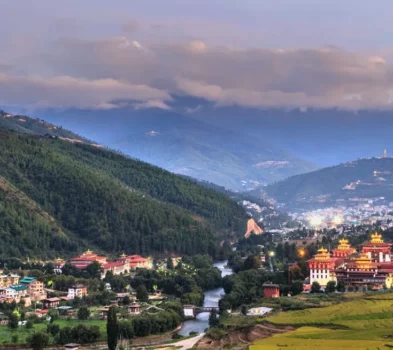
Bhutan, also known as the Last Shangri-La is a harmonic Himalayan kingdom with a stunning landscape, rich culture and people. Bhutan, located between India and China, is home to snow-capped mountains, dense forests, and fertile valleys. Buddhism has a very strong presence in the country, and it is reflected in the temples, monasteries, festivals, and daily life.
The journey to Bhutan provides a special combination of spirituality, adventure, and beauty. Through the bustling streets of Thimphu to the pristine valleys of Paro and Phobjikha, the visitors can have the experience of pristine nature and traditional Bhutanese life.
Adventure travelers may partake in trekking, mountain climbing, and river activities, whereas the cultural travelers may visit old dzongs, monasteries and local festivals. Bhutan is a place where any traveler can relate to nature, tradition, and the Himalayan landscape.
Bhutan Visa and Entry Process
Before entering Bhutan, all the travelers must have a visa with the exception of citizens of India, Bangladesh, and the Maldives. Permits Visas should be obtained via a licensed Bhutanese tour operator, who submits an application to the Tourism Council of Bhutan (TCB) on your behalf.
Tourists should attach a scanned copy of their passport to the operator who will also process the visa after the tour is booked and paid. The visa is processed through a licensed Bhutanese tour operator and is included in the cost of the tour package, which typically starts at around USD 200–250 per day per person. On arrival, travelers present the visa clearance letter to receive the stamp Visa policies in Bhutan are also very rigid and therefore all tourists need to contact a tourism agency prior to their arrival.
Tourist Attractions in Bhutan
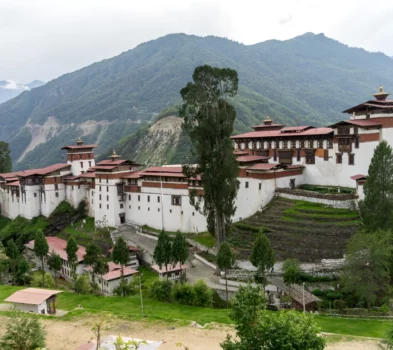
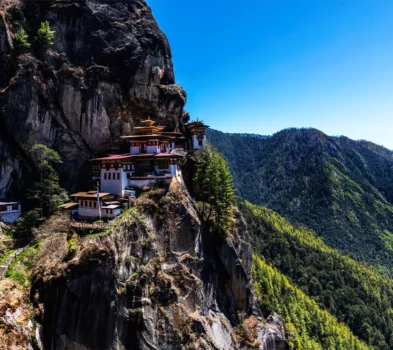
There are various places that a visitor must visit in Bhutan. The capital, Thimphu, has sights like the Memorial Chorten, Buddha Dordenma, Tashichho Dzong, and the National Library. The Tiger Nest Monastery (Paro Taktsang) is an iconic site located in Paro standing on a cliff overlooking the valley below.
The other scenic places are the Phobjikha Valley with its black-necked cranes, Haa Valley, Chele La Pass and Jigme Dorji National Park. There are also some wildlife reserves in Bhutan such as the Manas National Park and the Royal Takin Reserve that provide ecotours, wildlife viewing and nature photography. These are the places that give Bhutan both natural beauty as well as cultural richness and can be easily associated with Bhutan trekking or Bhutan tour packages.
Things to Do in Bhutan
Bhutan offers cultural, spiritual, and adventure experiences, including visits to dzongs, temples, and monasteries with centuries-old architecture and vibrant festivals. The traditional festivals (Tshechus) demonstrate mask dances, music, and rituals of Bhutan that give understanding of the local culture. Visitors can attend Thangka painting classes, experience traditional crafts, or visit local markets to purchase souvenirs.
To the adventure enthusiasts, Bhutan is the perfect destination during trekking and mountain climbing. Some of the popular treks are Druk Path Trek, Chomolhari Trek, Dagala Thousand Lakes Trek, and the Snowman Trek, which is extremely challenging and suitable for experienced trekkers. These paths will provide a range of walks in the valleys to the adventures of the high Himalayas with the chance to explore the remote villages and the clean landscapes.
There are also other activities such as mountain biking, river rafting and tours in the secured areas. Bhutan has everything to suit every type of traveler both easy cultural and the high altitude trekking.
Trekking Seasons in Bhutan
Spring (March-May) and autumn (October-November) are the most appropriate months to visit Bhutan. It is the season of spring, with its colorful rhododendrons, bright skies, and pleasant temperatures and offers the best conditions to go on trekking and sightseeing. Autumn is the season when Himalayas can be viewed in its clean crisp air, so it is an ideal time to go on high-altitude trek and also take photos.
Monsoon season (June to September) is very wet, trails are slippery and the landslides may occur particularly at the south whereas in winter (December to February) high altitude trekking is very tough because there are snowy roads and cold weather. It is advisable that travellers should schedule their trips based on the season so as to enjoy the trekking, cultural and sightseeing activities.
Culture, Tradition, and People
The culture of Bhutan is highly based on Buddhism and it has influenced the art, architecture and lives of the people. The Bhutanese are hospitable, sociable and culturalists. Tourists are offered to visit colorful celebrations, ancient dzesong and monasteries to know the local traditions and rituals.
Traditional Bhutanese arts such as Thangka painting, wood carving, weaving and sculpture are quite widespread and can be enjoyed or learnt during workshops. Another unique experience is Bhutanese cuisine where chili and cheese are among the staples.
Favorite food items are Ema Datshi (chili cheese stew), Phaksha Paa (pork with chili), and traditional butter tea. Interaction with the locals and their traditions makes the traveling experience more diverse, as well as it provides a glimpse of the non-antagonistic and spiritual nature of the Bhutan people.
Health and Altitude Awareness
Trekking and high altitude tours in Bhutan can expose the tourists to altitude sickness especially the above 2,400 meters. It is characterized by the following symptoms: nausea, headache, dizziness, shortness of breath and decreased appetite. Gradual acclimatization, pacing and hydration are required to prevent sickness.
In the treks like Chomolhari Trek or Snowman Trek, the tourists have been warned to carry necessary medicines like Diamox and inform guides whenever they begin the symptoms. The most effective remedy to altitude sickness is to reduce the elevation to lower levels. The adequate preparation makes the high mountains of Bhutan safe and entertaining.
Travel Insurance and Safety
Travel insurance is a must when traveling Bhutan whether in a trek, climbing or a remote tour. Theft, loss, flight delays, medical expenses, and emergency evacuation, with helicopter rescue, should be covered by the policies. In Bhutan, the use of a licensed guide is mandatory, which guarantees the safety of the traveler, permit issuance, and easy maneuverability in isolated regions.
Most foreigners are limited to solo travelers; all tours have to be undertaken with certified tour operators. These steps guarantee the safety of tourists and the conservation of Bhutan cultural and environmental integrity.
Meals and Accommodation
Bhutan operates on a daily package which covers accommodation, meals, travel and guide services. The cost of tour packages varies, generally starting from USD 200–250 per person per day, covering accommodation, meals, transportation, and guide services.
The accommodations include the luxury hotels and resorts in Thimphu and Paro and the teahouses and lodges in the trekking areas. Food is mainly Bhutanese cuisine, and the food in urban centers is scarce. During treks, the food is simple yet nutritious and the travelers get to enjoy the local food taste in its natural form as well as enjoy the convenience and security provided by the tour operator.
Money, Banking, and Connectivity
The Ngultrum (BTN) is the official currency and is pegged to the Indian rupee. The Indian Rupees are generally accepted. Banks and ATMs are available in main cities like Thimphu, Paro, and Phuntsholing and are scarce in isolated areas.
Both the internet and mobile networks perform well in urban areas, and most of the hotels in the cities have free Wi-Fi. There is cellular coverage on most of the trekking trails, whereas remote places have a low signal, or no signal at all. Both landlines and mobile phones are only in few lodges and towns.
Internal Air Transport and Flights
Weather conditions such as fog, wind, and rain may delay or cancel domestic flights, including Paro–Bumthang. Driving is often more practical, though roads can be narrow and winding. Most destinations can be reached by personal vehicles or guided tours. It is recommended that travelers plan their visits during autumn or spring so as to avoid monsoon or winter interference.
Why Visit Bhutan
Bhutan is an ideal destination for travelers seeking cultural experiences, adventure, and spiritual exploration. Bhutan is an experience to remember with its tranquil monasteries and festivals, high altitude treks and snow-white mountains.
It is the best place to be introduced to the Bhutanese way of life through friendly people, rich cultures, and clean environment, making it a perfect place to visit in order to enjoy an organized, safe and guided tours. Trekking, cultural tours, or spiritual exploration, no matter what you prefer, Bhutan has a unique experience to explore the very core of the Himalayas.


