



Introduction of Bhutan Tshechu Festival – 2026-2027
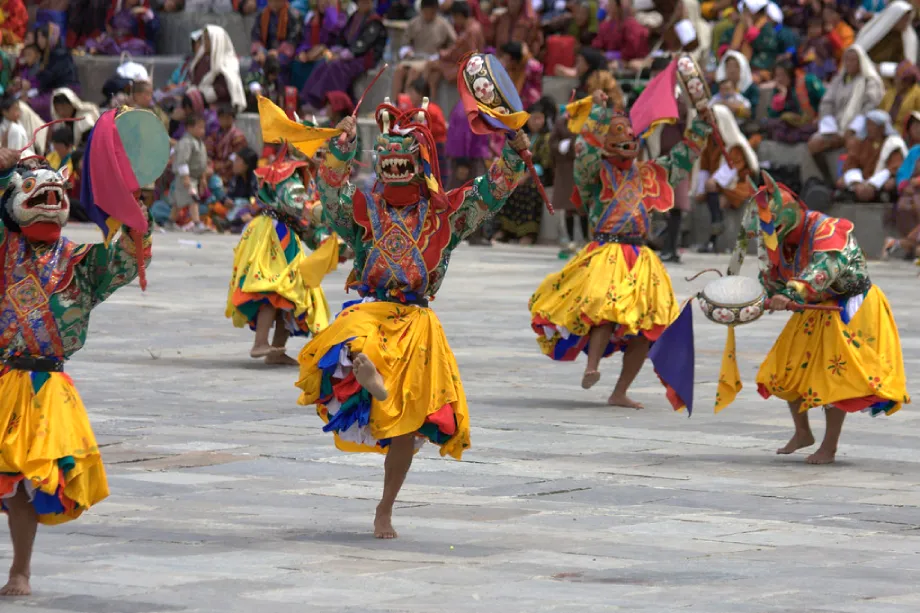
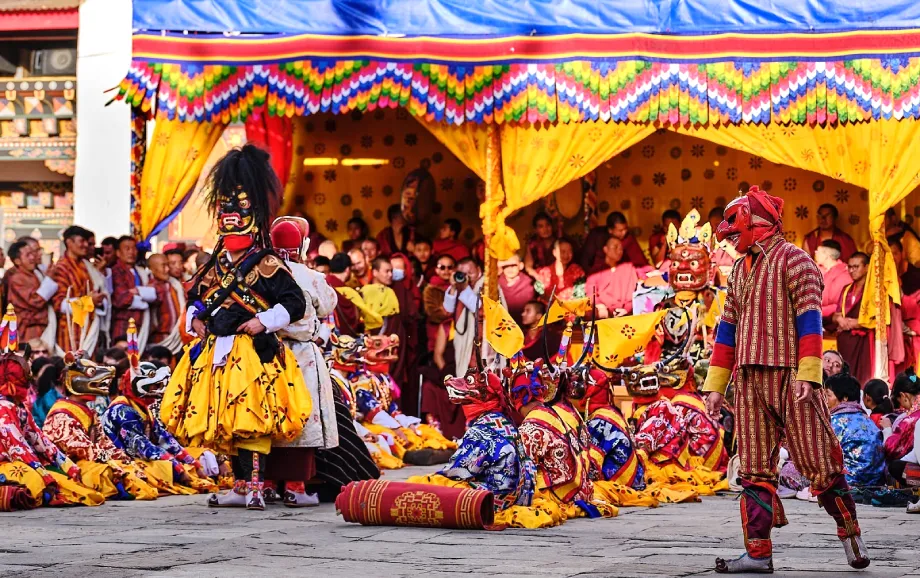
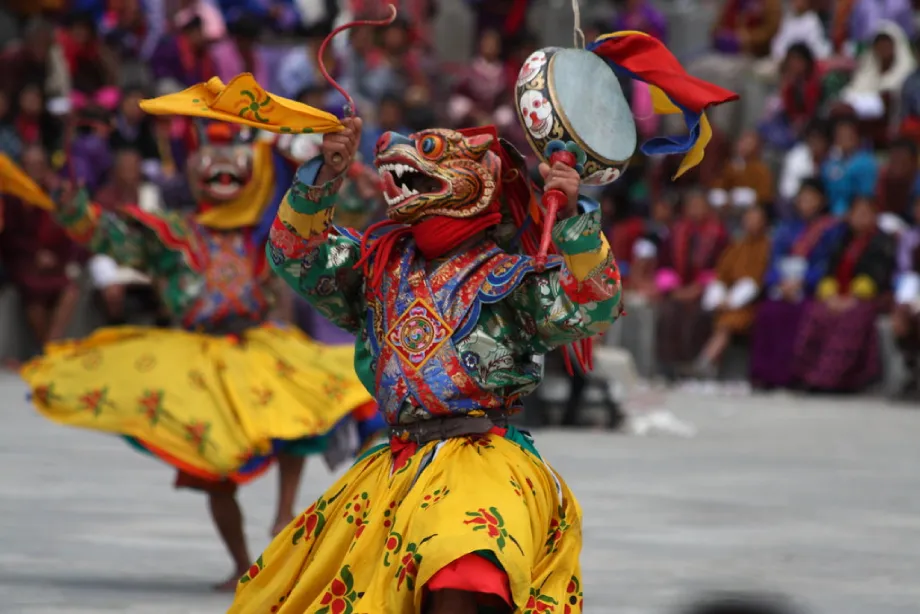
The Tshechu is a vibrant, sacred Buddhist religious Bhutan Tshechu festival held annually in each district to honor Guru Rinpoche, the 8th-century saint who introduced Tantric Buddhism to Bhutan. The significance of the Tshechu festival is deeply multifaceted, serving as a cornerstone of Bhutanese spiritual and cultural life. Primarily, it is a commemoration of Guru Rinpoche’s miraculous deeds, with each mask dance, or Cham dance, re-enacting events from his life and the revelations of great Buddhist masters.
Attending a Bhutan Tshechu Festival is believed to confer profound spiritual merits and blessings upon participants, cleansing them of past sins and accumulating good karma for future lives. The viewing of the sacred Thongdrel, a giant appliqué tapestry unveiled at dawn on the final day, is considered so powerful that it can liberate the beholder from the cycle of rebirth. Furthermore, Tshechus function as vital community gathering events in Bhutan, where people from remote villages don their finest traditional attire, or kira and gho, to socialize, reaffirm communal bonds, and receive blessings from monks.
The festivals are also a living museum of Bhutanese cultural heritage, transmitting Buddhist philosophy, history, and traditional values through dramatic performances to younger generations, ensuring the preservation of a unique national identity in the face of modernization. For the tourist, the Bhutanese Tshechu festival offers an unparalleled immersion into the kingdom’s living culture, with its mesmerizing mask dances, rhythmic monastic music, and deeply pious atmosphere.
When and Where It Is Held
The Bhutan Tshechu festival dates 2026-2027 vary by district and are determined by the traditional Bhutanese lunar calendar, often corresponding to specific days of a lunar month. The most famous and largest Tshechu is the Thimphu Tshechu, typically held in the capital city of Thimphu for three days beginning on the 10th day of the 8th lunar month, which usually falls in September or October.
The Paro Tshechu is another major festival held in the picturesque Paro Valley at the stunning Rinpung Dzong, usually in spring (March or April). Other significant district Tshechus include the Punakha Drubchen and Tshechu in late winter (February/March), the Wangdue Phodrang Tshechu, and the Bumthang Jambay Lhakhang Drup in the central Bumthang valley, known for its unique Mewang fire ceremony and Tercham naked dance. Essentially, every district or Dzongkhag in Bhutan has its own Tshechu held at the local Dzong fortress monastery, which serves as the administrative and religious heart of the district, making the festival both a spiritual and civic occasion.
Best Month to Attend
Determining the best time to visit Bhutan for Tshechu depends on traveler preferences and festival logistics. For those seeking the grandest scale and vibrant atmosphere, the Thimphu Tshechu in September or October is a top choice, offering clear autumn skies and excellent photography conditions.
The Paro Tshechu in spring (March/April) coincides with beautiful blooming rhododendrons and pleasant hiking weather, ideal for combining the festival with a trek to the Tiger’s Nest Monastery or Paro Taktsang. However, these are also the peak Bhutan tourism seasons, requiring early booking for flights and hotels.
For a more intimate and less crowded experience, consider the Bumthang festivals in October-November or the Punakha Tshechu in February, which also offers milder winter weather in that valley. Ultimately, the best month for Bhutan Tshechu festival aligns with your desired balance between major event spectacle, regional exploration, and seasonal weather, with autumn (September to November) widely regarded as the overall optimal period for travel in Bhutan.
Reason to Celebrate
The core reason to celebrate Bhutan Tshechu festival is to honor Guru Rinpoche, also known as Padmasambhava, whose historical significance in Bhutan cannot be overstated. According to Buddhist texts, Guru Rinpoche visited Bhutan multiple times in the 8th century, subduing malevolent spirits and regional deities, binding them as protectors of the Dharma, and concealing sacred terma or treasure teachings for future discoverers.
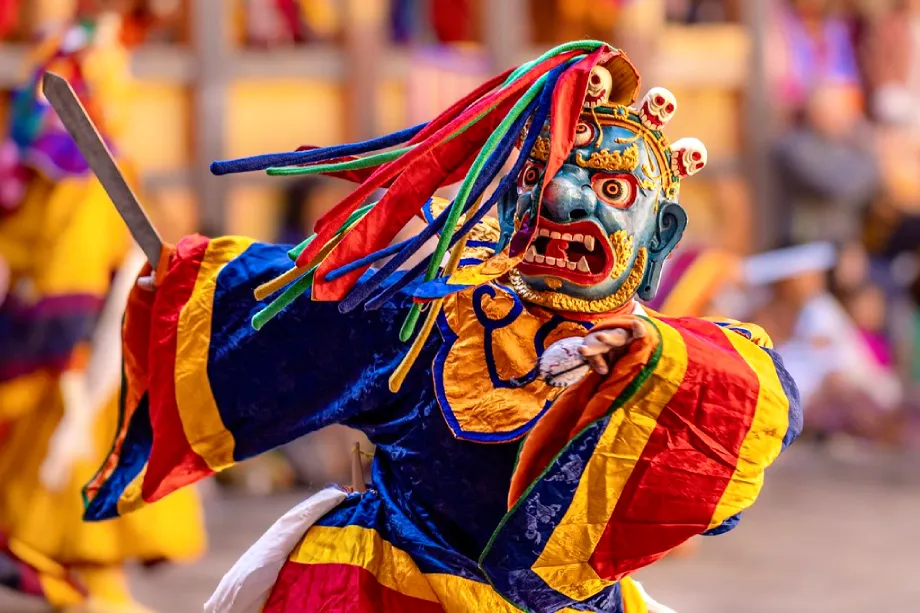
The Bhutan Tshechu festival celebrates his birth, his manifold manifestations, and his enlightened activities that established Buddhism in the Himalayas. Each Cham dance’s meaning is didactic; for instance, the Dance of the Eight Manifestations of Guru Rinpoche (Guru Tshengye) depicts his eight forms used to tame different beings, while the Dance of the Black Hats (Shana) symbolizes the triumph over evil and the ritual destruction of the ego. The Dance of the Stags and Hounds (Shawo Shachi) depicts the conversion of a hunter by a celestial being and conveys messages of compassion and non-violence.
The climax, the unveiling of the Thongdrel, typically depicts Guru Rinpoche surrounded by lineage holders, and its mere sight is an act of spiritual purification. Therefore, the celebration is not merely a cultural show but a dynamic Buddhist teaching through performance, a means to inspire faith, remind people of moral teachings, and provide a direct conduit for blessings, reinforcing the religious and social harmony in Bhutanese society.
When is the Bhutan Tshechu Festival 2026-2027?
2026 Bhutan Tshechu Festival Projected Dates:
-
Paro Tshechu: March 30 – April 3, 2026.
-
(The main mask dances typically start on the 10th day of the 2nd lunar month, with the unfurling of the Guru Thongdrel sacred tapestry on the final morning, April 3).
-
-
Thimphu Tshechu: September 27 – 29, 2026.
-
(Main dances from the 10th to 12th days of the 8th lunar month, with the Thongdrel on the 29th).
-
-
Punakha Tshechu & Drubchen: February 18 – 22, 2026.
-
*(Note: Punakha Drubchen is unique, preceding the Tshechu. It’s one of the oldest festivals, re-enacting a 17th-century battle).*
-
-
Wangdue Phodrang Tshechu: September 22 – 24, 2026.
-
Jambay Lhakhang Drup (Bumthang): November 8 – 12, 2026.
-
(Famous for the Mewang (Fire Ceremony) and the Tercham (Naked Dance) performed around midnight).
-
2027 Bhutan Tshechu Festival Projected Dates:
-
Paro Tshechu: March 19 – 23, 2027.
-
Thimphu Tshechu: October 16 – 18, 2027.
-
Punakha Tshechu & Drubchen: February 8 – 12, 2027.
-
Wangdue Phodrang Tshechu: October 11 – 13, 2027.
-
Jambay Lhakhang Drup (Bumthang): October 28 – November 1, 2027.
FAQs About Bhutan’s Tshechu Festival
1. What is a Bhutan Tshechu Festival, and why is it celebrated?
Answer: A Tshechu is a vibrant, annual religious festival held in each district (Dzongkhag) of Bhutan. It honors Guru Rinpoche (Padmasambhava), the 8th-century saint who introduced Tantric Buddhism to Bhutan. The festival is celebrated to commemorate his deeds, receive spiritual blessings, cleanse negative karma, and foster community unity. The sacred mask dances (Cham) are not mere performances but meditative acts believed to confer merit and bring enlightenment to both performers and viewers.
2. What are the main Tshechus and their projected dates for 2026 and 2027?
Answer: The two largest and most accessible festivals are the Paro and Thimphu Tshechus. Their projected dates are:
-
Paro Tshechu 2026: March 30 – April 3, 2026 (Final day with the Thongdrel unveiling is April 3).
-
Thimphu Tshechu 2026: September 27 – 29, 2026.
-
Paro Tshechu 2027: March 19 – 23, 2027.
-
Thimphu Tshechu 2027: October 16 – 18, 2027.
*Note: Dates are lunar-based projections; confirm with your tour operator 6-9 months prior.*
3. Are these dates for 2026 and 2027 confirmed?
Answer: No, these are highly reliable projections based on the Bhutanese lunar calendar. The official dates are finalized and announced by the Central Monastic Body of Bhutan, typically 6-12 months in advance. Licensed Bhutanese tour operators are the best source for the confirmed calendar. It is safe to plan your travel around these projected windows.
4. Which Tshechu is best for first-time visitors?
Answer: Thimphu Tshechu is often recommended for first-timers. It is large, well-organized, held in the capital’s massive Tashichho Dzong, and offers good visitor facilities. Paro Tshechu, set in the stunning Rinpung Dzong, is equally magnificent and coincides with beautiful spring weather. For a more intimate and unique experience, consider the Punakha Drubchen & Tshechu (Feb 2026/2027) or the Jambay Lhakhang Drup in Bumthang (Nov 2026, Oct 2027).
5. What is the most important moment of a Bhutan Tshechu festival?
Answer: The climactic moment is the pre-dawn unfurling of the Thongdrel, a gigantic sacred tapestry, on the final day. Viewing this Thongdrel (which depicts Guru Rinpoche and his mandala) is believed to liberate one from sins and grant blessings. In Thimphu and Paro, this happens on the final morning (e.g., April 3, 2026, in Paro). Be prepared to join locals at the Dzong very early (around 4-5 AM).
6. How far in advance should I book my trip for a Tshechu?
Answer: Book as early as possible, ideally 6 to 9 months in advance. Flights into Paro International Airport and hotels in Thimphu and Paro during these major festivals sell out extremely quickly. Working with a licensed Bhutan tour operator early ensures you secure the mandatory Bhutan visa, flights, accommodations, and festival viewing arrangements.
7. What should I wear to a Bhutan Tshechu Festival?
Answer: While there is no strict dress code for tourists, modest and respectful clothing is required. Given the sacred nature and the fact that you will be sitting on the ground for hours, comfortable, layered clothing is best. You are welcome to wear formal Bhutanese attire (Gho for men, Kira for women), which can often be rented or purchased in Thimphu. It is highly appreciated and enhances your experience.
8. What are the practical tips for attending a Bhutan Tshechu festival?
Answer:
-
Arrive Early: Securing a good viewing spot is crucial, especially on the final day.
-
Be Prepared to Sit: Bring a small cushion or mat for comfort on the stone courtyards.
-
Respect Photography Rules: Always ask before photographing people, especially monks. Never use flash during dances or inside temples. Video recording may require a special permit.
-
Stay Hydrated and Protected: Bring water, sunblock, and a hat for the daytime.
-
Follow Local Guidance: Your guide will know the best times to view specific dances and manage crowds.
9. Can I attend a Tshechu independently, or do I need a tour?
Answer: All tourists (except those from India, Bangladesh, and the Maldives) must travel to Bhutan through a licensed Bhutanese tour operator. This policy includes obtaining a visa and paying the mandatory Sustainable Development Fee (SDF). Therefore, you will be on a pre-arranged tour, and your guide will be essential for navigating the festival logistics, explaining the dances, and ensuring a respectful and smooth experience.
10. Besides the mask dances, what else happens at a Bhutan Tshechu festival?
Answer: Beyond the mesmerizing Cham dances, Tshechus are vibrant social gatherings. You’ll see families in their finest clothes enjoying picnics, children playing, and locals receiving blessings from monks. Atsaras (clown-like figures in masks) roam the crowds, providing comic relief while also performing spiritual guardianship. The atmosphere is a unique blend of deep reverence, community joy, and cultural pride, making it a holistic cultural immersion.
Conclusion
In essence, the Bhutan Tshechu festival is far more than a tourist attraction; it is the pulsating heart of Bhutanese traditions and customs, a profound spiritual gathering, and a vibrant social event rolled into one. From the solemn, sacred masked dance rituals performed by monks to the joyous, colorful picnics of families, it encapsulates the essence of Gross National Happiness philosophy by nurturing spiritual well-being and cultural continuity.
Planning a trip requires consulting the official Bhutan festival calendar 2026 – 2027 from the Tourism Council of Bhutan, securing travel through a licensed Bhutan tour operator, and preparing for an experience that engages all senses. Whether witnessing the Atsara clown performers providing comic relief and spiritual commentary or losing oneself in the hypnotic drumbeats of the Drametse Ngacham (a UNESCO Intangible Cultural Heritage dance), attending a Tshechu offers a deep, unforgettable window into the soul of the Dragon Kingdom, making it a quintessential experience for any visitor seeking to understand this Himalayan jewel.


