





Need help?
Talk to trip expert

Dolpo Region
Introduction to the Dolpo Region
The Dolpo Region lies in the extreme western part of Nepal, at the border of the Tibetan Plateau. It is considered one of the most remote and untouched regions in the country, offering trekkers a true wilderness experience.
The landscape is high, arid, and dramatic, and reminds one of the Tibetan plateau with rugged peaks reaching over 7,000 meters and deep gorges cutting through the valleys. Dolpo covers the remote areas of Dolpa District, including Upper and Lower Dolpo, and is much less visited compared to other trekking regions in Nepal.
The region is home to Shey Phoksundo National Park, which is famous for its stunning deep blue lake, Phoksundo, and alpine forests and vast highland plains.
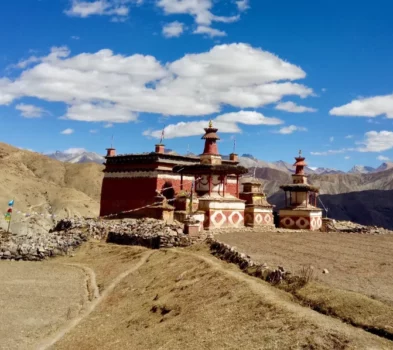
The natural beauty is spiritualized by the holy sites such as the Shey Monastery with the view of the Hidden Valley of Upper Dolpo. There are local communities known as Dolpali or Drokpa who lead a traditional Tibetan lifestyle and are of Tibetan Buddhism mixed with ancient Bon practices.
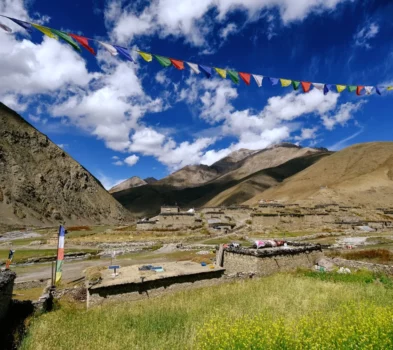
Dolpo villages consist of stone-built houses with flat roofs, frequently adorned with colored prayer flags. Trekkers pass through isolated communities like Dunai, Ringmo, and Shey Gompa village.
Trails cross several passes, distant from high altitude (above 5,000 meters), and offer extraordinary panoramic views. The Nepalese government highly controls access, and, therefore, special permits are necessary for those wishing to enter. This remoteness gives Dolpo a timeless and mystical atmosphere.
Few trekkers ever venture here, and it is a veritable adventure destination to the experienced explorer looking to connect with raw Himalayan beauty and solitude.
Geography and Natural Wonders of the Dolpo Region
Dolpo’s geography is rugged, dramatic, and breathtaking. Most of the region is over 3,000 meters, so it is a high-altitude desert, with light vegetation.
The lower valleys are wide with grassy meadows and patches of juniper and pine and rhododendron, and higher altitudes are rocky and barren. The country is made up of rugged ridges, deep gorges, and barren valleys, with streams and small glacial lakes dotted all over the landscape.
The most famous lake in this region is Phoksundo, which is at an altitude of 3,611 meters. Its dramatic blue waters are shaded with cliff and forest, and a spectacular 600-meter waterfall drops into the gorge below.
The Kanjiroba Himal dominates the west of Dolpo; the Dhaulagiri massif stands out in the south. High passes such as Shey La (5540 meters) and Ngochin La (5644 meters) reward the trekker with sweeping views of snow-capped peaks, glaciers, and rugged valleys.
At higher elevations, the land turns icy and inhospitable. Glaciers hug steep slopes, and seasonal icy streams carve small channels in the rocky landscape. Despite the harsh conditions, Dolpo has a variety of wildlife adapted to this extreme environment.
The Himalayan blue sheep or bharal can be observed grazing on the cliffs, and the elusive snow leopard may be observed roaming on high ridges occasionally.
Things such as birds of prey, such as golden eagles and lammergeier, fly in the air as they complete the image of this grim and grand land. The barren valleys and the ice-covered lakes and high mountains combine to present Dolpo with a landscape unlike any other in Nepal.
Culture and Local Communities of the Dolpo Region
Dolpo cultural life is strongly related to the Tibetan traditions and Buddhist beliefs. The majority of the population here is an ethnic Tibetan group called Dolpali or Drokpa, which is known to live a nomadic life and have a strong spiritual attachment to the mountains.
Many families migrate seasonally to high alpine pastures in the summer and low villages in winter. They also cultivate barley and buckwheat in terraced fields and raise yaks, sheep, and goats for milk, wool, and meat.
Religion is an integral part of everyday life. Prayer flags, mani walls, and stone chortens identify sacred areas throughout the region. Shey Gompa, on a hill in Upper Dolpo, is a major monastery and spiritual center. Local festivals unite the people, like the Dolpo Tiji festival with masked dances and rituals, and the festival of the Shey Monastery, in honor of local deities.
Dolpo’s people wear traditional hand-knitted dresses and wear turquoise and coral jewelry. Dolpali people are known for their warmth and hospitality, sometimes inviting trekkers to share butter tea, meals, or even a night’s stay in their homes, though access is regulated and special trekking permits are required.
Life here is slow and peaceful, and it has strong family, cultural, and natural ties. Visitors to Dolpo get a rare insight into ancient traditions in the Himalayas, as their way of life has changed very little over the centuries.
Food and Accommodation Experience in the Dolpo Region
Accommodations in Dolpo are very basic, particularly in Upper Dolpo. Lodges in main villages such as Dunai and Juphal provide simple stone or wooden rooms with straw or wool mattresses.
Showers and running water are not always available, and the rooms may only be heated by stoves or be cold at night. Beyond these villages, tea houses are few and far between, and trekkers may camp or stay in local homestays. Tents and sleeping bags are normally included in the camping sections of the trek.
Food in Dolpo is simple, when it comes to nutrition, and very much based on the local ingredients that are available. A traditional combination of rice and lentils, known as dal bhat, is served in larger villages. Other meals might be thukpa (noodle soup), momos (dumplings), and bread made from barley or buckwheat. Yak butter tea is common, warming, and energizing.
Fresh vegetables are limited, and meals usually involve potatoes, cheese, or dried vegetables. Proteins are obtained principally from grains, legumes, and yak’s dairy.
It is suggested that trekkers carry other high-energy food snacks or their own personal preference for food, especially in remote sections. Despite being a simple food, the food in Dolpo is really enough to sustain the trekker on long days of trekking and offer an authentic taste of local mountain cuisine.
Why Choose the Dolpo Region
Dolpo is a destination for people looking for a pure Himalayan adventure. It is high, remote, and wild with landscapes untouched by mass tourism. The region offers solitude, pristine scenario and an opportunity to explore one of Nepal’s last frontiers. Trekkers experience comparatively few crowds and get to enjoy unspoiled valleys, dramatic gorges, and soaring peaks in total quiet.
The cultural experience is just as compelling. Villages preserve ancient Tibetan and Bon traditions, and festivals, prayer rituals, and local music continue to be a hub of community life.
Each village we visit seems authentic and timeless, as there have been very few modern influences. Tourism permits limit the number of visitors, and this ensures that the region maintains its natural and cultural integrity.
The trek is difficult, featuring high-altitude passes, long days, and remote circumstances. The effort is, however, rewarded with some of the most outstanding mountain scenery in Nepal.
Standing beside the turquoise Phoksundo Lake, crossing a 5,500-meter pass, or experiencing the traditional life of the Dolpali people can create unforgettable memories. Dolpo is not only a physical challenge but also a deeply enriching cultural and spiritual journey.
Best Time to Visit the Dolpo Region
The best trekking seasons in Dolpo are spring (April to early June) and autumn (September to early November). Autumn provides a stable, clear weather with crisp air and bright skies, which makes it perfect for high altitude trekking. Daytime temperatures are mild, while the nights are sometimes cold, especially in the upper valleys and passes.
Spring is also really good, when the snow from the winter is gone, and wild flowers are blooming in the lower valleys. Many travelers plan trips to coincide with the Dolpo Tiji festival, which occurs in May or June, offering a unique cultural experience as well as natural beauty.
The monsoon season, from mid-June to August, brings torrential rainfall to lower regions, making trails slippery and dangerous. The winter months, between December and February, are extremely harsh in Dolpo.
Snowfall and sub-zero temperatures make trekking very difficult; many of the trails are inaccessible. For the safest conditions, best views, and the best reward, plan a trek in late spring or autumn and always check the local weather forecasts before going.


