


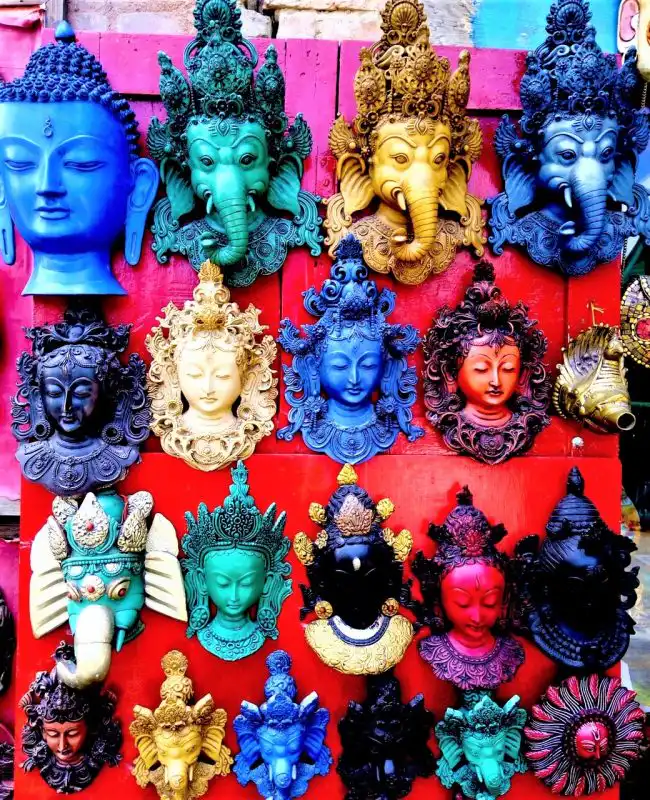

Nepal is one of the most beautiful countries where globalization of modernity has not easily affected their ancestral culture. Ancient religions with the multicultural territory, Fine art, and architecture, their extensive nature, smiling faces, and its gigantic mountains have contributed to Nepali traditions much of this currently is the main nation attraction for all kinds of tourists.
Top 8 highest mountain on the Earth
Nepal is the land of high mountains and nature is characterized by being stunningly mountainous, possessing 8 highest mountains out of the 10 in the world called ‘Eight-thousander’, which is also known as having a land elevation higher than 8000 meters high above the sea level, Mount Everest (8848.86 meters) is the incredible nature gift on the Earth’s highest mountain and most recognized in the world.
- Mount Everest 8848.86 m
- Kanchenjunga 8586 m
- Lhotse 8516 m
- Makalu 8481 m
- Cho Oyu 8201 m
- Dhaulagiri I 8167 m
- Manaslu 8156 m
- Annapurna I 8091m
Kathmandu – Living Cultural Museum
Nepal is a culturally and naturally rich country in the world. There are dozens of World Heritage Sites categorized as Natural and Cultural UNESCO World Heritage Sites.
Kathmandu uses to be called as there are more temples than houses so that Kathmandu is known to be the living cultural museum of the world. Kathmandu valley alone has seven UNESCO’s World Heritage Cultural sites within a 15 kilometers radius.
- Pashupatinath Temple
- Swayambhunath
- Boudhanath
- Kathmandu Durbar Square
- Patan Durbar Square
- Bhaktapur Durbar Square
- Changunarayan Temple
Birthplace of Lord Buddha – Lumbini
Nepal is also called the Light of Asia where Gautam Buddha was born. Siddhartha Gautam (Buddha) was born in 623 B.C. in Kapilvastu southwestern part of Nepal. Now, Lumbini is a sacred place of pilgrimage for Buddhists from all over the world and world heritage sites. There are different relics around Maya Devi Temple which dates back to the time during Buddha’s birth
Triangular Flag
Nepal is a wonderful country in the world. There is only one country in the world with a non-rectangular flag. The color of Nepal’s flag is maroon with two triangular shapes stacked on one another with a dark blue border. The upper triangle part consists of the moon and the lower triangle part consists of the sun.
The current flag has been in place since 1962 A.D, although the basic design has been used for more than 2,000 years in Nepal. Most of the temples and religious sites can see ancient triangular flags
Independent Nation
The famous warriors in the world “Gurkhas” are from the Himalayan country Nepal. “Better to die than being a coward” is the slogan of the world-famous Nepalese Gurkha soldiers who are an integral part of the British Gurkha Army. The Gurkhas are also known for weapons such as the Khukuri, which was used in the Anglo-Nepalese War, as well as in the First and Second World Wars.
Having been protected by the bravest warriors of the world, Nepal was never colonized by any superpowers of the world and does not have an independent day. Nepal is one of the independent countries in the world.
Different Nepali Calendar
The Nepali calendar called Bikram Sambhat (B.S) and it’s approximately 57 years and 8.5 months ahead of the Gregorian calendar (A.D). Although the Nepalese calendar is the official use in Nepal and one of the most used inside the country, it is not the only one since thanks to the ethnic and religious diversity, some different peoples and castes use their own typical calendars like newer and other ethnical casts. The Nepali New Year is celebrated in mid-April according to which is the first of Baishak on Bikram Sambat (B.S).
Nepalese Eat Dal Bhat twice a day
A Nepalese traditional dish, consisting of lentils rice (Bhat), Lentils (Dal), and Curry (Tarkari). The Dal Bhat set preparation is very characteristic of Nepal. Rice is the main crop in Nepal and usually cooked twice in the morning and evening with different varieties of vegetables (Curry) because it is a nutritious meal for a small fee. It is also called the Thali Set with Rice, Lentils, Curry, Pickle, Salad, Papad, and many other items. Interesting things are they eat by hand. It is a very popular food among the foreigner also during the trekking so it says ‘Dal Bhat power 24 hours”.
Living Goddess- Kumari
Nepal is a Hindu religious country and Kathmandu valley has a strong Newari majority. Nepal is such a country that has only a living Goddess in the world called Kumari. Kumari culture comes from the Newari community. Kumari literally means virgin in Nepali. There are three different Kumari in the three main cities of Kathmandu, Patan, and Bhaktapur valley.
The original name of Mount Everest
The highest mountain on the planet named ‘Everest’ by Western people, actually Everest is not its original name since this western English name was attributed by Sir Andrew Waugh in 1865 after its discovery by the Royal Geographical Society suggested. However, the locals between Tibet and Nepal attribute different names of the Everest. Tibetan called (Pinyin) for Mount Everest is Qomolangma, which means ‘The Mother’s universe’ and Nepali is Sagarmatha, which means Sagar = sky and Matha = forehead, its means the pride of Nepal and Nepalese people.
Hindu religion majority inland of Gautam Buddha
Although Nepal is the birthplace of the Light of Asia “Gautam Buddha” in a village called Lumbini in the southwestern part of Nepal. But the beliefs and practices of Hinduism have had a major impact and more majorities on Nepalese society. Until 2006, Nepal was the only Hindu country in the world with Hinduism as the official religion. According to the 2011 census, 81.3% of the Nepalese population is Hindu, 9.0% are Buddhist, 4.4% are Muslim, 3.0% are Kiratis (indigenous ethnic religion), 1.4% is Christian, 0.1% is Sikhs, 0.1% is Jains and 0.7% follows other religions or no religion.
Namaste – The honor of respect
Handshake is quite uncommon in Nepalese society. Either for elder people or respected people mostly younger people do Namaste. Putting their palms together and bow their forehead and say Namaste to everyone. This is a very respectful and good treat on Nepalese culture. Other cast people Sherpa, Tamang also use Namaste in their own language like Tashidele, Fafulla, etc. Namaste is directly translated as ‘I salute the God in you’. Which means very honor and respect.
The Legend of Yeti- Snowman
The mysterious creature of the Himalayas called ‘Yeti’ or ‘Jigou’ is said to be spotted in the Nepalese mountains by many who have trodden the secluded path in the Himalayas. Although some of the people in the monasteries use to say they have remains belonging to this beast, for many scientists these samples are not reliable. Which describes it as a giant bipedal ape that people still believed to be located in the Himalayas’s wooded areas. There are hotels and other brands in the name of Yeti.
Cow Holy Animal
A cow is a sacred animal in Nepal and killing a cow will earn you twelve years in prison. Cows are considered holy animals in Hindu culture worship the cows on different festivals, occasions and happen to be the national animal of Nepal. So unless you are fond of your freedom being taken away and spending a decade behind bars, don’t even dare think about beef while you are in Nepal. It is common to see cows and ox wandering around the streets of Kathmandu.
Altitude Variation
Nepal is such a wonderful country with an altitudinal variation that ranges start from 59 meters to 8848.86 meters within the approx distance of 200 km. Nepal holds some of the most extreme places on the earth such as the highest valley on earth (Arun valley), World deepest lake Shey Phoksundo, the highest lake on the earth (Tilicho 4800 meters), deepest gorges (1200 meter) in Kaligandaki between the Dhaulagiri and Annapurna I Range and the tallest grassland in the world in Chitwan National Park.
Weekend Rules
Saturday is a holiday in Nepal while people usually work on Sunday. Friday is more often than not, a half-day.


