




Need help?
Talk to trip expert

Langtang Region
Introduction to Langtang Region
The Langtang Region is just north of Kathmandu, and is easily accessible by road, making it one of the most convenient trekking regions in Nepal. The area is centred on the Langtang Valley, cut by glaciers and surrounded by high peaks like Langtang Lirung at 7,234 metres. Langtang National Park was established in 1976 in order to protect this scenic area of forested hills, alpine meadows, and high mountains.
Traditional Tamang and Sherpa villages, such as Syabrubensi, Lama Hotel, Mundu, and Kyanjin, exist throughout the valley. These settlements reflect the Tibetan-influenced Himalayan culture.
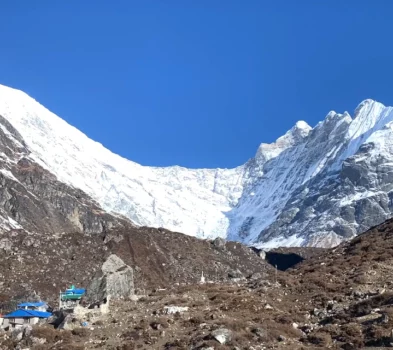
Trekkers generally start their journey at Syabrubensi and follow the trails winding through dense forests of rhododendron, magnolia, and bamboo. Further up, the road leads to alpine meadows and yak pastures around Kyanjin Gompa, which is at 3,800 meters. On the route, there are towering mountains like Langtang Lirung and Langshisa Ri that overlook the valley, making an amazing sight.
The Langtang Region provides the feeling of intimacy and authenticity. Compared to Everest or Annapurna, there are fewer crowds and more rustic teahouses on the way.
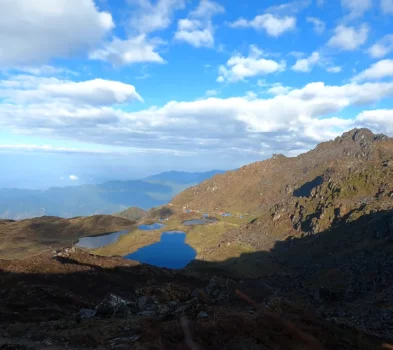
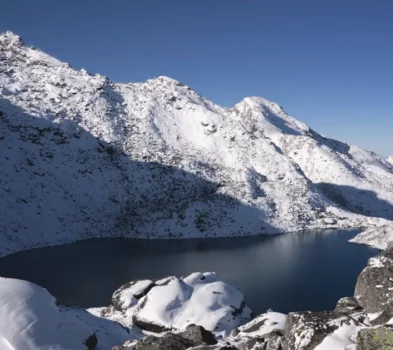
Trekkers can explore other holy lakes like Gosainkunda at an altitude of 4,300 meters and the Gosainkunda Helambu path. With spectacular glaciers, quaint villages, and easy proximity to Kathmandu, the Langtang Region offers the classic trekking experience in the Himalayas in a short distance from the capital city.
Geography and Natural Wonders
Langtang has a rich, diverse natural landscape. Langtang National Park covers an area from around 1,000 meters to 7,234 meters and consists of many climatic zones. In the lower valley, we find subtropical forests of bamboo, oak, and rhododendron along the trekking trails. At the higher heights, the forests are replaced by alpine meadows, which are full of wild flowers during the summer.
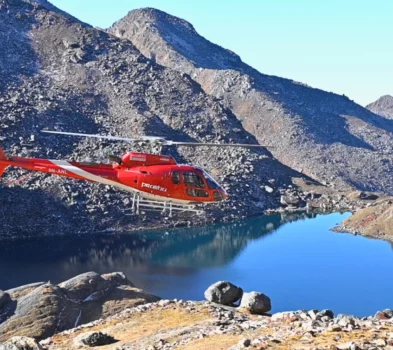
Glaciers feed the Langtang and Yala valleys, and there are streams and small waterfalls that appear on the trails. The group of more than twelve sacred Gosainkunda Lakes at 4,300 meters is glistening amidst rocky peaks above Thulo Syabru.
Peaks like Langtang Lirung, Langshisa Ri, and Dorje Lakpa gracefully stand above the tree line. Rivers such as the Trishuli and the Langtang Khola cut deep channels into the mountains, creating the rugged terrain.
From viewpoints such as Kyanjin Ri, at 4,773 meters, trekkers can enjoy gorgeous panoramas of the border peaks of Nepal and Tibet. Langtang’s wildlife is also fantastic. Red pandas, Himalayan black bears, and snow leopards live in the forests and the higher slopes.
Hot springs around Tatopani are another secret attraction. In the autumn, the colors of the forest and the fresh air make the landscape particularly colorful. Overall, the Langtang Region is a compact concentration of dense Himalayan forests, high-altitude lakes, glaciers, and striking peaks in a region that is accessible.
Culture and the Local Communities
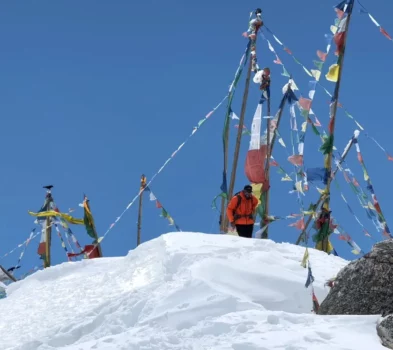
The Langtang Valley’s main inhabitants are the Tamang, who are of Tibetan origin. Tamangs follow a form of Tibetan Buddhism that is mixed with Bon. Their villages are decorated with sturdy stone houses with wooden beams, prayer flags, and mani stones carved with religious inscriptions.
Key villages include Thulo Syabru, Langtang (rebuilt after the 2015 earthquake), and Kyanjin. There is a monastery, or gompa, at Kyanjin that serves as the spiritual heart of the valley.
Many of the Tamang families raise yaks and grow barley, buckwheat, and potatoes on steep terraced fields. They are known for the production of yak cheese and the serving of traditional butter tea.
The Tamang language is widely spoken, along with the Nepali language. Festivals, singing, and dancing are important parts of their culture, with Losar, the Tibetan New Year, being particularly important.
Tamang hospitality is warm and friendly. Families often open their lodges up for trekkers to use and offer meals and guidance. Local guides and porters normally grow up in the community and provide insight about the culture and the natural environment.
Modern amenities are available in schools and community centers, which support education and social life in the valley. The culture of Langtang is humble, resilient, and communal, enriching every trekker’s experience with folklore, songs, and mountain traditions.
Accommodation and Tea House Experience in Langtang Region
Accommodation in the Langtang Region is mostly teahouse-based. Starting from Syabrubensi, trekkers stay in villages such as Lama Hotel, Bamboo, Rimche, and Kyanjin. Rooms are typically twin-share with foam mattresses, blankets, and pillows. At lower altitudes, some lodges offer single rooms and adjoining bathrooms. Further up, only twin rooms are available.
Dining halls are cozy, and many are heated by wood-fired stoves. Most tea houses have squat toilets, and some have western-style toilets. Hot showers are possible in the form of bucket showers with heated water, often at an additional charge. Electricity for lighting and charging devices is obtained from solar panels or small generators and is usually charged at a small cost. Wi-Fi is available in selected lodges.
Despite the basic facilities, teahouses in Langtang are comfortable and clean. Friendly Tamang hosts serve hot tea, dal bhat, noodles, and momos. During the peak season, lodges fill up fast, so it would be best to book your stay or hire a guide. Overall, teahouses offer a warm and safe rest each night, making the trek through the Langtang Valley a pleasant and manageable one.
Why Choose the Langtang Region
Trekkers choose Langtang because it is easy to get to and offers a genuine Himalayan experience. Unlike more remote trekking destinations, Langtang is accessible via road, which means that there is no need for costly flights. The region provides the classic Himalayan scenery with jagged peaks, glaciers, and alpine lakes on a small 7 to 10-day trek.
The valley is not as crowded as Everest or Annapurna, and trekkers can have a peaceful and intimate experience here. Langtang Lirung dominates the skyline, and Kyanjin Ri is the point at 4,773 meters, which offers panoramic views. The Gosainkunda Lake circuit gives the adventure a spiritual dimension.
Cultural interactions are direct and personal; trekkers stay in Tamang family lodges and visit Buddhist gompas, including the Kyanjin Monastery. The highest elevation on most treks is around 4500 meters, which minimizes the danger of altitude sickness as compared to Everest. Langtang is also a place for community-based tourism to aid the recovery from an earthquake in 2015.
In short, Langtang means dramatic mountain scenery, friendly highland communities, and the ‘real’ feeling of the Himalaya. It is ideal for adventurers who wish to have an experience of high altitude trekking without the crowds or the long travel required to reach northern Nepal.
Best Time to Visit
The best seasons for trekking in Langtang are spring and autumn. From March to May, the weather is warm, and rhododendrons are blossoming at the sides of the forests. Days are mostly sunny, and nights are cool and chilly. September to November brings dry, stable weather, crystal-clear skies, and mild daytime temperatures perfect for panoramic mountain views.
During the summer months, June-August, it is monsoon season, and trails become slippery due to rain as well in Langtang. However, the upper valley is sometimes relatively dry. Winter, from December to February, is cold, especially at higher altitudes.
Lodges are open; however, nights can fall well below freezing, and snow may cover higher trails. Gosainkunda is still available during the late winter and draws pilgrims during the January full moon.
Overall, the spring and fall are the best seasons for trekking in Langtang. Other seasons have fewer crowds but may bring colder nights and occasional rain. Planning your trek during such periods ensures the best combination of weather, visibility, and comfort of trekking.


