



Lumbini, situated in Nepal’s Rupandehi district, holds profound historical, cultural, and spiritual significance as the birthplace of Siddhartha Gautama, who later became known as Gautama Buddha. Recognized as a UNESCO World Heritage Site in 1997, Lumbini attracts pilgrims and visitors from around the globe, drawn by its rich heritage and tranquil ambiance.
Historical Significance
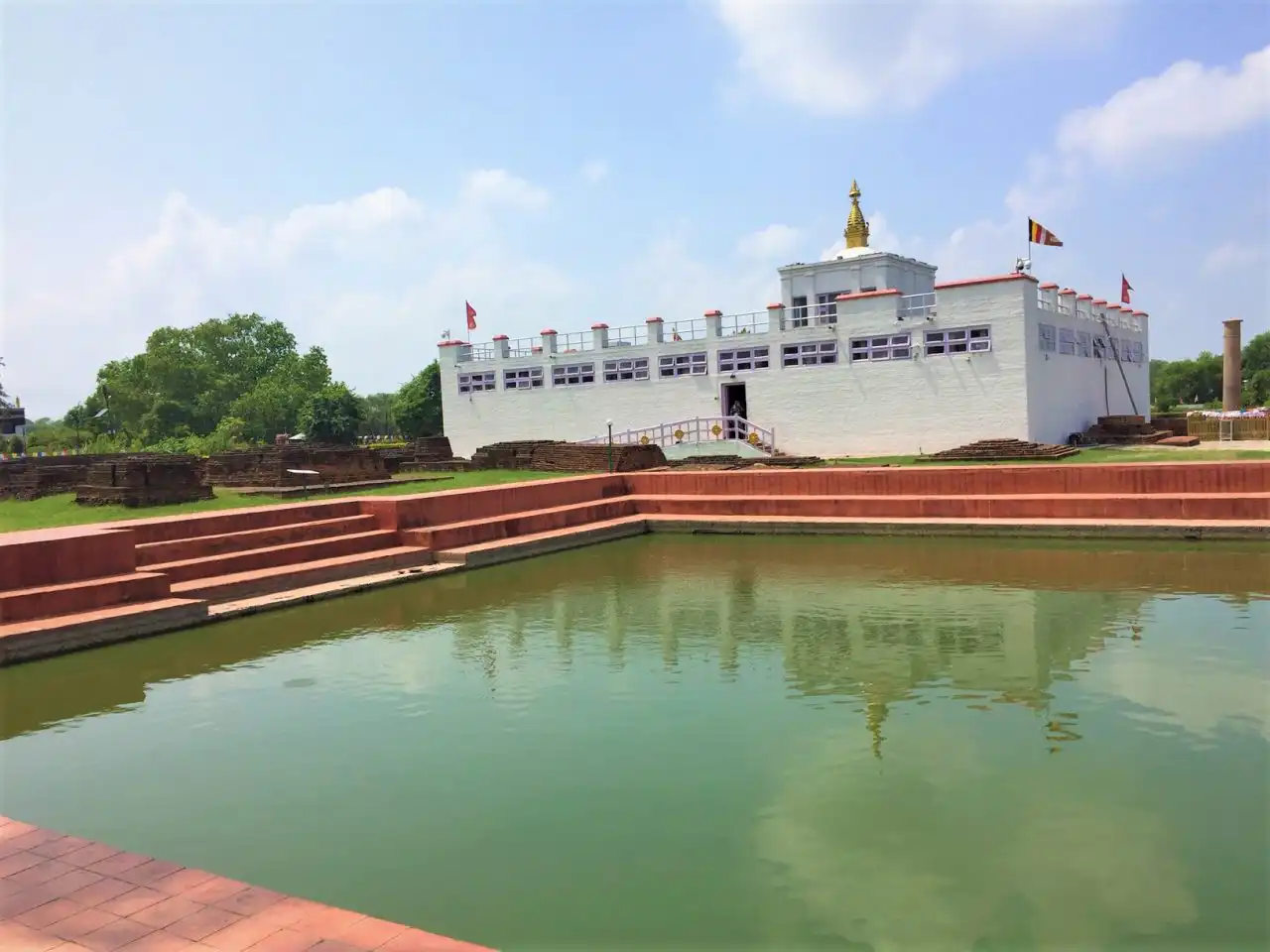
According to ancient Buddhist scriptures, Queen Maya Devi gave birth to Siddhartha Gautama in 623 BCE in the Lumbini garden, under a Sal tree. This event is commemorated at the Maya Devi Temple, which houses the exact spot of Buddha’s birth, marked by a stone slab and the Nativity Sculpture. Adjacent to the temple stands the Ashoka Pillar, erected by Emperor Ashoka in 249 BCE, bearing an inscription in Brahmi script that identifies Lumbini as the birthplace of Buddha .
The rediscovery of Lumbini in 1896 by General Khadga Shamsher and archaeologist Dr. Alois Anton Führer brought global attention to the site. Excavations revealed ancient structures dating back to the 3rd century BCE, including remnants of monasteries and stupas, underscoring Lumbini’s longstanding role as a center for Buddhist pilgrimage .
Cultural Heritage
Lumbini’s cultural landscape is a testament to its enduring spiritual legacy. The site encompasses the Sacred Garden, the Monastic Zone, and the Cultural Center and New Lumbini Village.
-
Sacred Garden: This area includes the Maya Devi Temple, the Ashoka Pillar, the Marker Stone, the Nativity Sculpture, the Puskarini Sacred Pond, and other structural ruins of Buddhist stupas and viharas. The garden remains the epicenter of the Lumbini area and consists of monuments of archaeological and spiritual importance .
-
Monastic Zone: Spanning an area of one square mile, the monastic zone is divided into two zones: the East Monastic Zone, representing the Theravada school of Buddhism, and the West Monastic Zone, representing Mahayana and Vajrayana schools. Many countries have established Buddhist stupas and monasteries in the monastic zone with their unique historical, cultural, and spiritual designs .
-
Cultural Center and New Lumbini Village: This area comprises the Lumbini Museum, Lumbini International Research Institute, World Peace Pagoda of Japan, Lumbini Crane Sanctuary, and other administrative offices. These institutions focus on the history and heritage of Lumbini and promote research and education related to Buddhism .
Lumbini’s designation as a UNESCO World Heritage Site in 1997 underscores its outstanding universal value and the need for its conservation and management .
Spiritual Significance
Lumbini serves as a hub for meditation and spiritual practice. Centers like the Panditarama Lumbini International Vipassana Meditation Center and Dhamma Janani offer courses in Vipassana meditation, providing practitioners with opportunities to delve into mindfulness and inner peace . These centers attract individuals seeking spiritual growth and tranquility in the birthplace of Buddha.
The site’s serene environment, including the Sacred Garden and the Puskarini Pond, enhances its appeal as a place for reflection and meditation. Pilgrims and visitors often find solace in the garden’s calm atmosphere, ideal for contemplation .
Archaeological Discoveries
The rediscovery of Lumbini in 1896 by General Khadga Shamsher and archaeologist Dr. Alois Anton Führer brought global attention to the site. Excavations revealed ancient structures dating back to the 3rd century BCE, including remnants of monasteries and stupas, underscoring Lumbini’s longstanding role as a center for Buddhist pilgrimage .
Monastic Zones
Lumbini’s monastic zones, divided into eastern and western sectors, showcase a diverse array of monasteries built by Buddhist communities from around the world.
-
East Monastic Zone: This area features Theravada monasteries from countries like Thailand, Myanmar, and Sri Lanka. Notable structures include the Royal Thai Monastery, constructed from gleaming white marble, and the Myanmar Golden Temple, designed to resemble the Shwedagon Pagoda in Yangon .
-
West Monastic Zone: This zone houses Mahayana monasteries from nations such as China, Japan, and South Korea. The Dae Sung Shakya Temple from South Korea stands out as one of the tallest monasteries in Lumbini, offering accommodation to visitors .
These monasteries, each reflecting their country’s architectural styles, contribute to Lumbini’s cultural mosaic and offer spaces for meditation and reflection.
Meditation and Spiritual Practice
Lumbini serves as a hub for meditation and spiritual practice. Centers like the Panditarama Lumbini International Vipassana Meditation Center and Dhamma Janani offer courses in Vipassana meditation, providing practitioners with opportunities to delve into mindfulness and inner peace . These centers attract individuals seeking spiritual growth and tranquility in the birthplace of Buddha.
Natural Beauty and Tranquility
Beyond its historical and spiritual allure, Lumbini’s serene environment enhances its appeal. The Sacred Garden, encompassing the Maya Devi Temple and Ashoka Pillar, offers a peaceful setting adorned with ancient trees, ponds, and prayer flags. The Pushkarini Pond, where Queen Maya is believed to have bathed before Buddha’s birth, adds to the site’s sanctity . Visitors often find solace in the garden’s calm atmosphere, ideal for meditation and contemplation.
Conclusion
Lumbini stands as a testament to Nepal’s rich cultural and spiritual heritage. Its historical landmarks, diverse monasteries, and tranquil ambiance make it a must-visit destination for those seeking spiritual enrichment and a deeper understanding of Buddhism’s origins.


