



Tangboche Mani Rimdu Festival 2026
The Mani Rimdu Festival is the most important and spectacular event in the calendar of the Sherpa people, a profound and vibrant celebration of Tibetan Buddhism held in the majestic setting of the Everest (Khumbu) region. For those planning to witness this sacred occasion, the Tangboche Mani Rimdu Festival date in 2026 is confirmed to take place on October 26, 27, 28, and 29, which are the main public festival days at the famous Tengboche Monastery. This detailed explanation will explore every facet of the festival, from its ancient history and deep spiritual significance to the intricate rituals and practical information for visitors, weaving in the most searched keywords to provide a complete understanding of this “Mani Rimdu Trek” and cultural experience.
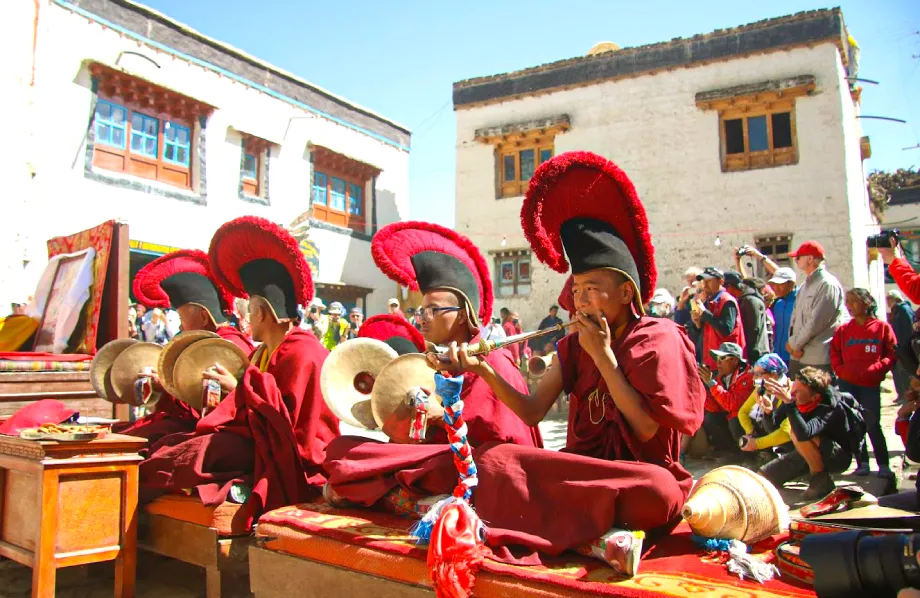
An Introduction to the Mani Rimdu Festival 2026
The Mani Rimdu Festival is an elaborate, nineteen-day religious event observed by the Buddhist communities, particularly the Sherpa people, in the Solu-Khumbu district of northeastern Nepal. While the entire festival spans over two weeks with closed-door monastic rituals, it culminates in a three-day public celebration filled with color, music, and profound spiritual meaning. The festival is celebrated at several monasteries in the region, including Thame and Chiwong, but the most famous and grandiose celebration occurs at the Tengboche Monastery, perched dramatically on a ridge with breathtaking views of the Himalayas, including the iconic peak of Ama Dablam and gateway to the Everest Base Camp Trek.
The very name Mani Rimdu unlocks the festival’s core purpose. “Mani” refers to the mantra of Chenrezig, the Buddha of Compassion, which is “Om Mani Padme Hum”. This mantra is chanted millions of times during the festival’s rituals. “Rimdu” (or Rilwu) translates to “sacred pills”—small, red pills that are blessed throughout the ceremonies and distributed to attendees, symbolizing the reception of blessings and spiritual accomplishment. Thus, Mani Rimdu is, at its heart, a festival of blessing, compassion, and the reaffirmation of Buddhist faith. It is a time when Lamas and Sherpas gather at the monastery not just for social celebration, but for the profound purpose of accumulating merits and praying for the welfare of the world.
The Rich History and Origin of Mani Rimdu
The history of Mani Rimdu is a fascinating journey of how a sacred ritual traveled across the Himalayas, adapting to new homes while preserving its core spiritual essence.
Origins in Tibet
The roots of the Mani Rimdu festival can be traced back to the early 20th century in Tibet. It was first established at the Rongbuk Monastery in Tibet, which sits at the base of Mount Everest’s north side. The festival was initiated by a renowned Tibetan Buddhist practitioner, Lama Ngawang Tenzin Norbu, who had studied at the prestigious Mindroling Monastery in Central Tibet, a great monastery of the Nyingma (or “Red Hat”) school of Tibetan Buddhism. The rituals and texts that form the foundation of Mani Rimdu are derived from this ancient lineage. The festival was created as a way to mark the founding of Buddhism in Tibet by the great 8th-century tantric master Guru Rinpoche Padmasambhava, who is credited with subduing local spirits and establishing the Buddhist doctrine.
Transmission to Nepal
The festival found its way to Nepal in the mid-20th century. In the 1940s, due to the changing political landscape in Tibet, the tradition was brought south to the Solukhumbu region of Nepal, home to a large Sherpa population. It was first established at the Chiwong Monastery and later, in 1940, the Tengboche Monastery, which had been founded in 1916 by Lama Gulu, became its new and most famous home. Since then, Mani Rimdu has become an integral part of the cultural and spiritual identity of the Sherpa community, preserving the Nyingma Buddhist traditions passed down through generations.
The Spiritual and Cultural Importance
The importance of the Mani Rimdu Festival is multi-layered, serving religious, social, and cultural functions for the Sherpa community and offering a profound experience for visitors.
Religious Significance
At its core, Mani Rimdu is a powerful religious ceremony with several key objectives:
-
Victory of Good over Evil: The festival reenacts and celebrates the triumph of Buddhism over the dark forces and negative energies that oppose enlightenment. This theme is most vividly portrayed in the famous masked dances (Chham), which depict the defeat of demons and the protection of the Buddhist faith.
-
Spiritual Empowerment: The entire 19-day ritual cycle is designed to generate immense spiritual energy. This energy is channeled into the sacred Mani Rilwu pills, which are then distributed to the public during the Wong (Empowerment Ceremony). Receiving these pills is believed to confer blessings, protection from harm, promote long life, and provide spiritual fortification for the year ahead.
-
Purification and World Peace: A key aim of the festival is to purify the environment and the minds of all beings. The intricate rituals, including the creation and subsequent destruction of the sand mandala and the final Fire Puja (Jinsak), are performed to dispel negative karma, remove obstacles, and bring peace, good fortune, and cosmic balance to the world.
Cultural Significance
For the Sherpa people, Mani Rimdu is the biggest event of the year. It is a time when scattered communities come together, strengthening social bonds and reinforcing their unique cultural identity. The festival is a living transmission of their heritage, passing down ancient stories, artistic skills (like mask-making and dance), and oral traditions to the younger generation. For the outside world, and especially for the thousands of trekkers who undertake the Everest Base Camp Trek during this period, the festival offers an unparalleled, authentic window into the spiritual soul of the Himalayas.
The 19-Day Festival: From Secret Ritual to Public Spectacle
While visitors flock to Tengboche for the final three days, the full Mani Rimdu festival is a much longer, more complex affair. The first 16 days are known as the Drupchen (or “Great Accomplishment”), a period of intense, closed-door rituals and meditation performed by the monks.
The Creation of the Sand Mandala
One of the first and most important acts is the construction of the sacred sand mandala. Monks spend several days meticulously creating this intricate, multi-colored diagram out of colored sand. The sand, often sourced from a specific high point in the Himalayas, is carefully laid to form a symbolic cosmic palace of the deity. The mandala serves as the visual and spiritual focal point for all the meditations and prayers performed during the Drupchen. This entire preparatory phase is dedicated to invoking the deities and generating the blessings that will later be shared with the public.
The Three Main Public Days of Mani Rimdu Festival in 2026
The long period of internal practice concludes with three days of public ceremony, a vibrant and deeply moving experience that is the highlight of the Mani Rimdu Festival Trek. The dates you have specified, October 26-29, 2026, mark these main festival days at Tengboche. The schedule typically unfolds as follows:
Day 1: The Empowerment Ceremony (Wong)
The first public day is the Wong, or Empowerment Ceremony. This is a solemn and sacred ritual where the spiritual energy accumulated over the preceding weeks is shared with the community.
-
The Ritual: The head lama of Tengboche, the Tengboche Rinpoche, presides over the ceremony. Pilgrims and visitors gather inside or in the courtyard of the monastery to receive blessings. The Rinpoche, assisted by senior monks, performs tantric chantings and consecrates the Mani Rilwu (sacred long-life pills) and Tshereel (pills for long life).
-
Receiving Blessings: Attendees file past the Rinpoche to receive these blessed pills, which are believed to be imbued with protective and healing powers. It is a moment of profound personal connection and spiritual significance for devotees. This day marks the spiritual opening of the festival, drawing immense positive energy into the region.
Day 2: The Sacred Mask Dances (Chham)
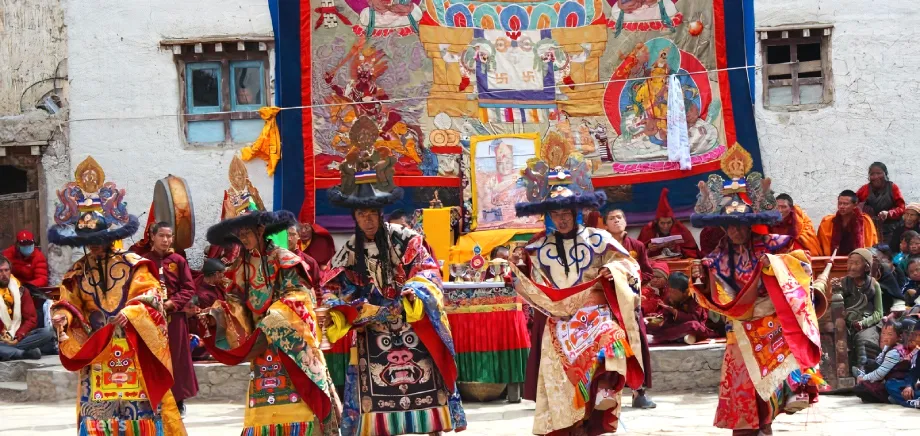
The second day is the most visually stunning and famous part of the Mani Rimdu festival. This is the day of the Chham, or sacred masked dances.
-
The Performance: Monks, who have spent days in deep meditation to embody the deities, emerge from the monastery in elaborate, colorful costumes and large, expressive papier-mâché masks. The dances are performed in the monastery courtyard, with the towering peaks of the Himalayas, including Everest and Ama Dablam, serving as a breathtaking backdrop.
-
The Stories and Symbolism: Each dance tells a story, primarily enacting the victory of good over evil and the protection of the Buddhist faith. The dances are not mere entertainment; they are a form of meditation and a symbolic representation of complex Buddhist teachings. Viewers witness the subjugation of demons, who represent ignorance and ego, by fierce but compassionate deities.
-
Key Dances: Some of the most important dances include the Shanak (Dance of the Black Hat Sorcerers), which ritually cleanses the space of negative spirits; the dances of the Dharma Protectors like Mahakala; and the captivating Dur-Dahk (Dance of the Skeletons), which serves as a powerful reminder of the impermanence of life. The dances are often interspersed with brief, comedic interludes that provide levity and sometimes offer social commentary. The atmosphere is made even more spectacular by the traditional Buddhist folk music played on instruments like drums, horns, and cymbals.
Day 3: The Fire Puja and Conclusion (Jinsak)
The final public day culminates with the Fire Puja, known as Jinsak.
-
The Ritual: This ceremony is performed in a sacred enclosure outside the main monastery. A large fire is consecrated, and the monks chant mantras while making offerings into the flames. These offerings include tormas (small ritual cakes made of barley flour and butter), grains, and other blessed substances.
-
Significance: The fire, often identified with Agni, the god of fire, acts as a purifying agent. The ritual symbolizes the burning away of all negative karma, evil spirits, and mental defilements that were gathered and transformed during the festival. The smoke carries these purified offerings to the spiritual world and dispels any remaining harm.
-
The Mandala’s Dissolution: After the Fire Puja, a final, poignant act takes place inside the monastery. The monks ritually dismantle the intricate sand mandala, sweeping the colored sand into a pile. This act is the ultimate lesson in Buddhist philosophy: a powerful, tangible reminder of the impermanence of all things. The sand is then ceremonially carried to a river and poured into the water, dispersing the festival’s blessings into the world for the benefit of all sentient beings.
Tengboche Monastery: The Heart of the Celebration
The Tengboche Monastery (also spelled Thyangboche) is not just the venue; it is an integral part of the Mani Rimdu experience. Situated at an altitude of 3,867 meters (12,687 feet), it is the largest gompa (monastery) in the Khumbu region. Founded in 1916, the monastery has a dramatic history, having been destroyed by an earthquake in 1934 and a devastating fire in 1989 before being rebuilt with international assistance. Its location, at the confluence of the Dudh Koshi and Imja Khola rivers and on the main trail to Everest Base Camp, makes it a spiritual and geographical crossroads. During Mani Rimdu, the monastery becomes a vibrant hub, its ornate interiors and the faith of the monks providing the sacred space for the rituals, while its courtyard becomes a stage for the timeless drama of the mask dances, watched by hundreds of local villagers and international visitors.
Planning Your Mani Rimdu 2026 Experience
Attending the Mani Rimdu Festival is a highlight of any Nepal tour, but it requires careful planning. The festival coincides with the peak autumn trekking season (October-November), offering stable weather and clear mountain views. This makes a Mani Rimdu Festival Trek an ideal combination of cultural immersion and Himalayan adventure.
Itinerary and Logistics
To be in Tengboche for the main festival days of October 26-29, 2026, you must plan your trek carefully. Reaching Tengboche involves a scenic flight from Kathmandu to Lukla, followed by a multi-day trek. It is crucial to build in extra days for acclimatization, especially in Namche Bazaar, to prevent altitude sickness. A typical itinerary would look like this:
-
Before Oct 26: Fly Kathmandu to Lukla, trek to Phakding, then to Namche Bazaar (allow an acclimatization day here), and finally trek to Tengboche.
-
Oct 26-29: Full days at Tengboche to witness the Wong, Chham, and Fire Puja ceremonies.
-
After Oct 29: Begin the trek back to Lukla for the flight to Kathmandu.
Tips for Visitors
-
Respectful Conduct: Remember that you are a guest at a sacred religious event. Dress modestly, always ask permission before taking photographs (photography is often restricted in certain areas during ceremonies), and maintain a respectful silence during rituals.
-
Accommodation: Teahouses (lodges) in Tengboche and Namche Bazaar fill up very quickly during the festival. It is highly recommended to book your Mani Rimdu festival trek package with a reputable trekking agency well in advance to secure your spot.
-
Preparation: This is a high-altitude trek. Ensure you are physically prepared and have the proper gear. Listen to your guide and prioritize acclimatization to fully enjoy this once-in-a-lifetime cultural experience.
(FAQ) Mani Rimdu Festival 2026
1. What are the exact dates for the Mani Rimdu Festival at Tengboche in 2026?
The main public days of the Tengboche Mani Rimdu Festival will take place from October 26 to October 29, 2026.2. What is the main significance of the Mani Rimdu festival?
Mani Rimdu is a sacred Tibetan Buddhist festival celebrating the victory of good over evil. It is a time for blessing, spiritual empowerment, and reaffirming the faith of the Sherpa community.3. What happens on the first public day (October 26)?
The first day is the Wong (Empowerment Ceremony). The head lama consecrates sacred “Mani Rilwu” (blessed pills) and distributes them to the attendees for protection and good fortune.4. What are the famous Masked Dances, and when do they occur?
The Masked Dances (Chham) occur on the second day (October 27). Monks dressed in colorful costumes and masks perform dances that depict the triumph of Buddhism over negative forces.5. What is the Fire Puja, and when does it take place?
The Fire Puja (Jinsak) takes place on the final day (October 29). Offerings are burned in a consecrated fire to purify negative karma and dispel evil spirits, concluding the festival.6. Do I need to trek to attend the festival?
Yes. Tengboche Monastery is located in the Everest (Khumbu) region. Visitors must take a flight to Lukla and then trek for several days to reach Tengboche.7. Is the Mani Rimdu festival only a tourist show, or is it religious?
It is a deeply religious event for the Sherpa people. While it is spectacular for visitors, it is first and foremost a 19-day monastic ritual dedicated to praying for world peace and the welfare of all beings.8. What should I wear or avoid wearing at the monastery?
You should dress modestly out of respect for the sacred occasion. It is also important to maintain silence during rituals and always ask for permission before taking photographs.9. Is it easy to find accommodation in Tengboche during the festival?
No. Teahouses and lodges in Tengboche and nearby Namche Bazaar fill up very quickly. It is highly recommended to book a trek package with an agency well in advance.10. What does “Mani Rimdu” actually mean?
“Mani” refers to the mantra “Om Mani Padme Hum” (the mantra of compassion), and “Rimdu” (or Rilwu) means “sacred pills”—the blessed pills distributed during the ceremony.
In conclusion, the Tangboche Mani Rimdu Festival is far more than a tourist attraction; it is the living, breathing heart of Sherpa Buddhist culture. For those fortunate enough to trek to Tengboche in late October 2026, the festival offers a profound glimpse into a world where ancient rituals, unwavering faith, and the majestic Himalayas converge, creating an experience that is both spiritually moving and visually unforgettable.


