



Overview
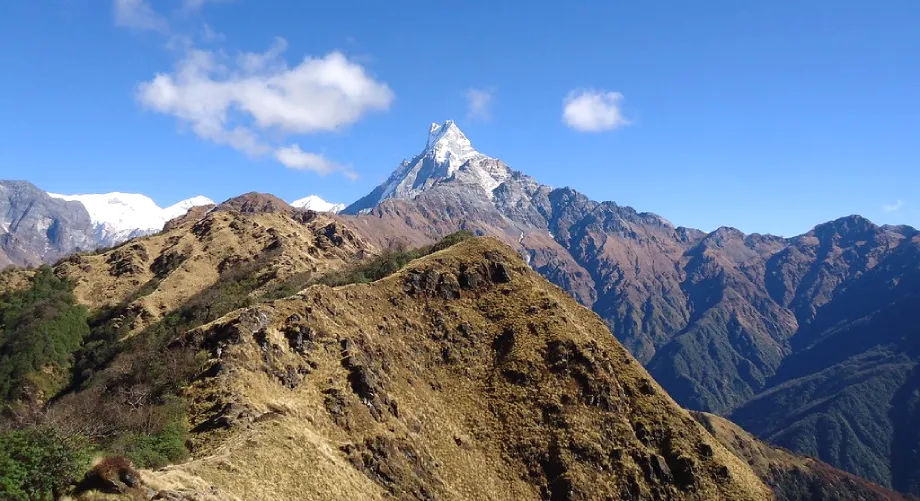
Mardi Himal Trek is an emerging and exceptional short-to-moderate trekking route situated just east of the iconic Annapurna Base Camp trail in the heart of Nepal’s Himalayas. Often celebrated as the “Hidden Gem of the Annapurna Region“, this journey offers a pristine and crowd-free alternative for trekkers seeking an authentic Himalayan experience without the prolonged duration or dense traffic of its more famous counterparts.
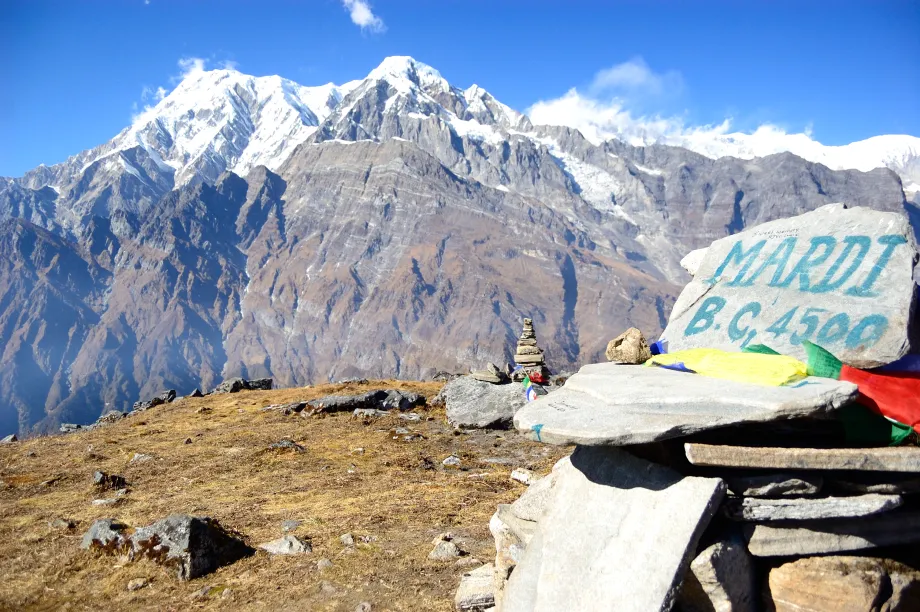
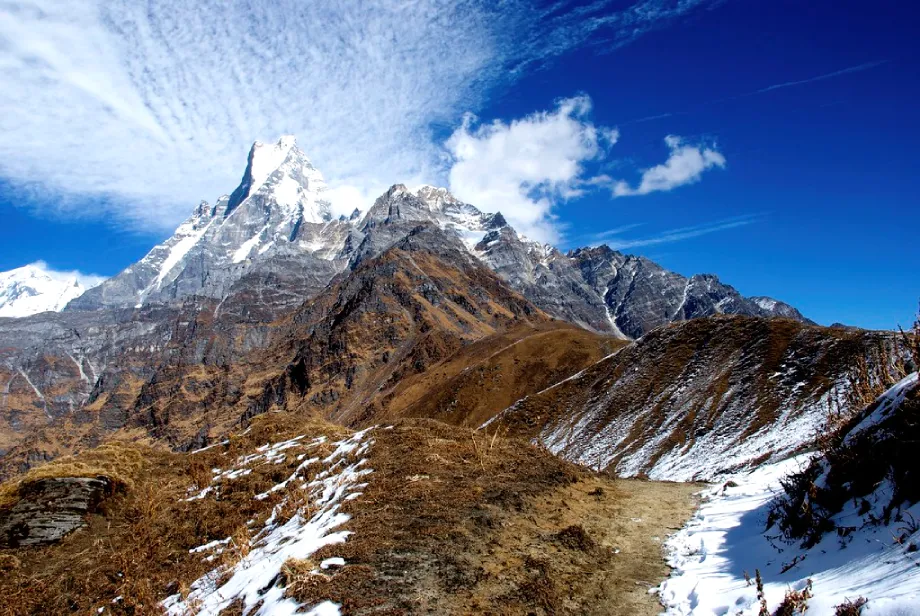
The trek’s unique appeal lies in its spectacular and intimate vantage points. It unfolds on a ridge line that runs directly towards the formidable Machhapuchhre (Fishtail Mountain), providing trekkers with unobstructed, face-to-face views of its razor-sharp summit. The panorama expands to include the entire Annapurna South wall, the elegant Hiunchuli, and the trek’s namesake, the majestic Mardi Himal (5,587m), from whose base camp (4,500m) the trek derives its climax.
Geographically and culturally, the trail is a journey through dramatically shifting ecosystems. It begins in the subtropical foothills near Pokhara, ascends through enchanting old-growth rhododendron and oak forests (vibrant with color in spring), and emerges into serene high alpine pastures known locally as “kharka.“ The final push traverses a rugged, moon-like landscape to the foot of the glacier below Mardi Himal. Along the way, trekkers pass through traditional Gurung and Magar villages like Siding and Lwang, offering glimpses into a rural mountain lifestyle that remains closely tied to the land.
What sets Mardi Himal apart is its sense of solitude and discovery. The teahouse infrastructure, while established and comfortable at lower camps, is less developed than on major routes, which preserves a sense of adventure. The trek is highly achievable for fit beginners yet deeply rewarding for seasoned hikers, perfectly balancing physical challenge, breathtaking scenery, and cultural immersion in a compact 5 to 7-day itinerary. It stands as a testament to the fact that some of Nepal’s most profound mountain experiences are found not on the most trodden paths, but on the quiet trails that run alongside them.
Often called the “hidden gem” due to its quieter trails and raw, unspoiled beauty, this trek is perfect for those seeking a shorter, moderately challenging Himalayan experience without the crowds.
Highlights
-
Breathtaking Mountain Views: Unobstructed, close-up views of Annapurna South, Hiunchuli, Machhapuchhre (Fishtail), and Mardi Himal.
-
Less Crowded Trails: Experience solitude and tranquility compared to busier routes like ABC or Everest.
-
Diverse Landscapes: From lush rhododendron and oak forests to alpine meadows and rugged high-altitude terrain.
-
Rich Culture: Interact with Gurung and Magar communities in traditional villages.
-
Mardi Himal Base Camp (4,500m): Stand at the foot of the majestic Mardi Himal with panoramic Himalayan vistas.
-
High Camp Sunrise: Spectacular sunrise over the Annapurna range from High Camp (3,580m).
-
Wildlife Spotting: Possible sightings of langur monkeys, deer, and various bird species.
-
Relatively Short Duration: Typically completed in 5–7 days, ideal for those with limited time.
Classic Itinerary (6–7 Days)
Day 1: Drive from Pokhara to Kande (1.5 hours) → Trek to Forest Camp (Deurali) via Australian Camp (2,600m) – 5–6 hours.
Day 2: Trek from Forest Camp to Low Camp (3,150m) – 4–5 hours.
Day 3: Trek from Low Camp to High Camp (3,580m) – 3–4 hours.
Day 4: Early morning hike to Mardi Himal Base Camp (4,500m) → Return to High Camp → Descend to Low Camp or Siding Village – 7–8 hours.
Day 5: Trek from Low Camp/Siding to Lwang Village or Lumre – 4–5 hours → Drive back to Pokhara (1.5 hours).
Variations: Some itineraries include a night at Badal Danda (Cloud Hill) for sunset/sunrise views or extend via Landruk for a loop route.
Cost Breakdown (2026-2027 Estimates)
Costs vary based on style (independent vs. guided), season, and comfort level.
-
Independent Trekker (without guide): $400–$550 per person
Includes: Food, accommodation, permits, transport. Excludes gear rental, insurance, and extras. -
Guided Group Trek: $700–$900 per person
Includes: Guide, porter, meals, accommodation, permits, transport, and insurance. -
Private Guided Trek: $800–$1,200+ per person
Includes: Personalized service, flexibility in itinerary, and better accommodation.
Permits Required:
-
Annapurna Conservation Area Permit (ACAP): NPR 3,000 (≈ $25)
-
Trekker’s Information Management System (TIMS): NPR 2,000 (≈ $17) for independent; NPR 1,000 (≈ $8) if with a guide.
Best Time to Trek
-
Spring (March–May): Rhododendron blooms, clear skies, mild temperatures.
-
Autumn (October–November): Best visibility, stable weather, popular season.
-
Winter (December–February): Cold at higher camps, possible snow, very quiet.
-
Monsoon (June–September): Rainy, leeches, cloudy skies – not recommended.
Difficulty & Preparation
-
Difficulty: Moderate. No technical climbing, but steep sections and altitude (max 4,500m) require acclimatization.
-
Fitness: Good cardiovascular fitness recommended. Prior trekking experience is helpful but not mandatory.
-
Altitude Sickness: Risk exists; ascend slowly, stay hydrated, consider acclimatization days.
-
Training: Cardio exercises (hiking, running, cycling) and strength training (squats, lunges) 4–6 weeks prior.
Accommodation & Food
-
Teahouses/Lodges: Basic but comfortable rooms with shared toilets. Hot showers available (extra cost).
-
Food: Dal Bhat (lentil rice), noodles, soups, pancakes, pasta. Vegetarian options are widely available.
-
High Camp facilities: More basic; recommend carrying snacks and water purification tablets.
Packing Essentials
-
Clothing: Layering system (base, insulation, waterproof shell), warm hat, gloves.
-
Footwear: Broken-in hiking boots, spare socks.
-
Gear: 30–40L daypack, trekking poles, sleeping bag (optional but recommended), headlamp.
-
Other: Water bottle/purifier, sunscreen, sunglasses, basic first-aid kit, portable charger.
Responsible Trekking Tips
-
Leave No Trace: Carry out all trash (including biodegradable).
-
Support Local: Buy meals at teahouses, hire local guides/porters.
-
Water: Use purification tablets/filters to reduce plastic bottle use.
-
Cultural Respect: Dress modestly, ask before photographing people.
Why Choose Mardi Himal Over ABC?
-
Less crowded: More intimate experience.
-
Shorter duration: Ideal for time-bound trekkers.
-
Unique perspective: Different, arguably more dramatic, angle of the Annapurna range.
-
Affordable: Generally cheaper due to shorter itinerary.
Getting There
-
International: Fly to Kathmandu.
-
To Pokhara: 25-minute flight or 6–7 hour scenic drive/tourist bus from Kathmandu.
-
Trailhead: 1.5-hour drive from Pokhara to Kande or Phedi.
Final Thoughts
The Mardi Himal Trek is a perfect blend of accessibility, natural beauty, and cultural immersion without the overwhelming crowds. Its “hidden gem” status is well-earned, offering a raw and rewarding Himalayan adventure suitable for both novice and experienced trekkers. With proper preparation and respect for the mountains, this trek promises memories to last a lifetime.
Mardi Himal Trek: FAQ
1. What is the best season for the Mardi Himal trek?
The best season for the Mardi Himal Trek is during the autumn months (October to November) when the weather is stable, and the mountain views are crystal clear, and the spring months (March to May) when the rhododendron forests are in full, colorful bloom.
2. Is a guide mandatory for the Mardi Himal trek?
While a guide is not legally mandatory, it is highly recommended for navigation, cultural interpretation, and safety, especially as this is a less crowded trail; however, you must obtain a TIMS card independently if trekking without one.
3. What permits are required, and where do I get them?
Two permits are essential: the Annapurna Conservation Area Permit (ACAP) and the Trekkers’ Information Management System (TIMS) card, both of which can be obtained in Kathmandu or at the Pokhara Tourism Office before starting your trek.
4. How difficult is the trek to Mardi Himal Base Camp?
The trek is rated as moderate difficulty, featuring some steep ascents and reaching a high altitude of 4,500m at the base camp, so good physical fitness and proper acclimatization are important to prevent altitude sickness.
5. What is the typical cost for a 5-7 day trek?
The typical cost ranges from $300 for independent trekkers covering teahouse accommodation, food, and permits, to $600-$900 for an all-inclusive package tour with a guide, porter, and transport.
6. What kind of accommodation is available on the trail?
Accommodation consists of basic teahouses or lodges offering twin-share rooms with simple beds; facilities become more basic at High Camp, and hot showers are usually available for an extra fee at lower elevations.
7. Is altitude sickness a risk on this trek?
Yes, altitude sickness is a genuine risk as the trail ascends to Mardi Himal Base Camp (4,500m); key prevention strategies include a slow ascent, staying hydrated, and incorporating a rest day for acclimatization if needed.
8. What should I pack for the Mardi Himal trek?
Essential packing items include layered clothing for variable weather, broken-in hiking boots, a sleeping bag, trekking poles, a headlamp, a water purification method, and a comprehensive first-aid kit.
9. Can I do the trek independently, and how is the trail marked?
You can trek independently, as the trail is generally clear and marked with red-and-white painted signs; however, carrying a detailed map or a GPS device is advisable, especially in foggy conditions near the upper sections.
10. How does the Mardi Himal trek compare to Annapurna Base Camp (ABC)?
Compared to the Annapurna Base Camp (ABC) trek, the Mardi Himal Trek is shorter in duration, sees fewer crowds, offers a more intimate experience, and provides a unique, close-up vantage point of Machhapuchhre (Fishtail Mountain).


