



Mardi Himal Trek: A Journey into Nepal’s Majestic Annapurna Region
Nestled within the captivating Annapurna region of Nepal, the Mardi Himal Trek offers an unforgettable adventure through breathtaking landscapes, rich cultural encounters, and serene wilderness. Spanning over a course of around 7-11 days, this relatively new trekking route has swiftly gained popularity among adventurers seeking a less crowded alternative to the more frequented trails in the Annapurna Sanctuary. Let’s delve into the essence of the Mardi Himal Trek, exploring its key highlights, route, logistics, and experiences.
Introduction to Mardi Himal Trek:
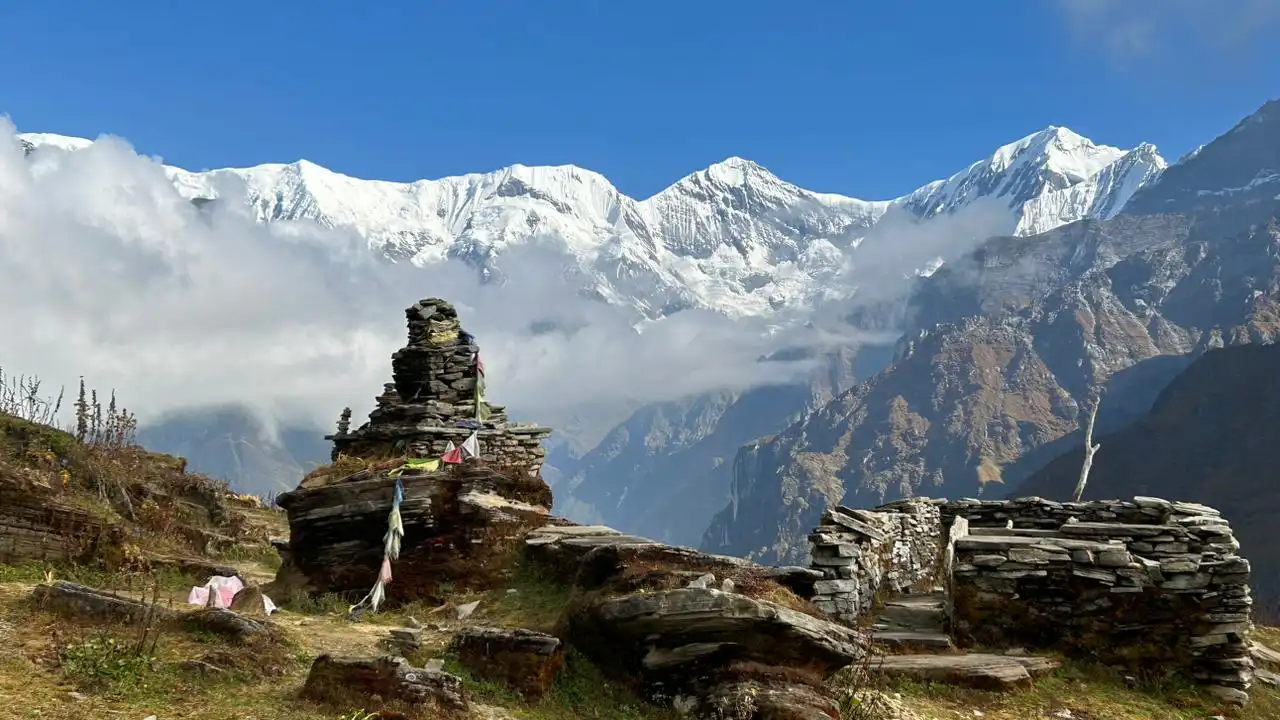
The Mardi Himal Trek takes its name from the magnificent Mardi Himal, a peak situated to the east of the renowned Machhapuchhre (Fishtail) Peak, one of the most iconic landmarks of the Annapurna region. While the trek itself doesn’t ascend to the summit of Mardi Himal, it offers unparalleled views of this majestic peak, as well as panoramic vistas of other towering Himalayan giants such as Annapurna South, Hiunchuli, and Dhaulagiri.
Key Highlights of the Mardi Himal Trek -7 days:
Scenic Landscapes: The trek unfolds through diverse landscapes, including lush rhododendron forests, quaint Gurung villages, alpine meadows adorned with wildflowers, and rugged mountain terrain, offering a visual feast at every turn.
Cultural Encounters: Trekking through traditional Gurung villages such as Landruk, Pitam Deurali, and Siding provides a glimpse into the rich cultural heritage of the region. Visitors often have the opportunity to interact with locals, savor authentic Nepali cuisine, and learn about age-old traditions and customs.
Spectacular Views: Throughout the journey, trekkers are treated to breathtaking vistas of snow-capped peaks, deep valleys, cascading waterfalls, and terraced farmlands, creating picture-perfect moments that linger in the memory long after the trek is over.
Base Camp Experience: Although the trek doesn’t lead to the base camp of Mardi Himal itself, the High Camp (approximately 3,580 meters) offers a close-up view of the mountain and serves as the highest point of the trek. The sense of achievement upon reaching this vantage point is unparalleled.
Off-the-Beaten-Path Experience: Compared to more popular routes like the Annapurna Circuit trek or Everest Base Camp trek, Mardi Himal offers a quieter and less crowded experience, allowing trekkers to immerse themselves fully in the tranquility of the Himalayan wilderness.
Route Overview:
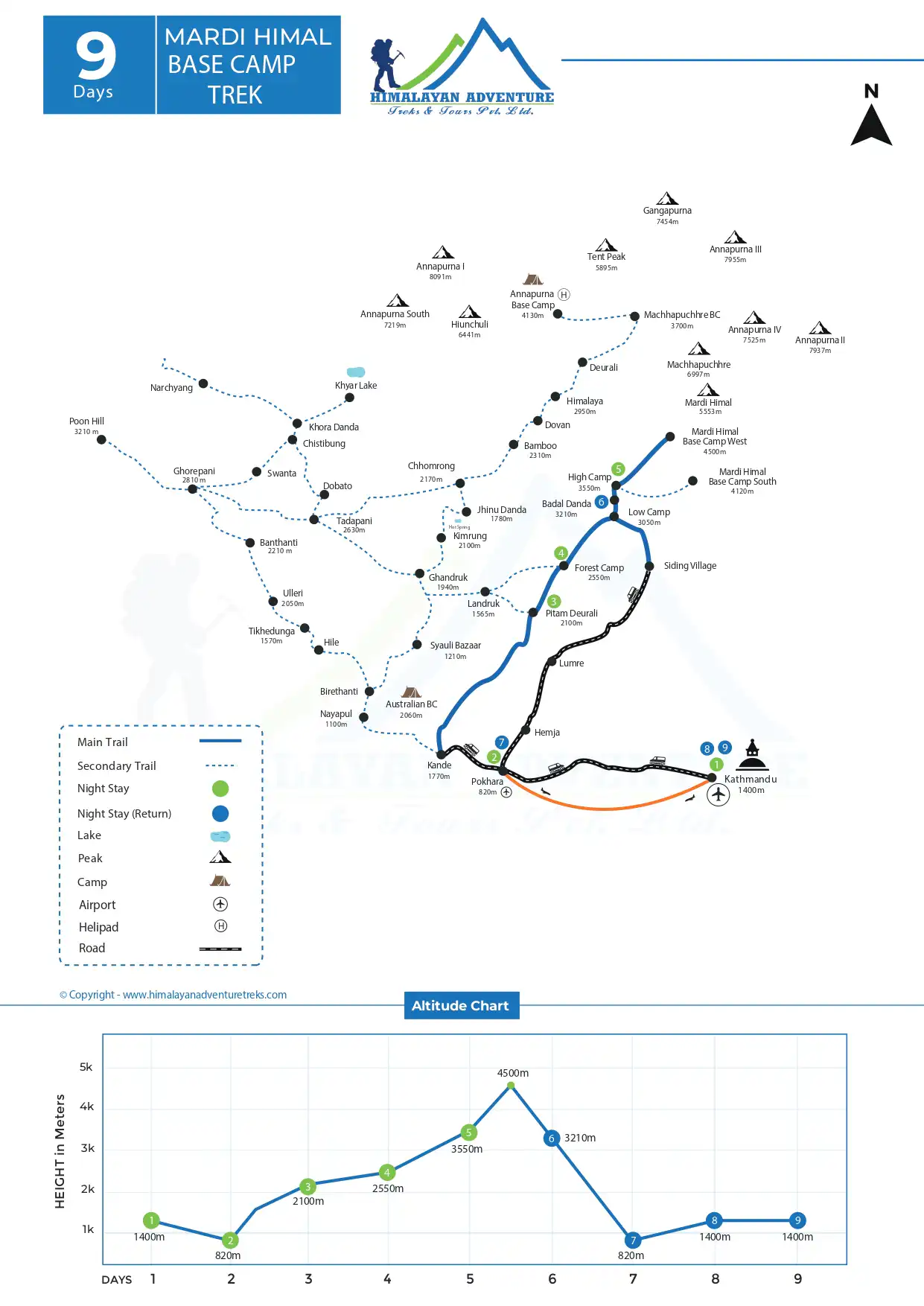
The Mardi Himal Trek typically begins from the lakeside city of Pokhara, often regarded as the gateway to the Annapurna region. From Pokhara, trekkers embark on a scenic drive or short flight to the trailhead at Phedi or Kande, depending on the chosen itinerary. The trekking route then winds its way through a series of picturesque villages and pristine forests, gradually gaining altitude as it approaches the High Camp. Along the way, trekkers stay in teahouses or lodges, enjoying warm hospitality and hearty meals.
The typical itinerary for the Mardi Himal Trek includes stops at locations such as Dhampus, Forest Camp, Low Camp, High Camp, and Siding. While the duration and specific stops may vary depending on the chosen route and pace, most trekkers complete the journey in about a week, allowing ample time for acclimatization and exploration.
Logistics and Considerations:
Permits: As with any trekking adventure in Nepal, obtaining the necessary permits is essential for the Mardi Himal Trek. Trekkers are required to obtain the Annapurna Conservation Area Permit (ACAP) and the Trekkers’ Information Management System (TIMS) card before setting out on the trail.
Accommodation: Accommodation along the Mardi Himal Trek is primarily in teahouses or lodges operated by local communities. While basic, these establishments offer comfortable lodging and delicious meals, providing a cozy retreat after a day of trekking.
Season: The best time to undertake the Mardi Himal Trek is during the spring (March to May) and autumn (September to November) seasons when the weather is generally clear, and the views are at their most spectacular. During the monsoon season (June to August), heavy rainfall can make the trails muddy and slippery, posing challenges for trekkers.
Fitness Level: While the Mardi Himal Trek is considered moderately challenging, trekkers should have a reasonable level of fitness and stamina to tackle steep ascents, rocky terrain, and high altitude. Prior hiking experience and adequate preparation can enhance the overall enjoyment of the trek.
Altitude Considerations: Altitude sickness is a potential risk for trekkers ascending to higher elevations. It’s essential to acclimatize properly, stay hydrated, and listen to your body’s signals to prevent altitude-related complications.
Experiences along the Trail:
Rhododendron Forests: The trekking route passes through enchanting rhododendron forests, especially vibrant during the spring season when the hillsides come alive with a riot of colors.
Local Hospitality: Interacting with the friendly locals, sampling authentic Nepali cuisine, and experiencing the warmth of Gurung hospitality are among the most memorable aspects of the trek.
Sunrise Views: Witnessing the sunrise from vantage points such as Pothana or High Camp offers a mesmerizing spectacle as the first rays of sunlight illuminate the snow-capped peaks in a dazzling display of light and shadow.
Photography Opportunities: From sweeping mountain panoramas to quaint village scenes and cascading waterfalls, the Mardi Himal Trek presents endless opportunities for photographers to capture the beauty of the Himalayan landscape.
Mardi Himal Trek Difficulty:
Altitude: While not as high as some other treks in the region, Mardi Himal Trek still involves ascending to significant altitudes, reaching around 3,580 meters at High Camp. Altitude sickness can be a concern for some trekkers, so proper acclimatization and hydration are crucial.
Terrain: The trail includes steep ascents, rocky paths, and sections with uneven terrain. Trekkers should be prepared for uphill climbs and downhill descents, which can be physically demanding, especially for those with limited hiking experience.
Weather: Weather conditions in the Himalayas can be unpredictable, with sudden changes in temperature, wind, and precipitation. Trekkers may encounter rain, snow, or fog, particularly during the monsoon season, which can make the trails slippery and muddy.
Remote Locations: Some parts of the trek pass through remote areas with limited access to medical facilities and amenities. Trekkers should be self-sufficient and prepared to deal with minor injuries, illnesses, or emergencies.
Mardi Himal Trek Cost, Budget:
The overall cost of the Mardi Himal Trek cost can vary depending on factors such as duration, accommodation preferences, transportation, and additional expenses. Here’s a rough breakdown of potential expenses:
Permits: Annapurna Conservation Area Permit (ACAP) and Trekkers’ Information Management System (TIMS) card: approximately $40-50 USD combined.
Accommodation: Teahouse or lodge accommodation along the trek can range from $5-20 USD per night, depending on the level of comfort and facilities.
Food: Meals at teahouses or lodges typically cost between $5-15 USD per meal, depending on the menu items and location.
Transportation: The cost of transportation from Pokhara to the trek starting point (Phedi or Kande) and back can vary but is usually around $20-30 USD for a private vehicle or $5-10 USD for a shared jeep or bus.
Guide and Porter: Hiring a guide and/or porter is optional but recommended for those who prefer assistance with navigation, carrying gear, and cultural insights. Guide fees can range from $20-30 USD per day, while porter fees are approximately $15-25 USD per day, including meals and accommodation.
Miscellaneous: Additional expenses may include snacks, drinks, souvenirs, and tips for guides and porters.
Overall, a conservative budget for the Mardi Himal Trek could range from $500 to $1000 USD per person for a standard 5-7 day trek, excluding international airfare and travel insurance.
Mardi Himal Trek Itinerary/ Map:
7 Days Mardi Himal Trek Itinerary and Cost:
Day 1: Arrival in Pokhara
Day 2: Drive from Pokhara to Kande (1-2 hours) and trek to Forest Camp
Day 3: Trek from Forest Camp to Low Camp
Day 4: Trek from Low Camp to High Camp
Day 5: Acclimatization day at High Camp, optional hike to Mardi Himal Base Camp viewpoint
Day 6: Trek from High Camp to Siding
Day 7: Trek from Siding to Lumre, drive back to Pokhara
Mardi Himal Trek 7 Days Fixed Departure, Cost 2024 and 2025:
No. of Pax Starting Price Inquiry
1 USD 899 Inquiry
2 to 4 USD 799 Inquiry
5 to 8 USD 699 Inquiry
9 to 12 USD 599 Inquiry
13 to 20 USD 499 Inquiry
This itinerary allows for a gradual ascent, adequate acclimatization, and exploration of key highlights along the trail. Trekkers can adjust the duration and pace according to their preferences and fitness level. It’s essential to factor in rest days and flexibility for unforeseen circumstances or changes in weather conditions. Additionally, some may choose to extend the trek or include side trips to neighboring attractions such as Ghandruk or Ghorepani.
Best Month/season for Mardi Himal Trek:
The best seasons for undertaking the Mardi Himal Trek are typically spring (March to May) and autumn (September to November). Here’s why:
Spring (March to May):
Weather: Spring brings mild temperatures and clear skies, making it an ideal time for trekking. The days are longer, allowing for more comfortable hiking conditions.
Flora: This season is renowned for its stunning rhododendron blooms, painting the hillsides with vibrant hues of red, pink, and white. The lush vegetation adds to the scenic beauty of the trekking route.
Views: Clear skies offer unobstructed views of the surrounding mountains, including Mardi Himal, Machhapuchhre (Fishtail), and other peaks of the Annapurna range. Sunrise and sunset views are particularly spectacular during this time of year.
Temperature: Although temperatures can vary depending on altitude, spring generally offers pleasant daytime temperatures, making trekking comfortable without the extreme cold of winter or the heat of summer.
Autumn (September to November):
Weather: Autumn is characterized by stable weather conditions, with minimal rainfall and clear visibility. Trekkers can expect sunny days and crisp, cool evenings, creating ideal trekking conditions.
Panoramic Views: The post-monsoon period offers some of the clearest mountain views of the year, with crisp visibility and sharp outlines of the Himalayan peaks. Photographers and outdoor enthusiasts will appreciate the stunning panoramas.
Cultural Festivals: Autumn coincides with various cultural festivals in Nepal, including Dashain and Tihar (also known as Diwali). Trekking during this time allows visitors to witness traditional celebrations and immerse themselves in the vibrant cultural atmosphere.
Trail Conditions: The trails are generally dry and well-defined in autumn, making trekking easier and more enjoyable. There’s less risk of encountering muddy or slippery paths compared to the monsoon season.
Both spring and autumn offer excellent conditions for the Mardi Himal Trek, each with its unique highlights and attractions. Trekkers can choose the season that aligns best with their preferences and schedule, ensuring a memorable and rewarding adventure in the heart of the Himalayas.
Guide and Porters for Mardi Himal Trek:
While hiring a guide and porter for the Mardi Himal Trek is optional, there are several reasons why many trekkers choose to enlist their services, especially for longer or more challenging itineraries like the one outlined above:
Navigation and Route Finding:
The Mardi Himal Trek route can be complex, especially for those unfamiliar with the terrain. A guide is experienced in navigating the trails, ensuring that trekkers stay on the right path and avoid getting lost, particularly in areas with minimal signage or diverging paths.
Safety and Emergency Preparedness:
Guides are trained to recognize and respond to potential hazards along the trail, including altitude sickness, adverse weather conditions, and natural obstacles. They can provide guidance on proper acclimatization, first aid treatment, and evacuation procedures in case of emergencies.
Cultural Insights and Language Support:
Guides often belong to local communities and possess valuable insights into the region’s culture, traditions, and history. They can facilitate interactions with local villagers, translate conversations, and provide meaningful cultural exchanges, enhancing the overall trekking experience.
Porter (Sherpa) Assistance:
Carrying a heavy backpack can be physically taxing, particularly at higher altitudes. Hiring a porter allows trekkers to lighten their load and focus on enjoying the journey without the burden of excessive weight. Porters are accustomed to carrying trekking gear and supplies, ensuring that belongings reach the destination safely and efficiently.
Logistics and Planning:
Organizing logistics such as accommodation, meals, permits, and transportation can be challenging, especially for first-time visitors to Nepal. Guides are adept at making arrangements, booking accommodations, and coordinating logistics, streamlining the trekking experience and reducing logistical stress for trekkers.
Support and Encouragement:
Trekking at high altitudes can be mentally and physically demanding, particularly during challenging sections of the trail. Guides provide encouragement, motivation, and practical advice, helping trekkers overcome obstacles, maintain morale, and achieve their trekking goals.
While trekkers with prior experience and navigation skills may opt for a self-guided approach, hiring a guide and porter can enhance safety, comfort, and cultural immersion, especially for those seeking a more enriching and hassle-free trekking experience in the Himalayas. Ultimately, the decision to hire support staff depends on individual preferences, trekking objectives, and the level of comfort with independent travel.
Mardi Himal Trek without a Guide:
Trekking the Mardi Himal route without a guide is feasible for experienced hikers who are well-prepared, physically fit, and have previous experience in high-altitude trekking. However, there are certain safety considerations to keep in mind:
Trail Navigation:
The Mardi Himal Trek route is generally well-marked, but there are sections where the trail may be less defined, especially in remote areas. Trekkers without a guide should have strong navigational skills and be able to read maps and follow trail markers confidently.
Altitude Sickness:
Altitude sickness is a potential risk when trekking at higher elevations. Without a guide, trekkers must be vigilant in monitoring their own health and recognizing symptoms of altitude-related illnesses such as headaches, nausea, and dizziness. Proper acclimatization and hydration are crucial.
Emergency Response:
In the event of an emergency or medical issue, trekkers without a guide may face challenges in accessing assistance quickly. It’s essential to have a plan in place for communication and evacuation, as well as basic first aid knowledge and supplies.
Weather Conditions:
Weather in the Himalayas can be unpredictable, with sudden changes in temperature, precipitation, and visibility. Trekkers should be prepared for varying weather conditions and carry appropriate gear for rain, snow, and cold temperatures.
Cultural Interaction:
While trekking independently allows for greater flexibility and solitude, it may also limit opportunities for cultural interaction and local insights. Trekkers without a guide may miss out on learning about the region’s history, culture, and traditions from a knowledgeable local perspective.
Personal Safety:
Trekking alone or without a guide carries inherent risks, including the potential for accidents, injuries, or encounters with wildlife. Trekkers should exercise caution, especially when traversing rugged terrain, crossing streams, or navigating steep ascents and descents.
Equipment and Supplies:
Without a guide or porter, trekkers are responsible for carrying all necessary gear, supplies, and provisions themselves. It’s essential to pack light but adequately for the journey, ensuring sufficient food, water, and emergency essentials.
While trekking without a guide offers a sense of freedom and self-reliance, it’s important to weigh the risks and benefits carefully and make an informed decision based on individual experience, skills, and comfort level. For those less experienced or unfamiliar with the region, hiring a guide or joining a guided trekking group can provide added safety, support, and peace of mind while exploring the Mardi Himal route.
Equipment (Gears) list for Mardi Himal Trek for all seasons:
Clothing:
Moisture-wicking Base Layers:
Long-sleeve shirts (synthetic or wool)
T-shirts (synthetic or wool)
Thermal underwear (tops and bottoms)
Insulating Layers:
Fleece jacket or pullover
Insulated down or synthetic jacket (for colder temperatures)
Insulated pants or trekking pants (optional for colder months)
Outer Shell:
Waterproof and breathable jacket (Gore-Tex or similar)
Waterproof and breathable pants or rain pants
Headwear:
Wide-brimmed hat or cap for sun protection
Beanie or thermal hat
Buff or neck gaiter
Sunglasses with UV protection
Handwear:
Lightweight gloves (for sun protection)
Insulated gloves or mittens (for colder temperatures)
Footwear:
Hiking boots or trekking shoes with good ankle support
Comfortable camp shoes or sandals
Hiking socks (synthetic or wool) and liners
Equipment:
Backpack:
Daypack (20-30 liters) for carrying essentials during daily hikes
Sleeping:
Sleeping bag suitable for temperatures encountered (down or synthetic, 0°F to 20°F/-18°C to -6°C)
Sleeping pad or inflatable mattress for insulation and comfort
Trekking Poles:
Adjustable trekking poles for stability and reducing strain on knees during descents
Headlamp/Flashlight:
LED headlamp or flashlight with extra batteries for evening and early morning activities
Water Bottles/Hydration System:
Water bottles or a hydration reservoir (2-3 liters capacity) for staying hydrated along the trail
Personal Hygiene Kit:
Toothbrush, toothpaste, and dental floss
Biodegradable soap and shampoo
Hand sanitizer and/or wet wipes
Quick-drying towel
Sun Protection:
High SPF sunscreen and lip balm
Sun hat with a wide brim
Sunglasses with UV protection
First Aid Kit:
Basic first aid supplies, including bandages, antiseptic wipes, adhesive tape, blister treatment, pain relievers, and any personal medications
Navigation: (Optional)
Detailed map of the trekking route and the surrounding area
Compass or GPS device (optional)
Repair Kit and Tools:
Multi-tool or knife
Duct tape for gear repairs
Trash Bags:
Ziplock bags or stuff sacks for organizing and waterproofing gear, as well as for carrying out trash and waste
Miscellaneous:
Camera/Gear:
A camera or a smartphone for capturing memorable moments
Extra batteries or a portable charger
Guidebook/Reading Material:
Trekking guidebook or reading material for leisure time
Snacks/Energy Food:
High-energy snacks such as nuts, trail mix, energy bars, and chocolate for on-the-go fuel
Trekking Permit/Documentation:
Annapurna Conservation Area Permit (ACAP)
Trekkers’ Information Management System (TIMS) card
Passport and necessary identification
Cash:
Sufficient Nepalese rupees for purchasing meals, drinks, and souvenirs along the trek
It’s essential to pack lightweight and compact gear while ensuring that you’re adequately prepared for varying weather conditions and terrain challenges encountered during the Mardi Himal Trek. Adjustments to the gear list may be necessary based on individual preferences, season, and specific itinerary. Additionally, renting or purchasing gear in Pokhara is possible for those who prefer not to carry all the equipment from home.
Conclusion:
The Mardi Himal Trek beckons adventurers with its pristine beauty, cultural richness, and sense of wilderness exploration. Whether you’re a seasoned trekker seeking new horizons or a first-time visitor to Nepal, this off-the-beaten-path trek promises an unforgettable journey through some of the most spectacular landscapes on earth. From panoramic mountain views to encounters with local communities, every step along the trail reveals a new facet of Nepal’s enchanting Annapurna region, leaving an indelible imprint on the soul of the traveler. Embark on this epic adventure and immerse yourself in the magic of the Himalayas on the Mardi Himal Trek.


