


Nepal Trekking Permit and Fees (2026)
Nepal is a small, landlocked country in South Asia, nestled between the giants of India and China. But geographically and in the hearts of adventurers, it’s a giant itself. It is most famous for:
-
The Himalayas: Nepal is home to eight of the world’s fourteen highest peaks over 8,000 meters, including Mount Everest (Sagarmatha), the highest point on Earth.
-
Incredible Diversity: The terrain rises from the low, subtropical jungles of the Terai plains (as low as 60 meters) to the arctic conditions of the high Himalayas in just about 150 km, creating an astonishing range of ecosystems and cultures.
-
Rich Culture: It’s a multicultural, multi-ethnic, and multi-lingual country with a deep history of Hinduism and Buddhism, evident in its countless temples, monasteries, and festivals.
Trekking is the primary way to experience Nepal’s majestic mountains. Unlike hiking, trekking in Nepal often involves a multi-day journey from village to village, staying in teahouses (small mountain lodges), and immersing yourself in the local culture and breathtaking landscapes.
The “Why” Behind Trekking Permits
The fees you pay for permits are not just tourist taxes. They serve crucial purposes:
-
Conservation: The funds from National Park and Conservation Area permits go directly towards maintaining trails, managing waste, and preserving the fragile ecosystems of the Himalayas.
-
Local Development: Fees, especially the local municipality permits (like in Everest), are used for building schools, health posts, and infrastructure in remote villages that see thousands of trekkers but have limited resources.
-
Trekkers’ Safety: The TIMS card was specifically created to maintain a database of trekkers. In case of natural disasters or emergencies, authorities know who is in the region, aiding search and rescue operations.
-
Regulating Tourism: Restricted Area Permits control the flow of tourists into culturally sensitive and environmentally vulnerable regions, ensuring that tourism is sustainable and benefits the local communities.
A Detailed Breakdown of Nepal Trekking Permit Fees (2026)
Fees are generally stable, but always confirm with a registered trekking agency or the Nepal Tourism Board before your trip.
Category 1: The Standard Permits (For most major trekking regions)
| Permit Name | Required For | Cost (Per Person) | Where to Get It |
|---|---|---|---|
| TIMS Card (Trekkers’ Information Management System) |
Annapurna Region, Langtang, Rara Lake, etc. *Not required for Everest. |
Individual (FIT): NPR 2,000 With Agency (Group): NPR 1,000 |
Nepal Tourism Board (Kathmandu/Pokhara) or Trekking Agencies’ Association of Nepal (TAAN). |
| National Park Permit (e.g., Sagarmatha, Langtang) |
Entering specific national parks. | ~NPR 3,390 (NPR 3,000 + 13% VAT) |
Department of Tourism (Kathmandu) or at the park entrance gate. |
| Conservation Area Permit (e.g., ACAP, KCAP) |
Entering specific conservation areas. | ~NPR 3,390 (NPR 3,000 + 13% VAT) |
Nepal Tourism Board (Kathmandu/Pokhara) or at the entry checkpoint. |
Example: Annapurna Circuit Trek
You need both an Annapurna Conservation Area Permit (ACAP) and a TIMS Card. Total cost: ~NPR 3,390 + NPR 1,000/2,000 = ~NPR 4,390 to 5,390.
Category 2: Special & Restricted Area Permits (Require a Licensed Guide)
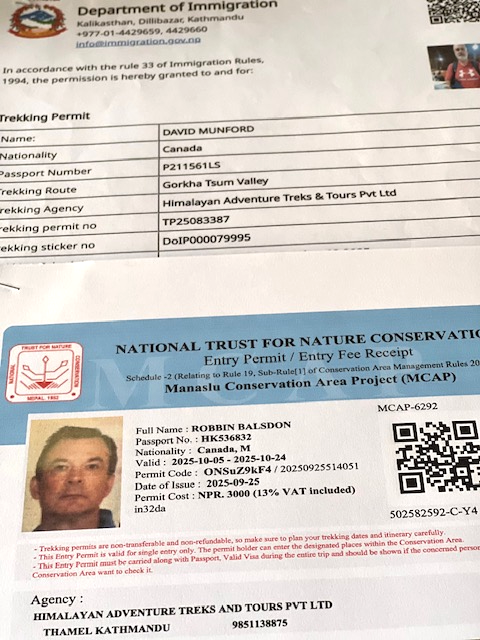
These are for remote, culturally sensitive regions. You must book through a registered trekking agency, and a minimum of two trekkers is usually required. Fees are in USD.
| Restricted Area | Permit Cost (Peak Season: Sep-Nov) | Permit Cost (Off-Season: Dec-Aug) | Minimum Duration |
|---|---|---|---|
| Upper Mustang | USD 500 (for 10 days) + USD 50/day after | USD 500 (for 10 days) + USD 50/day after | 10 Days |
| Manaslu Circuit | USD 100 (for 7 days) + USD 15/day after | USD 75 (for 7 days) + USD 10/day after | 7 Days |
| Upper Dolpo | USD 500 (for 10 days) + USD 50/day after | USD 500 (for 10 days) + USD 50/day after | 10 Days |
| Tsum Valley | USD 35 (for 7 days) + USD 5/day after | USD 25 (for 7 days) + USD 5/day after | 7 Days |
| Kanchenjunga | USD 100 (for 10 days) + USD 25/day after | USD 100 (for 10 days) + USD 25/day after | 10 Days |
Category 3: The Everest Region Special Case
The Everest region has had its own unique system since 2018.
-
Sagarmatha National Park Permit: Standard NPR ~3,390.
-
Khumbu Pasang Lhamu Rural Municipality Permit: NPR 2,000 per person.
Important: The TIMS Card is NOT required for the Everest region. These two permits replace it. You can buy the local permit at the entrance gate in Lukla or Monjo.
Which Permit Do You Need?
| Trekking Region | Required Permit(s) | Why It’s Needed |
|---|---|---|
| Everest Region | 1. Sagarmatha National Park Permit 2. Khumbu Pasang Lhamu Rural Municipality Permit |
The TIMS Card is no longer required for the Everest region. These two permits replace it. |
| Annapurna Region | 1. Annapurna Conservation Area Permit (ACAP) 2. TIMS Card (Trekkers’ Information Management System) |
The two classic, mandatory permits for this popular region. |
| Manaslu Region | 1. Manaslu Restricted Area Permit (RAP) 2. Annapurna Conservation Area Permit (ACAP) (for the southern part) |
A restricted area requiring a licensed guide and a minimum of 2 trekkers. |
| Upper Mustang | 1. Upper Mustang Restricted Area Permit (RAP) | A high-cost, restricted area preserving Tibetan culture. Requires a guide. |
| Upper Dolpo & Lower Dolpo | 1. Dolpo Restricted Area Permit (RAP) 2. Shey Phoksundo National Park Permit |
Very remote and expensive permits, especially for Upper Dolpo. |
| Kanchenjunga Region | 1. Kanchenjunga Restricted Area Permit (RAP) 2. Kanchenjunga Conservation Area Permit (KCAP) |
Remote eastern trek requiring a guide and two trekkers. |
| Langtang Region | 1. Langtang National Park Permit 2. TIMS Card |
An easily accessible trek from Kathmandu. |
Breakdown of Permits and Fees
1. TIMS Card (Trekkers’ Information Management System)
Required for: Annapurna, Langtang, and other general trekking regions. Not required for: Everest and any Restricted Area.
-
Purpose: To ensure trekkers’ safety and maintain a database.
-
Cost (2026 Expected – in NPR):
-
Individual Trekkers (Free Independent Trekkers – FIT): NPR 2,000 per person
-
Trekkers with a Licensed Guide/Agency (Group): NPR 1,000 per person
-
-
Where to Get It:
-
TAAN Office in Kathmandu or Pokhara.
-
Nepal Tourism Board (NTB) Office in Kathmandu or Pokhara.
-
-
Documents Required: Passport, 2 passport-sized photos, a copy of your Nepal visa, and insurance.
2. National Park & Conservation Area Permits
These are entry fees for protected areas.
-
Sagarmatha NP (Everest), Langtang NP, Shey Phoksundo NP (Dolpo), etc.
-
Cost: NPR 3,000 per person (plus 13% VAT, so total ~NPR 3,390).
-
Available at: DoT in Kathmandu, or the park entrance gate.
-
-
Annapurna Conservation Area (ACAP), Kanchenjunga Conservation Area (KCAP)
-
Cost: NPR 3,000 per person (plus 13% VAT, so total ~NPR 3,390).
-
Available at: DoT in Kathmandu, NTB in Pokhara, or the entry gate in Besisahar or Dunre.
-
3. Restricted Area Permits (RAP)
These are the most expensive and regulated permits. They require you to be with a licensed trekking agency and a guide. A minimum of 2 trekkers is usually required.
| Restricted Area | Permit Cost (September – November) | Permit Cost (December – August) | Minimum Days |
|---|---|---|---|
| Upper Mustang | USD 500 per person (for 10 days) + USD 50 per day thereafter | USD 500 per person (for 10 days) + USD 50 per day thereafter | 10 Days |
| Manaslu | USD 100 per person (for 7 days) + USD 15 per day thereafter | USD 75 per person (for 7 days) + USD 10 per day thereafter | 7 Days |
| Upper Dolpo | USD 500 per person (for 10 days) + USD 50 per day thereafter | USD 500 per person (for 10 days) + USD 50 per day thereafter | 10 Days |
| Lower Dolpo | USD 100 per person (for 10 days) + USD 25 per day thereafter | USD 100 per person (for 10 days) + USD 25 per day thereafter | 10 Days |
| Kanchenjunga | USD 100 per person (for 10 days) + USD 25 per day thereafter | USD 100 per person (for 10 days) + USD 25 per day thereafter | 10 Days |
| Humla (Lim Valley) | USD 100 per person (for 7 days) + USD 25 per day thereafter | USD 100 per person (for 7 days) + USD 25 per day thereafter | 7 Days |
4. Khumbu Pasang Lhamu Rural Municipality Permit
Required for: All treks in the Everest region (replaces the TIMS requirement here).
-
Cost: NPR 2,000 per person.
-
Where to Get It: This can be purchased at the Lukla Entrance Gate or the Nepal Tourism Board office in Kathmandu. It’s very easy to get upon arrival in Lukla.
How to Obtain the Permits: A Step-by-Step Guide
-
For Independent Trekkers (Non-Restricted Areas like Annapurna/Langtang):
-
Go to the NTB or TAAN office in Kathmandu or Pokhara.
-
Fill out the TIMS and ACAP/Langtang NP forms.
-
Provide your passport, photos, visa copy, and cash.
-
Receive your permits on the spot.
-
-
For Trekkers with an Agency (All Areas, including Restricted):
-
This is the easiest and recommended method.
-
Your chosen trekking agency will handle all permit paperwork.
-
You need to provide them with a clear copy of your passport, Nepal visa, and travel insurance.
-
The agency will get the permits a day or two before your trek starts.
-
Essential Tips for 2026
-
Carry Multiple Copies: Have at least 2-3 photocopies of your passport, visa, and all permits. You will need to show them at various checkpoints.
-
Cash is King: Permits are paid in Nepalese Rupees (NPR) for TIMS, National Park, and Local Permits. USD is used for Restricted Area Permits, but the agency will usually handle this. Have small bills for entry gates.
-
Check for Updates: Rules, especially for the Everest region, have changed recently. Confirm the latest requirements before you go.
-
Guide Mandatory for Restricted Areas: You cannot get a Restricted Area Permit without a licensed guide. This is a non-negotiable safety and regulation rule.
-
Keep Permits Accessible: Do not pack them in your main duffel bag. Keep them with your passport in a waterproof bag or your daypack.
Summary and Key Takeaways
-
Not One-Size-Fits-All: The permits you need depend entirely on where you are trekking.
-
Guide Mandatory for Restricted Areas: You cannot enter regions like Manaslu, Upper Mustang, or Dolpo without a licensed guide and a trekking agency.
-
Cash in Local Currency: Have Nepalese Rupees (NPR) for standard permits and TIMS. Your agency will handle the USD payments for restricted areas.
-
The Easiest Method: For any trek, the simplest way to get permits is to hire a reputable local trekking agency. They will handle all the paperwork, saving you time and hassle.
-
Carry Copies: Always carry multiple photocopies of your passport, visa, and permits, as you will need to show them at checkpoints along the trail.
By paying these permit fees, you are directly contributing to the preservation of the incredible Himalayan environment and supporting the local communities that make trekking in Nepal such a unique and rewarding experience.
FAQ: Nepal Trekking Permit and Fees (2026)
1. What trekking permits are required in Nepal?
Most trekkers need a TIMS (Trekkers’ Information Management System) card and a specific National Park or Conservation Area Permit, depending on the trekking region.
2. What is a TIMS card?
The TIMS card is a registration system managed by the Nepal Tourism Board and trekking agencies to ensure trekkers’ safety and record their details.
3. How much does a TIMS card cost in 2026?
For foreign trekkers, the TIMS card generally costs around NPR 2,000–3,000, depending on whether you trek independently or through an agency.
4. Do I need a permit for Everest Base Camp Trek?
Yes, you need the Sagarmatha National Park Permit and a local Khumbu Municipality permit for trekking in the Everest region.
5. What is the permit fee for Annapurna region?
Trekkers in the Annapurna region must obtain the Annapurna Conservation Area Permit (ACAP), which costs around NPR 3,000 for foreign nationals.
6. What is a Restricted Area Permit (RAP)?
A Restricted Area Permit is required for special regions like Upper Mustang, Upper Dolpo, and Manaslu, and must be arranged through a registered trekking agency.
7. How much does the Manaslu Restricted Area Permit cost?
The Manaslu RAP fee varies by season but generally starts from USD 100 per person for the first 7 days during peak season.
8. Where can I obtain trekking permits in Nepal?
You can get permits from the Nepal Tourism Board office in Kathmandu or Pokhara, or through a registered trekking agency.
9. Are SAARC nationals eligible for discounted permit fees?
Yes, trekkers from SAARC countries usually receive discounted rates for national park and conservation area permits.
10. Do children need trekking permits?
Yes, children generally require permits, but some conservation areas may offer free or discounted permits for minors.
-


