



The snow-capped top of mountain Everest shines like a postcard to all who love adventure and enjoy glory. Behind the dazzling facade, there is another darker secret that very few climbers like to talk about until they face up to it: the so-called Rainbow Valley Everest.
In travel magazines, the name is a charismatic one, evoking images of a green alpine pasture or a rainbow of mountain light. The grisly part right below the top is known as Rainbow Valley since the jackets and equipment of fallen climbers are brightly colored and are well preserved in the ice there.
It is where the ambitious come into contact with the inhospitable environments of the Death Zone of Mount Everest. Such a contrast of beauty and horror summarizes the stakes of being at the top of the tallest mountain in the world.
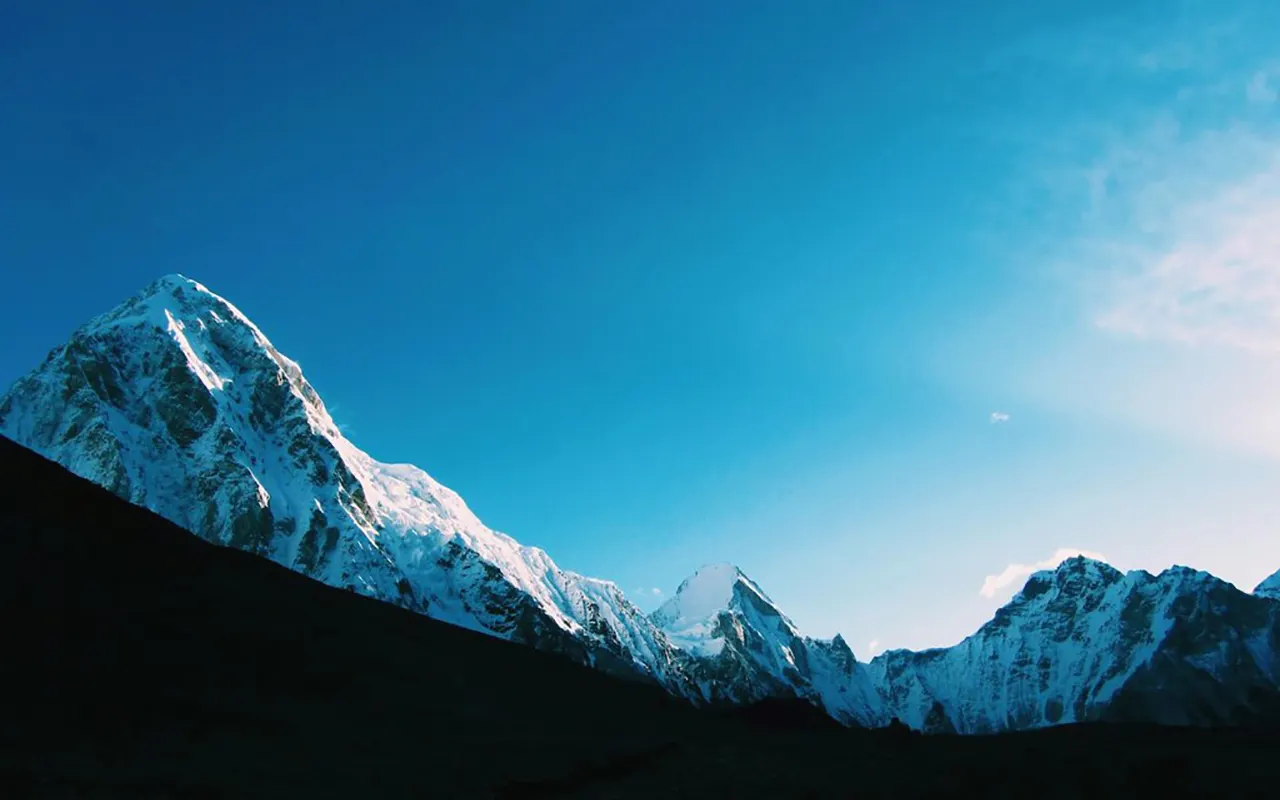
The Rainbow Valley Everest has become a common term of conversation in the last few years due to viral images and terrifying stories of mountaineers. The tragedies in the Death Zone of Mount Everest (the altitude above 8,000 meters where the body fails to adapt) are ever-increasing as more individuals venture to the high mountain.
The scene of the multi-colored down suits put in ice on the mountainside is fascinating and morbidly heartbreaking. It makes climbers reckon with the cost of their fantasies and leads armchair adventurers to wonder: what is Rainbow Valley, why do the bodies remain there, and what do they say to us about the human endeavor?
This blog seeks to demystify Rainbow Valley Everest by discussing its location, its origin, the tragedies surrounding it, and the ethical issues it brings. We will consider why the nickname is so deceptive, how the Death Zone of Mount Everest creates a situation where the rescue is almost impossible, and what lessons this creepy area teaches the people who enter the thin air.
On our journey, we will also distinguish between myth and reality with the help of recollections of the survivors and specialists in the field of mountaineering to create a complete portrait of this morbid record. To everyone considering climbing Everest or just wanting to study the mountaineering industry, it is necessary to know the story of Rainbow Valley, not to romanticize the concept of death, but to honor those people who died there.
What is Rainbow Valley on Mount Everest?
Rainbow Valley Everest is a section of the upper part of the mountain close to the summit that has been transformed into a temporary cemetery of climbers. Rainbow Valley is not a lush valley, but a steep stretch on the South Col route just below the Hillary step and in the Death Zone of Mount Everest.
Geographically, it is approximately around 8,400 meters (27,560 ft) on the southeast ridge, beyond Camp I, V. The precise position is not indicated on official maps, but is an informal name of Sherpas and mountaineers. The hikers ascending the southeast route have to go through this area during their last ascent towards the peak.
The term Rainbow Valley was introduced on the basis of the dramatic contrast between the snow, which is white in the middle of the snow-white down, and the colorful down suits, tents, and climbing gear that are scattered on the mountainside. Those reds, blues, oranges, and greens chase the light and become rainbow-frozen in time.
Numerous of the bodies have been preserved so well that the jackets still have the brand names. That frozen look is a consequence of the extreme cold and absence of water in the Death Zone of Mount Everest, which stops decay. Rainbow Valley Everest is not featured in official maps or guidebooks.
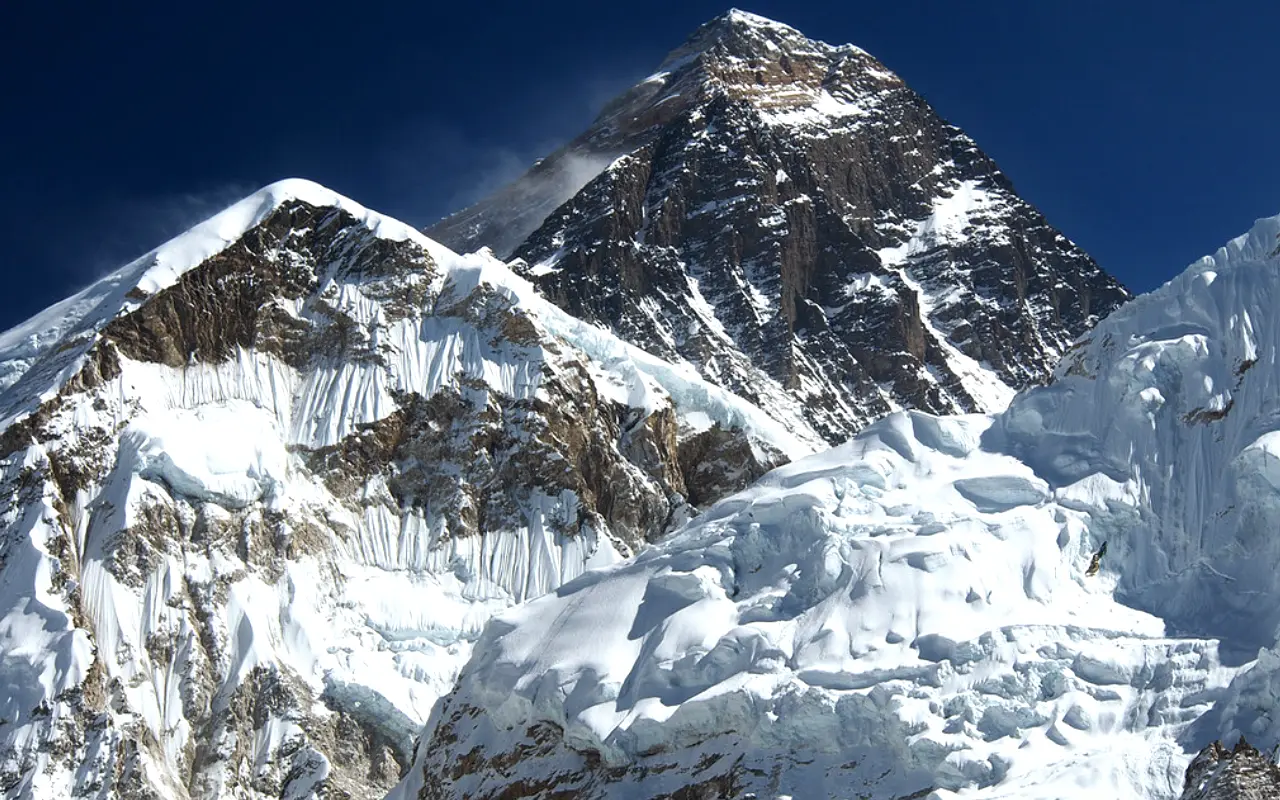
Its location is no secret, which is transmitted through expedition after expedition, and the Sherpa guides often caution the clients against the bodies they might come across. According to accounts, the bodies are in the positions where the climbers fell, as the slopes are so steep, the ice is too hard, and the air is too thin to retrieve the bodies.
The fame of the valley has increased with social media, but seasoned mountaineers emphasize that it is not a holiday destination. It is a cheap lesson to remember that every colored jacket was that of a person who risked everything to climb to a summit which we often look at as a photograph.
Why is it called Rainbow Valley?
Rainbow Valley Everest may strike you as the image of a picturesque alpine meadow, but there is nothing romantic or idyllic about it. The nickname is quite literal and ironic: the rainbow is a big number of colorful jackets, sleeping bags, tents, and backpacks abandoned by the climbers who faced their deaths on this territory.
The reds, yellows, blues, and greens shine out on a white background amidst the snow- and rock-covered landscape, forming a surreal and hauntingly beautiful spectacle. The colors eventually combined into the Rainbow Valley name.
The valley was famous partly due to the colorful narratives of those who travelled through it. Climbers recount their feelings of stepping over or around bodies still wearing their gear and their heads covered by their goggles and oxygen masks.
Due to the extreme cold temperature in the Death Zone of Mount Everest, a lot of bodies take decades to decompose. In some cases, climbers may still be able to identify the brands or patches on the down suits, and this forms an eerie linkage between generations of expeditions.
At the last ascent, the climbers are aimed at survival, and when they cross Rainbow Valley Everest, the spectacle of those colors may be both motivating and terrifying. Most of the climbers have stated that the colors helped remind them of prayer flags or even hope, and why they went there.
Some of them are devastated by the thought of lost lives. Some climbers say they also remind us that the valley is not really a resting place but a consequence of tragedy; every color represents a man who was unable to be brought down because of the hazards of getting a body in the Death Zone of Mount Everest.
The Death Zone of Everest Explained
To have a feel of Rainbow Valley Everest, it is necessary to know what the Death Zone of Mount Everest. Any altitude above 8,000 meters (26,247 ft) where the quantity of oxygen in the air decreases to approximately a third of that of the atmosphere at sea level is referred to as the Death Zone of Mount Everest.
The human body will not be able to acclimatize at this height. Cells start dying, mental performance worsens, and other vital body organs fail. Climbers on supplemental oxygen find it hard to stay long, even with supplemental oxygen.
As one climber described, the clock begins to run the moment you enter the death zone, a combination of low oxygen and extreme cold (below -40 °C), high winds, and physical fatigue makes the Death Zone of Mount Everest extremely hostile.
The route of the death zone along the southeast ridge is steep and narrow, so the climbers have to go very slowly, queuing in single lanes.
In 2019, a photo of a queue of climbers on the Hillary Step went viral and turned into world news in this traffic jam. In this zone, the slightest mistakes can prove to be fatal. The trail, as detailed in the article of Marvel Adventure, is so narrow that it can only accommodate one individual; in case of a collapse, the person is moved aside to allow other people to go by.
The situation also does not allow for rescue and body recovery. At this altitude, helicopters are not in a position to fly safely because of the thin air and unstable wind flows. Transporting a dead body, more than 100 kg with frozen equipment, would take several people’s valuable oxygen and energy, and expose their lives to danger.
According to the Marvel Adventure site, retrieval of the deceased in the death zone would cost more than USD 70,000 and could even claim more lives. On this account, the majority of bodies are left on the spot where they dropped, or covered by the snow. With time, the glowing equipment of these mountaineers makes the region appear like a rainbow.
Tragic Stories Behind Rainbow Valley
Behind the colours of Rainbow Valley Everest are real people with names, dreams, and loved ones. More than 300 climbers have perished on Everest since the first effort was recorded in 1922, and most of the fatalities have been in the Death Zone of Mount Everest.
Some are still in the memory of every climber as those legendary cautionary stories that many only recall through the color of their jackets. Green Boots is considered to be one of the most famous bodies. A body with green climbing boots became a landmark over the decades, on the north side of Everest, in a small cave near the summit.
It is supposedly the body of Tsewang Paljor, one of the 1996 Indian Police party who disappeared in a blizzard. The unique pair of boots of the corpse was an effective landmark in navigation.
A second casualty was a British climber, David Sharp, who tried to reach the summit alone in 2006. Sharp fell dead in the same cave as the Green Boots and was confused with the previous dead person. More than forty climbers passed him as he sat, arms wrapped around his legs, still alive but barely conscious.
Francys Arsentiev, the so-called Sleeping Beauty of Everest, also gave another tragic twist. In 1998, she became the first American woman to summit using no supplemental oxygen, and she and her husband Sergei parted in an unsuccessful attempt to descend. She later died of exposure. The next day, Ay Sergei is killed in a search for her. Their narrative emphasizes the human will to gain at any cost.
The first woman to die on Everest was Hannelore Schmatz, who died in 1979 after declining to retreat in the case of exhaustion. Her body was kept up against a backpack for years with her eyes frozen open and hair blowing in the wind. Later, two Sherpa died while trying to recover her, which demonstrates the dangers of retrieval.
George Mallory, whose body was discovered 75 years after his disappearance in 1924. Behind every colored jacket in Rainbow Valley Everest, there is a story of aspiration, wrong computations, or pure ill fortune. These tragedies remind us of the fact that Everest does not care about human ambition.
Ethics and Controversy
The presence of Rainbow Valley Everest provokes hard moral issues: should the bodies be removed out of respect for the dead, or should they remain as warnings to future climbers? There is no consensus. The families of the dead people commonly desire closure and decent burial, yet the cost of the bodies’ retrieval in the Death Zone on Mount Everest is so high and risky.
In others, Sherpa crews have been able to retrieve bodies under extreme danger to themselves, including an expedition that successfully transported the body of Francys Arsentiev out of sight in 2007 by Ian Woodall. Nonetheless, the fact that most of the climbers are happy to die on Everest ensures that they would not return home.
There is an argument that it is disrespectful to leave bodies and that this is littering. Others refute this by saying that Everest is a natural graveyard and the bodies are meant to remind climbers about the dangers.
In Sherpa and Buddhist cultures, the act of preserving bodies on the mountain may be regarded as letting the soul stay near the holy peak. The local beliefs are that the mountain is a god and the bodies are incorporated into the realm of the mountain.
The other aspect of controversy is whether or not climbers ought to go to aid people who are in distress. The incident of David Sharp divided the mountaineering community: some said that those who passed him did so because they had no means to assist him; others said that human life must be prioritized above summit goals.
In the Everest Death Zone, assisting one person can put your life at risk. The answer to the ethical issues is not so simple; however, the discussion itself has brought improved protocols. The majority of business expeditions are now subject to tight turnaround periods and proper oxygen rations, and giving guides the authority to make choices about forfeiting summit bids to preserve life.
Lessons for Climbers and Adventurers
Rainbow Valley Everest emphasizes the fact that climbing is not an adventure; it is a high-stakes venture. A good acclimatization is key to respecting the Death Zone, as altitude sickness is fatal. Important are physical training, high-altitude experience, and mental strength. Numerous fatalities are caused by the so-called summit fever. Retreat is knowledge that can save lives.
Climbers should know the path, weather conditions, and their own boundaries. Oxygen should be kept as a spare, because insufficiency generally results in a collapse in Rainbow Valley. It is imperative to have a competent expedition operator who has competent guides.
Rainbow Valley Everest makes us realize that ambition should not overpower human beings. Climbers have to be aware of those in distress and assist where safe to do so. Even such simple actions as encouragement or oxygen exchange are important. Connection with colleagues, base camp is critical. Through these tragedies, we learn humility, respect for nature, and the limits of human endurance.
Myths vs. Reality
Rainbow Valley Everest, with its dark name, invents myths. It is believed to be a man-made tourist attraction, but in fact, it is a hill on the southeast slope of the ridge where bodies are lying. It is not in trekking itineraries, or the view of Everest Base Camp. Climbers who climb through the South Col on their way to the summit see this very frequently without much notice.
Others think Rainbow Valley has its celestial colors as a result of minerals in the rock. The reality is that they are of down suits, boots, tents, and little, including oxygen bottles. This contaminant is environmental. Clean-up efforts seek to clean up litter, but a majority of corpses are left frozen in their positions where they fell. This is a tragic, as well as a colorful scene.
The other myth is that bodies are deliberately dumped there. As a matter of fact, it is close to impossible to recover in the Death Zone on Everest. Occasionally, fallen climbers are dragged out of slender routes or into crevasses to safety. This grim act isn’t disrespectful but necessary. With time, the remains can be moved or covered by the avalanches or winds.
Other stories glorify Rainbow Valley as a ghost town or a cursed area. Although it is spooky, there is no supernatural action. The ultimate risk is the ambition of the people, miscalculating, and overestimation Everest. The best safeguards against tragedy are respect, preparation, and responsible action, which ensure that climbers do not join this demented record.
Conclusion
Rainbow Valley Everest is paradoxical– a beautiful title as a monument to sorrow. In the Death Zone of Everest storybook landscapes are punctuated with the brightly colored gear of climbers that failed to make it home. Each item of clothing, tent, and boot chronicles acts of courage and strength. These fatalities are memorial objects, but were once human beings with dreams that expired without oxygen or energy.
Although the number of climbers to Everest is increasing, Rainbow Valley should be a cautionary symbol and not an aesthetically enticing one. Rainbow Valley emphasizes the deadly aspect of the Death Zone so that one is less likely to come through alive. Climbers must educate themselves, hear their guides, and be unafraid to turn back.
Frequently Asked Questions
Where is Rainbow Valley located on Everest?
Rainbow Valley Everest is an informal name for the slope just below the Hillary Step on the South Col route, at about 8,400 m. Rainbow Valley lies in the Death Zone of Mount Everest and is only encountered by climbers heading for the summit.
Why are bodies left in Rainbow Valley?
The risk and cost of recovering bodies in the Death Zone of Mount Everest are great. Helicopters cannot operate at these altitudes, and the hazards of carrying a frozen body can put rescuers’ lives in danger. Therefore, most people just leave the body where it falls.
Can trekkers visiting Everest Base Camp see Rainbow Valley?
No, Rainbow Valley Everest is on the summit route above Camp IV, infinitely higher than the hiking route to base camp. Only climbers heading for that last elusive summit pass through it.
How dangerous is the Death Zone?
The Death Zone of Mount Everest – the area above 8,000 m, has only one-third of the oxygen at sea level. The temperatures will regularly drop below -40 °C, and the person will be unable to acclimatize. More than 70–80 percent of Everest fatalities are in this zone.
Has anyone survived after collapsing in Rainbow Valley?
Once a climber collapses in Rainbow Valley, Everest, their chances of survival are extremely low because of the harsh conditions, and the retreat and rescue options are very limited. Therefore, most who die in this zone will never recover, and therefore it is deemed an “open graveyard” of Everest.


