



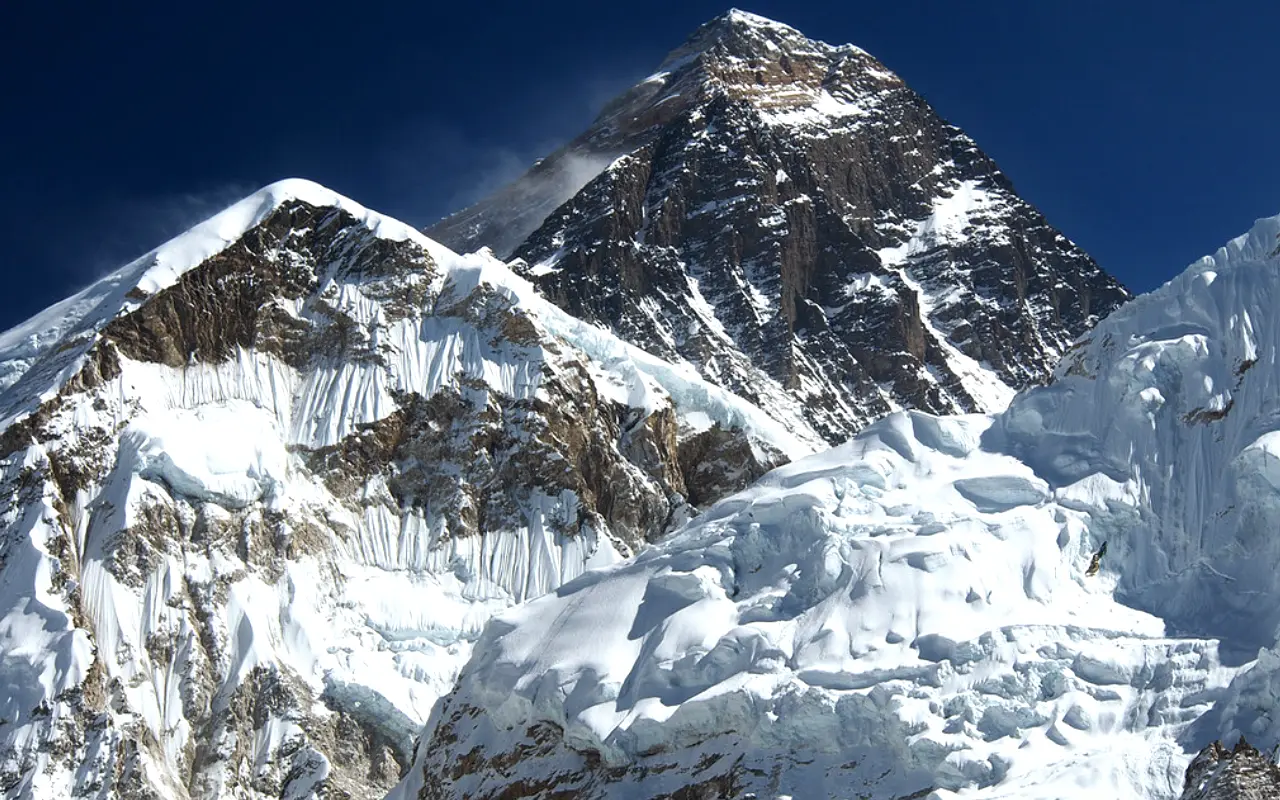
Mount Everest is known for its daunting challenges and iconic landmarks. Among these, one name stands out as particularly legendary: the Hillary Step. For decades, climbers spoke of the Hillary Step with a mix of reverence and apprehension. But what is the Hillary Step exactly? And why did it become such a famous and sometimes feared part of the Everest climb?
In this blog, we will be discussing the story of the Hillary Step. We will describe how it came to be named during the first successful ascent of Everest in 1953, and where it was found on the mountain. We will also see why it was so significant to the climbers and came to be referred to as the last challenge on the way to the summit.
Lastly, we will talk about the developments following the 2015 Nepal earthquake, the transformation or even evolution of the Hillary Step, and the implications of it to the present-day climbers. We will also tell you interesting stories and facts about Everest on the way in a very easy and understandable manner. We should discuss the history of the most popular step on Everest.
What Is the Hillary Step?
Put simply, the Hillary Step was a nearly vertical rocky outcrop high on Mount Everest, one of the last obstacles climbers faced before reaching the summit. It stood at an altitude of about 8,790 meters (around 28,840 feet) above sea level, just above the South Summit (~8,749 meters) and roughly 60 meters below Everest’s 8,849-meter summit. In mountaineering terms, it was a short rock wall (approximately 12 meters or 40 feet high), perched along the mountain’s southeast ridge.
The Hillary Step was situated between Everest’s South Summit (a secondary peak) and the true summit. On one side of this ridge is Nepal, and on the other side is Tibet; the Step itself was like a narrow gateway on this knife-edge ridge with dizzying drops on both sides.
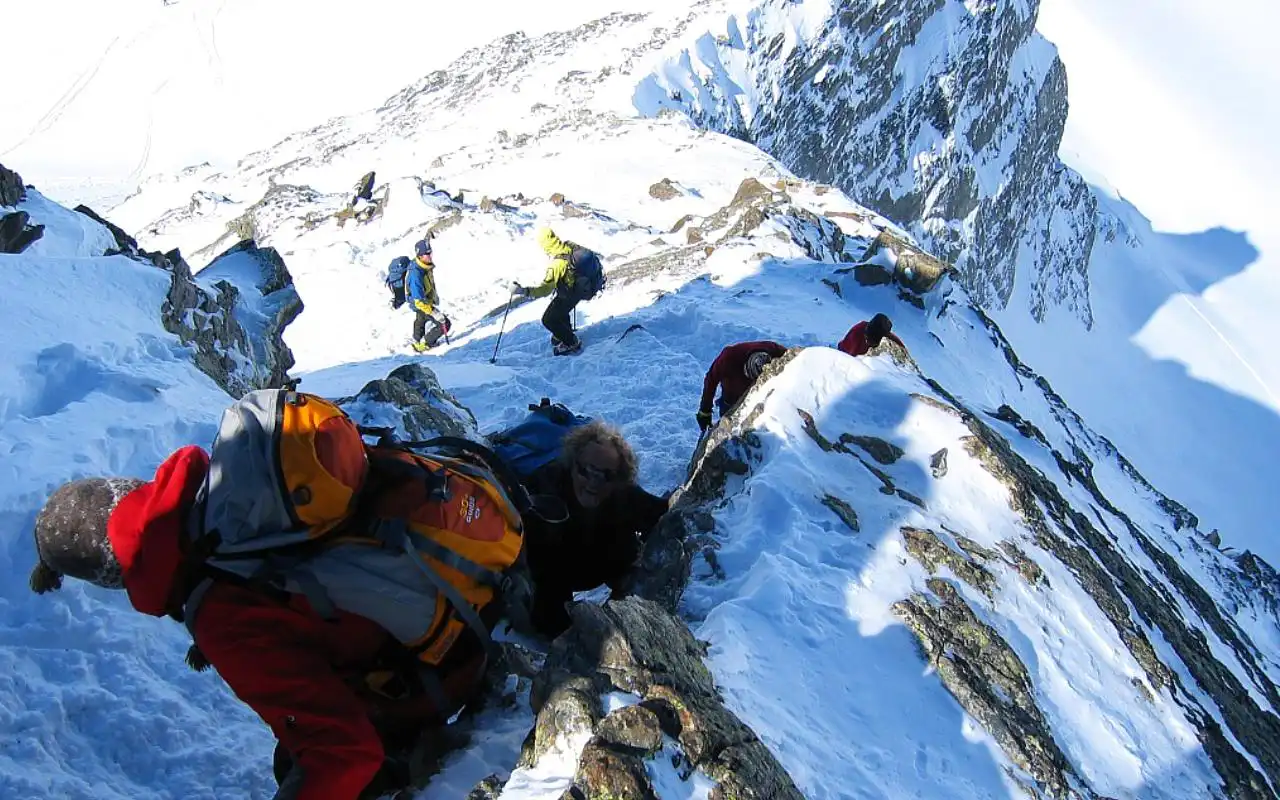
Climbers who approached the Hillary Step encountered a steep wall of rock and ice in front of them. Only one person at a time could climb up or down through this section, which meant it often turned into a climbers’ bottleneck during busy summit days.
Ascending the Hillary Step required care and a bit of nerve: you’d have to pull yourself up using whatever handholds and footholds you could find on the rock, often with the help of fixed ropes placed there by Sherpas.
At that extreme altitude – deep in Everest’s “death zone” where oxygen is scarce – even a relatively short climb like this feels exhaustingly difficult. The Hillary Step’s reputation grew because it was the final real test of a climber’s skill, strength, and determination right before gaining the rooftop of the world.
In case you are wondering how it came to be so named, it has everything to do with the first successful ascent of Mount Everest. The Hillary Step is named after Sir Edmund Hillary, a New Zealand mountaineer, who in 1953 became the first person to summit Everest alongside a Nepalese sherpa, Tenzing Norgay.
This was the final significant obstacle that Hillary and Tenzing had to overcome during that historic climb. The point on the mountain has ever since been referred to as the Hillary Step in recognition of the name of the man who was the first person to climb it. Even people who are not mountaineers tend to have heard of the Hillary Step – it’s a name that became synonymous with the final push to Everest’s summit.
The First Ascent and Naming of the Hillary Step (1953)
The Hillary Step story indeed starts on May 29, 1953, when Sir Edmund Hillary and Tenzing Norgay made history in mountaineering by becoming the first to reach the summit of Everest.
When they were within reach of the summit on that last morning, they met with a magnificent obstruction: a wall forty feet of rock and ice crossing the passage along the small ridge.
It was an unforeseen difficulty so near the summit, and it must have seemed, for a moment, daunting. Hillary subsequently wrote that he spotted this steep rock buttress and knew that it was the final major obstacle between them and the peak of Everest.
Determined to press on, Hillary looked for any possible route up the obstacle. He noticed a small crack between the rock outcrop and a sheet of ice plastered on its side. With no time to waste at nearly 8,800 meters altitude, Hillary wedged himself into that crack and began to climb.
In classic climber’s style, he used a technique called “chimneying” – bracing his back against one side and his boots against the other – while also chopping steps in the ice with his axe.
It was an incredibly strenuous effort, made even harder by the thin air and exhaustion of the high altitude. Hillary managed to pull himself up this narrow gap bit by bit. Tenzing Norgay, right behind him, ascended using the rope Hillary fixed and the steps cut into the ice.
At the top of this rock face, they finally stood above the Hillary Step, with only a relatively easier slope ahead leading to the true summit. Overcoming that hurdle was a pivotal moment.
In fact, Sir Edmund Hillary later recounted that once he and Tenzing conquered this obstacle, he felt confident they would reach the summit. And he was right – shortly afterwards, at 11:30 am, the pair stood on the highest point on Earth.
News of their successful ascent spread around the world, and along with it the story of that tricky rock step they had overcome just below the summit. In the years that followed, climbers and expedition chroniclers began referring to that section of the climb as the Hillary Step, honoring the man who led the first ascent up it.
Hillary himself was a humble character, and he didn’t go around naming features after himself – but the mountaineering community bestowed the name in recognition of his achievement. So, the myth of the Hillary Step was created, along with the victory of the Everest conquest.
Why the Hillary Step Became Legendary
As decades passed, the Hillary Step became more than a physical feature; it became a symbol of the challenge of Everest. It was legendary to mountaineers for a number of reasons. Firstly, the historical aspect: this was precisely the point where the expedition of Hillary and Tenzing had culminated in 1953 and made the place a dramatic and glorious part of the story.
All of the climbers who came after them knew that when they reached the Hillary Step, they were following in the footsteps of Hillary and Tenzing, just a few meters from the summit themselves. It was a rite of passage into the journey to the summit of Everest – a place where every climber could place their mark against the mountain and history.
Secondly, the Hillary Step was known for its technical challenge and exposure. Even though, by rock climbing grades, it wasn’t extremely difficult (some experts rated it as a modest climb at sea level), at nearly 8,800 meters, it became an exhausting and dangerous challenge.
Climbers often arrived at the Step in a state of extreme fatigue and oxygen deprivation, with adrenaline running high due to the extreme conditions of the death zone. Facing a near-vertical rock section with a 10,000-foot drop on one side and an 8,000-foot drop on the other definitely focuses the mind!
Seasoned mountaineers would feel their hearts pound not just from the exertion but from the sheer exposure and consequence of every move at that spot. In short, it was intimidating – one of those sections where your brain is yelling, “Don’t look down!”
The narrowness of the Hillary Step added to its notoriety. Because only one climber at a time could go up or down, it naturally created a bottleneck. On crowded summit days (and Everest has experienced many crowded summit days in recent decades), climbers sometimes had to queue up below the Step, waiting their turn to ascend or descend.
These delays could become dangerous, since every minute spent waiting in the “death zone” saps energy and precious oxygen. In fact, the Hillary Step has been a factor in some of Everest’s most famous episodes.
The Everest disaster of 1996 was a tragic event where a combination of factors, including sudden storms, exhaustion, oxygen depletion, and delays at the Hillary Step, led to fatalities among climbers.
More recently, a widely-circulated photograph in 2019 showed a huge line of climbers snaking down from the summit ridge, many of them waiting at the Hillary Step area to either go up or come down. Those images underscored how this spot, although small in size, played an outsized role in the flow of climbers on Everest.
For many Everest aspirants, successfully climbing the Hillary Step was emotionally significant. It marked the moment of “I’m really going to make it.” When climbing the Everest slopes, it took weeks to endure the icefalls, camp, and high-altitude treks. Achieving the Hillary Step was the gateway to success.
A few more steps beyond it, and the loftiest goal in mountaineering – standing on the summit of Everest – would be within reach. This psychological boost was huge, but so was the risk: until you cleared the Step, you couldn’t quite celebrate.
It has been said by many climbers that the victory over the Hillary Step was one of the most memorable and rewarding moments of their climb, exactly because it required so much at the very end of their journey.
The 2015 Nepal Earthquake and the Fate of the Hillary Step
The Hillary Step remained the same silent challenge to every new generation of climbers over many years. But nature had a surprise. In April 2015, Nepal experienced a large 7.8 magnitude earthquake, which led to extensive destruction in the country and the Himalayas.
Mount Everest shook violently during that quake, triggering avalanches and sadly ending the climbing season that year. In the aftermath, climbers and scientists speculated that such a powerful event might have altered features high on the mountain. One particular question on the minds of the mountaineering community was: What happened to the Hillary Step?
When Everest expeditions resumed in 2016 (the year after the earthquake), whispers began circulating that the Hillary Step didn’t look the same anymore. Some climbers who summited in 2016 reported that the familiar rock step appeared altered or ‘gone’ – replaced by a slope of snow and broken rock, possibly due to the 2015 earthquake. This was met with a lot of curiosity and a bit of skepticism. Was the Hillary Step truly collapsed, or was it simply buried under heavy seasonal snow?
The high winds and heavy snowfall near Everest’s summit can sometimes pack snow into rocky sections, making them look different from year to year. Because 2016 had a lot of snow up high, it was hard to be certain.
Photographs taken that year were inconclusive; the spot where the Hillary Step should be looked smoother and more rounded, but it was hard to tell if the underlying rock was still intact underneath.
Then came May 2017, when clearer evidence emerged. During that spring’s climbing season, conditions allowed better looks at the area, and several mountaineers confirmed that the Hillary Step’s iconic rock structure had indeed been altered dramatically – essentially, the iconic rock outcrop had collapsed or been destroyed.
British climber Tim Mosedale, after summiting Everest again, announced that “the Hillary Step is no more,” sharing photographs showing the slope of snow and broken rocks where it once stood.
The large boulder that once jutted out as the key part of the Step wasn’t there; instead, there was a jumble of smaller rocks and a snow ramp. Mosedale’s revelation made international news. Many in the climbing world felt a tinge of sadness – an iconic piece of Everest (and mountaineering history) had literally crumbled, likely as a result of the earthquake’s tremors loosening the formation.
Initially, there was some confusion. Nepalese authorities and experienced Sherpas reported that the Hillary Step might still be intact but covered in snow, making it hard to confirm its status immediately.
It’s understandable – admitting that a famous part of the route had collapsed might worry future climbers, and the heavy snow did make it hard to see the rocks clearly. But over time, as more climbers went up and more photos came out, the reality became clear.
By the late 2010s, most experts and Everest guides agreed that the Hillary Step, as it existed for decades, was effectively gone or at least greatly changed. The likely scenario is that the earthquake dislodged the huge chunk of rock that formed the Step, sending it down the side of the mountain. What remained was a reshaped slope where that rock used to be.
How Climbing Everest Has Changed Without the Hillary Step
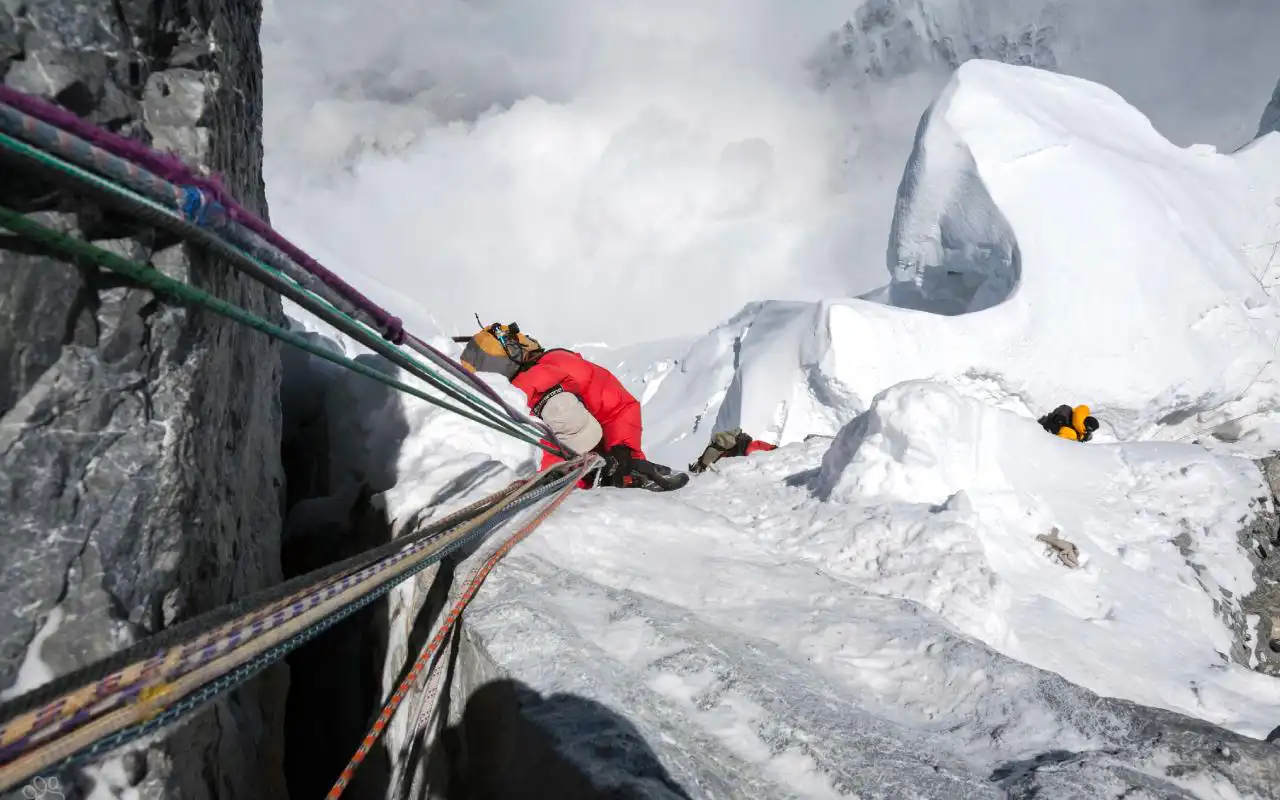
With the Hillary Step’s transformation, climbers today have a somewhat different experience on the final leg of Everest’s South Col route. So, what is it like now? In simple terms, that once-vertical rock hurdle is now essentially a slope.
Instead of having to scale a sheer rock face using hands and feet, climbers can ascend more by walking or stepping up (often kicking steps in the snow) on an inclined surface. In 2017 and the years just after, many climbers noted that this section was physically easier to climb than before.
Without the big rock in the way, there was no need for the same kind of technical maneuvering – no chimney technique, no hoisting oneself over a ledge. This undoubtedly comes as a relief to less experienced mountaineers or those absolutely exhausted in the thin air. In that sense, the alteration of the Hillary Step has slightly “tamed” that particular crux of the climb.
However, easier does not always mean safer or better in the world of high-altitude climbing. One consequence of the Hillary Step’s disappearance is that the route can actually become more complicated in terms of traffic management.
When the Step was intact, guides often set up separate fixed ropes – one for ascending and one for descending – so that climbers could go up and down somewhat efficiently one at a time. With the Step gone, the terrain turned into an open snow slope, which sounds simple, but it also means there’s no obvious single choke-point to clip into.
Climbers still have to go one by one in many spots because the ridge is narrow, but establishing two distinct paths is trickier. The result? There can still be bottlenecks, and possibly even more confusion as people pick their way up or down the new slope. In seasons when the snow is not well-packed, that area might be littered with loose rocks from the collapsed Step, adding to the challenge and hazard.
There’s also the factor of stability. The Hillary Step in its rock form was solid (albeit demanding to climb). In its current form, depending on conditions, climbers might be dealing with deep snow or unstable debris.
If snow conditions are poor (imagine a sugary, unstable snowpack), climbers could expend a lot of energy wallowing up the slope, or even trigger a small avalanche. If the snow is melted or blown off, they might be scrambling over rock fragments that aren’t firmly attached. Some guides have expressed concern that the changed terrain could be dangerous, especially if climbers bunch up there in a queue.
Mentally and culturally, the change in the Hillary Step is a mixed bag for mountaineers. On one hand, a daunting obstacle has been removed, which might slightly increase summit success rates because one less technical barrier exists to turn people back.
On the other hand, many climbers feel a sense of loss that they didn’t get to climb the famous Hillary Step in its original form. For years, climbers would come home with tales of how they tackled the Hillary Step; now their stories are a bit different.
Regardless, every person who reaches that spot still knows they’re at the final gateway to the summit of Everest. Whether it’s a steep snow incline or a rock wall, at nearly 8,800 meters, it remains a serious endeavor.
Climbers must stay focused and patient, especially if they find themselves in a line of people in the cold dawn waiting to ascend that last stretch. In short, while the character of the climb has changed, the significance of that location – and the need for determination and care – is as strong as ever.
The Legacy of the Hillary Step
Today, when you ascend Everest by the Southeast Ridge, you find yourself going by the place where the Hillary Step was, though it is no longer quite the walk it was. Out of respect to history and habit, many climbers and guides refer to that section as the Hillary Step. The Hillary Step, in some sense, continues to exist as a concept and a place, though it may not refer to that physical feature.
Its history is included in all the tales of the Everest top since the year 1953 to date. Even those who make it today often repeat in their stories how the region once called the Hillary Step has tested them, in a friendly or unfriendly way.
This rocky part, or, more precisely, the memory of it, symbolizes the human struggle to overcome the barriers of nature. That it existed so long as an actual stepping stone to the summit of the world, and then vanished through the action of natural forces, is a reminder of the dynamism of the planet upon which we live.
The routes to Everest may vary, but the adventure and challenge remain the same. These slopes will keep being tested by future climbers as they get accustomed to new challenges that the mountain throws at them.
The tale of the Hillary Step makes an intriguing Everest history to the casual reader and mountain lover. It possesses all of them: historic victory, risk and adventure, the development of nature, and even a certain enigma.
Since Hillary and Tenzing first ascended it in 1953, through the mountaineers who followed and the earthquake that transformed the familiar face of Everest, the Hillary Step has been the center of it all.
It also reminds us of the fact that on Everest, as in life, the greatest of all things is achievable, and what we have today may be gone tomorrow. But the tales of our predecessors serve to direct our successors.
The Hillary Step is an interesting chapter in the history of Mount Everest, whether you are an aspiring climber, a student researching Everest, or simply someone who enjoys a good adventure story. Its rock may be gone, but its myth is still alive, still a source of wonder, respect, and awe of what it requires to be on top of the world.


