



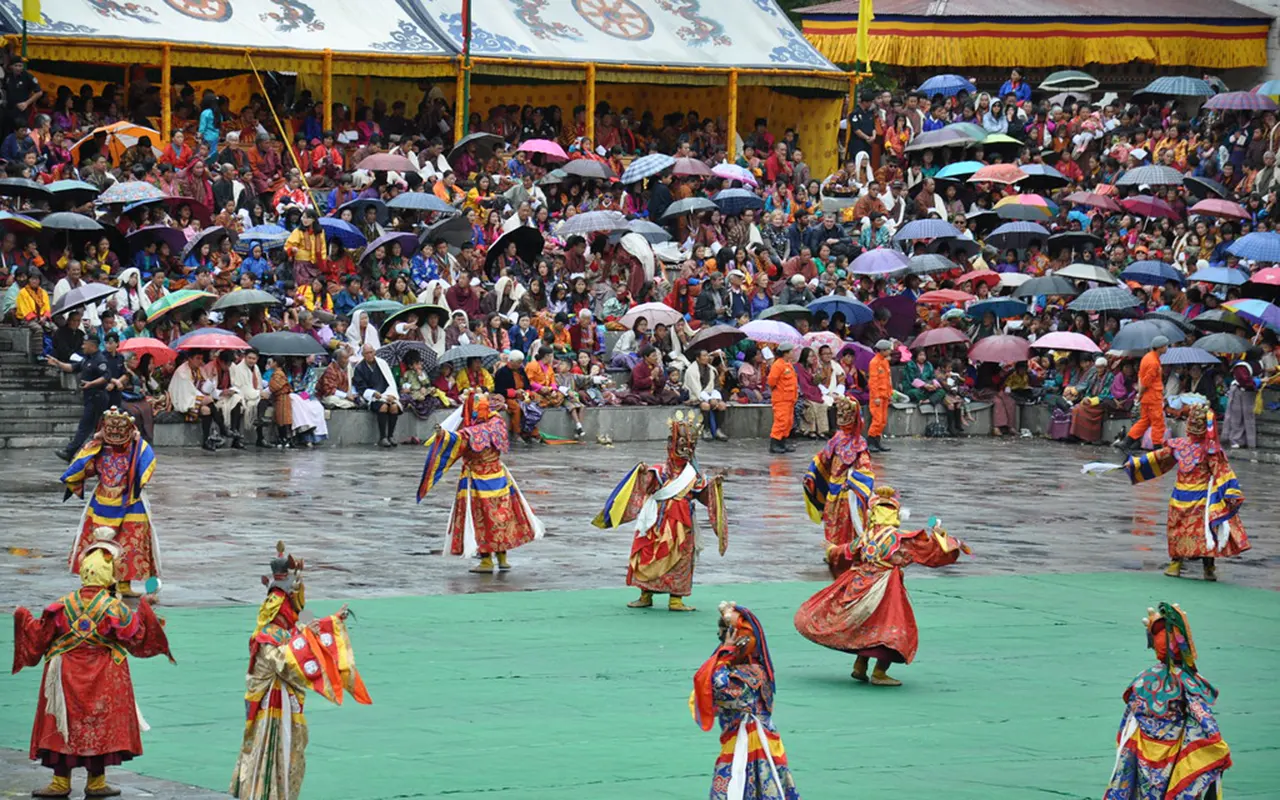
The Thimphu Tshechu Festival 2026 is a major religious festival in Bhutan and attracts large numbers of local Bhutanese and international visitors every year. The festival is held in the capital city of Thimphu where people love to perform dances, rituals and cultural ceremonies that have been performed in this region for centuries. The festival is scheduled to be held in 2026 from 21st to 23rd September, giving visitors three days to experience one of Bhutan’s most important cultural events.
If you are considering participation in Thimphu Tshechu Festival 2026, it is important to plan early. Bhutan mandates everyone to hire services from a registered tour operator while the festival dates are filled up fast as travelers from all over the world come to attend the festival. Himalayan Adventure Treks also assists you in arranging your trip to Bhutan for festivals by providing permits, lodging, transportation, and guide services as well as full tour packages. The company also offers help with the practical aspects of the trip, from the moment the traveller reaches the airport until they arrive at their destination.
This guide covers everything you need to know about the festival itself, what to expect on each day, how to get there, where to stay, and how to make the most of your time in Thimphu during one of the most important cultural events in Bhutan.
What Is the Thimphu Tshechu Festival?
Tshechu means tenth day in Dzongkha, the national language of Bhutan, and refers to the fact that these festivals are traditionally held on the tenth day of a month in the Bhutanese lunar calendar. They are celebrated in honour of Guru Rinpoche, also known as Padmasambhava, the eighth century Buddhist master who is credited with bringing Vajrayana Buddhism to Bhutan and the broader Himalayan region.
The Thimphu Tshechu is among the largest and most significant of all the tshechu festivals held across Bhutan. It takes place at the Tashichho Dzong, the impressive fortress monastery that serves as the seat of the Bhutanese government and the monk body. Another important part of the festival is the ceremonies and the beauty of the dzong makes it memorable.
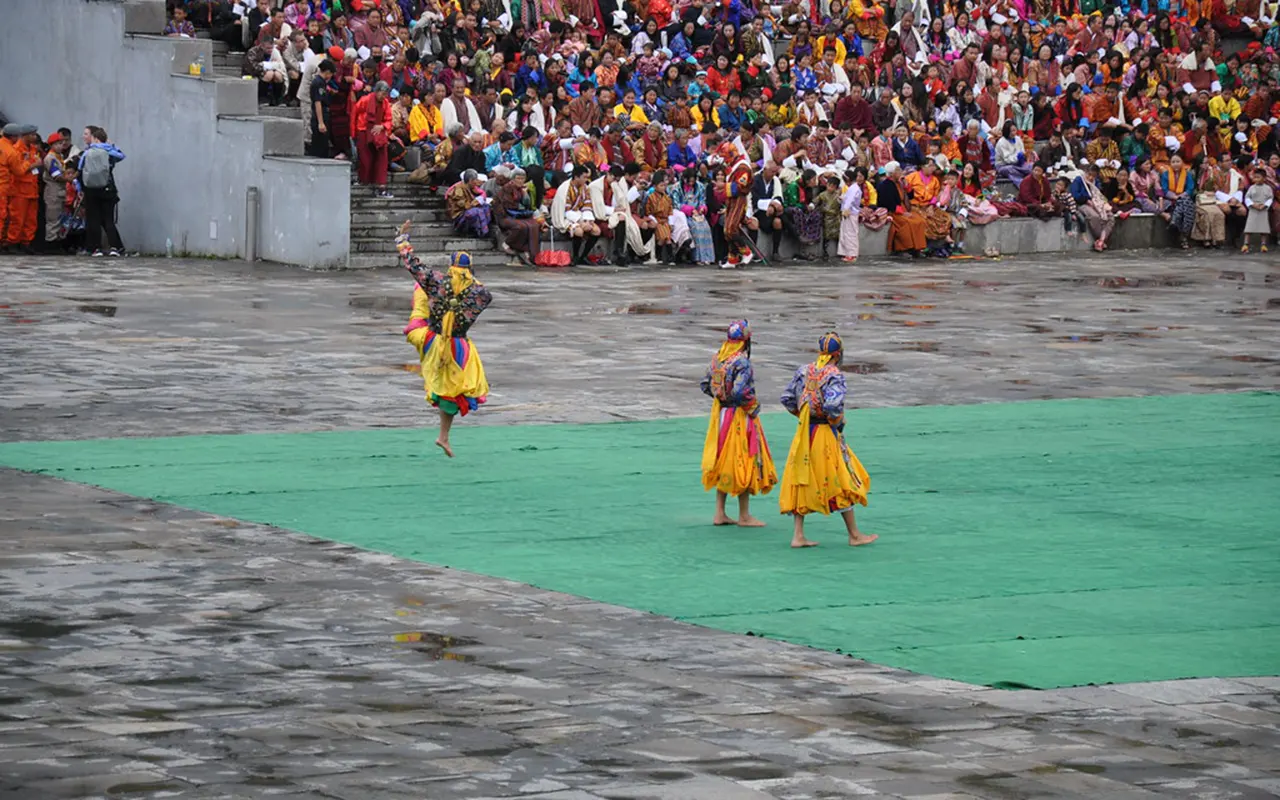
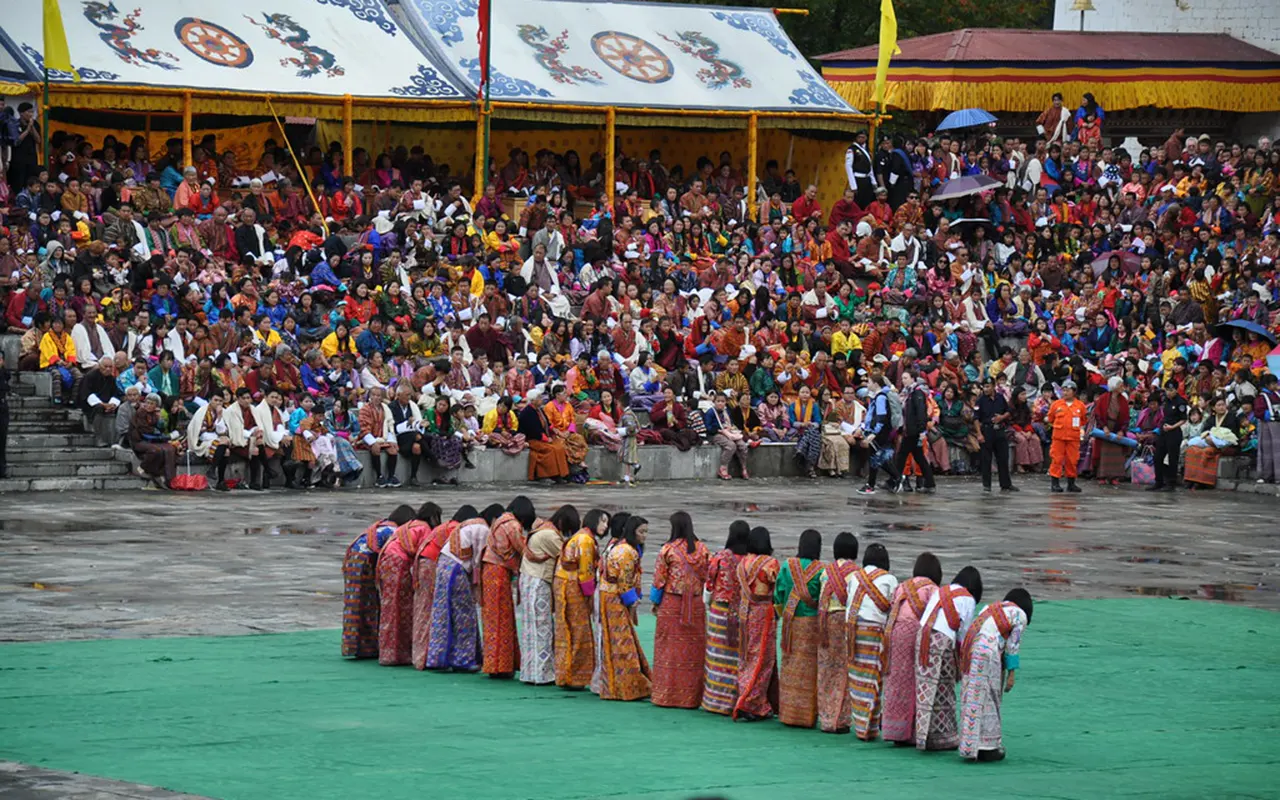
The festival is very meaningful in a religious context to the Bhutanese people. It is believed that attending a tshechu is an act of merit and Bhutanese families from villages all over the country come together in the events. It is an authentic community and welcoming atmosphere. Grandmothers wearing traditional kira dress will be sitting with young children, monks will be conducting ceremonies in the courtyard, and villagers who have walked for days will be present. For visitors, the experience feels much deeper than ordinary sightseeing.
The Masked Dances: The Heart of the Festival
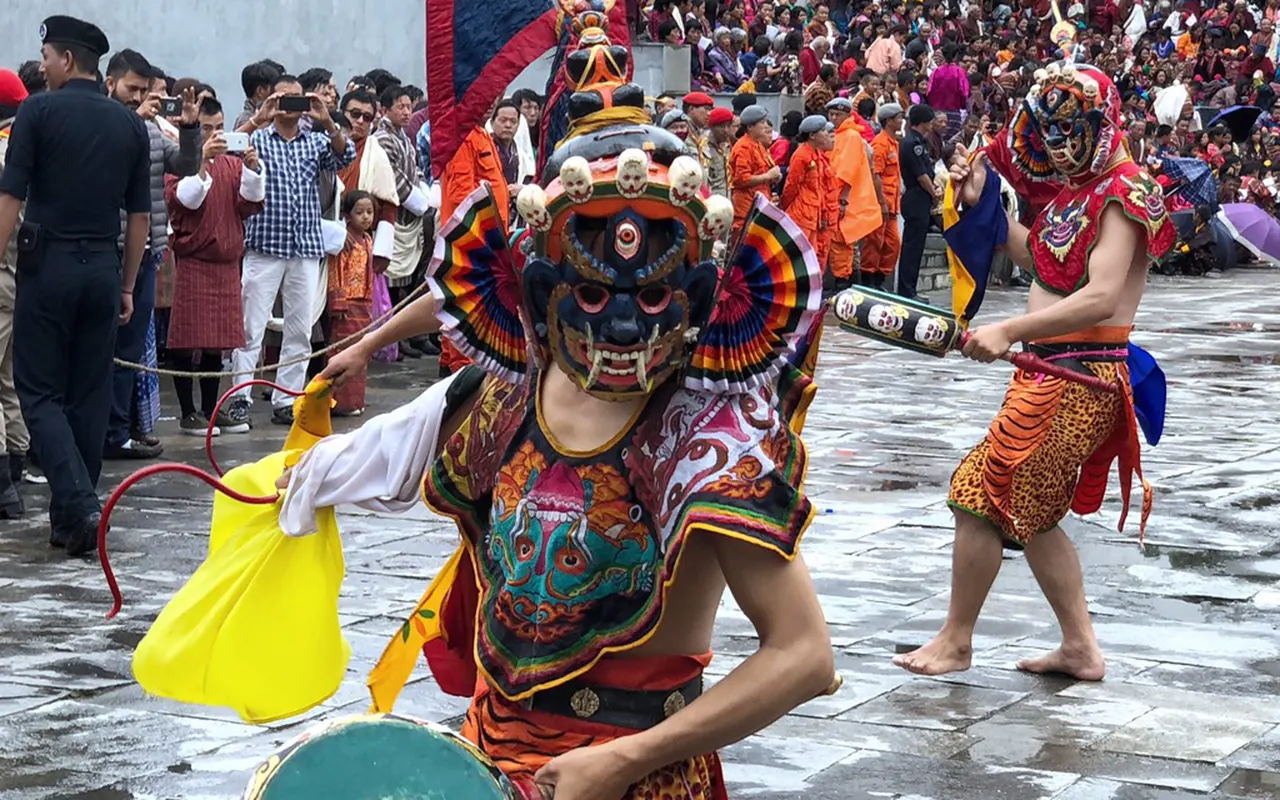
The main attraction of the Thimphu Tshechu Festival is the series of cham dances (sacred masked dances) performed in the main courtyard of the Tashichho Dzong over the course of the four days. The monks and trained lay people wear traditional costumes and large painted masks depicting various deities, demons, animals and figures from Buddhist mythology that they perform in these dances.
The dances are stories from Buddhist teachings and Bhutanese religious history. Some portray the victory of good over evil. Others are the story of the soul’s pilgrimage to other worlds.
A few are more devotional in nature, intended to invoke the blessings of specific deities. The performances are accompanied by traditional Bhutanese music played on long horns called dungchen, cymbals, drums, and oboe like instruments called gyaling. The music, dances and ambiance is much different from the festivals most visitors have been to.
Learning some of the significance of the various dances makes them more meaningful. A knowledgeable local guide, which all visitors to Bhutan are required to have, can explain each performance as it happens and give context that brings the dances to life beyond their visual appeal.
What Happens During the Thimphu Tshechu Festival 2026 (21st to 23rd September)
The Thimphu Tshechu Festival 2026 runs across three days from the 21st to the 23rd of September. The dances and ceremonies take place at specific times every day and most importantly, the last day is significant.
Day one, the 21st of September, typically opens with early morning rituals inside the dzong before the public dances begin in the courtyard. The opening dances set the tone for the festival and draw large crowds. Arriving early on the first day gives you the best position in the courtyard and a chance to take in the atmosphere before it becomes very busy.
Days two and three, the 22nd and 23rd of September, continue with a full programme of masked dances from morning through to the late afternoon. Different dances are performed on each day, so attending on multiple days gives you a different experience each day. These middle days are often slightly less crowded than the opening and closing days, which can make for a more comfortable viewing experience.
The final day is usually the most important day of the Thimphu Tshechu Festival 2026. The highlight of this last day is the unveiling of the Thongdrel (Guru’s Rinpoche’s sacred scroll painting or thangka) which is so large that it covers the whole front wall of the dzong. The Thongdrel is only shown in the early morning, usually before dawn and is rolled up before the sun is up to cast direct rays on it.
It is believed that merely viewing the Thongdels confers spiritual benefit and expels negative karmas. Thousands of Bhutanese gather in the darkness before dawn to witness this moment. For a visitor, standing in the dark courtyard as this enormous sacred artwork is slowly revealed in the lamplight is one of the most memorable moments many visitors experience in Bhutan.
Dress Code and Behaviour at the Festival
The Thimphu Tshechu Festival is a religious event and it is important to attend with appropriate respect for the cultural and spiritual context.
Bhutanese people dress in their finest traditional clothing for the festival. Men wear the gho, a knee length robe tied at the waist, and women wear the kira, a full length dress. As a visitor you are not required to wear traditional Bhutanese dress, but dressing modestly and neatly is expected. Smart casual clothing in muted colours is appropriate. Avoid shorts, sleeveless tops, or anything that would be considered informal or revealing.
Inside the dzong and during the dances, maintain a respectful manner. Do not walk in front of people who are praying or observing the ceremonies. Photography is generally permitted in the courtyard during the dances but check with your guide about any specific restrictions on the day. Flash photography is not appropriate during religious ceremonies. Move quietly and do not talk loudly during performances.
Shoes must be removed when entering certain areas of the dzong. Your guide will tell you exactly where this applies.
Getting to Thimphu for the Festival
Thimphu is the capital of Bhutan and the country’s largest city, though by most standards it is a small and very manageable town. Getting there requires flying into Paro International Airport, which is the only international airport in Bhutan and sits about an hour’s drive from Thimphu.
Paro airport is served by Druk Air and Bhutan Airlines, the two national carriers, from a limited number of cities including Kathmandu, Delhi, Bangkok, Singapore, and a few others. Flights in and out of Paro are weather dependent and can be delayed or cancelled in poor visibility since the approach through the mountain valley requires precise visual flying. Building a buffer day into your arrival plan is wise, particularly if you are travelling from a long distance and cannot afford to miss the opening of the festival due to a flight delay.
All visitors to Bhutan must enter with a valid visa arranged in advance through a licensed Bhutanese tour operator. The visa application is handled by the operator as part of your tour package. Independent travel is not permitted. The Sustainable Development Fee is a separate daily fee paid by most international visitors and supports Bhutan’s conservation, cultural preservation, infrastructure, education, and healthcare programmes. Accommodation, meals, guide service, transport, an The SDF rate can change, so confirm the latest amount with your tour operator before booking.
Where to Stay in Thimphu During the Festival
Thimphu has a range of accommodation options from budget guesthouses to mid range hotels and a small number of higher end properties. During the Thimphu Tshechu Festival 2026, rooms fill up very quickly. Booking accommodation several months in advance is not an exaggeration. Festival weeks are the most in demand periods in Bhutan’s tourism calendar and late bookings will find limited availability at any price point.
The centre of Thimphu has most of the good hotels within easy walking distance of each other and a short drive from the Tashichho Dzong. Staying centrally makes it much easier to attend early morning events like the Thongdrel unfurling on the final day, since you do not have to factor in a long transfer in the dark.
Mid range hotels in Thimphu during festival season cost roughly 150 to 250 USD per night depending on the property and what is included. Higher end boutique hotels and resorts on the outskirts of the city can cost considerably more. Your tour operator will handle accommodation booking as part of your package and can advise on the best options for your budget.
What Else to See and Do in Thimphu Around the Festival
Thimphu is worth spending extra time in beyond the festival days. The city has a relaxed, unhurried character that is quite different from other Asian capitals, partly because Bhutan has deliberately managed the pace of its development and modernisation.
The National Memorial Chorten is a large white stupa in the centre of the city that serves as a gathering place for local Bhutanese who come to pray and walk circuits around it throughout the day. Visiting in the morning when it is busy with devotees gives you a quiet and genuine sense of daily religious life in Bhutan.
The Buddha Dordenma statue, a large seated golden Buddha on a hill above the city, offers wide views over the Thimphu valley and is worth the short drive up. The Folk Heritage Museum in the city centre gives good context for traditional Bhutanese rural life and crafts. The weekend market along the river is a lively place to see local produce, textiles, and everyday life in the capital.
A day trip to the Punakha Dzong, about an hour and a half from Thimphu, is one of the most worthwhile excursions in Bhutan. This fortress monastery sits at the meeting point of two rivers and is arguably the most beautiful dzong in the country. Many visitors to the Thimphu Tshechu Festival combine their trip with a few days in Punakha and the surrounding valley.
Practical Tips for Attending the Thimphu Tshechu Festival 2026
- Book your entire trip through a licensed tour operator well in advance. Festival period availability goes quickly and last minute arrangements are very difficult.
- Arrive in Bhutan at least one day before the festival starts to allow for any flight delays from Paro and to give yourself time to settle and rest before the busy first day.
- Plan to attend the Thongdrel unfurling on the morning of the final morning. Set an alarm for well before sunrise and arrange transport with your guide the night before.
- Wear comfortable shoes you can stand in for several hours. The courtyard at Tashichho Dzong involves a lot of standing and the ground is uneven in places.
- Carry a light jacket even in September. Thimphu sits at around 2,300 meters and early mornings and evenings can be noticeably cool even during the warmer months.
- Bring some cash in Bhutanese Ngultrum for small purchases at the festival market stalls and local food vendors that set up around the dzong during the festival days.
- Let your guide explain the significance of each dance as the festival progresses. This context transforms what you are watching from visually rich performance into something genuinely meaningful.
Final Thoughts
The Thimphu Tshechu Festival 2026 runs from the 21st to the final morning and represents one of the best opportunities in the year to experience Bhutan at its most culturally alive. The masked dances, the religious ceremonies, the crowds of Bhutanese in their finest traditional dress, and the pre dawn gathering for the Thongdrel on the final morning combine into an experience that is very difficult to find anywhere else in the world.
Bhutan is a country that has made a deliberate choice to protect its culture, its environment, and its way of life. Attending the Thimphu Tshechu Festival as a respectful and well prepared visitor is one of the most rewarding ways to engage with that choice. You leave not just with photographs and memories but with a genuine sense of having been somewhere and seen something that very few people in the world get to experience.
Plan early, dress respectfully, listen to your guide, and give yourself enough days to absorb what Thimphu and the surrounding region have to offer. The festival is four days long but the country it sits in deserves considerably more of your time if you can manage it.


