



Conceptual Foundations of Tourism: Sunlust and Wanderlust
In the early 1970s, sociologist Stanley C. Gray introduced a framework categorizing tourist motivations into two primary types: Sunlust and Wanderlust.
-
Sunlust Tourism: This form is driven by the desire for relaxation and leisure in sunny destinations, often characterized by the “three S’s”: Sun, Sea, and Sand. Travelers seek environments that offer comfort and amenities not available in their usual surroundings.
-
Wanderlust Tourism: This type is motivated by a yearning to explore unfamiliar cultures, places, and experiences. It embodies a quest for knowledge, adventure, and personal growth through exposure to different ways of life.
Nepal predominantly appeals to Wanderlust tourists due to its rich cultural tapestry, diverse ecosystems, and opportunities for adventure.
Nepal’s Tourism Landscape
1. Adventure and Nature-Based Tourism
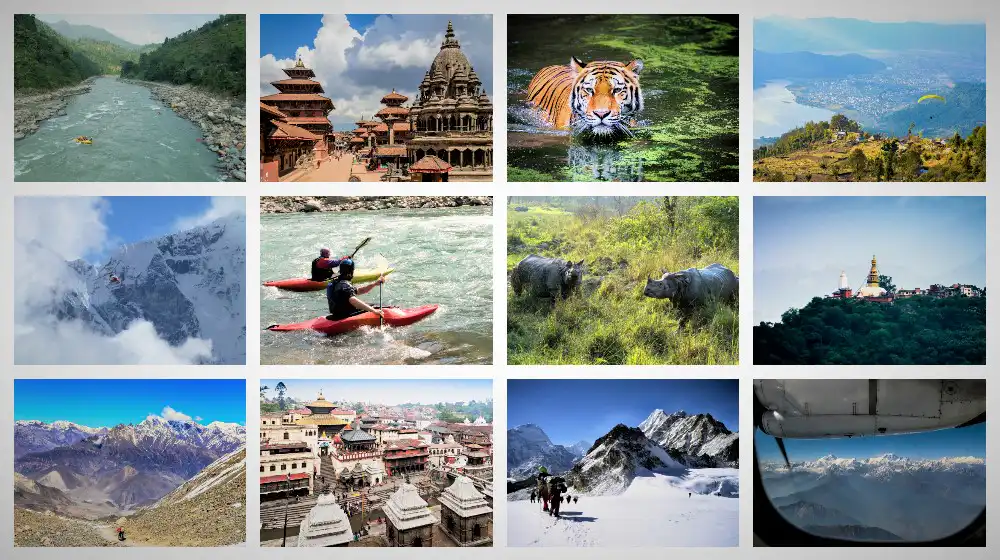
Nepal’s topography, dominated by the Himalayas, offers unparalleled opportunities for adventure tourism.
-
Trekking and Mountaineering: Home to eight of the world’s ten highest peaks, including Mount Everest, Nepal is a haven for trekkers and climbers. Routes like the Annapurna Circuit and the Everest Base Camp trek are globally renowned.
-
Great Himalaya Trail (GHT): This extensive trail system spans the length of Nepal, offering both high and low routes that traverse remote villages, diverse landscapes, and cultural sites.
-
Adventure Sports: Activities such as white-water rafting, bungee jumping, paragliding, and mountain biking are popular, especially in regions like Pokhara and the Trishuli River.
2. Cultural and Heritage Tourism
Nepal’s cultural diversity is reflected in its festivals, architecture, and daily life.
-
Historical Sites: Kathmandu Valley boasts seven UNESCO World Heritage Sites, including the Swayambhunath and Boudhanath stupas, and the Durbar Squares of Kathmandu, Patan, and Bhaktapur.
-
Festivals: Events like Dashain, Tihar, and Indra Jatra offer insights into Nepalese traditions and communal celebrations.
-
Ethnic Diversity: With over 120 ethnic groups, visitors can experience a mosaic of languages, customs, and lifestyles.
3. Spiritual and Pilgrimage Tourism
Nepal is a significant destination for spiritual seekers.
-
Lumbini: Recognized as the birthplace of Siddhartha Gautama (Buddha), it attracts Buddhists worldwide.
-
Pashupatinath Temple: One of the holiest Hindu temples, it draws devotees, particularly from neighboring India.
-
Muktinath and Janaki Temple: These sites are pivotal for both Hindu and Buddhist pilgrims.
4. Wildlife and Ecotourism
Nepal’s varied climates support a rich biodiversity.
-
National Parks: Chitwan and Bardia National Parks are habitats for species like the Bengal tiger, one-horned rhinoceros, and various bird species.
-
Conservation Efforts: Community-based initiatives promote sustainable tourism and wildlife protection.
5. Culinary Tourism
Nepalese cuisine offers a blend of flavors influenced by its diverse cultures.
-
Traditional Dishes: Staples like dal bhat (lentil soup with rice), momo (dumplings), and sel roti (rice doughnut) are must-tries.
-
Food Tours: Urban centers like Kathmandu and Pokhara offer culinary tours, introducing visitors to local markets and traditional cooking methods.
Economic Impact of Tourism in Nepal
Tourism is a cornerstone of Nepal’s economy, contributing significantly to GDP and employment.
-
GDP Contribution: In 2022, the direct contribution of travel and tourism to Nepal’s GDP was NPR 101.0 billion (2.1% of GDP). This figure is projected to grow by 4.3% annually, reaching NPR 168.3 billion (2.4% of GDP) by 2033.
-
Employment: The tourism sector supported 1.19 million jobs in 2023, accounting for 15.2% of total employment. This includes direct and indirect employment in areas such as hospitality, transportation, and tour operations.
-
Foreign Exchange Earnings: Tourism is a major source of foreign currency, aiding in balancing trade deficits and supporting economic stability.
Challenges and Opportunities
Challenges
-
Infrastructure Development: Remote tourist destinations often lack adequate infrastructure, including roads, healthcare, and communication facilities.
-
Environmental Concerns: Increased tourist footfall can lead to environmental degradation if not managed sustainably.
-
Political Instability: Periodic political unrest can deter potential visitors and affect investment in the tourism sector.
Opportunities
-
Sustainable Tourism: Implementing eco-friendly practices can preserve natural and cultural resources while attracting environmentally conscious travelers.
-
Community-Based Tourism: Engaging local communities in tourism can ensure equitable economic benefits and enhance authentic experiences for visitors.
-
Digital Promotion: Leveraging digital platforms for marketing can reach a broader audience and provide up-to-date information to potential tourists.
Conclusion
Nepal’s multifaceted tourism offerings, rooted in its natural beauty, cultural richness, and spiritual significance, position it as a unique destination for travelers worldwide. By addressing infrastructural and environmental challenges and embracing sustainable practices, Nepal can further enhance its appeal and ensure that tourism continues to be a robust pillar of its economy.


