

Duration
22 Days

Manaslu with Nar Phu Valley Trek – 22 Days


Trip Grade
Difficult
Group Size
2-16 People
Max Altitude
5,306m. / 17,408ft.
Best Season
Mar-May/ Sept- Nov
Activity
Trekking & Hiking
Meals
Breakfast, Lunch & Dinner
Accommodation
Hotels, Teahouses
Transportation
Private Vehicle & Jeep
Trip Customization
On request (click here)


Highlights of Manaslu with Nar Phu Valley Trek – 22 Days
- Traverse two high passes across the Himalayas, which have beautiful panoramic scenery.
- Walk in a distant valley, far away from the modern world.
- Visit the ancient villages like Sama Gaon, Nar, and Phu that have a rich Buddhist culture.
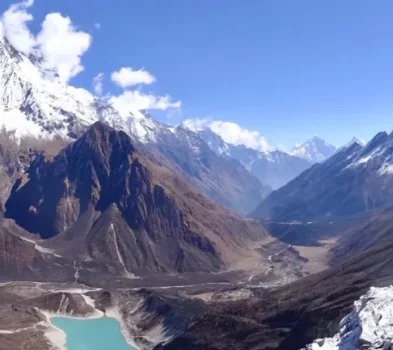
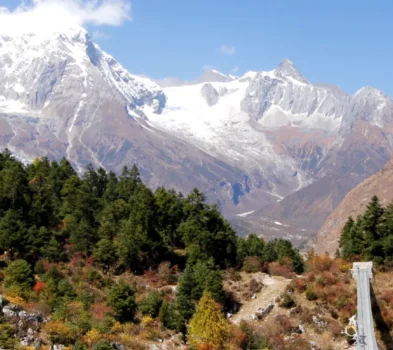
- Pass through a beautiful landscape, subtropical forests, alpine meadows, and glaciers.
- Witness majestic mountains such as Manaslu (8,163 m), Annapurna II, and Himlung Himal.
- See exotic wildlife like blue sheep and the Snow leopard, which is hard to find.
- Live the life of pure Himalayan hospitality in basic teahouses and mountain villages.
Trip Introduction
Manaslu with Nar Phu Valley Trek is an adventure of a lifetime that offers two of the most remote and satisfying areas of trekking in Nepal in a single, unbelievable trip. This journey will bring you way out of the mainstream paths and will take you through green hills and terraced farmlands along the Budhi Gandaki River to the barren high elevation terrain of the Manaslu region and the obscure valleys of Nar and Phu.
During the Manaslu with Nar Phu Valley Trek, you will go through two difficult and symbolic mountain passes – Larkya La Pass (5,160 m) and the remote Kang La Pass (5,306 m), which will provide you with a panoramic view of the Himalayan giants like Mt. Manaslu 8,163 m, Annapurna II, and many others.
This is a well-designed itinerary offered by Himalayan Adventure Treks to provide a balance between adventure, acclimatisation, and cultural immersion. This is not only a mountain trail, but it is also a trip that is more of a cultural expedition of the various ethnic sceneries in Nepal. You will pass by old villages, which portray the slow shift of the Hindu-based mid-hill society to the high-mountains Tibetan Buddhist settlements.
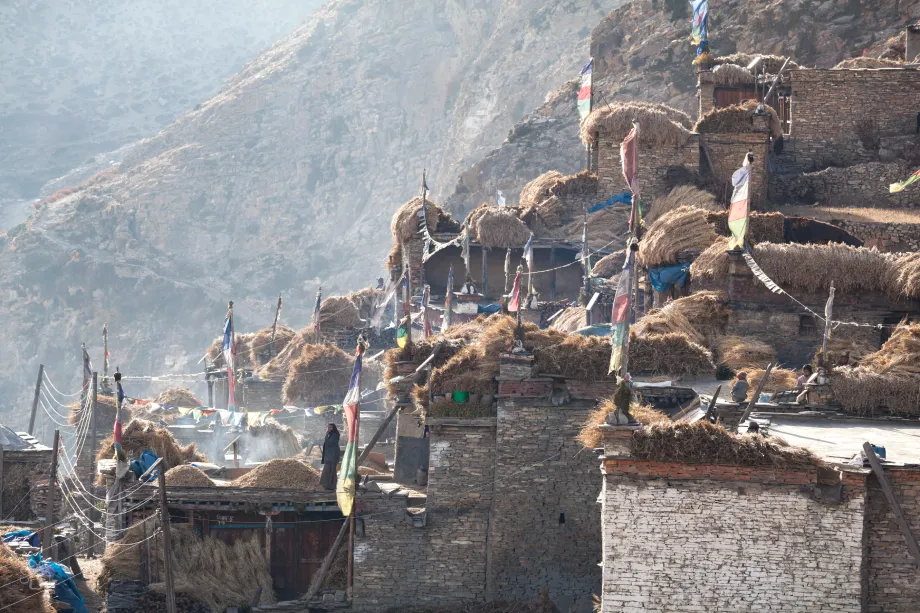
Some of the villages are Sama Gaon, Samdo, Phu, and Nar, which are villages that have stopped in time, and they have prayer flags fluttering beside stone houses, some monasteries that are centuries old and are placed on the ridges, and the locals receive the trekkers with the warmth that they bring.
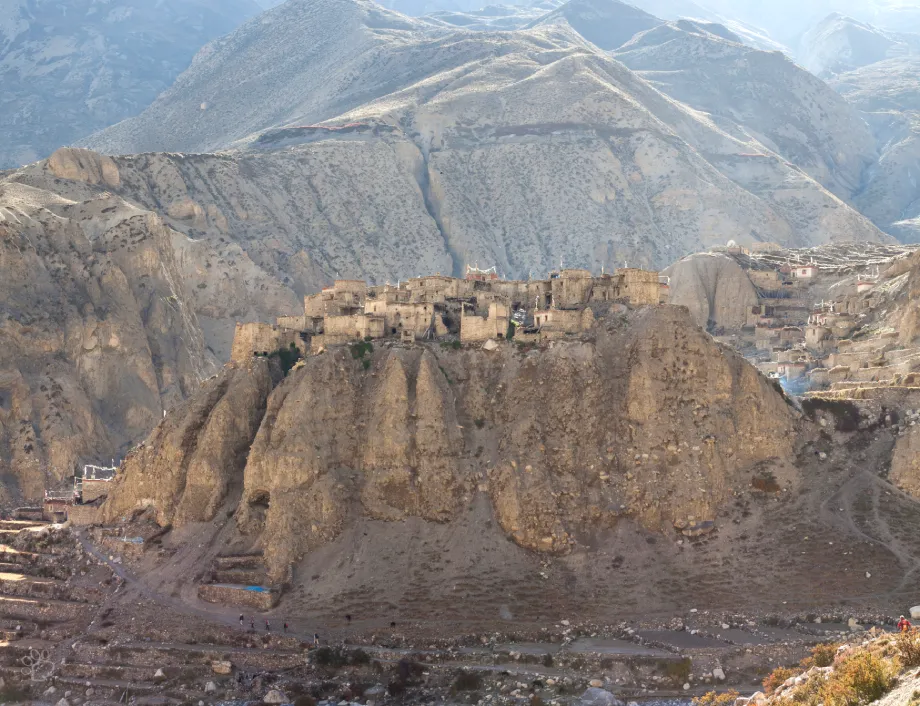
Nar and Phu valleys are two of the least frequented areas in the Himalayas, which began to be opened to foreign trekkers only in 2002, and can give a rare glimpse of how the mountain people might have lived in the past.
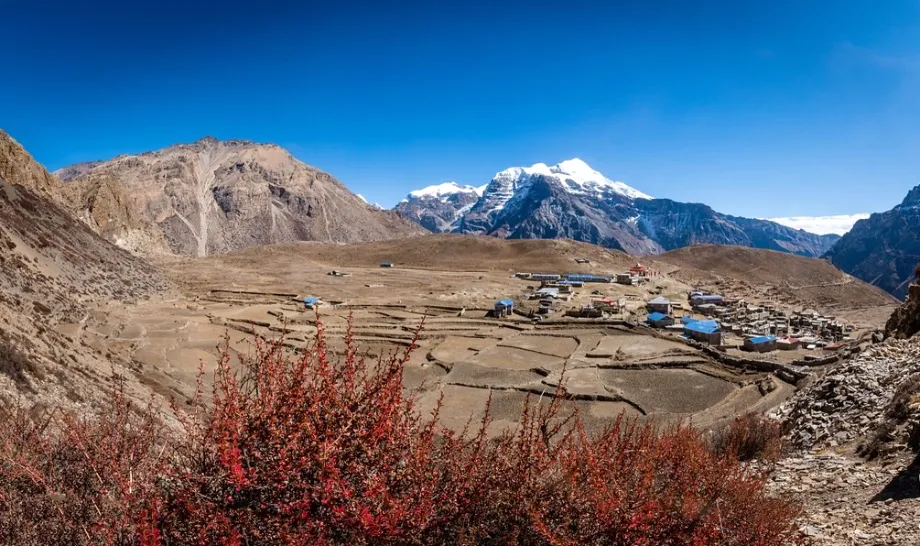
The Manaslu with Nar Phu Valley Trek is perfect for experienced trekkers who want to be alone, enjoy the rawness of the landscape, and experience a true Himalayan culture. Compared to Everest or Annapurna, the trail is much quieter, which allows one to be closer to nature. You will pass through an unbelievable variety of ecosystems of subtropical forests and rhododendron groves, high alpine meadows, and deserted deserts of the trans -Himalayas.
The Manaslu Conservation Area has wildlife that can be sighted, such as Himalayan tahr, blue sheep, and, with extreme luck, the elusive snow leopard. During the Manaslu with Nar Phu Valley Trek, our experienced guides are focused on the safety, the gradual pace, and acclimatisation. Long yet rewarding days, spectacular scenery, and a feeling of achievement are all to be expected – this is a real once-in-a-lifetime Himalayan adventure.
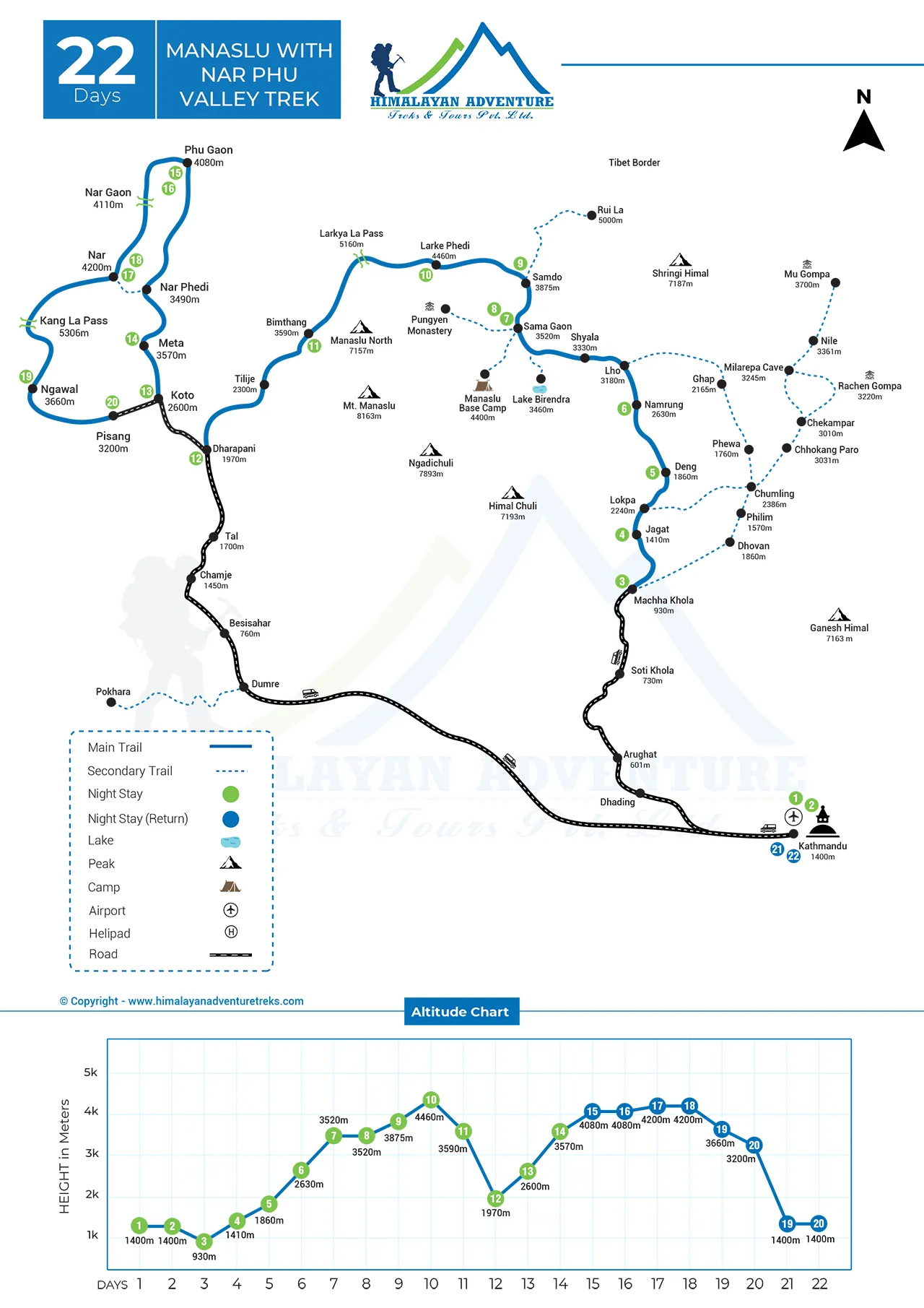
Outline Itinerary of Manaslu with Nar Phu Valley Trek – 22 Days
Day 01: Arrival in Kathmandu Airport & transfer to the hotel.
Day 02: Kathmandu valley sightseeing and trek Preparation.
Day 03: Dive from Kathmandu to Machha Khola (870 m).
Day 04: Trek from Machha Khola to Jagat (1,340 m).
Day 05: Trek from Jagat to Deng (1,860 m).
Day 06: Trek from Deng to Namrung (2,900 m).
Day 07: Trek from Namrung to Sama Gaon(3,390 m).
Day 08: Acclimatization day in Sama Gaon.
Day 09: Trek from Sama Gaon to Samdo (3,690 m).
Day 10: Trek from Samdo to Larke Phedi (4,460 m).
Day 11: Trek from Larke Phedi to Bhimtang (3,590 m) via Larkya La Pass (5,160 m).
Day 12: Trek from Bhimtang to Dharapani (1,860 m).
Day 13: Trek from Dharapani to Koto (2,600 m).
Day 14: Trek from Koto to Meta (3,560 m).
Day 15: Trek from Meta to Phu Gaon (4,080 m).
Day 16: Excursion around Phu Valley (acclimatization & rest).
Day 17: Trek from Phu Gaon to Nar (4,200 m) via high pass (5,300 m).
Day 18: Exploration around Nar Village (4,200 m).
Day 19: Trek from Nar to Ngawal (3,660 m) via Kang La Pass (5,306 m).
Day 20: Trek from Ngawal to Pisang (3,200 m).
Day 21: Drive from Pisang to Kathmandu.
Day 22: Departure from Kathmandu.
Our guests sharing their experiences (Photo/Video Gallery)
Detail itinerary of Manaslu with Nar Phu Valley Trek – 22 Days
01
Day 01: Arrival in Kathmandu Airport & transfer to the hotel.
Your Manaslu with Nar Phu Valley Trek starts when you land at Tribhuvan International Airport in Kathmandu. One of the representatives of the Himalayan Adventure Treks will receive you and take you to their hotel in the centre of the city.
After checking in, you are free to either sleep or go to the busy streets of Thamel to explore the local market. In the evening and be introduced to your trek guide, who will give you a brief of the adventure. Have a good night to be prepared for the journey into the Himalayas.

Activity: Airport Pickup, 30 min

Max. Altitude: 1,400m/4,593ft. Kathmandu

Accommodation: Hotel
02
Day 02: Kathmandu valley sightseeing and trek Preparation.
The day will be devoted to the cultural tour of Kathmandu and preparation for the trek. In the morning, you are taken on a guided tour of some of the UNESCO World Heritage Sites, the Monkey Temple (Swayambhunath Stupa) with its amazing views of the city, the holiest Hindu temple in Nepal (Pashupatinath Temple), the largest Buddhist stupa in the world (Boudhanath Stupa), and the former royal palace complex (Kathmandu Durbar Square).
This is an interactive tour that provides knowledge of the rich history, architecture, and spiritual culture of Nepal. Then you can spend time on trek preparations. You can purchase or hire the required equipment and pack your bags. You will have your guide check your permits and equipment. Send in early tonight – tomorrow we drive to the trailhead.
Activity: Sightseeing, 5-6 hours
Max. Altitude: 1,400m/4,593ft. Kathmandu

Meal: Breakfast
Accommodation: Hotel
03
Day 03: Dive from Kathmandu to Machha Khola (870 m).
We start early in the morning with breakfast in Kathmandu before proceeding in a private jeep to the West of Kathmandu on the Prithvi highway and into Gorkha. This is a scenic drive, though long, along rivers such as the Trishuli and the Budhi Gandaki, over terraced fields and hill-top villages.
The tarmac road ends at a jeep trail past Arughat. Towards the end of the afternoon, we reach Machha Khola (870 m), a little town on the banks of the Budhi Gandaki River. This is where we begin our hike. We settle into a simple lodge. We start trekking on footfrom tomorrow morning.
Activity: Drive, 8-9 hours
Max. Altitude: 870m/2,854ft. Machha Khola
Meal: Breakfast, Lunch & Dinner
Accommodation: Teahouse
04
Day 04: Trek from Machha Khola to Jagat (1,340 m).
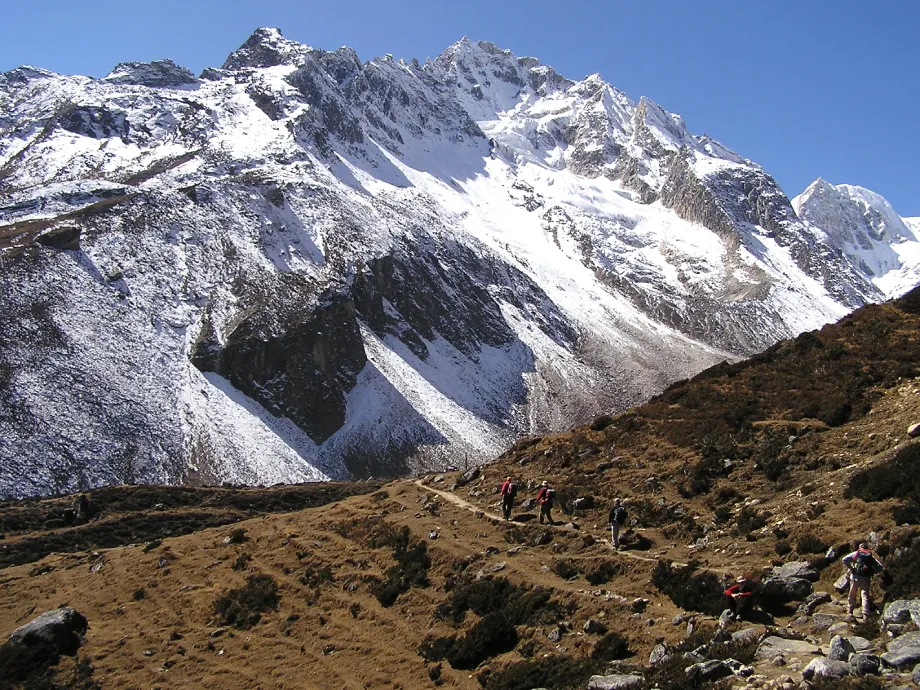
The day of our initial trekking is along the Budhi Gandaki River upstream through a fertile subtropical land. The path ascends and descends in a mild way, going over a few ravines via long suspension bridges. We pass through the small villages and the riverside hot springs of Tatopani.
The road passes over a canopied valley and falls on the cliffs on the opposite side of the river. Lunch is followed by a stone staircase and a side route via a hillside to Jagat (1, 340 m). The official checkpoint of the Manaslu Conservation Area and the registration of our permits is at Jagat, a well-maintained village, paved with stones. Overnight in a local lodge.
Activity: Trek, 6-7 hours
Max. Altitude: 1,340m/4,396ft. Jagat
Meal: Breakfast, Lunch & Dinner
Accommodation: Teahouse
05
Day 05: Trek from Jagat to Deng (1,860 m).
We pass Jagat and go down a narrow pass on the Budhi Gandaki. The path leads to Salleri and down to Sirdibas, where prayer flags of every colour indicate the increase of the Buddhist presence. We pass on to Philim (1,590 m), a large village made up of terraced fields. Beyond Philim, the valley narrows into an exciting ravine.
We cross a long suspension bridge and then walk a long way above the river, then cross to the east bank. The last strenuous climb is Deng (1,860 M), which is a small village where we enter the Nubri valley. We camp in a primitive lodge, where we have all the tranquillity of a desert place.
Activity: Trek, 6-7 hours
Max. Altitude: 1,860m/6,102ft. Deng
Meal: Breakfast, Lunch & Dinner
Accommodation: Teahouse
06
Day 06: Trek from Deng to Namrung (2,900 m).
We leave Deng after breakfast, and we cross the Budhi Gandaki again and slowly climb a steep bank of thick woods. The trail is going through small settlements where Gurung culture is mixed with new developing Buddhist traditions, with mani walls and chortens.
We have lunch at Ghap (2,160 m) and climb steadily with pine and rhododendron forests, here and there seeing grey langur monkeys in the trees.
Towards the end of the afternoon, we arrive at Namrung (2,900 m), a stone-enclosed checkpoint village where there are several lodges. In case of clear weather, one can see Ganesh Himal and Shringi Himal. We get ourselves into a teahouse and rest most delightfully.
Activity: Trek, 6-7 hours
Max. Altitude: 2,900m/9,514ft. Namrung
Meal: Breakfast, Lunch & Dinner
Accommodation: Teahouse
07
Day 07: Trek from Namrung to Sama Gaon(3,390 m).
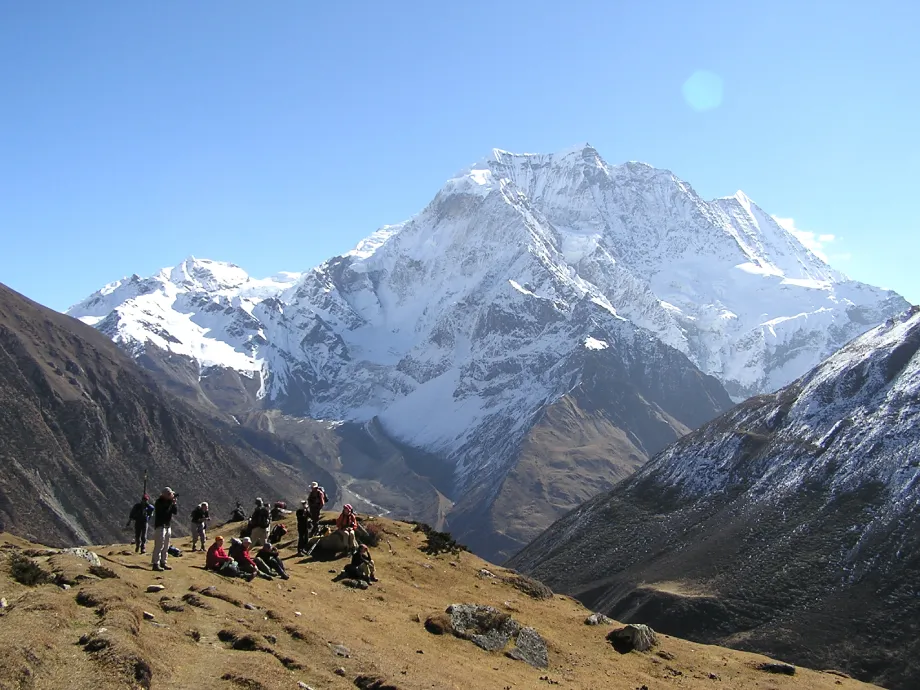
The current day hike is one of the most picturesque days since we are headed towards Mt. Manaslu. The path runs out of Namrung, up to the village of Lho (3,180 m), where we are granted our first sight of a spectacular view of Manaslu soaring far above. The hilltop monastery of Lho is a good place to take a short tea break, gazing at the mountain.
Then we go into woody paths till we reach Shyala (3520 m), a broad open valley between trees, with high mountains all around. Shyala is a small village, and we walk through some of the pastures before arriving at Sama Gaon (3,390 m), the principal village of the upper Nubri Valley.
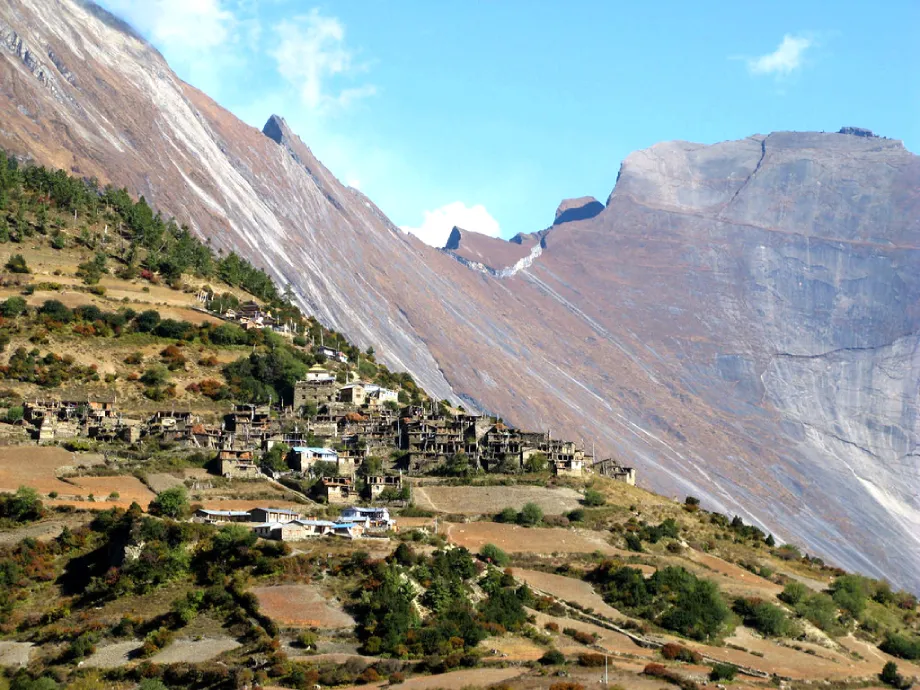
This is a conventional Tibetan-style village that is located at the foot of the north face of Manaslu. Here we have two nights of acclimatisation time to spend in monasteries, village life, and superb mountain scenery.
Activity: Trek, 7-8 hours
Max. Altitude: 3,390m/11,122ft. Sama Gaon
Meal: Breakfast, Lunch & Dinner
Accommodation: Teahouse
08
Day 08: Acclimatization day in Sama Gaon.
In order to facilitate the acclimatisation, we take a rest day at Sama Gaon and have a few exploration alternatives. An increase in elevation to a mild rise brings a glacial lake named Birendra Tal that is a calm glacial lake supplied with icefalls of Manaslu.
More adventurous trekkers can walk to part way to Manaslu Base Camp (4800m) to have spectacular glacier and mountain views.
Pungyen Gompa, or the village monastery, is also an option to gain local spirituality. People who want to spend their day in a leisurely manner are able to enjoy the village life, butter tea, and mountain views. Keep hydrated and do not overstrain oneself – the aim is adequate altitude acclimatisation. We spend the second night at Sama Gaon.
Activity: Hike, 6-7 hours
Max. Altitude: 4,800m/15,748ft. Manaslu Base Camp
Meal: Breakfast, Lunch & Dinner
Accommodation: Teahouse
09
Day 09: Trek from Sama Gaon to Samdo (3,690 m).
We get into the valley rejuvenated and move away from Sama Gaon. The path goes down to the Budhi Gandaki and up into the yak pastures and juniper scrub. It has mountain panoramas and is a pleasant little stroll.
About four hours later, we arrive at Samdo (3,690 m), which is the last permanent village before Larkya La and near the Tibet border. Having registered in a plain lodge, there is time to make a light acclimatisation walk or to explore the village. This free afternoon makes your body ready to start the high pass ahead.
Activity: Trek, 4-5 hours
Max. Altitude: 3,690m/12,106ft. Samdo
Meal: Breakfast, Lunch & Dinner
Accommodation: Teahouse
10
Day 10: Trek from Samdo to Larke Phedi (4,460 m).
Today, we have a brief acclimatisation walk before getting across Larkya La. Out of Samdo we pass down at a small bridge, and back again up a sterile valley, by a slow, gradual way, which is entirely barren. The path takes through tundra, moraines, and some herder shelters, and has the opportunity to see the blue sheep on the cliffs.
By noon, after 3-4 hours, we arrive at Dharamsala (Larke Phedi, 4,460 m). The afternoon will be spent on rest, hydration, and acclimatisation. We have an early dinner and sleep well, preparing to cross the pass at pre-dawn tomorrow.
Activity: Trek, 4-5 hours
Max. Altitude: 4,460m/14,633ft. Larke Phedi
Meal: Breakfast, Lunch & Dinner
Accommodation: Teahouse
11
Day 11: Trek from Larke Phedi to Bhimtang (3,590 m) via Larkya La Pass (5,160 m).
Our day begins at about 4.00 am, when we cross Larkya La (5,160 m) before the strong winds arrive. Gazing at the sky by the headlamps and amid the stars, we start the great and gradual ascent through the rocky moraines and glacial land. With the dawn, the Himalayan mountains are dramatic as they receive the morning light.
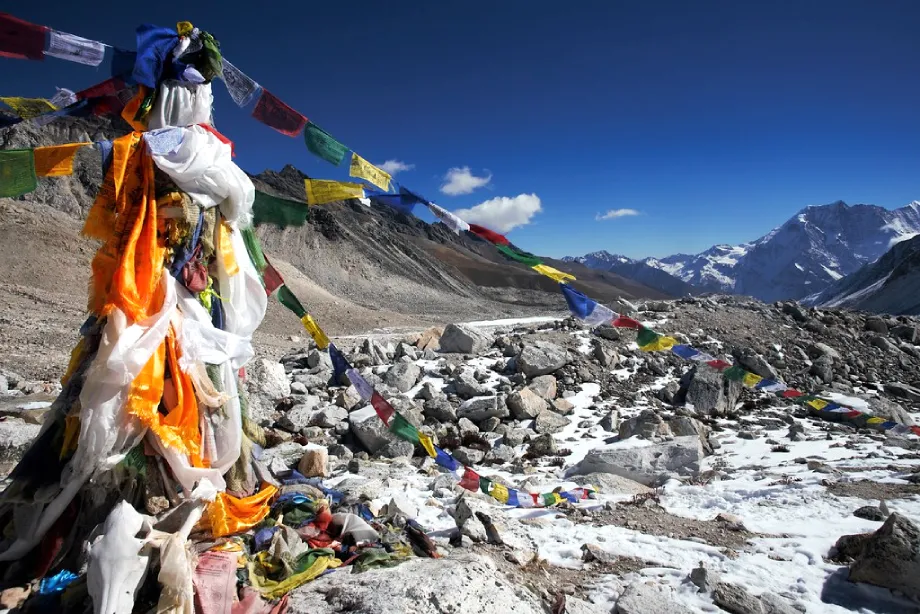
With persevering mountaineering, we arrive on the Larkya La peak, with prayer flags and a landmark, which is the top of the Manaslu with Nar Phu Valley Trek. Here, panoramic mountain sceneries run back from Mt. Manaslu and Himlung Himal up to Annapurna.
We then take a few photos and then climb down, taking great care over the scree and the snow that might have fallen. The scenery becomes softened slowly to grassy fields. Mid-afternoon, we reach Bhimtang (3,590 m), a lovely pasture valley, with excellent views of mountains, and we sleep and celebrate this big milestone.
Activity: Trek, 8-10 hours
Max. Altitude: 5,160m/16,929ft. Larkya La Pass
Meal: Breakfast, Lunch & Dinner
Accommodation: Teahouse
12
Day 12: Trek from Bhimtang to Dharapani (1,860 m).
It takes us all day to overcome the pass, during which time we are treated to the alternating scenery. The path, leaving Bhimtang, plunges into the Dudh Kholathrough the gloomy rhododendron and pine forests. The farther we descend in altitude, the more the air grows warm and rich, and it is a relief after the high alpine landscape.
Passing Yak Kharka and a small village, Karche (2,700 m), we see the terraced fields and the farm animals once again. Passing on to Gho and Tilje, we are indicated by prayer wheels and chortens that we are back in settled villages.
By mid-afternoon, we arrive at Dharapani (1,860 m), the meeting point of the Manaslu Circuit and the Annapurna Circuit. We check into the lodge and celebrate the accomplishment of our Manaslu part of the trek.
Activity: Trek, 7-8 hours
Max. Altitude: 1,860m/6,102ft. Dharapani
Meal: Breakfast, Lunch & Dinner
Accommodation: Teahouse
13
Day 13: Trek from Dharapani to Koto (2,600 m).
We again would be joining the Annapurna Circuit, walking downstream along the Marsyangdi River, from Dharapani to Koto, most likely via a dirt road.
On entering the Manang area, we pass by Bagarchhap and the Danaque mani walls and a white stupa. The skyline is soon taken over by Annapurna II and Annapurna IV. Another steep and short climb is to Timang (2,720 m), where Manaslu can be seen behind and Annapurna II in front.
Then we go down the pine forests to Koto (2,600 m) by the early afternoon. We head to this small Gurung village and get our Nar Phu permits before getting down to a teahouse, awaiting our departure to the remote valleys the following day.
Activity: Trek, 5-6 hours
Max. Altitude: 2,600m/8,530ft. Koto
Meal: Breakfast, Lunch & Dinner
Accommodation: Teahouse
14
Day 14: Trek from Koto to Meta (3,560 m).
There we are, leaving the great Annapurna Circuit today and starting the wilderness of Nar Phu in the remote wilderness. It tracks a long, narrow gully down the Nar Khola, penetrating through shaded pine woods, with the river raging miles beneath. We pass over suspension bridges and have to walk on dramatic cliffside trails until we reach Dharamsala (3,230 m), where we eat lunch.
It is at this point that a long and gradual ascent starts as the trees become thinner and the scenery more open. Towards the end of the afternoon, we reach Meta (3,560 m), a small pastoral plateau, a few simple lodges, and a spectacular mountain landscape. It is anisolatedstop, actually, the beginning of our journey out of the trail.
Activity: Trek, 7-8 hours
Max. Altitude: 3,560m/11,680ft. Meta
Meal: Breakfast, Lunch & Dinner
Accommodation: Teahouse
15
Day 15: Trek from Meta to Phu Gaon (4,080 m).
We go further into the obscure Phu Valley, walking across extensive, desert-like landscapes and past ruins, which were the old, seasonal settlement camps of Jhunam and Chyaku. The trail is framed by white cliffs and far snow peaks on our way down to the river and onto a suspension bridge. Up a sharp zigzag path brings us to the chortens of the Phu Gate, the entrance to this remote valley.
Next, we see the stronghold village of Phu Gaon (4,080 m), which stands over the river. We reach when it is mid-afternoon, and lodge in a lodge. The remaining day is left to research the narrow lanes and special Tibetan-inspired culture of Phu Valley.
Activity: Trek, 6-7 hours
Max. Altitude: 4,080m/13,386ft. Phu Gaon
Meal: Breakfast, Lunch & Dinner
Accommodation: Teahouse
16
Day 16: Excursion around Phu Valley (acclimatization & rest).
This is a rest and exploration day in Phu, which can be used to acclimatise and immerse in the culture. We then climb for 45 minutes in the morning, after breakfast, to Tashi Lhakhang Monastery, which is a great pilgrimage place with a view of the whole valley and Phu village. We can greet the monks and be blessed on the way we are going.
The rest of the day after rejoining Phu is at leisure, possibly to visit old ruins of forts, caves, or to go to the river to see grazing yaks. Mingle with the locals and get to know their customs and trade paths.
Activity: Hike 1-2 hours
Max. Altitude: 4,200m/13,780ft. Nar Village
Meal: Breakfast, Lunch & Dinner
Accommodation: Teahouse
17
Day 17: Trek from Phu Gaon to Nar (4,200 m) via high pass (5,300 m).
We depart with Phu after breakfast and come down a little way towards Meta, before splitting off to Nar. On passing a bridge, the path starts a strenuous uphill run across a high ridge (approximately 5,300 m), which is the boundary between the Phu and Nar valleys. We climb at a steady pace up the steep ground, making a gradual slowness of Phu as he is slowly lost behind us, and the scenery more and more widens and magnifies itself.
In a few hours, we will be on the top of the ridge with prayer flags and cairns. Here, the scenery is on the back towards the Phu Valley and the front, over the Nar Valley. We then proceed very slowly on loose gravel and pass through grazing-lands by a little brook. By the evening, when we come to Nar Village (4,200 m), find a teahouse and have a good rest after a hard but successful day.
Activity: Trek, 7-8 hours
Max. Altitude: 5,300m/17,388ft. high pass
Meal: Breakfast, Lunch & Dinner
Accommodation: Teahouse
18
Day 18: Exploration around Nar Village (4,200 m).
Today is an acclimatisation and rest day in the picturesque village of Nar. Make a lazy morning of wandering through the paved lanes of the town, watching people spinning wool, watching them herd animals, and keeping up old stone-built houses. Villagers are all very friendly and accommodating, and you can be offered Tibetan tea or local barley beer (chang).
You might easily walk some distance to a nearby ridge and have panoramic views of Nar and other snow peaks around, or pay a visit to Nar Pulgon Chua Monastery right below the village.
Stick to light activities because Nar is above 4000 m, and before passing Kang La Pass tomorrow, it is necessary to rest. We spend the second night in Nar, and we drink in its own culture and hospitality.
Activity: Hike, 2-3 hours
Max. Altitude: 4,200m/13,780ft. Nar Village
Meal: Breakfast, Lunch & Dinner
Accommodation: Teahouse
19
Day 19: Trek from Nar to Ngawal (3,660 m) via Kang La Pass (5,306 m).
Our last and most dramatic pass across is an early start that we make at Nar. As we pass by the headlamp in the silent valley, we slowly climb up Kang La (5,306 m). The ascent is extensive yet gradual.
And after hours, we are up on the summit of the prayer flags, and before us is an awe-inspiring view of the Annapurna range of Annapurna II, Annapurna IV, Gangapurna, and Tilicho Peak looming over the horizon, and the Marsyangdi Valley down below us.
Once we have partaken of a feast and made pictures, we start on a lengthy descent, at first steep, then growing lax in alpine scenery. By the afternoon, we are back on the Annapurna Circuit and relaxing in comfort in a warm lodge at Ngawal (3,660 m)
Activity: Trek, 7-8 hours
Max. Altitude: 5,306m/17,408ft. Kang La Pass
Meal: Breakfast, Lunch & Dinner
Accommodation: Teahouse
20
Day 20: Trek from Ngawal to Pisang (3,200 m).
The walk of today is brief and easy, after many more adventurous days. Out of Ngawal, we are on a well-beaten track of the Annapurna Circuit, with an easy slope of pine woodland and terraced fields. We cross the lovely village of Ghyaru on top of the ridge and then start a series of switchbacks with the Annapurna range constantly being in sight.
As the altitude decreases, we have warm air and get more villages, chortens, and agricultural lands. At the end of the morning, we reach Lower Pisang (3,200 m), where our journey comes to an end.
Free afternoon after lunch, either walk up to Upper Pisang and see the monastery, or spend the time at the lodge. We stay the night at Pisang, where we sleep very comfortably at this lower altitude.
Activity: Trek, 3-4 hours
Max. Altitude: 3,660m/12,008ft. Pisang
Meal: Breakfast, Lunch & Dinner
Accommodation: Teahouse
21
Day 21: Drive from Pisang to Kathmandu.
This morning we parted with the high Himalayas and started on the long, though picturesque journey back to Kathmandu. Then, we make our way by the 4×4 jeep that is privately operated by Pisang and go down the Marsyangdi Valley passing the villages which we are familiar with, such as Chame and Dharapani. Whereas walking used to take days, driving takes only hours.
At noon, we arrive at Besisahar (760 m) and change to a private vehicle, which is comfortable on the highway. After the rivers and the moderate hills, we reach Kathmandu towards the end of the day. Having spent a night in your hotel, we have a special farewell dinner and have an unforgettable trek in Manaslu and Nar Phu.
Activity: Drive, 9-10 hours
Max. Altitude: 1,400m/4,593ft. Kathmandu
Meal: Breakfast, Lunch & Dinner
Accommodation: Hotel
22
Day 22: Departure from Kathmandu.
This is the time to say goodbye (at least to Nepal). Whether you have time to do last-minute shopping for some souvenirs or to take a leisurely walk in Thamel depends on your time in Kathmandu and the time at which you are flying.
We will also organise your transportation to the airport located at Tribhuvan International Airport and ensure your departure on time. We will even have one of our members send you off with a warm saying of Namaste and Dhanyabad.
You come home full of indelible recollections of high passes, hidden valleys, and the sincerity of the people of the Himalayas. It is good to see you have trekked with Himalayan Adventure Treks. Goodbye, and we hope to see you again. Pheri bhetaula – see you again!
Activity: Airport drop, 20-30 min
Max. Altitude: 1,400m/4,593ft. Kathmandu
Meal: Breakfast

Note:
If you have your own private group and want to make your trip private, we can run the custom trip all the day as per your requirements and group size.
Includes and Excludes
What are included with package?
- Pick up and drop from the airport to the hotel: Upon arrival in Kathmandu, you’ll be picked up by a private vehicle and transferred to your hotel. Similarly, at the end of your trip, you will be dropped off at the airport for your departure.
- Three Night’s 3-star hotel in Kathmandu with Breakfast: You’ll stay in a 3-star hotel in Kathmandu for three nights. Breakfast is included on all of these days.
- Lunch, Dinner, and Breakfast during trekking: All meals (breakfast, lunch, and dinner) during the trekking portion of your itinerary will be provided. These meals are usually simple, nutritious, and locally prepared in the tea houses along the trek.
- Kathmandu Valley sightseeing by private vehicle with an experienced tour guide: A private vehicle will take you on a sightseeing tour around Kathmandu Valley. You will be guided by an experienced tour guide who will provide insights into the historical and cultural landmarks.
- Kathmandu to Machha Khola by Private Vehicle: You’ll travel by Private jeep from Kathmandu to Machha Khola, the starting point of your trek.
- Pisang to Kathmandu by Private Vehicle: After completing your trek, you’ll take a Jeep from Pisang to Kathmandu.
- Annapurna Conservation Area Project (ACAP): The Annapurna Conservation Area project fee is included, which gives you access to the conservation area and helps in its maintenance and development.
- Trekkers’ Information Management System (TIMS) Permit: This permit is included, which is required for all trekkers in Nepal. It helps to ensure the safety of trekkers and keep track of the number of trekkers on the trails.
- All necessary paperwork: All the essential permits and paperwork for your trek, including your TIMS, ACAP, and Manaslu trekking permit, will be taken care of.
- All accommodations in tea houses during the treks: Accommodation during the trek will be in local tea houses along the trekking route. The accommodations are basic but comfortable, offering you a place to rest after a day of trekking.
- Special Manaslu trekking permit: This permit is specific to the Manaslu trekking region, as it is a restricted area in Nepal. The cost of this permit is included in your package.
- An experienced, helpful, and friendly Guide & porters (1 porter for 2 clients): A professional trekking guide will accompany you throughout the trek, ensuring your safety and helping you navigate the route. You will also have one porter for every two clients to carry your personal belongings.
- Travel and rescue arrangements: Travel and rescue arrangements are included in case of an emergency. This will ensure that you have assistance if you require evacuation or emergency medical help.
- Medical supplies (first aid kit will be available): A first aid kit will be available throughout the trek to address any minor health issues or injuries.
- Last night’s farewell dinner at an authentic Nepalese restaurant with a cultural performance: On your last night in Kathmandu, you will enjoy a farewell dinner at a traditional Nepalese restaurant, complete with a cultural performance, where you can experience Nepalese music and dance.
What are not included with package?
- Nepal Visa Fee: You can obtain your visa easily upon arrival at Kathmandu airport. The visa fees vary based on the duration of your stay. Make sure to bring a passport-sized photo and sufficient funds for the visa.
- International Airfare to and from Kathmandu: The cost of your international flights to and from Kathmandu is not included. You will need to book your flights separately.
- Entrance Fees in Kathmandu: Some of the attractions in Kathmandu require an entrance fee. These fees are typically not included in the package, so you will need to pay for any sightseeing visits separately.
- Travel and Rescue Insurance: It is recommended that you have travel and rescue insurance for your trek. This insurance covers emergencies like medical evacuation, flight delays, or trip cancellations. You must arrange for this coverage separately.
- Personal Expenses: Any personal expenses such as phone calls, laundry, drinks (including alcohol and bottled water), battery recharges, extra porters (if needed), hot showers, etc., are not included in the package. These costs will be your responsibility during the trek.
Pick Your Suitable Date
US$ 2300
Book a Private Trip
Private & Group Discount Price
-
2 -
2 people
US$ 2500
-
3 -
5 people
US$ 2300
-
6 -
10 people
US$ 2000
-
11 -
16 people
US$ 1800
-
17 + people
9999
US$ 1700
2 Travelers x US $ 2000
Total Cost:
US$
Route Map & Altitude Chart
Kathmandu
Start/End point
Kathmandu
Trip Information
How Difficult Is the Manaslu with Nar Phu Valley Trek?
The Manaslu with Nar Phu Valley Trek is moderate to difficult. It implies such walks as 6-8 hours a day with difficult mountain paths, and the highest point is 5,306 m, where the altitude becomes the primary difficulty. You must be physically fit and in no way averse to prolonged uphill and downhill hiking.
Manaslu with Nar Phu Valley Trekis not a technical ascent; there are no ropes or climbing skills involved. Through scheduled acclimatisation, a gradual speed, and the advice of highly experienced guides, most fit and motivated trekkers can complete it. Some previous experience at high-altitude would be helpful, but not necessary. The rewards greatly outweigh the effort with preparation and a positive mind.
Weather, Best Season, Food & Drink.
Spring (March-May) and autumn (September-November) are the most appropriate seasons for the Manaslu with Nar Phu Valley Trek. The seasons have predictable weather, clear skies, and optimum mountain views. The spring is characterised by moderate weather, blossoming of rhododendrons, and more time, with a daytime temperature of approximately 15-20 °C at lower altitudes and colder at higher altitudes.
Autumn is the most favourite season, particularly the month of October, where there is fresh air, clear weather, and pleasant temperatures during the day (10-18 °C), but nights usually get below zero in high villages.
It is not advisable during Monsoon (June-August) because of heavy rains, landslides, leeches, and low visibility, whereas winter (December-February) can be very cold with the amount of snowfall closing high passes and a few lodges.
The Manaslu with Nar Phu Valley Trek food is plain, fresh, and nutritious. You will have breakfast, lunch and dinner in teahouses, where you will savour such food as dal bhat, noodle soups, fried rice, momos, thukpa, potatoes, eggs, porridge, and Tibetan bread.
At elevated areas, meals are made mainly vegetarian due to safety and availability. Tea (particularly ginger-lemon-honey) is also common, and safe drinking water is available either boiled or treated. Look forward to three good meals every day, strengthening, enlivening, and good for trekking.
Altogether, it is a safe and pleasant hike due to good timing, warm foods, and appropriate hydration.
Altitude Sickness and Recommendations.
This Manaslu with Nar Phu Valley Trek is quite high, and the night rests are at altitudes of up to about 4,800m, with the highest point of 5,306m at the Kang La Pass. In such altitudes, the oxygen levels will be low, and this may lead to Acute Mountain Sickness (AMS) when ascent is too rapid.
We have planned our itinerary in such a way that the increase in elevation will be gradual, and there will be acclimatisation days in destinations such as Sama Gaon and Nar, which will be a huge risk reduction measure.
AMS can also be prevented by adhering to a couple of practices. Do not walk too fast; move in steady strokes. Keep well hydrated, and consume approximately 3litres of fluids daily.
Consume enough food; carbohydrates are particularly useful at elevation. People should avoid alcohol, cigarettes, and intoxicating pills, which disrupt the acclimatisation.
Watch out and inform your guide about such symptoms as headache, nausea, fatigue, or poor sleep. Our group will have a first aid kit, pulse oximeter, AMS medication, emergency oxygen, and a portable hyperbaric bag. AMS extreme necessitates the descent on the spot, and helicopter evacuation may be necessary.
Show respect to the altitude, hear your body, and follow the recommendations given by your guide. By taking these precautions, the trekkers are mostly able to acclimatise effectively and have a safe experience.
Preparation and Fitness for Manaslu with Nar Phu Valley Trek
Manaslu with Nar Phu Valley Trek can be enjoyed safely only with good preparation. One does not have to be an elite athlete, but frequent training will significantly enhance your experience.
Pay attention to the development of cardio endurance and leg strength. 3-4 cardio sessions per week, 1-2 hourshiking, brisk walking, jogging, cycling, swimming, or stair climbingare the best.
Add lower and core body exercises like squats, lunges, step-ups, calf raises, and planks. Yoga or Pilates can be used to assist in flexibility, balance, and breathing when it comes to the altitude.
It is equally important to be prepared mentally. Be prepared to have minimum facilities, chilly nights, and potential changes to the itinerary. Having a positive mind, which is flexible, can be of great help in remote areas.
Prepare your gear carefully. Break in shoes, practice carrying your backpack, and a light pack. It is not advisable to come in with new or untested equipment.
Keep fit before departure, and, as much as possible, acquire some high-altitude experience. The Manaslu with Nar Phu Valley Trek is not an easy one, but it is a satisfying and very memorable experience with regular training and the right attitude towards it.
Visa and Permits
The right visa and permits are needed before the Manaslu with Nar Phu Valley Trek starts. All trekking permits are done on your behalf by Himalayan Adventure Treks; all that you have to do is get your Nepal visa.
The majority of travellers buy a Nepal Tourist Visa at the Kathmandu airport. The charges are USD 30 (15days), USD 50 (30days), and USD 125 (90 days). On this 22-day journey, a 30-day visa would be advisable. Your passport has to be a valid one with at least six months ‘ validity.
Manaslu with Nar Phu Valley Trek is done in restricted zones; special permits are required, and no trekking alone is allowed. We arrange:
- Restricted Area Permit (RAP) of Manaslu.
- Nar Phu Valley RAP
- Manaslu Conservation Area Permit (MCAP).
- Annapurna Conservation Area Permit (ACAP).
There are a minimum of two trekkers and a licensed guide we need (we deal with solo cases as needed). TIMS is not required.
Carry your passport and 4-6 passport photographs. After the issuance of permits, you can hike freely.
Health & Safety
We are so concerned about your health and safety during the Manaslu with Nar Phu Valley Trek. A licensed and first aid-trainedguide will always be with you. Our guides pay special attention to the state of the trails, the weather, and your physical states, and change the speed or program when it is required to guarantee the comfort of everybody.
The conditions of the trails include wide tracks and narrow, rocky trails as well as suspension bridges. Guides take the route on hard paths, and the assistants make sure that no one is left behind.
We also have a complete first aid kit, emergency oxygen, and, in remote areas, a portable hyperbaric (Gamow) bag to address the problem of altitude. To avoid sickness, clean drinking water, clean meals, and frequent hand washing are taken.
There are definite emergency procedures. In the extreme instances, like extreme altitude sickness or injury, we mobilise evacuation through a helicopter using your insurance. If flying is impossible due to weather, horses or stretcher support can be used locally.
We are very keen on weather predictions and save the buffer days to prevent the dangerous weather. Encounters with wildlife are common and non-hazardous when observed, whereas cultural awareness would guarantee the establishment of positive relations with local people.
This Himalayan trek in distant regions is safe and sure with professional help and your cooperation.
Transportation
In the Manaslu with Nar Phu Valley Trek, all the transportation will be privately organised to make it comfortable, safe, and adaptable. We are transported from Kathmandu in a private bus, and then to Machha Khola, the beginning point of the trek, by a 4×4 jeep in the early morning.
The ride requires approximately 7-8 hours and is on the Prithvi Highway, and it then moves north towards Arughat and along the Budhi Gandaki River. The roads after Arughat are very bad and narrow, and a personal jeep is much safer and more reliable compared to local buses.
By the end of the Manaslu with Nar Phu Valley Trek, we complete walking in Pisang and travel back to Kathmandu in a single day of travel. The 4x 4 jeep transports us between Pisang and Besisahar (around 5-6 hours) through the Marsyangdi Valley. At Besisahar, the roads become better, and we change to a touristvehicle that we use on the highway, which takes 5 hours to reach Kathmandu. There is also an opportunity to order optional stops or a route change (e.g., proceeding to Pokhara).
Airport transfer and sightseeing in Kathmandu are done in a private car/van with expert drivers. In the Manaslu with Nar Phu Valley Trekitself, you are walking with the help of a porter, and you are able to walk lightly without overloading the local economy.
The roads in these areas may be rough and sometimes weather-related, although our vehicles, drivers, and buffer days guarantee easy logistics. We take care of all transport on arrival and departure so that you can just enjoy the adventure.
Travel Insurance
Travel insurance is a strict requirement of Himalayan Adventure Treks because it is not just a formality, but an essential safety precaution, because of the remote and high-altitude location of Manaslu and Nar Phu. Any trek of up to 5,500 meters (a few feet higher than our peak) will be covered by your insurance; you will want to cover yourself properly.
Emergency medical evacuation, such as a helicopter rescue, must be covered by the insurance. In extreme situations like high altitude conditions or an accident, helicopters may be the only means of getting out, and the fees may cost a few thousand dollars. Medical treatment and hospitalisation should be covered by insurance when there is emergency treatment in Kathmandu and, in case of necessity, repatriation to the home country.
We highly favour the policies that involve trip cancellation or interruption since any unforeseen illness, family emergency, or other external condition could influence the travel plans. It is also recommended that baggage and electronics coverage be done in case it gets lost or damaged, particularly when your gear is valuable.
Make sure that in your policy, the high-altitude trekking practice in Nepal must be clearly stated because ordinary plans can have no such practice. After buying, you should provide us with your policy details and emergency contact number, and keep the copies available.
Having the right insurance cover, you can hike to the mountains and be sure that you are covered in case of the unforeseen.
Alternative Routes
The Manaslu with Nar Phu Valley Trek is already a combination of two incredible areas, but Nepal has some other alternative ways to rely on, depending on the time and interests.
When you do not need so much time on the itinerary, the standard Manaslu Circuit Trek will be completed without Nar Phu in the centre of the expedition, with the push to the Larkya La and the exit through Dharapani. This one is shorter in time than getting the highlights of Manaslu.
In case the main attraction is the distant Tibetan culture, the Nar Phu Valley Trek over Annapurna is a good substitute. It enters through the Annapurna side and goes through Nar and Phu villages, and then traverses Kang La and joins the Annapurna Circuit.
The other cultural alternative is the Manaslu with Tsum Valley Trek that incorporates a holy side valley that has old monasteries and untainted customs. The additional time of the trekkers can also be spent on the Annapurna Circuit, extending the trip, which passes through Nar Phu and crosses Thorong La.
Both variations provide a different combination of scenery, culture, and challenge. Himalayan Adventure Treks will be glad to make customised routes according to your time, interest and trekking needs.
Your Extra Expenses
Everything is included in our Manaslu with Nar Phu Valley Trek, except that there are some personal costs that one must consider beforehand. Lunches and dinners on free days are self-paid, and in Kathmandu, the local places are moderate, whereas the international food is slightly more expensive.
Three meals a day are provided during the Manaslu with Nar Phu Valley Trek, though any additional drinks and snacks like soft drinks, more tea or coffee, chocolate, or beer are charged. The price goes up as the altitude goes up, and therefore, occasional treats may cost more than that as time goes by. Recharging electronic devices and taking hot showers in teahouses can also carry a little charge, particularly in the elevated areas where power is restricted.
Tipping is also a common practice in the trekking culture in Nepal, and it is a significant appreciation for the guides, porters, and drivers. Although it will depend on how satisfied you are, it is prudent to set aside some money for tips. You can also have an urge to spend money on souvenirs, handicrafts, or something more shopping in Kathmandu.
The other potential expenses are accommodation or meals not included in the itinerary, travel insurance, and personal drugs. In general, it is enough to carry the amount of USD 300-400 in Nepali rupees, in small denominations. Ahead-of-time planning will mean that you will not be experiencing the Manaslu with Nar Phu Valley Trek with the financial burden on your shoulders, and that you will be able to fully enjoy the experience.
Language & Communication
You will not find communication a problem as you walk the Manaslu with Nar Phu Valley Trek, which would be a rich place in terms of languages. Our professional guides are fluent in English, Nepali, and in most cases even local dialects, and will be happy to translate and help where necessary.
Lower in the villages, Nepali is widespread, and further up the mountain, like in Nubri Valley and Nar Phu, people are Nepali but speak dialects related to Tibet and might not know much English.
Such basic greetings can do a lot. Namaste is a popular phrase in Nepali-speaking regions, whereas Tashi Delek is received well among Tibetan societies. A smile, a gesture, or a few words learned can be used to build meaningful relationships. English is better understood in more tourist-oriented places, such as the Annapurna side.
There is generally a friendly and respectful communication with porters and locals, even when there is little in common language. Body language, patience, and politeness are very essential. As your guide fills in the blanks, language will be included in the cultural experience instead of being an obstacle, which will complement your Himalayan experience.
Mobile Network, Internet, and Charging Facilities.
It is not possible to always be in touch on the Manaslu with Nar Phu Valley Trek, and it is part of the experience. Mobile coverage is unreliable once you move out of Kathmandu. Weak Nepal Telecom or Ncell signal may sometimes be picked up in the lower parts of the Manaslu route around small towns, although deep gorges tend to block signals.
Further up, further in Samdo, Nar, and Phu, the mobile network is completely absent. After passing Kang La, connectivity is again established after traversing the Annapurna side, passing Pisang.
The Manaslu with Nar Phu Valley Trek to access the internet is also very rare. There are good Wi-Fi connections in Kathmandu and Pokhara, whereas a few lodges in the Manaslu Circuit have slow satellite-based internet, most of which are charged.
There is no internet beyond Sama Gaon until you get back to the Annapurna region. This is why the trip is a great place to have a digital detox and spend time in the mountains in their entirety.
Mostly solar or small hydro-generated, electricity is limited at elevated altitudes. The devices can usually be charged for a fee. It is highly encouraged to carry a power bank, spare batteries, and flight mode.
To be on the safe side, the guides carry satellite communication in case of an emergency. In general, it is better to expect to spend most of your time offline, recharge as often as you can, and take the opportunity to disconnect and explore the Himalayas once in a lifetime in Manaslu with Nar Phu Valley Trek.
Don’ts on This Trip
Although the advice to trekking mostly concerns what to do, several major “don’ts” are worthy of remembering, and in this way, it will help guarantee a safer, more respectable, and more enjoyable Manaslu with Nar Phu Valley Trek.
You must not disregard what your guide tells you, or go off by yourself. Their judgment rests on experience, safety, and local issues, and thus relies on their judgment even though plans seem inconvenient.
You should not hurry and overestimate your skills. Trekking at high altitudes is not a race, and overstraining may result in exhaustion or sickness caused by the altitude. In the same manner, do not disrupt the tranquillity of the local communities or animals. Admire the silence of the mountain life and watch animals at a distance.
No littering or pollution of water should take place. Dispose of everything, consume biodegradable things in moderation, and do as your guide tells you to get rid of them.
Another important one is cultural disrespect. It is better to dress decently in villages, observe the rules of monasteries, and never take pictures without permission from people or religious sites.
Always speak up on health issues. Even little problems may escalate into a big problem when not addressed, so talk freely with your guide. Another tip is never to leave valuables unattended, and a person should not be afraid to speak up when something does not sit well with him or her.
All these don’t come down, however, to awareness, humility, and respect. Be a considerate traveller, and the mountains will have some memorable moments to offer to you.
Photography & Drone Rules
The stunning sceneries and cultural experiences that you have on the Manaslu with Nar Phu Valley Trek are best preserved through photography. Cameras and videos are allowed during the trek, but they should be done with care, respect, and understanding of your environment.
It is always important to seek permission, especially when taking pictures of people, such as close-up portraits. A polite smile or even a minor gesture normally suffices, and honouring a decline is just as important as honoring consent.
Photography may be restricted in some locations in this Manaslu with Nar Phu Valley Trek, such as monasteries, temples, schools, or even in residential homes. Always ask your guide or a local authority when you are in doubt. Avoid flash photography in the course of religious activities as it is disruptive and disrespectful. Cultural sensitivity and respect for privacy guarantee good interactions and meaningful relationships.
The use of the drone in Nepal is strictly controlled and may require special permits, which are rather hard to get. Drones may disrupt wildlife, livestock, and the local communities, as well as be seized in the event of unauthorised flights. For this reason, it is highly suggested that the drones should be left at home.
There should be no compromise of safety in the name of a photo. Take care of cliffs, rutted roads, and loose soil, and stabilise your camera equipment.
Lastly, post pictures well without using sensitive geotags or misrepresentation. Photography must not become a part of what you experience, but rather add to it.
Tips for First-Time Visitors to the Himalayas
Originally, you are visiting Nepal to go trekking or at an elevated altitude, a bit of preparation and the appropriate attitude can make the process much more enjoyable. A few days before the trek in Kathmandu allows you to get over the fatigue of travelling, settle your gear, and get settled into the local culture. The additional time will give your body and mind time to settle before you get on the trail, which puts you into a cool and assured mood about the coming adventure.
It is also important to be flexible in the mountains. In Nepal, life is taken at its own pace, and plans are subject to change without any warning due to weather or trail conditions. Instead of fighting with such situations, it is better to accept them, and small inconveniences can become a good experience. Slowing down, particularly during the initial days, will help in ensuring that there is adequate acclimatisation and help maintain the energy levels during the trek.
Hydration, frequent meals, and dressing in layers are significant factors in keeping warm at the altitude. Although the appetite or thirst may be low, regular consumption will ensure that there is strength. Having some cash, packing gear, and bringing some personal comforts would help to add to the peace of mind on long days as well.
Greetings, mutual smiling, and receptiveness to the domestic customs build long-term relationships. You should anticipate the unexpected, be in the moment, and enjoy every process. Your first Himalayan Manaslu with Nar Phu Valley Trek is not only an ordeal, but it is a narrative you will live in forever. Namaste!
Essential Packing Gear List for Manaslu with Nar Phu Valley Trek
If you have decided to go on the most popular trek, the Manaslu with Nar Phu Valley Trek in Nepal, we assure you that you will have a fantastic time ahead. But what should you pack for your Adventure? What will be the right gear to make your trip more fabulous? To help you with this, we have compiled a packing list of essential items that you mustn’t forget to bring along.
- Passport ( min 6 months valid)
- Cash, credit card
- List of important addresses and contact details
- 2-3 passport photos (optional)
- Copies of all important travel documents (passport, visa, airline ticket, insurance policy, etc.)
- A sturdy 70 L trekking backpack which will be carried by your porter (please note that our assigned 1 porter will carry 2 clients’ luggage up to 20-25 kg.
Note: We will provide each participant with a spacious 70 to 75 L Company logo duffle bag to conveniently carry your trekking gear, which you have to return once the trek is complete. - A 30 L Daypack that has room for your essentials such as camera, mobile, Passport, important documents, water bottle, day-useable medicine, chocolate bars, raincoat, etc., which will be carried by you.
- Protective cover for a backpack or travel bag.
- Hiking Boots: Preferably ankle-high boots to prevent ankle sprain
- Regular Shoes: For small strolls and exploration around the city
- Crampons: During the winter, December- March
- Second, a light pair of shoes and possibly sandals
- Micro Spikes or Ice Cleats for the winter trekking over snow and ice
- Gaiter for added protection in snow
- A rain and wind-resistant, lightweight down jacket for warmth, with a good helmet hood
- Summer-light, as well as winter warm clothing
- Quick-drying shirts made of synthetic fabrics
- Warm and cool vests or T-shirts
- Functional synthetic underwear
- Sports Bra for Female Trekker
- A waterproof pair of trousers
- Regular trousers of quick-drying fabric
- Hiking shorts
- Cargo Pants with multiple pockets to hold your small items, such as knives or chocolates
- Woolen or fleece pants
- Trekking socks, both thick and woolen fabric, and lighter wool socks
- Wool hat, gloves, and scarf
- A light cotton scarf or a bandanna for the protection of your head, neck, ears, and mouth
- Sun hat, and sunglasses with 100% UV protection (for trekking trips, even with stray light and nose protection)
- Sunscreen cream or lotion with a high sun protection factor (at least 15, for trekking trips, even at least 30)
- Sunscreen lipstick with a high SPF (at least 20, for trekking trips, even at least 30 or sunblock)
- Mosquito repellent (Optional)
- Comfortable light night clothes and shoes
- A drinking bottle that can be used as a hot water bottle on frosty nights
- Flip-flops or bathing shoes for using the showers
- Water purifiers: if you need to refill water from the tap or stream en route
- Headlamp: for a midnight or pre-dawn trip towards the viewpoint
- Quick-drying towel and sample-size toiletries for washing your feet and face
- Your Personal first-aid kit: with basic medical supplies such as bandages for sprains, antidiarrheal and antibiotics, iodine wipes for scrapes and cuts, plasters, aspirin, or ibuprofen, moleskine for preventing blisters, Diamox (acclimatizing medicine), and your Personal medication
- Sleeping bag appropriate for all-season treks (we can hire in Kathmandu)
- Waterproof money belt, chest bag, leg bag, or belt bag for storing important travel documents or valuables
- Toothpaste, Toothbrush, and soap
- Deodorants
- Moisturizer
- Nail clippers
- Feminine hygiene products (Sanitary Pads)
- Small mirror
- Wet wipes
- Hand sanitizer
- Comb
- A camera with sufficient memory cards and spare batteries or a battery charger
- Small padlock for your travel bag
- Crampons ( during winter, Dec- Feb)
- Thermos flask
- Water bag
- Toilet paper (2-3 rolls without)
- Ear Plugs
- Matchbox, or lighter
- Compass or GPS
- Map
- Alarm clock
- Multi-tool kit
- Binoculars
- Books
- Whistle
Equipment Note:
- Please note that there is no need for you to bring all these heavy items, such as a Sleeping bag, a down Jacket, Trekking Poles, and items from your home. You can easily rent or purchase high-quality or standard-quality items in Kathmandu.
- Items are available from international brands such as The North Face, Sherpa Adventure, Marmot, Mountain Hardware, Black Yak, Karma Gear, and local brands like Goldstar and locally made products etc.
- Plus, we will also gift you a company logo T-shirt as a token of your experience in Nepal with us.
Renting Cost:
- Sleeping Bag & Down Jacket (-10-20 degree Celsius), Per Piece per day US$ 1.5
Frequently Asked Questions
What is Manaslu with Nar Phu Valley Trek?
It is a secluded high altitude trekking which integrates the Manaslu Circuit with the isolated Nar and Phu valleys, providing mountain adventure and in depth cultural experience.
What is the duration of the Manaslu with Nar Phu Valley Trek?
This is a full 22-day trek that incorporates arrival, trek, acclimatisation, and departure.
Who is this trek suitable for?
It is a trek that is most appropriate to experienced and physically fit trekkers who would not mind long walks and high altitude environments.
What is the level of difficulty of Manaslu with Nar Phu Valley Trek?
The walk is described as moderate to challenging as it is a long distance, rough, and steep mountain passes.
What would be the highest point of the trek?
Its highest point is Kang La Pass, which is 5306 meters in height and needs proper acclimatisation and strength.
Which are the key mountain passes of the trek?
The expedition traverses two high passes, Larkya La Pass and Kang La Pass, which have incredible Himalayan scenery.
Which is the most opportune season to do this trek?
The best seasons would be spring and autumn because the weather is stable, the skies are clear, and the trails are safer.
Does this trek have the risk of altitude sickness?
Yes, altitude sickness can indeed be a possibility; however, it can be prevented by gradually increasing the altitude, resting days, and following the guidance of acclimatisation.
What type of accommodation can be offered during the trek?
Along the trekking route, there are accommodation facilities in basic and comfortable teahouses and lodges.
What kind of food is given during the trek?
There are simple, fresh and nutritious meals served, which are mainly local Nepali and Tibetan style meals.
Is a special permit necessary to do this trek?
Yes, special restricted area permits and conservation area permits are needed, and they are organised by the trekking company.
Can one trek on this route alone?
There is no option of solo trekking since the path is within restricted zones and it needs a licensed guide and minimum group policies.
What wildlife is observed on the trek?
You can find wildlife of the Himalaya like blue sheep, Himalayan tahr and in some cases snow leopard traces.
Is this trek obligatory when it comes to the travel insurance?
Yes, high-altitude trekking and emergency helicopter evacuation travel insurance is necessary.
Will it have a mobile network or internet connection during the trek?
There are limited mobile networks and internet coverage that are not available in high and remote areas.
What is so special about this trek compared to Everest or Annapurna treks?
The trek is quite silent, more isolated, culturally diverse, and not as commercialised as the Everest or Annapurna trails.
Would this trek be of interest to culture tourists?
Indeed, the trip can provide invaluable insights into the culture of ancient Tibetan Buddhism in places such as Sama Gaon, Phu, and Nar.

Reviews on Manaslu with Nar Phu Valley Trek – 22 Days

Related trips