

Duration
8 Days

Tibet Group Joining Tour


Trip Grade
Easy
Group Size
1-16 People
Max Altitude
4,350m. / 14,272ft.
Best Season
May- September
Activity
Multiple Activities
Meals
Breakfast
Accommodation
Hotels
Transportation
Bus & Jeep
Trip Customization
On request (click here)


Highlights of Tibet Group Joining Tour
- Trip to the scenic overland between Nepal and Tibet by beautiful Himalayan roads and villages.
- Cross the Nepal-Tibet Friendship Bridge and the expansive Tibetan Plateau.
- Cross the vast Tibetan plateau with the view into infinity and grazing yaks.
- Stunning Himalayan views in the mountain passes of over 5,000 m (16,404 ft).
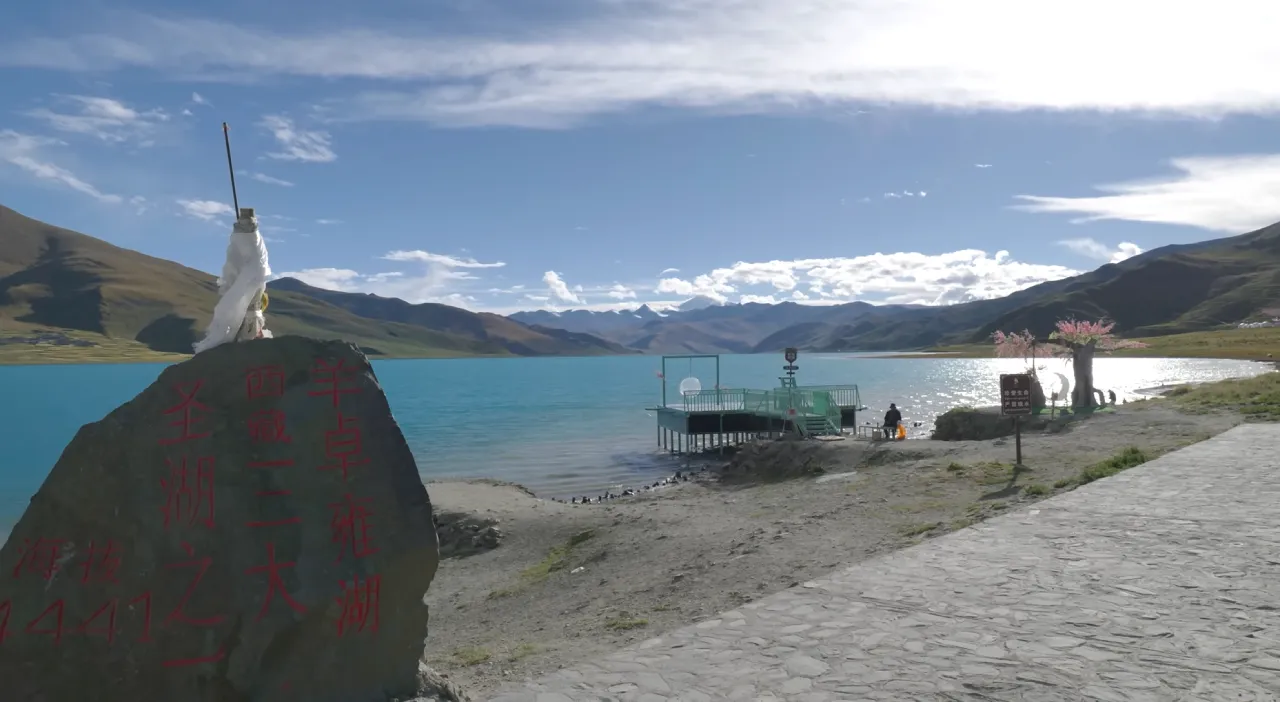
- View the clear turquoise waters of Yamdrok Tso Lake at 4,441 m (14,570 ft).
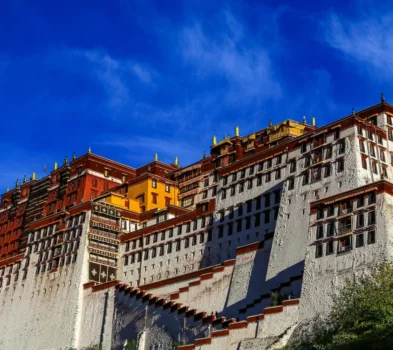
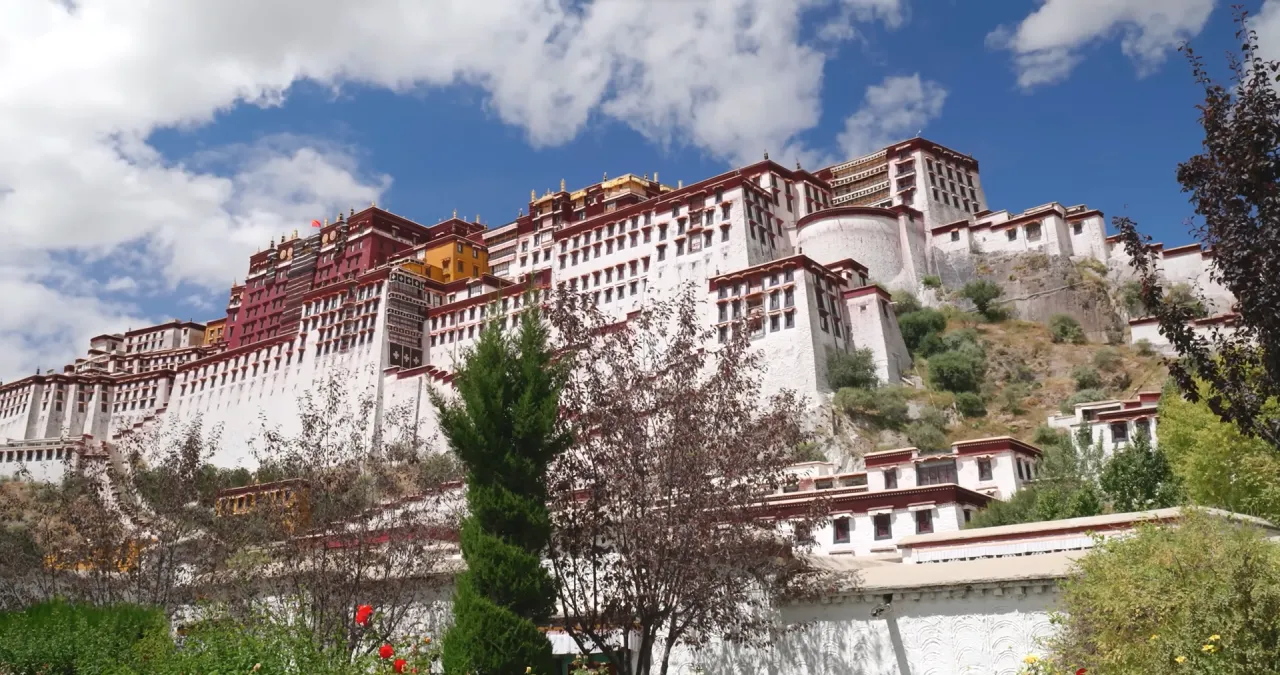
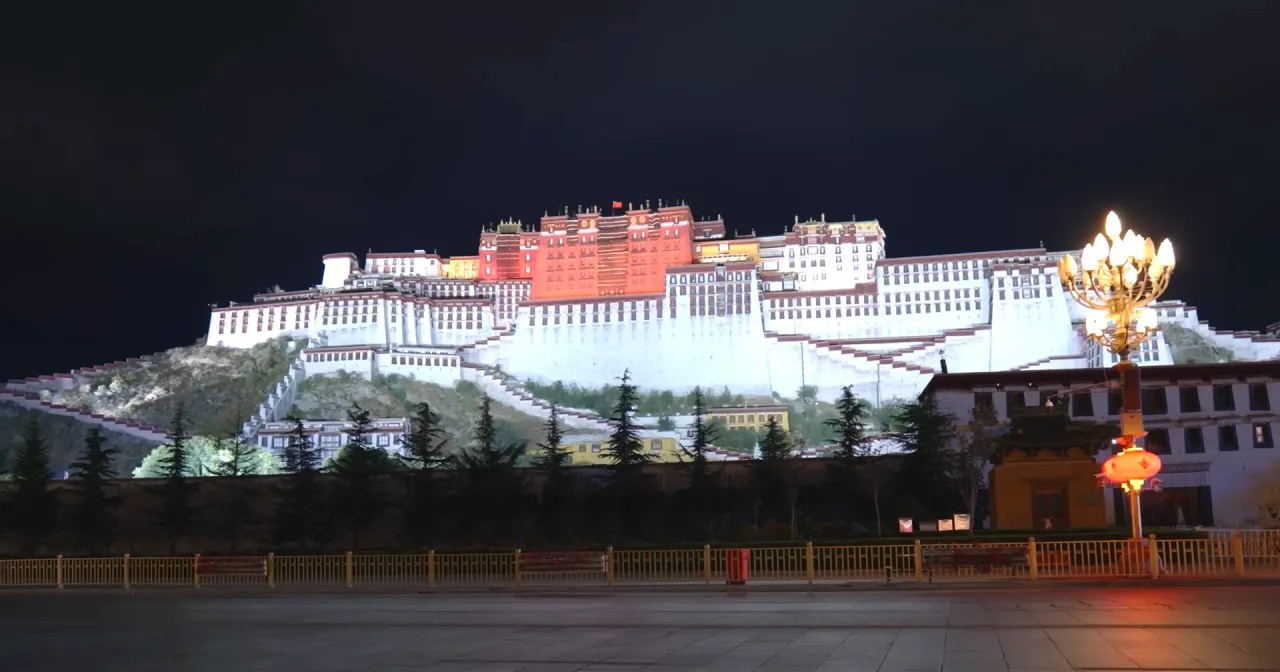
- Go to the famous Potala Palace in Lhasa, 3,650 m (11,975 ft).
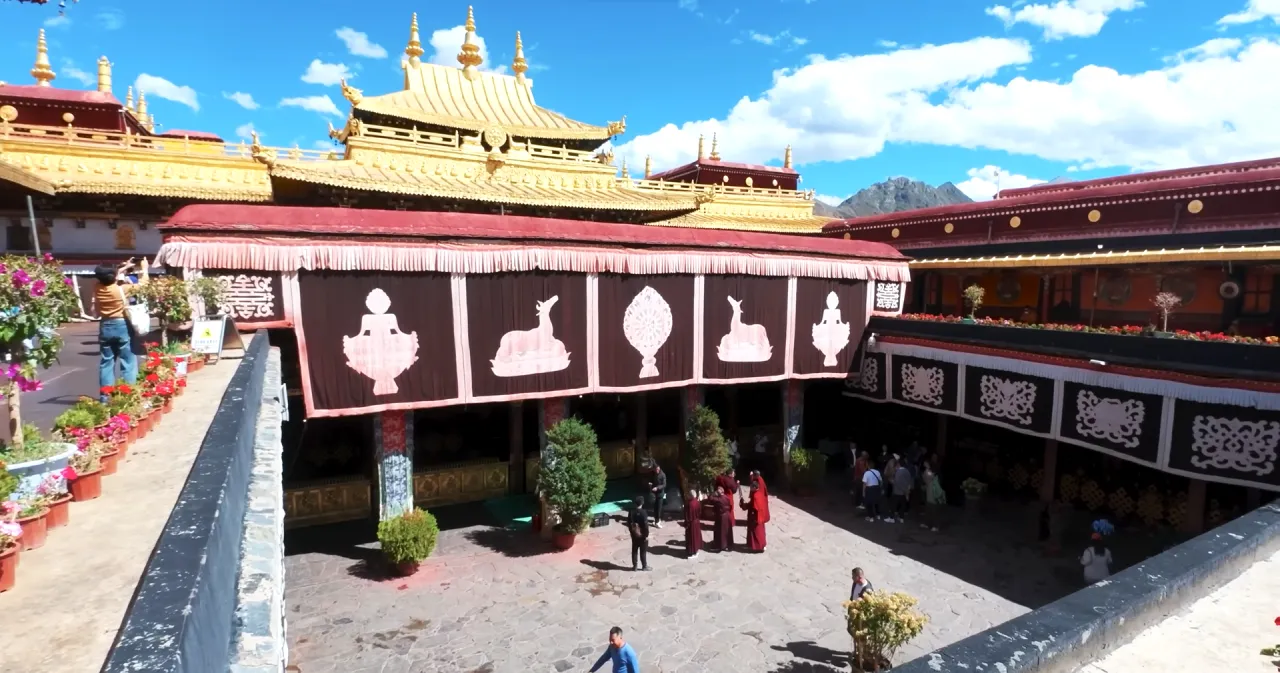
- Feel the spiritual mood in Jokhang Temple in Lhasa.
- Visit the old Tashilhunpo Monastery in Shigatse, at 3 900 m (12 795 ft).
- Explore the Tibetan culture and traditions with an experienced guide.
Trip Introduction
The Tibet Group Joining Tour is a beautiful overland journey that takes you from Kathmandu to the heart of Tibet and back again. It is an excellent option for a traveler wishing to visit the most popular cultural sites in Tibet, mountainous landscapes, sacred lakes, and peculiar attractions in a straightforward and well-structured manner. This trip is not only about reaching Lhasa, but also about enjoying every part of the road journey through the Himalayas and the Tibetan Plateau.
The Tibet Group Joining Tour begins in Kathmandu, Nepal and takes the scenic route along the Rasuwagadhi border to Kerung. The trip then goes through expansive open valleys, mountain passes, serene lakes and traditional Tibetan towns. On the way, you can watch the landscape that is different as you go through the green hills of Nepal to the dry and dramatic land of Tibet. The road goes through significant locations such as Tingri, Shigatse, Gyantse and lastly Lhasa, which is the religious and cultural hub of Tibet.
Nature and culture are also the best aspects of the Tibet Group Joining Tour. You will observe breathtaking Himalayan sceneries, high passes of more than 5,000 m (16,404 ft), and religious lakes like Yamdrok Tso. Meanwhile, you will also explore some of the best religious and historical places in Tibet, such as Potala Palace, Jokhang Temple, Tashilhunpo Monastery, Drepung Monastery and Sera Monastery. These sites provide a better insight into Tibetan Buddhism, the local customs and lifestyle.
The Tibet Group Joining Tour is the exclusive opportunity to explore the culture, landscapes, and spiritual atmosphere of Tibet in a well-arranged group trip. The benefit of traveling with other explorers is that you get to experience memorable moments with them, as you have the presence of expert local guides.
The tour includes picturesque mountainous roads, old cities, and places of significance in the lives of the Tibetan religion. On the way, the tourists can observe the spectacular Himalayan views, mountain passes, and calm lakes that make the journey really remarkable. This tour is planned to offer the balance of culture, nature, and adventure, being comfortable and safe, but convenient in the organization of travel.
Tibet Group Joining Tour is appropriate for many types of travelers, as it is not based on hard trekking. The entire tour is covered through a comfortable vehicle, with some walks and sightseeing visits in between. This renders it an excellent choice for those who desire to have a feel of Tibet without the need to go on a physically challenging trip. The itinerary is designed to aid acclimatization to the altitudes, with low altitudes as the starting point, gradually increasing to high altitudes.
The Tibet Group Joining Tour is a wonderful cultural, natural, and spiritual experience of a travel. It is ideal for travelers who want to explore Tibet in a small group with professional guidance, making the journey safe, meaningful, and enjoyable.
Outline Itinerary of Tibet Group Joining Tour
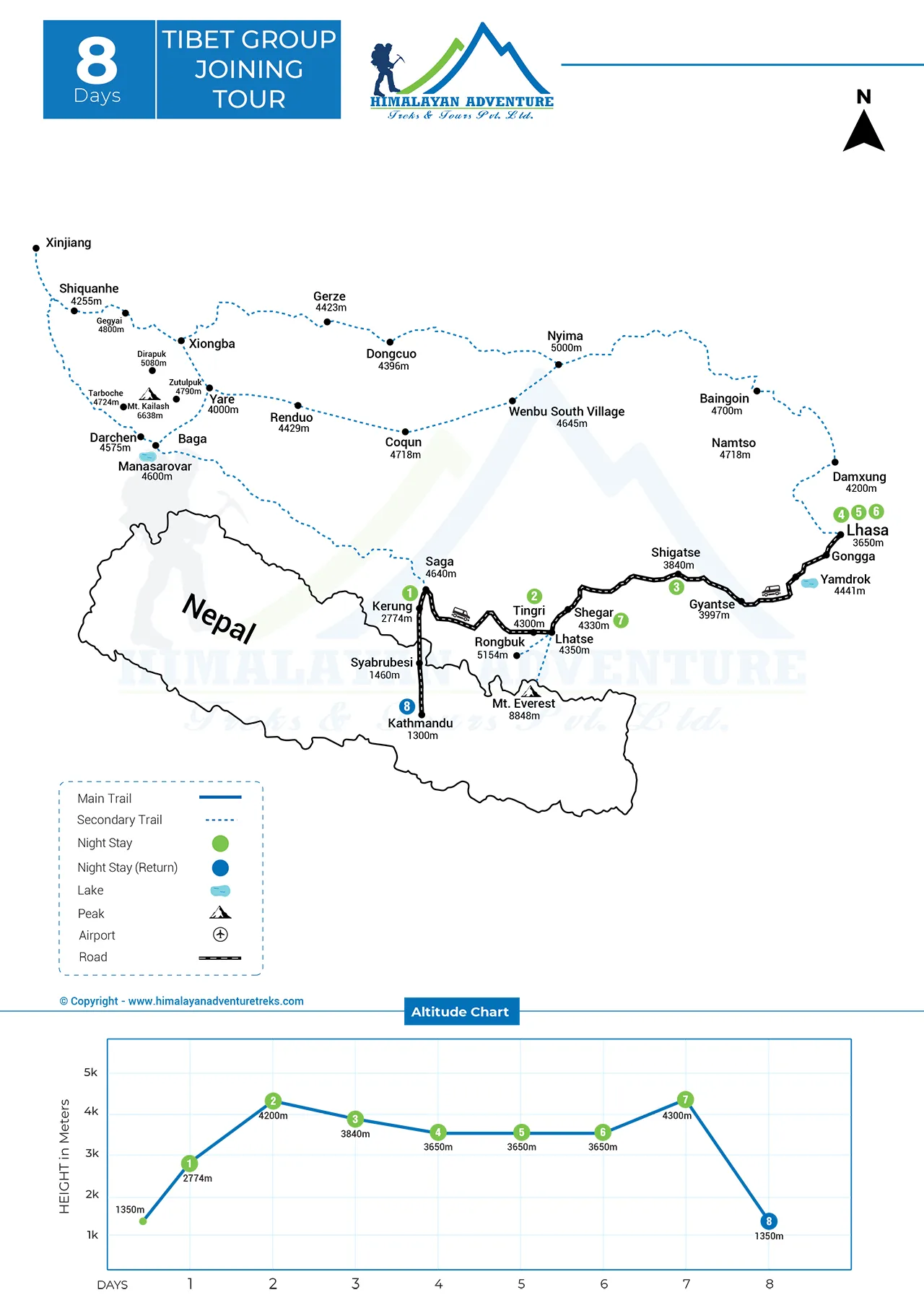
Day 01: Kathmandu to Kerung
Day 02: Drivefrom Kerung to Tingri
Day 03: Tingri to Shigatse
Day 04: Shigatse to Lhasa via Gyantse
Day 05: Lhasa Sightseeing
Day 06: Lhasa Sightseeing Continued
Day 07: Lhasa to Shegar
Day 08: Shegar to Kathmandu
Our guests sharing their experiences (Photo/Video Gallery)
Detail itinerary of Tibet Group Joining Tour
01
Day 01: Kathmandu to Kerung
Following a breakfast in Kathmandu, at the level of approximately 1,300m / 4,265ft, your Tibet Group Joining Tour will start with a picturesque ride northwards to the Nepal-Tibet frontier. The road goes through the Pasang Lhamu Highway, which is one of the most beautiful mountain roads in Nepal.
Green hills, waterfalls, and running rivers will be found on your way as you ride through small villages and terraced farmlands. The highway gradually ascends around the Langtang area and provides numerous scenes of countryside living and mountainous landscape.
It takes approximately 6-7 hours of driving (approximately 145 km) to Rasuwagadhi, the border between Nepal and Tibet. This is where you finish the Nepal immigration and part with your Nepali driver. Then you cross the Friendship Bridge, the formal border of the entry into Tibet (China).
On the Tibetan side, your Tibetan guide receives you at Gyirong Port. Once the formalities of immigration in China are over, you make a brief drive to Kerung (Gyirong) town at 2,700 m (8,858 ft). This is a small town built around the mountains with the green hills, and it is also the initial point where your journey to Tibet starts.
The remainder of the day will be spent resting and acclimatizing. During the evening, it is worthwhile to take a walk around the town to have a taste of fresh mountain air and observe how Nepal’s fertile terrain has changed into Tibet’s empty plateau.

Activity: Scenic drive, border crossing, acclimatization, 6-7 hours Drive

Max. Altitude: 2,774m/9,101ft. Kerung Border

Meal: Breakfast, Lunch, and Dinner

Accommodation: Hotel
02
Day 02: Drivefrom Kerung to Tingri
The journey on the Tibetan plateau proceeds after breakfast in Kerung at 2,700 m (8,858 ft) to Tingri. The terrain gradually transforms as the road gets higher. The green hills start vanishing and are replaced with vast open valleys, dry hills, and infinite skies that are characteristic of Tibet.
At some point in the drive, you pass the beautiful Lalung La Pass, which is at 5,050 m (16,568 ft), and is among the highest points of the trip. Colorful prayer flags are fluttering in the wind at the top of the pass, and you can have amazing views in the Himalayan mountain range. Visitors can observe well-known peaks on a clear day, namely Shishapangma of 8,013 m (26,289 ft), Cho Oyu of 8,188 m (26,864 ft), and even the distant peak of Mount Everest shining on the horizon.
On the road, there is the serene turquoise of the lake of Peiku Tso at approximately 4,590 m (15,059 ft). The lake is a mirror that reflects the mountains around and forms an ideal spot to make a quick stop with the camera. You can also encounter nomadic families whose yaks and sheep are grazing on the plateau.
The final destination by the end of the afternoon is Tingri at 4,300 m (14,108 ft). This small town is in the shade of the giants of the Himalayas and offers magnificent scenery of the mountains. Check into a basic guesthouse, have dinner, and have time to rest and acclimatize to the elevated altitude.
Activity: High-altitude drive, Himalayan views, lake stop, 5-6 hours
Max. Altitude: 4,350m/14,272ft. Lhatse
Meal: Breakfast, Lunch, and Dinner
Accommodation: Hotel
03
Day 03: Tingri to Shigatse
You depart this morning from Tingri at 4300 m (14108 ft), and proceed eastward down the now-famous Friendship Highway to Shigatse. The road ascends to Gyatso La Pass at approximately 5,220 m (17,126ft), the highest point of this highway. Prayer flags are placed on the top, and the panoramic sights of the Tibetan plateau are endless in all directions. In the background, under a dark blue sky, are snow-crested mountains.
Spending a brief rest by the photo-stop, the road slowly winds down in broad valleys and narrow villages. On your way, you pass by Lhatse, a small town, which is frequented by travelers as a quick lunch place. The trip then proceeds to the agricultural land where barley fields and the traditional Tibetan houses are starting to emerge.
At the end of the afternoon, you get to Shigatse (3,900 m / 12,795 ft), the second-largest city in Tibet and a significant cultural and religious hub. The most notable destination here is the renowned Tashilhunpo Monastery, which was established in the 15th century. It is a very big monastery where the Panchen Lama is usually seated. You can see a monastery full of golden statues and colorful murals, and prayer halls inside. The giant statue of Maitreya Buddha is one of the most impressive ones.
On completion of the visit, check into your hotel and rest. A brief walk through the vibrant local market, which is followed by dinner, is also an option.
Activity: Mountain pass crossing, monastery visit, city exploration, 5-6 hours
Max. Altitude: 3,900m/12,795ft. Shigatse
Meal: Breakfast, Lunch, and Dinner
Accommodation: Hotel
04
Day 04: Shigatse to Lhasa via Gyantse
The journey starts with breakfast in Shigatse at 3,900 m (12,795 ft) and then moves on to Lhasa. The initial destination is the old town of Gyantse, which is situated at an elevation of 3,950 m (12,959 ft). Gyantse is a town that is characterized by an old fortress and religious sites. This is where you see the well-known Pelkor Chode Monastery and the amazing Kumbum Stupa, a multi-tier building comprising 108 monastery halls with great murals and statues. The old Gyantse Dzong fortress that towers over the town can also be viewed in the monastery area.
The road leads after visiting Gyantse, over two spectacular mountain passes. The first one is Karo la Pass of 5,036 m (16,522 ft), where one can observe a huge glacier near the road. Shortly, the road ascends to the Kamba La Pass of 4,794 m (15,728 ft). Here you will have the memorable sight of Yamdrok-Tso Lake, which is located at approximately 4,441 m (14,570 ft) and is among the most beautiful lakes in Tibet. It is bright turquoise water that spreads over the valley with mountains surrounding it.
This road starts to go down towards the valley of the Yarlung Tsangpo River. It is a greener and more populated landscape towards Lhasa, becoming more of a village and farmland landscape.
In the evening, you reach Lhasa at 3,650 m (11,975 ft), the spiritual center and capital of Tibet. Once you have checked into your hotel, have dinner and rest after this picturesque day.
Activity: Scenic drive, monastery visit, lake viewpoint, 7-8 hours
Max. Altitude: 3,950m/12,959ft. Gyantse
Meal: Breakfast, Lunch, and Dinner
Accommodation: Hotel
05
Day 05: Lhasa Sightseeing
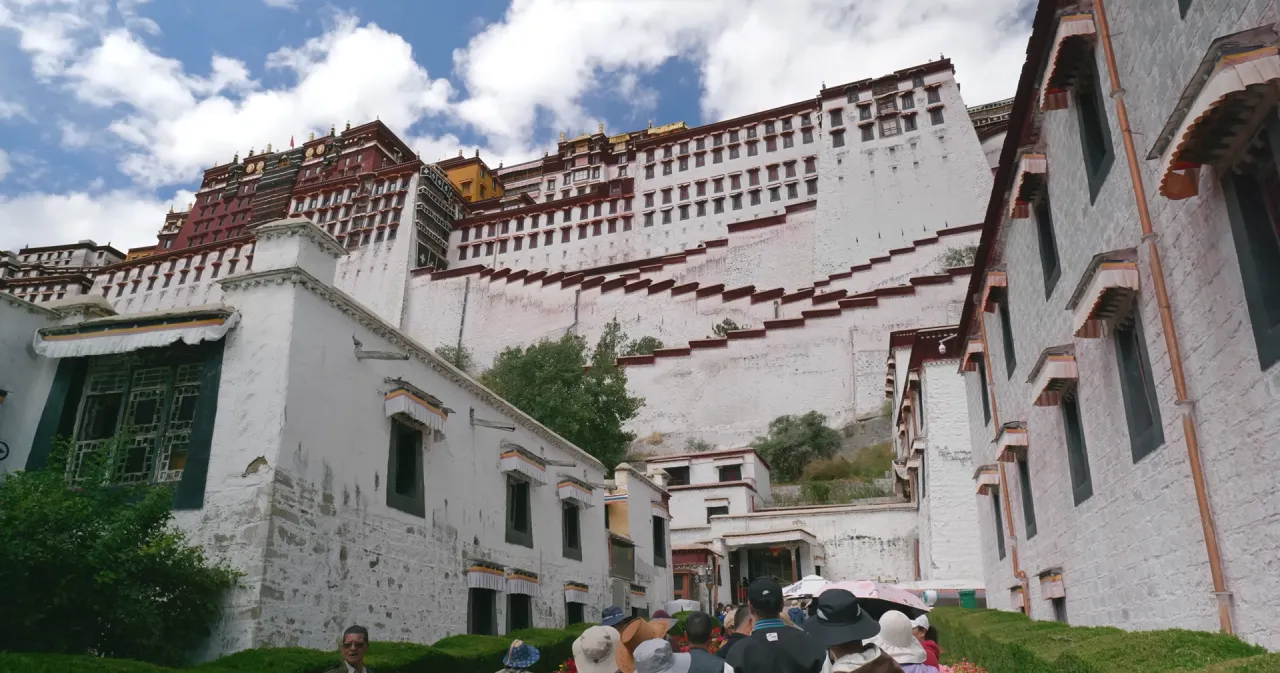
The day is spent exploring the cultural wonders of Lhasa at 3,650 m (11,975 ft) high. You come to the great palace, Potala, one of the most typical constructions in Tibet, after you eat breakfast. This gigantic palace is a winter palace of the Dalai Lama, is standing on a hill above the city. The structure has over a thousand rooms, halls, and corridors.
You can have breathtaking views of Lhasa city as you ascend the stone steps gradually. The golden statues, colorful murals, and sacred relics, including the tombs of various Dalai Lamas, are inside, making the halls pretty.
By afternoon, you come to Jokhang Temple, which is the most sacred temple in Tibet. This temple was constructed more than 1300 years ago, and it contains the sacred statue of Jowo Shakyamuni. Tibetan pilgrims visit here to make prayers, spin prayer wheels, and make prostrations. The religious feeling within the temple is memorable.
Barkhor Market is an outer market of Jokhang that is a vibrant circular street. Here you will be able to walk among local pilgrims, monks, and traders. There are also small stores offering prayer beads, incense, art, jewelry, and traditional Tibetan clothing.
You can also have the remaining part of the evening to unwind or have a walk around the city streets. Have your dinner and spend a good night in this historical and religious city.
Activity: Potala Palace, Jokhang Temple, Barkhor market sightseeing, 5-6 hours
Max. Altitude: 3,651m/11,978ft. Lhasa
Meal: Breakfast, Lunch, and Dinner
Accommodation: Hotel
06
Day 06: Lhasa Sightseeing Continued
Today you are still sightseeing the significant monasteries of Lhasa, which is at 3,650 m (11,975 ft). You leave after breakfast to go to Drepung Monastery on a hillside just outside of the city, about 3,800 m (12,467 ft).
Drepung was the biggest monastery in Tibet, and it had thousands of monks. Until the construction of the Potala Palace, it was used as the home of the Dalai Lamas. As you walkthrough its white structures and repositories, you will encounter prayer halls, assembly rooms, and statues that indicate centuries of Tibetan Buddhist education.
You visit another significant religious center in the afternoon, which is the Sera Monastery, which is found at approximately 3,700 m (12,139 ft). Sera is also very famous due to the traditional monks and their way of living. Each afternoon, the monks sit together in one of the courtyards to discuss Buddhist philosophy. This is a lively tradition that has been part of Tibetan monastic education for centuries.
The visit to the monastery might include some time in a local tea house where the Tibetans come to have the traditional butter tea. Barkhor Street is also a good place to comeback and do more shopping or cultural activities.
The last thing to do in Lhasa is to have your final dinner in the evening and look back at the fabulous cultural and spiritual experiences you have had in the sacred city of Tibet.
Activity: Monastery visits, monk debates, cultural experiences, 6-7 hours
Max. Altitude: 3,650m/11,975ft. Lhasa
Meal: Breakfast, Lunch, and Dinner
Accommodation: Hotel
07
Day 07: Lhasa to Shegar
You start in Lhasa at 3,650 m (11,975 ft) in the morning with breakfast, and then start your long journey west across the Tibetan plateau to Shegar. It is the driving day and the longest of the tour, travelling through broad scenery and through high mountain passes.
The path goes along the Friendship Highway and goes through the towns again, including Shigatse(3,900 m / 12,795 ft) and Lhatse(4,050 m / 13,287 ft). You will notice the expansive open plateau, yaks grazing, the mountains in the distance, and little Tibetan villages. The landscape is calm and melodramatic with no-endless sight of sky and land.
Other high passes that pass through the journey are of a height of about 5200 m (17060 ft). Excellent scenery of the nearby mountains and valleys is provided by these passes. These stops take a short duration of time so that the travelers are able to stretch, take pictures, and have a taste of the pure high-altitude air.
Towards the end of the day, you arrive at Shegar (New Tingri) at 4,200 m (13,780 ft). This is a tiny town that is situated close to the road leading to Mount Everest Base Camp. During clear days, you can even see the mountain Everest (8,848 m / 29,029 ft) from here.
Once in the guesthouse, have dinner and a well-deserved sleep after the tiring journey as you share experiences of your trip to Tibet with the other fellow travelers.
Activity: Long overland drive, scenic plateau views, 10-12 hours
Max. Altitude: 4,300m/14,108ft. Shegar
Meal: Breakfast, Lunch, and Dinner
Accommodation: Hotel
08
Day 08: Shegar to Kathmandu
You start the last leg of your trip back to Nepal after breakfast in Shegar (4,200 m / 13,780 ft). The highway leads to the direction south to the Tibet-Nepal border. The drive then becomes lower and lower in altitude, and the landscape slowly transforms.
Several hours later, you reach Gyirong Port at approximately 2,700 m (8,858 ft), the principal crossing of Tibet-Nepal. It is here that you part with your Tibetan guide and driver and take your Chinese immigration formalities. Once you have left Tibet, you walk over the Friendship Bridge, and you are back in Nepal at Rasuwagadhi.
After completing all the immigration processes, you are introduced to your Nepali driver and start your drive back to Kathmandu. The highway is meandering along hills of green, falls, rivers, and farms that are terraced. The scenery is green and beautiful again in comparison to the dry plateau of Tibet.
The drive is carried on through little villages and along mountain gullies until you arrive at Kathmandu (1,300 m / 4,265 ft) in the late afternoon or evening. This is the final day of your beautiful Tibet group joining tour. Once you are in your hotel, you can celebrate the trip by having a farewell dinner, or you can relax after the adventure.
Activity: Border crossing, scenic mountain drive, tour completion, 8-9 hours
Max. Altitude: 1,400m/4,593ft. Kathmandu
Meal: Breakfast, Lunch, and Dinner

Note:
If you have your own private group and want to make your trip private, we can run the custom trip all the day as per your requirements and group size.
Includes and Excludes
What are included with package?
- Kathmandu to Lhasa and Return by Jeep/Van: Comfortable overland travel from Kathmandu to Lhasa and back by private jeep or van is included in the package.
- Tibet Travel Permit: All necessary permits required to enter and travel within Tibet are arranged and included.
- Accommodation in Tibet: Twin-sharing rooms at standard hotels throughout Tibet are included during the trip.
- English-Speaking Tibetan Guide: A professional local Tibetan guide will accompany you to provide insightful information and ensure smooth communication.
- Monastery and Sightseeing Entrance Fees: All entrance fees for cultural and historical sites mentioned in the itinerary are covered.
- National Grassland Conservation Fee at Pekutso: Conservation fees for visiting Pekutso grasslands are included for all participants and staff.
- Yamdrok Lake Conservation Fee: The conservation fee required for visiting the sacred Yamdrok Lake is also included.
- Daily Breakfast: Breakfast is provided every day during your stay in Tibet.
What are not included with package?
- Lunch and Dinner: Daily meals except for breakfast are not included; you’ll need to pay for your own lunch and dinner throughout the trip.
- Nepal Re-entry Visa Fee: If you re-enter Nepal after the Tibet tour, you’ll need to obtain and pay for a re-entry visa at the border or Kathmandu Airport.
- Tibet Visa Fee: The visa fee for entering Tibet is not included and must be arranged separately.
- Insurance of Any Kind: Travel, health, or emergency evacuation insurance is not provided, and it’s your responsibility to arrange suitable coverage.
- Personal Expenses: Costs like beverages, tips for guides and drivers, laundry, or any other personal spending are excluded from the package.
Pick Your Suitable Date
US$ 1400
Book a Private Trip
Private & Group Discount Price
-
1 -
1 person
US$ 1500
-
2 -
2 people
US$ 1400
-
3 -
5 people
US$ 1300
-
6 -
10 people
US$ 1200
-
11 + people
9999
US$ 1100
1 Travelers x US $ 2000
Total Cost:
US$ 1500
Route Map & Altitude Chart
Kathmandu
Start/End point
Kathmandu
Trip Information
Weather and Best Season
The Tibet Group Joining Tour will be held in any month of the year, although the best season is between May and October. At this time, the weather is more predictable, the skies tend to be clear, and travelling is not difficult. Days are pleasant normally, whereas nights may still be cold, taking into consideration that Tibet is quite an elevated area.
In most of the roads, passengers sleep and rest between altitudes of approximately 2,700 m (8,858 ft) to 4,300 m (14,108 ft), whereas some of the passes are above 5,000 m (16,404 ft). Due to this rise, temperatures may fluctuate very fast even on a sunny day.
The Tibet Group Joining Tour is particularly good in spring (April, May) and autumn (September, October). In these seasons, the weather is cool, the mountain scenery is usually clearer, and there are fewer tourists compared to summer. These months are ideal for sightseeing of the Everest, Yamdrok Lake, and the expansive Tibetan plateau.
Summer is also a good season since the weather is mild and roads are normally free, even though there can be some rain during July and August.
It is much harder and colder in winter. High passes might be blocked by snow, and even certain services are restricted. To the majority of travellers, the most suitable and comfortable mode of visiting this place is from the end of spring to the beginning of autumn.
How Difficult is the Tour
Tibet Group Joining Tour is largely a moderate trip, and this implies that most healthy tourists can complete the trip without having to undergo special training.
It does not entail any long walking or strenuous climbing. The majority of the trip is spentina vehicle, and only a small amount of walking is involved during sightseeing. This renders the tour preferable to most individuals, including older travelers, provided they are fit enough and willing to go to high altitude.
The Tibet Group Joining Tour has the primary difficulty of the altitude. You start at approximately 2,700 m (8,858 ft) in Kerung and proceed to such destinations as Lhasa at 3,650 m (11,975 ft), and Shigatse at 3,900 m (12,795 ft). There are parts of the route that lead to the mountain that have mountain passes that have a height exceeding 5,000 m (16,404 ft).
The air at these heights is less dense and therefore, some of the travelers might be fatigued, breathless, or develop slight headaches. This is natural, yet it is necessary to take time, consume lots of water, and take breaks when necessary.
Long driving days may also be exhausting, particularly on the way back. Nevertheless, there are frequent pauses during meals, photographs, and stretching. The tour is challenging but fulfilling to most tourists, provided you listen to the advice of your guide and take good care of your body.
Visa and Permits
To join a Tibet Group Joining Tour, one needs special travel documents; the good news is that we organize them for you.
The key among the documents is the Tibet Travel Permit that is required by all foreigners coming to Tibet. In the absence of this permit, one cannot join the tour or cross the border into Tibet. In order to process it, we require you to send a copy of your passport prior to your trip, and your travel information.
In case you fly to Tibet via Kathmandu, you must also have a China Group Tourist Visa to accompany your Tibet Group Joining Tour. This is contrary to a standard Chinese visa. The group visa is granted to the entire travelling group, and all of them get in and out of Tibet simultaneously. Due to this procedure, the traveler is expected to come into Kathmandu a few working days prior to departure so that the visa can be organized accordingly.
Other local permits can also be obtained during the trip, such as entry to specific regions, which are normally a behind-the-scenes task of the travel company. The travelers are required to be in possession of a valid passport that has at least half a year to expire. Your guide will assist in taking care of the formalities in the trip.
Because the road crosses areas like Kerung(2,700 m / 8,858 ft), Shigatse(3,900 m / 12,795 ft), and Lhasa (3,650 m / 11,975 ft), appropriate permit structuring is a significant element of unproblematic travel.
Transportation
The Tibet Group Joining Tour involves a large aspect of transportation, and it is organized such that the journey is safe, comfortable, and practical. The journey begins in Nepal, with the visitors taking a normal drive through Kathmandu to the border in a personal vehicle, jeep, or van. Once across the border on foot, the group then carries on in a Tibet-registered vehicle with a local driver since foreigners cannot drive themselves in Tibet.
The overland tour is also one of the highlights of the Tibet Group Joining Tour. It enables the viewer to experience how the scenery gradually evolves when the green Nepalese hills give way to the vast dry Tibetan plateau.
Most of the roads in Tibet are tarmac and good enough to be used during a long journey, but the Nepal side might seem to be narrower and rougher. Transport can be in the form of a Land Cruiser, a minivan, or a small bus, depending on the size of the group.
Certain days would entail extensive driving, particularly on the roads connecting Lhasa, Shigatse, and Shegar. They are very high areas and the spending of the night may be on such places as Kerung(2,700 m / 8,858 ft), (3,650 m / 11,975 ft), and Shegar(4,200 m / 13,780 ft). Regular rest, photo, meal, and short walk stops are made to make the journey easier.
Your Extra Expenses on the Trip
Even though the key services of a Tibet Group Joining Tour are often covered, travellers still need to make a personal budget during the trip. The most predominant additional costs will be meals, snacks, drinks, visa fees, tipping, and shopping. Breakfasts are included in the packages, but lunch and dinner will have to be paid for on your own. There are more restaurant options in bigger destinations, such as Lhasa and Shigatse, and fewer in smaller destinations.
Since the Tibet Group Joining Tour will go through isolated highlands like Kerung at 2,700 m (8,858 ft), Shigatse at 3,900 m (12,795 ft), and Shegar at 4,200 m (13,780 ft), it would be a good idea to bring plenty of Chinese Yuan cash. Such small costs as bottled water, tea, coffee, snacks, and toilet charges can be accumulated over several days. Purchases also include souvenirs like prayer flags, handicrafts, jewelry, and local art.
Other items that should be included in the budget of travelers are the China Group Visa, Nepal visa, where applicable, and travel insurance. It is not mandatory to tip the guide and the driver; however, it is a popular and welcome practice.
Some spare money in case of delays that cannot be predicted is also intelligent. It is always good to plan to be less worried about the trip.
Don’ts on This Trip
Tibet Group Joining Tour will not just be all about beautiful scenery and well-known monasteries, but again, it will be about respecting people and rules, as well as the religion.
Among the most vital aspects to keep in mind, you should not act carelessly in monasteries and temples. No handling of statues, altars, or religious objects. Speak not loudly in places of worship, and do not take photos where you are not permitted to do so. One is also expected to dress in an appropriate manner as well as take off hats or sunglasses when visiting holy places.
One more valuable fact to be noticed during a Tibet Group Joining Tour is not to discuss political issues sensitively. Issues touching on the politics of Tibet, religion, and government policies are extremely delicate. It is preferable to remain on culture, history, and the experience of travelling itself.
Travelers should also not push themselves too far at high elevations. The road contains destinations like Lhasa at 3,650 m (11,975 ft), and mountain passes that are above 5000 m (16404 ft); thus, altitude may impact your body. Never ignore symptoms such as headache, dizziness, or unusual tiredness. Inform your guide immediately if you feel unwell.
Also, do not litter, disturb animals, or overpack heavy luggage. Treat people with respect and stay calm, and this will make your way easier and more pleasant for the group and for you.
Trip Extension
The Tibet Group Joining Tour is a comprehensive service and can be characterized as a full trip alone, but most travelers opt to add on to it and have a look around the Himalayas.
The most popular one is the extension of the Everest Base Camp on the Tibet side. Because the primary route already winds around mountainous terrain, including Shegar at approximately 4,200 m (3,780 ft), it is easy to head more towards Everest. This provides the travelers with additional time to appreciate the mountainous landscape and have one of the most renowned views in the world.
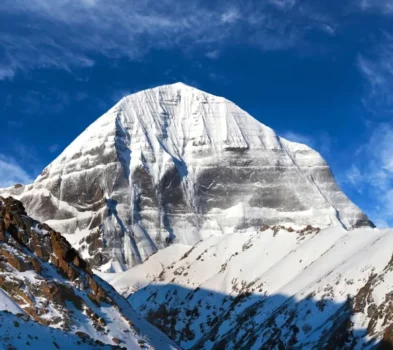
The other extension of the Tibet Group Joining Tour is the visit to Mount Kailash and Lake Manasarovar. It is a more challenging and lengthier one, yet very significant when one is interested in spiritual travel and in remote areas. This route requires additional permits and additional travel days.
In case you come back to Nepal after the tour, there are numerous simple extension options. In Pokhara, you can relax, in Chitwan, you can go on a jungle safari, and in Kathmandu Valley, you can visit heritage sites. There are also those tourists who visit both Tibet and Bhutan to have a more Himalayan experience.
You can add extensions to your trip that will make it more meaningful. It is an excellent choice for people who have made a long way and want to spend as much time as possible in the area.
Photography & Drone Rules
A Tibet Group Joining Tour will give an opportunity for amazing photography, whether it is monasteries, old streets, lakes, or mountain passes.
It is important to note that the travelers must be careful and respectful when taking photos. Photography in the interior of the prayer halls is prohibited in several monasteries. Most sacred statues, murals, and prayer halls have strict rules, and it is better to be attentive to the signs and instructions of your guide.
On the street, one should politely request people to take close-up shots of the locals, monks, or pilgrims.
When you are on a Tibet Group Joining Tour, you see high and sensitive destinations including Lhasa, Shigatse, and beautiful passes of more than 5,000 m (16,404 ft). Photography within military areas, police stations, border crossings, and government buildings is heavily prohibited in these areas. Violating these guidelines may be dangerous.
Even the use of drones is more regulated. In Tibet, drones are restricted in most locations, particularly near cities, airports, along borders, as well as religious locations. Drones can fly in certain open scenic areas, but again, you must abide by local regulations, and your guide must confirm that it is permissible. The use of drones should also be done with responsibility by the travelers, as the noise may distract the worshippers, the local people, and wildlife.
Major Attractions
The Tibet Group Joining Tour gives a chance to view most of the most renowned cultural and natural sites in Tibet. The largest attraction is the Potala Palace, a great hilltop palace in Lhasa which stands above the city on top of a hill of 3,650 m (11, 975 ft). The Dalai Lama used to stay here in winter, and it is one of the most significant landmarks in Tibet.
Barkhor is another market worth visiting in Lhasa, and the spiritual center of Tibetan Buddhism, Jokhang Temple.
Another natural attraction during the Tibet Group Joining Tour is the Yamdrok-Tso Lake, which is among the holy lakes in Tibet. As observed at Kamba La Pass, which is located at an approximate altitude of 4,794 m (15,728 ft), the lake is gleaming in beautiful hues of turquoise and is engulfed by snow-coated mountains.
Passing by Gyantse, you can also see Pelkor Chode Monastery and a well-known Kumbum Stupa, which is designed in a unique way and has beautiful interior prayer halls.
Another significant attraction is Tashilhunpo Monastery in Shigatse at 3,900 m (12, 795 ft). It is the customary seat of the Panchen Lama and is renowned for its gigantic statue of Maitreya.
Drepung and Sera monasteries near Lhasa are also included in the tour, as the travelers have the opportunity to observe the significant monastic life and the famous debates between the monks.
Tips for first-time travellers
If this is your first Tibet Group Joining Tour, proper preparation will make your journey a lot easier.
The most important suggestion is to take altitude seriously. You will go through such places as Kerung(2,700 m / 8,858 ft), Lhasa (3,650 m / 11,975 ft), and mountain passes over 5,000 m (16,404 ft). Owing to this, it would be good to walk slowly, take lots of water, and not engage in heavy exercises in the initial days. This is very important, as your body needs time to adjust to the altitude.
Proper packing is also another important aspect of a Tibet Group Joining Tour. Warm clothes, even during warm weather, are necessary, as the weather may shift rapidly. Sunglasses, sunscreen, lip balm, and moisturizer are quite handy since the sun is intense and the air is dry. A little personal first aid kit comes in handy.
One should also have sufficient cash in Chinese Yuan, particularly when one is not in Lhasa. A lot of distant locations lack convenient card payment. Tissue paper, hand sanitizer, and a reusable water bottle should also be taken on long drives.
Lastly, respect local customs. Wear modest clothes, and listen to the instructions of your guide in religious places. A peaceful and respectful attitude will make you appreciate Tibet, its culture, people, and landscapes in a more significant way.
Essential Packing List for Tibet Group Joining Tour
Traveling is mostly about enjoying and experiencing the destination, however, if you want to get the most from your little holiday, then appropriate travel gear is also a must.
It may seem a chore to you, but some of the items and equipment are such that you would hate to be without them. Here, we have listed some must-have gear that will take up very small space in your backpack and is also legal to travel with.
- Your Passport
- Visa
- Passport Photos
- Local Currency
- Credit or Debit Cards
- Emergency Contact Info
- Booking Information
- Health Insurance
- First Aid Kit
The backpack is a more comfortable, easy-to-carry, manageable, and convenient option than carrying a heavy suitcase when traveling abroad. You can carry almost all your gear in it without much load. We suggest you have one main and another secondary backpack: the main backpack will have large storage for all your equipment and belongings, and the secondary backpack will be used to travel light during the day.
- Main Backpack: Good quality waterproof lightweight with volume up to 45 to 60 L with a good hip-belt
- Secondary Backpack: Foldable, durable, lightest, and smallest
- Foldable Travel Toiletry Bag
- Carrying case or waterproof cover for your main and secondary backpack to protect from dust, water, and dirt
- Camera Backpack
- Document bag
- Waterproof Jacket
- Light Down Jacket
- Rain Coat
- T-shirts (long and half-sleeved) and Tank Tops for the hot days
- Fleece Jackets
- Hoodie
- Sweatshirts
- Wool sweater
- Durable, lightweight, quick drying Hiking Pants
- Some Jeans for a casual look
- Canvas or cargo pants with numerous pockets
- Shorts
- Leggings for women
- Skirt (long for visiting temples and monasteries for women)
- Long Dress for some formal occasions
- Bras (Sports bras would be preferable for comfortable traveling)
- Panties
- Briefs
- Boxers
- Socks (Cotton and woolen, quick drying)
- Flip-flops or sandals
- Canvas sneakers
- Trail shoes for light walking and touring
- Swimsuit
- Hat, cap
- Bandana and masks
- Scarf, shawl, or foulard
- Handkerchief
- Gloves
- Sleeping Bag, Hammock, Tent for nature trips ( Optional)
- Earplugs
- Inflatable pillow or cushion
- Sleeping with an eye mask
- Sunscreen or sunblock
- Sunglasses
- Chapsticks or Lip Balms
- Moisturizer
- Deodorant
- Light, quick-drying towel
- Phone with charger, headphones, memory cards
- Camera with replacement battery, memory cards, and charger
- Notebook computer, tablet
- GPS or GPS Watch
- Universal Adapter
- Power Bank
- Solar Charger
- Toothpaste
- Shampoo
- Toothbrush
- Comb
- Soap
- Hand sanitizer
- Sanitary Pads
- Padlocks
- Head torch
- Multipurpose knife
- Lighter or matches
- Whistle
- Thermal Blanket
- Flashlight
- Compass
- Mosquito spray or repellent
- Water Filter
- Antiseptics
- Painkillers such as Aspirin or Ibuprofen
- Bandages
- Tweezers
- Thermometer
- Disposable gloves
- Your prescribed medications
- Common medicines for diarrhea, nausea, and vomiting
- Anti-allergic medications
- Moleskin or blister pads
- Altitude sickness medication (Diamox)
- Eye and ear drops
- Safety Pins
- Gause Pads
- Scissors
Equipment Note:
- We understand that not every item that we have listed here is essential. The traveling items depend on what you need, your destination, the type of tour, and a number of days you have allocated for your tour.
- So, review our list and pack only what is necessary for you. The main aim is to travel as light as you can and comfortably without the burden of extra luggage. Most of the items here can even be purchased in Lhasa so there is no need to worry if you forget to pack something.
Frequently Asked Questions
Can a solo traveller become a part of the Tibet Group Joining Tour?
Yes, solo travelerscan join the Tibet Group Tour and share services,whichmakes the trip more affordable.
How many people are on average in this tour?
Group size usually ranges from 4 to 15 travelers, creating a comfortable balance between shared experience and smooth travel management.
Is there any age restriction?
No age restriction exists, but the participants must be of good health and must be comfortable with long-distance drives at high altitudes.
Is it possible to take children on the Tibet Group Joining Tour?
Yes, children can join when they are accompanied by parents, though they must be physically fit when it comes to altitude, road travel, and basic facilities.
Will I be able to have a single room?
Private rooms can be booked, but it depends on the availability of any hotels and guesthouses on the road.
Can I share a room with another traveler?
Yes, same-sex room sharing is usually available for solo travelers who prefer not to pay the single supplement fee.
What kind of accommodation does this trip use?
The tour uses various hotels of tourist quality in the cities and simple guesthouses in remote places, which are basic, clean, and have the necessary amenities.
Do all accommodations have attached bathrooms?
Most city hotels have attached bathrooms, and some remote guesthouses have a basic shared bathroom facility based on location.
Is it possible to take hot showers during the trip?
Hot showers are commonly found in the hotels of Lhasa and Shigatse, but can be scarce or unreliable in the smaller towns.
Does the tour have WIFI facility?
The Wi-Fi connection is supported in most of the hotels, particularly in urban areas, yet the connection may be slow, intermittent, and not available in rural areas.
Will it be possible to charge my phone and camera every day?
Yes, it is usually easy to charge at the places of accommodation, but sometimes power is scarce in small towns and remote guesthouses.
What type of toilets may I expect on the way?
A combination of western toilets, squat toilets, and roadside toilet stops can be expected, particularly when the driving day is long.
Does it include laundry service during the tour?
In bigger cities such as Lhasa, laundry service can be available as opposed to remote stops, where it is limited or absent.
Is it possible to accommodate special dietary needs on this tour?
Generally, vegetarian meals can be ordered, although extreme dietary needs ought to be noted prior to ordering so that more arrangements can be made.
Does it have bottled oxygen in the vehicle?
Yes, vehicles are generally equipped with bottled oxygen, in case of an emergency, and notably in high-altitude parts of the trip.
What happens if somebody becomes very ill in the course of the trip?
The guide will be of immediate help, offer some basic aid, and even get transport to the closest medical facility as required.
Do we have any hospitals or clinics on the road?
In the larger towns such as Shigatse and Lhasa, there are some medical facilities, but the services are limited in the small, remote regions.
Do I need travel insurance to do this tour?
Yes, highly recommended to use travel insurance, particularly the one covering altitude-related sickness, medical care, evacuation, and sudden postponements of the trip.
Should I carry my passport on a daily basis?
No, you have to carry your passport during the tour, as it might be requested at the checkpoints or hotels.
Will the guide speak English?
Yes, the Tibet Group Joining Tour has an English-speaking guide who will guide the traveller in sightseeing, logistics, and local information.
Would I be able to purchase a local SIM card in Tibet?
Yes, a domestic SIM card can be bought in more populated cities, but the registration policies can differ, and access to the internet is limited.
Does it have ATMs throughout the trip?
The ATMs are found in major cities such as Lhasa and Shigatse, but they are few or nonexistent in remote regions.
Is it easy to use foreign bank cards in Tibet?
In some cities, the foreign cards will be accepted in the hotel or the ATM, but the surest way of payment is cash.
Is there a seat rotation facility in long drives?
Yes, the rotation of the seat can often be arranged fairly among the members of the group, particularly during longer days of driving in Tibet.
What is the amount of luggage that can be carried on the tour?
It is suggested to have one main duffel or suitcase and one day bag because on overland travel, there is limited space in the vehicle.
Is it possible to leave additional luggage in Kathmandu?
Yes, most of the travelers can leave their additional luggage at Kathmandu.
Do the rooms become cold at night?
Remote areas can be cold at night, and therefore warm sleepwear and layered clothes are advised.
Are there any blankets and heating available in hotels?
A majority of hotels supply blankets, and most city hotels supply heating.
Is it possible that the itinerary can be altered during the tour?
Sometimes the itinerary may need small changes due to road conditions, weather, permit checks, or local regulations for safety and practicality.
Can I do a Nepal tour after the Tibet Group Joining Tour?
Yes, Tibet Group Joining Tour can perfectly be combined with Nepal sightseeing, short hikes, wildlife safari, or any other Himalayan extensions.
Related Blogs & Articles

Reviews on Tibet Group Joining Tour

Related trips