

Duration
13 Days

Gokyo Lake Trek


Trip Grade
Moderate
Group Size
1-16 People
Max Altitude
4,470m. / 14,665ft.
Best Season
Feb- May/ Sept-Nov
Activity
Trekking & Hiking
Meals
Breakfast, Lunch & Dinner
Accommodation
Hotels & Teahouses
Transportation
Private Vehicle & Flight
Trip Customization
On request (click here)


Highlights of Gokyo Lake Trek
- Exploring 6 turquoise-colored glacial lakes, including Dudh Pokhari, Ngozumpa Tsho, and Thonak Tsho
- Witnessing Ngozumpa Glacier, Nepal’s biggest glacier, which is a key highlight of the trek
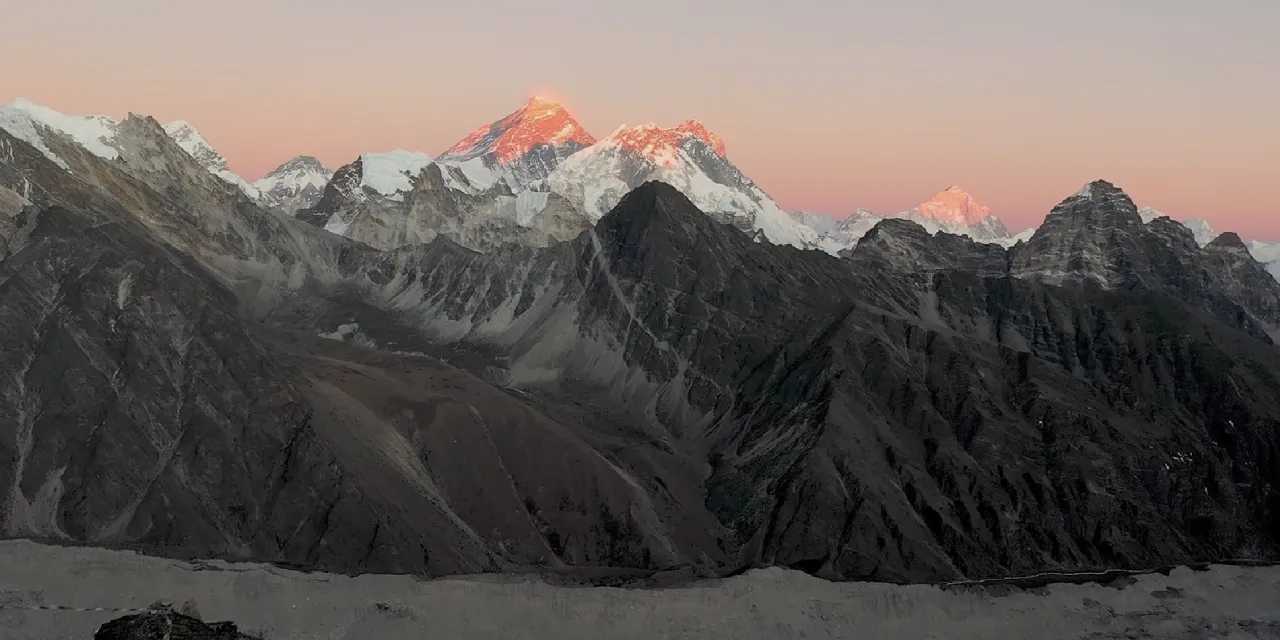
- Summiting Gokyo Ri at 5357 meters for stunning views of breathtaking mountains like Mount Everest, Makalu, Cho Oyu, Lhotse, and other peaks
- Immersing in the rich culture, history, and lifestyle of the Sherpa people, along with experiencing their cordial hospitality
- Starting Everest Gokyo Lake Trek Nepal with a memorable flight to Lukla, which is the gateway and starting point to the Khumbu region
- Trekking through Sagarmatha National Park, which is also a UNESCO World Heritage Site of Nepal located in the Everest region
- Passing through Sherpa Villages like Namche Bazaar, Phunki Tenga, Dole, Machhermo, and Khumjung
- Facing the challenges on moderately level trails with views of the heavenly landscape throughout the entire journey
Trip Introduction
The Gokyo Lake Trek is a sensational journey within the serene Gokyo Valley in the Khumbu region of Nepal. It showers visitors with unparalleled panoramic vistas of the snow-clad Himalayas, offering lifetime unforgettable memories and a unique, thrilling adventure you won’t regret.
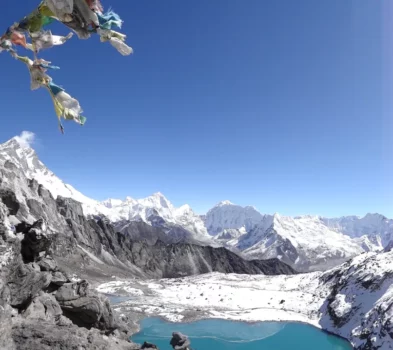
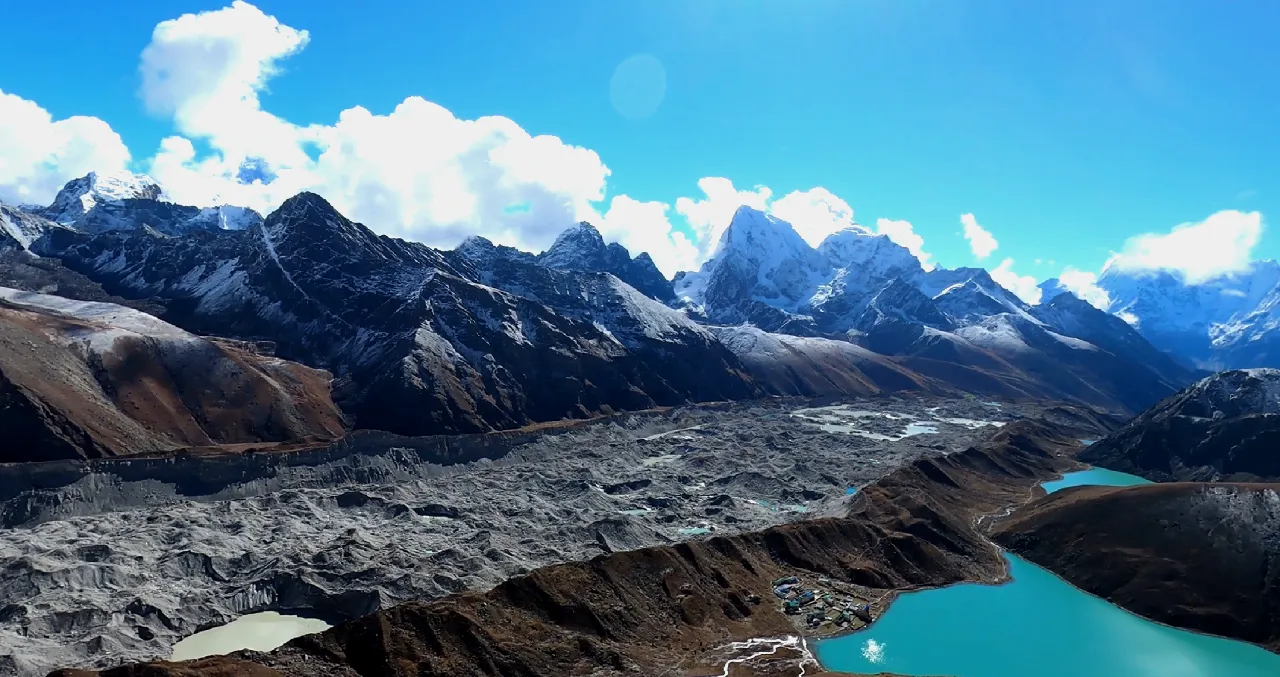
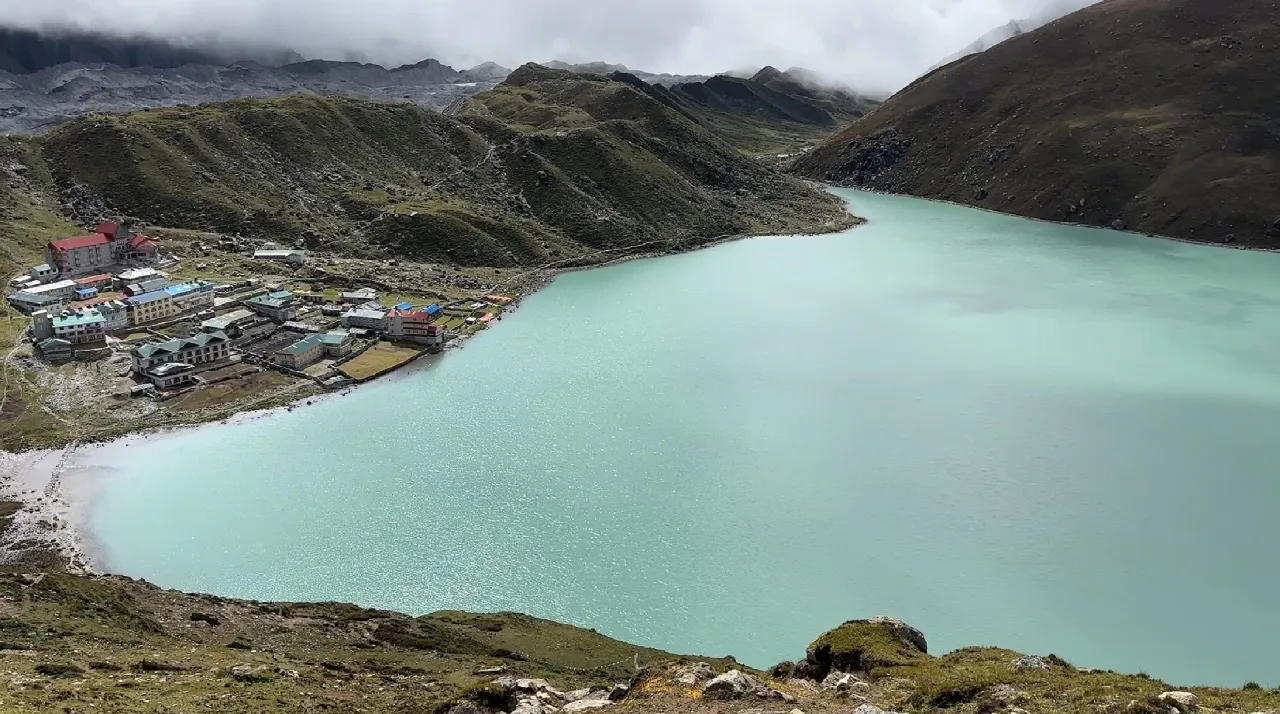
The Everest Gokyo Lake Trek Nepal will allow you to travel over the six beautiful turquoise-colored glacial lakes, namely Dudh Pokhari, Ngozumpa Tsho, Longpongo Tsho, Taboche Tsho, Gyazumpa Tsho, and Thonak Tsho. You will be amazed by the beauty of these peaceful, awe-inspiring lakes that feel unrealistic.
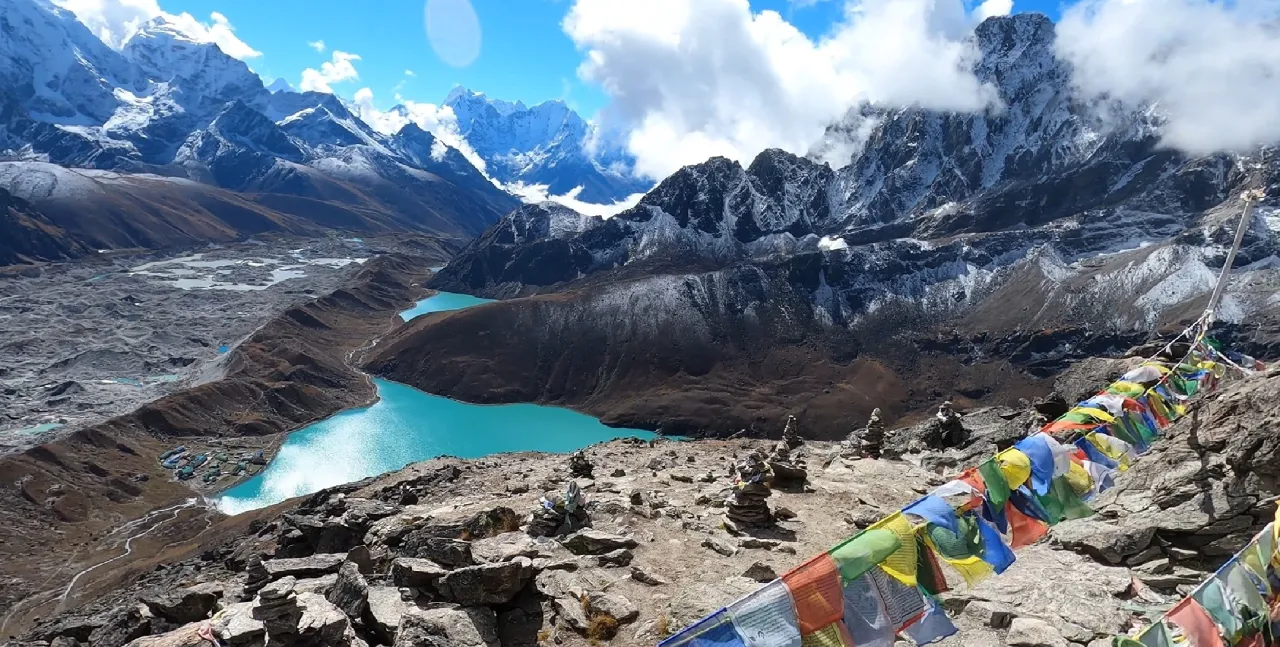
Similarly, you will witness the largest glacier in Nepal, the Ngozumpa Glacier, one of the highlights of the Everest Gokyo Lake Trek route. You will also ascend Gokyo Ri, sitting at an elevation of 5360 meters, and Gokyo 5th Lake,e 5000m. It’s one of the highest freshwater lakes in the world. where you will be spoiled with views of some of the mind-boggling highest peaks on the earth, like Mt. Everest, Makalu, Cho Oyo, Lhotse, and others.
The Gokyo Lake Trek in Nepal is not just any journey in Nepal; it’s a journey that aligns the natural world with the rich Sherpa culture, popular for its mountaineering skills, where you can delve deeply into their history and lifestyle as well as enjoy cordial hospitality in this 13-day itinerary.
Your Gokyo Lake Trek route kicks off with a picturesque flight from Tribhuvan International Airport in Kathmandu to Tenzing Hillary Airport or Lukla Airport in Lukla, which is a starting point to the Khumbu region. From here, you will trek through Phakding and Namche Bazaar town, following the Dudh Koshi Khola River.
The Gokyo Lake Trek Nepal will allow you to explore one of the UNESCO World Heritage Sites established in 1976, Sagarmatha National Park. This park is home to diverse flora and fauna encompassing various ecosystems, from verdant forests to barren alpine landscapes near the mountains.
For acclimatization, you will visit the Khumjung village and the Hotel Everest View, the world’s highest-situated hotel, offering 360-degree vistas of ice-capped peaks and heavenly landscapes. The next Everest Gokyo Lake Trek route trail will take you to other Sherpa villages like Phunki Tenga, Dole, and Machhermo, and finally lead to Gokyo, where you will explore Gokyo Lakes.
Furthermore, you will explore Gokyo Ri and Gokyo 5th lake in this Everest Gokyo Lake Trek Nepal itinerary, making your journey more exciting and adventurous. Afterward, you will return to Namche Bazaar and Lukla, ending your hiking trip. There is so much to offer in this trekking journey, and you would love to visit this place again and again.
The Gokyo Lake Trek route can be visited all year, but for the best experience in autumn and spring, it offers the ideal weather, making the journey and views more enjoyable to watch. You are walking on the moderately challenging trail, yet providing unlimited fun and memories in 13 days of adventure.
So, check your bucket list and add the Everest Gokyo Lake Trek Nepal journey to your top list and grab the lifetime opportunity to experience the feeling you have never felt before with our expert guides, ensuring your satisfaction and safety at first with the customized services you prefer.
Outline Itinerary of Gokyo Lake Trek
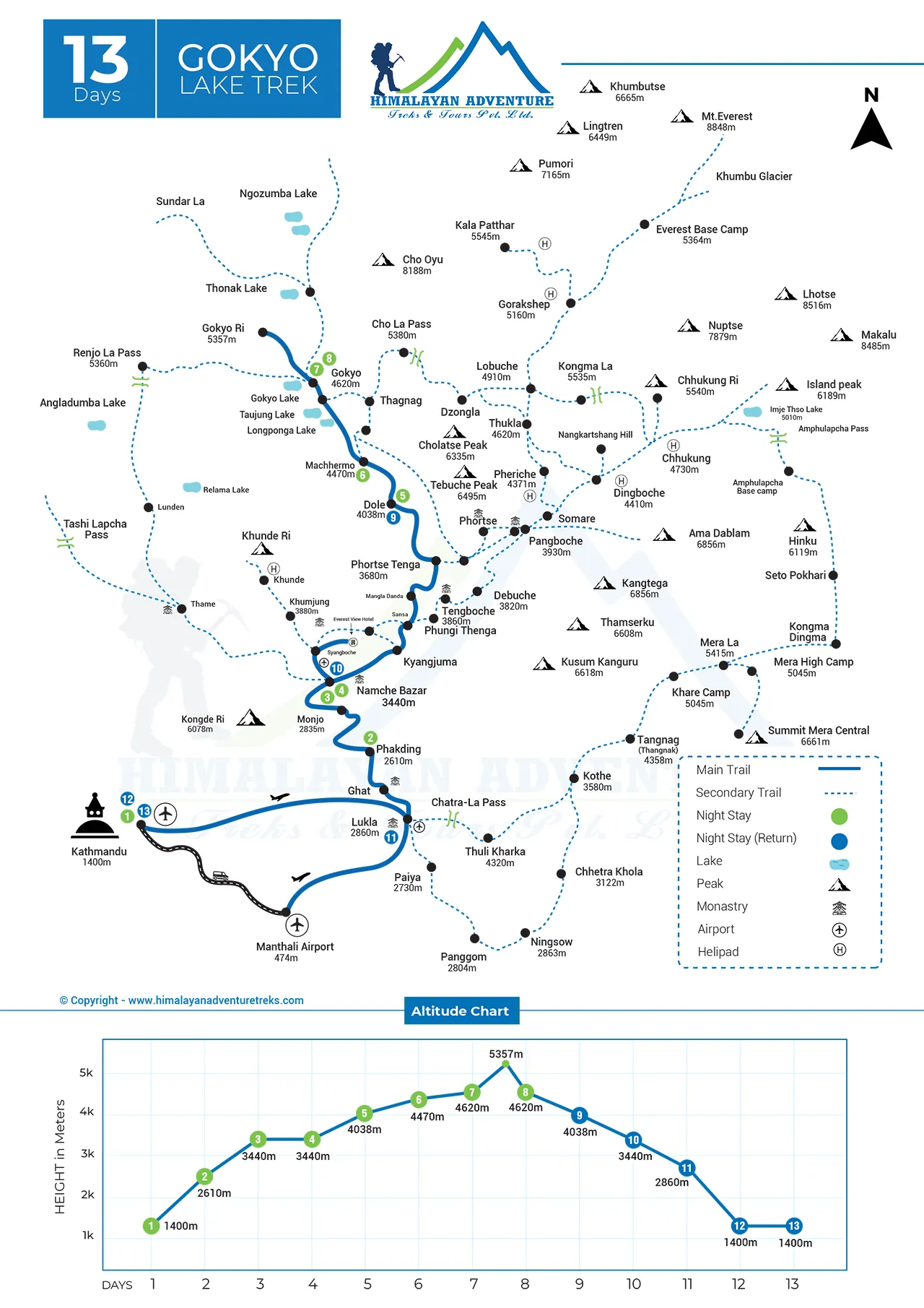
Day 01: Arrival at Kathmandu Airport.
Day 02: Flight from Kathmandu to Lukla & trek towards Phakding Village (2610m).
Day 03: Trek from Phakding Village to Namche Bazaar (3440m).
Day 04: Acclimatization day a short hike to Khumjung Village & Hotel Everest View (3880m).
Day 05: Trek from Namche Bazaar to Dole (4110m)
Day 06: Trek from Dole to Machhermo (4470m).
Day 07: Trek from Machhermo to Gokyo Lake (4790m).
Day 08: Sunrise excursion to Gokyo Ri (5357m) and 5th Lake.
Day 09: Trek from Gokyo lake to Dole (4038m).
Day 10: Trek from Dole to Namche Bazaar (3440m)
Day 11: Trek to Namche Bazaar to Lukla (2860m)
Day 12: Flight from Lukla to Kathmandu.
Day 13: Departure or Farewell from Kathmandu, Nepal.
Our guests sharing their experiences (Photo/Video Gallery)


Detail itinerary of Gokyo Lake Trek
01
Day 01: Arrival at Kathmandu Airport.
Welcome to our lovely nation, Nepal. This is going to be your 1st day of the Everest Gokyo Lake Trek route itinerary. We will send our team to the international terminal to receive you. They will be waiting at the terminal, carrying our company signpost in their hands. As soon as you spot them, they will show you cordial hospitality, helping with your luggage.
Afterward, they will transfer you to your three-star lodging accommodation in the Thamel area of Kathmandu. Thamel is mostly the best spot to lodge in Kathmandu city, offering a vibrant nightlife. You will reach the hotel in about 30 to 40 minutes depending upon the city’s traffic. Our team would drop you off at your accommodation and show you your room.
Then, you can look into your room and unwind for few hours in the hotel. We will arrange a time to meet in the afternoon so that we can fill you in on the required information about the Everest Gokyo Lake Trek Nepal 13-day itinerary. Afterward, you can explore restaurants and eat nice dinners to end your 1st day in Thamel.

Activity: Airport Pickup, 30 min

Max. Altitude: 1,400m/4,593ft. Kathmandu

Accommodation: Hotel
02
Day 02: Flight from Kathmandu to Lukla & trek towards Phakding Village (2610m).
In the morning, we have to catch a flight to Tenzing Hillary Airport from Tribhuvan International Airport. Our company’s automobile would be waiting in the hotel hallway to take us to the airport. The flight will take an estimated 30 minutes to reach Lukla. We will have breakfast in Lukla, where we will meet our other team members and the porter.
On this second day of the Gokyo Lake Trek route, we will begin our hike to Phakding village, which lies at an altitude of 2610 meters. The trek would be relatively gentler than the other days. You will see the first glimpse of truly mind-boggling peak views in the Khumbu region.
On the path to Phakding hamlet, we would go along the Dudh Koshi River and cross the Thado Khola River. Along the trip, we’ll have a panoramic view of Mount Kusum Kangaru. After traveling for 3 to 4 hours, we will arrive at the settlement where we will spend the night on our Everest Gokyo Lake Trek Nepal excursion.
Activity: Flight & Trek, 4-5 hours
Max. Altitude: 2,610m/8,563ft. Lukla

Meal: Breakfast, Lunch & Dinner
Accommodation: Teahouse
03
Day 03: Trek from Phakding Village to Namche Bazaar (3440m).
The third day of our Gokyo Lake Trek Nepal itinerary takes us towards the Namche Bazaar. We will start our walk following a hearty first meal of the day in Phakding Village. We will hike through rhododendrons and pine forests, succeeding the Dudh Koshi Khola River, along with crossing many hanging bridges.
We will arrive at Monjo after hiking for a few hours. We will now enter Sagarmatha National Park. The officials will examine our permissions, and once verified, we will be able to continue our journey. While wandering, you may notice unique flora and animals in the park, which will attract you.
We will then trek uphill and eventually reach Jorsale hamlet before arriving at Namche Town. Following six to seven hours of hiking, we will arrive at this town, which is also known as the Sherpa Capital in the Everest region. You could explore the remaining of the day on this Gokyo Lake Trek route journey.
Activity: Trek, 6-7 hours
Max. Altitude: 3,440m/11,286ft. Namche Bazaar
Meal: Breakfast, Lunch & Dinner
Accommodation: Teahouse
04
Day 04: Acclimatization day a short hike to Khumjung Village & Hotel Everest View (3880m).
This is a very important day of our Gokyo Lake Trek Nepal journey. We are acclimatizing in Namche Bazaar so that we don’t have problems like altitude sickness when we trek higher in the upcoming days of the itinerary. This day will also allow our bodies to adjust to the surroundings of the high-altitude areas, where the oxygen air is thinner.
Namche Bazaar offers opportunities for exploration and relaxation. However, the best method to acclimate on this day is to go on a short hike. We will go to Khumjung Village, which is also an old Sherpa village. Khumjung Monastery, where monks meditate in solitude, is visible from here.
After that, we will go to see the world’s highest hotel, the Everest View Hotel, which is an excellent location to see the extensive vistas of beautiful landscapes and snow-clad Himalayas. After soaking in the beauty of the scenery, we will head back to Namche Bazaar and visit the Sherpa Culture Museum and Everest Photo Gallery to learn the history of this region.
You will gain deep insights into local culture and the past history of brave mountain climbers who have been role models for many new mountaineers who want to conquer Mt. Everest one day. Subsequently, in the late afternoon, we will get back to our hotel room to rest. We will continue our hike to Dole 4110m tomorrow on this Gokyo Lake Trek route excursion.
Activity: Hike, 3-4 hours
Max. Altitude: 3,880m/12,730ft. Khumjung Village
Meal: Breakfast, Lunch & Dinner
Accommodation: Teahouse
05
Day 05: Trek from Namche Bazaar to Dole (4110m)
On this fifth day of the Gokyo Lake Trek route, we continue to Dole from Namche Bazaar. After eating a delicious breakfast prepared with love by the locals, we will depart this town. We will then walk steeply downhill into the valley before reaching the river at Phunki Tenga.
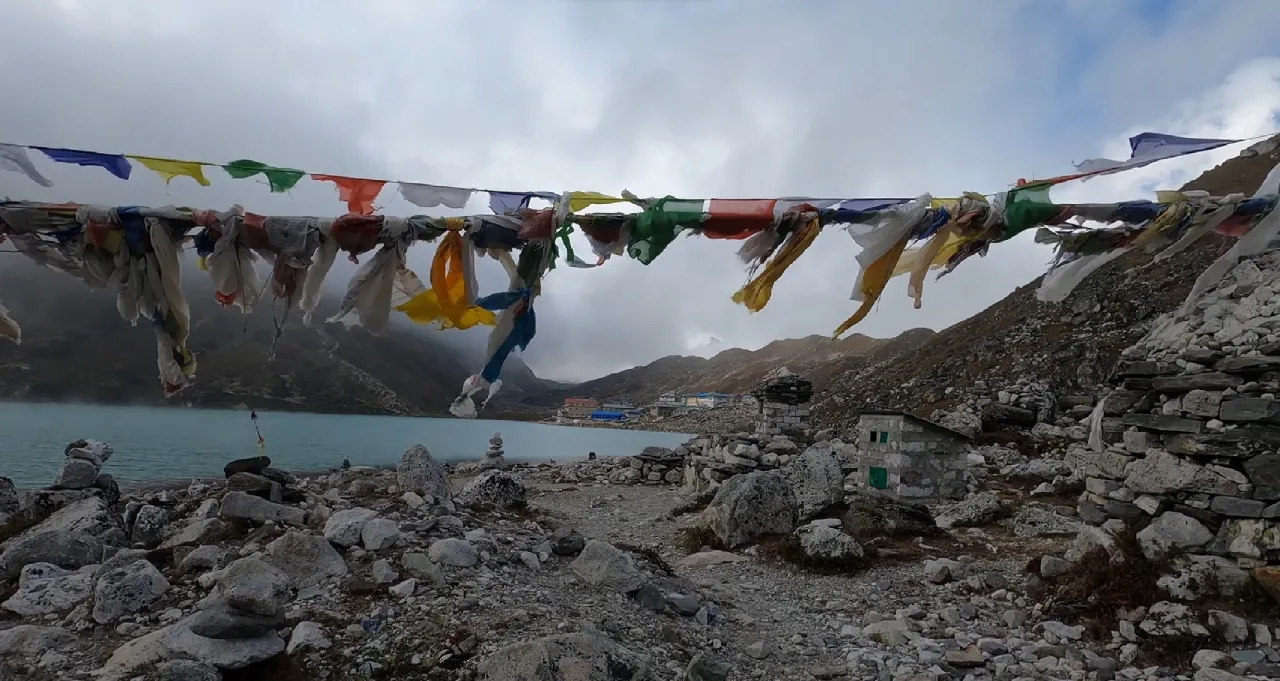
On the way to Phunki Tenga Village, we will wander through lovely jungles of juniper, pine, and rhododendron, which provide a soothing atmosphere. Similarly, you will see many prayer wheels and Buddhist prayer flags on the route, making your journey more enjoyable. After a few hours’ walk, you will arrive and have Lunch at the Phunki Tenga village.
Phunki Thenga is a small settlement in the Everest region at an elevation of 3250 meters. It’s the perfect location to chill and take in the peace and quiet of the region. After Lunch we continue our journey to Dole village. Only a few modest teahouses are available for overnight stays, so don’t anticipate any extra amenities on this Gokyo Lake Trek Nepal tour.
Activity: Trek, 6- 7 hours
Max. Altitude: 4,110m/13,484ft. Dole
Meal: Breakfast, Lunch & Dinner
Accommodation: Teahouse
06
Day 06: Trek from Dole to Machhermo (4470m).
After spending a peaceful night in Dole Village on this Gokyo Lake Trek route journey, today’s stop will be at Machhermo Village, a serene village located at a height of 4,470 meters with some basic tea house lodging for hikers. We will walk in a steady ascent at first.
Then, we will stroll through the trails leading us to verdant jungles and small, charming Sherpa hamlets, showered with the beautiful vistas of snow-clad mountain scenery. As we are today reaching above 4400 meters, it is necessary that we hydrate ourselves from time to time while trekking with some breaks for a healthy journey.
We eventually reach the Machhermo village following 6 to 7 hours of hiking. You can feel thinner air here compared to other destinations we’ve been to before in this Khumbu region. Here, you could look up at the landscape of the village and take in this beautiful moment. Tonight, we will spend our night in a basic teahouse on this Gokyo Lake Trek Nepal excursion of 13 days.
Activity: Trek, 6-7 hours
Max. Altitude: 4,470m/14,665ft. Machhermo
Meal: Breakfast, Lunch & Dinner
Accommodation: Teahouse
07
Day 07: Trek from Machhermo to Gokyo Lake (4790m).
Today, we are finally heading to Gokyo, where you can explore the six captivating Gokyo Lakes. We will depart from Machhermo Village after having an early breakfast. We first ascend towards the ridge, where you can see the vistas of the Kangtega and Cho Oyu peaks before you. Prior to Gokyo Lakes, we first arrive at the Ngozumpa Glacier.
The largest glacier in Nepal, it is encircled by stunning mountains and scenery. After five to six hours of hiking, we continue our journey and reach Gokyo. The lakes are Longpongo Lake (first), Taboche Tsho (second), Dudh Pokhari (third and most well-known), Ngozumpa Tsho (fourth), Gyazumpa Cho (fifth), and Thonak Cho (sixth and largest).
These lakes are culturally and spiritually significant for Nepalese and Khumbu residents. You can explore and take images and movies of these stunning landscapes on your smartphone, which you can appreciate whenever you see them again.
Don’t worry about the time; you can explore these lakes as much as you want, as we will spend the night in Gokyo and prepare for tomorrow’s ascends to Gokyo Ri, which will be very wonderful and exciting at the same time. So, sleep early and have plenty of rest to enjoy this to your fullest in this Gokyo Lake Trek route of a 13-day excursion.
Activity: Trek, 4-5 hours
Max. Altitude: 4,750m/15,584ft. Gokyo Lake
Meal: Breakfast, Lunch & Dinner
Accommodation: Teahouse
08
Day 08: Sunrise excursion to Gokyo Ri (5357m) and 5th Lake.
On this eighth day of the Gokyo Lake Trek in Nepal, we will start early in the morning before sunrise to watch it from the Gokyo Ri, which stands at 5,357 meters, or 17,575 feet, above sea level. This would take 3 to 4 hours to arrive at the Gokyo Ri. The trek will be challenging due to the steep ascents, but it is absolutely worth it.
After reaching the Gokyo Ri viewpoint, you can take in the beauty of the sunrise gleaming over the gigantic ice-clad peaks like Cho Oyu, Lhotse, Mt. Everest, Gokyo Peak, and Thamserku, and many other awe-inspiring Himalayas, which will be one of the highlights of your Gokyo Lake Trek Nepal journey.
Then, we will visit Gokyo 5th Lake, also known as Ngozumpa Tse, which is a stunning high-altitude lake located at about 5,000 meters (16,400 feet) in the Gokyo Valley of the Everest region. Gokyo 5th Lake is one of the highest freshwater lakes in the world. It lies north of Gokyo Village and offers breathtaking views of Mount Everest, Lhotse, Makalu, and Cho Oyu.
Trekkers often hike here for its peaceful surroundings and the dramatic scenery of the nearby Ngozumpa Glacier. The area above the lake, known as Scoundrel’s Viewpoint, provides one of the best panoramic Himalayan vistas in Nepal.
Activity: Hike, 6-7 hours
Max. Altitude: 5,356m/17,572ft. Gokyo Ri
Meal: Breakfast, Lunch & Dinner
Accommodation: Teahouse
09
Day 09: Trek from Gokyo lake to Dole (4038m).
The trek from Gokyo Lake to Dole is a beautiful descent through the heart of the Everest region, retracing part of the Gokyo Valley trail. Starting from Gokyo (4,790 meters / 15,715 feet), trekkers follow the trail along the eastern edge of Dudh Pokhari (Gokyo Lake), descending gently with spectacular views of Cho Oyu and surrounding peaks.
The first part of the trail crosses rocky moraine paths and passes by grazing areas used by yaks in summer. As you descend, the landscape shifts from alpine terrain to more greenery, with shrubs and juniper bushes beginning to reappear.
After about 1.5 to 2 hours, you reach Machhermo (4,470 meters / 14,665 feet), a small settlement known for its medical post and panoramic views. It’s a great spot to rest and have tea or lunch. Continuing downward, the trail passes through several small villages like Lhabarma and Luza, offering glimpses into the Sherpa lifestyle and traditional stone houses. Along the way, trekkers enjoy views of Thamserku, Kangtega, and the deep Dudh Koshi River valley.
The path can be a bit rocky and dusty, especially in dry seasons, but it’s not overly steep, making it easier on the knees. You may also encounter Himalayan tahr or colorful pheasants in the lower sections of the trail. After 5–6 hours of trekking, you arrive at Dole (4,040 meters / 13,255 feet), a quiet village nestled along the hillside with a few cozy lodges and warm hospitality. This leg of the trek provides a peaceful and scenic transition from the high glacial world of Gokyo back into the forested mid-Himalayan valleys.
Activity: Trek, 5-6 hours
Max. Altitude: 4,110m/13,484ft. Dole
Meal: Breakfast, Lunch & Dinner
Accommodation: Teahouse
10
Day 10: Trek from Dole to Namche Bazaar (3440m)
The trek from Dole (4,040 meters / 13,255 feet) to Namche Bazaar (3,440 meters / 11,286 feet) is a scenic downhill journey that takes about 5 to 6 hours, depending on your pace. As you leave Dole, the trail descends gradually through alpine meadows, dotted with rhododendron and juniper trees, especially vibrant in the spring. You pass through charming Sherpa villages like Phortse Thanga and Tenga, where you can take a short rest and enjoy views of Taboche, Thamserku, and the deep Dudh Koshi gorge below.
The trail continues downward to a suspension bridge over the Dudh Koshi River and then begins a steep climb to Mong La (3,975 meters / 13,041 feet), a small ridge with a few teahouses and an excellent viewpoint. After Mong La, the path descends again through lush forests filled with moss and birch trees, creating a refreshing contrast to the high alpine landscapes of earlier days. You may spot Himalayan monals, musk deer, or mountain goats along the trail.
Eventually, the trail merges with the main Everest Base Camp route, becoming busier as you approach Namche Bazaar. After a final short climb and several prayer flags and mani walls along the way, you reach Namche Bazaar, the lively Sherpa capital of the Khumbu region. Here, you can enjoy hot showers, bakeries, Wi-Fi, and even souvenir shopping after many days in the high mountains. This part of the trek is both culturally rich and naturally beautiful, offering a rewarding return to a lower altitude.
Activity: Trek, 5-6 hours
Max. Altitude: 3,440m/11,286ft. Namche Bazaar
Meal: Breakfast, Lunch & Dinner
Accommodation: Teahouse
11
Day 11: Trek to Namche Bazaar to Lukla (2860m)
Finally, we are heading back to Lukla, where this will be the last night in the Khumbu region on this Gokyo Lake Trek route. We will depart as soon as we finish our breakfast and walk downhill through the alpine jungles. You would watch the perfect vista of the Kusum Kanguru mountain (6,367 m) on this thrilling Gokyo Lake trek.
We will walk along the Dudh Koshi Khola River, which will lead to Jorsale, where we will exit from Sagarmatha National Park. Afterward, we will traverse several settlements like Monjo, Bengkar, and Chumoa, as well as monasteries, prayer flags, and chortens. After reaching Phakding, we will go downhill to reach Lukla, where we will stay for the night on this Gokyo Lake Trek Nepal.
Activity: Trek, 7-8 hours
Max. Altitude: 2,860m/9,383ft. Lukla
Meal: Breakfast, Lunch & Dinner
Accommodation: Teahouse
12
Day 12: Flight from Lukla to Kathmandu.
On day 12 of the Gokyo Lake Trek route journey, we are leaving the Everest region behind and flying to the vibrant city of Nepal, Kathmandu. We will board an early flight to avoid Everest Base Camp weather that could be worse if late. Just take in the stunning scenery for the last time while flying for thirty-five minutes.
After landing at the airport, we will take you to your 3-star standard hotel, where you can rest and relax for the whole day. If you want to travel to Kathmandu city, you could stroll at your own speed. You can go to Basantapur, the Garden of Dreams. Boudhanath Stupa, Patan Durbar Square, and other major attractions to spend your remaining day.
Later in the evening, we will throw you a farewell dinner party and provide you with the certificate of completion of the Everest base camp with the Gokyo Lake trek adventure as a token of love and memory. Tonight, you will spend the last night in Kathmandu city.
Note: City tour is optional an extra cost.
Activity: Flight, 30 min
Max. Altitude: 1,400m/4,593ft. Kathmandu
Meal: Breakfast & Dinner
Accommodation: Hotel
13
Day 13: Departure or Farewell from Kathmandu, Nepal.
Today marks the last chapter of your adventure on the Gokyo Lake Trek route. To avoid delays or problems, we suggest you get ready early and reach the airport 2 to 3 hours before your return pane trip to your home country. Also, get ready in time so we can move immediately after our private vehicle arrives in the hotel lobby.
We’ll give you a final farewell drive to the airport. We are glad that you have picked and trusted us with this amazing, daring 13-day adventure. We hope you arrive home without incident. In the future, we want to have you visit Nepal again and share more treasured memories.
Activity: Airport drop, 30 min
Max. Altitude: 1,400m/4,593ft. Kathmandu Airport
Meal: Breakfast

Note:
If you have your own private group and want to make your trip private, we can run the custom trip all the day as per your requirements and group size.
Includes and Excludes
What are included with package?
- Pick up from Airport and Transfer to the Hotel: Upon your arrival in Kathmandu, you will be picked up from the airport and transferred to your hotel, ensuring a smooth arrival experience.
- Two Nights 3-star Hotel in Kathmandu with Breakfast: Your stay in Kathmandu includes two nights in a 3-star hotel with breakfast included. This provides you with a comfortable base to relax before and after the trek.
- Lunch, Dinner, and Breakfast During Trekking: During the trekking portion of the trip, all your meals—lunch, dinner, and breakfast—will be provided at the tea houses and lodges along the trekking route. These meals are typically nutritious and cater to trekking needs.
- National Park Permit: The package includes the required permits for entering the national parks during the trek. This is necessary for trekking in protected areas like the Annapurna Conservation Area or other national parks, depending on your itinerary.
- Trekkers’ Information Management System (TIMS) Permit: The TIMS permit is a mandatory requirement for trekkers in Nepal, allowing the authorities to keep track of trekkers’ safety during their journey.
- All Necessary Paperwork: All essential permits, paperwork, and documentation for the trek are included, ensuring your trip runs smoothly with all legal requirements met.
- Domestic Airport Pick-Up and Drop: The package includes domestic airport transfers for flights from Kathmandu to Lukla (or Ramachap to Lukla and back) and vice versa, ensuring your transportation is arranged seamlessly.
- Flight Ticket (LUK-KTM-LUK) / Ramachap to Lukla and Ramachap Domestic Airport Tax: Your flight tickets for the domestic flights between Kathmandu and Lukla (or Ramachap to Lukla) are included, along with the applicable domestic airport taxes.
- All Accommodations in Tea Houses During the Treks: During your trek, you’ll be accommodated in tea houses or lodges along the trekking routes. These provide basic but comfortable lodging, and you’ll stay on a twin-sharing basis.
- An Experienced, Helpful, and Friendly Guide, Porters (1 Porter for 2 Clients): A professional and experienced trekking guide will accompany you throughout the journey, providing knowledge about the region, culture, and ensuring your safety. Additionally, one porter will be assigned for every two clients, carrying the bulk of the luggage.
- Travel and Rescue Arrangements: The package ensures that travel and emergency rescue arrangements are in place in case of any unforeseen situations, prioritizing your safety.
- Medical Supplies (First Aid Kit): A first aid kit will be available with your guide, ensuring that minor medical needs can be addressed during the trek.
- Last Night’s Farewell Dinner at an Authentic Nepalese Restaurant with a Cultural Performance: To conclude your trek, you’ll enjoy a traditional farewell dinner at a local restaurant, which includes a cultural performance, providing a memorable and authentic experience to end your journey.
What are not included with package?
- Nepal Visa Fee: You will need to obtain a visa for Nepal upon arrival at Kathmandu airport. The visa fee is not included in the package, and it is your responsibility to pay for the visa as required.
- International Airfare to and from Kathmandu: The cost of your international flights to and from Kathmandu is not included in the package. You will need to book and pay for your flights separately.
- Extra Night Hotel Accommodation in Kathmandu: If you arrive early in Kathmandu or need to stay extra nights due to late departures, or if you return earlier than scheduled from the mountain for any reason (such as weather delays or other factors), the cost of these extra nights in the hotel is not included in the package.
- All Meals in Kathmandu and Trekking (Early Return from Mountain): Meals in Kathmandu are not included unless specifically mentioned in your itinerary. Additionally, if you return early from the trek due to any reason, meals outside of the scheduled itinerary will be at your own expense.
- All Expenses in the Mountain Beyond Scheduled: If you encounter unforeseen circumstances such as bad weather that delays your flight or trek, or if you need to stay extra days in the mountains, any additional expenses like accommodation, meals, or extra porters will be your responsibility.
- Travel and Rescue Insurance: The package does not include travel and rescue insurance. It is highly recommended that you arrange for your own insurance to cover any unexpected situations such as emergencies, flight cancellations, or evacuation costs.
- Personal Expenses: Any personal expenses during the trek are not included. This includes things like phone calls, laundry, bar bills, battery recharges, extra porters, bottled or boiled water, hot showers, and other personal services. These expenses are at your own cost and should be prepared for accordingly.
Pick Your Suitable Date
US$ 1300
Book a Private Trip
Private & Group Discount Price
-
1 -
1 person
US$ 1800
-
2 -
2 people
US$ 1300
-
3 -
5 people
US$ 1250
-
6 -
10 people
US$ 1100
-
11 + people
9999
US$ 1000
1 Travelers x US $ 2000
Total Cost:
US$ 1800
Route Map & Altitude Chart
Kathmandu
Start/End point
Kathmandu
Trip Information
Best Time for Gokyo Lake Trek
The Gokyo Lake Trek Nepal trip in the Khumbu region can be made year-round, providing a unique flavor of experience each season. Suppose you decide to travel to Gokyo Lake in all four different seasons. In that case, you experience something new in each season visit, making this trek even more exciting and adventurous. Here are each of the seasons described briefly below, which makes it easy to choose the best season for you:
Spring Season (March to May): Spring is one of the peak seasons for the Gokyo Lake Trek, where you can witness the landscapes coming alive with lush greenery and blooming different varieties of colorful flowers. The temperature will range from 4°C to 28°C in lower altitude areas, whereas -2°C to -7°C in higher altitude areas.
One can experience pleasing weather with the Everest region’s clear vistas of snow-clad mountains. If you love to click many pictures, this season is the one that is calling for you, where you can see each step filled with amazing photography-worthy sceneries. Apart from this, this is an excellent season to spot different wildlife in Sagarmatha National Park.
Autumn Season (Early September to Late November): Another popular season for hiking in Nepal is autumn or fall. The temperature ranges from 1°C to 27°C in lower altitude areas, whereas -2°C to -13°C in higher altitude areas provides stable weather for hiking in the Everest region.
There may be a low chance of rain, which is a bonus for trekking because it cools the temperature and makes the walk more enjoyable. A cloudless sky allows for breathtaking views of the snow-covered giant mountain summits. This season also corresponds with Nepal’s most important festivals, such as Mani Rimdu, Tihar, and Dashain, which provide detailed insights into Nepal’s culture and traditions.
Monsoon or Rainy Season (June to August): Due to frequent heavy rain and challenging route conditions, fewer visitors usually visit the Gokyo Lake Trek Nepal journey during this season. The temperatures range from 9°C to 28°C in lower-altitude areas and -2°C to -6°C in higher-altitude areas in the Khumbu region.
However, in a pleasant atmosphere, you will relish the leafy emerald environment all around you. Before beginning on this adventure during the rainy season, you should consider the possibilities of flooding and landslides, which can disrupt your trekking plans. So, adequate planning, trekking gear, and preparation are required to visit Gokyo Lake this season.
Winter Season (December to February): If you wish to enjoy the mystical environment on our Gokyo Lake Trek excursion, this season may be the best time to see the majestic ice-capped mountains. The temperature in the lower Everest region fluctuates from 1°C to 14°C, while the upper regions range from -2°C to -20°C.
You would get the chance to experience the quiet, peaceful surroundings throughout the route. However, there will be extreme cold, and the trekking will also be very demanding with unstable weather. So, a lot of preparation and heart are needed to travel in this risky season. If you want to push your limits, then this season might be the perfect time to plan your trip to Nepal.
Elevation and distance
On this Gokyo Lake Trek Nepal itinerary, you will have to trek a total of 86 to 92 kilometers (53 to 57 miles) for 11 days out of 13 days. On the 2nd day, you will begin your trekking excursion from Lukla town to Phakding village, covering 8 kilometers. Similarly, on acclimatization day, you will hike about 4 to 6 kilometers (2.5 to 3.7 miles) to Khumjung Village and Hotel Everest View in a round trip.
To reach the Gokyo Valley, you will travel 47 to 53 kilometers or 29 to 32.9 miles from Lukla. Then there will be a 4-kilometer round journey from Gokyo to Gokyo Ri and Gokyo 5th Lake.
On the return journey, you will cover around 40-45 kilometers from Gokyo Lake to Lukla, passing through Namche Bazaar. This journey requires an average daily walking distance of 7.8 to 8.4 kilometers (4.8 to 5.2 miles). Similarly, after landing at Lukla airport from Kathmandu city, you will be at 2860 meters.
Namche town is located at 3440 meters, where this will be our acclimatization point. During this acclimatization day, you would be visiting the world’s highest-situated hotel, Hotel Everest View, at 3880 meters. On the eighth day, we will reach Gokyo, which is 4750 meters high above sea level, where you can soak in the panoramic beauty of the Himalayas.
After exploring Gokyo Ri and 5th Lake, we will lose altitude while returning to Namche at 3,440 meters. This trek is above 4000 meters, so you need to consider the factors that cause acute mountain sickness. The trek is challenging but can be completed successfully with proper training and preparation.
Difficulty and altitude sickness
The Guide to Gokyo Lake Trek is a moderate-level walk that becomes a little bit challenging as you ascend higher. The oxygen level becomes thin at high altitudes, which adds more toughness to this thrilling journey. So, well-scheduled acclimatization should be planned to prevent acute mountain sickness.
The most crucial rule for conquering the Gokyo Lake Trek challenges is to listen to your guide’s recommendations. Do not hesitate to tell your guide about your situation if you encounter any difficulties while trekking; he will help you relax and complete the journey without any problems.
Even though how fit you are, altitude sickness can happen to anyone anywhere at high altitude. So, our trek to Gokyo Lake itinerary includes an acclimatization in Namche Bazaar. We have planned short hikes to Everest View Hotel and Khumjung Village so that your body will adjust perfectly to the increasing height.
If you suffer the symptoms of AMS, such as headaches, dehydration, trouble sleeping, loss of appetite, and others, just let your guide know immediately. If not cured in time, AMS can convert into HACE (High Altitude Cerebral Edema) and HAPE (High Altitude Pulmonary Edema), which causes critical damage to the body. So, proper steps should be taken while doing this moderate-level difficulty adventure.
Maximum and minimum walk per day
On this Gokyo Lake Trek Nepal journey, you must regularly walk an average of five to six hours in the Khumbu region. Your minimum trek will be on the second day of the itinerary, three to four hours, when you first start hiking from Lukla town to a peaceful Phakding village. Similarly, on the fourth acclimatization day, you will go on a short hike to Hotel Everest View and Khumjung village, which also takes three to four hours on a round trip.
Your maximum trek per day will be on the eleventh day, about seven to eight hours, when you return to Lukla from Namche Bazaar, passing through Manu’s charming villages, forests, and other beautiful natural scenery following the Dudh Koshi river. On days 9 and 10, you will walk six to seven hours while returning to Dole from Gokyo Ri and Namche Bazaar from Machhermo village.
Accommodations in the Everest Gokyo Lake Trek
After you land in Nepal, you will be accommodated in a 3-star hotel in Kathmandu. If you want to stay in more luxurious lodging, we will upgrade for you at extra cost in the package. While trekking, we will spend the night in basic lodges or tea houses, which provide twin beds, cushions, and blankets.
All the teahouses where we will stay will be in popular villages like Namche Bazaar, Phunki Tenga, Dole, Machhermo, and Gokyo. In the Khumbu region, providing breathtaking scenery from the window in the Gokyo Lake Trek journey. Tea houses are very neat and clean, providing healthy foods that will keep you energized all the time.
Foods and Drinks
Throughout the entire route of the Gokyo Lake Trek, you will be served nutritious food that will keep your body healthy. Many food options are available according to your preference while you stay in the capital city of Nepal, Kathmandu. However, in the Everest region, food options are limited and are generally prepared by local cooks.
Tea houses serve oatmeal, French toast with jam or peanuts, eggs, muesli, cornflakes, and others in the breakfast options. Similarly, for dinner and lunch options, they serve momos, thukpas, typical daal, bhat and tarkari, Sherpa stew, yak steak, pizza, rice with curry, and other limited items. There will be fewer food options when you walk higher in the Everest region.
However, we advise you not to eat non-vegetarian dishes, especially at higher altitudes, to avoid health issues. While trekking, you can also carry snacks like fruit bars, cakes, energy bars, and rice puddings if you get hungry in the middle of the trail. For drink options, all types of hard and soft drinks are available in the teahouse.
You must only drink hot beverages like coffee, lemon tea, mint tea, ginger tea, etc., which will help your body fight altitude sickness. In addition to these drinks, you need to avoid any harmful beverages to your health.
Alternative Routes
There are various ways in the Khumbu region that offer unique emotions and innumerable experiences for the Everest base camp with the Gokyo Lake trip. Among the well-traveled trekking trails are:
Everest Base Camp via Jiri: It is a classic route that offers stunning scenery of the landscape.
Everest Base Camp via the Three Passes: In this Everest Base Camp Trekking Guide, you will cross Renjo La Pass, Kongma La Pass, and Cho La Pass.
Rolwaling to Everest Base Camp via Tashi Lapcha Pass: In this Everest base camp itinerary, the route is more challenging, very off-road, and isolated, offering a peaceful environment.
However, all these routes of the Everest base camp with the Gokyo Lake trek will eventually lead to the Mount Everest Base Camp, offering a lifetime experience and unforgettable memories.
Can a beginner join this trip?
Beginners can also join the Everest base camp (EBC) with the Gokyo Lake hike excursion. This hiking itinerary is designed not only for trekkers with prior experience but also for individuals who want to experience hiking in Nepal. Many people, children, and families have completed this trek successfully in the past.
However, beginners should keep in mind to prepare in the right way before planning the trip. They should be physically fit and train their body to increase their stamina and strength.
Another important factor for this trek is that they should have a positive mindset and not be afraid, thinking they are just beginners. Being mentally strong will help any person to face any kind of obstacles in life and their journey, too.
Preparation and fitness
One of the most important requirements for trekking in Nepal is physical fitness. The Gokyo Lake Trek requires walking a standard of 5 to 6 hours daily. During this journey, you will reach elevations above 5000 meters, reaching 5000 meters at Gokyo 5th Lake, and 4,750 meters in Gokyo.
So, there will be steep ascents and descents across various terrains with snowy or rocky sections, depending on the season you’re visiting Gokyo Lake. So, you must be in good shape to walk these paths without getting into much trouble. The best way to get in shape for physical fitness is to train for 2 to 3 months before coming to Nepal for hiking.
You can begin training by cycling, running, swimming, jogging, or hiking the neighboring hills with a backpack. You will last longer, which will eventually allow you to trek lengthy distances without feeling worn out. You could try out varying exercises such as weight lifting, hanging bars, push-ups, and pull-ups that can help you get strong.
This will help build your core and increase your endurance and strength. Another aspect that needs your attention should be the calf strength because the calves working through continuous up and down movements will be exhausted. After doing the training, you will be prepared for trekking to Gokyo Lake in the Khumbu region without encountering any problems.
Gadgets charging and the Internet
The few facilities in this remote Himalayan location make it tough to charge gadgets and access the internet while trekking the Gokyo Lakes. However, most of the tea houses along the route offer charging facilities for phones, cameras, and power banks for a fee.
Charging expenses range between NPR 100 and NPR 500 per hour and get more expensive as you ascend to higher elevations. The main energy source is solar panels or generators, so the availability of electricity may not be consistent. If you want power for the whole trip, bringing a high-capacity power bank, fully charged extra batteries, or a solar charger is recommended.
Appreciating the tea houses, Wi-Fi is available, but it is generally not reliable and slow, mainly in the upper parts. Usually, you have to pay between NPR 200 and NPR 800 per electronic device per day for a Wi-Fi connection. An Everest Link Wi-Fi card is another choice for travelers who can rely on their data. A 10 to 20 GB pack is estimated to go for NPR 2000–3000.
While cellular services are available via Ncell and Nepal Telecom, coverage is not widespread. To make it safer, get a new SIM card with a data plan in the capital of Nepal. To avoid battery drain and data use, you should download maps and all the relevant information that you will require throughout the trek before you commence it.
Permit
To accomplish this trek to Gokyo Lake you will need the following permits that are specified:
TIMS (Trekkers’ Information Management System) Card: This permit will ensure your safety and will also help track your location in the Everest region. You could easily acquire this permission from the Nepal Tourism Board in capital city of Nepal, Kathmandu.
Sagarmatha National Park Entry Permit: This permit is needed to enter the Khumbu region and National Park of Sagarmatha. If you do not have it, you will not be able to enter the gate of Monjo while trekking to Gokyo Lake.
Khumbu Pasang Lhamu Rural Municipality Permit: Additionally, the Khumbu region requires you to have this permit as well as an entry permit to Sagarmatha National Park. On the other hand, it is also assisting the local community to grow. When you arrive in the Everest region, it is not just trekking, but also several positive benefits that come to the region through your travel.
Transportation
All of your transportation needs will be handled by us. Our agent will transport you to your three-star accommodation in Thamel, Kathmandu, after picking you up from the airstrip on the 1st day. On the next day, we will fly early in the dawn to Tenzing Hillary airstrip. In the most of the days of our trip in the Everest region would be on foot.
So, we won’t be using any kind of transportation while trekking in the Khumbu region. On day 12, we would again take a flight to go back to capital city from Lukla. On the final day, our team would drop you off at the airstrip and tell you a final goodbye. If you have more time in Nepal, you can also do a sightseeing tour in Kathmandu Valley in a private automobile.
Similarly, if you prefer to fly by helicopter from Kathmandu to Lukla or vice versa to enjoy the panoramic vistas in a bird’s-eye view, we can also customize our package for you with extra money. All the costs of transportation are already included in the package. However, only extra money is needed to be paid for an upgrade.
Travel Insurance
It is unreliable to travel without travel insurance during most adventurous treks, initiative tours, and activities in Nepal. The insurance policy is of extraordinary significance since Nepali airports may be congested, which might lower direct flights and stymie your arrival or departure. Verify that your insurance plan covers them if such things occur.
Furthermore, when buying travel insurance, try to get coverage that includes trekking and other activities. Some policies might limit or not cover certain areas at all, so you must study the policy carefully and always read the details carefully.
When trekking at high altitudes (above 4,000 meters), one must make sure their insurance includes helicopter rescue coverage in case of an emergency. This service is vital. Having the right insurance ensures the right kind of coverage and gives you peace of mind that you will be safe and your trip will be trouble-free.
As a matter of fact, do not only undergo thorough research but also select the policy that suits your requirements. After all these considerations, you can enjoy the Gokyo Lake Trek to your fullest without any worries.
What to expect from this Gokyo Lake Trek route trip?
The Everest Gokyo Lake Trek Nepal is a lifetime experience. You will enjoy traveling through the Gokyo Valley, one of the most immaculate places in Nepal’s Khumbu region. Be prepared to visit six outstanding, crystal-clear, turquoise-colored glacial lakes, including Dudh Pokhari, also known as Gokyo Cho. The trek offers a breathtaking view of the snow-capped peaks of above six thousand meters high.
Similarly, another attraction of the Everest Gokyo Lake Trek route is Gokyo Ri (5,360 m), which offers the best point for having a 360-degree view of the world’s tallest mountain, Everest, as well as Lhotse, Makalu, and Cho Oyu.
Besides, you will also spend some time on your way to Ngozumpa Glacier, which is the largest glacier in Nepal, and through Sagarmatha National Park, which is a UNESCO World Heritage Site with so many kinds of plants and animals and with alpine landscapes.
Throughout the tour, you will feel the true friendliness of the inhabitants of the Sherpa settlements, such as Namche Bazaar, Dole, and Machhermo, which are known for their rich culture and customs. The 13-day walk will be unforgettable for those who enjoy nature, culture, and mountain vistas. This Everest Gokyo Lake Trek Nepal excursion will provide you with both an addictive and breathtaking experience.
Your Extra Expenses
When making a Gokyo Lakes Trek plan, it is important to consider the potential extra costs above the package cost, such as the Nepali visa issuance, which you can only obtain at the airport in Kathmandu, and, lastly, the so-called international airfares to and from Kathmandu.
Visits to Kathmandu and a possible hike in the Himalayas might require you to spend the night in a hotel if you arrive early, leave late, or return early from the trek due to unexpected circumstances.
Standard packages do not include meals in Kathmandu and on the trek, and extra costs are incurred due to delays or bad weather. Ensure you have travel and rescue insurance and budget for personal expenses such as phone calls, laundry, bar bills, charging electronics, extra porters, bottled water, and hot showers.
Essential Packing Gear List for Gokyo Lake Trek
If you have decided to go on the high glacier lakes trek, the Gokyo Lake Trek in Nepal, we assure you that you will have a fantastic time ahead. But what should you pack for your Adventure? What will be the right gear to make your trip more fabulous? To help you with this, we have compiled a packing list of essential items that you mustn’t forget to bring along.
- Passport ( min 6 months valid)
- Cash, credit card
- List of important addresses and contact details
- 2-3 passport photos (optional)
- Copies of all important travel documents (passport, visa, airline ticket, insurance policy, etc.)
- A sturdy 70 L trekking backpack which will be carried by your porter (please note that our assigned 1 porter will carry 2 clients’ luggage up to 20-25 kg.
Note: We will provide each participant with a spacious 70 to 75 L Company logo duffle bag to conveniently carry your trekking gear, which you have to return once the trek is complete. - A 30 L Daypack that has room for your essentials such as camera, mobile, Passport, important documents, water bottle, day-useable medicine, chocolate bars, raincoat, etc., which will be carried by you.
- Protective cover for a backpack or travel bag.
- Hiking Boots: Preferably ankle-high boots to prevent ankle sprain
- Regular Shoes: For small strolls and exploration around the city
- Crampons: During the winter, December- March
- Second, a light pair of shoes and possibly sandals
- Micro Spikes or Ice Cleats for the winter trekking over snow and ice
- Gaiter for added protection in snow
- A rain and wind-resistant, lightweight down jacket for warmth, with a good helmet hood
- Summer-light, as well as winter warm clothing
- Quick-drying shirts made of synthetic fabrics
- Warm and cool vests or T-shirts
- Functional synthetic underwear
- Sports Bra for Female Trekker
- A waterproof pair of trousers
- Regular trousers of quick-drying fabric
- Hiking shorts
- Cargo Pants with multiple pockets to hold your small items, such as knives or chocolates
- Woolen or fleece pants
- Trekking socks, both thick and woolen fabric, and lighter wool socks
- Wool hat, gloves, and scarf
- A light cotton scarf or a bandanna for protection of your head, neck, ears, and mouth
- Sun hat, and sunglasses with 100% UV protection (for trekking trips, even with stray light and nose protection)
- Sunscreen cream or lotion with a high sun protection factor (at least 15, for trekking trip,s even at least 30)
- Sunscreen lipstick with a high SPF (at least 20, for trekking trips, even at least 30 or sunblock)
- Mosquito repellent (Optional)
- Comfortable light night clothes and shoes
- A drinking bottle that can be used as a hot water bottle on frosty nights
- Flip-flops or bathing shoes for using the showers
- Water purifiers: if you need to refill water from the tap or stream en route
- Headlamp: for a midnight or pre-dawn trip towards the viewpoint
- Quick-drying towel and sample-size toiletries for washing your feet and face
- Your Personal first-aid kit: with basic medical supplies such as bandages for sprains, antidiarrheal and antibiotics, iodine wipes for scrapes and cuts, plasters, aspirin, or ibuprofen, moleskine for preventing blisters, Diamox (acclimatizing medicine), and your Personal medication
- Sleeping bag appropriate for all-season treks (we can hire in Kathmandu)
- Waterproof money belt, chest bag, leg bag, or belt bag for storing important travel documents or valuables
- Toothpaste, Toothbrush, and soap
- Deodorants
- Moisturizer
- Nail clippers
- Feminine hygiene products (Sanitary Pads)
- Small mirror
- Wet wipes
- Hand sanitizer
- Comb
- Camera with sufficient memory cards and spare batteries, or a battery charger
- Small padlock for your travel bag
- Thermos flask
- Water bag
- Toilet paper (2-3 rolls without)
- Ear Plugs
- Matchbox, or lighter
- Compass or GPS
- Map
- Alarm clock
- Multi-tool kit
- Binoculars
- Books
- Whistle
Equipment Note:
- Please note that there is no need for you to bring all these heavy items, such as a Sleeping bag, a down Jacket, Trekking Poles, and items from your home. You can easily rent or purchase high-quality to standard-quality items in Kathmandu and Namche.
- Items are available from international brands such as The North Face, Sherpa Adventure, Marmot, Mountain Hardware, Black Yak, Karma Gear, and local brands like Goldstar and locally made products etc.
- Plus, we will also gift you a company logo T-shirt as a token of your experience in Nepal with us.
Renting Cost:
- Sleeping Bag & Down Jacket (-10-20 degree Celsius), Per Piece per day US$ 1.5
Frequently Asked Questions
How difficult is it to hike to Gokyo Ri?
Gokyo Ri is moderately difficult, especially due to its elevation. However, with proper fitness and preparation, anyone may reach the summit to soak up the breathtaking scenery.
Are there medical facilities along the Everest Gokyo Lake Trek route?
There are basic health posts and clinics available in some villages, but if serious cases occur, then the patient will be rescued through helicopter evacuation to Kathmandu.
What sort of weather could I anticipate on the Everest Gokyo Lake Hike route?
You could expect pleasant days and chilly nights in autumn and spring, but you should also be prepared for unexpected changes like wind, rain, or snow in the Everest region climate.
What connects Gokyo and the Everest trail?
The Cho La Pass connects Gokyo Valley to the Everest trail, having a challenging yet rewarding route for hikers.
Is the Everest Gokyo Lake Trek Nepal worth doing?
Yes, of course, the Everest Gokyo Lake Trek Nepal is worth it, which showers trekkers with spine-tingling Himalayas views, beautiful crystal-clear turquoise lakes, and a mix of nature and culture, making it undoubtedly the one and only unforgettable trekking adventure.
Can I get internet and electricity on the Gokyo Lake Trek route?
Teahouses have limited internet and electrical facilities, particularly in lower elevations, although no connection may be available at higher elevations. So, having a local SIM card for emergency communication and a power bank to recharge your electronics is preferable.
What if the weather in Lukla delays my flight?
The flight is usually delayed in Lukla if the weather is bad. However, with extra money, you can also choose a helicopter charter as an alternative solution to reach your destination as per your schedule and plan.
Related Blogs & Articles


Reviews on Gokyo Lake Trek

Related trips