



Trekking in Nepal is often associated with long walking days, high mountain passes and several weeks on the trail. This can leave the first-time trekker unsure about what it takes to undertake a trekking route, whether high fitness or experience in the mountains. A helicopter return trek is an option for some popular treks in the Himalayas that can make the journey easier by allowing for a portion of the trek to be completed by helicopter.
So, then, is a Helicopter Return Trek beginner-friendly? In many cases, yes. But suitability will be different depending on the route, maximum elevation, walking distance, fitness level, weather and how well the trek is planned. Helicopter rides won’t eliminate the physical challenge of arriving at a high elevation target area, but may cut down on the number of days on foot.
This kind of trek may be appropriate for beginners, if the itinerary is a reasonable pace and provides adequate acclimatisation time.

What Is a Helicopter Return Trek?
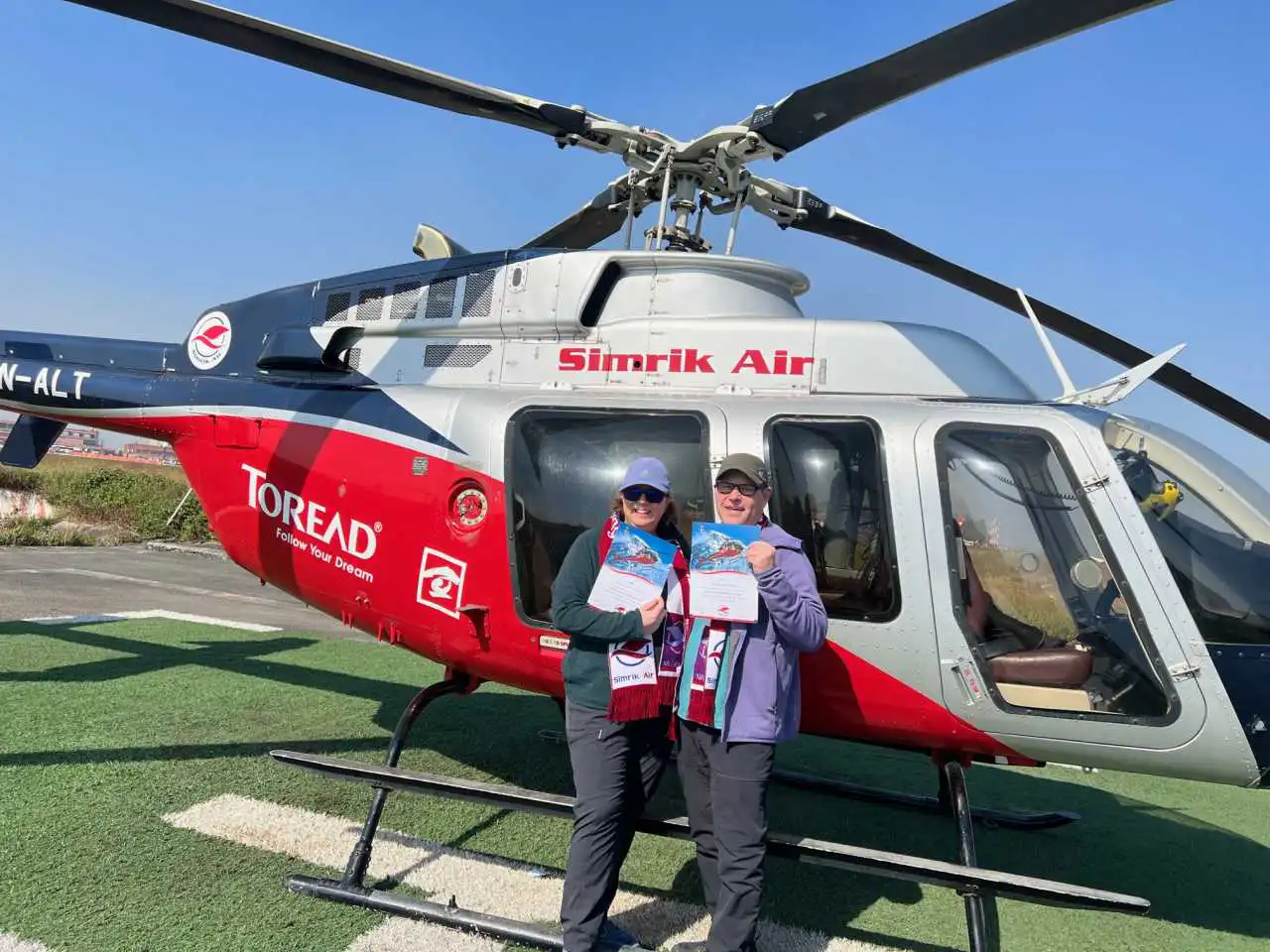
A helicopter return trek combines a normal trekking route with a helicopter flight for the return journey. You enter the mountain area, spend some time exploring the place and then come back by helicopter to another lower place or Kathmandu as per the package.
For instance, the Everest Base Camp trek may include a walk from Lukla to EBC and a helicopter flight back to Lukla.
The key is that the helicopter is typically useful in the return part. This still requires walking uphill, acclimating to the elevation and being on the trail for several days.
A Helicopter Return Trek is not a Helicopter Sightseeing Tour. Still a trekking experience, the helicopter provides a shortcut after arriving at the main destination.
Can Beginners Do a Helicopter Return Trek?
There is no doubt that many helicopter return trips can be done by beginners, provided they are physically fit and select an appropriate route.
There’s no need to have prior trekking experience. In Nepal, many first-time trekkers complete routes successfully, as the main difficulty is typically preparing for the trek, which is not necessarily a technical climb.
Newbies need to know that inexperience is not unpreparedness. Those who have not trekked at high altitudes may still manage to trek well with good preparation, while another person with some trekking experience might not be able to trek well if he or she fails to take care of altitude, hydration, rest and pacing.
The following should be considered as a recommended route for a novice:
- Gradual altitude gain
- Reasonable walking hours
- Proper acclimatization days
- Rooms to stay in if available
- A planned return via helicopter
- Highly qualified guides and support staff
- Sufficient response time to meet varying weather conditions in the mountains.
Why Can a Helicopter Return Be Helpful for Beginners?
It’s the greatest benefit is that it decreases the walking on the way back.
Coming down the same trail after a few days at high altitude can become strenuous. You might be exhausted and just want to devote less time to walking once you’ve reached the primary goal.
For beginners, a Helicopter Return Trek may be beneficial as it enables them to concentrate on the round trip in the main trek without having to trek the entire length twice.
There are a number of other practical advantages.
Less Time on the Trail
Another option for reducing the total flying time is to fly back to the airport by helicopter. It can help tourists who have a few days of holiday but still wish to trek in the Himalayas.
Reduced Return Walking
There are numerous hours of walking on the return trip. The bulk of this section is removed by flying back.
More Comfortable Finish
Some trekkers like to complete their mountain journey while flying instead of by foot for several more days. This can help the end of the journey be less strenuous.
Useful for First-Time Trekkers
If you are a beginner, you might feel more at ease if you don’t have to do both sides of the walk all the way. This shouldn’t fool them however to underestimate the part that is a bit uphill.
Does a Helicopter Return Make the Trek Easy?
Not necessarily.
This is a crucial lesson for beginners. A helicopter decreases the walking distance, but does not eliminate the altitude.
For instance, the elevation of Everest Base Camp is approximately 5,364 m (17,598 ft) above sea-level. It is important to take it slow and reach this height slowly, either by walking or flying back.
Your body still has time to acclimate itself to lower oxygen levels.
A Helicopter Return Trek should be considered a briefer trek than a conventional trek rather than an easy mountain holiday.
The difficulty is influenced by several factors:
| Factor | Why it matters |
| Maximum elevation | Higher elevations generally require more acclimatization. |
| Daily walking hours | Long days can increase physical fatigue. |
| Trail conditions | Rocky, uneven and steep sections require more effort. |
| Acclimatization | Gradual altitude gain helps the body adjust. |
| Weather | Cold, rain, snow and wind can affect comfort and safety. |
| Fitness | Strong legs and good cardiovascular fitness make walking easier. |
| Itinerary length | More time can allow a slower and more comfortable pace. |
Which Beginners Are Most Suitable?
The beginner who walks, exercises, hikes, or is involved in outdoor pursuits regularly can find a moderate trekking tour manageable.
No athletic skills needed. You must be at ease walking for several hours in a row.
If you’re going to be sitting a lot of the day and not getting much exercise, then it’s best to begin weeks before the hike!
Good preparation may be achieved by:
- Regular walking
- Stair climbing
- Trekking on the nearby trails
- Moderate strength exercises
- Cardiovascular exercise
- Weekend hikes with a simple rucksack
Avoid doing long walks just before leaving, but build up to walking for longer periods of time over time.
What About Altitude?
Altitude is typically more of an issue than trekking experience.
The amount of oxygen available decreases as the altitude increases. It will take your body time to adjust. That’s why it’s important to plan a trip with gradual ascent and acclimatization.
For example, Namche Bazaar is around 3,440 m (11,286 ft), while Everest Base Camp is approximately 5,364 m (17,598 ft). The difference is great and trekkers should not consider the route a normal low-level walk.
People who are just getting started should know the typical symptoms of altitude sickness, such as:
- Headache
- Nausea
- Dizziness
- Unusual tiredness
- Loss of appetite
- Difficulty sleeping
- Shortness of breath
Even fit individuals can have mild symptoms. It is important to descend to lower elevations if symptoms become more severe or worsen. If medically required, a helicopter may be used for emergency evacuation; however, trekkers should never use a helicopter to bypass proper acclimatization.
Do You Need Previous Trekking Experience?
No, not all the time does previous trekking experience have to be used.
The important factor is your ability to deal with the physical and environmental conditions on the route. If you’re a beginner who prepares properly, you’re likely to be more comfortable than an experienced trekker rushing through the tour.
Your guide is also a very important factor. Having a guide who can help with pacing, altitude concerns, rest periods and identify issues early can be very beneficial.
If it’s your first time at a high elevation, notify the trekking company before you go. They can assist you in selecting a suitable itinerary that is appropriate to you and your level of fitness.
How Physically Fit Should a Beginner Be?
Must be able to walk for several hours at a time for several days in a row.
Walking in the mountains is not walking on a level highway. There will be uneven surfaces, steps, downhill and uphill sections and stone paths.
A basic preparation process might be:
Four to six weeks before departure
Walk several times a week and slowly build up the amount of time.
Three to four weeks before departure
Include hills, steps, or longer weekend walks.
Two weeks before departure
Practice walking with the backpack they plan to use.
Final week
Cut down on intensive training and emphasize rest, sleep, hydration and preparation.
The aim of this is not to get super fit in a short time. The aim is to get several hours of walking to be normal.
Is the Helicopter Return Reliable?
Weather and operating conditions are critical for helicopter flights in the mountains. Delays can occur due to clouds, strong winds, rain/snow, poor visibility, airport restrictions and other operational issues.
Therefore, travelers should be flexible with their travel plans.
It should not be assumed that the helicopter will be at the exact minute it was scheduled.
In case of delay, your trek organization ought to have a backup approach. This may be waiting for favourable conditions or taking the normal trekking route, depending on the route and situation.
Always ask your operator what they would do if the helicopter can’t fly on the day you have requested.
What Should Beginners Pack?
Packing need not be complicated, but forethought should be made for changing mountain conditions.
Some of the key items that could include:
- Comfortable trekking shoes
- Warm layers
- Waterproof jacket
- Trekking trousers
- Warm hat and gloves
- Sunglasses
- Sunscreen
- Water bottle
- Personal medicines
- First aid equipment
- Headlamp
- Power bank
- Small backpack
- Sleeping bag
The packing list will vary with the route and season, the accommodation and the altitude.
Don’t carry unnecessary weight. Light backpacks can make longer walking days more comfortable.
How Does a Helicopter Return Compare With a Normal Trek?
A normal trekking route involves walking both ways to the destination and back to the starting point. The second leg of the trip is different when the journey is made by helicopter.
| Feature | Normal Trek | Helicopter Return Trek |
| Outbound journey | Walking | Walking |
| Main trekking experience | Full | Full |
| Return journey | Walking | Helicopter |
| Total walking distance | Higher | Lower |
| Total trekking days | Usually longer | Usually shorter |
| Exposure to altitude | Depends on itinerary | Depends on itinerary |
| Weather dependency | High | High, with additional flight dependency |
| Suitable for beginners | Yes, with preparation | Yes, with suitable planning |
This will depend on your goals for your trip. A walk along a traditional walking route can be more suitable if you are interested in long-distance walking and have ample time. The helicopter option might be right for you if you want the mountain, but would prefer a shorter return journey.
Which Routes Can Beginners Consider?
Not all high-altitude treks are suitable for a first-time trekker. Avoid routes just for the sake of a helicopter; beginners should look at factors such as maximum elevation, time, walking hours a day and acclimatization.
Everest Base Camp is a high-altitude trek that is achievable for those who are prepared. The final destination is at about 5364m (17598ft), which means altitude management is crucial.
For those who are beginner trekkers, the lower altitude treks are more comfortable.
When in doubt, talk with the trekking company about what you’ve hiked before, how much time you have, your fitness and how comfortable you want to be before booking.
How Can Beginners Make the Trek More Comfortable?
The best way to do it is to not rush.
Do not rush to keep up with other trekkers. Take regular breaks, drink water all day and eat well even if you don’t feel hungry.
It’s also a wise idea to have a flexible schedule. It may be more beneficial to stay one more night at a suitable elevation instead of rushing to get to the next location.
It’s the little things that can make a big difference:
- Take slow, steady steps.
- Drink water regularly.
- Eat enough food.
- Sleep properly.
- Let your guide know if you are feeling unwell.
- Don’t dismiss the effects of altitude.
- Have a light backpack.
- Adhere to the acclimatization program.
Is a Helicopter Return Worth It for Beginners?
It may be worth considering for many beginner players.
The primary advantage is ease of use. You do not have to go all the way back down the trail, but rather enjoy the trek without the obligation of returning on foot. This can help to save time and minimize physical strain.
But the extra cost of the helicopter should also be taken into account. Weather conditions can impact flight schedules and the mountain area still needs to be adequately prepared.
For beginners who are aware of these constraints and who pick a logical path, a Helicopter Return Trek is the best choice.
Common Mistakes Beginners Should Avoid
Many first-time trekkers tend to concentrate on the helicopter rather than the trek. Avoid these mistakes:
- Running too many miles in a day will place more stress on the body and may make it more difficult to acclimate.
- Fitness preparation is not an optional extra when it comes to flying a helicopter; a helicopter doesn’t bypass the walking required to get to the main destination.
- Anybody can be affected by high elevation, no matter their fitness or age.
- Having too much weight makes all the uphill climbs more difficult.
- Weather conditions are unpredictable in the mountains and should not be taken lightly.
- If you feel unwell, dizzy, very tired, or short of breath, let your guide know; don’t hide.
Final Verdict: Is It Suitable for Beginners?
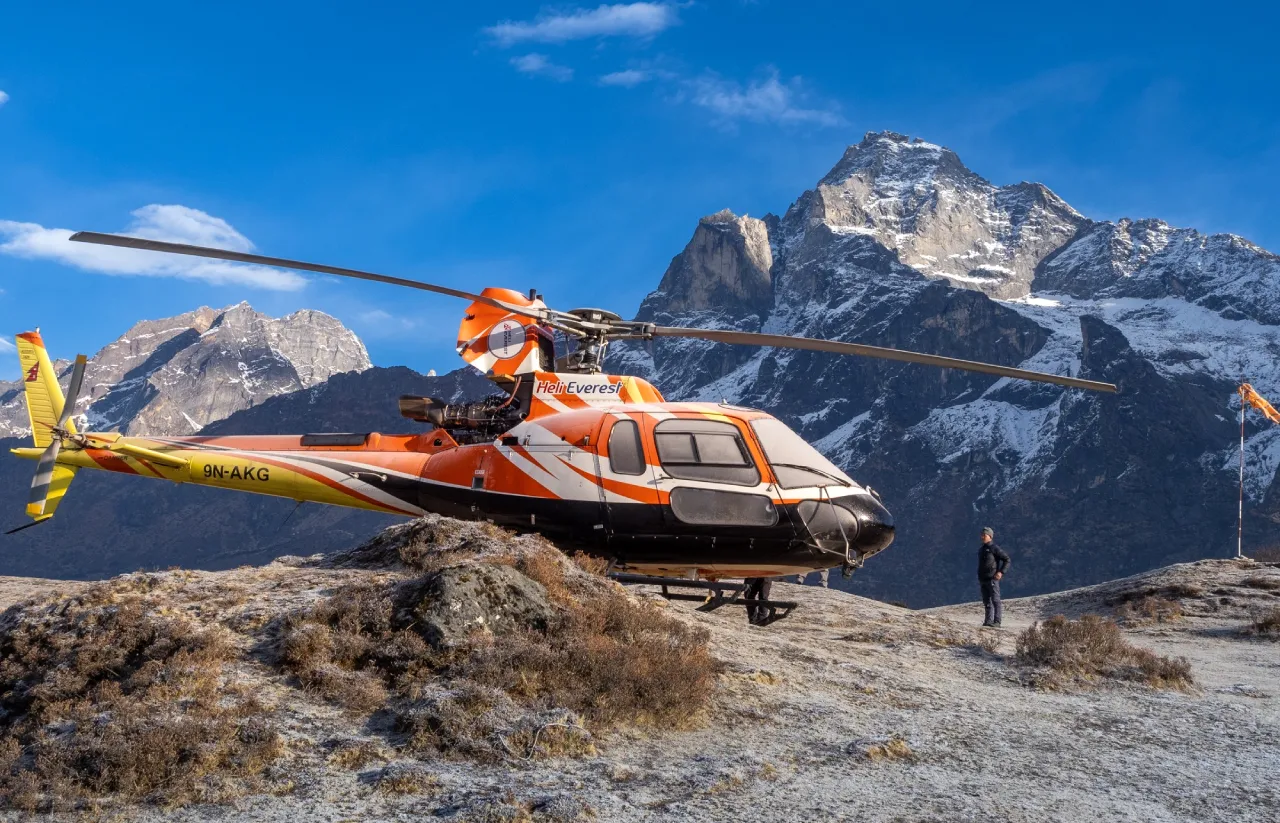
Yes, a return trek to the countryside by helicopter can be appropriate for novice hikers, as long as the route and itinerary are carefully selected.
The helicopter does not shorten the trek itself, but cuts short the walk back and does not eliminate trekking at altitude challenges. Even for those new to the experience, it is necessary to have reasonable fitness, acclimatization, appropriate gear, sufficient hydration and an experienced trekking team.
If you are new to trekking, then select a trek that is appropriate to your fitness and experience and avoid one just because it has a helicopter. Check the other questions below: what is the maximum altitude, hours walked per day, acclimatisation plan, accommodation, contingency plan for bad weather and what will be done if the helicopter is not operating at that time?
Trip not found.
If you wish to experience the mountain trails of Nepal but have little time, or if you would prefer less of a return walk, a Helicopter Return Trek could be a suitable choice for you. But if they have realistic expectations and are well-prepared, beginners can experience trekking without having to be experienced mountaineers.


