

Duration
5 Days

Mardi Himal Trek


Trip Grade
Moderate
Group Size
1-16 People
Max Altitude
4,500m. / 14,764ft.
Best Season
Feb- May/ Sept- Nov
Activity
Trekking & Hiking
Meals
Breakfast, Lunch & Dinner
Accommodation
Teahouses and lodges
Transportation
Private Vehicle
Trip Customization
On request (click here)
5 Days
Price starts
US$ 500
We offer group price for private travelers


Highlights of Mardi Himal Trek
- Start the trek with a short drive from Pokhara to Kande
- Walk through rhododendron, oak and mixed mountain forests
- Pass Low Camp, Mardi Himal Base Camp and Badal Danda on the way to High Camp
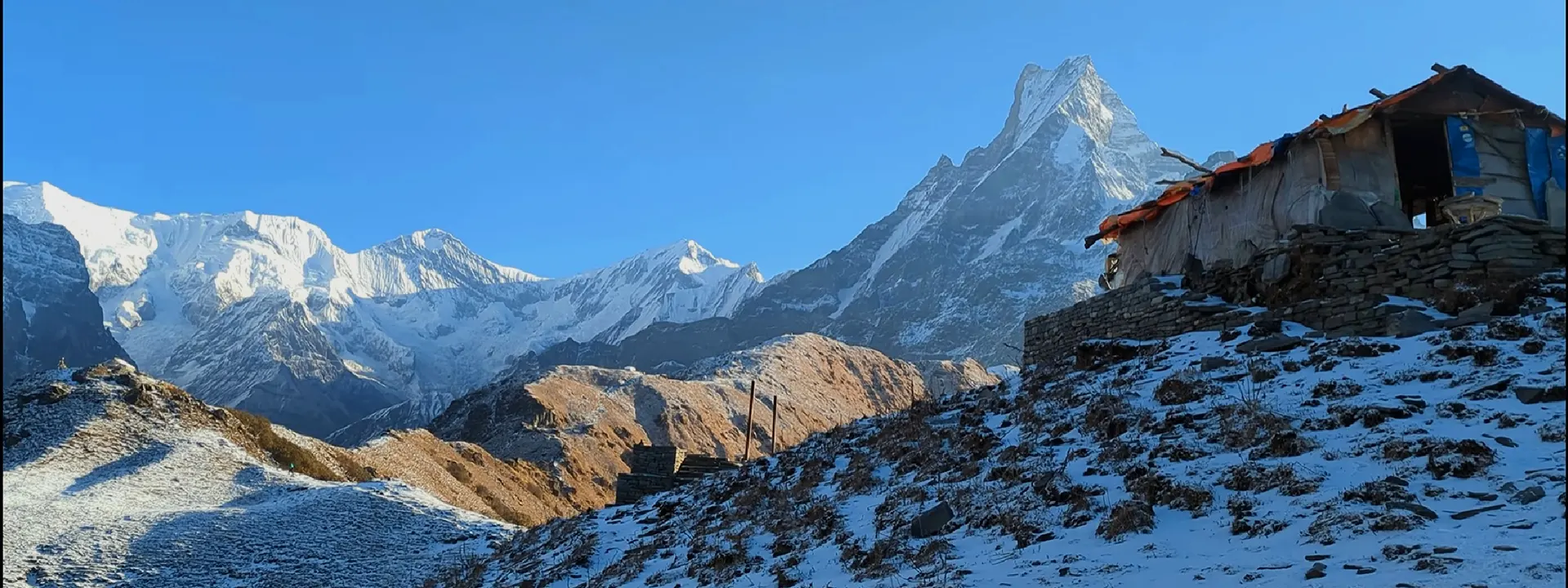
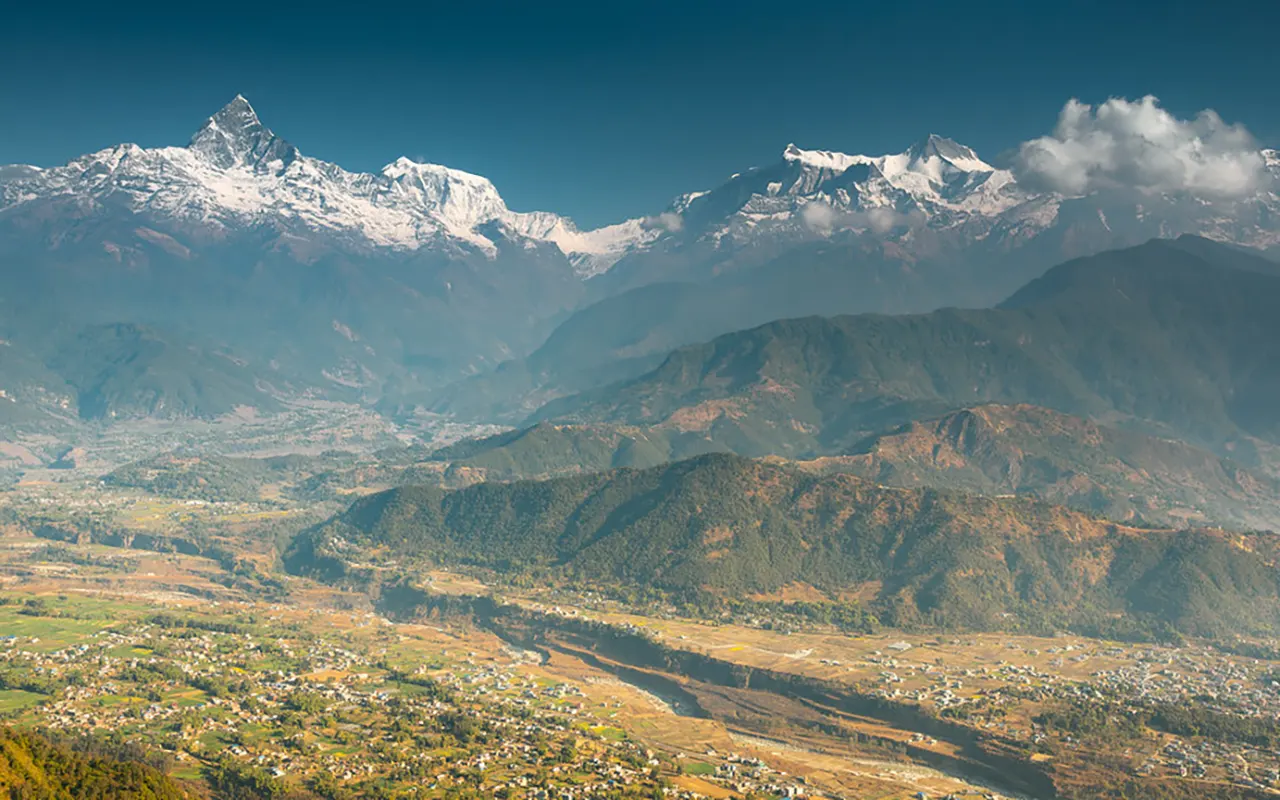
- See Machhapuchhre, Annapurna South and Hiunchuli in clear weather
- Descend through the forest toward Siding
- Enjoy a short road journey back to Pokhara
- Complete a high altitude Himalayan trek in five days
Trip Introduction
Mardi Himal Trek Overview
The Mardi Himal Trek is a five day journey through the Annapurna region, taking you from Pokhara toward the upper mountain trails below Mardi Himal. The route passes through forested hills, local settlements and open ridges before returning to Pokhara. It is a good option for travelers who want to spend several days in the mountains without taking a long break from their travel plans. The route moves from the lower green hills into rhododendron forests and then onto the open ridge above the tree line.
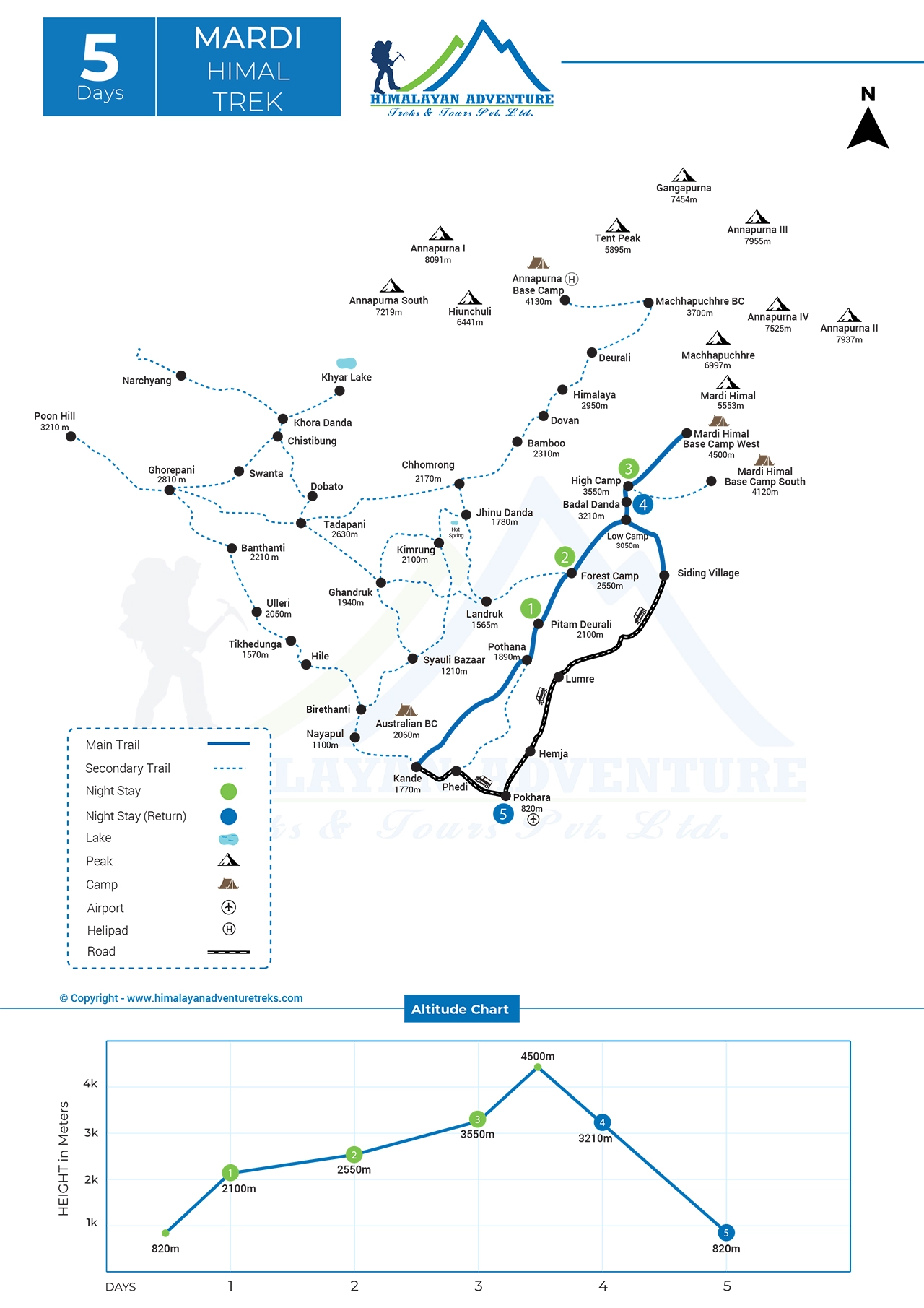
With Himalayan Adventure Treks, our five day route begins with a short drive from Pokhara to Kande. From there, we walk toward Pitam Deurali and continue deeper into the forest on the following day. Forest Camp, also called Kokar, is an important overnight stop before the trail starts climbing more quickly toward the upper ridge.
The route from Forest Camp to High Camp passes through Low Camp and Badal Danda. As the elevation increases, the dense forest gradually gives way to open hillside. From High Camp, the next morning takes us toward the upper Mardi Himal ridge. The Upper Viewpoint is around 4,200 m / 13,780 ft, while the trail can continue toward Mardi Himal Base Camp at approximately 4,500 m / 14,764 ft, depending on weather, trail conditions and the group’s physical condition.
The upper section provides views toward Machhapuchhre, Annapurna South and Hiunchuli when the weather is clear. Rather than returning to High Camp after the Base Camp excursion, our itinerary descends to Badal Danda for the night. The following morning, we continue downhill to Siding and drive back to Pokhara.
The Mardi Himal Trek from Pokhara suits travelers who are comfortable with several hours of walking each day and who are prepared for a quick increase in altitude. It is not a technical climbing trip, but the trail has steep sections, uneven ground and a demanding fourth day.
This route also gives us a chance to experience different sides of the Annapurna landscape within a short period. The lower trail passes through forest and hillside settlements, while the upper section becomes more exposed and alpine. The change in scenery is a major part of the experience.
For travelers with limited time, the five day schedule provides a compact route from Pokhara to the upper Mardi Himal ridge, with the option of continuing toward Mardi Himal Base Camp at approximately 4,500 m depending on weather, trail conditions and the group’s physical condition. At the same time, we recommend taking the altitude seriously because there is no separate acclimatization day in this itinerary.
Mardi Himal Trek Route Overview
| Day | Route | Overnight | Elevation | Distance | Duration | Activity | Meals |
| 1 | Pokhara → Kande → Pitam Deurali | Pitam Deurali | 2,100 m / 6,890 ft | Approx. 6 km | 4 hrs | Drive + Trek | B/L/D |
| 2 | Pitam Deurali → Forest Camp | Forest Camp | 2,600 m / 8,530 ft | Approx. 6–8 km | 4–5 hrs | Trek | B/L/D |
| 3 | Forest Camp → Low Camp → Badal Danda → High Camp | High Camp | 3,580 m / 11,745 ft | Approx. 8.5 km | 6 hrs | Trek | B/L/D |
| 4 | High Camp → Mardi Himal Base Camp → Badal Danda | Badal Danda | 4,500 m / 14,764 ft | Approx. 12–13 km | 7–9 hrs | Trek | B/L/D |
| 5 | Badal Danda → Siding → Pokhara | Pokhara | Approx. 3,210 m / 10,531 ft at start | Approx. 5–6 km | 4 hrs | Trek + Drive | B/L |
The distances are approximate because published route measurements differ depending on the exact trail, viewpoint and GPS recording. A commonly published five day schedule gives about 6 km for Kande to Pitam Deurali, 6 km for Pitam Deurali to Forest Camp, 8.5 km for Forest Camp to High Camp, 12.4 km for High Camp to Base Camp and Badal Danda, and about 5.2 km from Badal Danda to Siding.
Trip Facts
| Trip Information | Details |
| Duration | 5 Days |
| Region | Annapurna Region |
| Maximum Altitude | Up to 4,500 m / 14,764 ft, depending on the high point reached |
| Trek Difficulty | Moderate to Challenging |
| Trekking Style | Teahouse Trek |
| Accommodation | Teahouses and lodges |
| Meals | Breakfast, Lunch and Dinner |
| Starting Point | Pokhara |
| Ending Point | Pokhara |
| Best Seasons | Spring and Autumn |
| Group Size | Private or small group |
| Trek Type | Short high altitude trek |
Why Choose the Mardi Himal Trek?
The main reason to choose this Mardi Himal Trek itinerary is the amount of mountain scenery it provides within a short trekking period. You do not need to spend two weeks walking through the Annapurna region to reach a high Himalayan viewpoint. This itinerary takes us from Pokhara to the upper Mardi Himal ridge in five days.
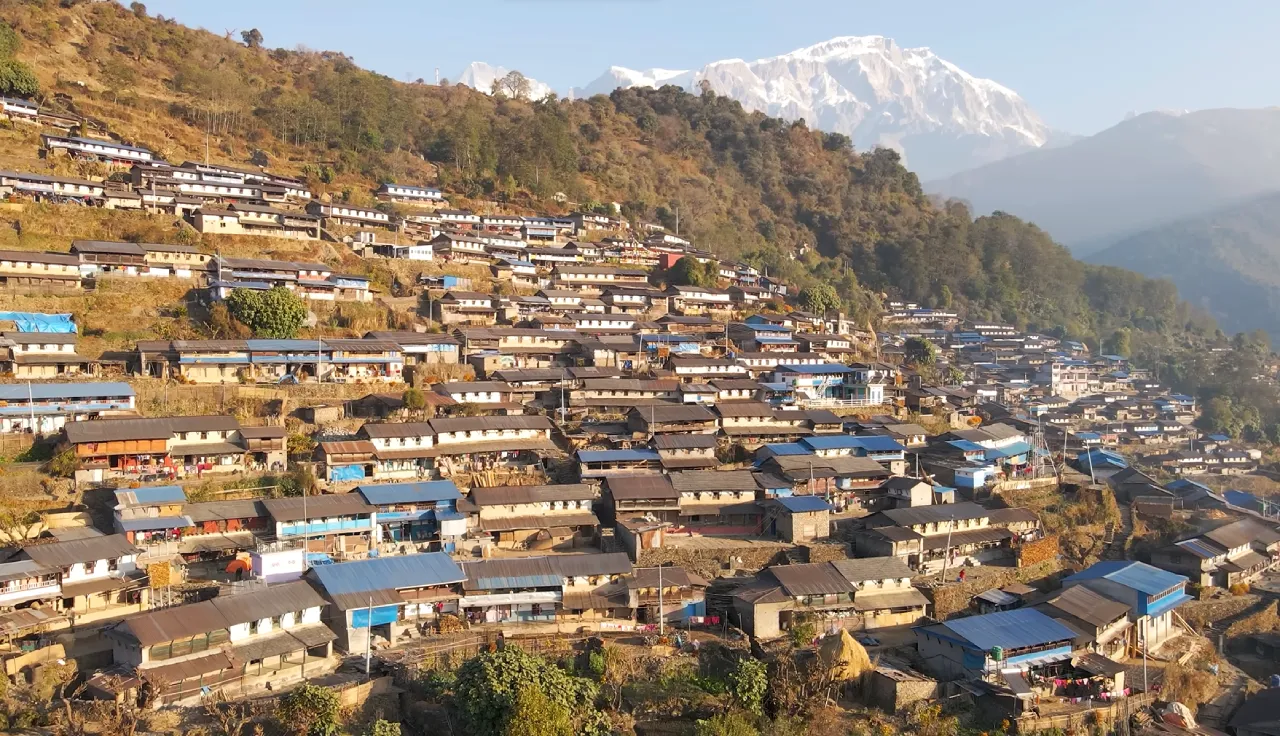
The route is also varied. The first part feels like a traditional hill trek, with forest, stone steps, farmland and small settlements. Further uphill, the forest becomes thicker before opening into the ridge landscape around Badal Danda and High Camp.
Another advantage is the starting point. Pokhara is already a popular base for travelers visiting western Nepal, so the trek can fit easily into a wider Nepal holiday. The drive to Kande is relatively short, allowing us to begin walking on the first day.
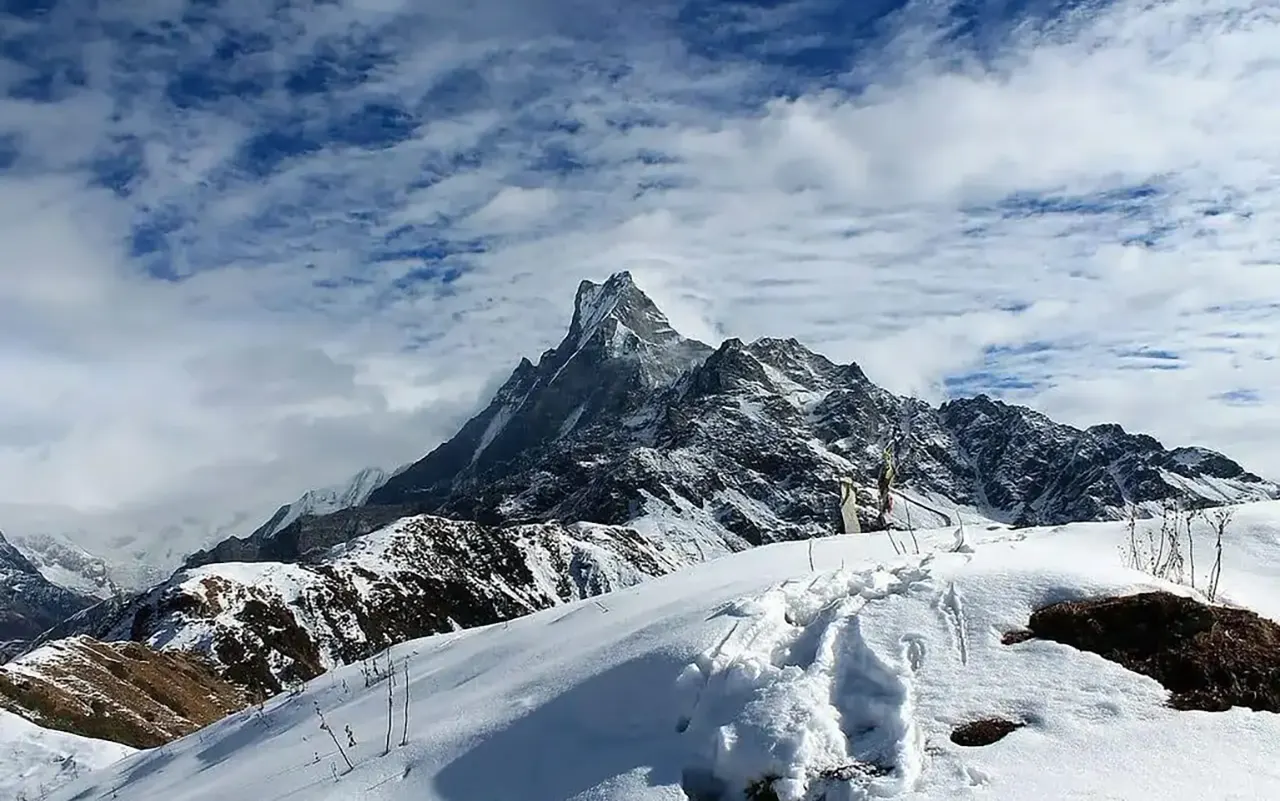
The upper ridge is the main attraction for many trekkers. From High Camp and the trail toward Base Camp, the views open toward Machhapuchhre and the Annapurna mountains. The landscape is very different from the forested trail lower down.
The trek also suits travelers who prefer a smaller itinerary rather than a long expedition. It does, however, require reasonable fitness because the short schedule means that we gain altitude quite quickly.
Outline Itinerary of Mardi Himal Trek
Day 01: Drive from Pokhara to Kande and Trek to Pitam Deurali.
Day 02: Trek from Pitam Deurali to Forest Camp at Kokar.
Day 03: Trek from Kokar Forest Camp to High Camp.
Day 04: Excursion to Mardi Himal Base Camp and Return to Badal Danda.
Day 05: Trek from Badal Danda to Siding and Drive to Pokhara.
Our guests sharing their experiences (Photo/Video Gallery)
Detail itinerary of Mardi Himal Trek
01
Day 01: Drive from Pokhara to Kande and Trek to Pitam Deurali.
We will leave Pokhara by road and drive toward Kande, where our trek begins. The trail gradually climbs through the green hills and passes forest, farmland and small settlements. Depending on the exact route, we may walk through the Australian Camp and Pothana area before reaching Pitam Deurali.
The first day is relatively short compared with the higher sections of the trek. It gives us time to settle into the walking routine without starting with a very long day. The trail includes some uphill sections and stone steps, but the elevation is still moderate.
Pitam Deurali sits at around 2,100 m / 6,890 ft and is surrounded by forest and mountain scenery. We will stay at a local teahouse and have dinner before resting for the next walking day.

Activity: Drive & Trek, 4-5 hours

Max. Altitude: 2,100m/6,890ft. Pitam Deurali

Meal: Lunch & Dinner

Accommodation: Teahouse
02
Day 02: Trek from Pitam Deurali to Forest Camp at Kokar.
We will continue from Pitam Deurali toward Forest Camp, also known as Kokar. The trail becomes more wooded as we move farther away from the lower settlements. Rhododendron, oak and other Himalayan trees cover much of this section.
The walking is mostly uphill, although there are some easier stretches where we can take a break. We will keep a steady pace rather than trying to finish quickly. This becomes more important as the altitude starts increasing.
The forest provides shade during the warmer parts of the day and also gives the trail a quieter feel. In spring, rhododendron flowers can be seen along parts of the route.
Forest Camp is located at around 2,600 m / 8,530 ft. Accommodation here is basic but suitable for trekkers. We will have dinner at the lodge and rest before the longer climb toward High Camp.
Activity: Trek, 5-6 hours
Max. Altitude: 2,600m/8,530ft. Kokar
Meal: Breakfast, Lunch & Dinner
Accommodation: Teahouse
03
Day 03: Trek from Kokar Forest Camp to High Camp.
Today is the first major climbing day. We will leave Forest Camp, and take the trail to Low Camp. The trail goes up into the woods and slowly opens. Low Camp is a route point rather than an overnight stop on our itinerary.
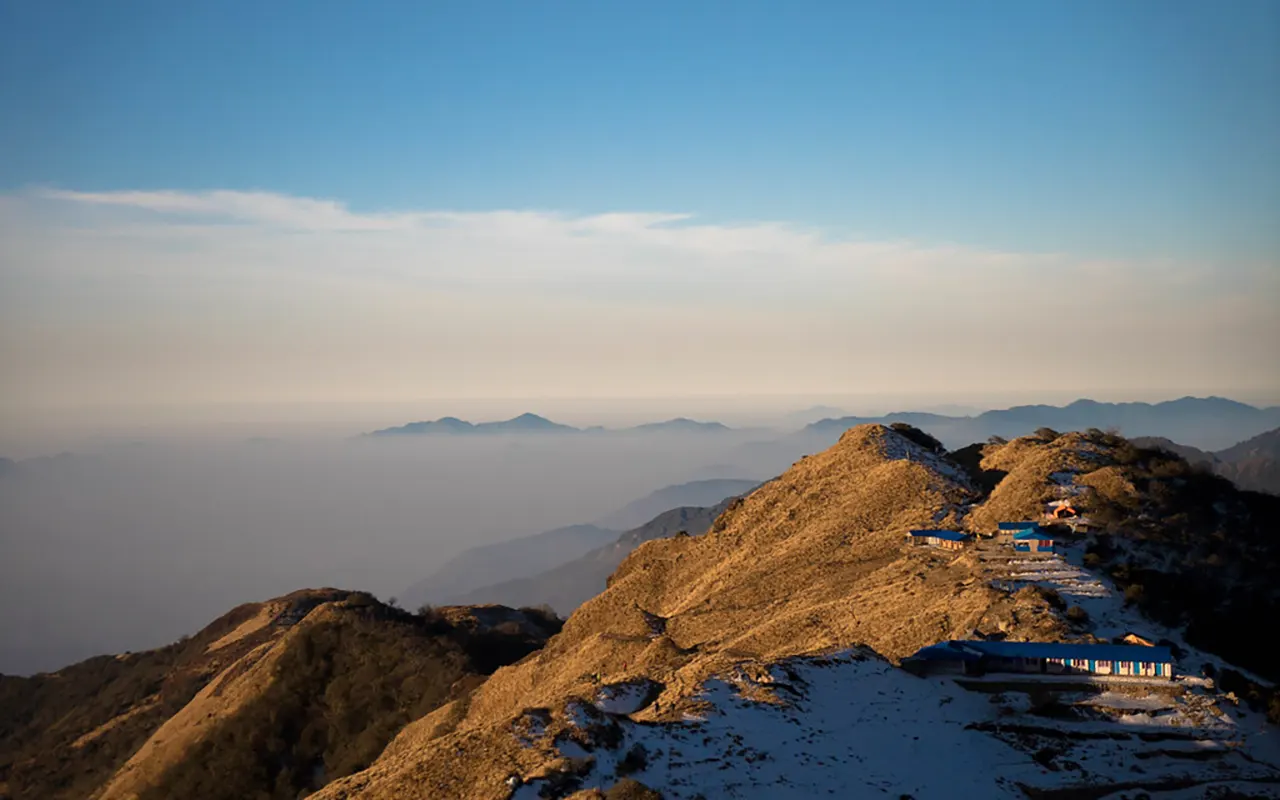
From there, we continue toward Badal Danda. The trees get smaller as we get higher and the trail starts to go over the open ridge. When the weather is clear, we will be able to begin to see Machhapuchhre and other Annapurna mountains better.
We shall keep on up the ridge to High Camp. The last part may be more difficult due to the elevation and open land. Our highest overnight point is High Camp at about 3,580 m / 11,745 ft.
After reaching the lodge, we will rest and prepare for the early start required for the Base Camp excursion the next day.
Activity: Trek, 5-6 hours
Max. Altitude: 3,580m/11,745ft. High Camp
Meal: Breakfast, Lunch & Dinner
Accommodation: Teahouse
04
Day 04: Excursion to Mardi Himal Base Camp and Return to Badal Danda.
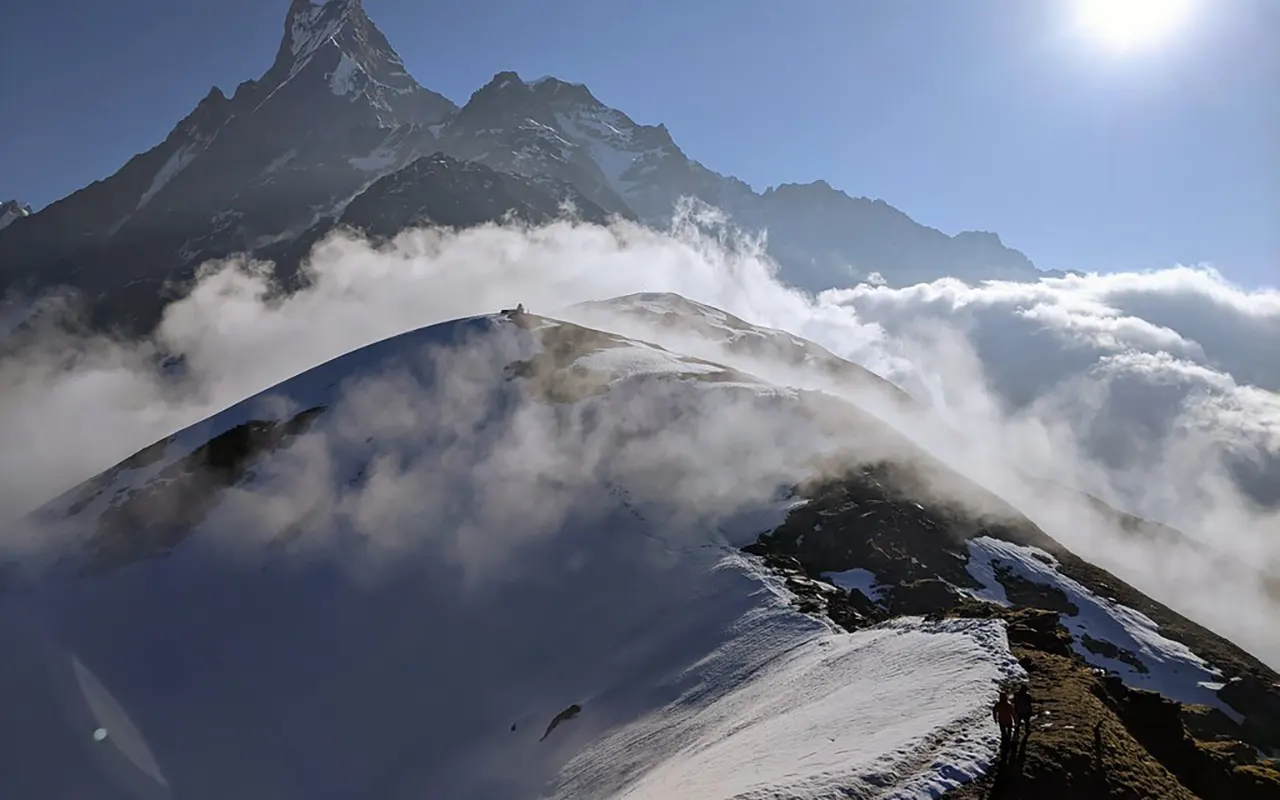
This is the highest and hardest day of our trek. We will begin early at High Camp and ascend the upper ridge to the Mardi Himal Upper Viewpoint where there is an elevation of approximately 4,200 m / 13,780 ft.
In case the weather is appropriate, the trail conditions, as well as the physical state of the group, allows it, we will be able to proceed to Mardi Himal Base Camp around 4,500 m / 14,764 ft. It is more open above the tree line, and has some rocky and uneven areas.
Our stroll will be gradual as the altitude will take on a greater influence beyond 4,000 m / 13,123 ft. The Upper View is approximately 4,200 m / 13,780 ft, and Mardi Himal Base Camp is about 4,500 m / 14,764 ft. It is at this location where we can see Machhapuchhre, Annapurna South, Hiunchuli and the surrounding mountains on a clear day.
We will then start descending toward Badal Danda, after spending appropriate time at the high point. This is a great day since it will involve a big climb and a big descent. We will stay at Badal Danda rather than returning to High Camp.
Activity: Explore & Trek, 5-6 hours
Max. Altitude: 4,500m/14,764ft. Mardi Himal Base Camp
Meal: Breakfast, Lunch & Dinner
Accommodation: Teahouse
05
Day 05: Trek from Badal Danda to Siding and Drive to Pokhara.
Our final walking section takes us downhill from Badal Danda toward Siding. The trail gets out of the open upper ridge and back into wooded environments. We will proceed down the hillside area where the elevation is lower.
The descent is not so hard technically, but may be tiring after the long walk of the previous day. We will take care on steep or uneven sections and keep a comfortable pace.
Siding is a local settlement and a road access point for the Mardi Himal area. After reaching Siding, our vehicle will meet us and we will drive back to Pokhara.
The return journey gives us a chance to relax after completing the trek. Once we reach Pokhara, our five day Mardi Himal Trek comes to an end.
Activity: Trek & Drive, 6-7 hours
Max. Altitude: 850m/2,789ft. Pokhara
Meal: Breakfast & Lunch

Note:
If you have your own private group and want to make your trip private, we can run the custom trip all the day as per your requirements and group size.
Includes and Excludes
What are included with package?
- Meals during trekking: Breakfast, lunch, and dinner will be provided on trekking days.
- Transportation: Pokhara to Kande by Private vehicle/ Siding to Pokhara by sharing Jeep.
- Permits: Trekking permits including TIMS and ACAP fees will be arranged.
- Equipment: Duffle bag and souvenir company logo T-shirt will be provided.
- Accommodation: Stay in tea houses or lodges along the trekking route.
- Experienced Guide & Porters: An experienced, helpful, and friendly government-licensed guide, along with porters (1 porter for every 2 clients), will accompany you.
- Travel rescue: Travel rescue arrangements in case of emergencies.
- Medical supplies: First aid kit available for minor health concerns.
- Taxes: All government taxes are included.
What are not included with package?
- Nepal Visa fee: Not included in the trek package. Available upon arrival at Kathmandu airport. The fee varies based on your stay duration.
- International airfare: The cost of international flights to/from Kathmandu is not included. You will need to arrange and pay for these separately.
- Travel and rescue insurance: Not included. You are responsible for arranging insurance that covers trekking activities in Nepal.
- Extra meals: Any meals not included in the package (e.g., in Kathmandu or extra meals during the trek) will be at your own expense.
- Personal expenses: Costs for phone calls, laundry, bar bills, battery recharge, extra porters, bottled or boiled water, hot showers, and any other personal items/services are not covered and will be your responsibility.
- Hotels: Pokhara hotel is not included.
Pick Your Suitable Date
US$ 500
Book a Private Trip
Private & Group Discount Price
-
1 -
1 personUS$ 1000
-
2 -
2 peopleUS$ 700
-
3 -
5 peopleUS$ 650
-
6 -
10 peopleUS$ 550
-
11 + people
9999
US$ 500
1 Travelers x US $ 2000
Total Cost:
US$ 1000
Route Map & Altitude Chart
Pokhara
Start/End point
Pokhara
Trip Information
How Difficult Is the Mardi Himal Trek?
The Mardi Himal Trek is best described as a moderate to challenging trek on this five day itinerary. It is not a technical climbing trail and does not involve the use of ropes or mountaineering equipment but the steep walking combined with the height and lack of time makes it physically challenging.
The biggest challenge is the rapid elevation gain. We begin at Kande at about 1,770 m / 5,807 ft and reach 4,500 m / 14,764 ft at Base Camp within only a few days.
The third day will cover a distance of about 8.5 km by foot and will take us out of Forest Camp to High Camp. The fourth day is more difficult, as we ascend the High Camp to the Base Camp area and descend down to Badal Danda.
The terrain also changes during the trek. Lower sections include forest paths, steps and village trails. Higher sections become rockier and more exposed.
Good preparation is important. Anyone planning this route should be comfortable walking for five to seven hours and handling repeated uphill sections.
Weather can add another challenge. Rain can make the forest trail slippery, while snow and strong wind can affect the higher ridge during winter.
Who Is This Trek Suitable For?
This trek is suitable for travelers with a reasonable level of fitness who can walk for several hours on consecutive days.
First time trekkers can consider the route if they are physically prepared and understand the altitude involved. Previous high altitude experience is helpful but not essential for everyone.
People who regularly hike, walk, run or participate in endurance activities will generally have a better starting point. Training before the trip is still recommended.
Solo travelers can also take this route with a guide. Groups, couples and private travelers can choose the itinerary according to their available dates.
Older travelers may also be able to complete the trek if they are physically fit, but the rapid altitude gain means that individual health and fitness should be considered rather than age alone.
Anyone who has limited walking experience or is uncomfortable with steep uphill and downhill trails should consider adding extra days. A slower itinerary allows more time to adjust to the altitude.
Altitude and Acclimatization
There is no dedicated acclimatization day in this five day Mardi Himal Trek itinerary. The overnight elevation rises from approximately 2,100 m / 6,890 ft at Pitam Deurali to around 2,600 m / 8,530 ft at Forest Camp and then to approximately 3,580 m / 11,745 ft at High Camp.
The next day takes us to the Upper Viewpoint at around 4,200 m / 13,780 ft, with the option of continuing toward Mardi Himal Base Camp at approximately 4,500 m / 14,764 ft before descending to Badal Danda.
This is a relatively quick ascent, so we will maintain a controlled pace. Drinking enough water, eating regular meals and getting sufficient rest are important.
Altitude sickness can cause headache, nausea, dizziness, unusual tiredness, loss of appetite and sleep problems. Mild symptoms should be reported to the guide rather than ignored.
If symptoms become serious or continue to worsen, climbing higher is not appropriate. Descent is the main treatment for serious altitude related illness.
Our guide will monitor the group throughout the Mardi Himal Trek, but every traveler should also pay attention to their own condition and communicate honestly with the trekking team.
Elevation Profile
| Location | Elevation |
| Pokhara | 822 m / 2,697 ft |
| Kande | 1,770 m / 5,807 ft |
| Pitam Deurali | 2,100 m / 6,890 ft |
| Forest Camp | 2,600 m / 8,530 ft |
| Low Camp | About 3,000 m / 9,843 ft |
| Badal Danda | About 3,210 m / 10,531 ft |
| High Camp | 3,580 m / 11,745 ft |
| Mardi Himal Base Camp | About 4,500 m / 14,764 ft |
| Siding | About 1,700 m / 5,577 ft |
| Mardi Himal Upper Viewpoint | About 4,200 m / 13,780 ft |
Elevations can vary slightly between maps, GPS readings and individual lodges. The route sources consistently place High Camp around 3,580 m / 11,745 ft and Mardi Himal Base Camp around 4,500 m / 14,764 ft.
Best Time for the Mardi Himal Trek
Spring
March to May is a good period for the Mardi Himal Trek. The lower forest sections can have rhododendron flowers, and the weather is generally suitable for mountain walking.
April and May can be warmer at lower elevations, while mornings and evenings remain cold at High Camp.
Summer and Monsoon
June to August is the wet season in Nepal. Rain can make the trail muddy and slippery, and clouds can limit mountain views.
The trek can still be done with suitable preparation, but travelers should expect wetter conditions.
Autumn
September to November is another favorable period. After the monsoon, the air is often clearer and mountain visibility is generally better.
October and November are popular trekking months, so accommodation can become busy.
Winter
December to February is colder, especially at High Camp and above. Snow can affect the upper trail, depending on the year’s weather.
Winter travelers should carry proper warm clothing and be prepared for changing trail conditions.
| Season | Months | Weather and Trail Conditions | Trekking Conditions |
| Spring | March to May | Mild temperatures, generally clear mornings, rhododendron flowers | Excellent |
| Summer / Monsoon | June to August | Frequent rain, cloudy skies, muddy and slippery trails | Less suitable |
| Autumn | September to November | Clear skies, stable weather and good mountain visibility | Excellent |
| Winter | December to February | Cold temperatures, possible snow at higher elevations | Possible with preparation |
Permits and Entry Requirements
The route is inside the Annapurna Conservation Area, so an Annapurna Conservation Area Permit is required. A TIMS card and licensed guide requirements also apply according to current trekking regulations.
Nepal Tourism Board’s current information lists specific protected trekking areas where trekkers must be accompanied by a licensed guide and carry an agency issued TIMS card. Requirements should be reconfirmed before departure because government rules can change.
| Requirement | Purpose |
| Annapurna Conservation Area Permit | Entry into the conservation area |
| TIMS Card | Trekker registration and safety management |
| Licensed Trekking Guide | Current requirement for applicable routes |
Himalayan Adventure Treks will arrange the required trekking permits and documentation according to the rules applicable at the time of travel.
Accommodation
Accommodation during the Mardi Himal Trek is provided in local teahouses and lodges. Rooms are generally simple, with beds and basic furniture. Twin sharing is common, although room arrangements depend on availability at each lodge.
Bathrooms can be shared, especially at higher elevations. Hot showers may be available at some lodges for an additional charge, but they should not be treated as guaranteed throughout the route.
Electricity is available in many settlements, although charging facilities can be limited and may involve an additional fee. WiFi can be available at some lodges, but connection quality varies.
We will arrange suitable accommodation based on availability and group requirements. Travelers should expect more basic facilities at High Camp than in Pokhara.
Food and Drinking Water
Meals during the Mardi Himal Trek are served at local teahouses. Breakfast can include eggs, bread, porridge, pancakes, potatoes, tea and coffee. Lunch and dinner commonly include dal bhat, noodles, fried rice, pasta, soup, potatoes and vegetables.
Vegetarian food is generally available. Travelers with special dietary requirements should tell us before departure so that we can inform the accommodation providers. Drinking water is available at various points along the trail. Travelers can use boiled, filtered or treated water.
A reusable bottle or hydration bladder is recommended. Water purification tablets or a portable filter can provide an additional option. We recommend drinking regularly throughout the day. Staying hydrated becomes particularly important as the altitude increases.
Transportation
Mardi Himal Trek begins with a road journey from Pokhara to Kande. The drive generally takes around 45–60 minutes, depending on traffic and road conditions.
From Kande onward, we travel on foot through the trekking route. There is no vehicle transfer between the main trekking stops. We will walk from Kande to Pitam Deurali, Forest Camp, High Camp and the Base Camp area before descending toward Badal Danda.
On the final day, we continue on foot to Siding. From there, a vehicle will take us back to Pokhara. The exact road travel time can change because of traffic, weather and road conditions. Our team will coordinate the transportation according to the actual progress of the group.
Trek Preparation and Fitness
Preparation should begin several weeks before the Mardi Himal Trek. Regular walking is a good starting point. Try to include longer walks on uneven ground so your body becomes comfortable with several hours of activity.
Stair climbing is particularly useful because the route has many uphill and downhill sections. Squats, step ups and lunges can also help develop leg strength.
Cardiovascular activities such as brisk walking, jogging, cycling and swimming can improve endurance. It is useful to practice with a small backpack before departure. This helps you become comfortable carrying your personal items during the trek.
Do not focus only on speed. A steady pace is more useful at higher altitude. If you have a medical concern or are unsure whether you are ready for high altitude trekking, speak with a qualified medical professional before the 5 Days Mardi Himal Trek.
Packing List
Clothing
- Trekking shirts
- Long sleeve shirts
- Fleece jacket
- Warm insulated jacket
- Waterproof jacket
- Trekking trousers
- Thermal base layers
- Warm hat
- Sun hat
- Gloves
- Trekking socks
Footwear
- Comfortable trekking boots
- Camp shoes or sandals
- Extra socks
- Gaiters for wet or snowy conditions
Backpack and Luggage
- Daypack
- Duffel bag if porter service is used
- Waterproof backpack cover
- Dry bags
- Small padlock
Sleeping Items
- Suitable sleeping bag
- Sleeping bag liner
- Small travel pillow if required
Sun and Weather Protection
- Sunglasses
- Sunscreen
- Lip balm
- Rain protection
- Lightweight umbrella for lower sections
Personal Hygiene
- Toothbrush and toothpaste
- Soap
- Small towel
- Hand sanitizer
- Toilet paper
- Wet wipes
- Personal hygiene products
First Aid and Medication
- Personal prescription medicines
- Basic first aid kit
- Blister treatment
- Rehydration salts
- Personal medication recommended by your doctor
Water and Hydration
- Reusable water bottles
- Hydration bladder
- Water purification tablets
- Water filter if preferred
Electronics
- Mobile phone
- Camera
- Charging cables
- Power bank
- Headlamp
- Spare batteries
Documents and Money
- Passport
- Passport copies
- Travel insurance documents
- Permit information
- Emergency contacts
- Nepalese rupees
Optional Items
- Trekking poles
- Binoculars
- Snacks
- Earplugs
- Small book
Communication, Internet and Charging
Mobile network coverage varies along the Mardi Himal Trek from Pokhara route. Some settlements have mobile service, while coverage can be weaker or unavailable on parts of the upper ridge.
A Nepal SIM or suitable eSIM can be useful, but travelers should not expect continuous service. WiFi may be available at some lodges. It is usually slower and less reliable than the internet available in Pokhara.
Many teahouses have electricity, though the charge can be an added expense. Power bank would be handy in ensuring that phones and cameras last throughout the trek. We recommend charging important devices whenever electricity is available.
Travel Insurance and Emergency Evacuation
This 5 Days Mardi Himal Trek trek is highly advised in terms of travel insurance. Your policy must include trekking at around 4,500 m / 14,764 ft, medical care and emergency evacuation.Before traveling, check the altitude limit in your insurance policy. There are high altitude restrictions of some of the policies.
In case of an emergency, our team will be able to assist in communication with local services and the insurance company. Depending on the situation, evacuation may involve road transportation or helicopter rescue.
Rescue coordination does not equal rescue cost coverage. Our assistance with coordination does not automatically mean that rescue costs are included. Mardi Himal Trek from Pokhara, travelers are expected to have their insurance information and emergency contacts.
Guide and Porter Support
Our guide will direct the group on the Mardi Himal Trek trail, organize the daily pace of walking, and make local and accommodation arrangements. The guide will also assist in keeping track of the symptoms at the altitude and the weather changes.
Porter service may be organized on the basis of final booking arrangement. When porters are part of your chosen package, we will clarify the luggage allowance and portering prior to departure.
In our opinion, trekking employees ought to be treated justly and given appropriate accommodation, food and insurance depending on the relevant arrangements. The exact staff structure can vary depending on group size and whether the departure is private or shared.
Safety and Responsible Trekking
Safety becomes increasingly important as we climb higher. We will maintain a steady pace and avoid unnecessary rushing. Travelers should immediately tell the guide if they experience unusual headache, dizziness, nausea, weakness or breathing problems.
Weather can change quickly around High Camp and the upper ridge. Warm and waterproof clothing should therefore remain easily accessible. The trail can become slippery during rain and snow. Balance may be aided by using trekking poles during steep parts.
Travelers are also advised to take care of the environment. Carry your waste until it can be disposed of properly and avoid leaving plastic or other rubbish along the trail.
Be mindful of the locals and consult them before capturing photographs of them. Our group will also adhere to local rules and promote a responsible attitude during the 5 Days Mardi Himal Trek.
Local Culture and Customs
The villages surrounding Mardi Himal Trek route are closely attached to traditional hill life, farming and tourism. A polite greeting such as Namaste is appropriate when meeting local residents.
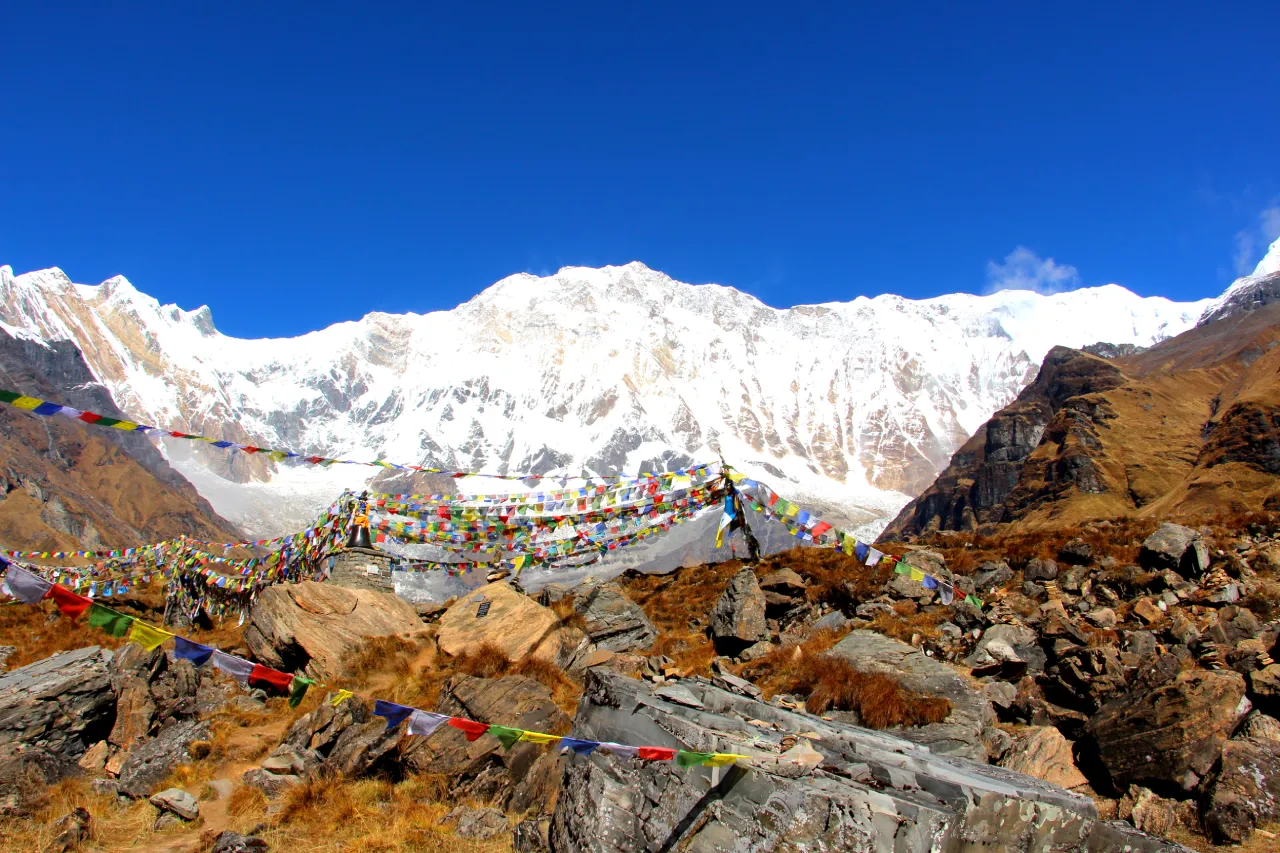
You may see prayer flags, prayer wheels and mani stones in villages and along the wider Annapurna region. These should be treated respectfully. Prayer wheels are traditionally turned clockwise.
Ask permission before photographing people or entering private homes. When visiting villages or religious places, modest clothing and respectful behavior are appropriate. Staying at local teahouses and eating locally prepared meals also helps support businesses along the route.
Mardi Himal Trek vs Ghorepani Poon Hill Trek
| Feature | Mardi Himal Trek | Ghorepani Poon Hill Trek |
| Main focus | High ridge and Base Camp | Poon Hill viewpoint and villages |
| Duration | 5 Days | Usually 3–5 days |
| Maximum altitude | 4,500 m / 14,764 ft | About 3,210 m / 10,531 ft |
| Difficulty | Moderate to challenging | Easy to moderate |
| Main scenery | High ridge, forest and mountain views | Forest, villages and mountain viewpoints |
| High altitude | Yes | Lower |
| Suitable for | Fit trekkers | Travelers wanting a lower altitude trek |
If your priority is reaching a higher Himalayan environment, Mardi Himal Trek is the stronger choice. If you want a shorter and generally easier route with less altitude, Poon Hill may be more suitable.
Mardi Himal Trek vs Extended Version
| Feature | 5 Day Trek | Extended Trek |
| Duration | 5 Days | 6 days or more |
| Pace | Faster | More relaxed |
| Maximum altitude | 4,500 m / 14,764 ft | Around 4,500 m / 14,764 ft |
| Acclimatization | No dedicated day | More flexibility |
| Walking days | Compact | More evenly distributed |
| Suitable for | Travelers with limited time | Travelers wanting a slower pace |
The five day version is useful when time is limited. An extended itinerary is better for travelers who prefer shorter daily walks and more time to adjust to the altitude.
Mardi Himal Trek Cost
The cost of 5 Days Mardi Himal Trek depends on several factors, including the number of travelers, travel dates, transportation arrangements, guide and porter services and accommodation. Private departures generally have a different price structure from larger groups because transportation and staff costs are shared differently.
Permits are another part of the overall cost. The package price also includes accommodation and meals. Availability and operating cost may be influenced by season, especially in the busy seasons of spring and autumn.
Travelers desiring a more relaxed schedule or more days can request a tailored booking. Since the price is determined according to the specifics of your travel, Himalayan Adventure Treks will offer you a quote after you decide on the number of people in the group and the dates.
Booking and Customization
You can book your trek with Himalayan Adventure Treks by starting with the dates of your preferred travel and the number of people in your group.
We are able to organize individual, couple, family and group departures. In case you lack trekking experience, we can also talk about whether to add an additional day to the route to make it more comfortable.
The itinerary, transportation, accommodation, guide arrangements and permits will be verified before the trip by our team. We will also tell you how to prepare before you go to the mountains. This involves proper clothes, walking shoes, insurance papers and personal medicine.
Travelers are expected to give the necessary passport information in order to obtain trek permits and registration. In case you cannot fit the usual five day plan, we can work out a tailor-made itinerary. It can also be extended to additional nights to decrease the daily walking pressure depending on your need.
The Mardi Himal Trek, Pokhara is a viable alternative to those travelers seeking a brief Himalayan experience beginning at Pokhara. Contact Himalayan Adventure Treks with your desired dates and group size and our team will assist you to plan the route based on your time and trekking experience.
Essential Packing Gear List for Mardi Himal Trek
If you have decided to go on Mardi Himal Trek 5 Days in Annapurna Ranges of Nepal, we assure you, that you will have a fantastic time ahead. But what should you pack? What will be the right gear to make your trip more fabulous? To help you with this, we have compiled a packing list of essential items that you mustn’t forget to bring along.
- Passport ( min 6 months valid)
- Cash, credit card
- List of important addresses and contact details
- 2-3 passport photos (optional)
- Copies of all important travel documents (passport, visa, airline ticket, insurance policy, etc.)
- A sturdy 70 L trekking backpack which will be carried by your porter (please note that our assigned 1 porter will carry 2 client’s luggage up to 20-25 kg.
Note: We will provide each participant with a spacious 70 to 75 L Company logo duffle bag to conveniently carry your trekking gear which you have to return once the trek is complete. - A 30 L Daypack that has room for your essentials such as camera, mobile, Passport, important documents, water bottle, day use medicine, chocolate bars, raincoat, etc. which will be carried by you.
- Protective cover for backpack or travel bag.
- Hiking Boots: Preferable ankle-high boots to prevent ankle sprain
- Regular Shoes: For small strolls and exploration around the city
- Second, a light pair of shoes and possibly sandals
- Micro Spikes or Ice Cleats for the winter trekking over snow and ice
- Gaiter for added protection in snow
- Rain and wind-resistant lightweight down jacket for warmth with a good helmet hood
- Summery-light, as well as winter warm clothing
- Quick-drying shirts made of synthetic fabrics
- Warm and cool vest or T shirts
- Functional synthetic underwear
- Sports Bra for Female Trekker
- A waterproof trouser
- Regular trousers of quick-drying fabric
- Hiking shorts
- Cargo Pants with multiple pockets to hold your small items such as knives or chocolates
- Woolen or fleece pants
- Trekking socks both thick or woolen fabric and lighter wool sock
- Wool hat, gloves, and scarf
- A light cotton scarf or a bandanna for protection of your head, neck, ears, and mouth
- Sun hat, and sunglasses with 100% UV protection (for trekking trips, even with stray light and nose protection)
- Sunscreen cream or lotion with a high sun protection factor (at least 15, for trekking trips, even at least 30)
- Sunscreen lipstick with a high SPF (at least 20, for trekking trip,s even at least 30 or sunblock)
- Mosquito repellent (Optional)
- Comfortable light night clothes and shoes
- A drinking bottle that can be used as a hot water bottle on frosty nights
- Flip-flops or bathing shoes for using the showers
- Water purifiers: if you need to refill water from the tap or stream en route
- Headlamp: for a midnight or pre-dawn trip towards the viewpoint
- Quick-drying towel and sample-size toiletries for washing your feet and face
- Your personal first-aid kit: with basic medical supplies such as bandage for sprain, antidiarrheal and antibiotics, iodine wipes for scrapes and cuts, plasters, aspirin, or ibuprofen, moleskin for preventing blisters, Diamox (acclimatizing medicine), and your personal medication
- Sleeping bag appropriate for all seasons treks (we can hire at Kathmandu)
- Waterproof money belt, chest bag, leg bag, or belt bag for storing important travel documents or valuables.
- Toothpaste, Toothbrush, and soap
- Deodorants
- Moisturizer
- Nail clippers
- Feminine hygiene products (Sanitary Pads)
- Small mirror
- Wet wipes
- Hand sanitizer
- Comb
- Camera with sufficient memory cards and spare batteries or battery charger
- Small padlock for your travel bag
- Crampons ( during winter, Dec- Feb)
- Thermos flask
- Water bag
- Toilet paper (2-3 rolls without)
- Ear Plugs
- Matchbox, or lighter
- Compass or GPS
- Map
- Alarm clock
- Multi-tool kit
- Binoculars
- Books
- Whistle
Equipment Note:
- Please note that there is no need for you to bring all these heavy items, such as Sleeping bag, Down Jacket, Trekking Poles, items from your home. You can easily rent or purchase high to standard quality items in Kathmandu Thamel area and Pokhara.
- Items are available from international brand such as North Face, Sherpa Adventure, Marmot, Mountain Hardware, Black Yak, Karma Gear and local brands like Goldstar and local made products etc.
- Plus, we will also gift you a company logo T-shirt as a token of your experience in Nepal with us.
Renting Cost:
- Sleeping Bag & Down Jacket (-10-20 degree Celsius), Per Piece per day US$ 1.5
Frequently Asked Questions
How far is the Mardi Himal Trek?
The complete trekking distance for this five day route is approximately 40–45 km, although exact measurements vary by route and GPS recording.
What is the highest point of the Mardi Himal trek?
The Upper Viewpoint is around 4,200 m / 13,780 ft, while Mardi Himal Base Camp is approximately 4,500 m / 14,764 ft. The actual peak is determined by the conditions of the trails and the route.
How long do we walk each day?
The distance is about 4-6 hrs of walking each day, with Day 4 potentially requiring 7-9 hrs of walking since it includes the Base Camp climb and the Badal Danda descent.
Is Mardi Himal Trek beginner friendly?
It can be considered by fit beginners, though they must prepare well since the route ascends rapidly and has a few days of long walks.
Is there an acclimatization day?
No. This five day itinerary has no dedicated acclimatization day.
What is the hardest day?
Day 4 is the hardest because we climb to approximately 4,500 m / 14,764 ft and then descend to Badal Danda.
Do I need a guide for Mardi Himal Trek?
A licensed trekking guide is required under the current rules applicable to the route. Himalayan Adventure Treks will arrange the guide.
What type of accommodation is available?
We stay in basic teahouses and lodges. Facilities become simpler at higher elevations.
Can I get vegetarian food?
Yes. Vegetarian meals are commonly available at the teahouses along the route.
Is internet available?
WiFi may be available at some lodges, but connection quality varies and should not be considered guaranteed.
Can I customize the 5 Days Mardi Himal Trek?
WiFi may be available at some lodges, but connection quality varies and should not be considered guaranteed.
Is travel insurance necessary?
We strongly recommend insurance that covers high altitude trekking, medical treatment and emergency evacuation.

5 Days
Price starts
US$ 500
We offer group price for private travelers
Reviews on Mardi Himal Trek






Related trips