



Bhutan is a small Himalayan kingdom located between Nepal, India and China. Despite its limited geographical size, the country has a unique identity based on the Buddhist faith, the mountains, traditional architecture and environmental protection. In contrast to many other countries, Bhutan has retained its cultural values while slowly expanding its tourism.
The country is also known for Gross National Happiness, a philosophy of development that takes into account the well-being of the people as well as economic development. It is also a destination for tourists interested in the ancient monasteries, colourful religious festivals, traditional villages and protected forests.
For those who are curious about Bhutan, it is not just its well-known attractions. The kingdom has retained many traditions that are still practiced today, including traditional dresses, archery, local food and religious festivities.
Bhutan is also ideal for those who like adventures in the Himalayas. One can see the valleys of Paro and Thimphu, walk to Tiger’s Nest monastery, stay in traditional dzongs or opt for longer hikes to the remote mountain areas.
In 2027, Bhutan offers a few travel options for a trip to the Himalayas, ranging from cultural tours to guided trekking experiences and luxury stays. This is the kingdom that is different from other destinations in 15 ways.
15 Things That Make Bhutan Famous
1. Gross National Happiness
Bhutan is internationally recognised for its development philosophy called Gross National Happiness (GNH). The concept was introduced by the Fourth King, Jigme Singye Wangchuck, during the 1970s.
In contrast to development models that emphasise primarily economic growth, Gross National Happiness takes into account various spheres of people’s lives. These are all areas of health, education, environment, cultural heritage and community relations.
The philosophy is grounded in four key principles:
- Social and economic development that is sustainable and equitable
- Environmental conservation
- Preservation and promotion of culture
- Good governance
Bhutan’s policies and development priorities are guided by these principles. They also reveal the importance the country places on preserving its traditions and natural environment.
This philosophy serves as a good introduction to Bhutanese society and its development philosophy for those who are visiting.
2. Tiger’s Nest Monastery
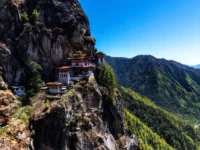
One of the most famous Buddhist sites in Bhutan is Tiger’s Nest Monastery (Taktsang) also referred to as Paro Taktsang. It is located on a cliff overlooking the Paro Valley and has great importance in Bhutanese Buddhism.
Local Buddhist legend states that Guru Rinpoche landed in this area on the back of a flying tigress in the 8th century. He is said to have meditated in a cave and initiated Buddhism in Bhutan.
The monastery is situated at an elevation of about 3120 m (10236 ft) above sea level. To reach the complex, a hike is required uphill through the pine forests. This is a 4-6 hour round trip depending on walking time and rest stops.
The monastery is a key point of interest in most Bhutan cultural tours. Respectful behaviour and adherence to rules of photography and access to religious buildings are required.
3. Traditional Dzongs and Bhutanese Architecture
The traditional dzongs are large fortress buildings famous in Bhutan and served as administrative, religious and defensive centres.
These are still significant components of Bhutanese society. Many have government offices, temples and monasteries and courtyards for religious festivals.
Examples of dzongs are:
- Punakha Dzong is located between the Pho Chhu and the Mo Chhu rivers
- Tashichho Dzong is an important administrative and religious centre in Thimphu
- On the other side of the Paro Valley is Rinpung Dzong, looking down on the valley
- A historic fortress in the center of Bhutan, Trongsa Dzong
Traditional Bhutanese architecture features whitewashed walls, wooden windows, decorative paintings and sloping roofs. The buildings are mostly built without nailing the wood in the typical manner of wood construction.
Several dzhongs are available for visitors to explore during a cultural holiday and learn about their importance in history and religion.
4. Colourful Buddhist Festivals
Tshechus are religious and cultural festivals of Bhutan. They are held in various districts throughout the year, typically in the spring and autumn.
On these occasions, monks and performers wear colourful Cham masks and traditional costumes and perform Cham dances. The performances are an embodiment of Buddhist teachings, religious stories and the triumph of good over evil.
A few popular festivals are:
- Paro Tshechu
- Thimphu Tshechu
- Punakha Drubchen
- Punakha Tshechu
- Jambay Lhakhang Drup
It is customary for locals from local villages to be present during these events. Traditional clothing, family get-togethers and religious observances.
Festival dates can be used to organise trips to Bhutan for visitors interested in Bhutanese culture. The dates are based on the Bhutanese lunar calendar, so please consult the annual calendar before making a booking.
5. Himalayan Mountains and Natural Landscapes
The geography of Bhutan which is set in the Himalayas, is also a draw for international tourists. Some of the features are mountains covered with snow, valleys, alpine meadows, glacial rivers and hills with trees.
Some of the highest mountains in the country are located in the northern region and are different from the central and southern parts of the country in terms of climate and vegetation.
These are some of the remarkable mountains:
| Mountain | Elevation |
| Gangkhar Puensum | 7,570 m (24,836 ft) |
| Jomolhari | 7,326 m (24,035 ft) |
| Jichu Drake | 6,989 m (22,930 ft) |
| Masang Kang | 7,194 m (23,602 ft) |
Gangkhar Puensum stands out as the world’s highest unclimbed peak. Bhutan has regulations on mountaineering in place and climbing past a certain height is not allowed to maintain sacred mountain landscapes and cultural beliefs.
Trekking, camping, nature exploration and photography are also possible in the mountain regions.
6. Buddhist Heritage and Ancient Monasteries
Buddhism in Bhutan is integral to the Bhutanese People. It has an impact on the architecture of the nation, festivals, customs and the day-to-day life of the nation.
There are many monasteries, temples, stupas and sacred meditation spots in Bhutan. These are many that have been kept over centuries and they are still active centres of religious practice.
The following are some important religious sites:
- Kyichu Lhakhang in Paro
- The temple of Chimi Lhakhang, Punakha
- Kurjey Lhakhang in Bumthang
- Phobjikha’s Gangtey monastery
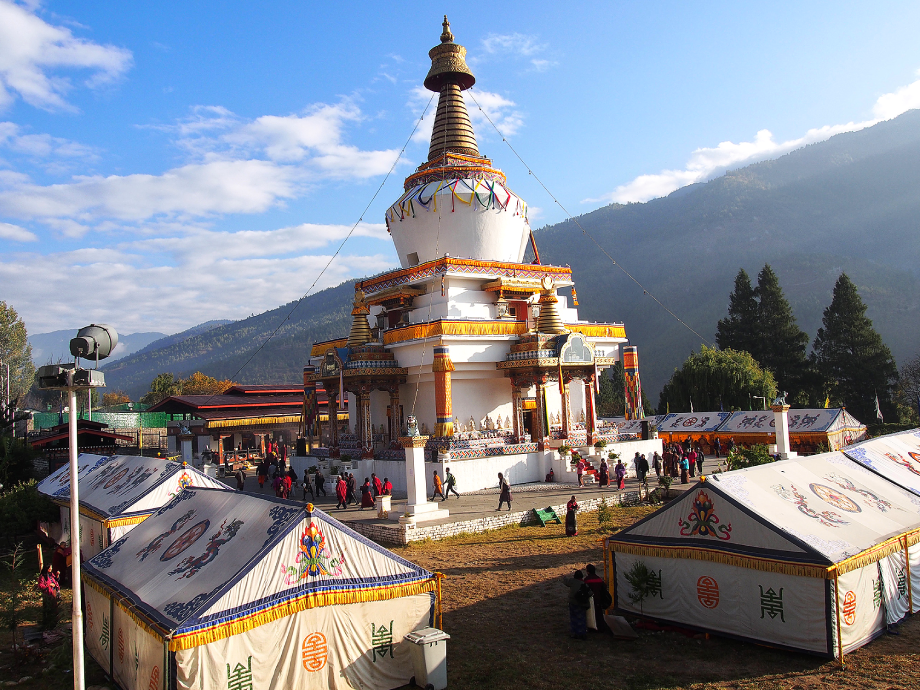
- Memorial Chorten in Thimphu
At these spots they can see prayer ceremonies, traditional art, prayer wheels and Buddhist symbols.
These religious sites also assist visitors to learn about the evolution of Buddhism in Bhutan and its impact on the local communities.
7. Environmental Conservation and Forest Protection
Bhutan has accorded high priority to conserving its natural environment. It has a constitution that mandates that the country preserve an area of forest of at least 60% of its total land area for all time.
It is also a carbon-negative country. This implies that Bhutan is a carbon sink and the amount of carbon dioxide being absorbed by forests is more than the amount being emitted from the country.
There are different ecosystems and wildlife species in several national parks and protected areas. They are Jigme Dorji National Park, Royal Manas National Park and Jigme Singye Wangchuck National Park.
The relationship between environmental conservation and tourism planning, community development and national policies.
It is hoped that visitors will not litter and will respect wildlife habitats and follow responsible travel. Conservation is an integral part of Bhutan’s international image.
8. Traditional Bhutanese Clothing
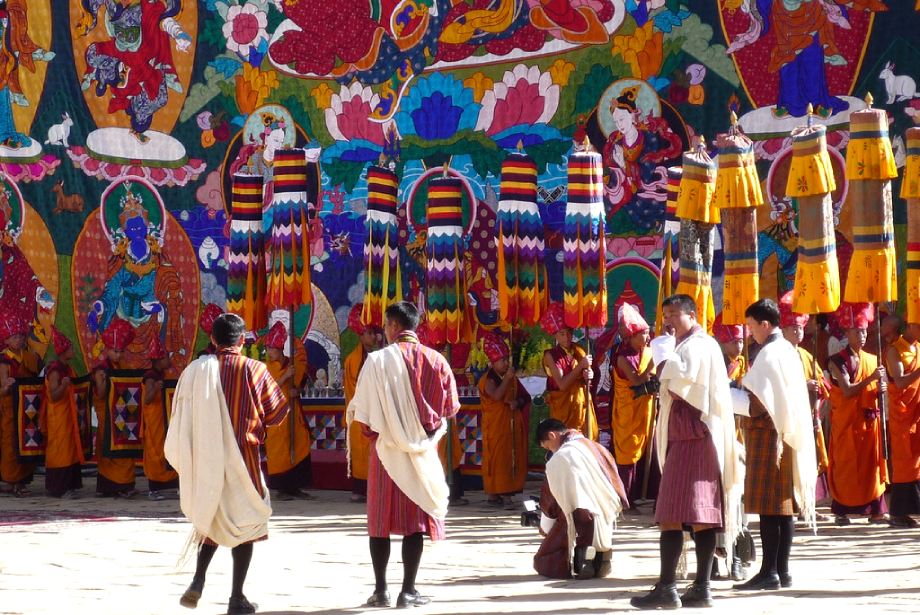
The traditional dresses are still significant to Bhutanese daily life. Men wear the national dress, Gho and women traditionally wear Kira.
The Gho is a long robe that is tied around the knees; the Kira is a long rectangle that is worn with a blouse and a jacket.
Traditional clothes can be worn at religious events, cultural celebrations and government offices.
The fabrics are often patterned and colored, with various designs and patterns that symbolize the regions and weaving techniques used.
It is also possible to see the traditional clothes being made in the weavers’ centers. The workshops offer an understanding of the skills that are required for producing textiles in Bhutan.
9. Bhutanese Food and Traditional Dishes
Chillies, cheese, rice and locally grown vegetables are popular ingredients in Bhutanese cuisine. Many traditional dishes have strong flavours and are prepared using simple ingredients.
Popular foods are:
- Chillies and cheese mixture, Ema Datshi
- Kewa Datshi, made with potatoes and cheese
- Cheesy Shabu Datshi
- Jasha Maru, a spicy chicken dish
- Red rice, a commonly served Bhutanese staple
- Momos, steamed or fried dumplings with different fillings
Many will eat chilli as a vegetable rather than just a seasoning. Consequently, some foods are very spicy in Bhutan.
Locally, food is a key component of service. Visitors can enjoy traditional food in family-owned farmhouses, hotels and restaurants.
10. Traditional Archery
Both archery and its connection with Bhutan’s history and culture are long-standing.
Competitions are held between teams, between villages and communities. Participants are asked to shoot arrows at small targets set at a good distance.
It is also a social event for these competitions. Team members cheer for good shots by singing traditional songs, dancing and exchanging friendly words.
Traditional wooden bows are also used in Bhutan and modern archery equipment is also used which is an integral part of the country’s sporting history.
During cultural sightseeing programmes, visitors might have the chance to watch the local competitions or to participate in archery under guidance.
11. Traditional Arts and Handicrafts
Handmade Arts and Crafts are an important tradition in Bhutan. These skills are transmitted from parent to child and continue to be a part of the country’s culture.
The arts and crafts are collectively called Zorig Chusum which means thirteen traditional arts and crafts.
They include:
- Wood carving
- Painting and thangka painting
- Sculpture
- Traditional weaving
- Paper making
- Embroidery
- Metalwork
- Pottery
One can learn these skills at the National Institute of Zorig Chusum (NIZC) in Thimphu. Handicraft shops and weaving centres are also available in the local market for handmade products.
12. Phobjikha Valley and Black-Necked Cranes
Phobjikha Valley is a glacial valley in the central part of Bhutan where open grassland, traditional villages and wildlife can be found.
It is particularly important as a winter habitat for black-necked cranes. These endangered birds migrate from the Tibetan Plateau to Bhutan during the colder months, generally arriving around October or November and leaving in February or March.
In addition to this, the valley is also home to Gangtey Monastery that overlooks the surrounding landscape.
Visitors can take a stroll, birdwatch and explore the village. The Black-Necked Crane Festival is held every year to welcome them and garner attention for conservation.
13. Traditional Hot Stone Baths
Traditional hot stone baths are a unique cultural and wellness experience in Bhutan.
The tub is made of wood and is filled with water for the bath. The river stones are heated in a separate compartment that is attached to the bath water. When the water is heated by the stones, minerals are dissolved into the water.
A few families include local medicinal herbs as well for extra fragrance and for a typical wellness experience.
This activity can be enjoyed at certain farmhouses, rural lodging and wellness centres.
It offers a tranquil respite from sightseeing or trekking and an enlightening experience of Bhutanese life to visitors.

14. High-Altitude Trekking and Remote Mountain Trails
Bhutan is also a destination for those who want to go for mountain trekking. It winds through alpine forests, remote villages, high mountain passes, yak pastures and glacial valleys.
While most teahouse trekking trails in Nepal are popular, there are many more Bhutanese trails that will also require organised camping support. The journey is guided by, cooked by and supported by camp staff and pack animals.
Some popular trekking routes include:
| Trekking Route | Approximate Duration | Difficulty |
| Druk Path Trek | 5–7 days | Moderate |
| Jomolhari Trek | 8–10 days | Moderate to challenging |
| Dagala Thousand Lakes Trek | 5–6 days | Moderate |
| Bumthang Owl Trek | 3 days | Easy to moderate |
| Snowman Trek | 25–28 days | Very challenging |
| Laya Gasa Trek | 13–15 days | Challenging |
The Druk Path Trek is a trek that takes you through lakes, mountains and the cities of Paro and Thimphu. It’s a good choice for those seeking a shorter hike.
The Jomolhari Trek leads towards the base of Mount Jomolhari, through alpine scenery and the settlement of the yak herders.
The Snowman Trek is a much longer trek which crosses multiple high passes. It’s demanding in terms of physical fitness, experience in trekking and planning.
15. A Different Approach to Tourism
Bhutan has established a tourism model which has put emphasis on environmental protection, cultural conservation and benefit to local communities.
The country is pursuing the tourism strategy of high value and low volume. Bhutan isn’t just about the number of visitors it attracts but also the responsible ones that come in and help achieve its long-term development goals.
Indian visitors have to undergo a separate visa application process and the majority of international visitors must apply for a visa prior to travel.
Another key element of the tourism system is the Sustainable Development Fee (SDF). The current international tariff is USD 100 per person per night. Concessions are available to eligible children and there is a separate visitor fee for Indians.
The current incentive rates for international visitors are scheduled to remain in place until 31 August 2027. Before holidays are booked, please check the applicable fees and entry requirements.
This can be an explanation as to why traveling to Bhutan might not feel the same as traveling to many other countries.
Bhutan Tours and Treks to Consider in 2027
Those who love culture, nature and outdoor activities have various travel choices in Bhutan. The best route to take depends on the time available, fitness and the desired experience.
In 2027, visitors have the option to either appreciate the culture or trek to different regions of the kingdom.
Bhutan Cultural Tour
A Bhutan Cultural Tour is right for those who would like to see the historic sites and traditional lifestyle of the country without going on long walks.
Paro, Thimphu and Punakha can be included in a 5-7-day tour package. The famous places are Tiger’s Nest Monastery, Punakha Dzong, Tashichho Dzong and traditional markets.
The travelers can also explore the local villages, enjoy Bhutanese cuisine and immerse themselves in the cultural traditions of Buddhism.
This tour is ideal for those who are travelling to Bhutan for a relatively short break and would like to gain an understanding of Bhutanese culture as a family, couple or first-time visitor.
Bhutan Luxury Tour
Bhutan Luxury Tour is all about a comfortable oasis, private travel and personal sightseeing.
Visitors can choose to stay in good hotels and resorts, experience traditional treatments and visit major cultural landmarks, depending on the program.
This is an ideal choice for couples, families and visitors who want a relaxing holiday with a degree of extra luxury.
Bhutan Trekking Tour
Those who prefer to venture into the mountain terrain of Bhutan on foot may consider a Bhutan Trekking Tour.
The Druk Path Trek is a shorter hike and is best for those with some hiking experience and moderate fitness. For more difficult routes such as Jomolhari and Laya Gasa, more preparation is required.
The Snowman Trek is designed for those trekking enthusiasts who are able to handle a lengthy excursion, remote camps and harsh mountain weather.
Bhutan Tour with Trekking
Those traveling with a time frame of about 9-12 days may wish to include cultural sightseeing with a shorter trekking itinerary.
For instance, one can do a tour where one visits Paro and Thimphu, followed by a Druk Path Trek. This enables tourists to enjoy Bhutanese architecture, Buddhist culture and the Himalayas during a single holiday.
It is essential to check the trekking permits, camping facility details and the availability of the guides, as well as the weather forecast, for planning Bhutan Tours and Treks 2027.
Best Time to Visit Bhutan in 2027
The ideal period to visit Bhutan is determined by the visitors’ interests. The season is generally good for cultural viewing, mountain views and trekking in the spring and autumn.
| Season | Months | What to Expect |
| Spring | March to May | Mild weather, blooming flowers and suitable trekking conditions |
| Summer | June to August | Monsoon rainfall, green valleys and occasional travel disruptions |
| Autumn | September to November | Clearer mountain views, festivals and favourable trekking conditions |
| Winter | December to February | Cold temperatures, quieter travel and good opportunities for lower-altitude sightseeing |
Spring and autumn are generally the preferred seasons for longer treks such as Jomolhari and Druk Path. But the conditions on each trail vary by season, so please make sure to get the most up-to-date weather and trail updates before heading out.

Frequently Asked Questions About Bhutan
What is Bhutan most famous for?
Bhutan is best known for its Gross National Happiness, the Tibetan temple of the Tiger’s Nest, Buddhist culture, colourful festivals and its green initiatives.
Is Bhutan expensive to visit?
The average cost in Bhutan is quite high when compared to other Asian nations since the international traveler has to pay the Sustainable Development Fee, accommodation, transport, food and other travel expenses. The price will depend upon the length and type of trip.
What is the number of days that will suffice to explore Bhutan?
The time required for visiting the major attractions of Paro, Thimphu and Punakha is around 5-7 days. In case you want to go trekking or visit central Bhutan, then you need to book 9 to 14 days or even more.
Can beginners go trekking in Bhutan?
Yes. Other treks that are not difficult in Bhutan include the Bumthang Owl Trek and moderate treks like the Druk Path Trek. The beginners routes ought to be chosen according to the past experience in hiking and fitness level.

Will I require a visa to visit Bhutan in 2027?
Most foreign tourists are required to have visas in order to access the country. Overall, Indian nationals need an entry permit. Before departing, please check visas and permits as they may change.
In Bhutan, there is a close linkage between traditional culture, Buddhist belief, mountain environment and conservation. Its monasteries, dzongs, festivals, traditional food and local customs provide visitors with an opportunity to understand a different way of life.
There are shorter cultural tours and longer Himalayan trekking tours for those who are planning a holiday in 2027 in the kingdom. People can enjoy the country either by hiking to Tiger’s Nest Monastery or by watching the traditional festivals or trekking to Phobjikha Valley or Mount Jomolhari.
By knowing what Bhutan is known for, travellers can better plan their trips and enjoy the unique traditions and values of this Himalayan kingdom.


