


Duration
15 Days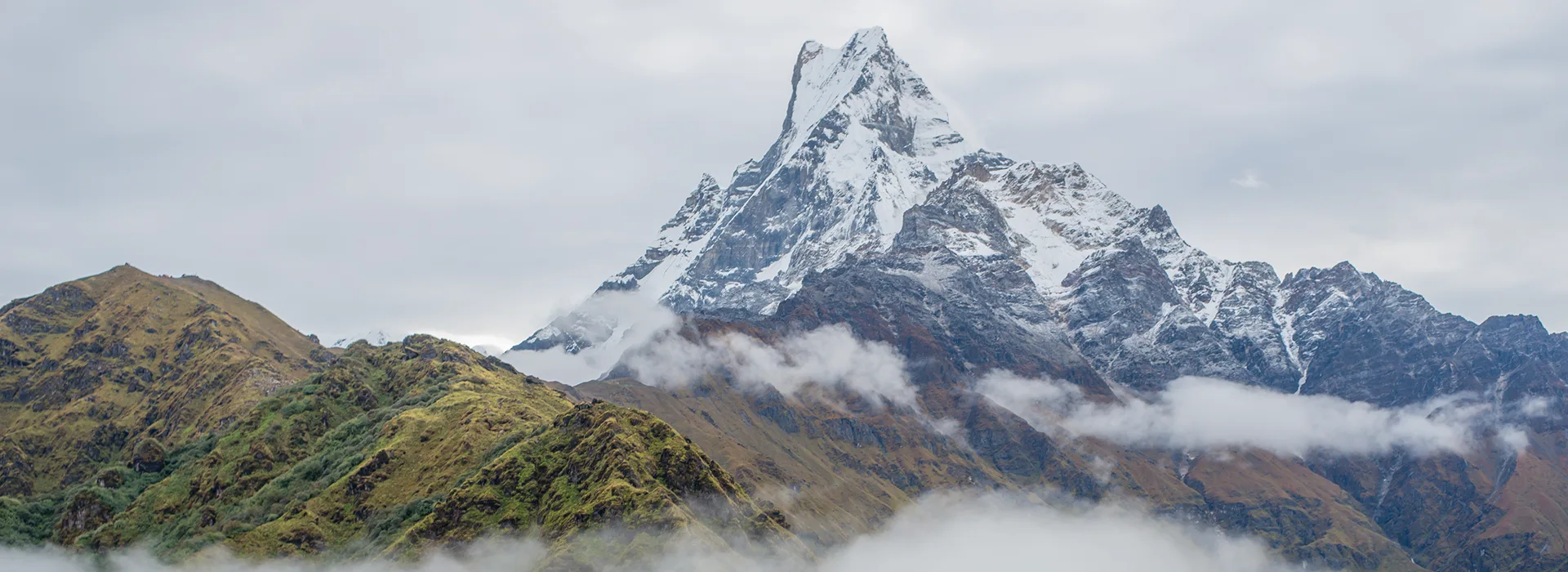

Mardi Himal with Khopra Ridge Trek


Trip Grade
Moderate
Group Size
2-20 People
Max Altitude
4,500m. / 14,764ft.
Best Season
Feb- May/ Sept- Nov
Activity
Trekking, Sightseeing
Meals
Breakfast, Lunch, and Dinner
Accommodation
Hotel, Lodge, Teahouse
Trip Customization
On request (click here)


Highlights of Mardi Himal with Khopra Ridge Trek
- Traverse two trekking trails in the Annapurna area
- Reach Mardi Himal Base Camp at 4,500 m (14,764 ft)
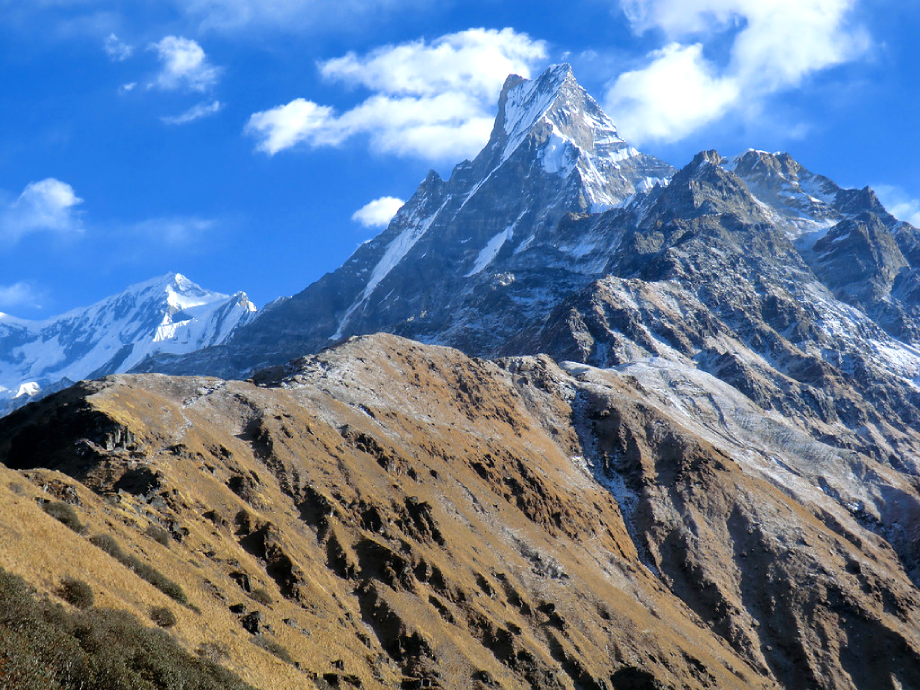
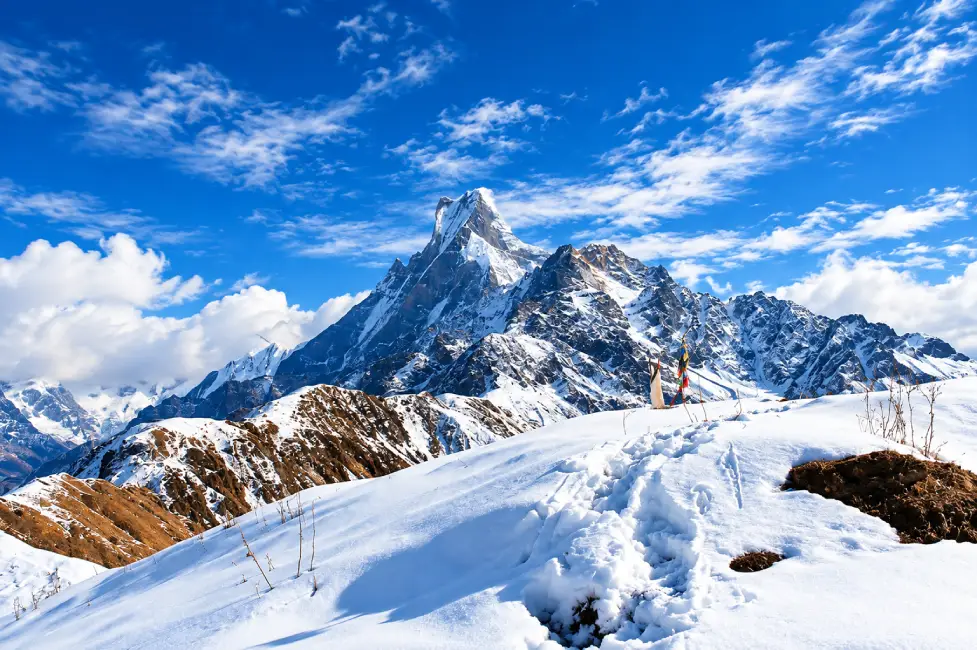
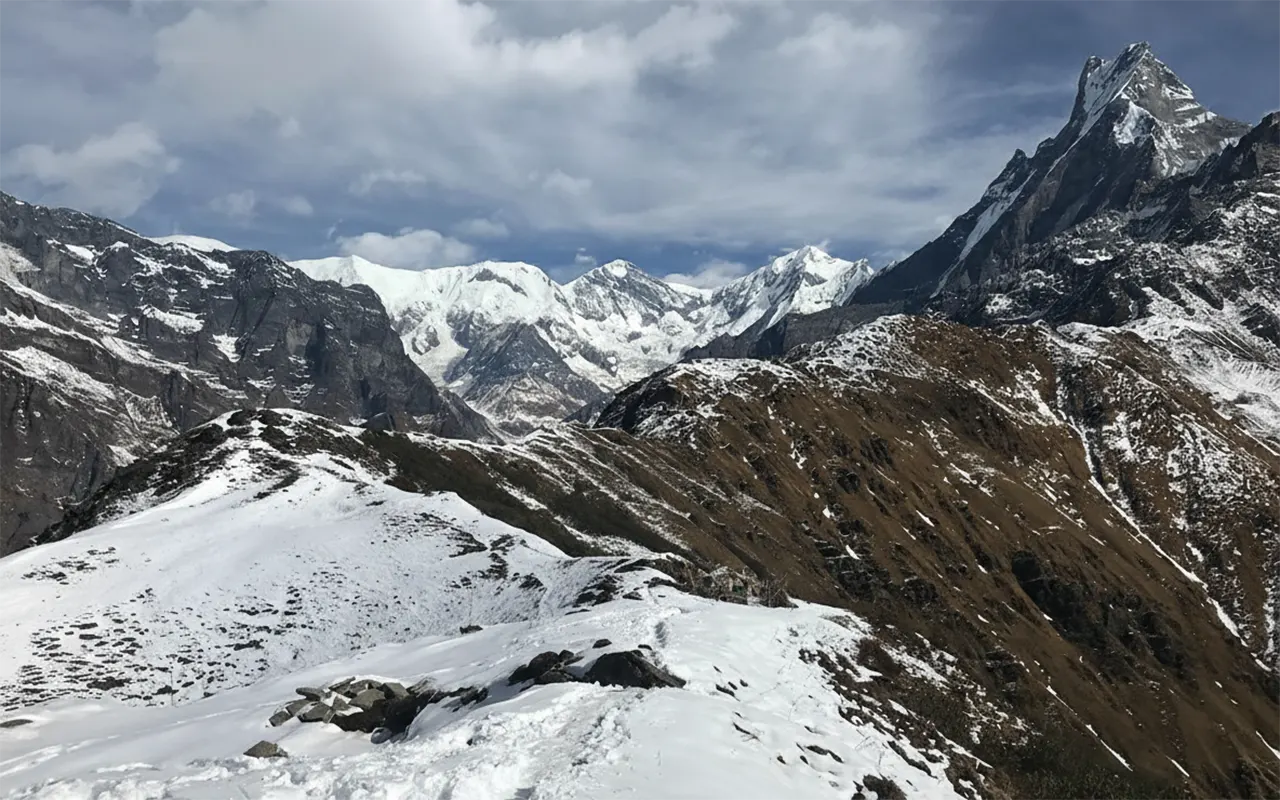
- View Machhapuchhre and Annapurna South up close
- Take a stroll through rhododendron and oak forests
- Visit Khopra Danda at 3,660 m (12,008 ft)
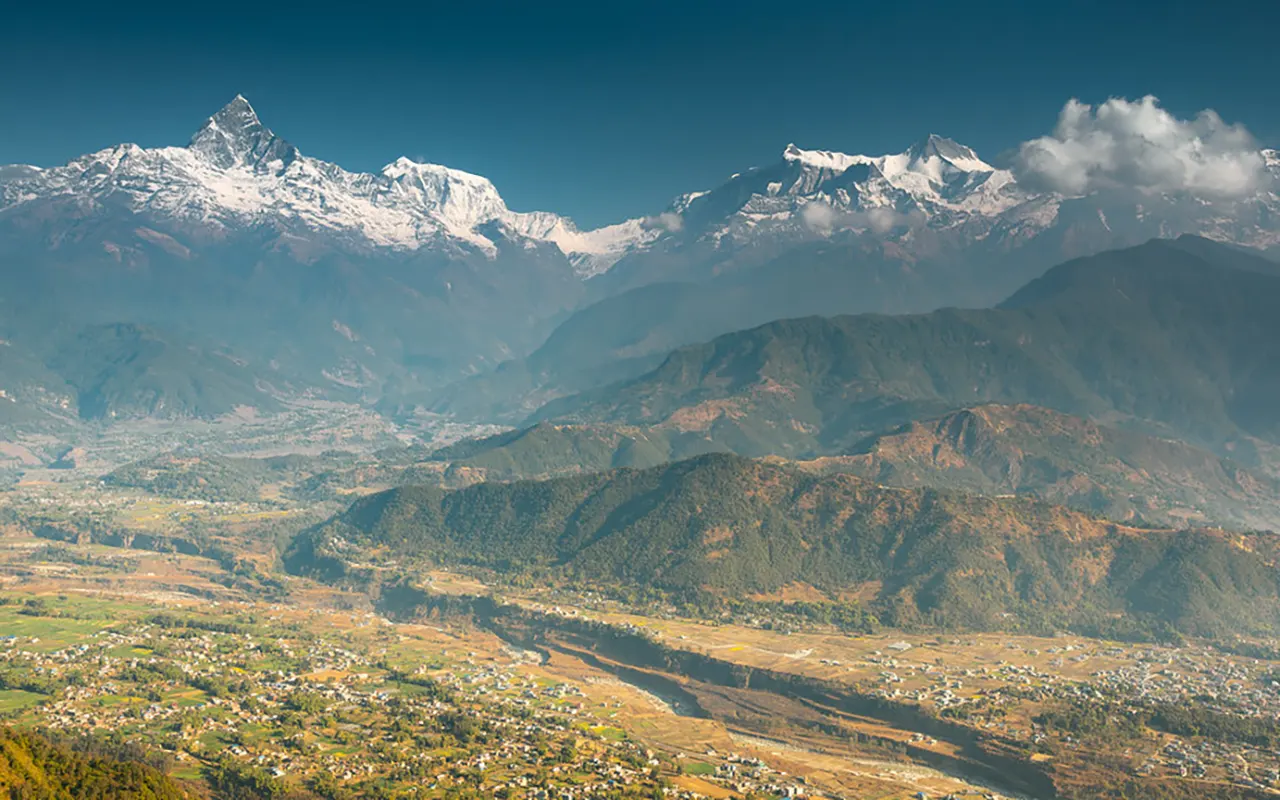
- Enjoy the views of the Annapurna and Dhaulagiri ranges
- Visit traditional villages such as Landruk and Ghandruk
- Walk through the tranquil villages of Bayeli Kharka & Swanta
- Watch the sunrise from Poon Hill at 3,210 m (10,531 ft)
- Enjoy the mountain trails, forests, villages and high ridges
Trip Introduction
The Mardi Himal with Khopra Ridge Trek is a 15-day adventure in Nepal’s Annapurna region that combines two scenic trekking routes into one journey. This trek leads you through the tranquil mountain villages, rhododendron forests, open ridges and high-altitude overlooks. It’s a good option for trekkers who wish to experience the other areas of the Annapurna region but don’t want to do the same route.
The ride starts in Kathmandu to Pokhara and from there to Kande. From here, the walking trail crosses Pitam Deurali, Forest Camp and High Camp before arriving at the base camp of Mardi Himal (4500 m /14764 ft). A walk along the mountain ridge overlooking Machhapuchhre, at the sight of Annapurna South and the surrounding peaks. After visiting the base camp, the trail descends to Low Camp before continuing towards Landruk and Tadapani.
After a more relaxed Khopra Ridge Trek, the second leg of the Mardi Himal trek heads towards Bayeli Kharka and Khopra Danda (3660 m /12008 ft). From Khopra Danda, you can enjoy open views of the mountain ranges of Annapurna and Dhaulagiri. Here, you will head through the village of Swanta and then onwards to Ghorepani. A trek to Poon Hill (3210 m /10,531 ft) is the early morning highlight of the final trek, where you can enjoy a spectacular view of the Himalayan peaks at sunrise. From Ghorepani, you trek down to Birethanti and then drive back to Pokhara.
This 15 Day Mardi Himal Trek includes a variety of landscapes and walking conditions. It will be an experience of forest trails, Gurung villages, stone staircases, mountain ridges and high altitudes. The duration of a typical walk is 4 to 7 hours a day and the Mardi Himal Base Camp walk lasts around 9 hours per day. Preparation and good fitness play a key role, particularly on the ascents and descents.
As a general rule, the spring and autumn seasons are preferred as they offer more favourable trekking conditions and mountain visibility. Throughout the journey, Himalayan Adventure Treks will arrange the necessary permits, accommodation, transportation and trekking support to make your trip organised and comfortable.
If you are looking for a trekking holiday that combines Mardi Himal, Khopra Ridge and Poon Hill in one itinerary, this journey is worth considering. Get in touch today to arrange your Mardi Himal with Khopra Ridge Trek, or to discuss Travel dates with them.
Outline Itinerary of Mardi Himal with Khopra Ridge Trek
Day 01: Arrival at Kathmandu Airport
Day 02: Drive from Kathmandu to Pokhara
Day 03: Drive from Pokhara to Kande and Trek to Pitam Deurali (2,100 m / 6,890 ft)
Day 04: Trek from Pitam Deurali to Forest Camp (2,600 m / 8,530 ft)
Day 05: Trek from Forest Camp to High Camp (3,600 m / 11,811 ft)
Day 06: Trek to Mardi Himal Base Camp (4,500 m / 14,764 ft) and Descend to Low Camp (3,050 m / 10,007 ft)
Day 07: Trek from Low Camp to Landruk (1,565 m / 5,135 ft)
Day 08: Trek from Landruk to Tadapani (2,610 m / 8,563 ft)
Day 09: Trek from Tadapani to Bayeli Kharka (3,450 m / 11,319 ft)
Day 10: Trek from Bayeli Kharka to Khopra Danda (3,660 m / 12,008 ft)
Day 11: Trek from Khopra Danda to Swanta (2,214 m / 7,264 ft)
Day 12: Trek from Swanta to Ghorepani (2,880 m / 9,449 ft)
Day 13: Hike to Poon Hill (3,210 m / 10,531 ft), Trek to Birethanti (1,039 m / 3,409 ft) and Drive to Pokhara
Day 14: Drive from Pokhara to Kathmandu (1,350 m / 4,429 ft)
Day 15: Departure to Kathmandu Airport
Our guests sharing their experiences (Photo/Video Gallery)


Detail itinerary of Mardi Himal with Khopra Ridge Trek
01
Day 01: Arrival at Kathmandu Airport
You will be met on arrival at Tribhuvan International Airport (KTM) in Kathmandu and transferred to the hotel by our representative. You can reach the hotel from the airport by car within 20-30 minutes, depending on the current traffic situation and its location.
Once you’ve arrived at your hotel, you may find it restful to recuperate from your travel. If you arrive early, you can walk around the city, visit some of the shops in the local area, or just take in the surrounding streets.
Later on, our team will meet you for a briefing and a short talk about the Mardi Himal with Khopra Ridge trek. You will learn the route, inspect your trekking gear and get an explanation for the next days.

Activity: Airport arrival and hotel transfer

Max. Altitude: 1,350m/4,429ft. Kathmandu

Meal: Dinner

Accommodation: Hotel
02
Day 02: Drive from Kathmandu to Pokhara
From Kathmandu, we take off after breakfast, traveling along the Prithvi Highway towards Pokhara. The trip is around 200 km with the total duration of the trip generally takes about 6 to 8 hours depending on the road conditions, traffic and stops made.
The road winds through small towns, terraced farming fields and green hills along the banks of the Trishuli River for most of the way. Along the way, you will also see local markets and villages by the banks of the rivers which are located towards Pokhara.
Lunch and short breaks will be taken along the way and then the drive will be resumed. From Pokhara, you’ll be picked up and driven to your hotel in the vicinity of the Lakeside for the night. Overnight stay to rest, explore the lakeside area and get ready for the climb the next morning.
Activity: Scenic drive from Kathmandu to Pokhara
Max. Altitude: 820m/2,690ft. Pokhara
Meal: Breakfast
Accommodation: Hotel
03
Day 03: Drive from Pokhara to Kande and Trek to Pitam Deurali (2,100 m / 6,890 ft)
We will then drive from Pokhara to Kande which takes about 1 hour after breakfast. The starting point of our trek towards Mardi Himal is Kande. Once in the village, we start to walk up a series of stone steps, turn up some terraced fields and pass through some small settlements.
The trail gradually ascends to Australian Camp, from where you can catch glimpses of the Annapurna Range and surrounding hills. We will head on through Pothana, the little village with its forest and mountain landscape. From then on, the trail heads towards Pitam Deurali.
The last section goes through the woods. Pitam Deurali is a quiet and tranquil night’s stop and a critical point on the Mardi Himal route. We will sleep in a local teahouse and plan the next day’s walk.
Activity: Drive and trekking
Max. Altitude: 2,100m/6,890ft. Pitam Deurali
Meal: Breakfast, Lunch and Dinner
Accommodation: Teahouse
04
Day 04: Trek from Pitam Deurali to Forest Camp (2,600 m / 8,530 ft)
After breakfast, we will leave Pitam Deurali and continue towards Forest Camp. The path slowly passes through a dense forest of rhododendron, oak and other trees of the Himalayas. Today the route is less populated than yesterday and is a less busy part of the Mardi Himal trail.
The route will be on very narrow forest trails, some uphill. The path then passes through a section of wood that is shaded, with a few trees draped in moss and some seasonal flowers providing color to the landscape. There are also opportunities for rest and to enjoy nature, as there are small clearings along the route.
The forest opens up in some places as we increase in altitude. We will arrive at Forest Camp (Kokar) after a few hours of walking. There are some small teahouses here, the only places we will spend the night. Getting a good rest will aid you in your upcoming ascent!
Activity: Forest trekking
Max. Altitude: 2,600m/8,530ft. Forest Camp
Meal: Breakfast, Lunch and Dinner
Accommodation: Teahouse
05
Day 05: Trek from Forest Camp to High Camp (3,600 m / 11,811 ft)
We will continue climbing through the forest towards High Camp. The trail starts from Forest Camp after breakfast and then goes through Rest Camp and Low Camp and onwards to Badal Danda. There are regular uphill gradients, some of which are sharp and rough.
As we climb higher, the thick forest slowly thins out and the terrain begins to open up. Trees will be shorter and open hillsides and mountain views will become more prominent. Regular breaks will be taken to ensure a comfortable pace of walking.
The track from Badal Danda is on an exposed ridge to reach High Camp. As we ascend to higher altitudes, we see more clearly the views of the mountains, especially Machhapuchhre, Annapurna South and surrounding mountains. We will stay in a teahouse, rest and enjoy the evening before the early morning trek to Mardi Himal Base Camp.
Activity: High-altitude ridge trekking
Max. Altitude: 3,600m/11,811ft. High Camp
Meal: Breakfast, Lunch and Dinner
Accommodation: Teahouse
06
Day 06: Trek to Mardi Himal Base Camp (4,500 m / 14,764 ft) and Descend to Low Camp (3,050 m / 10,007 ft)
We will start early in the morning for the hike from High Camp towards Mardi Himal Base Camp. The path passes a thin ridge of mountains that has steep areas and open spaces. As we ascend the trail, the view opens up to show Machhapuchhre, Annapurna South and other peaks in the Annapurna region.
The walk is uphill and through thinner air and therefore needs to be taken at a steady pace. We will arrive at Mardi Himal Base Camp, 4,500 m (14764 ft) and enjoy some time in the mountain surroundings; photographs will be taken.
Then, we will head back up the ridge and back down to Low Camp. The walk will be careful as it will be a long descent which can be challenging on the knees. We will arrive at Low Camp, where we will camp in a teahouse.
Activity: High-altitude hike and descent
Max. Altitude: 4,500m/14,764ft. Mardi Himal Base Camp
Meal: Breakfast, Lunch and Dinner
Accommodation: Teahouse
07
Day 07: Trek from Low Camp to Landruk (1,565 m / 5,135 ft)
After breakfast, we will depart from Low Camp to head down towards Landruk. This trail runs downhill through rhododendron and oak woods. Vegetation slowly changes and as we descend, the air also gets warmer compared to higher parts of the Mardi Himal route.
Stone steps and forest tracks are included, as well as some open areas. We’ll then wind our way through small villages and farmland to the lower hills. Downhill is a challenge, especially on rough and slippery surfaces.
We will arrive at Landruk, a traditional Gurung village after a few hours’ walk above the Modi Khola valley. Stone houses, terraced farmland and local teahouses are available in the village. The night will be spent here and some rest will be taken after the long trek from the Mardi Himal region.
Activity: Downhill trekking
Max. Altitude: 1,565m/5,135ft. Landruk
Meal: Breakfast, Lunch and Dinner
08
Day 08: Trek from Landruk to Tadapani (2,610 m / 8,563 ft)
After breakfast, we head off from Landruk towards Tadapani. The trail heads into traditional villages and terraced farming areas and then heads towards Ghandruk. There are steep uphill and downhill walks and views of the neighbouring hills and mountain valleys.
Ghandruk is a typical settlement of Gurung people, built of stone, with narrow paths and terraced fields. We will go through the village and proceed to Tadapani. Rhododendron and oak forests line the trail as it slowly ascends, with a few stone steps throughout.
The higher you ascend, the cooler it gets and the trees offer shade as you travel. The small mountain settlement of Tadapani is surrounded by woodland, offering a good view towards the Annapurna range from suitable open areas. We will arrive at our teahouse and stay overnight to prepare for the next stretch towards Khopra Ridge.
Activity: Village and forest trekking
Max. Altitude: 2,610m/8,563ft. Tadapani
Meal: Breakfast, Lunch and Dinner
Accommodation: Teahouse
09
Day 09: Trek from Tadapani to Bayeli Kharka (3,450 m / 11,319 ft)
We will leave Tadapani and begin trekking towards Bayeli Kharka. The trail gently ascends through rhododendron and oak woods to more open areas of the mountain trail. We will take a trek towards a small resting point along the way, named Dobato.
There are sections of the trail that are steeper and uphill and as we start to climb, the walk becomes more intense. Open areas along the way will offer views of Annapurna South, Machhapuchhare and other surrounding peaks depending on weather conditions.
Then we will come through the forest and the higher grazing lands and head up to Bayeli Kharka. This is a quiet mountain village in an open landscape dotted with hills and mountain scenery. We will arrive at the local hotel and stay there. Since we are approaching higher elevations, taking enough rest and drinking sufficient water will be important.
Activity: Uphill forest and mountain trekking
Max. Altitude: 3,450m/11,319ft. Bayeli Kharka
Meal: Breakfast, Lunch and Dinner
Accommodation: Hotel
10
Day 10: Trek from Bayeli Kharka to Khopra Danda (3,660 m / 12,008 ft)
Today we will be moving from Bayeli Kharka to Khopra Danda (Khopra Ridge). Following breakfast, we will travel on a mountain footpath through open grazing grounds and woodland. The path gradually heads upwards towards Chistibung and then along the ridge.
The scenery opens up further with increasing altitude and the surrounding mountain ranges (Annapurna and Dhaulagiri) can be seen clearly. There will be a few steep climbs, but this is a fairly short hike from a previous day of trekking.
We will reach Khopra Danda in about 2-3 hours of walking. The settlement is located on a ridge with broad mountain vistas of Annapurna South and Dhaulagiri on sunny days. We will stay in the local community’s lodge and take the rest of the day to rest and enjoy the mountain and its surroundings.
Activity: Ridge trekking
Max. Altitude: 3,660m/12,008ft. Khopra Danda
Meal: Breakfast, Lunch and Dinner
Accommodation: Lodge
11
Day 11: Trek from Khopra Danda to Swanta (2,214 m / 7,264 ft)
We will head out of Khopra Danda and head down to Swanta village. The trail starts on the mountainside but slowly descends to open hills and forests. We will cross over local grazing lands (Chistibung) and walk over other grazing lands in the process.
The walk is primarily downhill, but some short uphill sections may be encountered. The ground between the trees and the farmland becomes more and more vegetated as the ground slopes toward the cliff and finally reaches into the open terrain of the mountains.
The trail will follow the old path to the very traditional village of Swanta, a village of stone houses and terraced farmland. The village gives a glimpse into the life of the rural people in the Annapurna region. Once we arrive at Swanta, we will stay in a local teahouse for the night. The lower elevation is also great for downtime after a few days at higher elevations.
Activity: Downhill village trekking
Max. Altitude: 2,214m/7,264ft. Swanta
Meal: Breakfast, Lunch and Dinner
Accommodation: Teahouse
12
Day 12: Trek from Swanta to Ghorepani (2,880 m / 9,449 ft)
Breakfast will be served at Swanta first and then we will continue towards Ghorepani. The trail winds through indigenous communities, terraced farmland and forested hillsides. As we ascend, we will take a mix of stone steps and established paths through the village signposts.
The path also crosses agricultural fields and the local population cultivates crops that are used in the local seasons. During the season, one might observe the farmers in their fields and animals eating around the settlements.
The route soon merges with the popular trekking route to Annapurna and Poon Hill as we reach Ghorepani. The last section is a gentle climb up through rhododendron woods, leading to the village.
Ghorepani is a very busy trekking village, where you can find some teahouses, restaurants and shops. Once we have settled in at our lodging, we will be able to rest and get ready for the early morning of the next day on our hike to Poon Hill.
Activity: Village and forest trekking
Max. Altitude: 2,880m/9,449ft. Ghorepani
Meal: Breakfast, Lunch and Dinner
Accommodation: Lodge
13
Day 13: Hike to Poon Hill (3,210 m / 10,531 ft), Trek to Birethanti (1,039 m / 3,409 ft) and Drive to Pokhara
We will wake up early in the morning for the hike from Ghorepani to Poon Hill. The trail is mostly covered in stones and forests and it takes about 45 minutes to an hour to complete. The view from the vantage point at 3210m (10531 ft) is of the Annapurna and Dhaulagiri mountain ranges with clear weather at sunrise.
We are to return to Ghorepani after spending some time at Poon Hill for breakfast. From there, we will start the descent towards Birethanti, passing through the small towns of Ulleri and others. There are numerous stone steps and downhill sections on the route, so we will walk carefully.
From Birethanti, we will head on towards Pokhara by road. This drive is about two hours long, depending on traffic. We will have you picked up at your time of arrival and drop you off at your hotel.
Activity: Sunrise hike, downhill trekking and drive to Pokhara
Max. Altitude: 3,210m/10,531ft. Poon Hill
Meal: Breakfast and Lunch
Accommodation: Hotel
14
Day 14: Drive from Pokhara to Kathmandu (1,350 m / 4,429 ft)
On the morning after breakfast, we’ll depart Pokhara and head back to Kathmandu. It runs along the Prithvi Highway and winds through green hills, riverside villages, terrace farms and small towns.
We will stop at intervals to have refreshments and lunch and follow sections of the Trishuli River. The overall travel time can be different under various conditions such as road and traffic conditions during the busy hours or monsoon season.
In Kathmandu, we will arrive about 6-8 hours later. Our team will take you to your hotel after the completion of the Mardi Himal with Khopra Ridge Trek where you can rest after the trek. This evening is meant for personal use, shopping, or dinner at a local restaurant. This will be your last night in Nepal prior to leaving.
Activity: Scenic road journey from Pokhara to Kathmandu
Max. Altitude: 1,350m/4,429ft. Kathmandu
Meal: Breakfast
Accommodation: Hotel
15
Day 15: Departure to Kathmandu Airport
On this last day of your Mardi Himal with Khopra Ridge Trek, you’ll be able to experience it firsthand. Once breakfast is over, you may want to relax a bit at the hotel, depending on your flight time. Your transfer from Tribhuvan International Airport, Kathmandu, to your hotel/accommodation is arranged by our representative.
When traveling to and from the airport for overseas flights, we advise you to arrive at least three hours early to ensure the time required for check-in, baggage handling and immigration. Transfer from your hotel takes about 20-30 minutes, but may take longer during peak traffic hours.
Our staff will help you with your arrangements for departure and make sure you are at the airport on time. We hope you enjoyed your trek through the Mardi Himal route and Khopra Ridge and enjoyed your stay in Nepal.
Activity: Hotel checkout and airport transfer
Max. Altitude: 1,350m/4,429ft. Kathmandu
Meal: Breakfast

Note:
If you have your own private group and want to make your trip private, we can run the custom trip all the day as per your requirements and group size.
Includes and Excludes
What are included with package?
- Airport pickup and drop-off by private vehicle
- Hotel accommodation in Kathmandu and Pokhara with breakfast
- Three meals a day (breakfast, lunch and dinner) during the trek
- Comfortable teahouse accommodation throughout the trekking period
- Kathmandu to Pokhara and Pokhara to Kathmandu transportation
- Private Vehicle from Pokhara to Kande
- Transportation from Birethanti to Pokhara
- Experienced, English-speaking trekking guide
- Required number of porters to carry trekking luggage
- Annapurna Conservation Area Permit (ACAP)
- TIMS card and required trekking documentation
- Guide and porter salaries, meals, accommodation and insurance
- First aid kit carried by the trekking guide
- All relevant government taxes and service charges
What are not included with package?
- International airfare to and from Nepal
- Nepal entry visa fees
- Breakfast, lunch and dinner in Kathmandu and Pokhara
- Medical travel insurance and personal travel insurance
- Expenses for emergency helicopter evacuation
- Personal travel equipment and clothing
- Extra accommodation and meals caused by itinerary changes or delays
- Any extra personal items like extra drinks, snacks and chocolates
- Wi-Fi, hot showers and battery charging fees on the trail
- Alcoholic and bottled beverages
- Tips for trekking guides and porters
- Any services not mentioned in the Cost Includes section
Pick Your Suitable Date
US$
Book a Private Trip
Private & Group Discount Price
Travelers x US $ 2000
Total Cost:
US$
Trip Information
Trek Difficulty, Daily Walking Hours and Trail Conditions
The Mardi Himal with Khopra Ridge Trek is a moderate to challenging trekking route in the Annapurna region. It’s suitable for trekkers of reasonably good fitness and able to undertake several hours of walking on mountain trails. There are gentle inclines, stone steps, woodland tracks, narrow ridges and stretches of long downhill track.
The usual time spent on a day’s walk is about 4 to 7 hours, though on Day 6 it can take about 7 to 9 hours as it involves an early morning walk to Mardi Himal Base Camp (4500m /14764 ft) and the walk back to Low Camp.
The path grows more challenging above High Camp, where there is no cover and the weather may turn severe rapidly. Shoes, pace and preparation are important.
- Be prepared for a very steep uphill and downhill
- There are some trails with irregular stones and narrow paths
- Strong winds are possible above the ridge above High Camp
- Trekking poles may be useful on long descents
Best Time to Trek Mardi Himal and Khopra Ridge
Spring and autumn are generally the best seasons for the Mardi Himal with Khopra Ridge Trek. Typically, these will be more favorable for walking conditions, mountain views and daytime temperatures.
Spring (March to May) brings warmer weather and blooming rhododendron forests around Forest Camp, Tadapani and other lower sections. April is particularly suitable for enjoying the flowering forests. Autumn (September to November) usually provides clearer skies after the monsoon, making it a good time for mountain photography and sunrise views from Poon Hill and Khopra Danda.
The monsoon season (June to August) brings heavy rainfall, muddy paths, leeches and possible landslides. Winter, from December to February, can bring snow and icy conditions around High Camp and the higher ridges. Keep up to date with local weather and trail conditions prior to leaving.
Altitude Profile, Acclimatization and Altitude Sickness Prevention
This trekking route is an important one with regard to the elevation as it starts with Kathmandu (1350m /4429 ft) and ends at Mardi Himal Base Camp (4500m /14764 ft). Additionally, you will spend a night in higher settlements, such as High Camp (3,600 m /11,811 ft) and Khopra Danda (3,660 m /12,008 ft).
The Mardi Himal with Khopra Ridge Trek is a trek that has a great deal of elevation variation, especially in the ascent to Base Camp and the descent to the base camp of the Low Camp in Khopra Ridge. Everyone, no matter their age or fitness, can experience altitude sickness. Symptoms include headache, nausea, dizziness, tiredness and loss of appetite.
Take your guide’s instructions, keep it at a reasonable speed and drink plenty of water. Never continue ascending when symptoms are getting worse.
- Take slow steps and do not strain the body unnecessarily
- Stay properly hydrated all day long
- No alcohol at high altitudes
- If you are feeling unwell, tell your guide right away
- If symptoms get worse, go down and get medical help if required
Mardi Himal and Khopra Ridge Route: Trail Connections and Key Viewpoints
The Mardi Himal with Khopra Ridge Trek is a 15-day trek that is a combination of two treks in the Annapurna region: the Mardi Himal trek and the Khopra Ridge trek. The first part of the trek is along the Mardi Himal route from Kande to Pitam Deurali, Forest Camp and High Camp and then to Mardi Himal Base Camp. The trail then leads back to Low Camp and on to Landruk and Tadapani.
The trek from Tadapani leads to Bayeli Kharka and Khopra Danda, where you can have views of the Annapurna and Dhaulagiri ranges. It then passes through Swanta and then comes down to Ghorepani en route to Poon Hill. At the end of the trek, you will reach Birethanti, then you will drive to Pokhara.
Some of the significant points are Mardi Himal Base Camp, Poon Hill and Khopra Danda. A path through forests, mountain ridges, traditional villages and high lands.
Accommodation and Teahouse Facilities Along the Trail
Accommodation for the Mardi Himal with Khopra Ridge trek is provided primarily in local teahouses and mountain lodges. These offer basic facilities for trekkers such as beds, mattresses, blankets and shared dining areas. Rooms are more comfortable in some of the lower villages and facilities are simpler in higher settlements.
Stay in local lodges at Pitam Deurali, Forest Camp, High Camp, Low Camp, Landruk, Tadapani, Bayeli Kharka, Khopra Danda, Swanta and Ghorepani. The availability of rooms and facilities may differ from place to place and season to season.
Most tea-houses have communal toilets and hot showers may be available for a fee. Generally, electricity is available, but charging stations might be scarce at more remote lodges. Carrying a sleeping bag is useful, especially during colder months, as blankets may not always provide enough warmth.
Food, Drinking Water and Meal Availability During the Trek
Teahouses are open for food during the entire Mardi Himal Khopra Ridge Itinerary. Most of the lodges offer the regular meals of Nepal which include the typical dishes of Tibetan bread, eggs, potatoes, pasta, noodles, soups and fried rice. Dal bhat is popular because it offers a complete meal with rice, lentils, vegetables and a variety of other dishes.
Food choices may become more limited at higher settlements such as High Camp, Bayeli Kharka and Khopra Danda because supplies need to be transported from lower villages. Vegetarian meals are typically offered, but dietary needs should be communicated to the company beforehand.
Bottled, boiled, or filtered drinking water is available at local teahouses. Have a reusable water bottle and water purification tablets or a filter. Do not use untreated surface water from streams and natural sources.
Fitness Preparation and Physical Training for the 15 Day Trek
The 15-day Mardi Himal trek is a moderate-level hike as you will be climbing and descending across different altitudes for a number of consecutive days. There are several parts that are challenging for walking, including steep uphill sections and sections that descend for a long distance, including over stone steps and rough mountain trails.
Getting ready for your legs, building cardiovascular strength and getting used to longer walks will make the travel easier. Ideal training should start at least 6-8 weeks before departure, particularly if you do not engage in outdoor activities on a regular basis.
Practice exercises that help build endurance, balance and lower body strength. Walk uphill and downhill with a backpack to see how your body reacts to a full day of walking.
- Take a walk, 1-2 hours per day
- Hike on steep inclines and uneven terrain
- Try to incorporate step-ups, lunges and squats into your workout
- Get fit by cycling, swimming, or jogging
- Practice walking with a backpack loaded with necessary trekking supplies
Packing List for Changing Mountain Weather and High Altitudes
It is important to pack appropriately as the weather and temperatures vary considerably from Pokhara, the forest sections, to the higher mountain settlements. The weather conditions of the Mardi Himal with Khopra Ridge trek are warm at the lower altitude and quite cold during High Camp, Mardi Himal Base Camp and Khopra Danda.
Layered clothes are useful to adapt to varying temperatures during the day. If it starts to rain unexpectedly, a waterproof jacket and trousers will come in handy; however, if it gets cold, warm gloves, thermal clothing and a down jacket will help protect you.
For paths that are uneven and dips that are steep, you’ll need comfortable trekking boots that provide a strong grip. Personal medicine, sun protection and basic hygiene items would also be of great help.
- Waterproof and windproof jacket
- Warm down jacket and thermal layers
- Warm, relaxed pants and shirts
- Waterproof trekking boots and additional socks
- Warm gloves, hat and sun hat
- Sunscreen, sunglasses and lip balm
- Comfortable backpack and trekking poles
- Reusable water bottle and purification tablets
- Headlamp, power bank and personal medication
- Basic toiletries and small first aid kit
Trekking Permits, Conservation Fees and Guide Requirements
The Mardi Himal with Khopra Ridge Trek takes place inside the Annapurna Conservation Area, so trekkers must obtain the required entry and trekking registration documents before starting the journey. The main permits required for this route are the Annapurna Conservation Area Permit (ACAP) and the Trekkers’ Information Management System (TIMS) card.
Currently, this trek is also required to be led by a licensed trekking guide in accordance with the Nepal Tourism Board regulations for trekking in Nepal. Such systems are used to keep trekker records, conservation and to enhance safety along the trail.
All necessary permits and documentation will be arranged by Himalayan Adventure Treks. The team will require your passport information and other required information prior to your departure in order to complete the registration process.
No special permit, climbing permit, or restricted area permit is needed for the standard Mardi Himal and Khopra Ridge route.
Transportation, Road Conditions and Trek Starting and Ending Points
The transport to the Mardi Himal with Khopra Ridge trek involves road trips from Kathmandu to Pokhara, as well as from Pokhara to the trailheads of the trek. The journey starts from Kathmandu and then you have to drive for around 200km to get to Pokhara. The journey will usually take 6 to 8 hours, including traffic and road conditions.
Once in Pokhara, you will drive to Kande, taking about an hour. This trek starts from Kande and passes through Pitam Deurali, Forest Camp and High Camp. The last day of trekking is spent on Khopra Ridge, followed by Poon Hill and Birethanti.
There is a road transfer from Birethanti to Pokhara. On day 14, drive back to Kathmandu. Highways are mostly paved, but some roads are in the condition of trekking villages; they may be narrow, rough and may be influenced by seasonal weather.
Mobile Network, Internet and Charging Facilities on the Trail
Many areas along the trekking path are not covered by mobile phone signals or internet. Better connections are available in Kathmandu and Pokhara and as you venture to the more remote mountain settlements, there will be some areas where coverage is not reliable.
In some villages, Ncell and Nepal Telecom SIM cards might support mobile connectivity, but signals are not ensured throughout the trail. Isolated areas around High Camp and Khopra Danda might not be as well connected as others like Landruk, Tadapani and Ghorepani.
Wi-Fi is available in some of the teahouses, typically for a fee. The speed and availability of connections are dependent on the weather, on the electricity and on local network conditions.
Most of the lodges have charging services and some rural areas may lack electrical power. Bring a portable charger and charge devices as needed. If you are in an area with no reception on your mobile phone, you can also opt to keep it on airplane mode to save battery.
Local Gurung Culture, Village Life and Responsible Trekking
Along the Mardi Himal with Khopra Ridge Trek, you will go through several traditional villages that carry out their agricultural activities, traditions and life in the mountains. Villages like Landruk, Ghandruk and Tadapani are associated with Gurung communities and Swanta and Ghorepani are also places where one can see village life.
One can witness traditional residences, terraced agriculture, small local stores and teashops sustaining households residing in the Annapurna landscape. Use local businesses for food and services and locally run lodging to strengthen the local economy.
It is also essential to practice responsible trekking in this conservation area. Himalayan Adventure Treks strives to promote awareness of the local culture and minimize environmental impacts.
- Follow local customs and ask permission before taking photos of people
- Bring your own water bottle or jugs to drink water out of rather than disposable plastic bottles
- Clean up trash at designated waste bins
- Do not disturb wildlife and grazing animals
- Follow designated hiking trails
- Buy local teahouse produce and community goods
Photography, Sunrise Views and Mountain Viewpoints
The Mardi Himal Khopra Ridge Itinerary is important for photography; its route crosses forests, traditional villages, open mountain ridges and several high-altitude viewpoints. There will be chances to take photos of Machhapuchhre, Annapurna South and other peaks of the Himalayas from various parts of the trail.
Mardi Himal Base Camp offers a great view of the surrounding mountains, while Khopra Danda is a decent spot for taking pictures of the Annapurna and Dhaulagiri ranges. Another highlight is Poon Hill which is also a prime spot for photography, especially at sunrise to capture the stunning vistas of the mountains.
Take a camera or cell phone with extra batteries. Batteries can suffer from lowered performance at high altitudes in cold weather. Another type of photography it can be helpful for is sunrise or landscape photography, especially if you need a light tripod for that. Please check the weather conditions before making plans for photography stops.
Travel Insurance, Emergency Evacuation and Personal Expenses
It is highly advisable to take travel insurance for the Mardi Himal with Khopra Ridge Trek. A policy should include trekking up to at least 4,500 m (14,764 ft), emergency medical treatment and helicopter evacuation should it be necessary. Read the policy thoroughly, as many travel insurance policies do not cover high-altitude trekking.
Himalayan Adventure Treks provides all the necessary trekking services, but each tourist is responsible for his/her own insurance. If there is any serious medical situation, your guide will help you with the emergency communication and evacuation procedure.
It is also essential to have a few Nepalese currency notes for personal use, as ATM and card payment facilities are not always available on the mountain route.
- Personal snacks, chocolates and extra drinks
- Fees for hot showers, charging devices
- Mobile data and Wi-Fi costs
- Laundry and personal toiletries
- The following are some tips for guides and porters
- Additional housing or food as needed
- Medical costs that are not paid for by insurance
Check your insurance policy before leaving and have emergency contact numbers handy all along the journey.
Frequently Asked Questions
Can I add a side trip to Annapurna Base Camp during this trek?
Yes, but it needs some extra days of trekking and some route changes. Talk to your trekking company before booking to see if it’s an option.
Is it possible to store extra luggage in Pokhara during the trek?
It’s usually possible to leave your non-essential luggage at your hotel in Pokhara and only pack your trekking gear.
Are there safe drinking water refill stations along the trekking route?
Some teahouses offer boiled or filtered water. Drainage may be available but see to it that you always have purification tablets or portable water filter on hand.
Can I hire a horse or mule if I struggle to walk?
In some villages, services provided by horses or mules might be available, although this is not guaranteed along the way.
Are there any ATMs available after leaving Pokhara?
The trail does not have sufficient access to ATMs. Take enough Nepali money out of Pokhara before heading out on the trek.
Can I rent trekking equipment in Kathmandu or Pokhara?
Yes, even basic trekking gear like sleeping bags, down jackets and trekking poles are available for rent in both places.
Is it possible to arrange a private trek instead of joining a group?
Yes, Himalayan Adventure Treks can provide you with a private trek with a custom guide and porter service, as per your choice.
What happens if bad weather prevents us from reaching Mardi Himal Base Camp?
Your guide will be evaluating the conditions and may suggest a turnaround. It is always safer to go to the intended viewpoint than to be unsafe.
Can I use a drone for photography during this trek?
Permission from the Government of Nepal and perhaps further restrictions in conservation areas, may be necessary for the use of drones in Nepal. Verify before presenting one.
Is it possible to extend my stay in Pokhara after completing the trek?
Yes, you can book extra nights in Pokhara to see the city, have a boat ride, or whatever you wish, ahead of time.