notification

Great News, From June 2025 Mount Kailash is open for individuals holding Indian Passports

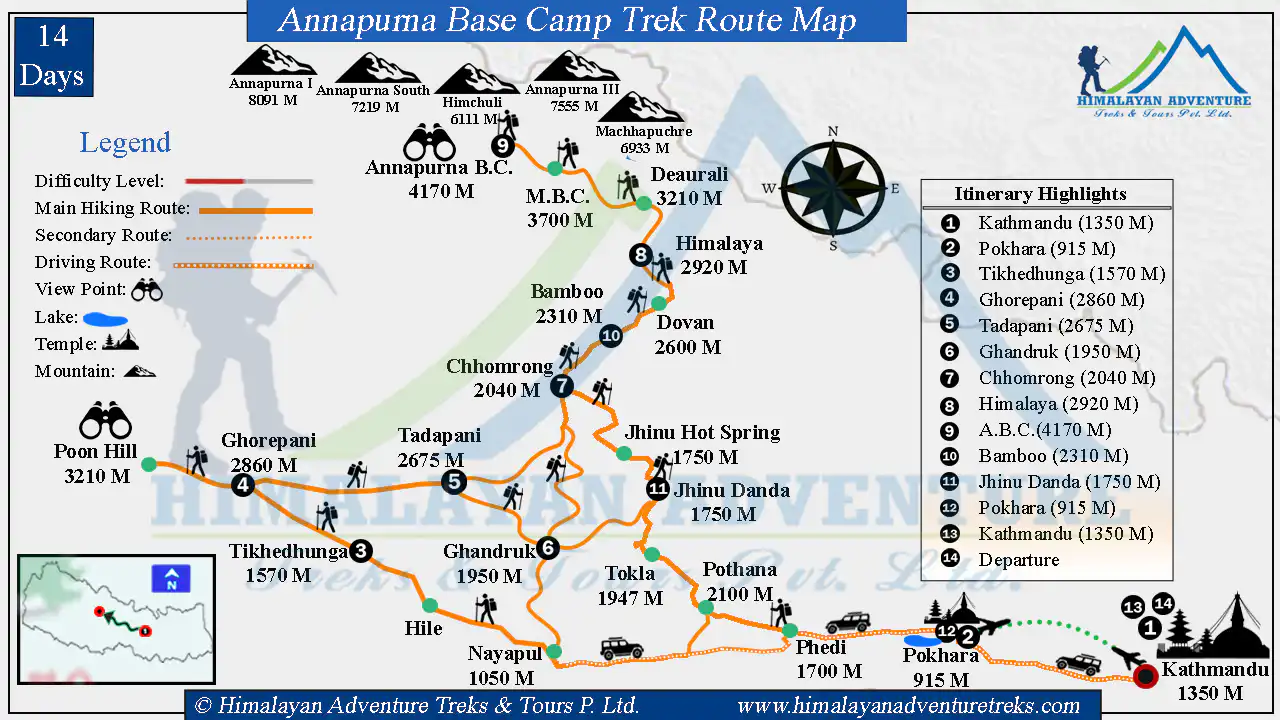
Annapurna Base Camp Trek Map

Lush green forest adorned with pine and rhododendron trees, vibrant villages, lovely people, and the majestic Himalayas add to the region’s beauty, making the Annapurna region into what it is- a home for adventurers all around the world.

Annapurna Base Camp Trek allows being face to face with the world’s tenth highest peak, Mt. Annapurna (8,091m), along with Machhapuchhre (6,993m), Hiunchuli (6,441m), and Dhaulagiri (8,167m).

The Annapurna Base Camp (ABC) Trek passes through the Annapurna Conservation Area, known for its natural wonders that are not found anywhere else on the planet.

In comparison to some of the other high-altitude treks in Nepal, the Annapurna Base Camp Trek is easily accessible, affordable, and the most thrilling.

The trek is fun for beginners and experienced alike.

Trekking takes 13 days, from Kathmandu to Annapurna Base Camp and Kathmandu.

The Annapurna Base Camp is located at the foot of the majestic Mount Annapurna (8,091m). The base camp is 4,130 meters, the highest altitude in the entire trek.

Annapurna Base Camp Trek is the perfect choice if you are up for discovering the diverse landscape, rich cultural lives, and quenching the thirst for mountain views

Although this is a moderate grade trek and you are always with the community, the trekking trail includes several possibilities, leading to destinations that are not the planned destinations.

So, make sure that the Annapurna Base Camp Trek Map is always with you.

Though handheld GPS may be more convenient, you can download and mark the paths you want to take. However, you should not rely entirely on them. This is because you can drop them, or you may not receive sufficient satellite coverage for them to be helpful.

Also, the Annapurna Base Camp Trek Route Map helps you plan your routes and find the right place to stay. A map is not just a picture of a place but a connection to memories of that place.
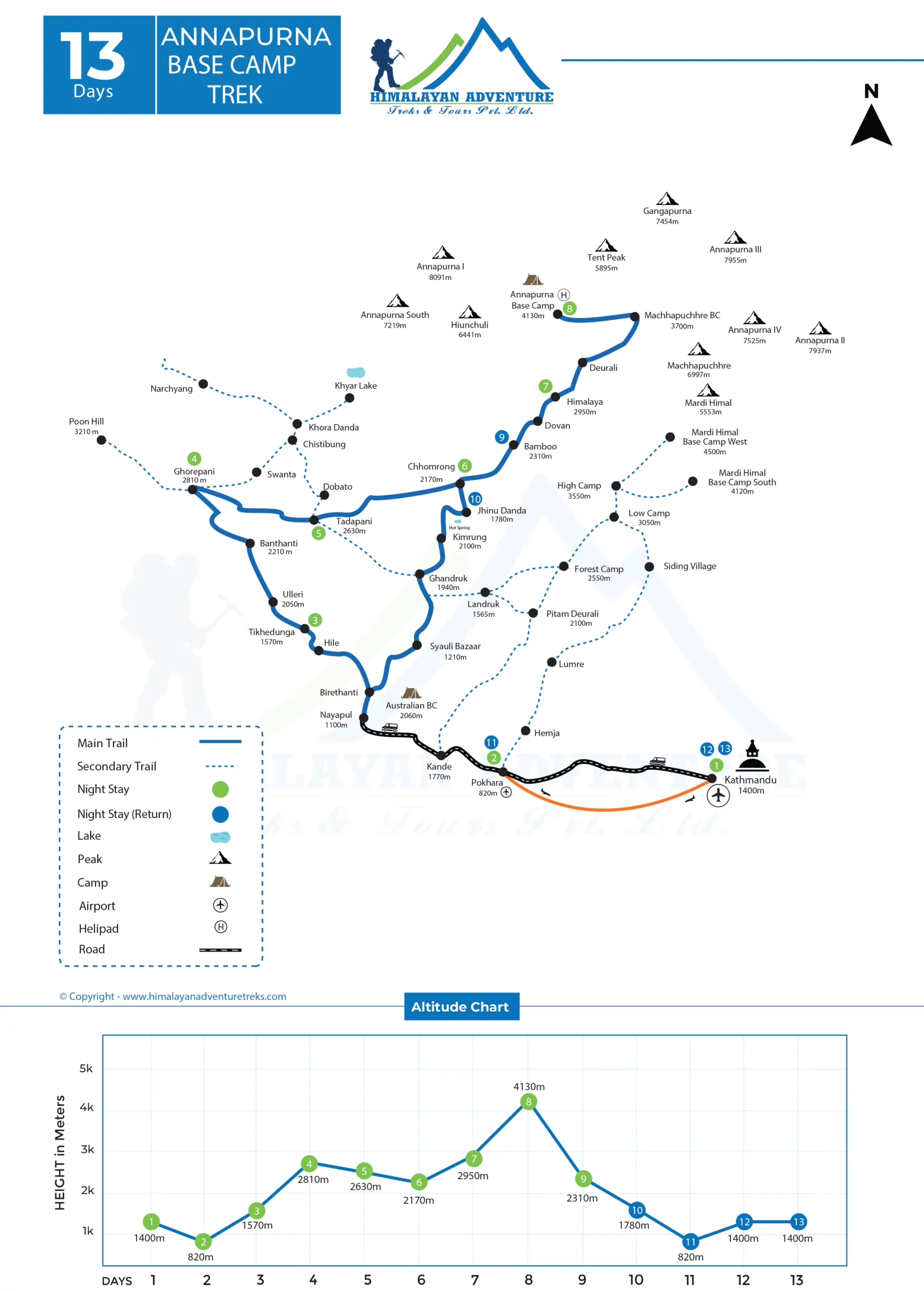
Annapurna Base Camp Trek Map and Altitude Chart

Summary

The trip officially begins once you set foot at the Tribhuvan International airport of Nepal.

You will check into a hotel and rest for the rest of the day. In the evening, you can visit the many eateries and sites of the capital or do some last-minute shopping.

Rise and shine, for the adventure awaits today!

Today, travel to the beautiful city of Pokhara. This can be done by flight (a 30-minute flight) or by bus for 6-7 hours. You will see terrace farms, scenic valleys, and roadside settlements while ringing in the local Nepali music if you choose the latter.

When you arrive at Pokhara, first check into your hotel room.

In the evening, you can boat in Phewa Lake, visit the many shops, try some local food, or take in the fascinating nightlife of Lakeside. But don’t stay up late too much as the trek begins to unfold.

On the third day, you will travel by road to Nayapul (1,050 meters). Then you finally start your trek as you walk to Tikhedhunga (1,570 meters), traveling along rivers and passing many scenic villages.

The next day, you cross many villages as you ascend stone stairs until you finally reach the village of Ghorepani (2,860 meters).

On the fifth day, you will trek to Poon Hill (3,210 meters) before sunrise to take in the glorious rays as the sun rises over the Annapurna and Dhaulagiri massifs.

Then return to Ghorepani and then to Tadapani (2,675 meters), where you will spend the night.

On the sixth day, you will travel to the famous village of Ghandruk (1,950 meters).

On the seventh day, you travel to the village of Chhomrong (2,040 meters), walking through valleys and crossing rivers.

On the eighth day, you head towards the Himalaya (2,920 meters), passing by the villages of Sinuwa (2,220 meters), Bamboo (2,310 meters), and Dobhan (2,600 meters).

On the ninth day, you finally reach Annapurna Base Camp (4170 meters) by trekking past Macchapuchhre Base Camp (3,700 meters). The Annapurna Base Camp Trek Route Map will surely come in handy today. You will spend the night in the Base Camp itself.

On the tenth day, you descend back to Bamboo.

The next day, you again descend to Jhinu Danda (1,750 meters) and visit the famous natural hot springs.

The twelfth day is the last day of the trek, where you will be descending back to Nayapul, passing through Landruk (1,565 meters) and Tolkha (1,710 meters) villages. From there, you travel by road to Pokhara.

On the thirteenth day, drive back to Kathmandu. The next day, the trip ends as you board a flight back home.

Key Highlights of the Annapurna Base Camp Trek

  •  Get great and up-close views of many peaks of the Annapurna and Dhaulagiri ranges, which include Annapurna I (8,091 meters), South (7,219 meters), II (7,937 meters), III (7,555 meters), Hiunchuli (6441 meters), Nilgiri (7,061 meters), Macchapuchhre (6,993 meters), Gangapurna (7,455 meters).
  • Covers two base camps, Annapurna and Machhapuchhre, at the cost of one.
  • Over 14 species of rhododendron flowers turn the entire forest into a painting with their contrasting colors.
  • Boat in the mesmerizing Phewa Lake and enjoy the reflection of the Himalayan giants in the lake.
  • Experience the lifestyle of the Gurung and Magar people, known throughout the world as ‘Gurkhas,’ fierce warriors of Nepal.
  • Witness the biodiversity of Annapurna Conservation Area and many rare and endangered species such as the red panda, snow leopard, musk deer, etc.
  • Watch the first rays of dawn turn the white snow of the Annapurna and Dhaulagiri ranges to molten gold from Poon Hill.

Annapurna Base Camp Trek Route Details

 Arrival in Kathmandu (1450m)

Touching down at Tribhuvan International, you will be welcomed by our office representatives, who will guide you directly to the hotel.

Freshening up from the day’s adventure, you will be introduced to other staff members, including your guides for the trip, who will brief you on the day-to-day itinerary.

With the activities for the day coming to a close, you are free to head down to the local places to enjoy a pleasant evening. You can also do some last-minute shopping for any supplies you may need.

You are advised to pack the Annapurna Base Camp Trek Route Map for safety reasons.

Drive from Kathmandu to Pokhara (915m), 6-7 hours

We begin our journey with a scenic adventure heading to the picturesque city of Pokhara.

We leave the capital early and follow the winding bends of the Prithivi Highway to vibrant settlements and stunning towns.

Accompanied by the raging Trishuli River mid-way, the hilly path leads us west to Pokhara. The city is blessed with breathtaking natural beauty and is frequently visited by trekkers entering and exiting the Annapurna region.

You can take a night walk along the shores of Phewa Lake or take a boat trip on the beautiful Phewa Lake. You can also visit many restaurants and clubs in the city.

Drive from Pokhara to Nayapul (1050m) and trek to Tikhedhunga (1570m), 3-4 hours

The trek officially begins today.

At first, you will drive to Nayapul (1050 meters), a travel distance of 45 km, taking about 2 hours. Upon reaching Nayapul, your journey on foot begins.

You cross a suspension bridge over the mighty Modi Khola and follow a gentle path through the bamboo forest until you reach (1039 meters). The settlement is at the confluence of the Burundi and Modi rivers.

The trail from Birethanti consists of well-maintained stone steps. These steps are not so steep and therefore provide a comfortable hiking experience.

After covering a distance of about 9 km, you will finally reach your destination, Tikhedhunga (1570 meters). On this day, you exceeded an altitude of 520 meters.

Trek from Tikhedhunga to Ghorepani (2860m), 6-7 hours

On the fourth day of your trip, we will ascend to Ghorepani (2,860 meters).

As you keep moving up the stone steps, you pass through the village of Ulleri (1,920 meters). The beautiful Annapurna and the Dhaulagiri views will captivate you during the trek.

The trail from here is gently uphill, and you will travel through pathways shrouded with greenery. The oak tree and rhododendron forest provide cool shade for a walk.

Ascending further, you pass through the villages of Banthanti (2,250 meters) and Nangethanti (2,460 meters) until, eventually, you reach Ghorepani (2,860 meters).

Ghorepani is famous for its rhododendrons. You can see the entire forest full of red rhododendron flowers, given the right season.

On this day, you hiked about 13 km and climbed 1290 meters.

Trek from Ghorepani to Tadapani (2675 meters) via Poon Hill (3210 meters), 6-7 hours

Today, you will get to see the first rays of sunshine hit the pristine snow of the Annapurna and Dhaulagiri mountains, so a unique experience awaits you. You leave before dawn and head to Poon Hill (3,210 meters).

This famous viewpoint has earned its fame due to the almost dream-like panorama it provides. You need to climb a steep uphill trail to get here.

Once here, you can see the sun’s early rays turn the Annapurna and Dhaulagiri ranges into mountains of molten gold.

Some of the peaks you can see from here include Annapurna I, II, III, South, Nilgiri, Hiunchuli, etc.

To reach Poon Hill from Ghorepani, you need to cover a distance of about 1.5 km and a vertical descent of 350 m.

Once you are satisfied with these fantastic views, you return to Ghorepani. Then, descend into the dense and mossy rhododendron forests. These forests are home to more than 14 species of rhododendron.

After walking for hours, you finally arrive at Tadapani (2,675 meters). To do this, you will have to travel a distance of about 10 km and descend an altitude of 185 meters.

Trek from Tadapani to Chhomrong (2040 meters), 5-6 hours

Today, you leave Tadapani and head towards Chhomrong (2,040 meters). At first, the trail is a slight uphill. After reaching the top of the hill, you descend steeply to the Kimrong Khola.

The trail passes through lush oak and rhododendron forests, and you can hear soft calls from birds and other animals as you walk.

Once there, you cross the suspension bridge over it and then start an uphill climb. Although the trail has a steep ascent and descent, the terrain is smooth, so you will not have much difficulty traveling.

This part of the trip is also more isolated, so you will be free to travel in peace. Walking for some more time, you will finally reach Chhomrong.

On this day, you covered about 10 km and climbed 90 meters.

Trek from Chhomrong to Himalaya (2920 meters), 5-6 hours

The sixth day of this trip starts by descending the Chhomrong Khola along a stone-paved path. You will cross the river through a suspension bridge and immediately start climbing.

As on the day before, the trail is surrounded by greenery.

Most of the trails are made up of stone steps. If you don’t know the route, refer to the Annapurna Base Camp Trek Route Map.

After walking for about 2-3 hours, you will reach the village of Sinuwa (2,220 meters). From here, the trail goes up a little and then descends to the village of Bamboo (2,310 meters).

Then, as you travel uphill, crossing the settlement of Dobhan (2,600 meters), you finally reach the Himalaya (2920 meters), located at the foot of the Hiunchuli peak.

On this day, you covered 10 km and ascended 880 meters.

Trek from the Himalaya to Annapurna Base Camp (ABC) (4170 meters), 6-7 hours

Today, you reach your ultimate destination, as at least you set foot in the Annapurna Base Camp (4170 meters).

Trekking begins early in the morning and descends to the village of Deurali. From Deurali, you travel uphill until you reach Macchapuchhre Base Camp (3,700 meters).

From here, you travel along the moraines of the Annapurna South. As most of the trail is a gradual incline towards the camp, you will not have much problem with altitude sickness.

After walking uphill for a while, you finally reach the base camp. From here, you can see the fascinating view of the Annapurna Massif along with Machhapuchhre (6,993 meters), Gandharva Chuli (6248 meters), Gangapurna (7,455 meters), and others.

Take plenty of shots to remember this victorious day. Tonight should be as memorable as spending time at the foot of the 10th-highest mountain in the world.

On this day, you covered 9.1 km and climbed 1,250 meters.

Trek from Annapurna Base Camp to Bamboo (2310 meters), 5-6 hours

When you wake up at Annapurna Base Camp, you can see the morning sun illuminating the Annapurna Mountains.

You say goodbye to the base camp and descend towards the Bamboo (2,310 meters).

The trail will follow the rough path along the moraine of the Annapurna. Since this is the Himalaya, the trail is by no means an easy descent, and there are also some climbs. Therefore, follow the Annapurna Base Camp Trek Route Map to track your route.

You first descend towards the Machhapuchhre Base Camp, then to Deurali, Himalaya, and Dobhan.

Finally, you reach Bamboo after walking 12.7 km and descending an altitude of 1,860 meters.

Trek from Bamboo to Jhinu Danda (Hot Spring) (1750 meters), 5-6 hours

Early in the morning, you head to Jhinu Danda (1750 meters) to take a bath in the hot springs.

However, to get there, you will have to walk about 11.7 km and descend 560 meters.

You start the trek by descending along trails, with most sections being stone staircases.

Descending past Sinuwa, you can see Chhomrong, the next settlement, right in front of you. However, to reach it, you need to descend to the Chhomrong Khola, cross the suspension bridge, and then ascend to the village.

From Chhomrong, you again descend until you reach Jhinu Danda.

Here, you check in at the lodge where you spend the night and then make your way to the natural hot springs about 50 meters down for a dip, leaving the heavier gear behind.

After a continuous walk for almost a week, relax and soothe your tired muscles with the bubbling water of the hot springs.

Today you cover a distance of 8.5 km and descend an altitude of 560 meters.

 Trek from Jhinu Danda to Pokhara via Nayapul, 4-5 hours

Today is the day you sadly leave behind the Annapurna range for your next adventure.

Descending mostly stone-paved staircases, you pass Landruk (1,565 meters) and Tolkha (1,710 meters) before finally reaching Nayapul.

Once you reach it, you will have traveled 4.3 km on foot and descended 700 m.

From Nayapul, you will catch a tourist bus to Pokhara. As you have to travel a distance of 45 km, it will probably take you about 2 hours.

Drive from Pokhara to Kathmandu, 6-7 hours

Today, you bid farewell to the Annapurna region as you drive from Pokhara to Kathmandu.

Traveling along the smooth paved roads, watching the countryside unfold outside your window, the myriad of rivers you travel along, and remembering your hopefully enjoyable trek.

Final Departure

The Return Journey is filled with memories of the last 13 days.

Until you come back again, it will serve as a warm memory. Arrival at the airport is required at least 3 hours before departure.

Annapurna Base Camp Trek Permits

The Annapurna region falls under the Annapurna Conservation Area Project (ACAP) and requires an ACAP entry permit. In addition, Annapurna Base Camp Trekking requires a Trekker’s Information Management System (TIMS) card.

Both are mandatory and can be easily obtained with a copy of your passport and passport-sized photographs. You also need to have travel insurance.

The TIMS card and ACAP permit are available from the Nepal Tourism Board (NTB), Bhrikutimandap, which is open from 10 am to 5 pm, seven days a week. TIMS Cards can also be obtained from the TIMS Counter at the NTB Regional Office in Pokhara.

The charges for the TIMS Card are as follows: Group trekker: NRs. 1,000 (equivalent to 10 USD); Free individual trekker (FIT): NRs. 2,000 (equivalent to 20 USD) per trekking route per person per entry. ACAP permit costs NRs. 3,000 (equivalent to 30 USD) per person per entry.

Best Season for Annapurna Base Camp Trek

The best seasons for trekking in this region are spring (March to May) and autumn (September to November).

During the spring, skies generally remain clear, and the views of the mountain peaks can be seen in stark contrast to the open valleys.

It is also one of the fascinating trekking months in Nepal as it experiences a huge surge of trekkers coming into the country to enjoy the trek with all of the good-weather perks.

There are meager chances of precipitation. The landscape remains vibrant and fresh.

Likewise, autumn offers moderate temperatures found in temperate landscapes. With warm sunny days and cool nights, autumn is an excellent time for trekking.

However, the Annapurna Base Camp trek could be done throughout the year.

Final words,

Surrounded by the majestic Annapurna Himalayan Range, the lush green valley of Annapurna has always been the go-to place for trekkers and adventurers alike, regardless of the kind of adventure they are seeking.

Himalayan Adventure Treks & Tours made the Annapurna Base Camp Trek Route Map possible with on-site research and information.

This map will be your travel companion, so keep it safe throughout your journey.
Kathmandu to Manthali Transportation

The Everest Base Camp Trek is one of those treks that will make your holiday dreams come true. This trek is famous, attracting thousands of tourists annually.

The key highlights of the trip are:

  • flight to Lukla, the most dangerous airport in the world.
  • Explore Sagarmatha National Park, a UNESCO World Heritage Site.
  • Experience the unique Sherpa culture.
  • Experience the world’s highest peak, Mount Everest (8848.86m).

The starting point for this trek is usually Lukla. The shortest route to reach Lukla is via Kathmandu by flight. However, flights from Kathmandu to Lukla may operate from Manthali (Ramechap) in Spring (March-May) and Autumn (September to November). Therefore, you may need to travel to Manthali (Ramechap) for the Everest Base Camp Trek.

There are several ways to travel from Kathmandu to Manthali (Ramechap)

  1. By Local Bus
  2. By Private Car/Jeep
  3. By Local Taxi

 Kathmandu to Manthali Transportation by Local Bus

You can take a local bus from Koteshwor or Kalanki to travel from Kathmandu to Manthali (Ramechap) by local bus. There is a regular bus service that runs daily.

It takes about 8-9 hours and costs NPR 900-1200 (US$ 8-10). The bus ride is picturesque along the winding roads and passes through many traditional villages.

The bus journey can be bumpy and winding, so it is advisable to be prepared and carry any necessary medications or motion sickness remedies.

Kathmandu to Manthali (Ramechap) Transportation by Local Taxi

Another option to travel from Kathmandu to Manthali (Ramechap) is by local taxi. Taxis are widely available in Kathmandu. It takes about 7-8 hours. It is usually more expensive than traveling by bus but cheaper than a private car/jeep.

You can find a taxi at various taxi stands at the airport or in the city. You can also book a taxi through a local travel agency or a ride-hailing app such as Pathao.

Kathmandu to Manthali (Ramechap) Transportation by Private Car/van/Jeep

Another way to travel from Kathmandu to Manthali (Ramechap) is by private car/van/jeep. This is the most expensive option but offers more flexibility and comfort for the journey, which takes about 7-8 hours.

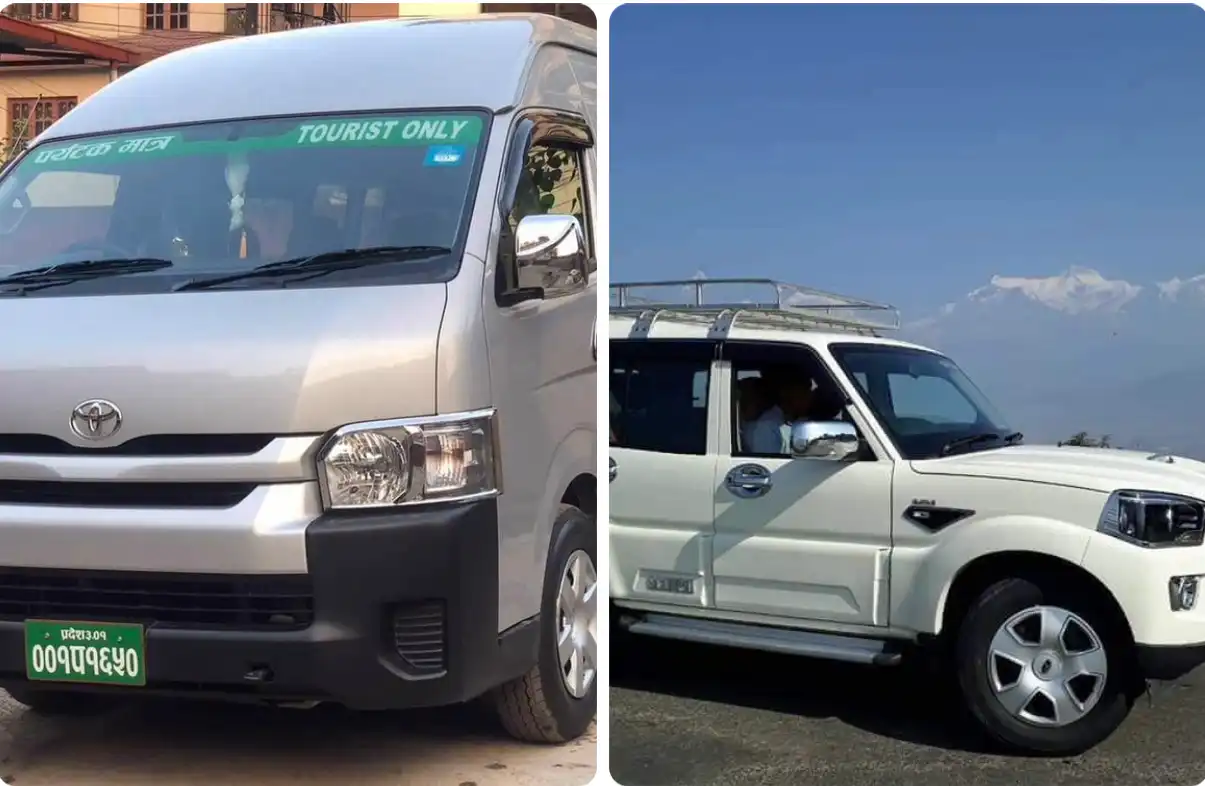
The cost of a private car/jeep depends on the type of vehicle and the number of travelers. You can easily find a car/jeep at a travel agency in Kathmandu. Every morning sharing jeep leave from Thamel tourist hub near the Saraswati Multiple collage around 1:30 am. For big group picked up from your hotel and individual need to go parking space. Sharing vehicle like Toyota Jumbo Hiace, Scorpio etc, cost Rs 2500/ person (US$ 20).

Road Conditions from Kathmandu to Manthali (Ramechap)

Road conditions from Kathmandu to Manthali (Ramechap) can vary from season to season. It’s important to note that the road conditions in the Himalayas are unpredictable, even at the best of times of the year. So check the local weather forecast and carry appropriate clothing and equipment.

  • Summer (March to May): Road conditions in the summer are generally good. The weather is dry, and the chances of natural disasters are low.
  • Monsoon (June to August): Road conditions can be difficult during the monsoon season due to the increased risk of high rainfall, landslides, and soil erosion. Roads can be slippery and muddy.
  • Autumn (September to November) and Winter (December to February): Autumn and winter are as good as summer, sometimes better than summer. The road conditions are stable.

Key attractions of Kathmandu to Manthali (Ramechap) Travel

As you travel from Kathmandu to Manthali (Ramechap), several key attractions are along the way. Some of the most notable are:

Dhulikhel

A historic town located about 30 km east of Kathmandu. It takes about 1-2 hours from Kathmandu to Dhulikhel. It is a popular tourist destination due to its beautiful scenery, traditional Newari culture, and hiking opportunities. The town sits on a hilltop and offers panoramic views of the world’s highest mountains.

Namobuddha

Namobuddha is a small hilltop located about 45 kilometers east of Kathmandu. It takes about 2-3 hours from Kathmandu to Namobuddha. Namobuddha is a popular pilgrimage site for both Buddhists and Hindus. The main attraction is the Namobuddha stupa, which is considered one of the most sacred Buddhist sites in the region.

Panauti

An ancient city located about 80 kilometers southeast of Kathmandu. It is known for its rich cultural heritage, traditional Newari architecture, and temples. Panauti is home to the Indreshwar Temple, considered one of the oldest temples in Nepal. Panauti is also famous for the Panauti Jatra Festival.

BP Highway

The BP Highway is also known as the Banepa Bardibas Highway. The drive along the BP highway offers beautiful views of the Nepalese countryside past small towns and villages.

Important Tips

Choosing the best way to travel from Kathmandu to Manthali (Ramechap) depends on many factors, such as budget, time, and preferences. Here are some tips for choosing the best mode of transportation for your trip.

Budget: If cost is important, traveling by local bus is the most economical option. Private cars and local taxis are generally more expensive. It is also important to note that local buses take several hours longer than private cars or taxis.

Time: If you are short on time, traveling by private car/jeep is the quickest option. 

Comfort: Private cars and local taxis are the most convenient and expensive options. Local buses are less comfortable but cheaper.

Road Conditions: If traveling during the monsoon season, private cars and local taxis may be a better option as they are reliable.

Luggage: If you have a lot of luggage, a private car and a local taxi will allow you to store more luggage.

Final Remarks

We recommend researching options and comparing prices, schedules, and reviews before deciding on transportation. Also, Manthali (Ramechap) is located in the foothills of the Himalayas and is known for its beautiful landscapes. So remember to have fun.

Dhulikhel and Banepa are great places to eat during your trip. Banepa is a historic town known for its Newari culture and cuisine. Here you can find traditional Nepali and Newari restaurants and dishes such as Bara, Yomari, Dal Bhat, and Dhindo. Dhulikhel offers a wide range of local and continental dishes.

Shiva Ratri Festival in Nepal

Shiva Ratri, also known as Maha Shivaratri, is one of the most significant Hindu festivals celebrated in Nepal and other parts of India. It is observed on the 13th night/14th day of the Hindu month of Phalguna, which falls in February. The festival is dedicated to Lord Shiva, one of the most important deities in Hinduism.

The word “Ratri” means “night” in Sanskrit, while “Shiva” refers to Lord Shiva. Thus, the festival’s name translates to “the night of Lord Shiva”. It is believed that on this night, Lord Shiva performed the “Tandava”, a cosmic dance that symbolizes the creation and destruction of the universe.

Shiva Ratri is a time for spiritual reflection, fasting, and devotion. People flock to temples dedicated to Lord Shiva to offer prayers, sing devotional songs, and perform rituals. The temples are decorated with flowers and lights, and the air is filled with the sound of bells and the chanting of mantras.

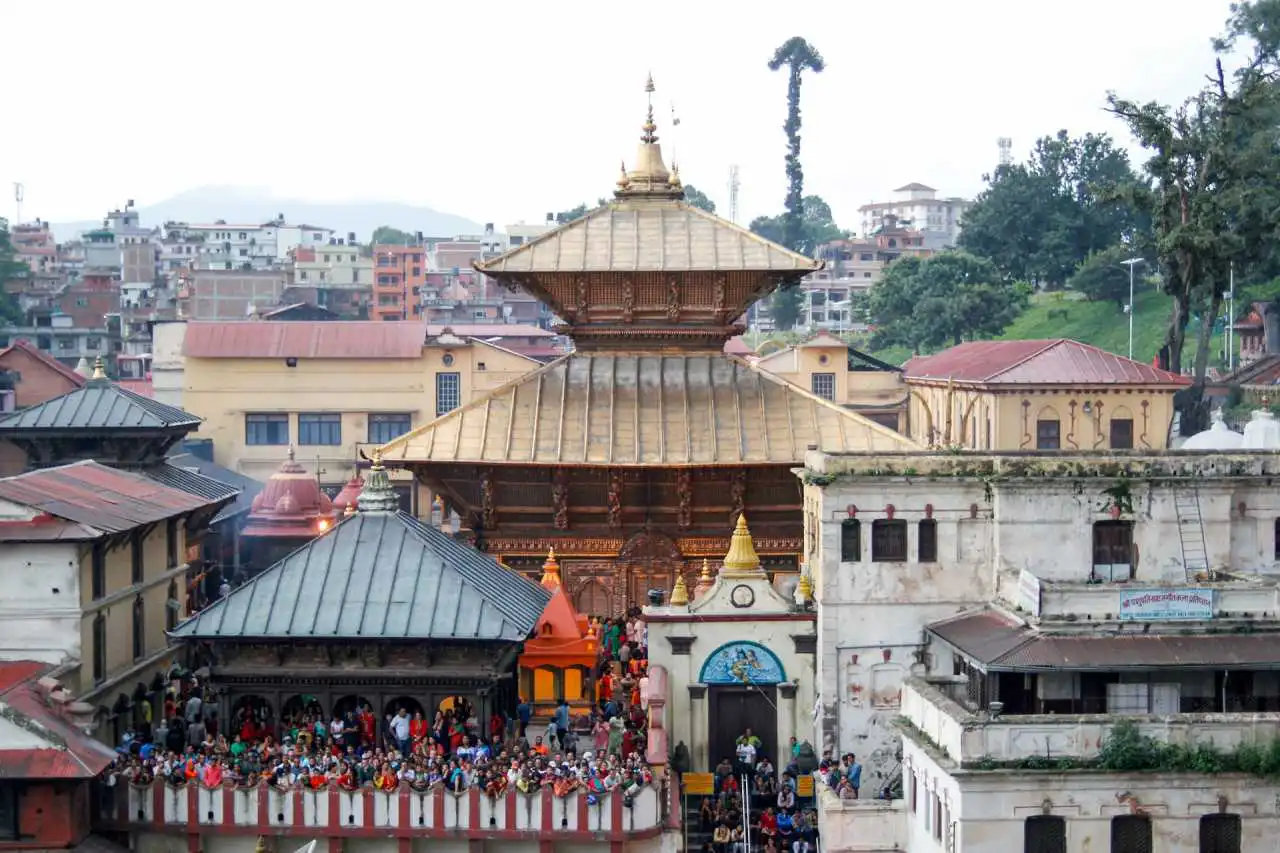
In Nepal, the festival is celebrated with great zeal and enthusiasm. People from all walks of life, regardless of caste, religion, or gender, come together to participate in the festivities. The biggest celebration takes place at the Pashupatinath Temple in Kathmandu, which is considered one of the holiest shrines dedicated to Lord Shiva. Thousands of devotees gather at the temple to offer prayers, perform rituals, and take a holy dip in the Bagmati River, which runs alongside the temple.

Another important tradition associated with Shiva Ratri is the all-night vigil, where devotees stay awake and offer prayers to Lord Shiva throughout the night. It is believed that doing so can help one attain blessings and absolve one of their sins.

In addition to the spiritual aspect, Shiva Ratri is also a time for cultural celebrations. In some parts of Nepal, traditional dances are performed to honor Lord Shiva. One such dance is the “Bhailini” dance, which is performed by women and symbolizes the creation of the universe through the cosmic dance of Lord Shiva.

In conclusion, Shiva Ratri is an important festival in Nepal that brings together people from all walks of life to celebrate the power and majesty of Lord Shiva. It is a time for spiritual reflection, devotion, and cultural celebration, and it continues to play a significant role in the lives of the Nepali people.

Pashupatinath Temple:

The Pashupatinath Temple is a Hindu temple located in Kathmandu, Nepal, and is dedicated to Lord Pashupatinath, an incarnation of Lord Shiva. The temple is considered one of the most sacred shrines for Hindu devotees and is one of the UNESCO World Heritage Sites in Nepal.

The temple complex, which covers an area of approximately 264 hectares, is located on the banks of the Bagmati River and features a number of shrines, temples, and monuments. The main temple is a pagoda-style structure with a golden roof, four silver doors, and intricate carvings covering its walls.

The Pashupatinath Temple is said to have been built in the 5th century, although the exact date is uncertain. Throughout its history, the temple has undergone several renovations and additions, with the current structure dating back to the late 17th century.

The temple is a major pilgrimage site for Hindus, particularly during the festival of Shivaratri. Thousands of devotees flock to the temple to offer prayers, perform rituals, and take a holy dip in the Bagmati River. The temple grounds also serve as a site for cremation ceremonies, and it is said that those who are cremated here attain liberation from the cycle of rebirth.

In addition to its religious significance, the Pashupatinath Temple is also known for its stunning architecture and intricate carvings. The temple’s pagoda-style roof, silver doors, and intricately carved walls are a testament to the skill and craftsmanship of the artists who created it.

The temple is surrounded by a number of smaller shrines and temples, as well as several Ghats (steps leading down to the river) for bathing and ritual purposes. The temple complex also features a number of museums and galleries, showcasing the rich cultural heritage of Nepal.

In conclusion, the Pashupatinath Temple is a testament to the rich cultural and spiritual heritage of Nepal. It is a major pilgrimage site for Hindus and attracts thousands of devotees each year, offering a glimpse into the rich history and traditions of the country. Whether you are a spiritual seeker or simply interested in the history and architecture of the temple, a visit to the Pashupatinath Temple is an unforgettable experience.

Holi Festival in Nepal

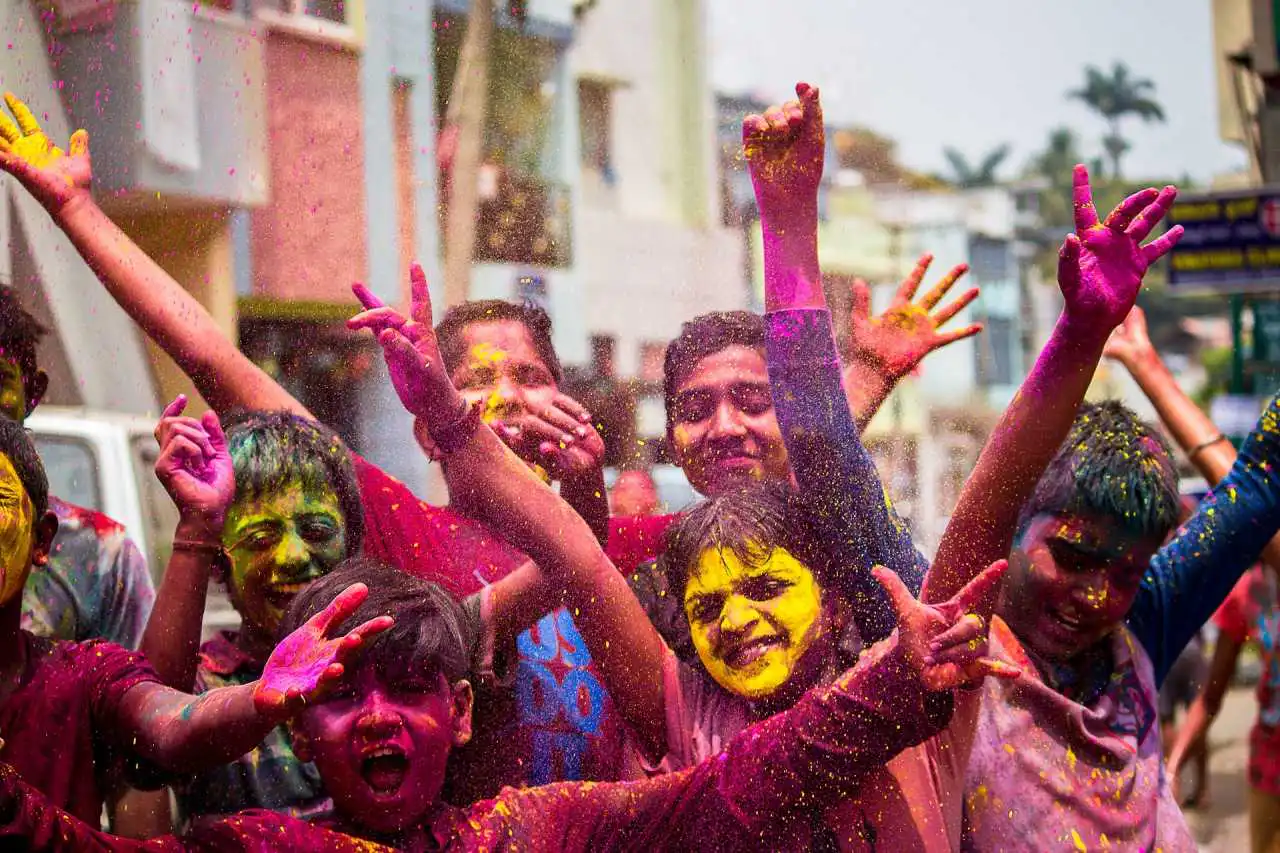
Holi, also known as the “Festival of Colors,” is one of the most popular and widely celebrated festivals in Nepal. This festival is celebrated with great fervor and enthusiasm by people of all ages, religions, and social backgrounds throughout the country. The festival of Holi is believed to have originated in India and has been celebrated for thousands of years. It is celebrated on the full moon day of the Hindu month of Phalguna, which usually falls in late February or early March. This blog will delve into the details of the Holi festival in Nepal, including its history, significance, and how it is celebrated.

History of Holi Festival in Nepal:

The history of the Holi festival in Nepal is deeply rooted in Hindu mythology. According to Hindu legend, the festival commemorates the victory of good over evil. The story goes that there was a demon king named Hiranyakashipu, who had obtained a boon from Lord Brahma that made him invincible. He became arrogant and demanded that everyone in his kingdom worship him as a god. However, his son Prahlad refused to worship him and instead chose to worship Lord Vishnu. The king became furious and ordered his sister, Holika, who was immune to fire, to enter a burning pyre with Prahlad in her lap. However, the divine protection of Lord Vishnu saved Prahlad, and Holika was burnt to ashes. The festival is thus known as “Holika Dahan,” which means the burning of Holika.

Significance of Holi Festival in Nepal:

The Holi festival is celebrated to welcome the arrival of spring and to commemorate the victory of good over evil. It is also a time for people to forgive and forget, to let go of grudges and ill feelings, and to start anew. The festival is a symbol of love, unity, and harmony, and it brings people of different castes, creeds, and religions together.

Celebration of Holi Festival in Nepal:

The Holi festival in Nepal is celebrated with great enthusiasm and joy, and it lasts for two days. The first day is known as “Chhoti Holi” or “Holika Dahan.” On this day, people gather in public spaces, including temples, streets, and parks, to light a bonfire and perform a ritual known as “Holika Dahan.” The bonfire is lit with dried wood, leaves, and cow dung, and it is believed to symbolize the burning of evil and negativity.

On the second day of the festival, which is known as “Rangwali Holi” or “Dhulandi,” people gather in the streets, homes, and public places to play with colors. People smear each other with colored powder and water, and they use water guns, water balloons, and sprinklers to drench each other in water. The colors used during the festival are made from natural ingredients such as flowers, herbs, and vegetables, and they are considered to be a symbol of joy and happiness.

Apart from the traditional customs, people also prepare special food and sweets for the festival. One of the most popular sweets prepared during the festival is “Gujiya,” which is a fried pastry filled with sweetened khoya and dry fruits. Other popular foods include “Thandai,” which is a milk-based drink flavored with nuts and spices, and “Dahi Bhalla,” which is a snack made of lentil dumplings served with yogurt and chutney.

Regional Variations in Holi Celebration in Nepal:

The celebration of Holi varies across different regions of Nepal, reflecting the country’s rich cultural diversity. In the Terai region, especially in cities like Birgunj, Janakpur, and Biratnagar, Holi is celebrated with immense enthusiasm, lasting for several days with grand processions, music, and dance. People in the Terai prepare elaborate feasts, and traditional folk songs known as “Fagua” are sung to mark the joyous occasion. In Kathmandu Valley, Holi celebrations are vibrant but comparatively more urbanized, with color festivals, street parties, and organized musical events gaining popularity among the youth.

The festival officially begins with the raising of the ceremonial “Chir” (a bamboo pole decorated with colorful cloth) at Basantapur Durbar Square, signaling the start of Holi week. In the hilly regions, Holi tends to be celebrated in a more family-centered manner, focusing on small gatherings, applying dry colors, and enjoying traditional foods. In Pokhara, the celebration combines traditional practices with modern entertainment, featuring live concerts and color runs that attract both locals and tourists. In contrast, the mountain regions observe Holi more modestly due to colder weather, where small rituals and symbolic use of colors are favored over water play.

Despite these regional differences, the spirit of Holi remains the same throughout the country — it is a time for unity, forgiveness, and celebration. Each area brings its unique charm to the festival, making Holi in Nepal a truly colorful and diverse experience for everyone.

Conclusion:

Holi is much more than just a vibrant festival of colors in Nepal — it is a celebration deeply rooted in history, culture, and spiritual significance. The story of Prahlad and Holika continues to remind people of the eternal triumph of good over evil, encouraging faith, devotion, and righteousness. As Holi coincides with the arrival of spring, it symbolizes renewal, hope, and the blooming of new relationships and possibilities. The festival acts as a social glue, dissolving barriers of caste, creed, and social status, and inviting everyone to celebrate together with love and laughter.

The traditions of Holika Dahan and the playful splashing of colors during Rangwali Holi are filled with symbolic meaning, representing the burning away of negativity and the welcoming of positivity and happiness. Holi festivities create an atmosphere of pure joy, where laughter echoes through the streets and vibrant colors paint a canvas of unity and harmony. The sharing of sweets like Gujiya and cooling drinks like Thandai adds flavor to the celebrations, further strengthening bonds among families and friends.

Regional variations, especially in the Terai region, showcase Nepal’s rich cultural diversity, with every community adding its own unique flavor to the festival. In Kathmandu, Pokhara, and other urban centers, Holi has also embraced modernity, with music festivals, DJ parties, and street events complementing traditional celebrations. Tourists from around the world are often seen participating, making Holi a global festival that highlights Nepal’s spirit of hospitality and inclusiveness.

Ultimately, Holi in Nepal is not just an event, but an emotional experience that leaves an indelible mark on everyone who participates. It teaches lessons of forgiveness, renewal, and joy while offering a glimpse into the colorful soul of Nepali culture. As the colors wash over faces and hearts, Holi becomes a reminder that despite life’s differences, humanity thrives when united in happiness and compassion. Whether celebrated quietly among family or exuberantly with the entire neighborhood, Holi remains a cherished part of Nepal’s vibrant cultural heritage. It is a festival that calls everyone to let go of their worries, embrace life with open arms, and spread love without boundaries. Each year, as Holi returns, it revitalizes not just the land with its springtime bloom but also the hearts of the people with its message of unity, hope, and joyous living.

Best time for Everest Base Camp Trek

The Everest Base Camp Trek is a breathtaking journey that takes trekkers through the heart of the Khumbu region in the Himalayas. Choosing the right season for this adventure is crucial, as it significantly impacts the overall experience. The two primary seasons recommended for the Everest Base Camp trek are spring (pre-monsoon) and autumn (post-monsoon), each offering unique advantages for trekkers. In this comprehensive guide, we’ll explore the characteristics of these seasons, the key factors influencing the trek, and the precautions necessary to ensure a safe and enjoyable journey.

There are many key factors that make different you Everest Base Camp Trek memorable and lifetime experience choosing the best time for Everest Base Camp Trek. The best time to trek EBC is either side of the first June-early September is monsoon seasonMiddle September-November and February-May are the best trekking months with nice stable conditions, good visibility, clear blue mountains and temps at Base Camp and early morning sunrise from Gorekshep getting up to about -8°C.

Spring (Pre-Monsoon) – The Symphony of Blooms:

Spring, spanning from April to May, is widely regarded as the best time for the Everest Base Camp Trek 2025-2026. During this season, the Khumbu region experiences a spectacular transformation as the harsh winter gives way to a symphony of blooming flora. The weather is relatively stable, with milder temperatures and clear skies providing trekkers with optimal visibility of the surrounding peaks.

Key Factors:

  1. Temperature: Spring brings moderate temperatures to the region, creating comfortable conditions for trekking. Daytime temperatures typically range from 10°C to 20°C (50°F to 68°F), offering a pleasant environment for hiking.
  2. Floral Beauty: One of the highlights of trekking in spring is the vibrant display of rhododendrons and other wildflowers. The trails come alive with colors, creating a picturesque landscape against the backdrop of snow-capped peaks.
  3. Clear Skies: Spring offers clear skies, providing unobstructed views of iconic mountains such as Everest, Lhotse, and Nuptse. The visibility enhances the overall trekking experience, allowing trekkers to capture stunning photographs and savor the beauty of the Himalayas.
  4. Extended Daylight Hours: Longer daylight hours in spring provide trekkers with more time to cover distances and explore the surroundings. This additional time allows for a more relaxed and enjoyable pace.

Autumn (Post-Monsoon) – The Crisp Tranquility:

The autumn months of September to November mark another favorable period for the Everest Base Camp trek. After the monsoon rains have cleared the air, the region experiences crisp tranquility. Trekkers during this season are treated to breathtaking landscapes, and the favorable weather conditions make it an excellent time for the adventure.

Key Factors:

  1. Clear Visibility: The post-monsoon period offers exceptional clarity and visibility as the monsoon rains wash away dust and pollutants from the atmosphere. Trekkers are rewarded with sharp, panoramic views of the surrounding peaks.
  2. Dry Trails: By autumn, the trails have dried up from the monsoon rains, ensuring better trekking conditions. The dry terrain reduces the likelihood of slips and falls, enhancing the overall safety of the trek.
  3. Mild Temperatures: Similar to spring, autumn brings mild temperatures, with daytime readings ranging from 10°C to 20°C (50°F to 68°F). The evenings can be cooler, emphasizing the need for appropriate cold-weather gear.
  4. Cultural Festivals: Autumn coincides with various cultural festivals in the region, providing trekkers with the opportunity to witness and participate in the local celebrations. This cultural aspect adds a unique dimension to the trek, allowing for a richer cultural experience.

Factors Influencing the Choice of Season:

Several factors play a crucial role in determining the ideal season for the Everest Base Camp trek. Understanding these factors is essential for making an informed decision and planning a successful and enjoyable journey.

  1. Weather Conditions: The weather is a primary consideration when choosing the season for the trek. Both spring and autumn offer stable weather conditions, but trekkers should be prepared for temperature variations, especially at higher altitudes.
  2. Visibility: Clear visibility is essential for enjoying the stunning mountain views. Both spring and autumn provide excellent visibility, ensuring that trekkers can fully appreciate the majesty of the Himalayas.
  3. Trail Conditions: The state of the trails is influenced by weather patterns. Spring and autumn are preferred because the trails are relatively dry, reducing the risk of slips and falls. Trekkers should be cautious during the winter and monsoon seasons when trails can be icy or muddy.
  4. Climatic Considerations: The high-altitude nature of the Everest Base Camp Trek requires careful consideration of climatic conditions. Trekkers should be aware of temperature drops, especially at night, and be equipped with suitable gear to handle cold weather.
  5. Crowds: Spring and autumn are peak trekking seasons, attracting a higher number of trekkers. While this may create a vibrant atmosphere and opportunities for social interactions, some trekkers prefer the quieter trails of the winter and monsoon seasons.
  6. Personal Preferences: Individual preferences play a role in choosing the season. Some trekkers enjoy the blooming landscapes of spring, while others appreciate the crisp tranquility of autumn. Consideration of personal preferences enhances the overall satisfaction of the trek.

Precautions for a Successful Trek:

Ensuring a safe and successful Everest Base Camp trek involves taking specific precautions to address the challenges associated with high-altitude trekking. Trekkers should be well-prepared, both physically and mentally, to navigate the demanding terrain and changing weather conditions.

  1. Acclimatization: Proper acclimatization is crucial for preventing altitude-related illnesses. Trekkers should schedule acclimatization days into their itinerary and ascend gradually to allow the body to adjust to the decreasing oxygen levels at higher altitudes.
  2. Physical Fitness: The Everest Base Camp trek demands a reasonable level of physical fitness. Trekkers should engage in pre-trek conditioning, including cardiovascular exercises and strength training, to build stamina and endurance.
  3. Appropriate Gear: Choosing the right gear is essential for comfort and safety. Trekkers should invest in high-quality trekking boots, layered clothing, a durable backpack, and other essential equipment. Additionally, packing essentials such as a first aid kit, water purification tablets, and a sturdy trekking pole is crucial.
  4. Weather Preparedness: Weather conditions can change rapidly in the Himalayas. Trekkers should be prepared for a range of weather scenarios, including rain, snow, and strong winds. Carrying waterproof clothing and having contingency plans for adverse weather is essential.
  5. Local Guidance: Engaging the services of an experienced local guide and support staff enhances the trekking experience. Local guides are familiar with the terrain, weather patterns, and can provide valuable insights into the local culture.
  6. Permit and Documentation: Obtaining the necessary permits for the trek is mandatory. Trekkers should ensure they have all required documents, including permits and identification, before embarking on the journey.

Conclusion:

In conclusion, choosing the right season is a crucial aspect of planning a successful Everest Base Camp trek. Spring and autumn stand out as the optimal seasons, offering trekkers a harmonious blend of favorable weather conditions, breathtaking scenery, and cultural experiences. The choice between these seasons ultimately depends on personal preferences, including whether one is drawn to the vibrant blossoms of spring or the crisp tranquility of autumn

Kathmandu to Manaslu Soti Khola Transportation

The journey from Kathmandu to Manaslu Circuit or Tsum Valley/ Soti Khola/Machakhola is a popular trekking route in Nepal. The journey starts from Kathmandu, the capital city of Nepal, where you can either drive or fly to the starting point of the Manaslu and Tsum valley circuit trek in Soti Khola. The drive from Kathmandu to Soti Khola takes around 8-10 hours and passes through picturesque villages and towns. It covers a distance of 126 km/ 80 mi. Manaslu Circuit Trek -14 days itinerary is the most popular among all the trekkers.

There are two primary transport options for traveling from Kathmandu to Soti Khola/ Machakhola private jeep and public bus.

Private Vehicles

Hiring a private jeep is the most popular option for travelers. You can easily find a jeep rental service in Kathmandu that will take you to Soti Khola. The journey takes 8-10 hours, depending on road conditions and traffic. Private jeeps are comfortable and allow you to stop along the way to stretch your legs. A land cruiser / Scorpio jeep is normally hired for the travel as the roads are bumpy.

The journey takes 8-10 hours, depending on road conditions and traffic. It costs around USD 300 to hire a jeep to Soti Khola. The vehicles can easily accommodate a group of 7. The cost can be higher during peak tourist season and lower during the off-season.

Hiring a private vehicle to travel to Soti Khola has many advantages. Private cars and jeeps are more comfortable than public buses.

  • You have more space to stretch your legs and can adjust the temperature and air conditioning according to your preferences.
  • Private cars and jeeps offer more convenience and flexibility than public buses.
  • You can choose your own departure time, stop whenever you want to take photos or rest, and take a direct route to your destination.
  • Private cars and jeeps are generally safer than public buses.
  • You can choose a reliable, experienced driver who knows the road well and can drive safely in challenging road conditions.
  • Hiring a private car or jeep offers more privacy than public buses.

However, there are also disadvantages,

  • Hiring a private car or jeep is more expensive than taking a public bus. It may not be the best option if you’re on a tight budget.
  • Likewise, private cars and jeeps may only sometimes be available, especially during peak tourist season.
  • You may need to book in advance to secure a vehicle.

Tips

  • If you’re traveling alone or with a small group, consider sharing a ride with other travelers. This can reduce the cost of the trip.
  • Choose a driver who is experienced and has a good track record.
  • Likewise, before you embark on your journey, ensure the vehicle is in good condition.

Public Buses

Local buses are available while traveling from Kathmandu to Soti Khola/ Machakhola. However, local buses have a transit in Arughat where you need to take another vehicle – locally operated small jeeps or local vans. The local bus ticket costs USD 15-20.

Local buses are the most common and cheapest option for travel. These buses are usually crowded and uncomfortable, but they offer an authentic experience of traveling with locals. These buses are normally operated from Gongabu, about a 15 min taxi ride from Thamel.

While traveling on a local bus, be prepared for a crowded journey, especially if you’re traveling during peak season. They also don’t have a fixed time to operate and leave when full. Hence, arrive early at the bus station to ensure you get a seat. Besides, local buses may make frequent stops along the way.

Conclusion

Traveling from Kathmandu to Soti Khola/Machakhola is an adventure in itself. There are mainly two ways to travel to Soti Khola/Machakhola from Kathmandu: by private vehicle or bus. While hiring a private car or jeep can be more comfortable and convenient, it can be expensive. On the other hand, traveling by local bus is a more affordable option, but it can be crowded. Regardless of the mode of transport you choose, it’s important to be prepared for the journey and take necessary precautions to ensure a safe and comfortable experience.

Hence, hiring a private car or jeep can be a good choice if you’re looking for a more comfortable and convenient option. If you’re on a budget and don’t mind the discomfort, traveling by local bus can be a more affordable option.

For both journeys, essential items such as a water bottle, snacks, sunscreen, and a hat should be brought. Comfortable clothing and shoes are recommended. A jacket or sweater may also be needed as the mountain temperature can be cool.

Once you reach Soti Khola, you can start the Manaslu circuit trek/Manaslu tsum Valley trek, which usually takes 14-20 days. The trek takes you through picturesque villages, dense forests, terraced fields, and challenging mountain passes, offering stunning views of the surrounding Himalayan peaks and diverse landscapes.

FAQ

How to go from Kathmandu to Manaslu/ Soti Khola/Machakhola?

Kathmandu to Soti Khola can be traveled in two main ways: by private jeep and public bus. The journey by private jeep takes around 8-10 hours, depending on road conditions and traffic. Private jeeps are comfortable and allow you to stop to take photos and stretch your legs. At the same time, a more budget-friendly option is the local bus.

How much is the bus from Kathmandu to Manaslu/ Soti Khola/Machakhola?

Depending on the bus type and the time of year, the price of a bus trip from Kathmandu to Manaslu/ Soti Khola can change. A local bus fare can cost approximately USD 12 on average. For the most up-to-date prices, verifying with the travel agency is preferable.

How long is the bus from Manaslu/Soti Khola/Machakhola to Kathmandu?

The time to travel by bus from Manaslu/Soti Khola/Machakhola to Kathmandu will depend on traffic and the weather. The trip typically takes 8 to 10 hours. This can change and take longer during the busiest travel times, though. Road closures resulting from unanticipated landslides or other unanticipated natural disasters can also result in delays.

Can I drive from Kathmandu to Manaslu/ Soti Khola/Machakhola?

The road from Kathmandu to Soti Khola/Machakhola is a rough and winding mountain road, and it can be challenging to navigate for inexperienced drivers. However, if you have experience driving on mountainous roads and are comfortable with the driving conditions in Nepal, it is possible to drive yourself to Soti Khola. It is important to note that road conditions can be unpredictable and change due to weather and natural disasters such as landslides. Therefore, hiring a reliable and experienced driver who knows the road well is advisable. Alternatively, hire a private jeep with a driver to ensure a safe and comfortable journey.

Mardi Himal Base Camp Trek 2026

Mardi Himal Base Camp Trek is relatively recent, as it gained popularity among trekkers in the past decade. Before that, the route was primarily used by local shepherds and villagers for grazing their livestock and accessing remote settlements.  Mardi Himal Base Camp Trek route was officially opened for trekking in 2012, following its recognition as a viable alternative trekking destination in the Annapurna region. Prior to its opening, the area was relatively unknown to the wider trekking community, overshadowed by more popular routes like the Annapurna Circuit and the Everest Base Camp trek.

The trek’s increasing popularity can be attributed to its stunning scenery, diverse landscapes, and relatively untouched trails. As word spread among trekkers about the beauty of the Mardi Himal region, more adventurers began to explore this hidden gem, contributing to its rise as a sought-after trekking destination.

Over the years, the infrastructure along the trekking route has improved, with the establishment of teahouses and lodges to accommodate trekkers. This development has made the trek more accessible to a wider range of travelers, further fueling its popularity.

Today, the Mardi Himal Base Camp Trek has become a favorite among trekkers seeking a unique and less crowded experience in the Annapurna region. While it may lack the historical significance of some other trekking routes in Nepal, its relatively recent emergence on the trekking scene has not diminished its appeal to those seeking adventure and natural beauty.

Mardi Himal Base Camp Trek is a relatively new and less crowded trekking route located in the Annapurna region of Nepal. This trek offers stunning views of the Annapurna range, including Machapuchare (Fishtail), Mardi Himal, and Hiunchuli. The trail takes you through lush forests, rhododendron groves, and traditional villages, providing a glimpse into the local culture and lifestyle. Mardi Himal Base Camp, situated at an altitude of around 4,500 meters, is the highlight of this trek, offering panoramic vistas of the surrounding peaks.

The Mardi Himal trek typically takes around 7-12 days to complete, depending on the chosen itinerary. It is considered a moderate trek, suitable for trekkers with a moderate level of fitness. The trekking route passes through various terrains, including steep ascents and descents, so prior hiking experience is recommended.

Highlights of the Mardi Himal trek include stunning mountain views, diverse landscapes, encounters with local ethnic communities such as Gurungs and Magars, and the opportunity to explore traditional villages along the way. The trekking trail is well-marked, making it relatively easy to navigate, and basic teahouse accommodation is available along the route.

To embark on the Mardi Himal trek, it is advisable to arrange a trekking permit through a registered trekking agency in Nepal. The best time to undertake this trek is during the spring (March to May) and autumn (September to November) seasons when the weather is favorable and the views are clear.

Mardi Himal trek offers a rewarding experience for nature enthusiasts and adventure seekers alike, with its breathtaking mountain scenery, cultural immersion, and relatively untouched trails in the heart of the Annapurna region.

Why Mardi Himal Base Camp Trek in 2026:

Mardi Himal Base Camp Trek might be popular in 2026 based on trends and factors that have made it a sought-after trekking destination:

Improved Accessibility: Ongoing improvements in transportation infrastructure and accessibility to the Mardi Himal region may make the trek more appealing to a wider range of travelers in 2026.

Growing Popularity: The Mardi Himal Base Camp Trek has been gaining popularity in recent years due to its stunning scenery, diverse landscapes, and relatively quieter trails compared to other popular treks in the Annapurna region.

Sustainable Tourism Initiatives: Increased focus on sustainable tourism practices and conservation efforts in the Annapurna Conservation Area, where the Mardi Himal Trek is located, may attract environmentally-conscious travelers in 2026.

Adventure Tourism Trends: As adventure tourism continues to grow globally, more travelers may seek out unique and off-the-beaten-path trekking experiences like the Mardi Himal Base Camp Trek in 2026.

Cultural Immersion: The opportunity to immerse oneself in the rich culture and traditions of the Gurung and Magar communities along the trekking route remains a significant draw for travelers interested in authentic cultural experiences.

Social Media Influence: Increased visibility of the Mardi Himal Trek on social media platforms and travel blogs may inspire more travelers to explore this picturesque destination in 2026.

Wellness and Outdoor Activities: With a growing emphasis on wellness and outdoor activities for health and relaxation, trekking in the Himalayas offers a unique opportunity for travelers to disconnect from the stresses of modern life and reconnect with nature.

Unique Scenery: The Mardi Himal Base Camp Trek offers stunning views of the Annapurna Range, including Machhapuchhre (Fishtail), which remains a major draw for photographers and nature enthusiasts.

Adventure Challenges: For adventure seekers looking for a challenge, the Mardi Himal Trek provides opportunities for trekking at higher altitudes and experiencing diverse terrain.

Bucket List Experiences: As travelers seek out unique and memorable experiences to add to their bucket lists, trekking to Mardi Himal Base Camp may become a must-do adventure for many in 2026.

The highlights of the Mardi Himal Base Camp trek can be summarized with the following:

Scenic Views: Stunning vistas of the Annapurna range, including Machapuchare (Fishtail), Mardi Himal, and Hiunchuli.

Varied Landscapes: Diverse terrain encompassing lush forests, rhododendron groves, and alpine meadows.

Cultural Immersion: Encounters with local ethnic communities such as Gurungs and Magars, offering insights into their traditional lifestyle and culture.

Mardi Himal Base Camp: The pinnacle of the trek, offering panoramic views of surrounding peaks from an altitude of around 4,500 meters.

Moderate Difficulty: A moderate trek suitable for individuals with a moderate level of fitness, featuring manageable ascents and descents.

Well-marked Trail: The route is well-marked, making navigation relatively easy for trekkers.

Teahouse Accommodation: Basic teahouse lodges along the trail provide comfortable accommodation for trekkers.

Trekking Seasons: Best undertaken during the spring (March to May) and autumn (September to November) seasons for favorable weather and clear views.

Mardi Himal trek offers a captivating journey through breathtaking scenery, cultural encounters, and a moderate hiking challenge, making it an ideal adventure for trekking enthusiasts seeking a memorable experience in the Annapurna region of Nepal.

Why Mardi Himal Base Camp Trek friendly for beginners?

Mardi Himal Base Camp Trek is often considered friendly for beginners due to several factors:

Moderate Difficulty: While trekking to Mardi Himal Base Camp involves ascending to altitudes of around 4,500 meters (14,764 feet), the trail is generally less strenuous compared to other popular treks in the region, like the Annapurna Circuit or Everest Base Camp. The ascent is gradual, allowing beginners to acclimatize more easily.

Short Duration: The trek can typically be completed in 4-7 days, depending on the route and pace chosen. Its shorter duration makes it more manageable for beginners who may not be ready for longer, more demanding treks.

Well-Defined Trail: The trail to Mardi Himal Base Camp is relatively well-defined and easy to follow. It’s not as rugged or challenging as some of the more remote treks in the region, which can be reassuring for beginners.

Less Crowded: Compared to more popular treks like the Annapurna Circuit or Everest Base Camp, Mardi Himal Base Camp tends to be less crowded. This means beginners can enjoy a quieter, more peaceful trekking experience without feeling overwhelmed by large crowds.

Stunning Scenery: Despite being less crowded, Mardi Himal Base Camp offers breathtaking views of the Annapurna Range, including iconic peaks like Machhapuchhre (Fishtail). The stunning scenery along the trail provides plenty of motivation for beginners to keep going.

Cultural Experience: The trek also offers opportunities to experience the local culture and lifestyle of the Gurung and Magar communities inhabiting the region. This cultural immersion adds an enriching dimension to the trekking experience for beginners.

Availability of Facilities: Along the trail, there are teahouses and guesthouses where trekkers can rest, eat, and spend the night. This makes the trek more accessible to beginners who may not have extensive camping or outdoor experience.

Overall, while Mardi Himal Base Camp Trek still requires a reasonable level of fitness and preparation, its moderate difficulty, shorter duration, well-defined trail, and stunning scenery make it a relatively beginner-friendly trek in the Himalayas. However, it’s always important for beginners to adequately prepare, including physical conditioning and obtaining proper gear, and to trek with a reputable guide or group for safety and support.

Best features of Mardi Himal Base Camp Trek:

The Mardi Himal Base Camp Trek offers several outstanding features that make it a popular choice among trekkers:

Scenic Beauty: One of the most striking features of the Mardi Himal Base Camp Trek is its stunning scenery. Trekkers are treated to panoramic views of snow-capped peaks, including Machhapuchhre (Fishtail), Annapurna South, Hiunchuli, and Mardi Himal itself. The landscape varies from lush forests to alpine meadows, providing a diverse and breathtaking visual experience.

Off-the-Beaten-Path: Compared to more popular treks in the Annapurna region, such as the Annapurna Circuit or Annapurna Base Camp Trek, the Mardi Himal Base Camp Trek offers a quieter and less crowded experience. Trekkers can enjoy a sense of solitude and tranquility amidst the pristine mountain scenery.

Cultural Exploration: Along the trail, trekkers have the opportunity to interact with local communities, including Gurung and Magar villages. This cultural immersion allows trekkers to learn about the traditional lifestyle, customs, and hospitality of the local people, adding depth to the trekking experience.

Varied Terrain: The trek encompasses a variety of terrain, from terraced fields and rhododendron forests in the lower elevations to rocky terrain and snow-covered trails as you ascend towards Mardi Himal Base Camp. This diversity keeps the trek engaging and allows trekkers to experience different ecosystems and landscapes.

Wildlife Viewing: The region is home to a diverse array of flora and fauna. Trekkers may encounter various species of birds, including colorful pheasants and eagles, as well as wildlife such as Himalayan thars, musk deer, and even elusive snow leopards in the higher elevations.

Opportunities for Photography: With its dramatic mountain vistas, picturesque landscapes, and vibrant cultural scenes, the Mardi Himal Base Camp Trek offers ample opportunities for photography enthusiasts to capture stunning images at every turn.

Accessibility: The trek is relatively accessible from Pokhara, one of Nepal’s major cities, making it convenient for travelers to reach. Additionally, the trek can be completed in a shorter duration compared to some other treks in the region, making it suitable for those with limited time or looking for a less physically demanding adventure.

Overall, the Mardi Himal Base Camp Trek combines breathtaking natural beauty, cultural immersion, and accessibility, making it a top choice for trekkers seeking an unforgettable Himalayan experience.

Major Attractions of Mardi Himal Base Camp Trek:

The Mardi Himal Base Camp Trek boasts several major attractions that draw trekkers from around the world:

Panoramic Mountain Views: Enjoy breathtaking vistas of the Annapurna Range, including Machhapuchhre (Fishtail), Annapurna South, Hiunchuli, and Mardi Himal itself.

Off-the-Beaten-Path: Experience a quieter and less crowded trekking route compared to other popular treks in the region.

Rhododendron Forests: Trek through lush rhododendron forests adorned with vibrant blooms during the spring season.

Cultural Immersion: Immerse yourself in the rich culture and traditions of the Gurung and Magar communities by visiting traditional villages along the trail.

Mardi Himal Base Camp: Reach the base camp of Mardi Himal at an altitude of around 4,500 meters, offering stunning views of the surrounding peaks.

Varied Terrain: Trek through diverse landscapes, including terraced fields, alpine meadows, and rocky trails, providing a constantly changing scenery.

Wildlife Spotting: Encounter various species of birds and wildlife, such as Himalayan thars, musk deer, and colorful pheasants, along the trekking route.

Photography Opportunities: Capture stunning images of snow-capped mountains, colorful landscapes, and traditional village life throughout the trek.

Less Crowded: Enjoy a more peaceful and serene trekking experience with fewer fellow trekkers on the trail.

Crisp Mountain Air: Breathe in the fresh mountain air and immerse yourself in the tranquil surroundings of the Himalayas.

Best season and off-season for Mardi Himal Base Camp Trek:

The best season for Mardi Himal Base Camp Trek is generally considered to be during the spring and autumn months, which offer the most favorable weather and trail conditions. Here are the details:

Spring (March to May):

Spring is one of the most popular seasons for trekking in Nepal, including the Mardi Himal Base Camp Trek.

During this time, the weather is generally stable and mild, with clear skies and warmer temperatures.

The rhododendron forests along the trail come to life with vibrant blooms, adding a splash of color to the landscape.

Wildlife is also more active during this season, offering trekkers better opportunities for spotting various species along the trail.

Spring is an ideal time for photography enthusiasts, as the clear skies and blooming flowers create stunning vistas.

Autumn (September to November):

Autumn is another excellent season for trekking to Mardi Himal Base Camp, attracting large numbers of trekkers.

The weather during autumn is typically dry and stable, with clear skies and mild temperatures, making it perfect for trekking.

The visibility is excellent during this time, offering trekkers panoramic views of the surrounding mountains and landscapes.

The trails are generally in good condition, and the weather is conducive to comfortable trekking conditions.

Autumn is considered the peak trekking season in Nepal, so trekkers can expect to encounter more fellow travelers along the trail.

While spring and autumn are the best seasons for Mardi Himal Base Camp Trek, it’s important to note that trekking is still possible during other times of the year. However, the weather conditions may be more challenging during the monsoon season (June to August), with heavy rainfall and muddy trails, or the winter season (December to February), with colder temperatures and the possibility of snowfall at higher elevations. Trekkers should consider their preferences and priorities when planning their trek and choose the season that best suits their needs. Additionally, it’s always advisable to check the weather forecast and trail conditions before embarking on the trek.

Trekking the Mardi Himal Base Camp during the monsoon season (June to August) presents several challenges and considerations that make it less favorable compared to other seasons. Here are some reasons why trekking Mardi Himal Base Camp during the monsoon may not be ideal:

Heavy Rainfall: The monsoon season in Nepal brings heavy rainfall, particularly in the afternoons and evenings. The continuous rain can make trekking trails slippery, muddy, and potentially hazardous, increasing the risk of slips and falls.

Limited Visibility: The monsoon clouds and fog can obscure mountain views, limiting the scenic vistas that are one of the highlights of the Mardi Himal Base Camp Trek. Trekkers may miss out on the breathtaking panoramas of the Annapurna Range and surrounding landscapes.

Landslides and Avalanches: The heavy rainfall during the monsoon season increases the risk of landslides and avalanches along the trekking route, particularly in areas with steep terrain. These natural hazards can pose serious dangers to trekkers.

Leach Infestation: The wet and humid conditions during the monsoon season can lead to an increase in leach activity along the trekking trails. Leeches are blood-sucking parasites that can attach themselves to trekkers, causing discomfort and potential health risks.

Limited Accommodation and Facilities: While teahouses and guesthouses along the Mardi Himal Base Camp Trek route may still be open during the monsoon season, their availability and services may be limited due to decreased trekker traffic. Trekkers may encounter challenges in finding suitable accommodation and amenities along the trail.

Risk of Flash Floods: In certain areas, particularly near rivers and streams, there is a risk of flash floods during the monsoon season. Trekkers must exercise caution and avoid trekking near water bodies during periods of heavy rainfall.

While some adventurous trekkers may still choose to trek Mardi Himal Base Camp during the monsoon season to experience the lush greenery and quieter trails, it’s essential to be well-prepared and aware of the potential risks and challenges associated with trekking during this time. Additionally, it’s advisable to consult with local guides and authorities for updated information on trail conditions and weather forecasts before embarking on the trek.

Mardi Himal Base Camp Trek difficulty:

Altitude: Trekking to Mardi Himal Base Camp involves ascending to altitudes of around 4,500 meters (14,764 feet), which may cause altitude-related issues such as altitude sickness or difficulty breathing.

Steep Inclines: The trail includes sections with steep inclines and uneven terrain, requiring a moderate level of physical fitness and endurance.

Weather Variability: Weather conditions in the Himalayas can be unpredictable, with changes in temperature, precipitation, and visibility. Trekkers may encounter rain, snow, or strong winds, particularly during the monsoon and winter seasons.

Trail Conditions: The condition of the trekking trail can vary, ranging from well-defined paths to rocky or muddy terrain. Trekkers should be prepared for uneven surfaces and potential obstacles along the way.

Long Trekking Days: Some days of the trek may involve long hours of walking, covering significant distances to reach the next stop. Trekkers should be prepared for full-day hikes and be able to maintain a steady pace.

Basic Accommodation: Along the trail is typically in basic teahouses or guesthouses, with simple amenities such as shared dormitory-style rooms and communal bathrooms.

Limited Facilities: Facilities along the trail may be limited, particularly in remote areas. Trekkers should be prepared for basic meals, limited access to hot water, and occasional power outages.

Remote Location: The trek takes place in a remote and mountainous region, far from urban centers or medical facilities. In case of emergencies, evacuation or medical assistance may be challenging to arrange.

Physical Fatigue: Trekking at high altitudes and navigating challenging terrain can be physically demanding, leading to fatigue and muscle soreness. Trekkers should ensure they are adequately prepared and physically fit for the trek.

Acclimatization: Proper acclimatization is essential to prevent altitude sickness and ensure a safe trekking experience. Trekkers should plan for acclimatization days and ascend gradually to higher altitudes.

Cost for Mardi Himal Base Camp Trek:

The cost of the Mardi Himal Base Camp Trek can vary depending on several factors, including the duration of the trek, the services included, the season of travel, and the trekking company or guide chosen. Here’s a general breakdown of the costs you might expect:

Permits and Fees:

TIMS (Trekkers’ Information Management System) card: USD 20 (for individual trekkers)

Annapurna Conservation Area Permit (ACAP): NPR 3,000 (approximately USD 25) for foreign nationals

Local entry fee for Mardi Himal: NPR 2,000 (approximately USD 17) for foreign nationals

Guide and Porter Costs:

Hiring a licensed guide can cost around USD 20 to USD 30 per day, depending on their experience and expertise.

Hiring a porter to carry your belongings typically costs around USD 20 to USD 25 per day, including their wages, meals, and accommodation.

Accommodation and Meals:

Accommodation costs in teahouses or guesthouses along the trekking route can range from USD 5 to USD 20 per night, depending on the quality and location of the lodging.

Meals (breakfast, lunch, and dinner) at teahouses or guesthouses usually cost between USD 10 to USD 20 per meal, depending on the menu items and portion sizes.

Transportation:

Transportation costs to and from the trekking starting point (usually Pokhara) can vary depending on the mode of transportation chosen (bus, private vehicle, or flight). Budget for approximately USD 20 to USD 100 for round-trip transportation.

Trekking Gear:

If you need to rent or purchase trekking gear and equipment, such as trekking poles, sleeping bags, or down jackets, this will add to the overall cost. Rental fees vary depending on the item and duration of use.

Miscellaneous Expenses:

Miscellaneous expenses such as snacks, drinks, tips for guides and porters, internet access, and souvenirs should also be budgeted for.

Overall, the total cost for the Mardi Himal Base Camp Trek can range from USD 700 to USD 1,500 per person for a standard 7 to 10-day trek, depending on your preferences, itinerary, and level of comfort desired. It’s advisable to research and compare prices from different trekking companies, consider the services included, and budget accordingly to ensure a safe and enjoyable trekking experience within your financial means.

Mardi Himal Base Camp Trek itinerary:

Day 01: Arrival at Kathmandu Airport
Highlights: Warm welcome in the capital city of Nepal, traditional Nepali hospitality, and transfer to your hotel in the vibrant Thamel area. Explore the colorful streets, enjoy local cuisine, and prepare for your adventure.
An optional evening briefing about the trek.


Day 02: Drive from Kathmandu to Pokhara (200 km / ~6-7 hours)
Highlights: Scenic drive along the Trishuli and Marsyangdi Rivers, with views of terraced fields and green hills. Arrival in Pokhara, a beautiful lakeside city with panoramic views of Annapurna, Dhaulagiri, and Machhapuchhre (Fishtail).
Evening walk at Phewa Lake or the local market.


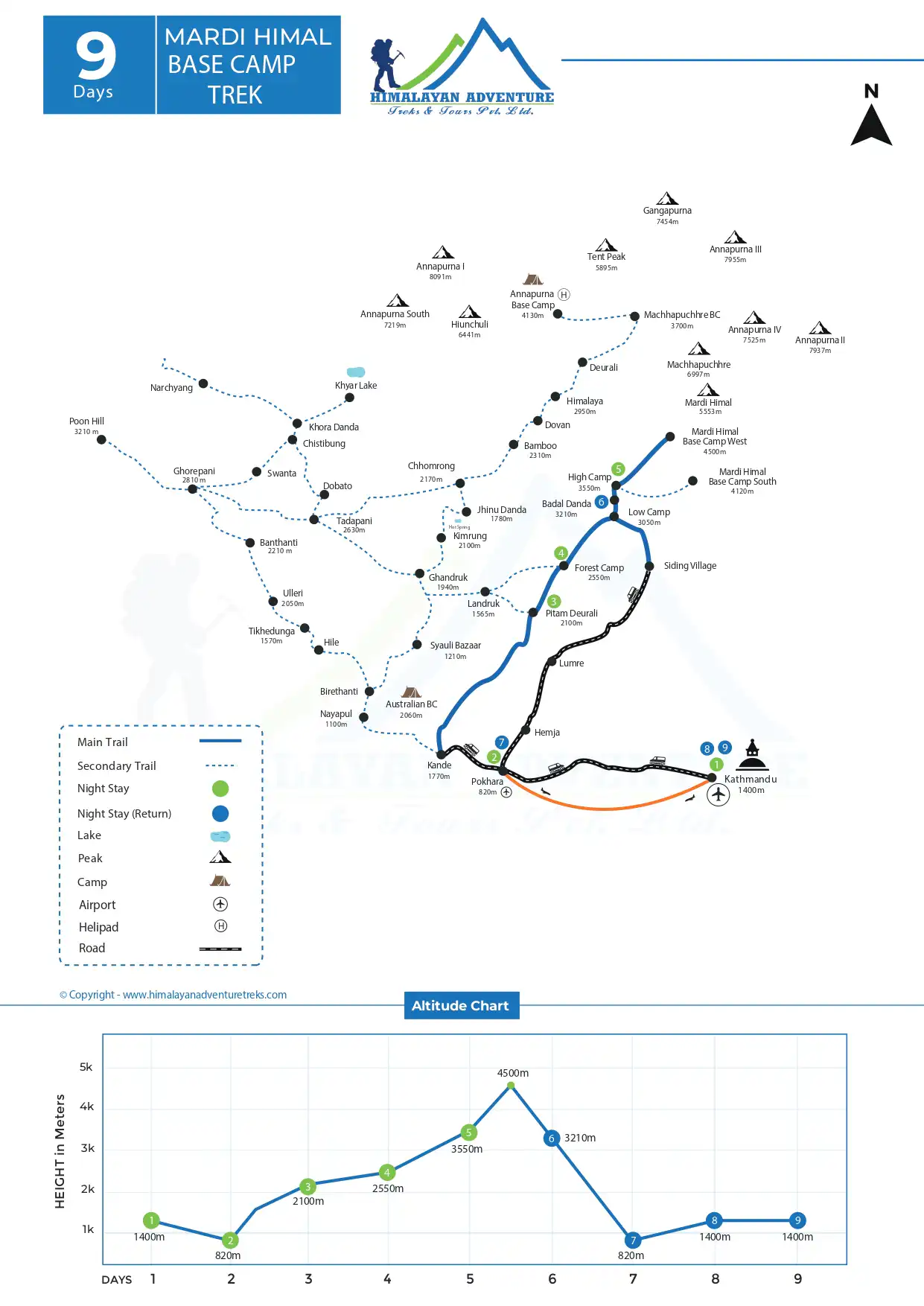
Day 03: Drive from Pokhara to Kande and Trek to Pitam Deurali (2100m) – 3-4 hours
Highlights: Short drive to the trailhead at Kande, gentle uphill hike through lush rhododendron forests and traditional Gurung villages—breathtaking views of Annapurna South and Hiunchuli from Deurali ridge.
First night in the peaceful mountain environment.


Day 04: Trek from Pitam Deurali to Forest Camp at Kokar (2500m) – 5-6 hours
Highlights: A beautiful walk through dense forest rich in biodiversity, including rhododendrons, oak, maple, and moss-covered trees. A tranquil and less-crowded trail offering pure nature.
Watch for birdlife and rare orchids along the route.


Day 05: Trek from Forest Camp to High Camp (3600m) – 5-6 hours
Highlights: Gradual ascent through alpine forest with emerging views of Machhapuchhre, Annapurna South, and Mardi Himal. As you reach High Camp, enjoy the spectacular panoramic Himalayan scenery.
Sunset over the Himalayas is unforgettable from this altitude.


Day 06: Excursion to Mardi Himal Base Camp (4550m) and Return to Badal Danda (3250m) – 7-8 hours
Highlights: Early morning trek to Mardi Himal Base Camp, the ultimate viewpoint. Witness sunrise over Annapurna I, Machhapuchhre, and surrounding peaks. A thrilling experience above the clouds.
Descent to Badal Danda through alpine meadows with prayer flags fluttering in the wind.


Day 07: Trek from Badal Danda to Siding (1850m) and Drive to Pokhara – 4-5 hours trek + 2.5-hour drive
Highlights: Descend through forested paths and rural villages to Siding, a traditional Gurung settlement. Experience local hospitality and lifestyle before returning to the comforts of Pokhara.
Celebrate the end of your trek with dinner near Phewa Lake.


Day 08: Drive from Pokhara to Kathmandu – 200 km / ~6-7 hours
Highlights: A scenic return journey through river valleys and rolling hills. Optional stop at Manakamana Temple (via cable car) or local eateries for lunch.
Evening at leisure in Kathmandu for shopping or rest.


Day 09: Departure to Kathmandu Airport
Highlights: Final day in Nepal. After breakfast, transfer to Tribhuvan International Airport.
Take with you unforgettable memories of the Himalayas and the warm Nepalese culture.

This itinerary provides a balanced mix of trekking, sightseeing, and relaxation, allowing you to experience the beauty of the Mardi Himal region while also enjoying the cultural and natural attractions of Kathmandu and Pokhara. Adjustments can be made based on your preferences, available time, and fitness level. Additionally, it’s essential to consult with a local trekking agency or guide to ensure your safety and make necessary arrangements for permits, accommodation, and transportation.

Mardi Himal Trek Map

Equipment List and Gears for Mardi Himal Base Camp Trek:

Clothing:

  1. Moisture-wicking base layers (tops and bottoms)
  2. Insulating mid-layers (fleece jacket, down jacket)
  3. Waterproof and windproof outer shell jacket
  4. Waterproof and breathable trekking pants
  5. Thermal underwear (for higher elevations and colder nights)
  6. Trekking shirts (long-sleeve and short-sleeve)
  7. Warm hat and sun hat
  8. Gloves (liner gloves and waterproof outer gloves)
  9. Scarf or neck gaiter
  10. Hiking socks (wool or synthetic blend)
  11. Trekking boots (broken in and waterproof)
  12. Camp shoes or sandals (for wearing around teahouses)

Gear:

  1. Backpack (35-45 liters)
  2. Sleeping bag (3-season, rated for below freezing temperatures)
  3. Sleeping pad or insulated mattress
  4. Trekking poles (adjustable and collapsible)
  5. Headlamp or flashlight with extra batteries
  6. Sunglasses with UV protection
  7. Sunscreen (high SPF)
  8. Lip balm with SPF
  9. Personal first aid kit (including blister treatments, pain relievers, antiseptic wipes, and any personal medications)
  10. Water purification tablets or a filtration system
  11. Lightweight towel or packable towel
  12. Multi-tool or knife
  13. Whistle
  14. Duct tape or repair kit
  15. Trekking guidebook and map
  16. Lightweight daypack (for day hikes and excursions from teahouses)

Accessories:

  1. A camera or a smartphone with a camera
  2. Portable charger or power bank
  3. Trekking permit and identification (passport, copies of important documents)
  4. Cash (Nepalese rupees) for purchasing snacks, drinks, and souvenirs along the trail
  5. Notebook and pen
  6. Travel toiletries (toothbrush, toothpaste, biodegradable soap, etc.)
  7. Wet wipes or hand sanitizer
  8. Insect repellent
  9. Travel towel or bandana
  10. Earplugs (for sleeping in teahouses)

Optional Gear:

  1. Gaiters (for keeping snow and debris out of boots)
  2. Portable solar charger
  3. Binoculars
  4. Lightweight camp stove and cookware (if planning to prepare meals)
  5. Trekking umbrella (for sun and rain protection)
  6. Lightweight down booties or insulated socks (for warmth in teahouses)
  7. Personal snacks and energy bars

Before packing, consider the weather conditions and season of your trek, as well as your personal preferences and needs. It’s essential to pack light but also be prepared for a variety of conditions and situations you may encounter along the trail. Additionally, check with your trekking agency or guide for any specific gear or equipment recommendations they may have for the Mardi Himal Base Camp Trek.

Mardi Himal Trek Cost

Mardi Himal Trek: A Journey into Nepal’s Majestic Annapurna Region

Nestled within the captivating Annapurna region of Nepal, the Mardi Himal Trek offers an unforgettable adventure through breathtaking landscapes, rich cultural encounters, and serene wilderness. Spanning over a course of around 7-11 days, this relatively new trekking route has swiftly gained popularity among adventurers seeking a less crowded alternative to the more frequented trails in the Annapurna Sanctuary. Let’s delve into the essence of the Mardi Himal Trek, exploring its key highlights, route, logistics, and experiences.

Introduction to Mardi Himal Trek:

The Mardi Himal Trek takes its name from the magnificent Mardi Himal, a peak situated to the east of the renowned Machhapuchhre (Fishtail) Peak, one of the most iconic landmarks of the Annapurna region. While the trek itself doesn’t ascend to the summit of Mardi Himal, it offers unparalleled views of this majestic peak, as well as panoramic vistas of other towering Himalayan giants such as Annapurna South, Hiunchuli, and Dhaulagiri.

Key Highlights of the Mardi Himal Trek -7 days:

Scenic Landscapes: The trek unfolds through diverse landscapes, including lush rhododendron forests, quaint Gurung villages, alpine meadows adorned with wildflowers, and rugged mountain terrain, offering a visual feast at every turn.

Cultural Encounters: Trekking through traditional Gurung villages such as Landruk, Pitam Deurali, and Siding provides a glimpse into the rich cultural heritage of the region. Visitors often have the opportunity to interact with locals, savor authentic Nepali cuisine, and learn about age-old traditions and customs.

Spectacular Views: Throughout the journey, trekkers are treated to breathtaking vistas of snow-capped peaks, deep valleys, cascading waterfalls, and terraced farmlands, creating picture-perfect moments that linger in the memory long after the trek is over.

Base Camp Experience: Although the trek doesn’t lead to the base camp of Mardi Himal itself, the High Camp (approximately 3,580 meters) offers a close-up view of the mountain and serves as the highest point of the trek. The sense of achievement upon reaching this vantage point is unparalleled.

Off-the-Beaten-Path Experience: Compared to more popular routes like the Annapurna Circuit trek or Everest Base Camp trek, Mardi Himal offers a quieter and less crowded experience, allowing trekkers to immerse themselves fully in the tranquility of the Himalayan wilderness.

Route Overview:

The Mardi Himal Trek typically begins from the lakeside city of Pokhara, often regarded as the gateway to the Annapurna region. From Pokhara, trekkers embark on a scenic drive or short flight to the trailhead at Phedi or Kande, depending on the chosen itinerary. The trekking route then winds its way through a series of picturesque villages and pristine forests, gradually gaining altitude as it approaches the High Camp. Along the way, trekkers stay in teahouses or lodges, enjoying warm hospitality and hearty meals.

The typical itinerary for the Mardi Himal Trek includes stops at locations such as Dhampus, Forest Camp, Low Camp, High Camp, and Siding. While the duration and specific stops may vary depending on the chosen route and pace, most trekkers complete the journey in about a week, allowing ample time for acclimatization and exploration.

Logistics and Considerations:

Permits: As with any trekking adventure in Nepal, obtaining the necessary permits is essential for the Mardi Himal Trek. Trekkers are required to obtain the Annapurna Conservation Area Permit (ACAP) and the Trekkers’ Information Management System (TIMS) card before setting out on the trail.

Accommodation: Accommodation along the Mardi Himal Trek is primarily in teahouses or lodges operated by local communities. While basic, these establishments offer comfortable lodging and delicious meals, providing a cozy retreat after a day of trekking.

Season: The best time to undertake the Mardi Himal Trek is during the spring (March to May) and autumn (September to November) seasons when the weather is generally clear, and the views are at their most spectacular. During the monsoon season (June to August), heavy rainfall can make the trails muddy and slippery, posing challenges for trekkers.

Fitness Level: While the Mardi Himal Trek is considered moderately challenging, trekkers should have a reasonable level of fitness and stamina to tackle steep ascents, rocky terrain, and high altitude. Prior hiking experience and adequate preparation can enhance the overall enjoyment of the trek.

Altitude Considerations: Altitude sickness is a potential risk for trekkers ascending to higher elevations. It’s essential to acclimatize properly, stay hydrated, and listen to your body’s signals to prevent altitude-related complications.

Experiences along the Trail:

Rhododendron Forests: The trekking route passes through enchanting rhododendron forests, especially vibrant during the spring season when the hillsides come alive with a riot of colors.

Local Hospitality: Interacting with the friendly locals, sampling authentic Nepali cuisine, and experiencing the warmth of Gurung hospitality are among the most memorable aspects of the trek.

Sunrise Views: Witnessing the sunrise from vantage points such as Pothana or High Camp offers a mesmerizing spectacle as the first rays of sunlight illuminate the snow-capped peaks in a dazzling display of light and shadow.

Photography Opportunities: From sweeping mountain panoramas to quaint village scenes and cascading waterfalls, the Mardi Himal Trek presents endless opportunities for photographers to capture the beauty of the Himalayan landscape.

Mardi Himal Trek Difficulty:

Altitude: While not as high as some other treks in the region, Mardi Himal Trek still involves ascending to significant altitudes, reaching around 3,580 meters at High Camp. Altitude sickness can be a concern for some trekkers, so proper acclimatization and hydration are crucial.

Terrain: The trail includes steep ascents, rocky paths, and sections with uneven terrain. Trekkers should be prepared for uphill climbs and downhill descents, which can be physically demanding, especially for those with limited hiking experience.

Weather: Weather conditions in the Himalayas can be unpredictable, with sudden changes in temperature, wind, and precipitation. Trekkers may encounter rain, snow, or fog, particularly during the monsoon season, which can make the trails slippery and muddy.

Remote Locations: Some parts of the trek pass through remote areas with limited access to medical facilities and amenities. Trekkers should be self-sufficient and prepared to deal with minor injuries, illnesses, or emergencies.

Mardi Himal Trek Cost, Budget:

The overall cost of the Mardi Himal Trek cost can vary depending on factors such as duration, accommodation preferences, transportation, and additional expenses. Here’s a rough breakdown of potential expenses:

Permits: Annapurna Conservation Area Permit (ACAP) and Trekkers’ Information Management System (TIMS) card: approximately $40-50 USD combined.

Accommodation: Teahouse or lodge accommodation along the trek can range from $5-20 USD per night, depending on the level of comfort and facilities.

Food: Meals at teahouses or lodges typically cost between $5-15 USD per meal, depending on the menu items and location.

Transportation: The cost of transportation from Pokhara to the trek starting point (Phedi or Kande) and back can vary but is usually around $20-30 USD for a private vehicle or $5-10 USD for a shared jeep or bus.

Guide and Porter: Hiring a guide and/or porter is optional but recommended for those who prefer assistance with navigation, carrying gear, and cultural insights. Guide fees can range from $20-30 USD per day, while porter fees are approximately $15-25 USD per day, including meals and accommodation.

Miscellaneous: Additional expenses may include snacks, drinks, souvenirs, and tips for guides and porters.

Overall, a conservative budget for the Mardi Himal Trek could range from $500 to $1000 USD per person for a standard 5-7 day trek, excluding international airfare and travel insurance.

Mardi Himal Trek Itinerary/ Map:

7 Days Mardi Himal Trek Itinerary and Cost:

Day 1: Arrival in Pokhara

Day 2: Drive from Pokhara to Kande (1-2 hours) and trek to Forest Camp

Day 3: Trek from Forest Camp to Low Camp

Day 4: Trek from Low Camp to High Camp

Day 5: Acclimatization day at High Camp, optional hike to Mardi Himal Base Camp viewpoint

Day 6: Trek from High Camp to Siding

Day 7: Trek from Siding to Lumre, drive back to Pokhara

Mardi Himal Trek Map

Mardi Himal Trek 7 Days Fixed Departure, Cost 2024 and 2025:

No. of Pax          Starting Price      Inquiry

1                               USD 899              Inquiry

2 to 4                       USD 799              Inquiry

5 to 8                       USD 699              Inquiry

9 to 12                     USD 599             Inquiry

13 to 20                   USD 499             Inquiry

This itinerary allows for a gradual ascent, adequate acclimatization, and exploration of key highlights along the trail. Trekkers can adjust the duration and pace according to their preferences and fitness level. It’s essential to factor in rest days and flexibility for unforeseen circumstances or changes in weather conditions. Additionally, some may choose to extend the trek or include side trips to neighboring attractions such as Ghandruk or Ghorepani.

Best Month/season for Mardi Himal Trek:

The best seasons for undertaking the Mardi Himal Trek are typically spring (March to May) and autumn (September to November). Here’s why:

Spring (March to May):

Weather: Spring brings mild temperatures and clear skies, making it an ideal time for trekking. The days are longer, allowing for more comfortable hiking conditions.

Flora: This season is renowned for its stunning rhododendron blooms, painting the hillsides with vibrant hues of red, pink, and white. The lush vegetation adds to the scenic beauty of the trekking route.

Views: Clear skies offer unobstructed views of the surrounding mountains, including Mardi Himal, Machhapuchhre (Fishtail), and other peaks of the Annapurna range. Sunrise and sunset views are particularly spectacular during this time of year.

Temperature: Although temperatures can vary depending on altitude, spring generally offers pleasant daytime temperatures, making trekking comfortable without the extreme cold of winter or the heat of summer.

Autumn (September to November):

Weather: Autumn is characterized by stable weather conditions, with minimal rainfall and clear visibility. Trekkers can expect sunny days and crisp, cool evenings, creating ideal trekking conditions.

Panoramic Views: The post-monsoon period offers some of the clearest mountain views of the year, with crisp visibility and sharp outlines of the Himalayan peaks. Photographers and outdoor enthusiasts will appreciate the stunning panoramas.

Cultural Festivals: Autumn coincides with various cultural festivals in Nepal, including Dashain and Tihar (also known as Diwali). Trekking during this time allows visitors to witness traditional celebrations and immerse themselves in the vibrant cultural atmosphere.

Trail Conditions: The trails are generally dry and well-defined in autumn, making trekking easier and more enjoyable. There’s less risk of encountering muddy or slippery paths compared to the monsoon season.

Both spring and autumn offer excellent conditions for the Mardi Himal Trek, each with its unique highlights and attractions. Trekkers can choose the season that aligns best with their preferences and schedule, ensuring a memorable and rewarding adventure in the heart of the Himalayas.

Guide and Porters for Mardi Himal Trek:

While hiring a guide and porter for the Mardi Himal Trek is optional, there are several reasons why many trekkers choose to enlist their services, especially for longer or more challenging itineraries like the one outlined above:

Navigation and Route Finding:

The Mardi Himal Trek route can be complex, especially for those unfamiliar with the terrain. A guide is experienced in navigating the trails, ensuring that trekkers stay on the right path and avoid getting lost, particularly in areas with minimal signage or diverging paths.

Safety and Emergency Preparedness:

Guides are trained to recognize and respond to potential hazards along the trail, including altitude sickness, adverse weather conditions, and natural obstacles. They can provide guidance on proper acclimatization, first aid treatment, and evacuation procedures in case of emergencies.

Cultural Insights and Language Support:

Guides often belong to local communities and possess valuable insights into the region’s culture, traditions, and history. They can facilitate interactions with local villagers, translate conversations, and provide meaningful cultural exchanges, enhancing the overall trekking experience.

Porter (Sherpa) Assistance:

Carrying a heavy backpack can be physically taxing, particularly at higher altitudes. Hiring a porter allows trekkers to lighten their load and focus on enjoying the journey without the burden of excessive weight. Porters are accustomed to carrying trekking gear and supplies, ensuring that belongings reach the destination safely and efficiently.

Logistics and Planning:

Organizing logistics such as accommodation, meals, permits, and transportation can be challenging, especially for first-time visitors to Nepal. Guides are adept at making arrangements, booking accommodations, and coordinating logistics, streamlining the trekking experience and reducing logistical stress for trekkers.

Support and Encouragement:

Trekking at high altitudes can be mentally and physically demanding, particularly during challenging sections of the trail. Guides provide encouragement, motivation, and practical advice, helping trekkers overcome obstacles, maintain morale, and achieve their trekking goals.

While trekkers with prior experience and navigation skills may opt for a self-guided approach, hiring a guide and porter can enhance safety, comfort, and cultural immersion, especially for those seeking a more enriching and hassle-free trekking experience in the Himalayas. Ultimately, the decision to hire support staff depends on individual preferences, trekking objectives, and the level of comfort with independent travel.

Mardi Himal Trek without a Guide:

Trekking the Mardi Himal route without a guide is feasible for experienced hikers who are well-prepared, physically fit, and have previous experience in high-altitude trekking. However, there are certain safety considerations to keep in mind:

Trail Navigation:

The Mardi Himal Trek route is generally well-marked, but there are sections where the trail may be less defined, especially in remote areas. Trekkers without a guide should have strong navigational skills and be able to read maps and follow trail markers confidently.

Altitude Sickness:

Altitude sickness is a potential risk when trekking at higher elevations. Without a guide, trekkers must be vigilant in monitoring their own health and recognizing symptoms of altitude-related illnesses such as headaches, nausea, and dizziness. Proper acclimatization and hydration are crucial.

Emergency Response:

In the event of an emergency or medical issue, trekkers without a guide may face challenges in accessing assistance quickly. It’s essential to have a plan in place for communication and evacuation, as well as basic first aid knowledge and supplies.

Weather Conditions:

Weather in the Himalayas can be unpredictable, with sudden changes in temperature, precipitation, and visibility. Trekkers should be prepared for varying weather conditions and carry appropriate gear for rain, snow, and cold temperatures.

Cultural Interaction:

While trekking independently allows for greater flexibility and solitude, it may also limit opportunities for cultural interaction and local insights. Trekkers without a guide may miss out on learning about the region’s history, culture, and traditions from a knowledgeable local perspective.

Personal Safety:

Trekking alone or without a guide carries inherent risks, including the potential for accidents, injuries, or encounters with wildlife. Trekkers should exercise caution, especially when traversing rugged terrain, crossing streams, or navigating steep ascents and descents.

Equipment and Supplies:

Without a guide or porter, trekkers are responsible for carrying all necessary gear, supplies, and provisions themselves. It’s essential to pack light but adequately for the journey, ensuring sufficient food, water, and emergency essentials.

While trekking without a guide offers a sense of freedom and self-reliance, it’s important to weigh the risks and benefits carefully and make an informed decision based on individual experience, skills, and comfort level. For those less experienced or unfamiliar with the region, hiring a guide or joining a guided trekking group can provide added safety, support, and peace of mind while exploring the Mardi Himal route.

Equipment (Gears) list for Mardi Himal Trek for all seasons:

Clothing:

Moisture-wicking Base Layers:

Long-sleeve shirts (synthetic or wool)

T-shirts (synthetic or wool)

Thermal underwear (tops and bottoms)

Insulating Layers:

Fleece jacket or pullover

Insulated down or synthetic jacket (for colder temperatures)

Insulated pants or trekking pants (optional for colder months)

Outer Shell:

Waterproof and breathable jacket (Gore-Tex or similar)

Waterproof and breathable pants or rain pants

Headwear:

Wide-brimmed hat or cap for sun protection

Beanie or thermal hat

Buff or neck gaiter

Sunglasses with UV protection

Handwear:

Lightweight gloves (for sun protection)

Insulated gloves or mittens (for colder temperatures)

Footwear:

Hiking boots or trekking shoes with good ankle support

Comfortable camp shoes or sandals

Hiking socks (synthetic or wool) and liners

Equipment:

 Backpack:

Daypack (20-30 liters) for carrying essentials during daily hikes

Sleeping:

Sleeping bag suitable for temperatures encountered (down or synthetic, 0°F to 20°F/-18°C to -6°C)

Sleeping pad or inflatable mattress for insulation and comfort

Trekking Poles:

Adjustable trekking poles for stability and reducing strain on knees during descents

Headlamp/Flashlight:

LED headlamp or flashlight with extra batteries for evening and early morning activities

Water Bottles/Hydration System:

Water bottles or a hydration reservoir (2-3 liters capacity) for staying hydrated along the trail

Personal Hygiene Kit:

Toothbrush, toothpaste, and dental floss

Biodegradable soap and shampoo

Hand sanitizer and/or wet wipes

Quick-drying towel

Sun Protection:

High SPF sunscreen and lip balm

Sun hat with a wide brim

Sunglasses with UV protection

First Aid Kit:

Basic first aid supplies, including bandages, antiseptic wipes, adhesive tape, blister treatment, pain relievers, and any personal medications

Navigation: (Optional)

Detailed map of the trekking route and the surrounding area

Compass or GPS device (optional)

Repair Kit and Tools:

Multi-tool or knife

Duct tape for gear repairs

Trash Bags:

Ziplock bags or stuff sacks for organizing and waterproofing gear, as well as for carrying out trash and waste

Miscellaneous:

Camera/Gear:

A camera or a smartphone for capturing memorable moments

Extra batteries or a portable charger

Guidebook/Reading Material:

Trekking guidebook or reading material for leisure time

Snacks/Energy Food:

High-energy snacks such as nuts, trail mix, energy bars, and chocolate for on-the-go fuel

Trekking Permit/Documentation:

Annapurna Conservation Area Permit (ACAP)

Trekkers’ Information Management System (TIMS) card

Passport and necessary identification

Cash:

Sufficient Nepalese rupees for purchasing meals, drinks, and souvenirs along the trek

It’s essential to pack lightweight and compact gear while ensuring that you’re adequately prepared for varying weather conditions and terrain challenges encountered during the Mardi Himal Trek. Adjustments to the gear list may be necessary based on individual preferences, season, and specific itinerary. Additionally, renting or purchasing gear in Pokhara is possible for those who prefer not to carry all the equipment from home.

Conclusion:

The Mardi Himal Trek beckons adventurers with its pristine beauty, cultural richness, and sense of wilderness exploration. Whether you’re a seasoned trekker seeking new horizons or a first-time visitor to Nepal, this off-the-beaten-path trek promises an unforgettable journey through some of the most spectacular landscapes on earth. From panoramic mountain views to encounters with local communities, every step along the trail reveals a new facet of Nepal’s enchanting Annapurna region, leaving an indelible imprint on the soul of the traveler. Embark on this epic adventure and immerse yourself in the magic of the Himalayas on the Mardi Himal Trek.

Everest Base Camp Trek in 2026-2027

As we embark on the adventure landscape of 2026-2027, the allure of the Everest Base Camp (EBC) Trek remains undiminished. This iconic trek continues to captivate the hearts of adventure enthusiasts globally, offering a blend of physical challenge, cultural richness, and awe-inspiring landscapes. In this exploration, we delve into the multifaceted reasons behind the Everest Base Camp trek 2026-2027, sustained popularity incorporating emerging keywords to capture the evolving trends in adventure tourism.

Holistic Adventure and Experiential Tourism (Holistic Adventure, Adventure Redefined, Experiential Tourism):

The modern adventurer seeks more than just physical challenges; there is a growing appetite for holistic experiences that encompass physical, mental, and spiritual dimensions. The Everest Base Camp trek epitomizes this shift, offering a transformative journey that goes beyond conquering peaks. In 2026-2027, the trek is not merely a test of endurance; it is an opportunity for experiential tourism, allowing trekkers to immerse themselves in the grandeur of the Himalayas while nurturing their overall well-being.

The holistic adventure on the EBC trail is underscored by the serene monasteries, breathtaking vistas, and cultural interactions. Trekkers engage in a profound experience that transcends the traditional notions of adventure, reflecting the evolving preferences of a new generation of travelers.

Remote Work Integration and Digital Nomadism (Remote Work, Digital Nomadism, Mobile Office):

The paradigm shift towards remote work has reshaped travel patterns, and Everest Base Camp has emerged as a sought-after destination for digital nomads seeking a unique blend of work and adventure. The availability of limited yet increasing digital connectivity in the region enables trekkers to turn the Himalayan trails into their mobile offices.

In 2026-2027, the EBC trek is not only a physical journey but a dynamic exploration, where trekkers can stay connected with the world while surrounded by the unparalleled beauty of the Khumbu region. The integration of remote work adds a new layer of versatility to the Everest Base Camp experience, attracting individuals who seek a balance between professional obligations and the thrill of high-altitude adventure.

Sustainability in Adventure Tourism (Sustainable Tourism, Eco-friendly Practices, Conservation):

With environmental concerns at the forefront of global consciousness, the Everest Base Camp trek has adapted to embrace sustainable tourism practices. Trekkers in 2026-2027 are increasingly drawn to destinations that prioritize eco-friendly measures, and the EBC trek stands as a beacon for responsible adventure tourism.

Conservation efforts, waste management initiatives, and community engagement projects are seamlessly integrated into the trekking experience. The commitment to sustainability not only preserves the fragile Himalayan ecosystem but also resonates with the values of trekkers who are conscious of their environmental impact.

Cultural Immersion and Ethical Tourism (Cultural Immersion, Ethical Tourism, Community Engagement):

The Everest region is not just a geographic marvel; it is a cultural treasure trove inhabited by the Sherpa community. In 2026-2027, trekkers are increasingly seeking meaningful cultural immersion experiences, and the EBC trek provides a platform for ethical tourism.

Beyond the physical challenge, trekkers engage with local communities, partake in traditional festivities, and gain insights into the rich Sherpa heritage. This cultural exchange enriches the journey, fostering a deeper connection between trekkers and the people who call the Himalayas their home.

Everest Trekking Gateway (Lukla Airport):

Lukla Airport, also known as Tenzing-Hillary Airport, serves as the main gateway to the Everest Base Camp (EBC) trek in Nepal. Here’s an overview of Lukla Airport and its significance as the starting point for the EBC trek:

Location:

Lukla Airport is located in the town of Lukla, in the Khumbu region of northeastern Nepal. It sits at an elevation of approximately 2,860 meters (9,383 feet) above sea level.
Accessibility:

Lukla Airport is accessible only by air, primarily from Tribhuvan International Airport in Kathmandu, the capital city of Nepal. Flights from Kathmandu to Lukla take around 25-30 minutes and provide stunning aerial views of the Himalayas.

Challenging Terrain:

The airport’s short, sloping runway and the surrounding mountainous terrain make Lukla Airport one of the most challenging and dangerous airports in the world. Pilots require specialized training and experience to navigate the airport’s unique approach and landing procedures, which involve flying through narrow valleys and making a steep descent onto the runway.

Significance for Trekkers:

Lukla Airport serves as the starting point for trekkers embarking on the Everest Base Camp trek, as well as other treks in the Khumbu region. Trekkers typically fly from Kathmandu to Lukla to save time and avoid the long overland journey to the trailhead.
From Lukla, trekkers follow the well-established trail that winds through picturesque Sherpa villages, dense forests, suspension bridges, and rugged mountain landscapes on their journey to Everest Base Camp.
Facilities:

Lukla Airport is a small, basic facility with limited amenities. It has a single runway and a small terminal building that handles domestic flights to and from Kathmandu.
The airport area also features a few shops, tea houses, and lodges where trekkers can rest, grab a meal, or spend the night before starting their trek.
Overall, Lukla Airport serves as the vital entry point for trekkers embarking on the iconic Everest Base Camp trek, offering a thrilling yet essential start to their Himalayan adventure.

Lukla also called most dangerous airport in the world:

Lukla Airport, also known as Tenzing-Hillary Airport, is often dubbed as one of the most dangerous airports in the world due to several factors:

Short Runway:

Lukla Airport has an exceptionally short runway, measuring only about 527 meters (1,729 feet) in length. This limited space makes it challenging for pilots to both land and take off, particularly considering the high altitude and variable weather conditions in the region.

Steep Slope:

The runway at Lukla Airport is situated on a steep slope, with a gradient of approximately 12%. This incline further complicates landing and takeoff procedures, requiring pilots to execute precise maneuvers to ensure a safe touchdown or ascent.

Mountainous Terrain:

Lukla Airport is surrounded by rugged mountainous terrain, with towering peaks and deep valleys in close proximity to the runway. Pilots must navigate through narrow valleys and around tall mountains during the approach and departure, leaving little margin for error.

Unpredictable Weather:

The weather conditions in the Everest region can change rapidly and become extremely unpredictable. Cloud cover, high winds, fog, and sudden changes in visibility are common, posing additional challenges for pilots attempting to land or depart from Lukla Airport.

Limited Instrumentation:

Lukla Airport has limited navigational aids and instrumentation, making it reliant on visual flight rules (VFR) for most operations. Pilots must rely on their visual observations and experience to navigate the challenging terrain and execute safe landings and takeoffs.

High Altitude:

Situated at an elevation of approximately 2,860 meters (9,383 feet) above sea level, Lukla Airport operates at a high altitude. The reduced air density at this altitude affects aircraft performance, requiring longer takeoff and landing distances and posing additional challenges for pilots.
Despite these challenges, Lukla Airport remains an essential gateway for trekkers and mountaineers heading to the Everest region. Skilled pilots and rigorous safety protocols help mitigate the risks associated with operating at this unique and challenging airport, ensuring that travelers can safely begin their Himalayan adventures.

Everest Base Camp Trek Cost:

The cost of the Everest Base Camp trek can vary based on several factors, including the trekking route, accommodation preferences, guide and porter services, and personal spending habits. Here is a breakdown of the major cost components:

Permits and Fees (Permit Fees, Entry Costs):

Sagarmatha National Park Permit: This permit is required for entry into the Sagarmatha National Park, where Everest is located.

Local Entry Fees: Some areas along the trek may have additional entry fees.

Flights (Airfare, Flight Costs):

Round-trip Flights to Lukla: The Lukla airport is the gateway to the Everest region. Flights from Kathmandu to Lukla are essential and can vary in price.

Accommodation (Lodge Costs, Teahouse Expenses):

Teahouse Lodging: Accommodation along the trek is typically in teahouses or lodges. The cost per night can vary based on the location and the services provided.

Guides and Porters (Sherpa) (Guide Fees, Porter Services):

Hiring a Local Guide: Many trekkers opt for the assistance of a local guide who knows the terrain, culture, and can provide valuable insights.

Porter Services: Trekkers may choose to hire a porter to carry their backpack, which lightens the load during the trek.

Equipment Rental (Gear Rental, Equipment Costs):

Renting Gear: Trekking gear such as sleeping bags, trekking poles, and other equipment can be rented. The cost will depend on the quality and duration of the rental.

Meals (Meal Expenses, Food Costs):

Three Meals a Day: Most teahouses provide meals as part of their accommodation packages. Budget accordingly for three meals a day.

Miscellaneous (Insurance Costs, Personal Expenses):

Travel Insurance: Comprehensive travel insurance is crucial, covering medical emergencies, evacuation, and unforeseen circumstances.

Personal Expenses: Budget for personal expenses, including snacks, souvenirs, and additional services.

Note: Prices can vary, and it’s advisable to research and plan based on current rates. The overall cost may range from $1,500 to $5,000 or more, depending on factors such as the level of comfort, services, and personal choices.

Everest Base Camp Trek Difficulties:

While the Everest Base Camp trek is immensely rewarding, it presents several challenges that trekkers should be aware of:

Altitude (Altitude Sickness, AMS):

Challenge: Acute Mountain Sickness (AMS) is a risk due to the high altitudes. Symptoms include headaches, nausea, and dizziness.

Mitigation: Acclimatization days, proper hydration, and adherence to recommended itineraries can help prevent AMS.

Weather Variability (Unpredictable Weather, Trekking Conditions):

Challenge: Weather conditions in the Himalayas can be unpredictable, leading to sudden changes and challenges such as snowfall or rain.

Mitigation: Flexibility in the trekking schedule, packing appropriate clothing, and staying informed about weather forecasts are essential.

Physical Exertion (Physical Preparedness, Trekking Endurance):

Challenge: The trek involves long hours of walking, often on challenging terrain. Trekkers need to be physically prepared for sustained exertion.

Mitigation: Pre-trek fitness training, regular breaks, and pacing oneself can help manage physical challenges.

Remote Locations (Limited Medical Facilities, Emergency Preparedness):

Challenge: The trek takes place in a remote region with limited access to medical facilities.

Mitigation: Comprehensive travel insurance, carrying a basic medical kit, and trekking with a qualified guide can enhance safety.

Teahouse Accommodations (Basic Facilities, Rustic Living):

Challenge: Basic facilities and shared accommodations in teahouses may pose challenges for those accustomed to more luxurious conditions.

Mitigation: Trekkers should be mentally prepared for rustic accommodations and embrace the simplicity of teahouse living.

Who can do the Everest Base Camp (EBC) Trek:

The Everest Base Camp (EBC) trek is suitable for a wide range of individuals with varying levels of trekking experience and fitness levels. While it does require a reasonable level of physical fitness and mental preparation, the trek can be completed by:

Experienced Trekkers:

Experienced trekkers with prior high-altitude trekking experience will find the EBC trek challenging yet manageable. They are accustomed to long hours of walking and have a good understanding of altitude-related risks and safety measures.

Novice Trekkers:

Novice trekkers with limited trekking experience can also undertake the EBC trek with proper preparation, training, and guidance. It’s essential for them to gradually build up their fitness levels and acclimatize to high altitudes during the trek.

Fitness Enthusiasts:

Fitness enthusiasts who maintain an active lifestyle and engage in regular aerobic exercises, such as hiking, running, or cycling, can prepare for the EBC trek by incorporating specific training routines to improve endurance, strength, and cardiovascular fitness.

Adventurous Travelers:

Adventurous travelers with a thirst for exploration and a willingness to embrace the challenges of high-altitude trekking can embark on the EBC trek. While they may not have extensive trekking experience, their enthusiasm and determination can propel them to successfully complete the journey.
Solo Trekkers or Groups:

Both solo trekkers and those traveling in groups can undertake the EBC trek. Solo trekkers should exercise caution and ensure they have proper guidance and support throughout the journey, while groups can benefit from shared experiences, camaraderie, and mutual support.

Age and Health Considerations:

While there is no strict age limit for the EBC trek, individuals of all ages should assess their health, fitness levels, and medical history before embarking on the journey. It’s advisable for older adults and individuals with pre-existing health conditions to consult with a healthcare professional before undertaking the trek.
Overall, the Everest Base Camp trek is a challenging yet achievable adventure for individuals who are physically and mentally prepared, regardless of their trekking experience or background. With proper preparation, determination, and adherence to safety guidelines, anyone with a passion for exploration can experience the awe-inspiring beauty of the Himalayas on the EBC trek.

Best Time and season for Everest Base Camp (EBC) Trek:

The Everest Base Camp trek is best undertaken during the spring and autumn seasons, offering optimal weather conditions and breathtaking scenery.

During spring, from March to May, trekkers are greeted with blooming rhododendrons, adding vibrant colors to the landscape. The temperatures are mild, ranging from pleasantly cool to comfortably warm during the day, making hiking enjoyable. The skies are generally clear, providing stunning views of the surrounding peaks.

Similarly, autumn, from September to November, is another ideal time for the trek. The weather is stable with clear skies and crisp air, offering excellent visibility of the majestic Himalayan peaks. The temperatures are also mild, making trekking comfortable, and the trails are less crowded compared to the peak tourist seasons.

Both spring and autumn provide trekkers with optimal conditions for a memorable journey to Everest Base Camp. Whether marveling at the blossoming flora in spring or enjoying the clarity of the vistas in autumn, adventurers are sure to be captivated by the beauty of the Everest region during these seasons.

The weather in the Everest region varies significantly throughout the year, with distinct seasons each offering unique trekking conditions. Here’s an overview of the weather in the Everest region throughout the year:

Spring (March to May):

Spring is one of the best times for trekking to Everest Base Camp. The weather is generally mild and stable, with clear skies and comfortable temperatures during the day.
The spring months bring blooming rhododendrons and other wildflowers, adding color to the landscape.
Daytime temperatures at lower elevations range from 10°C to 20°C (50°F to 68°F), while nighttime temperatures can drop to around -5°C to 5°C (23°F to 41°F).

Summer/Monsoon (June to August):

The summer months bring the monsoon season to the Everest region, characterized by heavy rainfall, cloudy skies, and high humidity.
Trekking during this period is not recommended due to poor visibility, slippery trails, and increased risk of landslides and avalanches.
Daytime temperatures at lower elevations may range from 15°C to 25°C (59°F to 77°F), but conditions can be unpredictable and uncomfortable.

Autumn (September to November):

Autumn is another popular trekking season in the Everest region, offering clear skies, stable weather, and stunning mountain views.
The weather is generally dry and cool, with mild daytime temperatures and cold nights.
Daytime temperatures at lower elevations range from 10°C to 20°C (50°F to 68°F), while nighttime temperatures can drop below freezing, especially at higher elevations.

Winter (December to February):

Winter brings cold temperatures and dry weather to the Everest region, making trekking challenging but rewarding for those prepared for cold conditions.
Daytime temperatures at lower elevations may range from 5°C to 15°C (41°F to 59°F), but temperatures drop significantly at higher elevations, with sub-zero temperatures common at night.
Clear skies and fewer trekkers on the trails make winter a quieter and more peaceful time to trek, but it requires proper cold-weather gear and precautions against frostbite and hypothermia.

Overall, spring and autumn are the preferred seasons for trekking to Everest Base Camp, offering the best combination of favorable weather, clear views, and comfortable temperatures. Winter treks are possible for experienced adventurers, while the monsoon season should be avoided due to challenging trekking conditions.

Why we need Guide and Porter (Sherpa) for EBC Trek:

Engaging a guide and porter for the Everest Base Camp (EBC) trek offers invaluable benefits, enhancing safety, convenience, and cultural understanding throughout the journey.

Guides possess extensive knowledge of the trekking routes, terrain, and local landmarks, ensuring trekkers stay on the right path and navigate safely through the rugged terrain of the Himalayas.

Safety Assurance:

Guides are trained in altitude sickness prevention and emergency procedures, providing crucial support in case of medical emergencies. Their experience helps identify symptoms of altitude sickness early and take necessary precautions.

Cultural Insights:

Guides offer insights into the local culture, traditions, and customs of the Sherpa communities inhabiting the Everest region. They facilitate meaningful interactions with locals, enriching the cultural experience of the trek.

Logistical Support:

Porters alleviate the physical burden on trekkers by carrying heavy loads, such as backpacks and equipment, allowing trekkers to focus on enjoying the journey without being weighed down.

Language Barrier Mitigation:

Guides often serve as interpreters, bridging the language gap between trekkers and locals, facilitating communication and enhancing cultural exchange.

Emergency Preparedness:

Guides and porters are equipped with first aid kits and have the expertise to handle common trekking injuries and emergencies, providing trekkers with an added layer of safety and peace of mind.
Overall, the presence of a guide and porter on the EBC trek not only enhances safety and convenience but also enriches the trekking experience by offering cultural insights and facilitating seamless logistics, ensuring trekkers can fully immerse themselves in the awe-inspiring journey to Everest Base Camp.

Why not Trek EBC in Monsoon Season:

The monsoon season, which typically spans from June to August, is not suitable for the Everest Base Camp (EBC) trek. During this period, the region experiences heavy rainfall, dense fog, and cloud cover, resulting in poor visibility and slippery, muddy trails. The monsoon rains can also trigger landslides and avalanches, posing significant safety risks to trekkers.

Moreover, the trails and teahouses along the EBC route may become impassable or inaccessible due to flooding and other weather-related hazards. Additionally, the constant rain and humidity can make trekking uncomfortable and increase the risk of leeches and mosquitoes.

Therefore, it’s advisable to avoid trekking to Everest Base Camp during the monsoon season and opt for the more favorable spring (March to May) or autumn (September to November) seasons, which offer clearer skies, stable weather conditions, and better visibility for enjoying the stunning mountain vistas.

Equipment and gear list for EBC Trek -14 Days:

Certainly! Here’s a comprehensive list of equipment and gear needed for the Everest Base Camp (EBC) trek:

Clothing:

Moisture-wicking base layers (tops and bottoms)
Insulating mid-layers (fleece jackets or down jackets)
Waterproof and windproof outer shell jacket
Waterproof and breathable hiking pants
Thermal underwear (for colder months)
Trekking shirts (long-sleeve and short-sleeve)
Insulated gloves or mittens
Warm hat or beanie
Sun hat or cap
Sunglasses with UV protection
Hiking socks (wool or synthetic)

Footwear:

Sturdy hiking boots with ankle support and good traction
Comfortable camp shoes or sandals for resting at tea houses

Backpack:

Large backpack (50-70 liters) with a waterproof cover
Daypack for carrying essentials during day hikes

Sleeping Gear:

Sleeping bag suitable for cold temperatures (rated for at least -10°C/14°F)
Sleeping bag liner for added warmth (optional)

Trekking Equipment:

Trekking poles for stability and balance
Headlamp or flashlight with extra batteries
Water bottles or hydration system (at least 2 liters capacity)
Water purification tablets or filter
Personal first aid kit with essentials (bandages, antiseptic cream, pain relievers, blister treatment, etc.)
Toilet paper and hand sanitizer

Miscellaneous Items:

Sunscreen with high SPF
Lip balm with SPF
Insect repellent
Quick-dry towel
Personal toiletries (toothbrush, toothpaste, biodegradable soap, etc.)
Trekking snacks (energy bars, nuts, chocolate, etc.)
Trekking permit and necessary documents
Camera or smartphone for capturing memories
Portable charger or power bank

Optional Gear:

Lightweight down jacket or vest for extra warmth
Gaiters to keep snow and debris out of boots
Trekking umbrella for rain protection
Portable oxygen cylinder or altitude sickness medication (consult with a doctor)
Paperback books, journal, or deck of cards for downtime entertainment
Before embarking on the EBC trek, ensure all equipment and gear are tested, properly fitted, and in good condition to withstand the challenges of high-altitude trekking. Additionally, pack sensibly and avoid unnecessary weight to minimize strain during the journey.

Trekking Duration and itinerary (Extended Trek Duration, Endurance):

Challenge: The trek spans around 14-18 days, which can be physically and mentally demanding.

Mitigation: Adequate rest, acclimatization days, and mental preparedness for the duration of the trek are crucial.

The allure of the Everest Base Camp trek lies not just in its popularity but also in the carefully curated itinerary that takes trekkers through a mesmerizing tapestry of landscapes and cultural gems. The following is a condensed itinerary highlighting key stages of the trek:

Day 01: Arrival at Kathmandu Airport.

Day 02: Fly from Kathmandu to Lukla (2860m) and trek to Phakding (2610m) 3-4 hours.

Day 03: Trek from Phakding to Namche Bazaar (3446m) 6-7 hours.

Day 04: Acclimatization Day Visit Khumjung Village, Hotel Everest View (3880m).

Day 05: Trek from Namche Bazaar to Tengboche (3860m) 5 -6 hours.

Day 06: Trek from Tengboche to Dingboche (4360m) 5 -6 hours.

Day 07: Acclimatization day in Dingboche (4360m).

Day 08: Trek from Dingboche to Lobuche (4910m) 5-6 hours.

Day 09: Trek from Lobuche to Gorakshep (5160m) and EBC (5360m) 6-7 hours.

Day 10: Trek from Gorakshep to Kalapatthar (5545m) and Pheriche (4371m) 4-5 hours.

Day 11: Trek from Pheriche to Namche Bazaar (3446m) 6-7 hours.

Day 12: Trek from Namche Bazaar to Lukla (2860m) 5-6 hours.

Day 13: Fly from Lukla to Kathmandu.

Day 14: Departure to Airport.

Everest Base Camp Trek -14 Days fixed departure Cost for 2024 & 2025:

No. of Pax             Starting Price      Month and day                 Inquiry

1                              USD 1499          March 1st and 13th              Inquiry

2 to 4                       USD 1199          April 1st and 13th                 Inquiry

5 to 7                       USD 1099          May 1st and 13th                 Inquiry

8 to 11                     USD 999           September 1st and 13th       Inquiry

12 to 16                   USD 899          October 1st and 13th            Inquiry

17 to 22                  USD 799          November 1st and 13th         Inquiry

High-Altitude Climbs (Kala Patthar Ascent, Everest Base Camp Reach):

Challenge: Climbing to Kala Patthar and reaching Everest Base Camp involve high altitudes and steep ascents.

Mitigation: Gradual ascents, proper acclimatization, and following the guidance of experienced guides help manage the challenges.

In conclusion, the Everest Base Camp trek, while presenting challenges, is a journey of a lifetime that rewards trekkers with breathtaking views, cultural richness, and a sense of accomplishment. Proper preparation, acclimatization, and a respectful approach to the environment and local communities contribute to a successful and memorable EBC trek.

Tamang Heritage Trail

Tamang Heritage Trail: Exploring Nepal’s Cultural and Natural Beauty

Nestled in the Langtang region of Nepal, the Tamang Heritage Trail is a gem waiting to be discovered by trekkers and nature enthusiasts. This trail offers a unique blend of rich cultural experiences and breathtaking natural beauty, providing an unforgettable journey through the heart of the Himalayas.

Geography and Location:

The Tamang Heritage Trail is situated to the northeast of Kathmandu, the capital of Nepal. This trekking route takes you through the Helambu region, an area renowned for its lush green landscapes, terraced fields, and traditional Tamang villages. The trail usually starts in Sundarijal, a short drive from Kathmandu, and meanders through various villages, forests, and highland terrains.

Tamang Culture:

One of the distinctive features of the Tamang Heritage Trail is the opportunity to immerse oneself in the rich cultural tapestry of the Tamang community. The Tamangs are an indigenous group with a unique heritage, and their villages along the trail provide a glimpse into their traditional lifestyle, art, and architecture.

The villages are adorned with intricately carved wooden houses, adorned with prayer flags fluttering in the mountain breeze. Trekkers often have the chance to interact with the locals, learning about their customs, rituals, and daily lives. The warmth and hospitality of the Tamang people add a special dimension to the trek, creating lasting memories for those who traverse this trail.

Scenic Beauty:

The Tamang Heritage Trail unfolds amidst stunning landscapes, offering panoramic views of snow-capped peaks, alpine meadows, and dense rhododendron forests. As trekkers ascend through the trail, the scenery evolves, providing a feast for the eyes at every turn.

One of the highlights is the Langtang Valley, which presents a breathtaking backdrop of peaks including Langtang Lirung, Dorje Lakpa, and Ganesh Himal. The trail also passes through the Langtang National Park, a sanctuary for diverse flora and fauna. Rare species such as the red panda, Himalayan tahr, and various species of pheasants call this region home, adding a touch of wildlife excitement to the trek.

Trekking Itinerary:

The typical itinerary for the Tamang Heritage Trail spans around 7 to 10 days, depending on the starting point and trekking pace. The journey begins in Sundarijal, and the trail gradually ascends through villages like Chisopani, Kutumsang,Tharepati, Aama Yangri Base Camp and Aama Yangri Peak (3750m). Each day offers a new landscape and cultural encounter, making the trek an engaging and enriching experience.

Trekkers traverse dense forests, cross suspension bridges hanging over rushing rivers, and ascend to high mountain ridges, where the air becomes crisp and the views become even more spectacular. The trek is considered moderate, making it accessible to a wide range of trekkers, including those with some prior trekking experience.

Seasonal Variations:

The best time to embark on the Tamang Heritage Trail is during the spring (March to May) and autumn (September to November) seasons. During these periods, the weather is generally stable, and the skies are clear, providing optimal conditions for trekking and enjoying the stunning vistas.

In spring, the trail is adorned with blooming rhododendrons, adding vibrant colors to the already picturesque surroundings. Autumn, on the other hand, offers clear views of the mountain peaks, making it an ideal time for photographers and nature enthusiasts.

Cultural Highlights:

Apart from the natural beauty, the Tamang Heritage Trail is dotted with monasteries, chortens, and traditional Tamang gompas (monastic complexes). Trekkers often visit these sacred sites, gaining insight into the spiritual practices and religious traditions of the local communities.

One notable monastery along the trail is the Kyanjin Gompa, located in the upper reaches of the Langtang Valley. This ancient monastery is surrounded by majestic peaks and provides a serene setting for reflection and meditation.

Challenges and Rewards:

While the Tamang Heritage Trail is considered a moderate trek, trekkers should be prepared for varying weather conditions and altitudes. Acclimatization stops are strategically incorporated into the itinerary to minimize the risk of altitude-related issues.

The challenges of the trail are undoubtedly outweighed by the rewards. The sense of accomplishment upon reaching high mountain passes, the cultural exchanges with the Tamang people, and the awe-inspiring views of the Himalayan peaks make the journey truly unforgettable.

Tamang People and Culture:

The Tamang people, an indigenous ethnic group in Nepal, have a rich and unique culture that is deeply embedded in their daily lives, rituals, and traditions. In the Helambu region, which is home to a significant Tamang population, you’ll find an opportunity to experience and appreciate the vibrancy of Tamang culture.

Language and Identity: Tamang people have their own distinct language called Tamang language. While many Tamangs are bilingual, speaking Nepali as well, their native language reflects their cultural identity. The language, along with traditional dress and customs, helps define the Tamang community within the diverse ethnic landscape of Nepal.

Traditional Dress: Tamang men and women wear distinct traditional attire that reflects their cultural heritage. Tamang women often don vibrant, handwoven dresses with intricate patterns and adorn themselves with jewelry, while men may be seen in traditional outfits such as the ‘gunyu cholo’ and ‘bhoto.’ These garments are not only a display of cultural identity but also hold historical and symbolic significance.

Architecture: Tamang villages along the Tamang Heritage Trail are characterized by their traditional architecture. The houses are typically made of stone and wood, featuring intricately carved windows and doors. The structures are designed to withstand the harsh mountain climate while showcasing the craftsmanship of the Tamang people.

Festivals and Celebrations: Tamang festivals are colorful and lively affairs, offering a glimpse into the community’s religious and cultural practices. One of the most important festivals is Sonam Lhosar, which marks the Tamang New Year. During this celebration, families come together, perform traditional dances, and exchange greetings. Another significant festival is Buddha Jayanti, celebrating the birth of Lord Buddha.

Religion and Spirituality: The majority of Tamang people follow a syncretic blend of Buddhism and animistic beliefs. You’ll find numerous monasteries and gompas (Buddhist monastic complexes) along the Tamang Heritage Trail. These sacred sites are not only places of worship but also centers for cultural preservation and community gatherings. Kyanjin Gompa, situated in the Langtang Valley, is a notable monastery in the region.

Traditional Practices: Tamang culture is rich in traditional practices passed down through generations. These include unique forms of music, dance, and rituals that accompany various life events such as weddings and funerals. The Tamang Selo, a traditional form of song and dance, is often performed during celebrations.

Hospitality and Community Life: Hospitality is a hallmark of Tamang culture. As you trek through Tamang villages in Helambu, you’re likely to experience the warmth and friendliness of the locals. Tamang communities are closely knit, and communal activities are an integral part of their social fabric. Visitors often have the opportunity to participate in community events and gain insights into the daily lives of Tamang families.

Economic Activities: The Tamang people traditionally engaged in agriculture and animal husbandry. In the highlands of Helambu, you’ll see terraced fields where crops like barley, wheat, and potatoes are cultivated. Livestock, including yaks and dzos, are also integral to their way of life.

In summary, the Tamang culture in Helambu is a fascinating blend of tradition, spirituality, and community life. Trekking through this region not only offers breathtaking views of the Himalayas but also provides a unique cultural experience, allowing visitors to connect with the Tamang people and gain a deeper appreciation for their heritage.

Conclusion:

In conclusion, the Tamang Heritage Trail stands as a testament to Nepal’s diverse offerings for trekkers. From the cultural immersion in Tamang villages to the breathtaking landscapes of the Langtang region, this trail provides a holistic trekking experience. Whether you seek adventure, cultural exploration, or simply a communion with nature, the Tamang Heritage Trail is a remarkable journey that captures the essence of the Himalayas.

Free Travel Guide
Your Perfect, Personalized Journey Awaits
profile
Bhagwat Simkhada Seasoned Travel Expert with Years of Experience