notification

Great News, From June 2025 Mount Kailash is open for individuals holding Indian Passports

Entry Protocol for Trekking and Mountaineering Expeditions in Nepal

Entry Protocol for Trekking and Mountaineering Expeditions in Nepal:

As per the information released by the Ministry of Culture, Tourism, and Civil Aviation, all foreign tourists visiting Nepal for Mountaineering Expeditions and Trekking must abide by the following terms and conditions for minimizing the risk of COVID-19 infection. Terms and conditions in this document are valid till a new official notice regarding the same is published by the Government of Nepal.

Terms and Conditions to be followed by Foreign Tourists Visiting Nepal for Trekking and  Mountaineering Expeditions:

  1. All tourists coming to Nepal for mountaineering and trekking must obtain the required visa before arriving in Nepal. In the case of countries where prior visa provision for Nepal is not currently available, expedition teams or trekkers shall coordinate with their Travel/ Trekking Agency based in Nepal for an arrangement of prior approval to enter Nepal. For prior visa approval, the Nepal-based Agencies shall submit all prescribed details of the client/s and relevant details to the Department of Tourism (DoT) for Expedition Teams and the Nepal Tourism Board for Trekking Tours, for a recommendation of visa to be submitted to the Department of Immigration in advance. The concerned Agency shall be notified regarding visa recommendations.
  2. For the tourists arriving in Nepal with visa recommendation and prior approval as per Article 1, the visa shall be provided at the point of entry by the Department of Immigration.
  3. Tourists entering Nepal shall present the following documents at the Nepalese Immigration Entry Point:

a) Negative report of RT (Polymerase Chain Reaction: PCR) test taken within 72 hours before arrival.

b) Visa or prior approval document (ref Article 1) for entry to Nepal.

c) Hotel booking for at least 7 days quarantine in Nepal.

d) Insurance Coverage of at least US$ 5,000.00 (Five Thousand US Dollars) against COVID-19 per person.

4. After entry to Nepal, tourists shall stay in hotel quarantine for a minimum of 7 days.

5. Tourists shall be required to take PCR test on the fifth day of hotel quarantine at their own expenses and shall be allowed to proceed for expeditions or trekking on obtaining RT PCR Negative test report.

6. As per Article 5, a tourist who tests RT PCR Positive for COVID-19, quarantine shall be extended till he/she obtains an RT PCR  Negative test report.

7. Expedition or trekking teams shall provide insurance coverage of a minimum of NPR 100,000.00 (One Hundred Thousand Nepali Rupees only) against COVID-19 to team members from Nepal prior to obtaining permission for expedition or trekking.

8. While in expedition or trekking in Nepal, health protocols issued by the Ministry of Health and Population of the Government of Nepal shall be duly followed.

9. Other terms and provisions to be followed by tourists in Nepal shall be as per regular notice and updates published by the Department of Tourism. The concerned Agency shall provide detailed information on the entry protocols to their clients/ tourists before the expedition or Trekking in Nepal.

Lumbini

Lumbini, situated in Nepal’s Rupandehi district, holds profound historical, cultural, and spiritual significance as the birthplace of Siddhartha Gautama, who later became known as Gautama Buddha. Recognized as a UNESCO World Heritage Site in 1997, Lumbini attracts pilgrims and visitors from around the globe, drawn by its rich heritage and tranquil ambiance.

Historical Significance

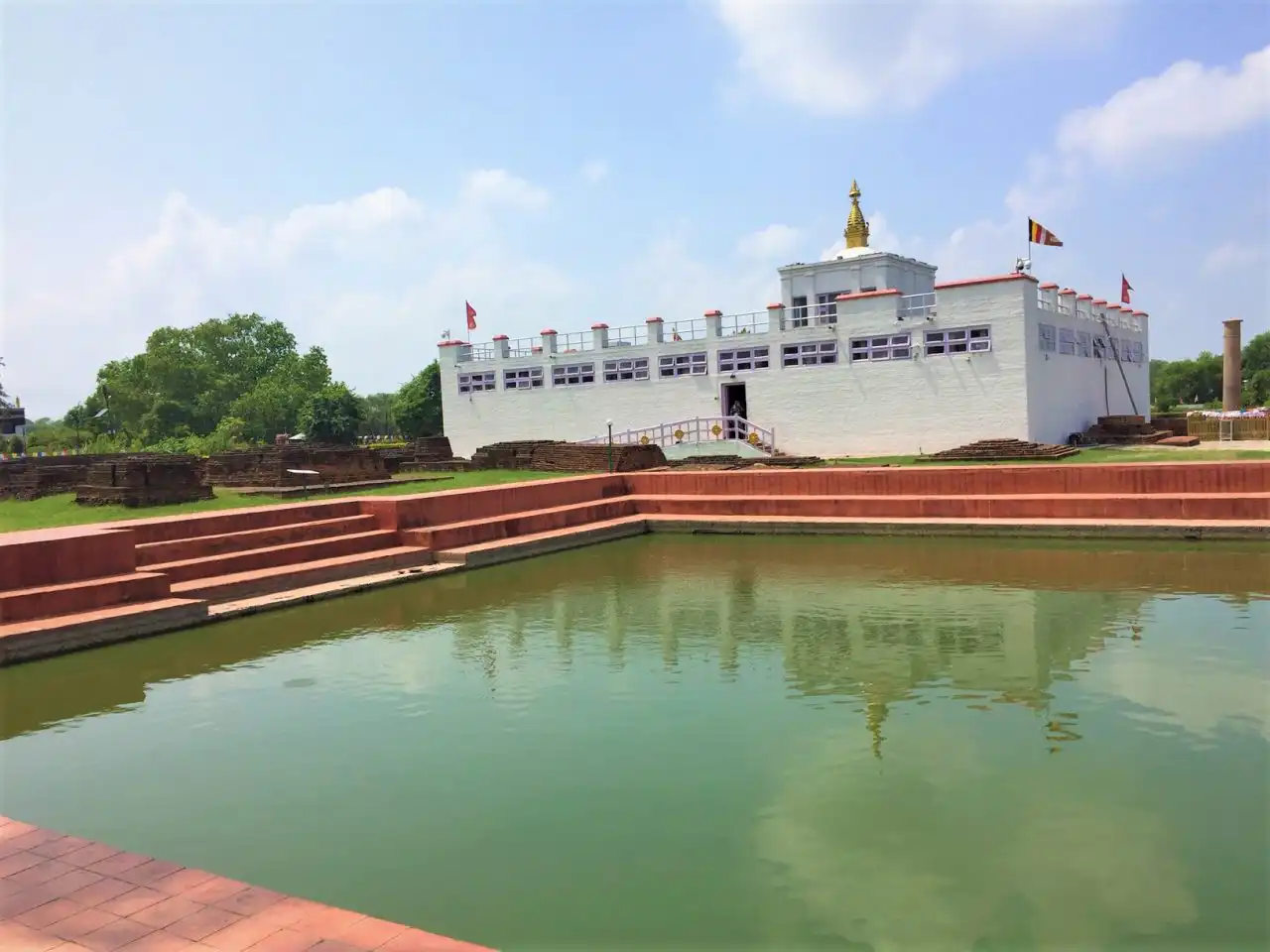
According to ancient Buddhist scriptures, Queen Maya Devi gave birth to Siddhartha Gautama in 623 BCE in the Lumbini garden, under a Sal tree. This event is commemorated at the Maya Devi Temple, which houses the exact spot of Buddha’s birth, marked by a stone slab and the Nativity Sculpture. Adjacent to the temple stands the Ashoka Pillar, erected by Emperor Ashoka in 249 BCE, bearing an inscription in Brahmi script that identifies Lumbini as the birthplace of Buddha .

The rediscovery of Lumbini in 1896 by General Khadga Shamsher and archaeologist Dr. Alois Anton Führer brought global attention to the site. Excavations revealed ancient structures dating back to the 3rd century BCE, including remnants of monasteries and stupas, underscoring Lumbini’s longstanding role as a center for Buddhist pilgrimage .

Cultural Heritage

Lumbini’s cultural landscape is a testament to its enduring spiritual legacy. The site encompasses the Sacred Garden, the Monastic Zone, and the Cultural Center and New Lumbini Village.

  • Sacred Garden: This area includes the Maya Devi Temple, the Ashoka Pillar, the Marker Stone, the Nativity Sculpture, the Puskarini Sacred Pond, and other structural ruins of Buddhist stupas and viharas. The garden remains the epicenter of the Lumbini area and consists of monuments of archaeological and spiritual importance .

  • Monastic Zone: Spanning an area of one square mile, the monastic zone is divided into two zones: the East Monastic Zone, representing the Theravada school of Buddhism, and the West Monastic Zone, representing Mahayana and Vajrayana schools. Many countries have established Buddhist stupas and monasteries in the monastic zone with their unique historical, cultural, and spiritual designs .

  • Cultural Center and New Lumbini Village: This area comprises the Lumbini Museum, Lumbini International Research Institute, World Peace Pagoda of Japan, Lumbini Crane Sanctuary, and other administrative offices. These institutions focus on the history and heritage of Lumbini and promote research and education related to Buddhism .

Lumbini’s designation as a UNESCO World Heritage Site in 1997 underscores its outstanding universal value and the need for its conservation and management .

Spiritual Significance

Lumbini serves as a hub for meditation and spiritual practice. Centers like the Panditarama Lumbini International Vipassana Meditation Center and Dhamma Janani offer courses in Vipassana meditation, providing practitioners with opportunities to delve into mindfulness and inner peace . These centers attract individuals seeking spiritual growth and tranquility in the birthplace of Buddha.

The site’s serene environment, including the Sacred Garden and the Puskarini Pond, enhances its appeal as a place for reflection and meditation. Pilgrims and visitors often find solace in the garden’s calm atmosphere, ideal for contemplation .

Archaeological Discoveries

The rediscovery of Lumbini in 1896 by General Khadga Shamsher and archaeologist Dr. Alois Anton Führer brought global attention to the site. Excavations revealed ancient structures dating back to the 3rd century BCE, including remnants of monasteries and stupas, underscoring Lumbini’s longstanding role as a center for Buddhist pilgrimage .

Monastic Zones

Lumbini’s monastic zones, divided into eastern and western sectors, showcase a diverse array of monasteries built by Buddhist communities from around the world.

  • East Monastic Zone: This area features Theravada monasteries from countries like Thailand, Myanmar, and Sri Lanka. Notable structures include the Royal Thai Monastery, constructed from gleaming white marble, and the Myanmar Golden Temple, designed to resemble the Shwedagon Pagoda in Yangon .

  • West Monastic Zone: This zone houses Mahayana monasteries from nations such as China, Japan, and South Korea. The Dae Sung Shakya Temple from South Korea stands out as one of the tallest monasteries in Lumbini, offering accommodation to visitors .

These monasteries, each reflecting their country’s architectural styles, contribute to Lumbini’s cultural mosaic and offer spaces for meditation and reflection.

Meditation and Spiritual Practice

Lumbini serves as a hub for meditation and spiritual practice. Centers like the Panditarama Lumbini International Vipassana Meditation Center and Dhamma Janani offer courses in Vipassana meditation, providing practitioners with opportunities to delve into mindfulness and inner peace . These centers attract individuals seeking spiritual growth and tranquility in the birthplace of Buddha.

Natural Beauty and Tranquility

Beyond its historical and spiritual allure, Lumbini’s serene environment enhances its appeal. The Sacred Garden, encompassing the Maya Devi Temple and Ashoka Pillar, offers a peaceful setting adorned with ancient trees, ponds, and prayer flags. The Pushkarini Pond, where Queen Maya is believed to have bathed before Buddha’s birth, adds to the site’s sanctity . Visitors often find solace in the garden’s calm atmosphere, ideal for meditation and contemplation.

Conclusion

Lumbini stands as a testament to Nepal’s rich cultural and spiritual heritage. Its historical landmarks, diverse monasteries, and tranquil ambiance make it a must-visit destination for those seeking spiritual enrichment and a deeper understanding of Buddhism’s origins.

Bandipur

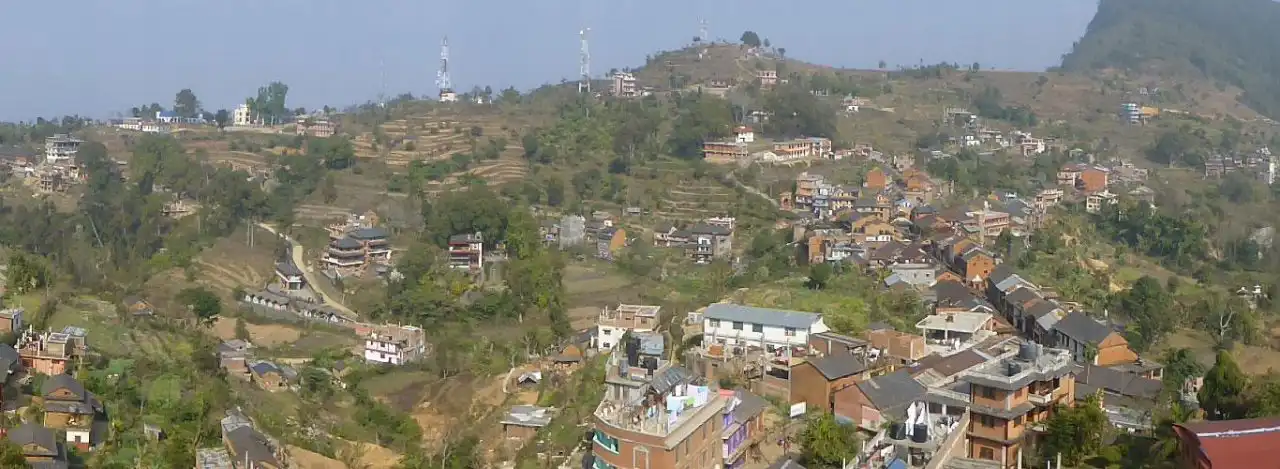
Bandipur is a hidden amid the vast expanse of lush green hills. The small town of Bandipur is the perfect embodiment of Newari settlements in Nepal. Unlike others, the small town’s beauty is due to the traditional architecture of the houses in the city that have been preserved to this day. The rarity of modern houses and settlements and the rich cultural presence in this place is what make Bandipur one of the best places to visit in Nepal.

Bandipur lies just 143km west of Kathmandu and is located a diversion away from the road that connects Kathmandu and Pokhara. Thus, it is the perfect place to take a night’s rest while traveling from Kathmandu to Pokhara.

The history of Bandipur suggests that it once used to be one of the essential stops in Tibet’s trade route. Few of the traditional shops remained from when it was the trade route in Bandipur. Most of the houses’ architecture dates back to the 18th century, making it a museum of a kind that depicts the lifestyle of the people in the 18th century in perfection.

Bandipur was formerly a Magar village, but as times have passed, several other settlers have now made Bandipur their home, which includes Brahmins, Chhetri, Newar, and Gurungs, and so on.

What makes the experience even more wholesome is the warm and welcoming attitude of the residents, which is not different from people’s attitudes back in the 18th century. The traditional houses are adorned with a variety of flowers, making the sight pleasing to the eye. The junctures and streets are also riddled with several small and large temples, increasing Bandipur’s cultural significance.

Bandipur is a place for relaxation and rejuvenation of energy. Away from the bustling city of Kathmandu, it is the best place to enjoy strolls at your own pace while taking in the spectacular mountain sights and the clear air. Guests can enjoy warm local tea in the local tea house or a cup of coffee with a book in a hand in the local bakeries. The local bakeries are a touch of the modern era in the otherwise traditional town.

On top of the culture is the breath-taking view of mountain ranges accompanied by a range of wide green hills. A small trek to the Martyrs memorial park or the nearby Tudhikhel (park) introduces the enthralling bird-eye view of Kathmandu valley along with a myriad of other settlements along the way. There is also the option of a 30-minute walk to the viewpoint of Tani Mai Temple from where one can see the panoramic sight of stunning mountain ranges.

There are also options for biking or hiking adventures in Bandipur. The most famous is the hiking trail to Siddha Gufa, which is the largest cave in Nepal. Chanting can be heard continuously from deep within the cave, which is home to a resident Sadhu. From the cave, the view of mountain vistas and the rushing Marsayangdi River becomes even clearer. The whole hike to the cave and the feeling of tranquillity once you reach the cave is nothing but refreshing. There is also a Launchpad just above the town from where travellers can enjoy paragliding. 

Other famous attractions in Bandipur village include the Bindabasini Temple, Tindhara, Raniban, etc. Raniban, which translates to the queen’s forest, is notorious for being one of Nepal’s most haunted places.

Bandipur’s quiet and isolated environment is what makes it one of the best travel destinations in Nepal.

Pokhara

Located west of Kathmandu at a distance of 203 km, Pokhara’s valley is the second-largest valley in the hilly region of Nepal. It is also one of the most visited travel destinations in Nepal. This popularity of Pokhara is courtesy of all the wide range of activities which you can enjoy here accompanied by the stunning sight of mountain vistas, shimmering lakes, and dense green forests. These activities include different kinds of adventure sports, treks, tours, and so on. These activities are also the opportunity to experience the unique lifestyle of the people living in Nepal’s hilly regions.

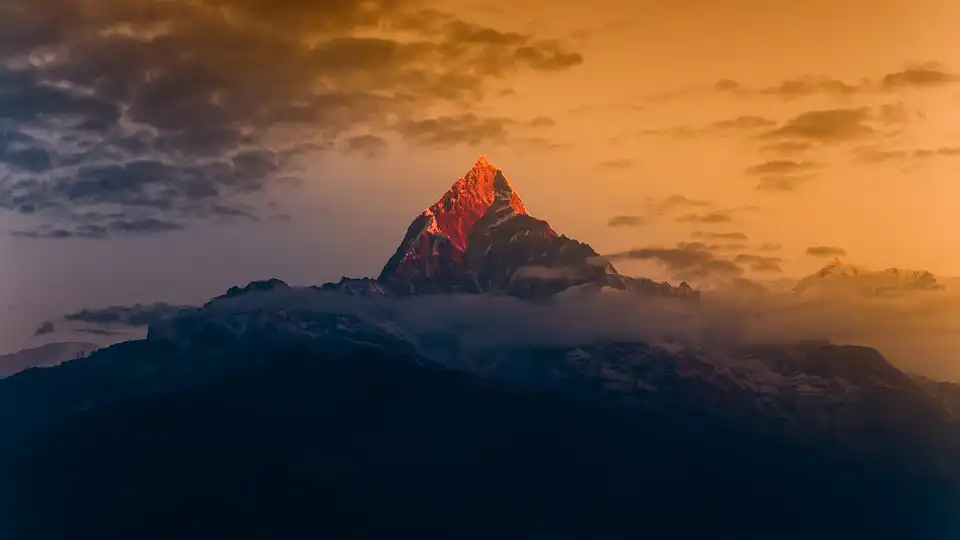
The natural beauty of Pokhara is unrivaled. It is a gateway to countless trekking routes to the Annapurna region. One of the most famous treks globally, the Annapurna Base Camp trek, also starts from here! So, Pokhara is surrounded by the spectacular view of the Annapurna range, followed by other snow-covered peaks. The assemblage of mountain peaks includes Dhaulagiri (8167m), Annapurna II (7937m), Machhapuchhre (6993m), Manaslu, and so on. Travelers can take a short trek to popular destinations like Sarangkot, Shanti Stupa, and so on to bask in the close-up view of the marvelous Himalayan ranges and a beautiful bird-eye view of Pokhara Valley. The view of mountains is more evident during the spring and autumn season.

Pokhara is also gifted with many water bodies, including lakes like Phewa Lake and Begnas Lake. The Seti-Gandaki river flows throughout Pokhara’s valley, creating several gorges that are hundreds of meters deep. Pokhara’s most enthralling thing is its porous underground, which has allowed the formation of several underground caves.

Gupteshwor Cave and Mahendra Cave are two of the most visited caves in Nepal, which reside in Pokhara. Just outside the entrance of Gupteshwor is also the stunning waterfall named Patale Chhango (a.k.a. Davis Falls).

The fascinating rise and fall in altitude in a short distance is the specialty of Pokhara. Owing to this, travelers can enjoy several extreme sports at an affordable price. One can enjoy bungee jumping, white water rafting in the Seti River, zip-lining (fastest zip line in Nepal), paragliding, and so on. To come down from the extreme sports rush, you can then enjoy a relaxing day drifting along the Fewa Lake in a boat and enjoy bird watching.

Pokhara also has high cultural importance. It contains many temples and stupas that are visited by many Hindu and Buddhist Pilgrims every year. The Bindabasini temple, which lies in the middle of Phewa Lake, is one of Pokhara’s most popular pilgrim destinations. There is also the Gupteshwor cave where the sacred statue of Lord Shiva resides. Stupas like the World peace stupa (Shanti stupa) and Matepani Gumba are extremely important to the Buddhist pilgrims.

The lifestyle of the Pokhara valley is a mix of modern and traditional lifestyles. On the one hand, the outskirt of Pokhara valley perfectly depicts Nepal’s hilly regions’ lifestyle. The lone mud houses with a thatched roof, terraced paddy fields, and traditional farming methods and agriculture are common features of Nepal’s hilly regions, which can be found in Pokhara.

On the other hand, the nightlife of Pokhara is stunning. The lakeside area is filled with countless bars and restaurants which are open until late at night. It is the best atmosphere to wind off from a tiring trekking journey with a beer in one hand and overlooking the light reflecting from Phewa Lake.

Bird watching in Nepal

Nepal is a utopia for bird watchers from all around the world. Albeit small in size, the country of Nepal hosts several wildlife conservation areas that are dedicated to protecting its unique flora and fauna.  Under this protective umbrella, Nepal hosts a group of over 850 species of birds. Most of these species of birds reside in the Birds and Biodiversity Areas (IBAs) of Nepal. More than 500 species of birds can be found in and around Kathmandu alone. Some of the birds’ species are native to and can only be found in certain parts of Asia, including Nepal.

Bird Watching in Nepal

Bird watching in itself is a rejuvenating endeavor, but bird watching in Nepal is a different experience altogether. For one, there is the thrill of looking over some of the rarest and most beautiful species of birds in the world. And then there is the backdrop of stunning mountain ranges and the picturesque natural beauty of Nepal. The white and green background illuminates the birds’ beauty, so get your camera ready to capture perfect photographs.

Bird Watching in Southern Plain

The tropical forests of the Terai region of Nepal host the total number of birds in Nepal. Koshi Tappu Wildlife Reserve is one of the best places for bird watching in Nepal as it holds a total of 423 species of birds, of which 170 species can be viewed in a day. It is also home to 13 of the most endangered species of birds in Nepal.

Grey-headed Fish Eagles, Black-bellied Tern, Indian Skimmer, White-Tailed Eagles, Imperial Eagles, Spot Bellied Pelican, Black-necked stork, Yellow-vented warbler are among the many species that can be seen from the Koshi Tappu Wildlife Reserve.

Chitwan National Park also holds many near-extinct species like Indian Spotted Eagle, Bengal Florican, Grey-crowned Prinia, Slender Billed Babbler, and so on. Bardia National Park and Shuklaphanta Wildlife Reserve are also among the places best for bird-watching in Nepal.

Bird Watching around Kathmandu Valley

Shivapuri, for bird watchers, is a must-visit site. The Spiny Babbler, which was considered the only endemic bird of Nepal, can be found in the forests of Shivapuri National Park. It is extremely shy so locating one is always a once-in-a-lifetime experience for anyone, especially bird-watchers.

There are also places around Kathmandu, which are famous as bird watching sites. These include places like Godavari, Phulchowki, Nagarjun, Rani Ban, Bagmati River, and the beautiful Taudaha Lake, where you can enjoy the beautiful view of several migratory birds.

Bird Watching in Mountains of Nepal

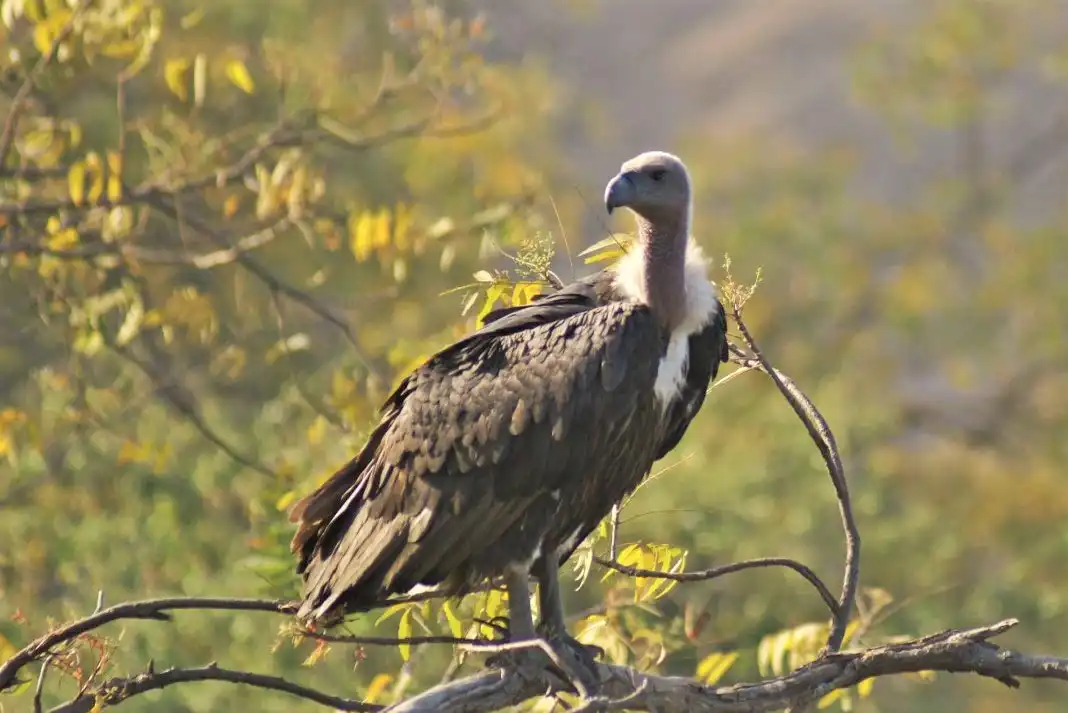
The mountain regions of Nepal are filled with several species of predatory birds like eagles and vultures. Danphe (Impeyan Pheasant), the national bird of Nepal, can be found best in the higher altitudes. Also, Wood Snipe, Nepal Wren-Babbler, Cinereous Vultures, Himalayan Monal, and so on can be spotted in the higher altitudes.

 Best time for Bird Watching in Nepal

Bird-watching in Nepal is extremely affordable and cheap if you have your bird-watching equipment. If not, you can buy high-quality equipment in Nepal at a reasonable price as well. Most of the bird-watching trips last for one day to 15 days according to your wishes.

The best time for bird watching falls between October and March. At this time, you can not only view a larger species of birds under the clear skies but are also greeted with the stunning view of mountains in the background.

Conclusion

For avid bird-watchers, Nepal is a site of extreme importance and one you shouldn’t miss out on. The view of hundreds of species of endangered birds flying along the tall Himalayan Massifs is something that will remain in your memories forever.

Patan Durbar Square

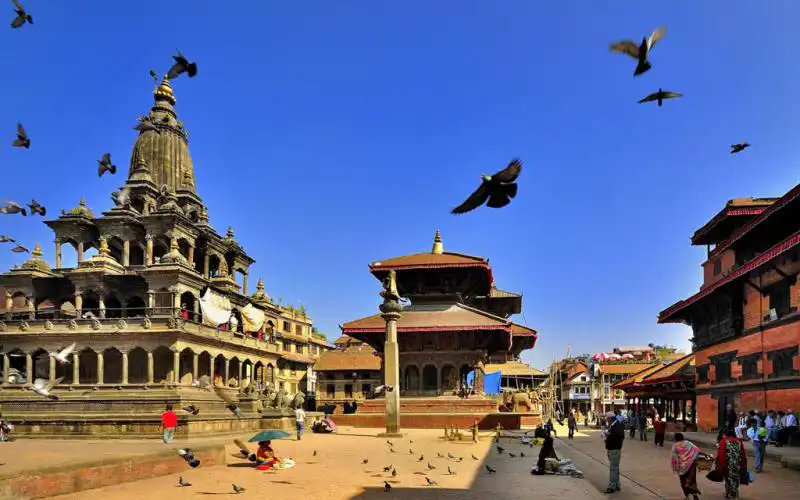
Patan Durbar Square lies in the heart of Lalitpur. It is one of the three Durbar Squares present in the Kathmandu Valley, also known for its extreme cultural and architectural importance in Nepal. Patan Durbar Square has also been listed as a World Heritage Site by UNESCO and is one of Nepal’s most visited places.

Patan, where Durbar Square lies, is one of the oldest cities in Nepal. Ancient scriptures also point towards Patan as one of the more prosperous cities in those times. Newar settlements mostly surround it. There is more than 100 courtyard surrounding the Patan Durbar Square. Patan also holds 56 significant temples, which are still preserved to this day. The square has religious significance for both Hindus and Buddhists.

Patan Durbar Square is best known for its immense historical and cultural importance in Nepal. Although its establishment’s real history is unknown, the royal square is filled with architectural monuments erected by the kings of the Malla Dynasty, dating back to the 1600s. The unique style of architecture is the focal point of Patan Durbar Square. Visitors are always in awe at the tall pagoda-style palaces, wide courtyards, and ancient statues and scriptures. The windows and doors in the palaces are made of wood and have intricate carvings of flowers, goddesses, and other figures which depict the cultural beliefs of people living in Patan in ancient times.

The most famous important temple which lies inside the square is the Krishna Mandir, which contains a shrine dedicated to Lord Krishna. The temple gets crowded with devoted believers of Lord Krishna during Krishnajansthami. Other major temples in the square include the Bhimsen Temple, Vishwanath Temple, and Taleju Bhawani Temple, all of which were established in the 1600s. The temples, red brick pavements, the busy markets surrounding the square, and the sight of old buildings with similar architecture to the palaces make travelers feel like they have traveled back in time.

Unfortunately, during the earthquake of 2015, most of the monuments were severely damaged. Most of the damages have already been mended with renovations, and some are still being renovated.

Art and craftsmanship are abundant in and around Patan Durbar Squares. As you pass through the narrow stone-paved pathways, you will come across several metal craftsman workshops and art workshops. The art is mainly focused on the painting of gods and goddesses and the natural monuments flaunting Nepal’s natural and cultural beauty. The art of wood crafts and Thanka painting has also been handed over to new generations, and you can find a glimpse of it here and there.

Rich cultural presence defines the environment of Patan Durbar Square. Festivities like the Rato Macchindranath Jatra fill Patan’s streets with joy every year as thousands of people crowd around the Durbar Square to celebrate.

The marketplaces surrounding Durbar Square are also one of its specialties. The feeling of warmth as you enjoy local Newari Delicacies, sitting in the old local houses, cannot be replicated anywhere else. Travelers can also look through several spice markets and buy exotic spices to take home to their family and let them enjoy the local delicacy as well. Metal statues and wood carvings make for a perfect souvenir.

The art, architecture, and rich cultural ambiance of Patan Durbar Square are sure to leave a lasting memory. This makes Patan Durbar Square one of the must-visit sites in Nepal and the world.

Everest Expedition

Introduction

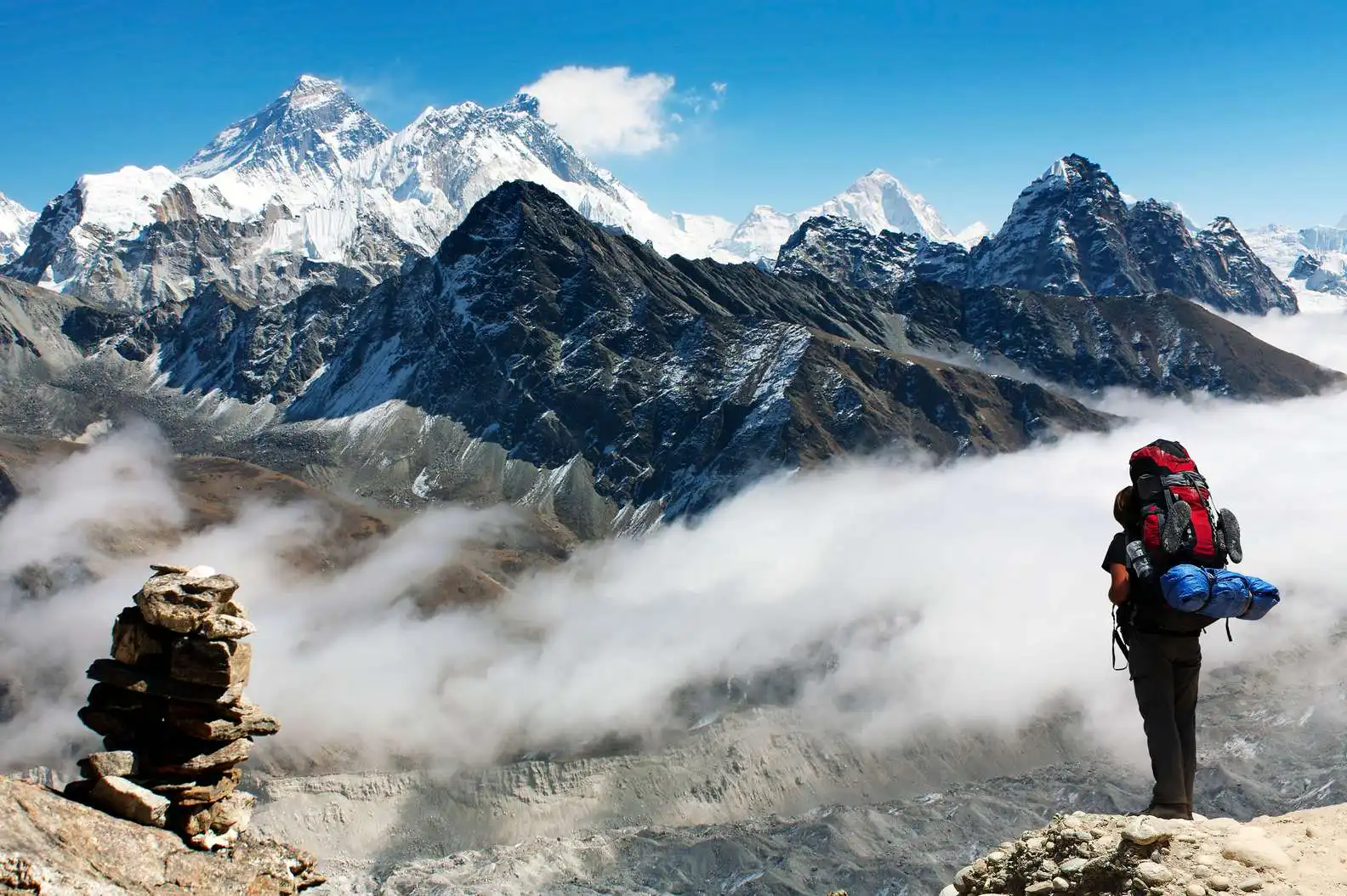
The Everest region of Nepal is home to the world’s most astounding adventures. From the generally simple low-elevation journeys to demanding high-altitude climbs, the Everest expedition is loaded with stunning rushes that draw experienced searchers from everywhere around the globe. The most energizing and challenging experience of all, however, is the Everest Expedition. Climbing Mount Everest is, without a doubt, a benchmark of climbing accomplishments.

The Everest Peak, shadowing over the Khumbu valley, oblige to the winding mountain trails dabbed with vibrant rhododendrons, stone stupas, and vacillating prayer flags. The well-trampled trails drive climbers and trekkers up and on towards the snowcapped pinnacle of the world’s highest mountain.

Decorated with prayer wheels, yak herders, and distant Sherpa towns, the Khumbu gives climbers a fluctuated scene adorned with traditional riches. Open to be climbed both from the Nepali southern side and the Tibetan northern side. The Everest Expedition is a challenging experience that genuinely embraces the confounding feeling of rush and energy that the Himalayan valley offers.

Everest Expedition Highlights

  • Take in the social and natural magnificence of Khumbu.
  • Climb the Highest Mountain on the planet, an accomplishment just a modest bunch of individuals on the Earth have done.
  • Experience directly the Sherpa culture of the region
  • Take in the traditional Himalayan territory of the Sagarmatha National Park, a natural UNESCO World Heritage Site.

 Everest Expedition via South Side

The southern essence of Everest, which lies in Nepal, is the more celebrated side of the Himalayas for mountain climbers. As referenced, Nepal pulls in many climbers from all over the world who all rush to Khumbu to get unique perspectives and amazing sights of the Everest massif.

The southern side of the endeavor generally starts with a short departure from Kathmandu to Lukla, and the excursion to the mountain ridge is filled with Sherpa customs and culture. Traversing from one town onto the next and passing along tiny settlements and pasturelands- the adventure isn’t just about summiting Everest. It is also about appreciating and taking in the Himalayan magnificence and the excellence of the Sherpa culture that has continued in the mountains for quite a long time.

Journey of the Everest Expedition via South Side

The general insight of climbing Mount Everest since showing up in Kathmandu precedes about 60 days, making the expedition last about nine weeks (more or less). In any case, it is good to remember that during such an endeavor, the climate can be inconsistent, and various factors can handicap the ascension.

Days 3 to 12 are journeying days, where climbers will travel the Khumbu valley and the foothills. And from that point forward, the climbing time frame begins from the Everest base camp. This climbing period is anticipated to last up to about 51 to 60 days.

The latter week of the expedition is usually spent on clearing the base camp and returning to Kathmandu. Nonetheless, individuals and climbers need to note that the end of the climb and traveling doesn’t mean they can get back to typical life immediately. The body needs an ideal opportunity to rest and get acclimated to various conditions once more. It is additionally fundamental to give your psyche time to handle what has occurred on the campaign and plan for ordinary reality. This can take up to half a month or even more.

Here is a summary of the Everest Expedition venture from the south

Kathmandu to Everest Base Camp

The underlying excursion of the journey is the excursion to the base camp. The trekking trail starts from Lukla. The traveling course takes climbers to numerous noticeable towns and villages of the Khumbu valley through the Sagarmatha National Park. Going through destinations like the town of Namche Bazaar, Tengboche, and Dingboche, among numerous others, the climbers can experience innumerable cases where they can appreciate the soaring views of the Everest massif. Blended in with the Sherpa culture, the excursion to base camp is filled with serenity and natural excellence.

 EBC to Camp 1

From the base camp, the next subsequent stage of the excursion is at Camp 1. Typically, climbers go through the Khumbu Icefall to prepare for the high-altitude landscape of the mountain. The Khumbu Icefall is situated at the top of the Khumbu Glacier and the foot of the Western Cwm. It is naturally arranged at an elevation of 5,486 meters (17,999 ft.). The icefall is quite possibly the riskiest phase of the South Col course to Everest’s expedition. The Khumbu Glacier framing the icefall moves at an expected 0.9 to 1.2 m (3 to 4 ft.) speed down the mountain consistently.

Camp 1 to Camp 2

The next part of the excursion is arriving at Camp 2. This subsequent camp is arranged at the western cwm of the southern face of the mountain. Cut by gigantic sidelong precipices, the western cwm is a comprehensive, leveled, delicately undulating icy valley bowl ending at the foot of the Lhotse Face of Mount Everest. This bowl bears the passageway into the upper Western Cwm. In this part, climbers should cross to the extreme right, over to the base of Nuptse, to a restricted path known as the Nuptse corner. From that point, climbers can see the upper 2,400 meters (7,900 ft.) face of Everest—the principal look at Everest’s upper inclines since showing up at Base Camp.

Camp 2 to Camp 3

The broad western flank of Lhotse is known as the Lhotse Face. It is an unavoidable piece of the conventional southeast course up Everest. Camp III sits mostly up this climbing mass of cold blue ice. The Lhotse Face rises exactly 3,700 feet from its base to the top, inclined at 40 and 50-degree pitches with some infrequent 80-degree swells. The whole course is fixed with ropes, and climbers should get into the cadenced development of pulling and venturing up. Kicking steps while dwelling one’s front focused into the hard blue ice is the dominating development needed for this relentless climb up towards the South Col.

Further up, the Yellow Rock guards the passageway. The Yellow Rock, a sedimentary sandstone rock, is an unmistakable component of the Lhotse Face. Climbers need around 100 meters of rope to navigate it. This is the principal rock a climber addresses up the course to Everest. The path turns out to be clear when one has arrived at this point in the trip; the climber’s crampons hit hard rock. The highest point of the yellow band is at 25,000 feet.

Camp 3 to Camp 4

The destination of the great camp, otherwise called Camp IV, is a stone’s throw wind-cleared seat at Everest and Lhotse, situated at 26,000 feet. “Col” is Welsh for seat or pass. This area was named by the British Reconnaissance Expedition of 1921, which saw it from a vantage point exactly seven miles away. Utilizing all undertakings as the high camp, Camp 4 is a 3000-foot vantage to the summit.

Further on, the climbers then arrive at the Southeast Ridge at 27,700 feet at a spot known as “The Balcony.” At this stage, the climbers can rest and enjoy the sunrise light illuminating the summit toward the east and south. From here, the snow edge rises 1,000 feet toward the South Summit and delicately curves toward the north.

Camp 4 to South Summit

The climbers’ first tiny triumph of the day, the South Summit, is a ping pong table-size arch of snow and ice at 28,700 feet. From here, the climbers can get the perspective on the last obstructions in front of them: The Hillary Step, the Cornice Traverse, and the previous slants to the highest point. It is customary to change oxygen bottles to have a new container for the last climb and get back toward the South Summit.

The Cornice Traverse, a 400-foot long even segment of rock and wind-cut snow, is effectively the ascension’s scariest segment. Climbers should cautiously cross a blading edge of snow among jagged rocks. This is the most uncovered part of the whole ascension, and a slip up to the right would dispatch a climber tumbling down the 10,000-foot Kangshung Face. Likewise, a drop up to one side will send one lurching 8,000 feet down the Southwest Face if the ropes aren’t fixed.

South Summit to Mount Everest Summit

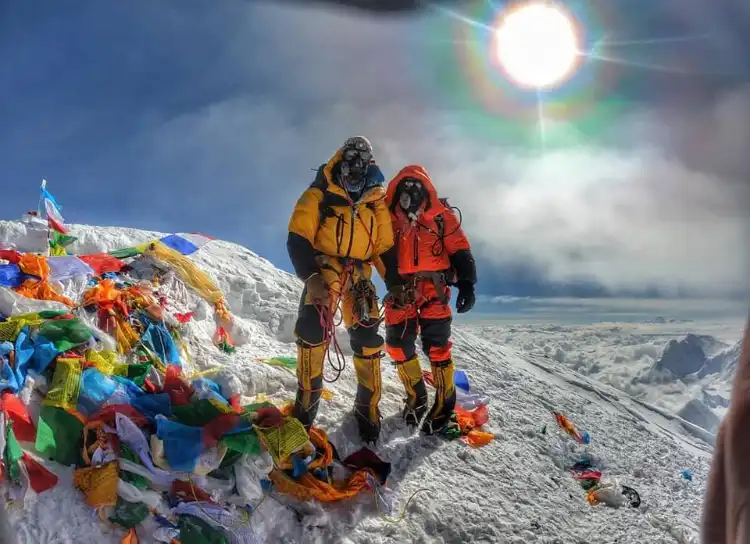
The most acclaimed actual component on Everest, the Hillary Step, at 28,750 feet, is a 40-foot spike of snow and ice. First ascended in 1953 by Edmund Hillary and Tenzing Norgay, the Hillary Step is the last obstruction for the climbers to reach the delicately calculated culmination slants of the Everest peak. Current climbers go through a fixed rope here to rise the Hillary Step. The climbers can wonder about Sir Hillary and Tenzing’s accomplishment in ascending this excellent mountaineering deterrent. After all, they did it without fixed ropes and used what is presently viewed as crude ice ascending hardware.

The View from the Top

Covering the space, the size of an outdoor table, the snow-shrouded highest point slants steeply away toward the north, southwest, and east. The 360-degree display presents the Tibetan Plateau toward the north, and the incomparable Himalayan pinnacles of Kanchenjunga towers toward the east, Makalu toward the southeast, and Cho Oyu west. On a crisp morning, it appears as though one can see across a large portion of the snowy landmass.

Descend from Mount Everest to Base Camp

It will usually take climbers almost 30 minutes to descend from the highest point. From that point, you will descend to the overhang in roughly two hours. Then, the descent to South Col from the Balcony is just an hour’s trip downwards.

The majority of the climbers spend a night at South Col after summiting Mount Everest. In any case, some groups descend to camp two and stay there for the time being. Thus, most climbers won’t require supplemental oxygen on the off chance that they stay at camp 2.

Everest Expedition Difficulty Level

Mount Everest lies at the height of 8848.86 m above sea level. The airport at Lukla is situated at an altitude that is twofold as that of Kathmandu. The rise increments 600-800 meters each day, and the degree of oxygen diminishes as you climb along the path. Intense Mountain Sickness brought about by the expanding height can get deadly if not treated well on time. Therefore, having acclimatization breaks at intervals during the expedition will help you a great deal during the excursion.

The Mount Everest campaign takes a long time and planning. It has numerous difficulties, including an amazingly chilly climate, low frosty temperatures, and troublesome climbing conditions. Climbers need to adapt for an extended length before showing up at the summit and descending back.

The Everest season, for the most part, starts in late March. It begins after climbers show up at Everest base camp after taking a trip to Lukla. At that point, climbers journey across Phakding, Namche, Tengboche, Dingboche, and Gorakshep before showing up at EBC. As mentioned, Southern Everest Base Camp (5,300 meters) is the beginning stage of the campaign.

The ice and its moving labyrinth are a portion of the obstacles that climbers need to confront. Climbers will adapt to the camps at different phases of their excursion. They adjust during the 4th and 5th days at the base camp and climb mostly over the Khumbu glacial mass. Furthermore, in the wake of adapting for a few days there, they move up to camp 1.

Mount Everest is one of the most challenging regions on this planet. The temperature on Mount Everest is beneath freezing all year round. The temperature at the highest point of the mountain in January is average -33° F (-36° C), and it can even drop to -76° F (-60° C). The average culmination temperature in July is -2° F (-19° C). As a rule, it’s cooler around evening time and a smidgen hotter during the day. So in winter (Jan to Feb), the days here at the highest point will be colder.

Preparing for Everest Expedition

To arrive at Everest’s highest point, you should be in top physical condition, passionate, and a great mental condition. Benchmarks for functional preparation for the expedition include successful past trips of over 20,000 ft. at whatever point conceivable.

Previous high-altitude trips will acquire you with experience in managing equipment and hardware, taking care of incredibly cold temperatures and outrageous elevation. You also develop strong cramping abilities both on and off a rock, snow, and ice, and how to rappel with a pack on, utilizing ascenders and jumars on a fixed-line. Aside from substantially elevated heights, snow, and ice-climbing abilities, you need colossal strength, perseverance, high-altitude resilience, and solid cardiovascular molding.

Remember that you have reasonable preparedness expected to help you during the expedition since you practice routinely at fundamentally lower altitudes. Cardiovascular wellness is essentially insufficient. You should zero in on building a functional physique at lower heights as they are important to make sure your body will withstand rising 4,000 ft. altitude.

The altitude gain also includes an increase in strength and endurance that progresses with days conveying 50–60 lbs. Although you won’t be given much weight on Everest, by molding your body to that high resistance level, you will have assembled additional stores that will serve you very well on the mountain. In addition, you will unavoidably begin to lose musculature and muscle versus fat from being at outrageous elevations for a very long time.

Everest Expedition Equipment

There is a considerable rundown of hardware needed for any move up to Mount Everest. During the expedition, continuously request your guide for a total rundown of what the person expects you to bring. Much of the equipment can also be accessible to lease in Nepal or Tibet. From Ice tomahawks to crampons, the equipment for the expedition is crucial for a successful climb. There are Carabineer frameworks used as well, including Snow-capped climbing outfits. Ascenders help make sure that the climbers are safe, and head protectors ensure safety during the trip. Sun caps, sew caps, and buffs are also essential.

Other pieces of equipment essential for the trip include Ski goggles, face covers, and nose masks. Headlamps are used during the dark, and a -40 down hiking bed with an inflatable resting cushion and a froth cushion can bring comfort in the blizzards of the mountain. Lights, 55-liter rucksacks, two duffel packs, and toiletries sack hold your essentials. Additionally, water filtration packs also make the trip easier. Sunscreens, running shoes, high-elevation boots, and climbing boots are also important. Finally, ensure you also pack suitable garments for a 60-day mountaineering trip with temperatures going from 30 °C to -30 °C.

Conclusion

Mount Everest presents an outstanding mountaineering experience. To remain at the zenith of the Earth is one of life’s most remunerating encounters. An endeavor to Everest is an undertaking that requires a tremendous measure of commitment and assurance. But the result is quite worth the trouble. The scene from the top and the Himalayan views all along the journey will remain on your mind forever. Paired with the cultural riches and traditions of the region, this is truly a journey of a lifetime.

Fishing in Nepal

Nepal is known around the world for its rich water resources. In these small and large water bodies, Nepal hosts a stunning variety of fishes species, more than 180 in number. Most of these water bodies flow with sharp currents and are not suitable for fishes to survive. However, there is no shortage of tranquil fishing spots for anglers across the country.

Fishing in Nepal is an experience where you get to relax in your seat, waiting for the fish to bite the bait while gazing at the stretch of mountain vistas and lush green hills above you. Most of these fishing spots also follow a strict ‘catch and release’ policy, collaborating with ‘leave only footprints and take only memories.’ Fishing in Nepal is also a perfect way to get a look into the lifestyle of the residents who have been living in these river banks for centuries.

 Population Destination for Fishing in Nepal

Seti Karnali River is one of the most popular sites among anglers in Nepal. The fast currents of the Seti River are home to a stunning variety of fishes, including Silver Masher, Giant Catfish, Sahar, etc. It is also a famous spot for white-water rafting, so you can combine the thrill of fishing with the feeling of rushing through the currents yourself.

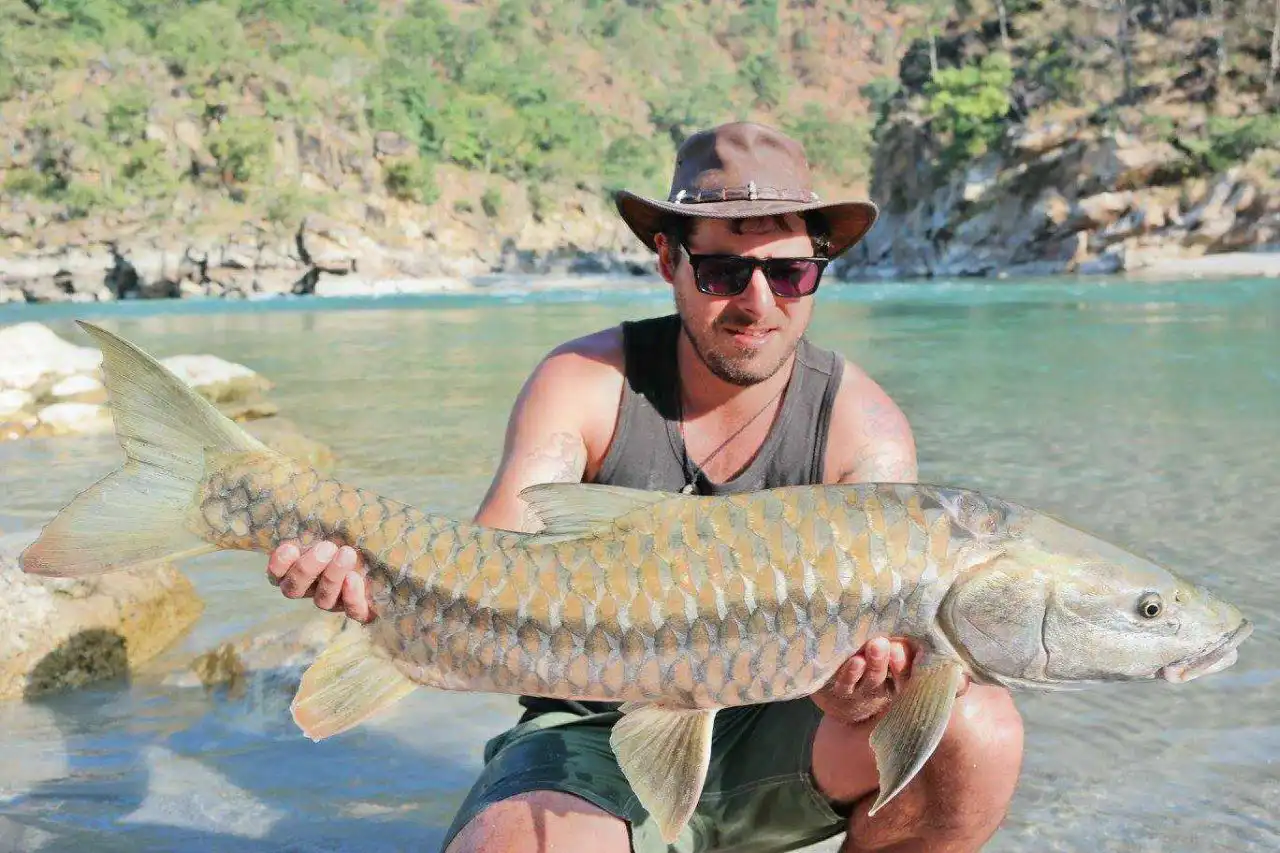
The Tamor River, accompanied by the view of Mt. EverestMt. Kanchenjunga, and Mt. Makalu, is also famous for hosting a wide variety of fishes. The 26 species of fishes found in the Tamor River also include Golden Mashers, Balitoridae, Cobitidae, Psilorhynchus, and others. The Koshi Rivers, which fall from the Himalayas of Tibet, also allow an unforgettable fishing experience combined with an exciting trek and camping adventure.

The Balephi River in the Langtang region, the Kali Gandaki River that flows through Mustang, and the beautiful Babai River, which resides in the Babai valley, is also famous for fishing activities. These rivers reside in a wide variety of fishes, including Golden Mashers, Golden Goonch Catfish, Indian Trout Barb, etc. Combined with fishing experience is also the experience of walking along the mountainous Langtang region, Mustang’s hidden kingdom, and the spectacular Bardia National Park. These are the more isolated spots for fishing where one can enjoy the peace and tranquility of nature.

Phewa Lake in Pokhara also follows as one of the most easily accessible fishing spots in Nepal. Common carp, Golden Mashers, along other species are found most commonly in Phewa Lake. The view from Phewa Lake is breathtaking, which includes vast terraced paddy fields, densely forested hills, and high glistening mountains. The stunning Phewa Lake in itself is a sight to see. Other popular fishing spots in Nepal include the Karnali River, Sunkoshi River, Trishuli River, Ankhu River in Dhading, etc.

The Cost and Best Season for Fishing in Nepal

A fishing trip around any of these regions will cost from $1500 to $2000, including the price for accommodation, food, and fishing equipment. The total trip lasts for 5-7 days, depending on where you are going. The best time for fishing in Nepal is during the warmer seasons, which fall between September to December. The time from March to May is also perfect for fishing in Nepal.

Conclusion

The combination of fishing and the natural beauty of Nepal makes for a perfect fishing expedition. The fresh air and silent surroundings distance you from stressful everyday life, giving you an ideal gateway into nature.

Skydiving in Nepal

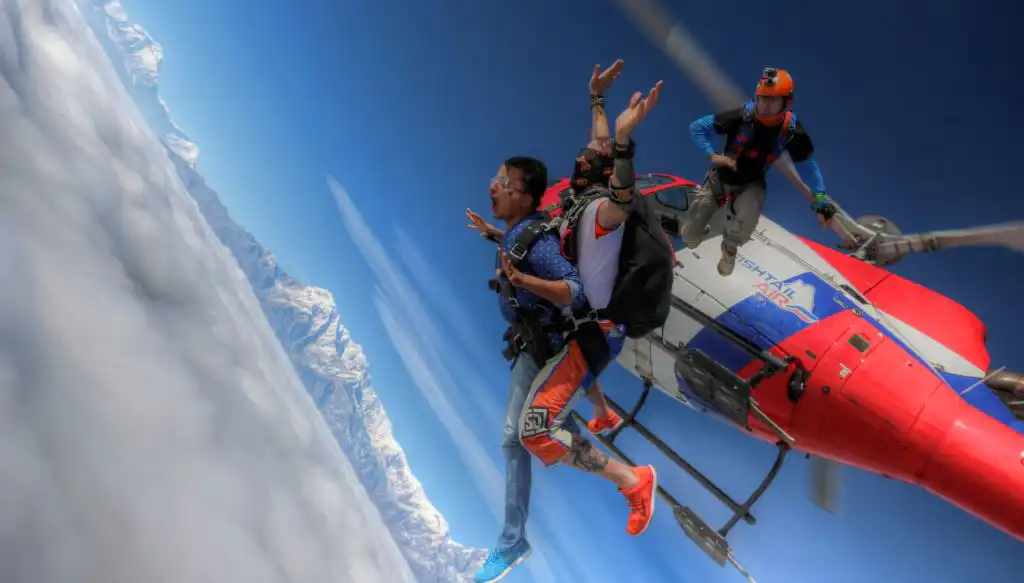
Nepal is undeniably a paradise for skydivers from all over the world. The sharp rise and fall in the topography of Nepal provide a stunning landscape-perfect sky diving experience. Whist falling through the clouds, you are greeted with the breathtaking view of flourishing green hills, broad valleys, and rushing water streams. Sky diving in Nepal is a truly majestic experience, one that will remain in your memories forever.

Nepal accommodates a unique natural diversity that can rarely be found anywhere else in the world. Combined with a stretch of the highest mountains globally, Nepal is considered a natural paradise. The peculiar environment is what makes sky diving in Nepal different from anywhere else in the world. The thrill of sky diving gets multiplied by ten folds when you combine the 360-degree view of the stunning Himalayan mastiffs to the mix.

Everest Skydiving

Everest skydiving is one of the most famous sky diving spots in the world. It also contains the world’s highest drop zone, which is at an altitude of 5164m in Gorakshep. The jump from the helicopter on top of Gorakshep is followed by a spine-crushing freefall of over 5000m.

While sky diving in the Everest Region, the cold air providing resistance to the fall flows directly from the highest mountain in the world, Mt. Everest (8848.86m). With the world’s highest mountains as your background, Everest’s skydiving experience is simply an out-of-this-world experience.

A mountain trekking experience and the Everest Base Camp, one of the most popular trekking spots globally, can also be added to the mix of Everest Sky-diving experience. You can slowly acclimatize your way to the skydiving sport while also enjoying the company of the residents. Trekkers can experience the rich culture and lifestyle of people living in the adverse mountain conditions while also feeling at peace in the tranquil landscapes of Sagarmatha National Park.

Pokhara Skydiving

Sky diving in Pokhara can be experienced from Pame Dada at a drop height of 3658m. The thrilling sky diving experience in Pokhara is only heightened with the view of panoramic mountain ranges like Mt. Machhapuchhre, Mt. Dhaulagiri, Mt Annapurna, and so on, along with the breathtaking 360-degree view of Fewa Lake. The terraced paddy fields, lush green hills, and sparse settlements only make Pokhara’s beauty stand out even more.

Nepal is one of the safest places for skydiving. There have rarely been records of mishaps while skydiving in Nepal. All of Nepal’s skydiving endeavors are overlooked by experienced and well-trained staff who always take safety as the top priority.

 The cost and best season for skydiving in Nepal

The price for skydiving in Nepal varies according to the place and the nationality of the skydiver. In Pokhara, the price of a jump per person is $1100 for Tandem and $130 for solo skydiving. For Everest Sky-diving, a solo jump costs $25000, and for tandem jumpers, the price is $35000. These prices can be applied to international tourists, only excluding Indian nationals.

The best season for skydiving in Nepal is during autumn (September to December) and spring (March to May). The visibility is clearer during the autumn and spring, and the higher altitudes rarely get any adverse weather conditions.

 Conclusion

Nepal is a sky diver’s utopia. Free falling along the snowy wonders with the highest mountains in the world as your background is not something that can be experienced every day. If you plan on a riveting trip to Nepal, then certainly do not miss out on the once-in-a-lifetime experience of skydiving in Nepal.

Mountain Biking in Nepal

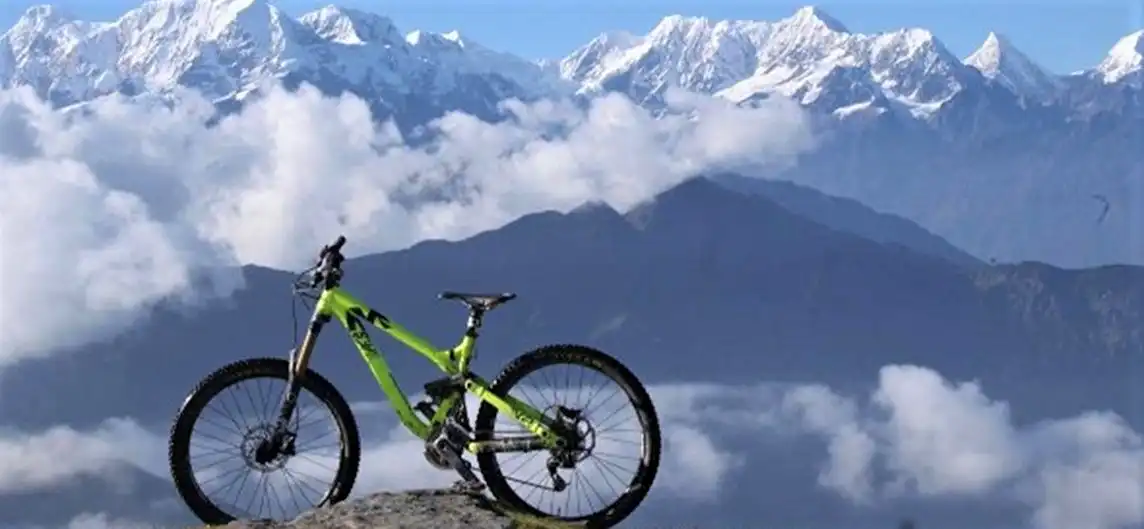
Nepal’s riveting mountain ranges fall under the list of most popular travel destinations for outdoor adventures in the world. Mountain biking in these tranquil grounds under the breathtaking Himalayas is one of the best experiences for adventure seekers in Nepal.

The Ride of Lifetime

Mountain biking in Nepal is a unique combination of riveting biking adventures and a marvelous view of the world’s tallest mountains. It is also one of the fastest-growing sports in the country. There are countless mountain biking trails along the mountain regions, each of them accompanied by marvelous views that will take your breath away. Most of these trails are hidden and waiting to be discovered. Others have not yet been touched by human feet at all. The thrill of knowing that you might be the first to take the path or step on these lands is something not many will get to experience in their lifetime, which is why one must partake in a mountain biking trip at least once while in Nepal.

 Best Mountain Biking Locations in Nepal

Mountain biking in Nepal can be accessed by people of all age groups and experience levels. Most of the biking trails in the mountain regions are of medium difficulty, suitable for novice learners. Biking trails around the beautiful hills of Kathmandu valley and Pokhara are the most popular among new mountain bikers. Kathmandu Valley is best known for its view of terraced paddy fields and a stretch of lush green hills. Some of the most famous biking trails in Kathmandu are Sankhu, Budhanikantha, Nagarkot, Bhaktapur, Godavari, DakshinKali, and Khokana, and so on.

In Pokhara, Mountain biking greets you with a close-up view of snow-covered angels like Mt. Machhapuchhre, Mt. Annapurna, and many other smaller peaks. Beginners can also enjoy some mountain biking around the city of Gorkha and Trishuli. Or one can take the scenic route against Terai’s plane lands like Chitwan National Park, Mahendra Highway, and Lumbini.

There are also steep and rugged off-road biking trails, perfect for those who are looking for a sense of challenge. The Annapurna mountain region of Nepal is filled with action-packed courses, which are ideal for risk-takers. The Annapurna region grants the view of some of the highest mountains in the world like Annapurna Massif, Mt. Dhaulagiri, and other peaks that stand at the height of 6000m or above. The Annapurna Circuit and Upper Mustang trails are the most popular and most challenging biking trails in Nepal. The Annapurna Circuit reached up to 5416m, which is challenging to acclimatize to, especially while riding a bike.

The Everest region also supports several biking trails. With the added thrill of sighting the highest mountain globally, Mt. Everest, mountain biking in the Everest Region, is even more pleasing. The Everest region also contains a series of biking trails of both medium and high levels of difficulty.

The cost and best season to do Mountain Biking in Nepal

Most of the mountain biking adventures in Nepal last for 14-15 days, especially in the mountain regions, and only for 1-2 days at most in Kathmandu places. On average, the cost for a 15 days trip is $1000 without renting a bike. The price for renting a bike is approximately $1-$2 per day. The best time for mountain biking in Nepal is from March to December when the views are more evident, and the mountains are covered in snow.

Conclusion

Mountain biking in Nepal is a new outdoor sports experience that is swiftly rising in popularity. Grab the opportunity now to be the first to place their feet in these rugged mountain trails. It is an opportunity of a lifetime.

Free Travel Guide
Your Perfect, Personalized Journey Awaits
profile
Bhagwat Simkhada Seasoned Travel Expert with Years of Experience