notification

Great News, From June 2025 Mount Kailash is open for individuals holding Indian Passports

Everest Expedition

Introduction

The Everest region of Nepal is home to the world’s most astounding adventures. From the generally simple low-elevation journeys to demanding high-altitude climbs, the Everest expedition is loaded with stunning rushes that draw experienced searchers from everywhere around the globe. The most energizing and challenging experience of all, however, is the Everest Expedition. Climbing Mount Everest is, without a doubt, a benchmark of climbing accomplishments.

The Everest Peak, shadowing over the Khumbu valley, oblige to the winding mountain trails dabbed with vibrant rhododendrons, stone stupas, and vacillating prayer flags. The well-trampled trails drive climbers and trekkers up and on towards the snowcapped pinnacle of the world’s highest mountain.

Decorated with prayer wheels, yak herders, and distant Sherpa towns, the Khumbu gives climbers a fluctuated scene adorned with traditional riches. Open to be climbed both from the Nepali southern side and the Tibetan northern side. The Everest Expedition is a challenging experience that genuinely embraces the confounding feeling of rush and energy that the Himalayan valley offers.

Everest Expedition Highlights

  • Take in the social and natural magnificence of Khumbu.
  • Climb the Highest Mountain on the planet, an accomplishment just a modest bunch of individuals on the Earth have done.
  • Experience directly the Sherpa culture of the region
  • Take in the traditional Himalayan territory of the Sagarmatha National Park, a natural UNESCO World Heritage Site.

 Everest Expedition via South Side

The southern essence of Everest, which lies in Nepal, is the more celebrated side of the Himalayas for mountain climbers. As referenced, Nepal pulls in many climbers from all over the world who all rush to Khumbu to get unique perspectives and amazing sights of the Everest massif.

The southern side of the endeavor generally starts with a short departure from Kathmandu to Lukla, and the excursion to the mountain ridge is filled with Sherpa customs and culture. Traversing from one town onto the next and passing along tiny settlements and pasturelands- the adventure isn’t just about summiting Everest. It is also about appreciating and taking in the Himalayan magnificence and the excellence of the Sherpa culture that has continued in the mountains for quite a long time.

Journey of the Everest Expedition via South Side

The general insight of climbing Mount Everest since showing up in Kathmandu precedes about 60 days, making the expedition last about nine weeks (more or less). In any case, it is good to remember that during such an endeavor, the climate can be inconsistent, and various factors can handicap the ascension.

Days 3 to 12 are journeying days, where climbers will travel the Khumbu valley and the foothills. And from that point forward, the climbing time frame begins from the Everest base camp. This climbing period is anticipated to last up to about 51 to 60 days.

The latter week of the expedition is usually spent on clearing the base camp and returning to Kathmandu. Nonetheless, individuals and climbers need to note that the end of the climb and traveling doesn’t mean they can get back to typical life immediately. The body needs an ideal opportunity to rest and get acclimated to various conditions once more. It is additionally fundamental to give your psyche time to handle what has occurred on the campaign and plan for ordinary reality. This can take up to half a month or even more.

Here is a summary of the Everest Expedition venture from the south

Kathmandu to Everest Base Camp

The underlying excursion of the journey is the excursion to the base camp. The trekking trail starts from Lukla. The traveling course takes climbers to numerous noticeable towns and villages of the Khumbu valley through the Sagarmatha National Park. Going through destinations like the town of Namche Bazaar, Tengboche, and Dingboche, among numerous others, the climbers can experience innumerable cases where they can appreciate the soaring views of the Everest massif. Blended in with the Sherpa culture, the excursion to base camp is filled with serenity and natural excellence.

 EBC to Camp 1

From the base camp, the next subsequent stage of the excursion is at Camp 1. Typically, climbers go through the Khumbu Icefall to prepare for the high-altitude landscape of the mountain. The Khumbu Icefall is situated at the top of the Khumbu Glacier and the foot of the Western Cwm. It is naturally arranged at an elevation of 5,486 meters (17,999 ft.). The icefall is quite possibly the riskiest phase of the South Col course to Everest’s expedition. The Khumbu Glacier framing the icefall moves at an expected 0.9 to 1.2 m (3 to 4 ft.) speed down the mountain consistently.

Camp 1 to Camp 2

The next part of the excursion is arriving at Camp 2. This subsequent camp is arranged at the western cwm of the southern face of the mountain. Cut by gigantic sidelong precipices, the western cwm is a comprehensive, leveled, delicately undulating icy valley bowl ending at the foot of the Lhotse Face of Mount Everest. This bowl bears the passageway into the upper Western Cwm. In this part, climbers should cross to the extreme right, over to the base of Nuptse, to a restricted path known as the Nuptse corner. From that point, climbers can see the upper 2,400 meters (7,900 ft.) face of Everest—the principal look at Everest’s upper inclines since showing up at Base Camp.

Camp 2 to Camp 3

The broad western flank of Lhotse is known as the Lhotse Face. It is an unavoidable piece of the conventional southeast course up Everest. Camp III sits mostly up this climbing mass of cold blue ice. The Lhotse Face rises exactly 3,700 feet from its base to the top, inclined at 40 and 50-degree pitches with some infrequent 80-degree swells. The whole course is fixed with ropes, and climbers should get into the cadenced development of pulling and venturing up. Kicking steps while dwelling one’s front focused into the hard blue ice is the dominating development needed for this relentless climb up towards the South Col.

Further up, the Yellow Rock guards the passageway. The Yellow Rock, a sedimentary sandstone rock, is an unmistakable component of the Lhotse Face. Climbers need around 100 meters of rope to navigate it. This is the principal rock a climber addresses up the course to Everest. The path turns out to be clear when one has arrived at this point in the trip; the climber’s crampons hit hard rock. The highest point of the yellow band is at 25,000 feet.

Camp 3 to Camp 4

The destination of the great camp, otherwise called Camp IV, is a stone’s throw wind-cleared seat at Everest and Lhotse, situated at 26,000 feet. “Col” is Welsh for seat or pass. This area was named by the British Reconnaissance Expedition of 1921, which saw it from a vantage point exactly seven miles away. Utilizing all undertakings as the high camp, Camp 4 is a 3000-foot vantage to the summit.

Further on, the climbers then arrive at the Southeast Ridge at 27,700 feet at a spot known as “The Balcony.” At this stage, the climbers can rest and enjoy the sunrise light illuminating the summit toward the east and south. From here, the snow edge rises 1,000 feet toward the South Summit and delicately curves toward the north.

Camp 4 to South Summit

The climbers’ first tiny triumph of the day, the South Summit, is a ping pong table-size arch of snow and ice at 28,700 feet. From here, the climbers can get the perspective on the last obstructions in front of them: The Hillary Step, the Cornice Traverse, and the previous slants to the highest point. It is customary to change oxygen bottles to have a new container for the last climb and get back toward the South Summit.

The Cornice Traverse, a 400-foot long even segment of rock and wind-cut snow, is effectively the ascension’s scariest segment. Climbers should cautiously cross a blading edge of snow among jagged rocks. This is the most uncovered part of the whole ascension, and a slip up to the right would dispatch a climber tumbling down the 10,000-foot Kangshung Face. Likewise, a drop up to one side will send one lurching 8,000 feet down the Southwest Face if the ropes aren’t fixed.

South Summit to Mount Everest Summit

The most acclaimed actual component on Everest, the Hillary Step, at 28,750 feet, is a 40-foot spike of snow and ice. First ascended in 1953 by Edmund Hillary and Tenzing Norgay, the Hillary Step is the last obstruction for the climbers to reach the delicately calculated culmination slants of the Everest peak. Current climbers go through a fixed rope here to rise the Hillary Step. The climbers can wonder about Sir Hillary and Tenzing’s accomplishment in ascending this excellent mountaineering deterrent. After all, they did it without fixed ropes and used what is presently viewed as crude ice ascending hardware.

The View from the Top

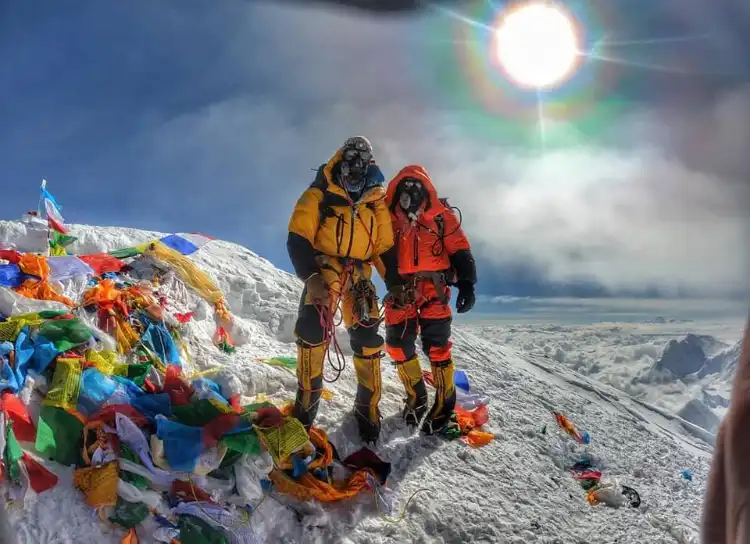
Covering the space, the size of an outdoor table, the snow-shrouded highest point slants steeply away toward the north, southwest, and east. The 360-degree display presents the Tibetan Plateau toward the north, and the incomparable Himalayan pinnacles of Kanchenjunga towers toward the east, Makalu toward the southeast, and Cho Oyu west. On a crisp morning, it appears as though one can see across a large portion of the snowy landmass.

Descend from Mount Everest to Base Camp

It will usually take climbers almost 30 minutes to descend from the highest point. From that point, you will descend to the overhang in roughly two hours. Then, the descent to South Col from the Balcony is just an hour’s trip downwards.

The majority of the climbers spend a night at South Col after summiting Mount Everest. In any case, some groups descend to camp two and stay there for the time being. Thus, most climbers won’t require supplemental oxygen on the off chance that they stay at camp 2.

Everest Expedition Difficulty Level

Mount Everest lies at the height of 8848.86 m above sea level. The airport at Lukla is situated at an altitude that is twofold as that of Kathmandu. The rise increments 600-800 meters each day, and the degree of oxygen diminishes as you climb along the path. Intense Mountain Sickness brought about by the expanding height can get deadly if not treated well on time. Therefore, having acclimatization breaks at intervals during the expedition will help you a great deal during the excursion.

The Mount Everest campaign takes a long time and planning. It has numerous difficulties, including an amazingly chilly climate, low frosty temperatures, and troublesome climbing conditions. Climbers need to adapt for an extended length before showing up at the summit and descending back.

The Everest season, for the most part, starts in late March. It begins after climbers show up at Everest base camp after taking a trip to Lukla. At that point, climbers journey across Phakding, Namche, Tengboche, Dingboche, and Gorakshep before showing up at EBC. As mentioned, Southern Everest Base Camp (5,300 meters) is the beginning stage of the campaign.

The ice and its moving labyrinth are a portion of the obstacles that climbers need to confront. Climbers will adapt to the camps at different phases of their excursion. They adjust during the 4th and 5th days at the base camp and climb mostly over the Khumbu glacial mass. Furthermore, in the wake of adapting for a few days there, they move up to camp 1.

Mount Everest is one of the most challenging regions on this planet. The temperature on Mount Everest is beneath freezing all year round. The temperature at the highest point of the mountain in January is average -33° F (-36° C), and it can even drop to -76° F (-60° C). The average culmination temperature in July is -2° F (-19° C). As a rule, it’s cooler around evening time and a smidgen hotter during the day. So in winter (Jan to Feb), the days here at the highest point will be colder.

Preparing for Everest Expedition

To arrive at Everest’s highest point, you should be in top physical condition, passionate, and a great mental condition. Benchmarks for functional preparation for the expedition include successful past trips of over 20,000 ft. at whatever point conceivable.

Previous high-altitude trips will acquire you with experience in managing equipment and hardware, taking care of incredibly cold temperatures and outrageous elevation. You also develop strong cramping abilities both on and off a rock, snow, and ice, and how to rappel with a pack on, utilizing ascenders and jumars on a fixed-line. Aside from substantially elevated heights, snow, and ice-climbing abilities, you need colossal strength, perseverance, high-altitude resilience, and solid cardiovascular molding.

Remember that you have reasonable preparedness expected to help you during the expedition since you practice routinely at fundamentally lower altitudes. Cardiovascular wellness is essentially insufficient. You should zero in on building a functional physique at lower heights as they are important to make sure your body will withstand rising 4,000 ft. altitude.

The altitude gain also includes an increase in strength and endurance that progresses with days conveying 50–60 lbs. Although you won’t be given much weight on Everest, by molding your body to that high resistance level, you will have assembled additional stores that will serve you very well on the mountain. In addition, you will unavoidably begin to lose musculature and muscle versus fat from being at outrageous elevations for a very long time.

Everest Expedition Equipment

There is a considerable rundown of hardware needed for any move up to Mount Everest. During the expedition, continuously request your guide for a total rundown of what the person expects you to bring. Much of the equipment can also be accessible to lease in Nepal or Tibet. From Ice tomahawks to crampons, the equipment for the expedition is crucial for a successful climb. There are Carabineer frameworks used as well, including Snow-capped climbing outfits. Ascenders help make sure that the climbers are safe, and head protectors ensure safety during the trip. Sun caps, sew caps, and buffs are also essential.

Other pieces of equipment essential for the trip include Ski goggles, face covers, and nose masks. Headlamps are used during the dark, and a -40 down hiking bed with an inflatable resting cushion and a froth cushion can bring comfort in the blizzards of the mountain. Lights, 55-liter rucksacks, two duffel packs, and toiletries sack hold your essentials. Additionally, water filtration packs also make the trip easier. Sunscreens, running shoes, high-elevation boots, and climbing boots are also important. Finally, ensure you also pack suitable garments for a 60-day mountaineering trip with temperatures going from 30 °C to -30 °C.

Conclusion

Mount Everest presents an outstanding mountaineering experience. To remain at the zenith of the Earth is one of life’s most remunerating encounters. An endeavor to Everest is an undertaking that requires a tremendous measure of commitment and assurance. But the result is quite worth the trouble. The scene from the top and the Himalayan views all along the journey will remain on your mind forever. Paired with the cultural riches and traditions of the region, this is truly a journey of a lifetime.

Fishing in Nepal

Nepal is known around the world for its rich water resources. In these small and large water bodies, Nepal hosts a stunning variety of fishes species, more than 180 in number. Most of these water bodies flow with sharp currents and are not suitable for fishes to survive. However, there is no shortage of tranquil fishing spots for anglers across the country.

Fishing in Nepal is an experience where you get to relax in your seat, waiting for the fish to bite the bait while gazing at the stretch of mountain vistas and lush green hills above you. Most of these fishing spots also follow a strict ‘catch and release’ policy, collaborating with ‘leave only footprints and take only memories.’ Fishing in Nepal is also a perfect way to get a look into the lifestyle of the residents who have been living in these river banks for centuries.

 Population Destination for Fishing in Nepal

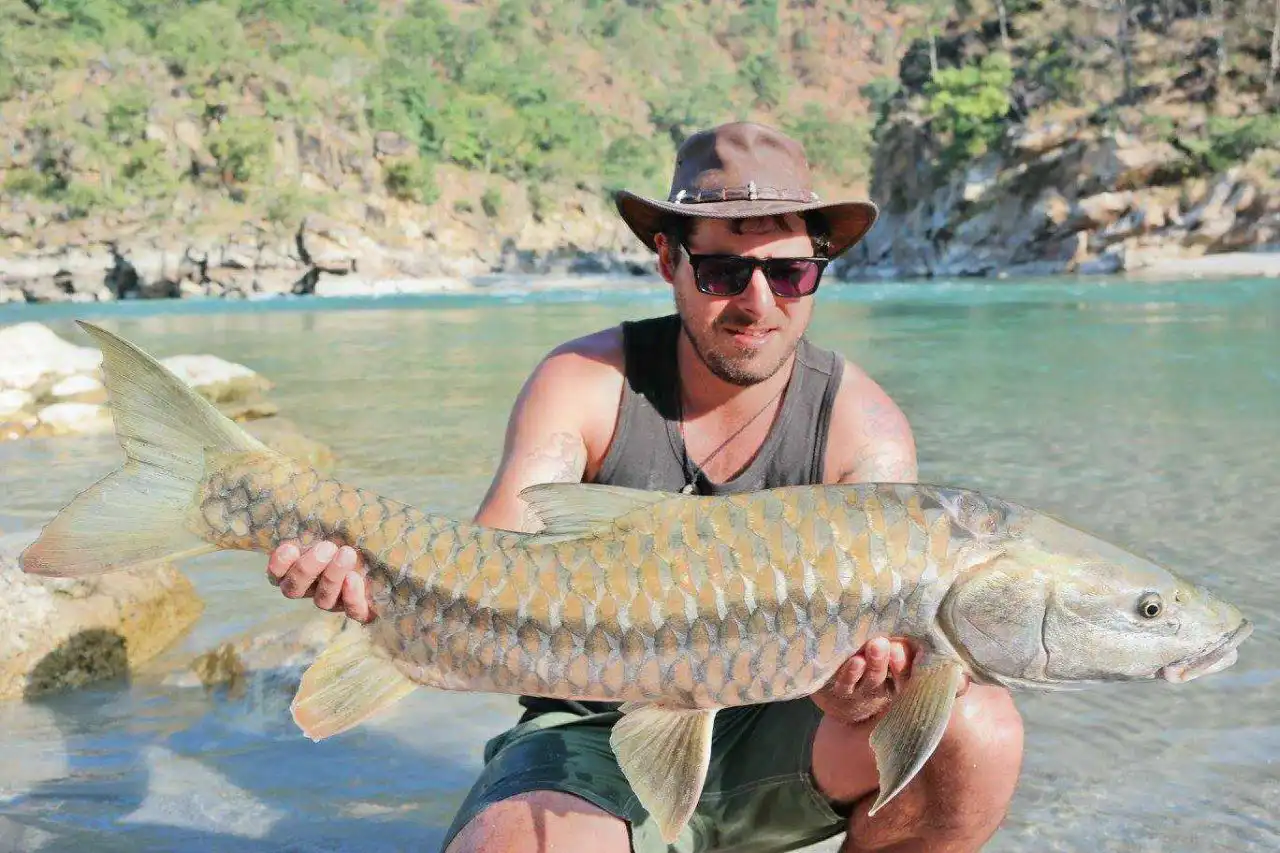
Seti Karnali River is one of the most popular sites among anglers in Nepal. The fast currents of the Seti River are home to a stunning variety of fishes, including Silver Masher, Giant Catfish, Sahar, etc. It is also a famous spot for white-water rafting, so you can combine the thrill of fishing with the feeling of rushing through the currents yourself.

The Tamor River, accompanied by the view of Mt. EverestMt. Kanchenjunga, and Mt. Makalu, is also famous for hosting a wide variety of fishes. The 26 species of fishes found in the Tamor River also include Golden Mashers, Balitoridae, Cobitidae, Psilorhynchus, and others. The Koshi Rivers, which fall from the Himalayas of Tibet, also allow an unforgettable fishing experience combined with an exciting trek and camping adventure.

The Balephi River in the Langtang region, the Kali Gandaki River that flows through Mustang, and the beautiful Babai River, which resides in the Babai valley, is also famous for fishing activities. These rivers reside in a wide variety of fishes, including Golden Mashers, Golden Goonch Catfish, Indian Trout Barb, etc. Combined with fishing experience is also the experience of walking along the mountainous Langtang region, Mustang’s hidden kingdom, and the spectacular Bardia National Park. These are the more isolated spots for fishing where one can enjoy the peace and tranquility of nature.

Phewa Lake in Pokhara also follows as one of the most easily accessible fishing spots in Nepal. Common carp, Golden Mashers, along other species are found most commonly in Phewa Lake. The view from Phewa Lake is breathtaking, which includes vast terraced paddy fields, densely forested hills, and high glistening mountains. The stunning Phewa Lake in itself is a sight to see. Other popular fishing spots in Nepal include the Karnali River, Sunkoshi River, Trishuli River, Ankhu River in Dhading, etc.

The Cost and Best Season for Fishing in Nepal

A fishing trip around any of these regions will cost from $1500 to $2000, including the price for accommodation, food, and fishing equipment. The total trip lasts for 5-7 days, depending on where you are going. The best time for fishing in Nepal is during the warmer seasons, which fall between September to December. The time from March to May is also perfect for fishing in Nepal.

Conclusion

The combination of fishing and the natural beauty of Nepal makes for a perfect fishing expedition. The fresh air and silent surroundings distance you from stressful everyday life, giving you an ideal gateway into nature.

Skydiving in Nepal

Nepal is undeniably a paradise for skydivers from all over the world. The sharp rise and fall in the topography of Nepal provide a stunning landscape-perfect sky diving experience. Whist falling through the clouds, you are greeted with the breathtaking view of flourishing green hills, broad valleys, and rushing water streams. Sky diving in Nepal is a truly majestic experience, one that will remain in your memories forever.

Nepal accommodates a unique natural diversity that can rarely be found anywhere else in the world. Combined with a stretch of the highest mountains globally, Nepal is considered a natural paradise. The peculiar environment is what makes sky diving in Nepal different from anywhere else in the world. The thrill of sky diving gets multiplied by ten folds when you combine the 360-degree view of the stunning Himalayan mastiffs to the mix.

Everest Skydiving

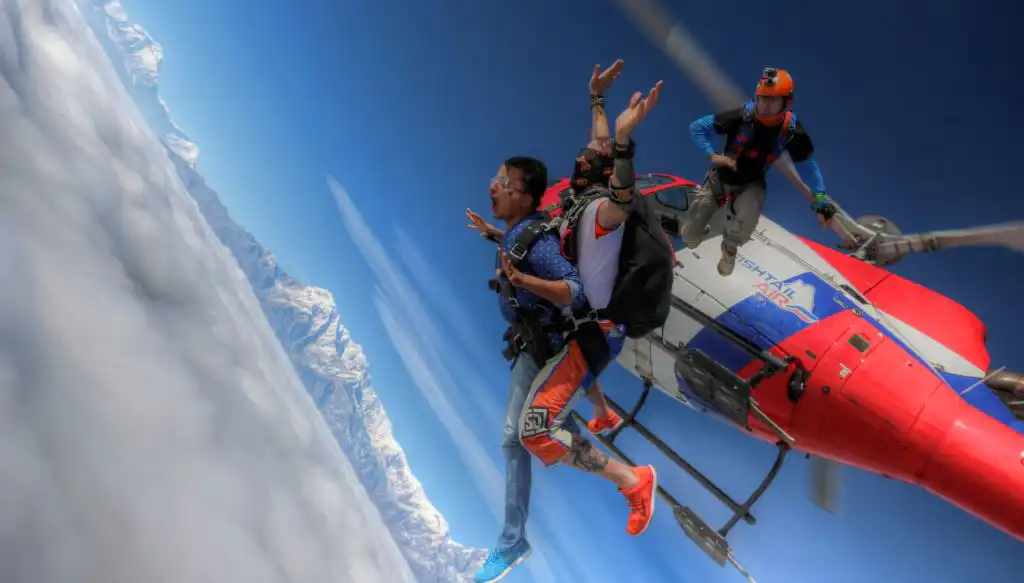
Everest skydiving is one of the most famous sky diving spots in the world. It also contains the world’s highest drop zone, which is at an altitude of 5164m in Gorakshep. The jump from the helicopter on top of Gorakshep is followed by a spine-crushing freefall of over 5000m.

While sky diving in the Everest Region, the cold air providing resistance to the fall flows directly from the highest mountain in the world, Mt. Everest (8848.86m). With the world’s highest mountains as your background, Everest’s skydiving experience is simply an out-of-this-world experience.

A mountain trekking experience and the Everest Base Camp, one of the most popular trekking spots globally, can also be added to the mix of Everest Sky-diving experience. You can slowly acclimatize your way to the skydiving sport while also enjoying the company of the residents. Trekkers can experience the rich culture and lifestyle of people living in the adverse mountain conditions while also feeling at peace in the tranquil landscapes of Sagarmatha National Park.

Pokhara Skydiving

Sky diving in Pokhara can be experienced from Pame Dada at a drop height of 3658m. The thrilling sky diving experience in Pokhara is only heightened with the view of panoramic mountain ranges like Mt. Machhapuchhre, Mt. Dhaulagiri, Mt Annapurna, and so on, along with the breathtaking 360-degree view of Fewa Lake. The terraced paddy fields, lush green hills, and sparse settlements only make Pokhara’s beauty stand out even more.

Nepal is one of the safest places for skydiving. There have rarely been records of mishaps while skydiving in Nepal. All of Nepal’s skydiving endeavors are overlooked by experienced and well-trained staff who always take safety as the top priority.

 The cost and best season for skydiving in Nepal

The price for skydiving in Nepal varies according to the place and the nationality of the skydiver. In Pokhara, the price of a jump per person is $1100 for Tandem and $130 for solo skydiving. For Everest Sky-diving, a solo jump costs $25000, and for tandem jumpers, the price is $35000. These prices can be applied to international tourists, only excluding Indian nationals.

The best season for skydiving in Nepal is during autumn (September to December) and spring (March to May). The visibility is clearer during the autumn and spring, and the higher altitudes rarely get any adverse weather conditions.

 Conclusion

Nepal is a sky diver’s utopia. Free falling along the snowy wonders with the highest mountains in the world as your background is not something that can be experienced every day. If you plan on a riveting trip to Nepal, then certainly do not miss out on the once-in-a-lifetime experience of skydiving in Nepal.

Mountain Biking in Nepal

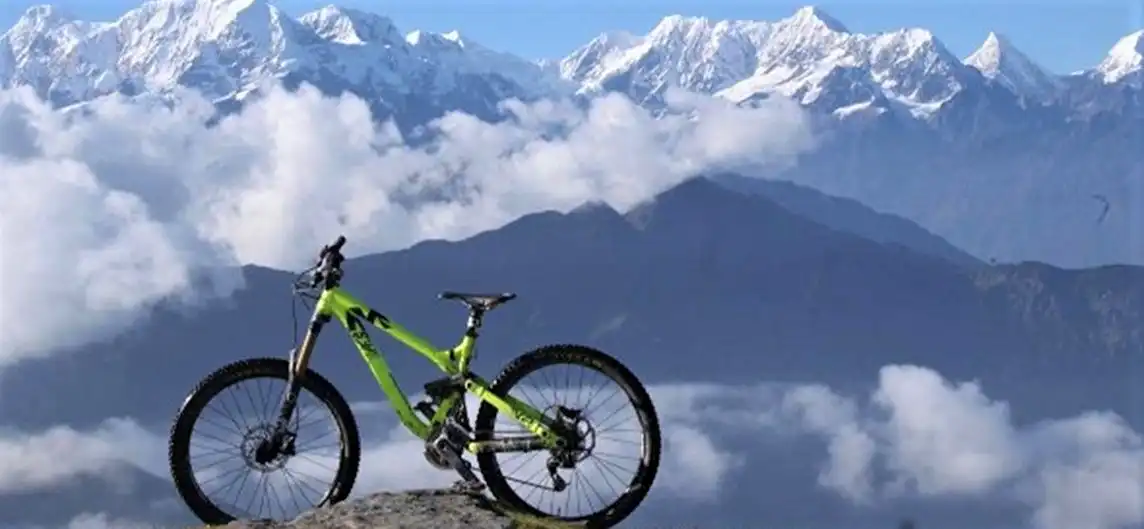
Nepal’s riveting mountain ranges fall under the list of most popular travel destinations for outdoor adventures in the world. Mountain biking in these tranquil grounds under the breathtaking Himalayas is one of the best experiences for adventure seekers in Nepal.

The Ride of Lifetime

Mountain biking in Nepal is a unique combination of riveting biking adventures and a marvelous view of the world’s tallest mountains. It is also one of the fastest-growing sports in the country. There are countless mountain biking trails along the mountain regions, each of them accompanied by marvelous views that will take your breath away. Most of these trails are hidden and waiting to be discovered. Others have not yet been touched by human feet at all. The thrill of knowing that you might be the first to take the path or step on these lands is something not many will get to experience in their lifetime, which is why one must partake in a mountain biking trip at least once while in Nepal.

 Best Mountain Biking Locations in Nepal

Mountain biking in Nepal can be accessed by people of all age groups and experience levels. Most of the biking trails in the mountain regions are of medium difficulty, suitable for novice learners. Biking trails around the beautiful hills of Kathmandu valley and Pokhara are the most popular among new mountain bikers. Kathmandu Valley is best known for its view of terraced paddy fields and a stretch of lush green hills. Some of the most famous biking trails in Kathmandu are Sankhu, Budhanikantha, Nagarkot, Bhaktapur, Godavari, DakshinKali, and Khokana, and so on.

In Pokhara, Mountain biking greets you with a close-up view of snow-covered angels like Mt. Machhapuchhre, Mt. Annapurna, and many other smaller peaks. Beginners can also enjoy some mountain biking around the city of Gorkha and Trishuli. Or one can take the scenic route against Terai’s plane lands like Chitwan National Park, Mahendra Highway, and Lumbini.

There are also steep and rugged off-road biking trails, perfect for those who are looking for a sense of challenge. The Annapurna mountain region of Nepal is filled with action-packed courses, which are ideal for risk-takers. The Annapurna region grants the view of some of the highest mountains in the world like Annapurna Massif, Mt. Dhaulagiri, and other peaks that stand at the height of 6000m or above. The Annapurna Circuit and Upper Mustang trails are the most popular and most challenging biking trails in Nepal. The Annapurna Circuit reached up to 5416m, which is challenging to acclimatize to, especially while riding a bike.

The Everest region also supports several biking trails. With the added thrill of sighting the highest mountain globally, Mt. Everest, mountain biking in the Everest Region, is even more pleasing. The Everest region also contains a series of biking trails of both medium and high levels of difficulty.

The cost and best season to do Mountain Biking in Nepal

Most of the mountain biking adventures in Nepal last for 14-15 days, especially in the mountain regions, and only for 1-2 days at most in Kathmandu places. On average, the cost for a 15 days trip is $1000 without renting a bike. The price for renting a bike is approximately $1-$2 per day. The best time for mountain biking in Nepal is from March to December when the views are more evident, and the mountains are covered in snow.

Conclusion

Mountain biking in Nepal is a new outdoor sports experience that is swiftly rising in popularity. Grab the opportunity now to be the first to place their feet in these rugged mountain trails. It is an opportunity of a lifetime.

Rock Climbing in Nepal

The geography of Nepal allows swift rise and fall in altitude in a short distance. These exciting altitudinal changes are the reason for the natural diversity in Nepal. It is also why Nepal hosts a myriad of adventure sports, including the adventurous rock-climbing endeavor. There are countless sites where you can look for an unforgettable rock-climbing experience in Nepal.

Who Can Join

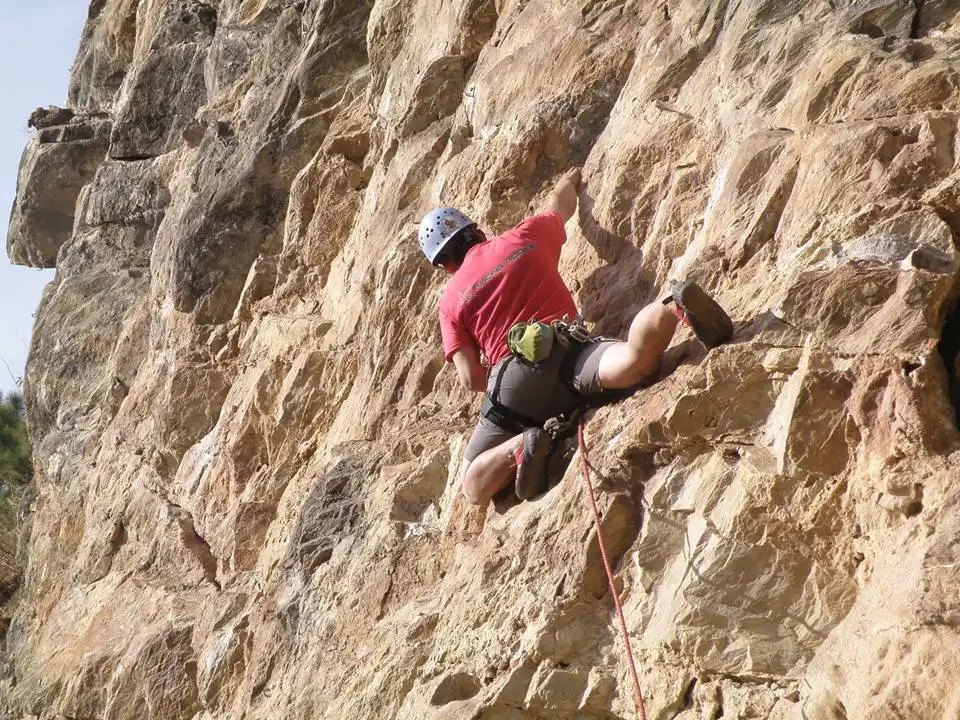
Rock climbing experiences in Nepal are not limited to experts only but can be enjoyed by novice learners. Countless climbing spots of a low, medium, and great difficulty are available in Nepal, suitable for all no matter where they are in levels of experience. However, knowledge of the rock-climbing technique is a must, along with some training and a fit body while tackling the steep rocky ridges of Nepal.

The most popular rock-climbing sites in Nepal are around Kathmandu valley. Due to the short distance for travel, these sites are easily accessible and also cheaper. Balaju, Hattiban, Thame, Kakani are some of the best climbing sites around Kathmandu. Most of these sites reside in the serene forests of Nagarjun, which is a famous religious site in Nepal.

The name Nagarjun comes after the Buddhist philosopher Nagarjuna who is said to have meditated in these forests. Rock climbing in the Nagarjun forest is, thus, a spiritual experience.  As your adrenaline level becomes normal after a difficult climb, you are then greeted with an air of peace and tranquility that surrounds the Nagarjun forest and a breathtaking view of the Kathmandu valet from above.

The Balaju and Hattiban rock-climbing sites fall inside the Nagarjun forests. The Balaju climbing site can be reached with a 30-hour drive from Thamel and is equipped with more than 22 climbing routes. These routes range from grade 4a to 7b+ in terms of difficulty. The rock-climbing site in Hattiban is an hour’s drive from Kathmandu, along with a 20 minutes hike to reach the climbing spot. Hattiban contains more than ten rock-climbing routes, which are graded 6a to 7a in terms of difficulty.

Kakani is on the top of the tier list as the most popular rock-climbing destination of Nepal. It is one and a half-hour drive from Kathmandu. Kakani contains only one large boulder for rock-climbing, which is of 7a grade with six routes. What makes Kakani a popular rock-climbing spot is the stunning picturesque view of mountain ranges, which can be enjoyed from the top of the hill, including Ganesh Himal, Hiuchuli, Annapurna, Dhaulagiri; Gaurishankar Himal, and so on. There is also a mountaineering park nearby with an outdoor climbing wall which you can enjoy.

Bimal Nagar is another one of the places popular for rock climbing. It is 5 hours drive away from Kathmandu and contains a 55-meter rock face with four pitches.

 When to do it

Most of the rock climbing trips in Nepal are one-day trips. So, the price of rock climbing is comparatively lower than anywhere else in the world. A session’s cost is about $100 to $200 if you already have the necessary equipment. You might have to spend a bit more if you do not have the equipment which you can then rent at a low price.

Rock climbing in Nepal can be enjoyed at any time except for the monsoon and winter season because of the slippery rocks and chilly weather. The best time would be between October to late November and March to May.

 Conclusion

Rock climbing in Nepal is an eye-opening experience. The climb’s strain is perfectly countered by the spectacular view of mountain ranges, making it a memory that will last for a lifetime.

Bhaktapur Durbar Square

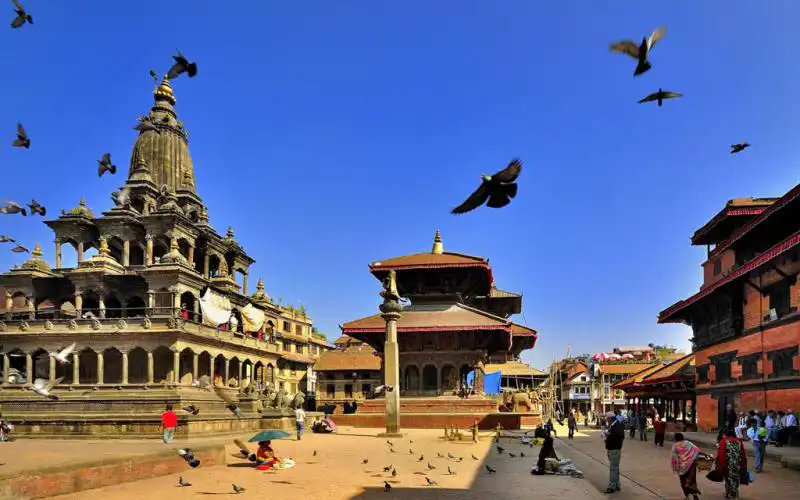
A journey to Bhaktapur Durbar Square is a journey back in time. It is one of the most popular destinations in Nepal, and rightfully so. The environment, ambiance, culture, and lifestyle around Durbar Square have been preserved for hundreds of years and remain the same with only minuscule changes with the times. UNESCO has also acknowledged its significance as it has been listed as a World Heritage Site.

The Bhaktapur Durbar Square is located in the center of Bhaktapur, just 33 km away from Kathmandu and a gateway to the panoramic viewpoint of Nagarkot. The whole square is made from four squares: Durbar Square, Taumadhi Square, Dattatraya Square, and Pottery Square.  Durbar, in Nepali, means palace. Thus, Bhaktapur Durbar Square is the location where the royal palace of Bhaktapur ancient city (also known as Bhadgaon or Khwopa) resided. The area is surrounded by the Newari people’s residents, who are the place’s residents since medieval times.

Khwopa was the capital of Nepal during the reign of the Malla Kingdom and was also the largest of the three Newa kingdoms. The tall ancient temples, red and white bricked pavements, old Newari settlements, ancient stone statues, and the intricate wood carvings make up the aesthetic of Bhaktapur Durbar Square. Visitors feel as though they have traveled back to the time of the Mallas while here, as the place is more isolated and preserved than the other two Durbar Squares.

Several pagodas and Shikhara-style temples surround the royal palace, all of immense cultural significance to Hindu and Buddhist devotees. The Vastala Temple (built-in 17th century), Yakcheswor Temple (built-in 1480), and Naytapola Temple, Bhairav Nath Temple, Dattatraya Temple, Teel Mahadev Narayan Temple, Bhimsen Temple, and many more temples adorn the square from all sides. Among these temples, the Naytapola (five stories) temple has the highest significance in Nepal’s history of ancient architecture. All of these temples were built by the Malla kings during their reign, starting from the 1400s to as late as the 1700s.

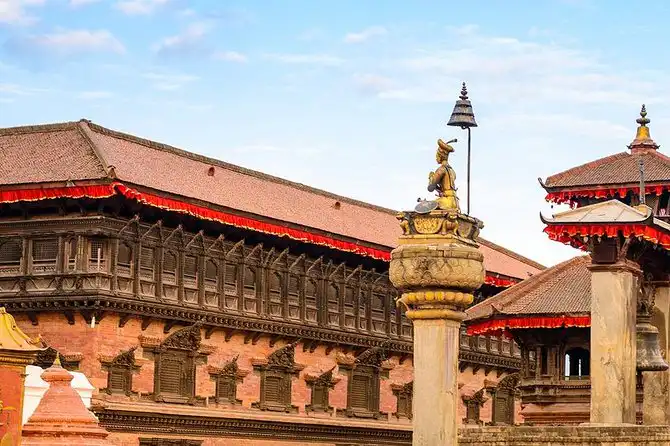
The 55-window palace is one of the most awe-inspiring pieces of architecture in Bhaktapur Durbar Square. The Pujari Math (house of the priest) built in the 15th century by King Yaksha Malla is famous for its wood carvings and the peacock window situated at the house’s eastern face. Siddha Pokhari, which is located at the gate of Bhaktapur, is also a famous tourist spot.

The art of wood carving has been preserved well in Bhaktapur and has been handed down from generation to generation. There is no lack of shops that sell traditional Thangga paintings, wood carvings, pottery, traditional clothes, and metal statues.

Bhaktapur Durbar Square also gains its popularity from the local delicacies that travelers can enjoy here. Among the others is the delicacy Ju Ju Dhau which is a type of locally produced yogurt that is made and distributed in cups made from clay. Bhaktapur is also famous for its assortment of local herbs, spices, and sweets.

Bhaktapur is also known to be a city of festivities and celebrations. Several Jatra, pujas, and other festivities, which the residents enjoy with a blast throughout the year. Some of the most famous and thrilling festivals celebrated in Bhaktapur are Bisket Jatra, Kumar Khasti, Gai Jatra, Gunla, and Yomari Purnima.

Bhaktapur Durbar Square is thus a perfect travel destination for people of all ages and interests. All in all, Bhaktapur Durbar Square is one of the places that travelers should not miss out on the opportunity to visit while in Nepal.

In conclusion, Bhaktapur Durbar Square stands as one of Nepal’s most treasured historical and cultural landmarks, offering visitors a remarkable glimpse into the country’s medieval past. The square’s preserved temples, royal palaces, and traditional Newari settlements reflect the artistic brilliance and architectural excellence of the Malla Kingdom. Walking through its ancient courtyards and brick-paved streets allows travelers to experience a living museum where history, religion, and daily life continue to coexist. The magnificent temples, including the iconic five-storied Nyatapola Temple and the beautifully carved 55-Window Palace, highlight the exceptional craftsmanship of past generations. The area’s spiritual atmosphere, enriched by both Hindu and Buddhist traditions, adds to its cultural depth and importance.

Beyond its monuments, Bhaktapur offers a vibrant cultural experience through its local markets, traditional crafts, and authentic Newari lifestyle. Visitors can witness skilled artisans creating wood carvings, pottery, and Thangka paintings, preserving centuries-old traditions. The city’s famous delicacy, Ju Ju Dhau, along with other local foods and sweets, provides a unique taste of Bhaktapur’s culinary heritage. Its lively festivals, such as Bisket Jatra and Yomari Purnima, bring the city to life with color, music, and deep-rooted traditions. Recognized as a UNESCO World Heritage Site, Bhaktapur Durbar Square continues to symbolize Nepal’s rich cultural identity and historical significance. Overall, it remains an essential destination that offers an unforgettable journey into Nepal’s timeless heritage.

Coronavirus and its effects in Tourism in Nepal

Coronavirus, also known as COVID-19, has created a massive stir and panic among people all over the world. Coronavirus is a newly found virus that supposedly originated from Wuhan, China.

This virus is a large family of viruses that causes illness ranging from the common cold to more severe illnesses like Middle East Respiratory Symptoms (MERS-COV) and Severe Acute Respiratory Symptoms (SARS-COV). World Health Organization (WHO) has classified coronavirus as “novel coronavirus”(nCOV) as it is a new strain that has never been identified in a human being.

Coronavirus is zoonotic, which means it can get transmitted between animals and people. Through research and detailed investigations, the SARS-COV was found to be transmitted from civet cats to humans, and the MERS-COV from dromedary camels to humans. However, the whereabouts of the novel coronavirus are not known yet.

Symptoms of Coronavirus affected people

Coronavirus started spreading rapidly among people all around the globe. Every day there is news of newfound cases or increased cases in various countries. The symptoms of the novel coronavirus can be very confusing and misleading. Generally, symptoms of cold or flu start after 2-4 days of coronavirus contraction. The symptoms are usually mild, but they can also be severe in some cases.

Scientists have found out that the novel coronavirus is related to the MERS-COV (Middle East Respiratory Syndrome) and the SARS-COV (Severe Acute Respiratory Syndrome) that mainly affects the respiratory tract of a person. So, the major symptoms are cough, breathing difficulties, and shortness of breath.

Other symptoms of the novel coronavirus are fever, runny nose, sneezing, and sore throat. However, in extreme cases, this virus can lead to pneumonia, asthma, kidney failure, or even death. Doctors have not found a cure for this new, deadly, and infectious virus. It can take more time for scientists to develop a remedy against it.

Global situation of coronavirus affected people

In recent months, the cases of coronavirus have increased from a small number to a large number, with more than 89,800 people in at least 67 countries. Out of the 89,800 affected people, more than 80,000 cases are from mainland China itself.

First detected in the city of Wuhan, Hubei province in China, the people living there are massively affected by the virus. The city has been in lockdown since January 23, 2020. With an increasing number of affected people, the government of China acted immediately to provide emergency medical services and also built a new hospital in 10 days.

There are almost more than 3000 death cases of coronavirus in China only. The death cases are also increasing in other countries like South Korea, Italy, Iran, Germany, and the USA.

On February 6, the World Health Organization raised the highest alert level and has called the novel coronavirus a pandemic. WHO has asked all the countries to stay alert and prepared to fight against one of the worst illnesses affecting people.

Due to the surging cases of the new coronavirus, airports all around the world have set up an infrared radiation thermometer to verify affected people. Most of the people affected by the coronavirus are admitted to hospitals and are kept in isolation. Experts correctly treat them.

The governments of countries such as China, South Korea, Germany, the USA, Italy, and Iran have provided excellent support to their virus-infected citizens.

The vulnerability of coronavirus in Nepal

Nepal is likely to suffer a massive outbreak of the novel coronavirus as it shares land borders with China. There are many visitors from mainland China every year. This year saw a lot more Chinese and other international tourists from all over the world as the government declared 2020 as a year to visit Nepal.

Amid the widespread concerns of coronavirus in Nepal, the government is finally scrambling to step up measures to contain the possible outbreak of the deadly disease. The risk of a massive outbreak of this virus is highly likely in Nepal as it still lets a lot of people from all around the world fly to Nepal.

Nepal is possibly the only country that has not restricted visitors from affected countries like South Korea, Iran, and Italy. However, the government’s immediate action was to set up radiation thermometers and health desks at the International airport instead of resorting to a quarantine right away. This reflects our vulnerability and questions the ability of the government to deal with this highly infectious disease.

Number of verified cases of coronavirus affected people

The total number of cases of people affected by a coronavirus in Nepal is still unclear as new cases arise every day. There was news in early February that a person suspected of coronavirus got admitted at the Sukraraj Tropical disease center. However, when the results came out negative in a few days, he got released. Ever since then, there have been many suspects, but we do not have an exact number of affected people or active cases.

According to the major news house of Nepal, there are at least three people who have been tested positive for the coronavirus and are receiving treatments.

On February 16, 2020, Nepal evacuated almost 175 students from the epicenter of the coronavirus outbreak, Wuhan. They were kept in quarantine for 14 days, and all of them were released. There were no single positive cases of the coronavirus.

What is the current scenario and how the government is acting upon it

Currently, Nepal does not have a proper and adequate plan to fight against the new deadly coronavirus. Both public and private hospitals are not ready to take on the battle with coronavirus.

The public hospitals are all refusing to set up different ICU beds for coronavirus patients due to the lack of beds. Government hospitals like Bir hospital, Teaching hospital, and Teku hospitals do not have enough doctors, nurses, beds, and rooms for coronavirus patients.

Even private hospitals have not been able to set up isolation rooms for coronavirus patients. However, the government is gradually stepping up to take action as they install more infrared radiation thermometers at the airport.

They are also setting up considerable posters in different parts of the countries that provide precaution information for the public. The government has also urged private hospitals to set up isolation wards and treatment systems to battle the new coronavirus. On March 3, 2020, hospitals in Pokhara have opened isolation wards and ICU services for affected people.

Coronavirus and its impacts on tourism at global and Nepal

Since the discovery of the novel coronavirus, markets, tourism sectors, and businesses have significantly been affected in most parts of the world. Primarily affecting the tourism sector of every country, this virus is preventing people from leaving their homes to stay safe.

In Nepal, coronavirus has alerted people to practice healthier behaviors and follow the precautions provided by the government. Nowadays, we can see almost everyone in Kathmandu city wearing a mask to protect themselves. The number of visitors and tourists from different countries is decreasing amid the roar of the novel coronavirus.

How to be safe from coronavirus

The precautionary measures against the novel coronavirus are as follows

  1. It would be best if you always wash your hands with soap or alcohol-based hand rub.
  2. Wearing a mask is a must wherever you go out, either school or office or hospital.
  3. It would be best if you covered your mouth or nose while sneezing with tissue papers or your elbow.
  4. You should avoid going to crowded places or public places where you can quickly get infected.
  5. It will help if you avoid close contact with people who have symptoms of a cold.
  6. You should also be able to avoid direct contact with live or farm animals.
  7. You are recommended to boil meat or egg before eating thoroughly.

Visit Nepal 2020 and coronavirus

Visit Nepal 2020 has been dramatically affected by the novel coronavirus strain all over the world. Instead of seeing a surge in the number of travelers, Nepal saw a decrease in the tourism sector as the virus rapidly grew in different parts of the world.

The air business in Nepal saw a declining number of passengers every day, and they are facing a massive loss. Due to the constant rise of the deadly coronavirus, the tourism ministry of Nepal has postponed all activities of the “Visit Nepal 2020” campaign.

Conclusion

Coronavirus is a highly infectious virus that has claimed the lives of many people all around the globe. This virus, classified as a pandemic, has no cure until now. Though there are many cases of people recovering from coronavirus, we should all be cautious and follow the precautions carefully and consciously.

Places to Visit in Kathmandu

Nepal could be the best alternative place for your holiday vacation because of the many beautiful tourist attractions in this country. Nepal has been recorded among foreign visitors as an attractive tourist destination in the world. Nepal is developing the tourism industry, as a natural country that highlights natural and cultural harmony. Beautiful natural differences reflect a rich colonial history. For years considered a country of Mount Everest in the world, Nepal has many tourist attractions places to visit. Kathmandu is one of the major tourist destinations in Nepal.

Nagarkot:

Nagarkot is one of the famous spots for local people as well as foreign tourists, located just 32 kilometers east of the capital city Kathmandu. It is famous for its magnification sunrise and sunset views. It is 2200 meters from sea level, it offers tourists a breathtaking view of eight different Himalayan ranges, Manaslu range Ganesh Himal range, Langtang range, Jugal range, Rolwaling range, Mahalangur range.

They also have a splendid view of the Kathmandu valley and Shivapuri National Park. Tourists also can enjoy local traditional culture and lifestyles. It is away from the hustle of city life, one can get a totally different experience there. Over the past year, the area has a long way in terms of the development of accommodation facilities. There are lots of hotels and resorts, including the Club Himalayan, which recently open new luxury hotels Mystic Mountain and Bhangeri Durbar Resort in Nagarkot.

This area offers accommodation facilities for both luxury and budget tourists with the good road linking among Nagarkot with Bhaktapur and Kathmandu, it becomes more accessible. Public buses are in operation from Kathmandu and Bhaktpur it travels through beautiful fields and pine forest. One can also hire comfortable vehicles on hire at a reasonable price. Nagarkot is a village is packed with Hotels and resorts, stacked up on the ridge facing one of the broadest possible views of the Himalayan. Between October and March, a trip to Nagarkot will always be rewarded with a view of the Himalayan range near the valley.

Dhulikhel:

Dhulikhel is a scenic ancient town situated 30 km. east of Kathmandu on the Ariniko Rajmarg (Kathmandu Kodari Highway). From here one can have a panoramic view of the Himalayan range. From the main town a short visit to Namabuddha, with a stupa and Buddhist monastery is a highly recommended site to visit. Panauti a village noted for its numerous temples with magnificent woodcarving is a short distance from Dhulikhel. The oldest inscription to mention Dhulikhel dared Sambat 425 (481 AD) states that the settlement was established by the goddess Bijayeshwari Bhagwati during the Kirat period in the reign of the Licchavi king Manadeva (BS 499-540/AD 442-483).

The ancient settlement names of Dhulikhel, Panauti, and Banepa are given in the Licchavi inscriptions as ‘Dhavalasrotapura and ‘ninappa” respectively, in fact, the name Dhulikhel has at least two possible origins. One is that it comes directly from the Newari, meaning a place where tigers play. Another version is that the ancient name of Dhulikhel is Dhalikhyel, the literal meaning of which is Dahi (curd) selling a place. This seems more likely given that the origins of the town were almost certainly in cow herding and agriculture. Even today some people especially those from Bhaktapur continue is call Dhulikhel dhaukya (area for selling curd in Newari). It is generally believed that the oldest cultural heritage in the area is the holy site of Gokhureswar Mahadev to which a number of interesting legends are attached.

Kapan Monastery:

The Kapan Monastery is a gated community of Buddhist monks founded on the hilltop north of Buddhanath, founded in the 1970s by Lamas Thubten and Zopa Rinpoche. Kapan Monastery is 8 km far from the central location.

Garden of Dreams:

The garden formal in style occupies about half a hectare .its lush lawns, sunken, flower gardens, large central pond, fountains gazebos, and three neo-classical pavilions are kept in pristine condition.

Dakshinkali:

Dakshinkali lies in the Kathmandu valley but is far from the center location of Kathmandu city. Dakshinkali is a famous Hindus goddess Kali temple. It is situated 22 km south of Kathmandu valley.

Sanku and Bajrajogini:

Sanku and Bajrajogini are other places to visit around Kathmandu. once the city was on the trade route towards the east of Helambu to Tibet. It is a typical Newari town with many fine old buildings and temples in the village

Changunarayan:

This temple of Changunarayan is dedicated to Lord Vishnu, was built in 323 AD is the oldest temple of Kathmandu Valley. The Temple is richly decorated with sculptures and carvings.

Bajrabarahi:

This famous Hindu temple is dedicated to Goddess Durga, is situated in the middle of a peaceful woodland park 5 km south of Patan city nearby the Newar Village of Chapagaon. Further visit of Tika Bhairab and Lele from here is on the north side.

Godavari:

Situated 13 km southeast of Kathmandu, Godawari is a place of natural beauty. It also has a forest for a good picnic spot. The Royal Botanical Garden, a fish hatchery, and a marble quarry are the other attractions. Those clients who are interested in trekking can trek to Phulchowki ( 9050 ft) from here.

Kakani:

Kakani, 6500 ft above sea level, is located 25 km west of Kathmandu. The fabulous holiday area of Kakani features attractions ranging from beautiful alpine scenery to the magnificent Himalayan Panorama, particularly the Ganesh Himal.

Kirtipur:

Situated at an elevation of 1432 mt above sea level, Kirtipur is an ancient city of Kathmandu Valley. This city is full of Hindu Temples and the Boudha Vihar. While visiting this city, one can see the people typically dressed in old traditional costumes and working an ancient loom.

Budhanilkantha:

About eight km north of Kathmandu is a remarkable, colossal statue of the Lord Vishnu, reclining on the coil of the snake king. This 5th-century statue is in the middle of a small pond and seems to float on water. It is a famous place of pilgrimage, though the reigning King of Nepal may not visit this spot.

Bungamati and Khokana:

These towns are very old Newar villages with typical oil mills and temples, which present to the visitors a view of the still continuing ” Middle Age” pattern of life.

Jungle Safari Tour in Nepal

Jungle Safari tour in Nepal is being more popular for all age groups of people. Chitwan National Park, Koshi Tappu wildlife reserve, Bardia National Park, Parsa wildlife reserve along with 11 other National parks are rich in a different kind of flora, fauna, and wildlife, birds, such as the rare great one-horned rhinosRoyal Bengal Tiger several other species of deer, black bear, Crocodile, leopard dolphin, etc. living in this National park in their natural habitat. Chitwan National park and Bardia National Park are very popular for jungle excursions like elephant back safari, dugout canoeing, nature walk, jeep safari, bird watching, Tharu cultural show, and visit to the village of local tribes Tharu typical houses.

Chitwan National Park in the central Terai lowlands of Nepal and Bardia National Park in the western part of Nepal provide some of the best wildlife basically for Royal Bengal Tiger and nature viewing places in Asia. Chitwan and Bardia National park have a more choice of Jungle Lodges, Hight standard hotels on the typical style, Tower night inside the jungle (machan), Tented Camps, and Guest Houses from where you can explore the wildlife Adventure. All hotels and lodges provide the packages including accommodation in lodge/tented camp, all sightseeing, and outings including Jeep safari inside the National park, elephant back safari, bird watching, Jungle walk, boating (as per specific itinerary and number of days provided for different packages), National park entrance fees, all meals duration the package tour. Situated in a forest setting in an area rich in the diverse ecology of the National park, most of the resort presents the perfect jungle experience.

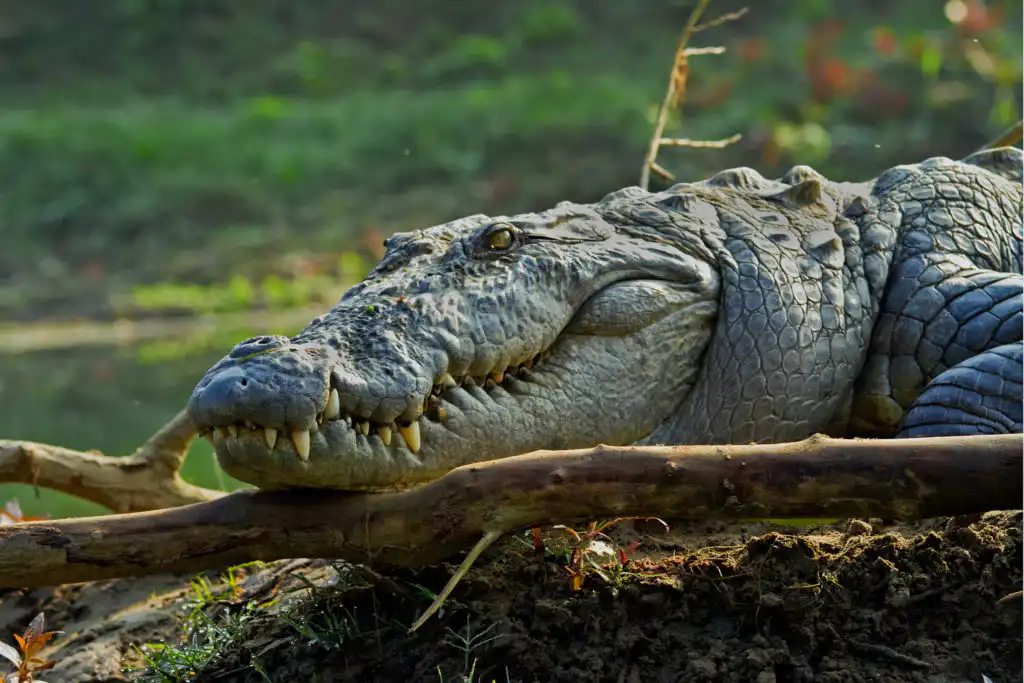
Bardia National Park situated in the western Terai part of Nepal and one of the largest undisturbed parks in the region. The park is the home of many endangered animals, birds, and reptiles including the Royal Bengal Tiger, One-horned rhinos, and two types of crocodiles Marsh Mugger and Gharial. Over the years Bardia is the best place to see the tiger viewing a rare event anywhere else in Nepal. Recently sightings of wild elephant groups have been further enhanced the wildlife experience possible in this beautiful and unspoiled sanctuary.

The Koshi Tappu wildlife reserve and the Koshi Barrage in the eastern part of Nepal provide one of the best places to view the migratory waterfall, waders, and shorebirds during the winter months. Many species not recorded elsewhere in the other region have been found here. Thousands of birds congregate here in Spring before they migrate north when the warm weather begins.

One-horned Rhinos

Rhinoceros is an endangered and presentative wild animal. The rhinoceros belong to the Rhinocerotidae family and include four genera, five species, and eleven subspecies. So far there are only five species of rhinoceros are surviving in the word of which three species namely as follow: the greater one-horned rhinoceros (Rhinoceros unicornis), Javan rhinoceros (Rhinoceros Sondaicus) and Sumatran rhinoceros (Rhinoceros Sumatrensis) are confined in the Asian continent and two species namely as follow: the black rhinoceros (Diceros bicornis) and white rhinoceros (Ceratotherium simum) in the African continent.

Greater one-horned rhinos or Asian rhino, also known as the Indian rhino lives in plain grassland and adjacent riverine forests of the northern part of the Indian and southern part of Nepal which is the border side of both countries like Chitwan national park & Bardia National park. Belonging to the Rhinocerotidae family, rhinos are among the largest remaining mammals megafauna. Characterized as odd-toed ungulate with a single horn and armored skin, one-horned rhino lives on herbivorous dieting animals. Rhinos horn is very valuable so have alarmingly become victims to poaching and their illegal trade, killed for their horns which are simply made of keratins (the same type of protein that makes up hair and fingernails). Rhino horns are prime targets of wildlife criminal networks making them severely vulnerable to the black market so the number of rhinos decreases every year.

One-horned rhinos once inhabited many areas ranging from Pakistan to Myanmar (Burma). However, because of the world wildlife federation, they are now confined to only a few protected areas of India and Nepal. The vast flood plains and lush grasslands of the Chitwan valley (Chitwan National park) harbored a large rhino population. which dramatically decrease in the 1950s. Rhinos are modifiers of grassland and riverine ecosystem, thus sustaining their healthy populations is necessary to maintain healthy ecosystems. One-horned rhinos habitat destruction (converted of prime habitats to agricultural lands by the local farmers) as a result of surging human growing population, hunting, tree cutting, and poaching are the main causes behind their dramatic decline, Inundation of floodplains, the spread of invasive species (Mikania micrantha, Chromolena data, Lantana spp.) and succession of a grassland ecosystem are other persistent threats to Rhino habitats.

Rhino and other endangered animal conservation in Nepal have taken a long journey and giving the prime focus. Once widespread throughout the lowlands, they were reduced to only a few numbers by the 1950s and only around 100 individuals. Conservation efforts boosted the population by the 1990s but took a toll during the political turmoil between 1996 to 2006. Their numbers are now rising again and reach over 600 individuals in Nepal only. Strengthened park management combined with effective Nepalese army patrols along with community engagement has allowed Chitwan’s rhinos to rebound from extinction. Chitwan National Park and Bardia National Park remain the stronghold of the rhino population in Nepal and in order to reduce the vulnerability of a single population to stochastic events, disease and natural disasters. Chitwan National park recognition of its unique biological resources of outstanding universal value in 1984 UNESCO designated as a World Heritage Site. An area of 750 km2 surrounding the park was declared a buffer zone in 1996.

National Trust For Nature Conservation in collaboration with the Government of Nepal and conservation partners WWF, has translocated rhinos to Bardia and Suklaphanta National Parks to create additional viable populations. Since 2009, the National Trust for Nature Conservation in collaboration with the park authorities, has initiated tracking by GPS rhino monitoring, which has been valuable in evidence-based planning for rhino conservation.

National Trust for Nature Conservation (NTNC) works closely with the parks to implement SMART Patrolling and support the livelihood improvement of buffer zone local communities to discourage poaching. As a result of a joint effort between the Government of Nepal, National Trust For Nature Conservation, conservation partners, and the community, Nepal has won widespread praise from international conservationists. The year 2013, 2015, and 2016 celebrated zero poachings of rhinos in Nepal. Going forward, National Trust For Nature Conservation will continue to engage in research and monitoring of rhinos, providing rescue operations and veterinarian care, engaging local communities, and promoting transboundary cooperation for rhino conservation. Readily available to the sighting eye, the National Trust for Nature Conservation continues to promote and preserve rhino attractions to wildlife tourists from all over the world.

Swayambhunath (Monkey Temple)

Swayambhunath is one of the famous Buddhist religious sites in the Kathmandu valley, west of Kathmandu city. Swayambhunath, which is also known as Simbhu in the local language derived from the word Singgu, meaning ‘self- Sprung’. It is also called the Monkey Temple among foreigners. For the local Newars, it is the most sacred Buddhist pilgrimage site. For Tibetans and followers of Tibetan Buddhism, it is the second major religious site after Boudhanath.

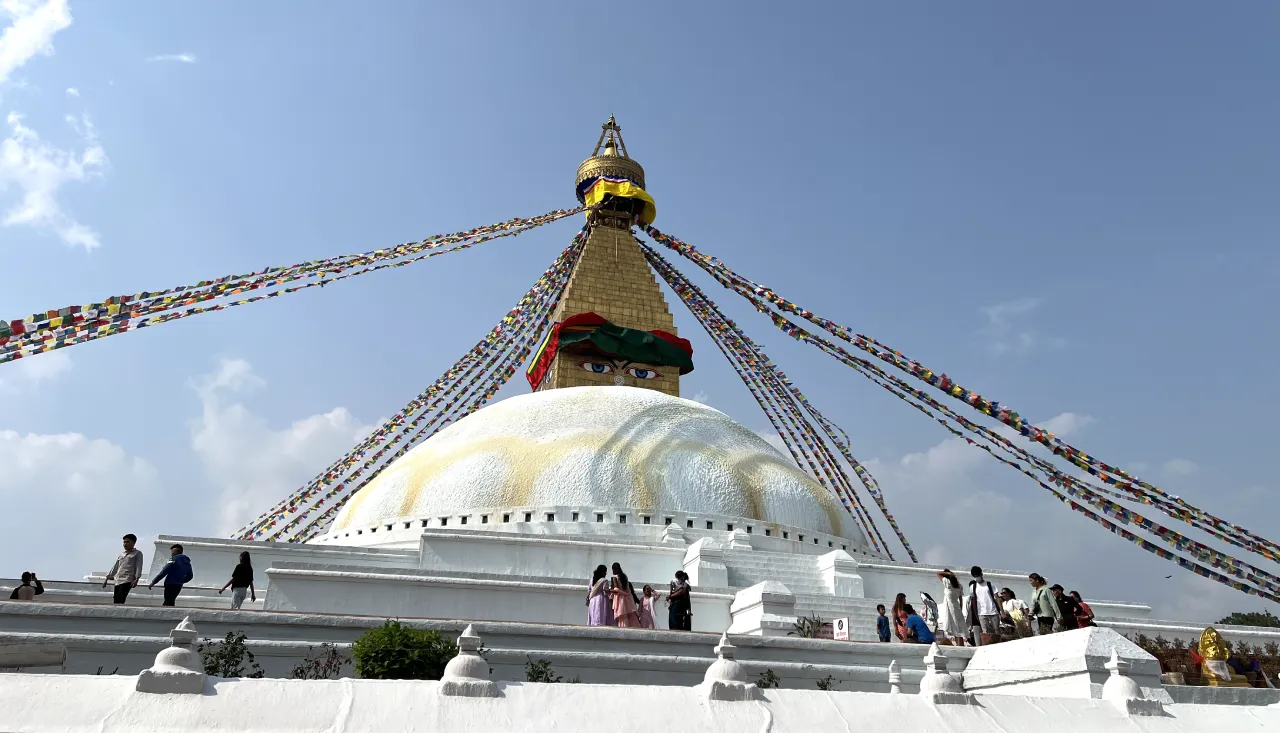
The complex consists of a stupa, a variety of shrines, and temples, some dating back to the Licchavi period. A Tibetan monastery, museum, and library are more recent additions. The stupa has Buddha’s eyes and eyebrows painted on. Between them, there is a mark like a question mark; called Sukhawati (way to heaven), the site has two access points: a long staircase leading directly to the main platform of the temple, which is from the top of the hill to the east, and a car road around the hill from the south leading to the southwest entrance. The first sight on reaching the top of the stairway is the Vajra (thunderbolt sceptre).

Swayambhunath’s iconography comes from the Vajrayana tradition of Newar Buddhism. However, the complex is also an important site for Buddhists of many schools and is also revered by Hindus. According to the Gopalrajvamsabali, it was founded by the great-grandfather of King Manadeva (464-505 CE), King Virsadeva, about the beginning of the 5th century CE. This seems to be confirmed by a damaged stone inscription found at the site, which indicates that King Virasadeva ordered work done in 640CE. According to Percival Brown, Swayambhu was 2000 years old. According to J.C Regmi, Swayambhu was built during the Kirat period, earlier to Lichhavis.

According to the Swayambhu Purana, the entire valley was a lake where nag (snake) used to reside where Bipaswi Buddha planted a seed of lotus which grew a lotus flower. Knowing about the Jyotirswarup(crystal flame) Manjusiri came from Mahachin(China) with King Dharmakar, his two wives, farmers, and monks to worship it. Seeing that the valley can be a good settlement and to make the site more accessible to human pilgrims, he cut a gorge at Chovar. Water drained out of the lake and made a settlement. The lotus was transformed into a hill and the flower became the stupa.

In 1349 Samasuddhin Ilyas of the Bengal sultanate invaded the Kathmandu valley and damaged the Swayambhu stupa by the Muslim army and later repaired by King Saktimalle Bhalloka. In 1505, the yogin Sangye Gyaltsen added the wheel and spire to the stupa’s dome. In 1614 the 6th Shamarpa had built shrines into the stupa in the four cardinal directions. Several important Kagyu Lamas held a consecration ceremony in 1750 after a major renovation. The famous Bhutanese master Lopon Tsechu Rinpoche (1918-2003), the late abbot of the Bhutanese Drugpa Kagyu Monastery on the western side of the stupas, came to Nepal in order to assist his uncle, the Drukpa Lama Sherab Dorje, in restoring and maintaining the stupa during the early 20th century. The most recent renovation of the Swayambhu stupa was completed in May 2010.

The valley came to be known as Swayambhu, meaning self-created. The name comes from an eternal self-existent flame (Syambhu) over which a stupa was later built. However, emperor Ashoka is said to have visited the site in the third century BC and built a temple on the hill which was later destroyed but historically it was not proved.

Although the site is considered Buddhist, the place is revered by both Buddhists and Hindus. Numerous Hindu Monarchs have paid their homage to the temple, including Pratap Malla, the powerful king of Kathmandu, who is responsible for the construction of the eastern stairway in the 17th century. Pratap Malla had built Pratap Pur and Anantapur temples on the premises. The stupa was completely renovated in May 2010, its first major renovation since 1921, and its 15th in the nearly 1,500 years since it was built. The dome was re-gilded using 20kg of gold. The renovation was funded by the Tibetan Nyingma Meditation Center of California and began in June 2008.

At around 5 am on 14 February 2011, Pratapur temple in the Swayambhu Monument Zone suffered damage from a lightning strike during a sudden thunderstorm. The Swayambhunath complex suffered damage in the April 2015 massive earthquake.

Free Travel Guide
Your Perfect, Personalized Journey Awaits
profile
Bhagwat Simkhada Seasoned Travel Expert with Years of Experience