notification

Great News, From June 2025 Mount Kailash is open for individuals holding Indian Passports

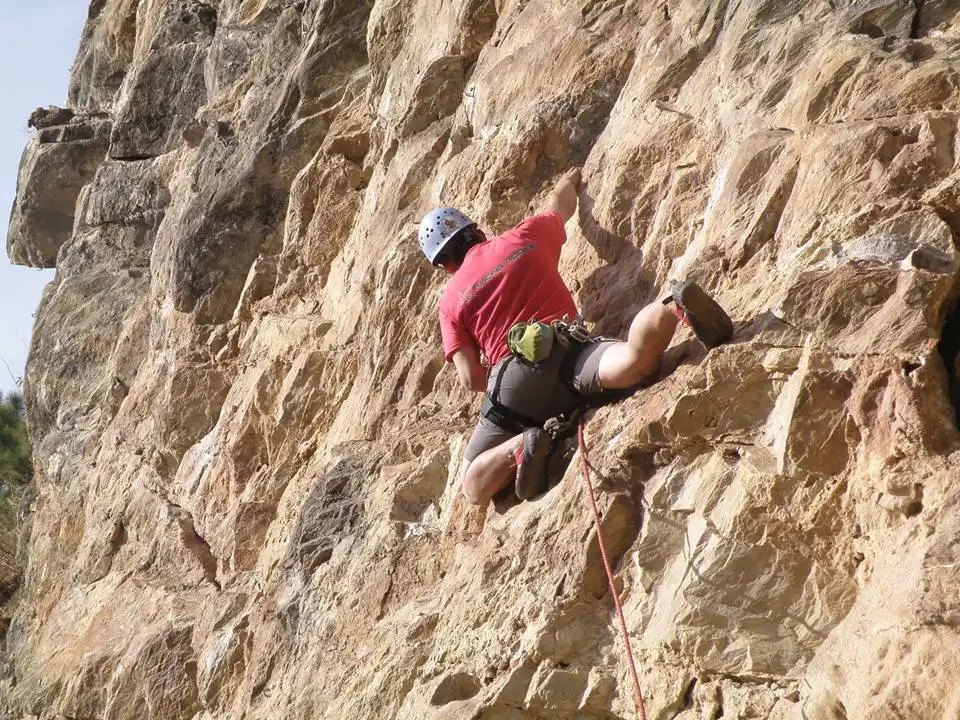
Rock Climbing in Nepal

The geography of Nepal allows swift rise and fall in altitude in a short distance. These exciting altitudinal changes are the reason for the natural diversity in Nepal. It is also why Nepal hosts a myriad of adventure sports, including the adventurous rock-climbing endeavor. There are countless sites where you can look for an unforgettable rock-climbing experience in Nepal.

Who Can Join

Rock climbing experiences in Nepal are not limited to experts only but can be enjoyed by novice learners. Countless climbing spots of a low, medium, and great difficulty are available in Nepal, suitable for all no matter where they are in levels of experience. However, knowledge of the rock-climbing technique is a must, along with some training and a fit body while tackling the steep rocky ridges of Nepal.

The most popular rock-climbing sites in Nepal are around Kathmandu valley. Due to the short distance for travel, these sites are easily accessible and also cheaper. Balaju, Hattiban, Thame, Kakani are some of the best climbing sites around Kathmandu. Most of these sites reside in the serene forests of Nagarjun, which is a famous religious site in Nepal.

The name Nagarjun comes after the Buddhist philosopher Nagarjuna who is said to have meditated in these forests. Rock climbing in the Nagarjun forest is, thus, a spiritual experience.  As your adrenaline level becomes normal after a difficult climb, you are then greeted with an air of peace and tranquility that surrounds the Nagarjun forest and a breathtaking view of the Kathmandu valet from above.

The Balaju and Hattiban rock-climbing sites fall inside the Nagarjun forests. The Balaju climbing site can be reached with a 30-hour drive from Thamel and is equipped with more than 22 climbing routes. These routes range from grade 4a to 7b+ in terms of difficulty. The rock-climbing site in Hattiban is an hour’s drive from Kathmandu, along with a 20 minutes hike to reach the climbing spot. Hattiban contains more than ten rock-climbing routes, which are graded 6a to 7a in terms of difficulty.

Kakani is on the top of the tier list as the most popular rock-climbing destination of Nepal. It is one and a half-hour drive from Kathmandu. Kakani contains only one large boulder for rock-climbing, which is of 7a grade with six routes. What makes Kakani a popular rock-climbing spot is the stunning picturesque view of mountain ranges, which can be enjoyed from the top of the hill, including Ganesh Himal, Hiuchuli, Annapurna, Dhaulagiri; Gaurishankar Himal, and so on. There is also a mountaineering park nearby with an outdoor climbing wall which you can enjoy.

Bimal Nagar is another one of the places popular for rock climbing. It is 5 hours drive away from Kathmandu and contains a 55-meter rock face with four pitches.

 When to do it

Most of the rock climbing trips in Nepal are one-day trips. So, the price of rock climbing is comparatively lower than anywhere else in the world. A session’s cost is about $100 to $200 if you already have the necessary equipment. You might have to spend a bit more if you do not have the equipment which you can then rent at a low price.

Rock climbing in Nepal can be enjoyed at any time except for the monsoon and winter season because of the slippery rocks and chilly weather. The best time would be between October to late November and March to May.

 Conclusion

Rock climbing in Nepal is an eye-opening experience. The climb’s strain is perfectly countered by the spectacular view of mountain ranges, making it a memory that will last for a lifetime.

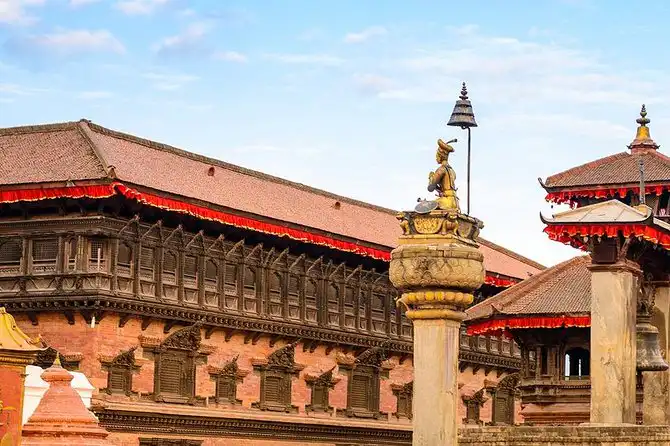
Bhaktapur Durbar Square

A journey to Bhaktapur Durbar Square is a journey back in time. It is one of the most popular destinations in Nepal, and rightfully so. The environment, ambiance, culture, and lifestyle around Durbar Square have been preserved for hundreds of years and remain the same with only minuscule changes with the times. UNESCO has also acknowledged its significance as it has been listed as a World Heritage Site.

The Bhaktapur Durbar Square is located in the center of Bhaktapur, just 33 km away from Kathmandu and a gateway to the panoramic viewpoint of Nagarkot. The whole square is made from four squares: Durbar Square, Taumadhi Square, Dattatraya Square, and Pottery Square.  Durbar, in Nepali, means palace. Thus, Bhaktapur Durbar Square is the location where the royal palace of Bhaktapur ancient city (also known as Bhadgaon or Khwopa) resided. The area is surrounded by the Newari people’s residents, who are the place’s residents since medieval times.

Khwopa was the capital of Nepal during the reign of the Malla Kingdom and was also the largest of the three Newa kingdoms. The tall ancient temples, red and white bricked pavements, old Newari settlements, ancient stone statues, and the intricate wood carvings make up the aesthetic of Bhaktapur Durbar Square. Visitors feel as though they have traveled back to the time of the Mallas while here, as the place is more isolated and preserved than the other two Durbar Squares.

Several pagodas and Shikhara-style temples surround the royal palace, all of immense cultural significance to Hindu and Buddhist devotees. The Vastala Temple (built-in 17th century), Yakcheswor Temple (built-in 1480), and Naytapola Temple, Bhairav Nath Temple, Dattatraya Temple, Teel Mahadev Narayan Temple, Bhimsen Temple, and many more temples adorn the square from all sides. Among these temples, the Naytapola (five stories) temple has the highest significance in Nepal’s history of ancient architecture. All of these temples were built by the Malla kings during their reign, starting from the 1400s to as late as the 1700s.

The 55-window palace is one of the most awe-inspiring pieces of architecture in Bhaktapur Durbar Square. The Pujari Math (house of the priest) built in the 15th century by King Yaksha Malla is famous for its wood carvings and the peacock window situated at the house’s eastern face. Siddha Pokhari, which is located at the gate of Bhaktapur, is also a famous tourist spot.

The art of wood carving has been preserved well in Bhaktapur and has been handed down from generation to generation. There is no lack of shops that sell traditional Thangga paintings, wood carvings, pottery, traditional clothes, and metal statues.

Bhaktapur Durbar Square also gains its popularity from the local delicacies that travelers can enjoy here. Among the others is the delicacy Ju Ju Dhau which is a type of locally produced yogurt that is made and distributed in cups made from clay. Bhaktapur is also famous for its assortment of local herbs, spices, and sweets.

Bhaktapur is also known to be a city of festivities and celebrations. Several Jatra, pujas, and other festivities, which the residents enjoy with a blast throughout the year. Some of the most famous and thrilling festivals celebrated in Bhaktapur are Bisket Jatra, Kumar Khasti, Gai Jatra, Gunla, and Yomari Purnima.

Bhaktapur Durbar Square is thus a perfect travel destination for people of all ages and interests. All in all, Bhaktapur Durbar Square is one of the places that travelers should not miss out on the opportunity to visit while in Nepal.

In conclusion, Bhaktapur Durbar Square stands as one of Nepal’s most treasured historical and cultural landmarks, offering visitors a remarkable glimpse into the country’s medieval past. The square’s preserved temples, royal palaces, and traditional Newari settlements reflect the artistic brilliance and architectural excellence of the Malla Kingdom. Walking through its ancient courtyards and brick-paved streets allows travelers to experience a living museum where history, religion, and daily life continue to coexist. The magnificent temples, including the iconic five-storied Nyatapola Temple and the beautifully carved 55-Window Palace, highlight the exceptional craftsmanship of past generations. The area’s spiritual atmosphere, enriched by both Hindu and Buddhist traditions, adds to its cultural depth and importance.

Beyond its monuments, Bhaktapur offers a vibrant cultural experience through its local markets, traditional crafts, and authentic Newari lifestyle. Visitors can witness skilled artisans creating wood carvings, pottery, and Thangka paintings, preserving centuries-old traditions. The city’s famous delicacy, Ju Ju Dhau, along with other local foods and sweets, provides a unique taste of Bhaktapur’s culinary heritage. Its lively festivals, such as Bisket Jatra and Yomari Purnima, bring the city to life with color, music, and deep-rooted traditions. Recognized as a UNESCO World Heritage Site, Bhaktapur Durbar Square continues to symbolize Nepal’s rich cultural identity and historical significance. Overall, it remains an essential destination that offers an unforgettable journey into Nepal’s timeless heritage.

Coronavirus and its effects in Tourism in Nepal

Coronavirus, also known as COVID-19, has created a massive stir and panic among people all over the world. Coronavirus is a newly found virus that supposedly originated from Wuhan, China.

This virus is a large family of viruses that causes illness ranging from the common cold to more severe illnesses like Middle East Respiratory Symptoms (MERS-COV) and Severe Acute Respiratory Symptoms (SARS-COV). World Health Organization (WHO) has classified coronavirus as “novel coronavirus”(nCOV) as it is a new strain that has never been identified in a human being.

Coronavirus is zoonotic, which means it can get transmitted between animals and people. Through research and detailed investigations, the SARS-COV was found to be transmitted from civet cats to humans, and the MERS-COV from dromedary camels to humans. However, the whereabouts of the novel coronavirus are not known yet.

Symptoms of Coronavirus affected people

Coronavirus started spreading rapidly among people all around the globe. Every day there is news of newfound cases or increased cases in various countries. The symptoms of the novel coronavirus can be very confusing and misleading. Generally, symptoms of cold or flu start after 2-4 days of coronavirus contraction. The symptoms are usually mild, but they can also be severe in some cases.

Scientists have found out that the novel coronavirus is related to the MERS-COV (Middle East Respiratory Syndrome) and the SARS-COV (Severe Acute Respiratory Syndrome) that mainly affects the respiratory tract of a person. So, the major symptoms are cough, breathing difficulties, and shortness of breath.

Other symptoms of the novel coronavirus are fever, runny nose, sneezing, and sore throat. However, in extreme cases, this virus can lead to pneumonia, asthma, kidney failure, or even death. Doctors have not found a cure for this new, deadly, and infectious virus. It can take more time for scientists to develop a remedy against it.

Global situation of coronavirus affected people

In recent months, the cases of coronavirus have increased from a small number to a large number, with more than 89,800 people in at least 67 countries. Out of the 89,800 affected people, more than 80,000 cases are from mainland China itself.

First detected in the city of Wuhan, Hubei province in China, the people living there are massively affected by the virus. The city has been in lockdown since January 23, 2020. With an increasing number of affected people, the government of China acted immediately to provide emergency medical services and also built a new hospital in 10 days.

There are almost more than 3000 death cases of coronavirus in China only. The death cases are also increasing in other countries like South Korea, Italy, Iran, Germany, and the USA.

On February 6, the World Health Organization raised the highest alert level and has called the novel coronavirus a pandemic. WHO has asked all the countries to stay alert and prepared to fight against one of the worst illnesses affecting people.

Due to the surging cases of the new coronavirus, airports all around the world have set up an infrared radiation thermometer to verify affected people. Most of the people affected by the coronavirus are admitted to hospitals and are kept in isolation. Experts correctly treat them.

The governments of countries such as China, South Korea, Germany, the USA, Italy, and Iran have provided excellent support to their virus-infected citizens.

The vulnerability of coronavirus in Nepal

Nepal is likely to suffer a massive outbreak of the novel coronavirus as it shares land borders with China. There are many visitors from mainland China every year. This year saw a lot more Chinese and other international tourists from all over the world as the government declared 2020 as a year to visit Nepal.

Amid the widespread concerns of coronavirus in Nepal, the government is finally scrambling to step up measures to contain the possible outbreak of the deadly disease. The risk of a massive outbreak of this virus is highly likely in Nepal as it still lets a lot of people from all around the world fly to Nepal.

Nepal is possibly the only country that has not restricted visitors from affected countries like South Korea, Iran, and Italy. However, the government’s immediate action was to set up radiation thermometers and health desks at the International airport instead of resorting to a quarantine right away. This reflects our vulnerability and questions the ability of the government to deal with this highly infectious disease.

Number of verified cases of coronavirus affected people

The total number of cases of people affected by a coronavirus in Nepal is still unclear as new cases arise every day. There was news in early February that a person suspected of coronavirus got admitted at the Sukraraj Tropical disease center. However, when the results came out negative in a few days, he got released. Ever since then, there have been many suspects, but we do not have an exact number of affected people or active cases.

According to the major news house of Nepal, there are at least three people who have been tested positive for the coronavirus and are receiving treatments.

On February 16, 2020, Nepal evacuated almost 175 students from the epicenter of the coronavirus outbreak, Wuhan. They were kept in quarantine for 14 days, and all of them were released. There were no single positive cases of the coronavirus.

What is the current scenario and how the government is acting upon it

Currently, Nepal does not have a proper and adequate plan to fight against the new deadly coronavirus. Both public and private hospitals are not ready to take on the battle with coronavirus.

The public hospitals are all refusing to set up different ICU beds for coronavirus patients due to the lack of beds. Government hospitals like Bir hospital, Teaching hospital, and Teku hospitals do not have enough doctors, nurses, beds, and rooms for coronavirus patients.

Even private hospitals have not been able to set up isolation rooms for coronavirus patients. However, the government is gradually stepping up to take action as they install more infrared radiation thermometers at the airport.

They are also setting up considerable posters in different parts of the countries that provide precaution information for the public. The government has also urged private hospitals to set up isolation wards and treatment systems to battle the new coronavirus. On March 3, 2020, hospitals in Pokhara have opened isolation wards and ICU services for affected people.

Coronavirus and its impacts on tourism at global and Nepal

Since the discovery of the novel coronavirus, markets, tourism sectors, and businesses have significantly been affected in most parts of the world. Primarily affecting the tourism sector of every country, this virus is preventing people from leaving their homes to stay safe.

In Nepal, coronavirus has alerted people to practice healthier behaviors and follow the precautions provided by the government. Nowadays, we can see almost everyone in Kathmandu city wearing a mask to protect themselves. The number of visitors and tourists from different countries is decreasing amid the roar of the novel coronavirus.

How to be safe from coronavirus

The precautionary measures against the novel coronavirus are as follows

  1. It would be best if you always wash your hands with soap or alcohol-based hand rub.
  2. Wearing a mask is a must wherever you go out, either school or office or hospital.
  3. It would be best if you covered your mouth or nose while sneezing with tissue papers or your elbow.
  4. You should avoid going to crowded places or public places where you can quickly get infected.
  5. It will help if you avoid close contact with people who have symptoms of a cold.
  6. You should also be able to avoid direct contact with live or farm animals.
  7. You are recommended to boil meat or egg before eating thoroughly.

Visit Nepal 2020 and coronavirus

Visit Nepal 2020 has been dramatically affected by the novel coronavirus strain all over the world. Instead of seeing a surge in the number of travelers, Nepal saw a decrease in the tourism sector as the virus rapidly grew in different parts of the world.

The air business in Nepal saw a declining number of passengers every day, and they are facing a massive loss. Due to the constant rise of the deadly coronavirus, the tourism ministry of Nepal has postponed all activities of the “Visit Nepal 2020” campaign.

Conclusion

Coronavirus is a highly infectious virus that has claimed the lives of many people all around the globe. This virus, classified as a pandemic, has no cure until now. Though there are many cases of people recovering from coronavirus, we should all be cautious and follow the precautions carefully and consciously.

Places to Visit in Kathmandu

Nepal could be the best alternative place for your holiday vacation because of the many beautiful tourist attractions in this country. Nepal has been recorded among foreign visitors as an attractive tourist destination in the world. Nepal is developing the tourism industry, as a natural country that highlights natural and cultural harmony. Beautiful natural differences reflect a rich colonial history. For years considered a country of Mount Everest in the world, Nepal has many tourist attractions places to visit. Kathmandu is one of the major tourist destinations in Nepal.

Nagarkot:

Nagarkot is one of the famous spots for local people as well as foreign tourists, located just 32 kilometers east of the capital city Kathmandu. It is famous for its magnification sunrise and sunset views. It is 2200 meters from sea level, it offers tourists a breathtaking view of eight different Himalayan ranges, Manaslu range Ganesh Himal range, Langtang range, Jugal range, Rolwaling range, Mahalangur range.

They also have a splendid view of the Kathmandu valley and Shivapuri National Park. Tourists also can enjoy local traditional culture and lifestyles. It is away from the hustle of city life, one can get a totally different experience there. Over the past year, the area has a long way in terms of the development of accommodation facilities. There are lots of hotels and resorts, including the Club Himalayan, which recently open new luxury hotels Mystic Mountain and Bhangeri Durbar Resort in Nagarkot.

This area offers accommodation facilities for both luxury and budget tourists with the good road linking among Nagarkot with Bhaktapur and Kathmandu, it becomes more accessible. Public buses are in operation from Kathmandu and Bhaktpur it travels through beautiful fields and pine forest. One can also hire comfortable vehicles on hire at a reasonable price. Nagarkot is a village is packed with Hotels and resorts, stacked up on the ridge facing one of the broadest possible views of the Himalayan. Between October and March, a trip to Nagarkot will always be rewarded with a view of the Himalayan range near the valley.

Dhulikhel:

Dhulikhel is a scenic ancient town situated 30 km. east of Kathmandu on the Ariniko Rajmarg (Kathmandu Kodari Highway). From here one can have a panoramic view of the Himalayan range. From the main town a short visit to Namabuddha, with a stupa and Buddhist monastery is a highly recommended site to visit. Panauti a village noted for its numerous temples with magnificent woodcarving is a short distance from Dhulikhel. The oldest inscription to mention Dhulikhel dared Sambat 425 (481 AD) states that the settlement was established by the goddess Bijayeshwari Bhagwati during the Kirat period in the reign of the Licchavi king Manadeva (BS 499-540/AD 442-483).

The ancient settlement names of Dhulikhel, Panauti, and Banepa are given in the Licchavi inscriptions as ‘Dhavalasrotapura and ‘ninappa” respectively, in fact, the name Dhulikhel has at least two possible origins. One is that it comes directly from the Newari, meaning a place where tigers play. Another version is that the ancient name of Dhulikhel is Dhalikhyel, the literal meaning of which is Dahi (curd) selling a place. This seems more likely given that the origins of the town were almost certainly in cow herding and agriculture. Even today some people especially those from Bhaktapur continue is call Dhulikhel dhaukya (area for selling curd in Newari). It is generally believed that the oldest cultural heritage in the area is the holy site of Gokhureswar Mahadev to which a number of interesting legends are attached.

Kapan Monastery:

The Kapan Monastery is a gated community of Buddhist monks founded on the hilltop north of Buddhanath, founded in the 1970s by Lamas Thubten and Zopa Rinpoche. Kapan Monastery is 8 km far from the central location.

Garden of Dreams:

The garden formal in style occupies about half a hectare .its lush lawns, sunken, flower gardens, large central pond, fountains gazebos, and three neo-classical pavilions are kept in pristine condition.

Dakshinkali:

Dakshinkali lies in the Kathmandu valley but is far from the center location of Kathmandu city. Dakshinkali is a famous Hindus goddess Kali temple. It is situated 22 km south of Kathmandu valley.

Sanku and Bajrajogini:

Sanku and Bajrajogini are other places to visit around Kathmandu. once the city was on the trade route towards the east of Helambu to Tibet. It is a typical Newari town with many fine old buildings and temples in the village

Changunarayan:

This temple of Changunarayan is dedicated to Lord Vishnu, was built in 323 AD is the oldest temple of Kathmandu Valley. The Temple is richly decorated with sculptures and carvings.

Bajrabarahi:

This famous Hindu temple is dedicated to Goddess Durga, is situated in the middle of a peaceful woodland park 5 km south of Patan city nearby the Newar Village of Chapagaon. Further visit of Tika Bhairab and Lele from here is on the north side.

Godavari:

Situated 13 km southeast of Kathmandu, Godawari is a place of natural beauty. It also has a forest for a good picnic spot. The Royal Botanical Garden, a fish hatchery, and a marble quarry are the other attractions. Those clients who are interested in trekking can trek to Phulchowki ( 9050 ft) from here.

Kakani:

Kakani, 6500 ft above sea level, is located 25 km west of Kathmandu. The fabulous holiday area of Kakani features attractions ranging from beautiful alpine scenery to the magnificent Himalayan Panorama, particularly the Ganesh Himal.

Kirtipur:

Situated at an elevation of 1432 mt above sea level, Kirtipur is an ancient city of Kathmandu Valley. This city is full of Hindu Temples and the Boudha Vihar. While visiting this city, one can see the people typically dressed in old traditional costumes and working an ancient loom.

Budhanilkantha:

About eight km north of Kathmandu is a remarkable, colossal statue of the Lord Vishnu, reclining on the coil of the snake king. This 5th-century statue is in the middle of a small pond and seems to float on water. It is a famous place of pilgrimage, though the reigning King of Nepal may not visit this spot.

Bungamati and Khokana:

These towns are very old Newar villages with typical oil mills and temples, which present to the visitors a view of the still continuing ” Middle Age” pattern of life.

Jungle Safari Tour in Nepal

Jungle Safari tour in Nepal is being more popular for all age groups of people. Chitwan National Park, Koshi Tappu wildlife reserve, Bardia National Park, Parsa wildlife reserve along with 11 other National parks are rich in a different kind of flora, fauna, and wildlife, birds, such as the rare great one-horned rhinosRoyal Bengal Tiger several other species of deer, black bear, Crocodile, leopard dolphin, etc. living in this National park in their natural habitat. Chitwan National park and Bardia National Park are very popular for jungle excursions like elephant back safari, dugout canoeing, nature walk, jeep safari, bird watching, Tharu cultural show, and visit to the village of local tribes Tharu typical houses.

Chitwan National Park in the central Terai lowlands of Nepal and Bardia National Park in the western part of Nepal provide some of the best wildlife basically for Royal Bengal Tiger and nature viewing places in Asia. Chitwan and Bardia National park have a more choice of Jungle Lodges, Hight standard hotels on the typical style, Tower night inside the jungle (machan), Tented Camps, and Guest Houses from where you can explore the wildlife Adventure. All hotels and lodges provide the packages including accommodation in lodge/tented camp, all sightseeing, and outings including Jeep safari inside the National park, elephant back safari, bird watching, Jungle walk, boating (as per specific itinerary and number of days provided for different packages), National park entrance fees, all meals duration the package tour. Situated in a forest setting in an area rich in the diverse ecology of the National park, most of the resort presents the perfect jungle experience.

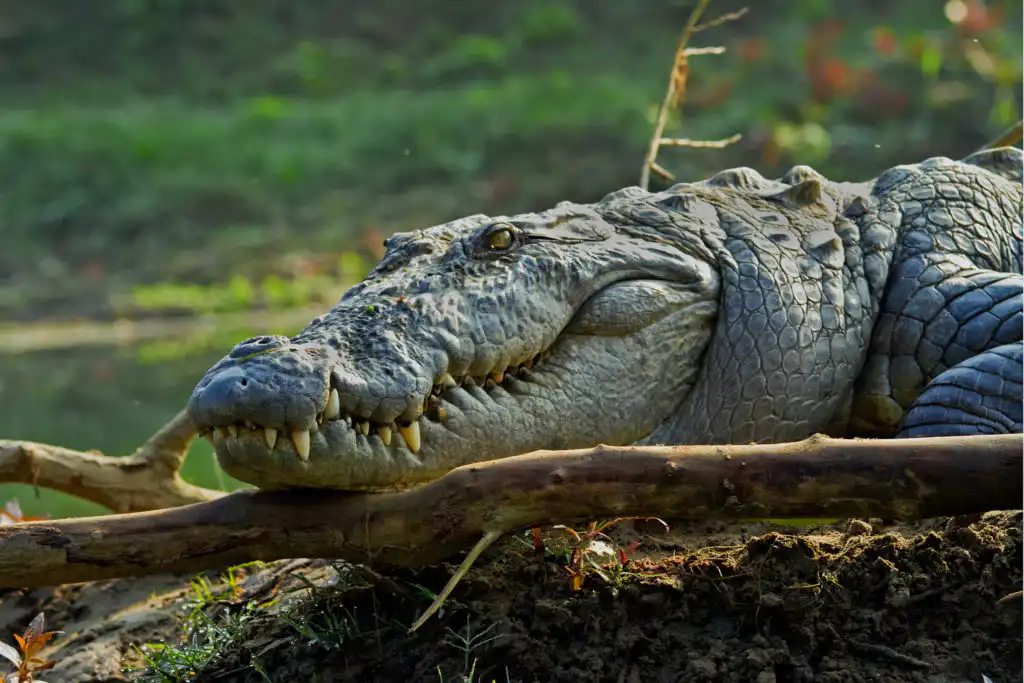
Bardia National Park situated in the western Terai part of Nepal and one of the largest undisturbed parks in the region. The park is the home of many endangered animals, birds, and reptiles including the Royal Bengal Tiger, One-horned rhinos, and two types of crocodiles Marsh Mugger and Gharial. Over the years Bardia is the best place to see the tiger viewing a rare event anywhere else in Nepal. Recently sightings of wild elephant groups have been further enhanced the wildlife experience possible in this beautiful and unspoiled sanctuary.

The Koshi Tappu wildlife reserve and the Koshi Barrage in the eastern part of Nepal provide one of the best places to view the migratory waterfall, waders, and shorebirds during the winter months. Many species not recorded elsewhere in the other region have been found here. Thousands of birds congregate here in Spring before they migrate north when the warm weather begins.

One-horned Rhinos

Rhinoceros is an endangered and presentative wild animal. The rhinoceros belong to the Rhinocerotidae family and include four genera, five species, and eleven subspecies. So far there are only five species of rhinoceros are surviving in the word of which three species namely as follow: the greater one-horned rhinoceros (Rhinoceros unicornis), Javan rhinoceros (Rhinoceros Sondaicus) and Sumatran rhinoceros (Rhinoceros Sumatrensis) are confined in the Asian continent and two species namely as follow: the black rhinoceros (Diceros bicornis) and white rhinoceros (Ceratotherium simum) in the African continent.

Greater one-horned rhinos or Asian rhino, also known as the Indian rhino lives in plain grassland and adjacent riverine forests of the northern part of the Indian and southern part of Nepal which is the border side of both countries like Chitwan national park & Bardia National park. Belonging to the Rhinocerotidae family, rhinos are among the largest remaining mammals megafauna. Characterized as odd-toed ungulate with a single horn and armored skin, one-horned rhino lives on herbivorous dieting animals. Rhinos horn is very valuable so have alarmingly become victims to poaching and their illegal trade, killed for their horns which are simply made of keratins (the same type of protein that makes up hair and fingernails). Rhino horns are prime targets of wildlife criminal networks making them severely vulnerable to the black market so the number of rhinos decreases every year.

One-horned rhinos once inhabited many areas ranging from Pakistan to Myanmar (Burma). However, because of the world wildlife federation, they are now confined to only a few protected areas of India and Nepal. The vast flood plains and lush grasslands of the Chitwan valley (Chitwan National park) harbored a large rhino population. which dramatically decrease in the 1950s. Rhinos are modifiers of grassland and riverine ecosystem, thus sustaining their healthy populations is necessary to maintain healthy ecosystems. One-horned rhinos habitat destruction (converted of prime habitats to agricultural lands by the local farmers) as a result of surging human growing population, hunting, tree cutting, and poaching are the main causes behind their dramatic decline, Inundation of floodplains, the spread of invasive species (Mikania micrantha, Chromolena data, Lantana spp.) and succession of a grassland ecosystem are other persistent threats to Rhino habitats.

Rhino and other endangered animal conservation in Nepal have taken a long journey and giving the prime focus. Once widespread throughout the lowlands, they were reduced to only a few numbers by the 1950s and only around 100 individuals. Conservation efforts boosted the population by the 1990s but took a toll during the political turmoil between 1996 to 2006. Their numbers are now rising again and reach over 600 individuals in Nepal only. Strengthened park management combined with effective Nepalese army patrols along with community engagement has allowed Chitwan’s rhinos to rebound from extinction. Chitwan National Park and Bardia National Park remain the stronghold of the rhino population in Nepal and in order to reduce the vulnerability of a single population to stochastic events, disease and natural disasters. Chitwan National park recognition of its unique biological resources of outstanding universal value in 1984 UNESCO designated as a World Heritage Site. An area of 750 km2 surrounding the park was declared a buffer zone in 1996.

National Trust For Nature Conservation in collaboration with the Government of Nepal and conservation partners WWF, has translocated rhinos to Bardia and Suklaphanta National Parks to create additional viable populations. Since 2009, the National Trust for Nature Conservation in collaboration with the park authorities, has initiated tracking by GPS rhino monitoring, which has been valuable in evidence-based planning for rhino conservation.

National Trust for Nature Conservation (NTNC) works closely with the parks to implement SMART Patrolling and support the livelihood improvement of buffer zone local communities to discourage poaching. As a result of a joint effort between the Government of Nepal, National Trust For Nature Conservation, conservation partners, and the community, Nepal has won widespread praise from international conservationists. The year 2013, 2015, and 2016 celebrated zero poachings of rhinos in Nepal. Going forward, National Trust For Nature Conservation will continue to engage in research and monitoring of rhinos, providing rescue operations and veterinarian care, engaging local communities, and promoting transboundary cooperation for rhino conservation. Readily available to the sighting eye, the National Trust for Nature Conservation continues to promote and preserve rhino attractions to wildlife tourists from all over the world.

Swayambhunath (Monkey Temple)

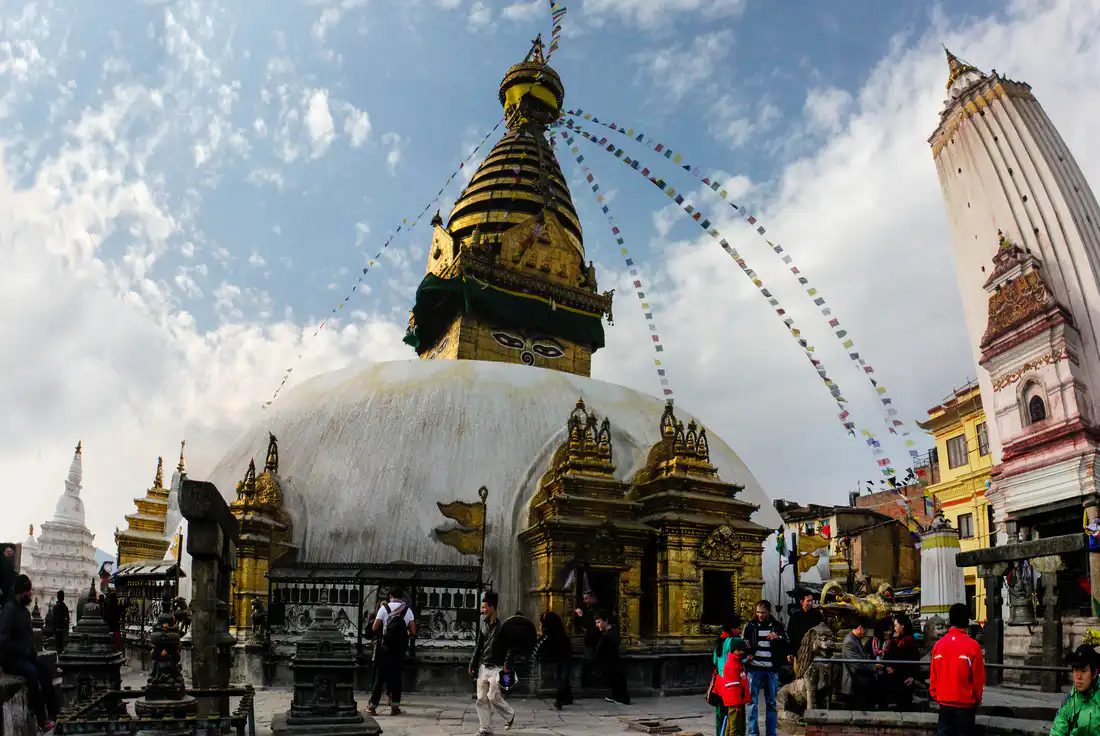
Swayambhunath is one of the famous Buddhist religious sites in the Kathmandu valley, west of Kathmandu city. Swayambhunath, which is also known as Simbhu in the local language derived from the word Singgu, meaning ‘self- Sprung’. It is also called the Monkey Temple among foreigners. For the local Newars, it is the most sacred Buddhist pilgrimage site. For Tibetans and followers of Tibetan Buddhism, it is the second major religious site after Boudhanath.

The complex consists of a stupa, a variety of shrines, and temples, some dating back to the Licchavi period. A Tibetan monastery, museum, and library are more recent additions. The stupa has Buddha’s eyes and eyebrows painted on. Between them, there is a mark like a question mark; called Sukhawati (way to heaven), the site has two access points: a long staircase leading directly to the main platform of the temple, which is from the top of the hill to the east, and a car road around the hill from the south leading to the southwest entrance. The first sight on reaching the top of the stairway is the Vajra (thunderbolt sceptre).

Swayambhunath’s iconography comes from the Vajrayana tradition of Newar Buddhism. However, the complex is also an important site for Buddhists of many schools and is also revered by Hindus. According to the Gopalrajvamsabali, it was founded by the great-grandfather of King Manadeva (464-505 CE), King Virsadeva, about the beginning of the 5th century CE. This seems to be confirmed by a damaged stone inscription found at the site, which indicates that King Virasadeva ordered work done in 640CE. According to Percival Brown, Swayambhu was 2000 years old. According to J.C Regmi, Swayambhu was built during the Kirat period, earlier to Lichhavis.

According to the Swayambhu Purana, the entire valley was a lake where nag (snake) used to reside where Bipaswi Buddha planted a seed of lotus which grew a lotus flower. Knowing about the Jyotirswarup(crystal flame) Manjusiri came from Mahachin(China) with King Dharmakar, his two wives, farmers, and monks to worship it. Seeing that the valley can be a good settlement and to make the site more accessible to human pilgrims, he cut a gorge at Chovar. Water drained out of the lake and made a settlement. The lotus was transformed into a hill and the flower became the stupa.

In 1349 Samasuddhin Ilyas of the Bengal sultanate invaded the Kathmandu valley and damaged the Swayambhu stupa by the Muslim army and later repaired by King Saktimalle Bhalloka. In 1505, the yogin Sangye Gyaltsen added the wheel and spire to the stupa’s dome. In 1614 the 6th Shamarpa had built shrines into the stupa in the four cardinal directions. Several important Kagyu Lamas held a consecration ceremony in 1750 after a major renovation. The famous Bhutanese master Lopon Tsechu Rinpoche (1918-2003), the late abbot of the Bhutanese Drugpa Kagyu Monastery on the western side of the stupas, came to Nepal in order to assist his uncle, the Drukpa Lama Sherab Dorje, in restoring and maintaining the stupa during the early 20th century. The most recent renovation of the Swayambhu stupa was completed in May 2010.

The valley came to be known as Swayambhu, meaning self-created. The name comes from an eternal self-existent flame (Syambhu) over which a stupa was later built. However, emperor Ashoka is said to have visited the site in the third century BC and built a temple on the hill which was later destroyed but historically it was not proved.

Although the site is considered Buddhist, the place is revered by both Buddhists and Hindus. Numerous Hindu Monarchs have paid their homage to the temple, including Pratap Malla, the powerful king of Kathmandu, who is responsible for the construction of the eastern stairway in the 17th century. Pratap Malla had built Pratap Pur and Anantapur temples on the premises. The stupa was completely renovated in May 2010, its first major renovation since 1921, and its 15th in the nearly 1,500 years since it was built. The dome was re-gilded using 20kg of gold. The renovation was funded by the Tibetan Nyingma Meditation Center of California and began in June 2008.

At around 5 am on 14 February 2011, Pratapur temple in the Swayambhu Monument Zone suffered damage from a lightning strike during a sudden thunderstorm. The Swayambhunath complex suffered damage in the April 2015 massive earthquake.

Flight Delay and Cancellation to Lukla

Flight Delay and Cancellation to Lukla- Travel Guide

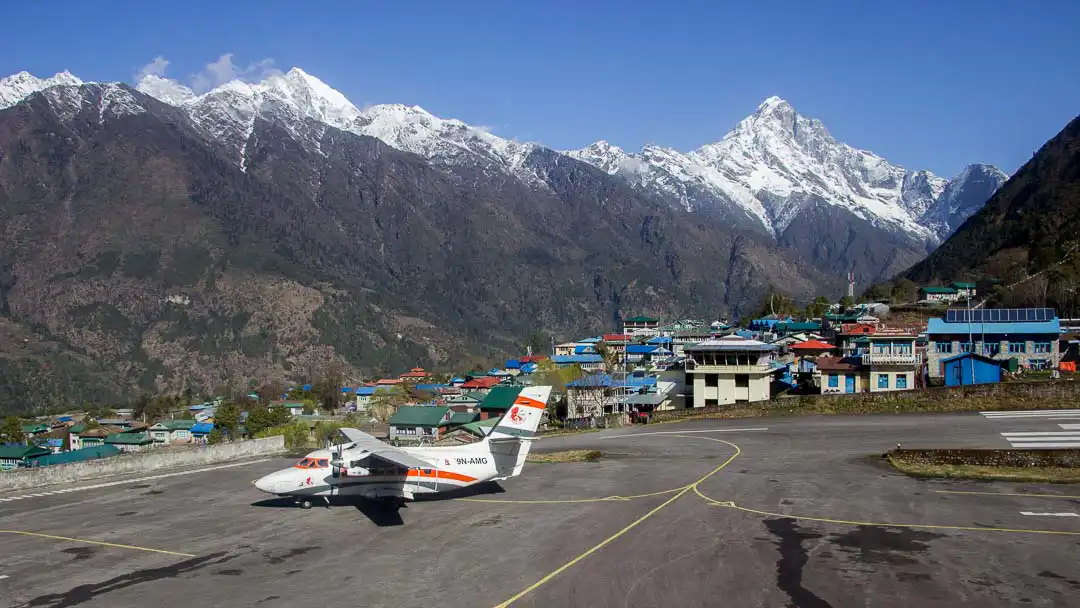
The little town of Lukla is the starting point of almost all trekking journeys in the Khumbu region. Situated at an altitude of 2,860 meters, Lukla is the first site that trekkers get introduced to when visiting Khumbu. It is a collection of small houses and hotels that are scattered within proximity to the region’s only airport- the Tenzing Hillary Airport. Because of its prominence, Lukla has transformed from a small farming community to a commercial hub of the region that is on par with Namche Bazaar. Due to trekkers staying overnight at Lukla during Everest Treks, the town has seen a rise in the number of luxury guesthouses and hotels in recent years. From Kathmandu, it takes about 40 minutes to reach Lukla via plane.

The Tenzing Hillary Airport in Lukla

Also famously known as the Lukla Airport, the Tenzing Hillary Airport is a small airport that is often referred to as one of the most dangerous airports in the world. The airport is among the most famous transport connections between the rest of Nepal and the Everest Mountains, with other ways of reaching Khumbu are long days of trekking. Daily flights occur to/from the airport during daylight hours and good weather conditions. In contrast to Kathmandu’s steady sun-shining, Lukla often experiences rainfall, sometimes simultaneously with the lack of rain in other parts of the country. Lukla’s topographical position in the mountain gives way to high winds, dense cloud cover, and changing visibility. This, as a result, often leads to flight delays or the airport being closed.

The Lukla Airport was built in 1964. The construction was done under the supervision of Sir Edmund Hillary, and until recently in 2001, the airport runway wasn’t even properly paved. It was renamed in 2008 in honor of Sir Edmund Hillary and Tenzing Norgay Sherpa, the first people to have reached the summit of Mount Everest. The runway is 527 meters long and 30 meters wide and the airport is used mostly for passenger flights and the transport of goods and cargo to Lukla and other villages in the north of the region, as there is no road access.

The airplanes landing or taking off from the Lukla Airport must use a single runway. High terrain blocks the already low prospect of go-around on short final airplane approaches, and the runway ends in a steeply angled drop into the valley below. As such, landing and taking off from Lukla is difficult. The Civil Aviation Authority of Nepal has, as a result, set high standards for which only experienced pilots who have completed at least 100 short-takeoff-and-landing (STOL) missions are allowed to land at the airport. The pilots must also have over one year of STOL experience in Nepal and must have completed ten missions into Lukla with a certified instructor pilot.

However, despite the difficulties, Lukla has one of the busiest domestic airports in Nepal. Accidents happen rarely, and the airport is considered one of the most beautiful airports in the world. It is surrounded by the mighty Himalayas and the towering emerald hills that shadow over the village.

Are Flights to Lukla safe?

Despite notoriously having a reputation as the most dangerous airport in the world, the Lukla Airport carried out about 20 or 30 aircraft landings every day during the peak seasons. Almost more than half the trekkers who visit Nepal annually tend to fly into Lukla. While the airport at Lukla is comparatively more dangerous statistically than a typical commercial airport, it is still pretty safe. The aviation officials of Nepal and local airlines are very strict on the acceptable flight conditions and regulations for aircraft making the journey to Lukla.

Local Airlines connecting to Lukla Airport

4 local airlines fly to Lukla, 3 from Manthali, and one from Kathmandu. Nepal Airlines connects to Lukla from Kathmandu, while Sita Air, Summit Air, and Tara Air connect to Lukla via Manthali. Currently, flights from Kathmandu to Lukla are suspended (More information below)

Sita Airlines has three Dornier DO 228 aircraft models. It can carry 13 passengers. Tara Airlines have three Dornier DO 228 aircraft model and two Twin Otter DHC 6/300 aircraft model. It can also carry 13 passengers. Likewise, Summit Airlines have three Turbolet LET L-410 aircraft model. It can carry 19 passengers.

How to Book a Flight to Lukla

One of the easiest ways to book a flight to Lukla is by booking tickets online. If you are traveling with a trekking agency, they will take care of all the booking of flights to/from Lukla for you. Nevertheless, the best flights are usually easily found online and there are separate airfares for children below 12 years. Likewise, it is highly recommended to buy two-way tickets. It is also a good idea to have buffer days on the itinerary when it comes to Lukla flights because there are always chances of the flight getting delays or canceled because of reasons like the weather.

How much does a Ticket to Lukla Cost?

The flights from Kathmandu to Lukla are priced at USD 179. The flights between Ramechap and Lukla are set at USD 147. These are the standard airfare. However, for flights from Kathmandu to Lukla, the price may vary from USD 168 to USD 189. The variations may be because of many different reasons, like some portals giving discounts while others may add markups.

 Getting to the Airport in Kathmandu

You can get a cab in Kathmandu to get to the Tribhuvan International Airport. The cab fare can cost about NPR 1000. It is recommended to get to the airport at least one hour before your flight time.

Are there alternate ways to get to Lukla besides flying?

There are options available for trekking to Everest without flying. The alternate options include trekking to Lukla either from Jiri, Salleri or Kharihola. However, trekking to Lukla instead of flying takes about 3 to 8 days.

Planning for Delays

Due to Lukla’s position and elevation, weather conditions and visibility are constantly dynamic and can change rapidly. Thus, flight schedules to Lukla can be difficult and are hard to predict. The airlines do not take chances with weather conditions and will return a flight to Kathmandu from anywhere along its journey rather than risk an unsafe landing if the weather conditions change since takeoff.

As such, flight delays are very common. They can happen at any time of year but are especially likely to occur during the monsoon season (late May to early September). If your flight is delayed, then you will have to reschedule the next possible flight. Travel agencies take care of rescheduling for you if you are hiring them for treks. As conditions at Lukla can change so rapidly, rescheduling may be very soon after your scheduled departure, or it may take as much as a few days later- it is very difficult to predict. This, of course, can be pretty frustrating, but it is simply a part of the journey to the Everest region.

It is strongly recommended to add at least a day or two to the end of the trip for flexibility in case of any delays. Extra days should always be scheduled at the end of the trip, as this provides flexibility with the trekking itinerary in case of any weather delays.

Luggage Allowance

Although it isn’t common, it is possible that your luggage can be shifted to another flight or delayed by the airline. As such, it is important to make sure that you have all your valuables in your carry-on. You can carry a maximum of 10Kg of luggage (two pieces) and a maximum of 5kg of hand-carry for your Lukla flight. If you want to carry more than 15kg, you will have to pay an extra USD 1 per kg.

Update and Information about the Diverted Kathmandu-Lukla Flights from Ramechap

All the Trekking Operators in Nepal were notified by the Nepal Aviation Authority that flights to and from Lukla would be diverted from Kathmandu to Ramechap, commencing from October 1st, 2019. Ramechap is a small airstrip located 140 kilometers (85 miles) from Kathmandu. The drive to the Ramechap airport takes around 4 hours from Kathmandu, and returning to Kathmandu can take between 5 and 6 hours, depending on traffic.

These diversions impact all trekkers, regardless of the tour company, traveling to the Everest Region. Although it is an inconvenience and adds more challenge to the trip with having to travel back and forth to Ramechap, it is a necessary precaution taken because of the high air congestion in the Kathmandu-Lukla Flights. The silver lining to this endeavor is that Ramechap Airport is a perfect alternative to fly to Lukla as this airport is solely dedicated to operating Lukla flights only, increasing your probability of landing in Everest despite reasons like weather and congestion.

Conclusion

The Everest region is home to the Everest Himalayas and the ethnic Sherpa people. Trekking to Everest is one of the best trekking options in the world. Despite the hassles that one may face with flights to the region, it does not take away from the sheer beauty and wonder of the trekking journey.

Visit Nepal Year 2020

Hiking in Nepal

One of the best ways to get away from the bustling city life and enjoy nature’s serenity is hiking in Nepal. Hiking is a popular way to embrace nature and rejuvenate the soul with the peaceful ambience of nature’s greens. Just like treks, hikes in Nepal are also a great leisurely activity pursued by many people. Nepal presents many options for short hikes throughout its countryside. Laid out by the banks of major rivers and streams, the small tranquil settlements in the countryside are a bright contrast to its bustling cities.

As such, many destinations in Nepal offer amazing natural settings perfect for hikes. Unlike trekking journeys, hiking does not necessarily require strenuous amounts of travel over a long duration, rather short trips through the foothills and woodlands, along with panoramic views of the Himalayas.

Places like Nagarkot, Chisapani, and Sarangkot among many others all present peaceful and tranquil natural environments for hikers. Moreover, many of the hike destinations are also conveniently located near the cities. They are easily accessible and convenient enough for people who want to enjoy the mountain views.

Hiking along the rather easy trails, visitors can reach vantage points to enjoy the distant views of the mountains. The wonders of nature are captured beautifully through hikes. Thus, hiking is a great way to get rejuvenated, not only physically, but mentally as well. To boot, hiking in Nepal not only offers an amazing natural setting but also opportunities to interact and experience the local countryside culture of the ethnic people. A great workout, hiking in Nepal beautifully blends the beauty of the wild outdoors with the rich customs and practices of the indigenous ethnicity.

Peak Climbing in Nepal

Peak climbing in the Nepali Himalayas is an extremely thrilling experience. The snowy mountains of Nepal provide spectacular backdrops which are enjoyed by many mountaineers and travellers on challenging peak climbing adventures. Thousands of mountaineering enthusiasts from all around the globe visit Nepal every year to try their hand at reaching the summit of various mountains.

The euphoric feel upon reaching the summit of the mountain, after crossing through dangerous snowy pathways is simply glorious. Moreover, climbers might even have to use mountaineering equipment like crampons, ice axes, and slingers on trips. Peak climbing in Nepal is a great way to absorb the adventurous spirit, as climbers traverse snowy tundra-like terrains in the mountains.

There are many climbing peaks to choose from in Nepal. Many of them are classified by Nepal Mountaineering Association as “trekking peaks”. Generally, peak climbing mountains fall between the 5,000 meters to 6,500 meters altitude range. Moreover, climbing peaks in Nepal can also be a part of a normal trekking trip.

A separate permit is required to scale the climbing peaks. Additionally, associated permit fees also required. Most of the climbing peaks in Nepal are non-technical, categorized from a mountaineering point of view. However, the adventure requires the climbers to be physically fit and capable as Peak Climbing is a more difficult feat than regular trekking.

Among the many peak climbing options, some popular choices include the Island peak, the Lobuche, Mera Peak, Pisang Peak, Chulu East Peak, and the Naya Khang among others.

Expeditions in Nepal

Expeditions in Nepal are the trips that reach the summit of higher Himalayan peaks. They are essentially social high altitude trekking activities, with the end goal of reaching the summit of the Himalayas over an altitude of 6,500 meters. As such, some of the expedition options are Mt. Everest (8848m), Cho Oyu (8201m), Nuptse (7861m), Ama Dablam (6856m), and Kanchenjunga (8586m) among many others.

Mountain Expeditions in Nepal are among the prime activities that position Nepal as an ultimate destination when it comes to high-altitude mountaineering. The fact that Nepal harbours over 1,310 snow-capped peaks, with eight out of 14 peaks above 8,000 meters, attracts many mountaineering enthusiasts from all over the world. Apart from the obvious 8,000-meter expeditions, Nepal also has many 7,000 meter peaks suitable for short expeditions of various levels.

Many of the expeditions in Nepal are not highly technical but do operate on high altitude levels and increased difficulty. Therefore, technical abilities or pre-expedition training are essential for the safety and success of an expedition. Moreover, skills are required to use climbing equipment such as ropes, ice axes, and crampons, etc. Likewise, expeditions require a high fitness level, strong determination, and the psychological ability to collaborate with other groups of people over several weeks.

Expeditions require a minimum knowledge and experience of basic rock climbing skills, climb steep snow and rocks, various protection techniques, and potential crevasse rescue. Moreover, additional skills that a person needs are the ability to recognize the danger of unstable snow conditions, and determine the physiological symptoms of dehydration, altitude sickness, cold, and hypothermia, as well as fast weather changes.

  • Everest Expedition
  • Manaslu Expedition
  • Ama Dablam Expedition

Adventure Sports in Nepal

A natural treasury of amazing terrains and diverse landscapes, Nepal offers many options for adventure sports. From Bungee Jumping to Paragliding, adventure sports in Nepal are present a diverse option to choose from.

Along with treks and hikes, Nepal is also famous for activities like rock climbing, sky diving, and even canyoning, among many. Because of Nepal’s natural virtue, adventure sports are also a good way to explore and experience the natural beauty of Nepal.

Among various adventure sports in Nepal, white water rafting is one of the most popular ways to enjoy and experience nature and its beauty. Nepal is considered one of the best countries for white water rafting. The fast flowing rivers of the nation provide breath-taking rides through their ups-and-downs and swift serpentine pacing. Rivers like the Sun Koshi and the Bhote Koshi among many are quite popular for the white water rafting sport.

Likewise, bungee jumping is another adventure sport in Nepal. The Last Resort over the Bhote Koshi River and the water-touch bungee jump in Hemja are the two bungee jump locations in Nepal. Mountain biking across diverse landscapes are also a great way to enjoy an exciting adventure. Similarly, paragliding is yet another adventure sport in the country. Starting in Pokhara, Sarangkot is the most popular paragliding destination. Likewise, there are various locations around Kathmandu as well including Shankarapur, Godavari, Kakani, etc.

Besides these, adventure-seekers can also try their hands on rock climbing. Hattiban, Godavari, and Kakani are the most popular destination for this purpose. All in all, Nepal is a haven for adventure sports thanks to the diversity in natural geography. Adventure sports are the ultimate definition of thrill and allow travellers to relish the beauty of Nepal.

Other things to do in Nepal

Besides the choices listed above, Nepal also offers many other options and things to enjoy, such as cultural celebrations and festivals. One of the popular adages is that Nepal is a country of festivals itself. Hardly a month passes without some festivities, ceremonial observances, or pilgrimages occurring in some part of the country or the other. With most of the festivals scheduled according to the lunar calendar, the rich cultural heritage of the country is best expressed through many large and small festivals.

The richness and authenticity of the culture in Nepal are as marvellous as the country’s mountains, if not more. Though the people of Nepal have diverse beliefs and ethnic backgrounds, there is unity in the celebration of the year’s major festivals. Festivals such as the Dashain and Tihar are of national significance. Some on the other hand, such as the Bisket or the Red Machhendranath Jatra, belong to the traditions of the old Valley and towns. Similarly, still others, such as the Mani Rimdu and Tiji, are celebrated only in particular countryside communities.

Experiencing these different and fascinating aspects of the rich and colourful Nepali traditions and cultural facets is what makes visiting Nepal an unforgettable event. Most of the rural ethnic traditions that are practised until this day have remained unchanged for many centuries.

Conclusion

Visit Nepal 2020 is a glorious opportunity to enjoy the diverse array of the natural beauty of Nepal. Explore the Himalayas and relish the cultural marvels of the nation. Choose any mode or package you want to travel across Nepal and enjoy the remarkable wonders. We, at Himalayan Adventure Treks, will accompany you on your ventures while providing the best possible services.

With us, the best services are guaranteed regarding all aspects of the trip, such as transportation, meals, accommodation, and guidance. Join us for one of the best Nepal experiences of your life, or contact us at any time for any queries or questions you may have about anything- we are available at all times!

Top 10 Best Treks in Nepal

Top 10 Best Treks in Nepal:

Travelling and if you are an adventure passionate, a change of Scenario can bring new excitement, experience, and joy in your busy and stressful life. If you are looking forward to a vacation, Nepal can be your perfect decision for all kinds of activities.

Nepal is not just a limited experience available to its unique and wonderful cultural heritage tour and high mountains expedition and the Himalayas, but it also has to offer the best thrilling all types of easy, moderate, difficult, and strenuous Trekking itinerary experience.

Nepal has some of the best trekking routes in the world, which are full of thrill, adventure, and joy, and can give you a memory of a lifetime experience.

Trekking in Nepal not only lets you enjoy the natural beauty and cultural heritage sites of Nepal, but also helps you enjoy the beautiful native and traditional local people living lifestyle. Nepalese nature and culture also help you to achieve peace of mind and body, losing yourself in the peaceful nature.

Trekking is the main reason, so every year more than three hundred thousand trekkers in Nepal to enjoy various trekking trails. Out of all the trekkers who come to Nepal for any kind of trekking, most of them face unconditional confusion related to which trekking route they should choose.

Keeping in mind to clear the confusion of the trekkers, we have come up with the list of the Top 10 best Treks in Nepal, which will help you to give you a heavenly experience and the best adventurous experience of your life.

  1. Everest Base Camp Trek:

Everest Base Camp Trek is the most popular trekking expedition route in the World. This trekking journey provides trekkers to witness some of the most amazing scenic beauty of the Khumbu area in Sagarmatha National Park.

Everest trek consists of some of the most numerous natural attractions destinations like the famous Lukla (one of the most dangerous airports in the world) Namche Bazaar which also called the “gateway to Everest Region”, Gokyo Lake, Gokyo Ri, Dingboche, Tengboche, and Goreshep the Everest Base Camp Trek consists of all the most elegant elements and aspects of trekking in the Khumbu region and into the of the world’s tallest mountain- the Mt. Everest (8848m).

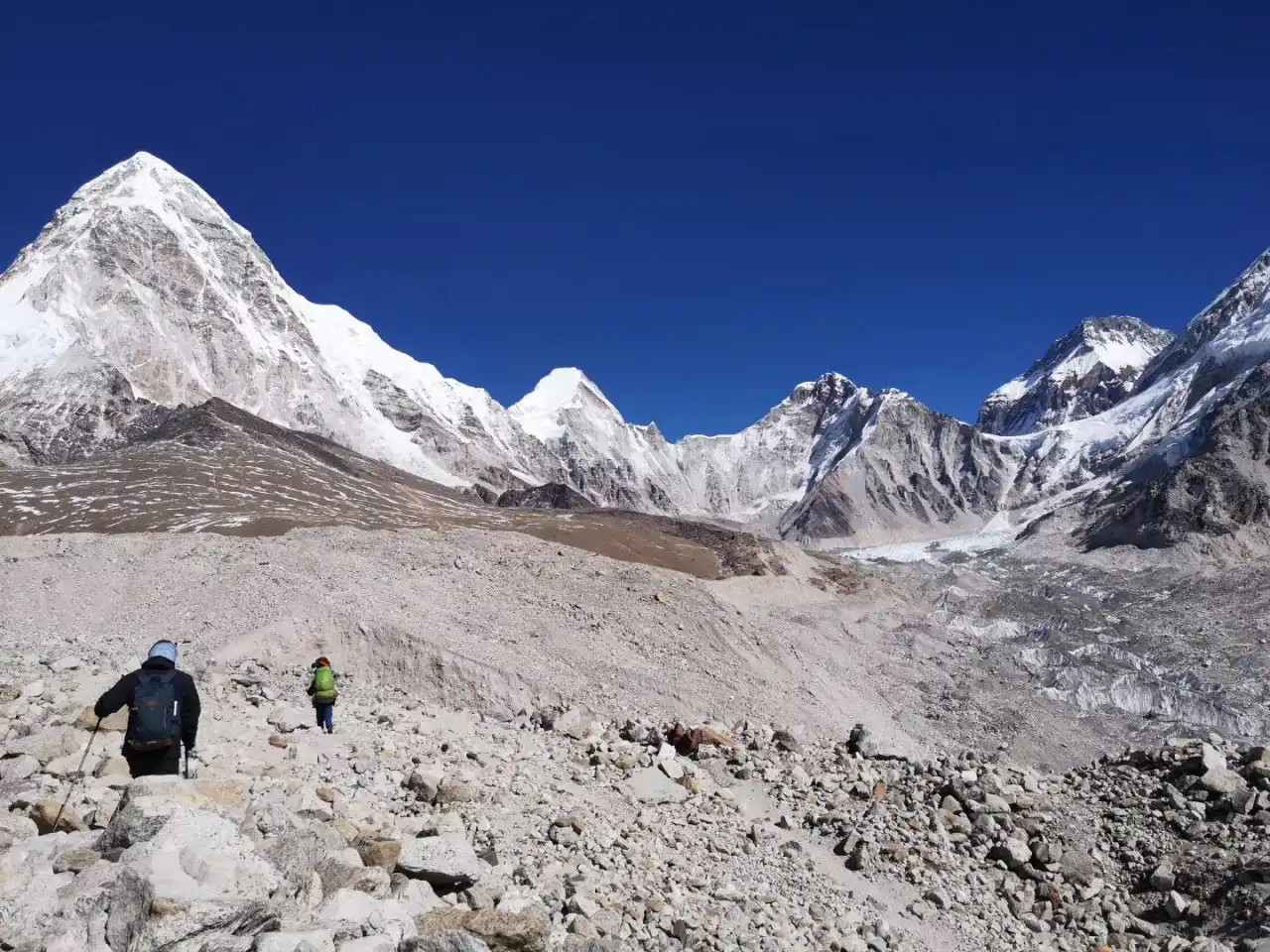
This trekking trail passes through the world heritage site Sagarmatha National Park and offers visitors fantastic views of  Nuptse (7861 m), Lhotse (8516 m),  Gyachung Kang (7952 m) Cho Oyu (8201 m) Nangpai Gosum (7350 m), Pumori (7161 m), Lingtren (6714 m), Khumbutse (6440 m), Taboche (6542 m), Cholatse (6440 m), Imja Tse Island Peak (6160 m), Lobuche (6145 m), Nirekha (6069 m), Pokalde (5806 m) and the Ama Dablam (6812 m) among many others high mountains and peaks. The Everest Base Camp Trek also lets trekkers enjoy the beautiful view of the Khumbu Icefall and the Khumbu Glacier. Together, you also visit many Sherpa villages, cultures, and monasteries, and their spiritual hub on the trek.

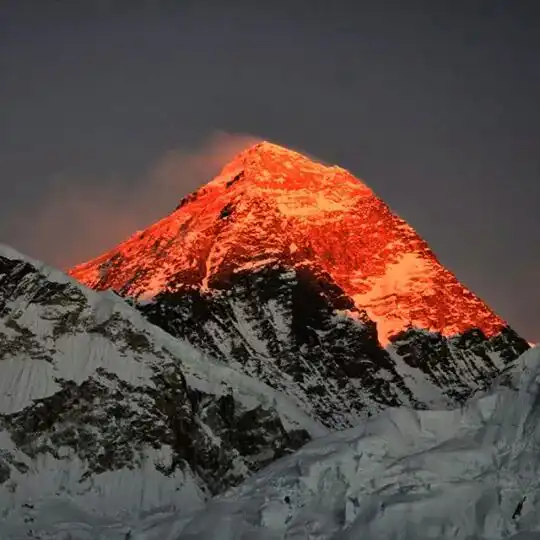
Kalapatthar is the highest viewpoint in the Everest Base Camp Trek, which allows us to enjoy the fantastic and incredible views of the highest mountain in the world, Mount Everest. There are so many circumstances that make the Everest Base Camp trek the best adventure trek in the world, with thousands of trekkers taking part every year.

For all the international travellers, Everest Base Camp has become one of the most popular trekking destinations in the world, offering the chance to gaze at the magnificent view of the world’s highest mountain, Mount Everest.

Everest Base Camp in Nepal, at an altitude of 5,364m, and the opposite side of Everest, North Base Camp, 5,150m from the Tibet side, are the terms used to describe two base camps. Everest expedition climbers use both campsites during their ascent and descent to the top of the world. The  Nepal side south face is the most popular, and the Tibet side.

  1. Annapurna Base Camp Trek:

Annapurna Base Camp Trek is designed for trekkers who wish to reach the Annapurna Sanctuary Trek in a relaxed manner with visits to the Annapurna Conservation Area. The Annapurna Base Camp trek passes through some of the typical Gurung, Magar villages communities of Nepal with natural and scenic beauty valleys and amazing green forests with different colours of rhododendron flowers, and the beautiful Modi river beginning from Annapurna range covering all the incredible views before finally reaching the base of Annapurna Base Camp (4170m) passing through the Machhapuchhre Base Camp Camp (4000m).

This Trek passes through a wide variety of landscapes and different geographical areas with rich flora and fauna. It also lets you enjoy the amazing high Mountains like Mt. Dhaulagiri (8167 m)Mt. Manaslu (8156 m), Mt. Annapurna (8091 m), Mt. Annapurna II (7937 m), Mt. Annapurna III (7555 m), Mt. Nilgiri (7061 m), Mt. Hiunchuli (6441 m) Mt. Gangapurna ( 7455 m) Mt. Tukuche (6920 m), Mt. Annapurna south (7219 m), Mt. Machhapuchhre (Fish Tail) (6993 m),   and Mt. Nilgiri North (7061 m) and many more.

This trekking trail passes through valleys and different villages, Ghandruk, Tikhedhunga, Ghorepani Sinwa, Chommrong, Tolka, Pothana, Landruk, Tadapani, Dhampus, Bamboo, Himalaya, Hinku Cave, Ulleri, Banthati, Poonhill, Deurali, and Jhinu Danda. Here, you can relax at the natural hot spring are the major villages cover before reaching the Annapurna base camp. Ghorepani Poonhill (3210m) is another main attraction for an amazing sunrise viewpoint in the Annapurna region. Annapurna Base Camp gives you a spectacular view of Mountain ranges and a breathtaking walking experience, which is like a reward to the people who love to do adventure and trekking in Nepal.

This trek is flocked by trekkers of all age groups, so don’t need any technical skills to conquer this trek. Also, trekkers need not worry about high Altitude Sickness. Even though, do carry Diamox medicines to tackle altitude sickness if it’s your first time climbing to high altitudes.

3. Langtang Valley Trek:

The Langtang Valley Trek is a popular trekking destination in Nepal. It is situated 51 kilometres north and is the nearest adventure trekking route from the Kathmandu valley. The Tibetan and Tamang culture for its varied vegetation and cultural villages with the backdrop of the Langtang range, make up exciting trekking trails. The flora and fauna in the Langtang National Park are quite surreal as other National parks in Nepal. All in all, the trek is a glorious trip into Langtang Valley is also called the “Valley of Glaciers”. Where we find the ice glaciers at a low level of mountains.

Tibet is bordered on the north by the main crest of the Himalayas, dominated by Langtang Lirung the highest peak in this area to the south Part is the Chimse Danda (ridge) crossed by the Ganja La pass (5,122 m), and Jugal Himal, culminating in Dorje Lakpa. Glaciers spawned from the slopes of Langtang Lirung, Dorje Lakpa, and many other peaks creat the Langtang Khola (river). The Trishuli and Bhotekoshi are formed by the Langtang range as it above Dhunche, forms an important corridor and ancient trade between Nepal and Tibet route through the mountains between the Langtang and Ganesh Himal up to Kerung town near Nepal border in Tibet.

The trekking journey offers a great vantage point of Kyanjin Ri (4,773 m) The Langtang valley offers stunning and panoramic views of the mountains which stays forever in one’s memory of  Dorje Lakpa (6,966 m), Langtang Lirung (7,234 m), Langtang Ri (7,205 m),  Loenpo Gang (6,979 m), Changbu (6,781 m), Yansa Tsenji (6,690 m), Kyunga Ri (6,601 m), Dogpache (6,562 m), Langshisha Ri (6,427 m), Gangchenpo (6,387 m), Morimoto (6,150 m), Tsogaka (5,846 m), Yala Peak (5,520) m, Ganesh Himal (7422m) and many more along with the views of the Jugal ranges, Mount Makalu on the eastern part of Nepal and Annapurna ranges on the west.

Langtang region is surrounded by a tranquil rural landscape and offers a great opportunity to explore the beautiful and amazing culture of the ethnic Tamang community groups live along on these trekking trails. Driving from Kathmandu to Syabrubesi to reach Langtang National Park head to Lama Hotel. Exploring the amazing places Ghodatabela means the horse stable, Langtang village, Kyanjin Ri (4,773m) is the highest point in this area, Kyanjin Gompa. This monastery is one of the oldest ones in this region. You can make a detour to Gosainkunda LakeHelambu Valley trek, or Yala peak climbing if you have the time and interest to explore more of this region.

Langtang National Park contains a wide variety of climate from subtropical to alpine, deciduous oak, maple, evergreens like pine, and various types of rhododendron flowers trees found in Langtang valley. Different species of birds like vulture, eagle, crow, Lophophorus (impejanus), and Animal life include the Himalayan black bear, the mountain goat (Himalayan tahr), Assam macaque and red pandas. The local people also believe in the stories of Yeti sightings.

4. Manaslu Circuit Trek:

The Manaslu Circuit Trek is an incredibly amazing trek that showcases unforgettable and beautiful scenic views of the great Himalayas trails in Tsum valley. Local Tibetan People also called the Kutang Himal. Manaslu Trek also offers tranquil beauty and cultural harmony while trekking through a series of landmarks in the restricted areas. The off-beat trekking trails display authentic Tibetan and Nubri culture. Mt. Manaslu (8163m), Manaslu Base camp (4800m) and Manaslu Conservation Area are the highlights of this trek. Manaslu region is located in the Mansiri Himal, in the west-central part of Nepal in Gorkha district.

This trekking trail passes through the 8th highest mountain Mount Manaslu and reaches its highest point at Larkya Pass (5160m) which offers the trekkers magnificent views of Mount Manaslu. Manaslu Circuit Trek passes through fabulous Tibetan-style villages, panoramic views of the mountain, Buddhist and Hindu style villages and culturally fascinating local Buddhist monasteries, and cultural monuments profoundly challenging Mountain Passes. The trek heads from Soti Khola to the north towards Bihi passing Philim on the way. You, also head west pass Lho, Sho, and Sama Gaun (villages), Birendra Lake. Next, you cross the adventurous Larkya La Pass (5160m) and descend along the Marshyangdi River. There is one more rest in Samdo village for the Tibetan border Ruila Pass (4998m).

Manaslu region offers you company along the trail you can enjoy the views of Ganesh Himal and Shringi ranges with an amazing view of Himalchuli (7,893 m), Ngadi Chuli (7,871 m) and on the western part, you will see the great mountains ranges of Annapurna (8091 m), Gangapurna ( 7455 m), Tukuche (6920 m),  Annapurna south (7219 m)Annapurna II (7937 m), Annapurna III (7555 m), Machhapuchhre (Fish Tail) (6993 m), Nilgiri (7061 m), Hiunchuli (6441 m) and Mt. Nilgiri North (7061 m) and many more.

Manaslu Circuit trek course is one of the most varied, isolated, remote, and full of different landscapes and topography. It offers the trekkers an adventure of a lifetime experience to explore the scenic beauty of the Himalayan ranges. It is claimed as one of the best trekking expedition of the route in the World these trekking trails are hard and off-beat, so you need to be in good physical shape. You can also do the Tsum Valley trek or join Annapurna Circuit Trek if you have the time and want to explore the Annapurna conservation area.

5. Ghorepani Poonhill Trek:

Ghorepani Poon Hill Trek is the most famous trekking route in the southern foothills of the Annapurna massif. It is considerably easy and short hiking around Pokhara compared to other trekking routes in Nepal. You walk along the terraced local farmlands and beautiful greenery fields, local farmers planting their crops on the traditional way on this trekking route. An exciting insight into the ethnic  Gurung, Magar, pun, and other cultures, grand natural beauty, are the highlights of this trek. You can witness the beautiful varieties colour of the rhododendron flower forest and the warm hospitality of the Gurung and Magar people.

Poonhill, 3210m is one of the main attraction points in the Ghorepani Poonhill trekking part. Amazing smile face and great customer service of Poon (Pun) ethnic people and incredible sunrise view from Poonhill early in the morning. 20 min distance from Ghorepani village to Poonhill (3210m) climb before the sunrise and waiting for the first sunlight touch into the high mountains changing the colour into yellow and red. Poonhill is the highest point in this trekking so you get to see the many high mountains and peaks Mt. Mardi Himal (5553 m)Mt. Dhaulagiri (8167 m), Mt. Manaslu (8156 m), Mt. Annapurna (8091 m), Mt. Annapurna II (7937 m),  Mt. Gangapurna ( 7455 m) Mt. Tukuche (6920 m), Mt. Annapurna III (7555 m), Mt. Nilgiri (7061 m), Mt. Hiunchuli (6441 m) Mt. Annapurna south (7219 m), Mt. Machhapuchhre (Fish Tail) (6993 m), and Mt. Nilgiri North (7061 m), Mt. Lamjung Himal (7454 m) and many more where you feel that you are in the heaven.

Ghandruk village is another attractive part of this trek. Rich in authentic Gurung culture and practices the most beautiful village between the Pokhara and Annapurna base camp trek. The touching distance of beautiful and incredible high Mountains Annapurna I (8091 m), Mt. Machhapuchhre (Fish Tail) (6993 m), Mt. Annapurna south (7219 m) and Mt. Hiunchuli (6441 m). Gurung birthplace, museum, and typical local houses and their living lifestyle wearing local dress called “Bhangra” and local food Dhedo and “Ghundruk” with warm charming faces. They are one of the main Gurkha tribes.

Ghorepani Poonhill trek is magnificent during the spring season. You can enjoy the different colours of rhododendron flower blossoms and green forests all over the hillside. The massive white high mountain on the background of the colourful flower makes the mind and soul very peaceful and makes you energetic. Additionally, the panoramic view of mountains on these trekking routes thousands of trekkers attracts throughout the year. This is an amazing trekking trail in Nepal to explore the beauty of the Annapurna Region in a short period of time frame.

6. Annapurna Skyline Trek:

The Royal Annapurna Skyline trekking is a short and most exciting trekking expedition route in the Annapurna region, Nepal that starts from the beautiful valley Pokhara. This trek is mostly picked by those trekkers who planned to visit Nepal for a short time period.  Annapurna Skyline trek is also suitable for those families who want to explore the Annapurna region with their kids for a few days. The highest altitude of this trek 1730m so all kinds of trekkers and families can trek without any difficulties.

The Royal Skyline trek also welcomes those trekkers who want to learn more about the Annapurna region and experience the beauty of god gifted Annapurna conservation area. The best sunset view from Chisapani is the first evening of the trek and the walk ending up to the Begnas Lake which is located in the south-east of the Pokhara valley which is also the third-largest lake in Nepal. This trekking route passes through hillside rice terraces fields and the trekking experience allows you to understand the local culture and tradition of the Brahmin, Gurung, Magar, and Chhetri communities. Different beautiful villages help you to walk through the ethnic-cultural settlement’s amazing experience of their living lifestyle.

This trekking is also known as “The Annapurna Royal Trek” after this route was first traversed by Prince Charles of the United Kingdom in the early nineties. Along with Prince Charles, there were 90 other members of people who explore this Trek. Mr Mick Jagger a famous English singer, songwriter, actor, and film producer was also takes the part in this trekking group. That way this trek is known as “The Royal Trek”.

This trekking is a wonderful experience that passes through the beautiful green forest with lots of Rhododendron, Sal trees, and local vegetable farming fields along with the amazing high mountains views of Mt. Machhapuchhre (Fish Tail) (6993 m), Mt. Hiunchuli (6441 m), Mt. Annapurna (8091 m) Mt. Dhaulagiri (8167 m), Mt. Manaslu (8156 m), Mt. Lamjung Himal (7454 m), Mt. Tukuche (6920 m), and many more. This trekking expedition is best to learn and study about various species of birds and insects available in Nepal.

7. Annapurna Circuit Trek:

Annapurna Circuit Trek or also called the “Annapurna round Trek” is one of the most popular, classic, and adventurous trekking routes that consists of high Himalayas and mountain range in its journey. The diversity in different cultures and traditions of Gurung, Tamang, Brahmins, Sherpas, and Thakalis and landscapes along with the alluring Annapurna Mountains are the major attractions on the trek of the Annapurna region.

One can witness the amazing and eye-catching views of  Mt. Dhaulagiri (8167 m), Mt. Manaslu (8156 m), Mt. Annapurna (8091 m), Mt. Annapurna II (7937 m), Mt. Annapurna III (7555 m), Mt. Gangapurna ( 7455 m) Mt. Tukuche (6920 m), Mt. Annapurna south (7219 m), Mt. Machhapuchhre (Fish Tail) (6993 m), Mt. Nilgiri (7061 m), Mt. Hiunchuli (6441 m)  and Mt. Nilgiri North (7061 m) and many more mountains and peaks decorate the Annapurna circuit trek.

The incredible Manang and Mustang valley, amazing green forests with different colours of rhododendron flowers, and the beautiful rivers Kali Gandaki and Marshyangdi make this trek great experience in Nepal. The different landscapes and greenery environment of this trekking trail makes you feel mythical and mystical while being on this trek. You will be able to explore the beautiful Tilicho Lake, Gangapurna Lake, famous landmarks like Chame, Tatopani, Ghorepani Poonhill (3210m), Thorong La Pass (5416m), Manang, and Muktinath Temple. Moreover, the Tibetan and Gurung culture offers refreshing breaks on this long day’s trip.

Annapurna Circuit Trek is the only trekking journey where the trekkers start from low hill Besisahar (760m) to the highest point, Thorong La pass (5416m) can enjoy the great Himalayan as well as the hilly part of the Himalayan lifestyle in a single trekking time frame. The trekking trail passes through alpine forests to a wide variety of vegetation and dry sandy parts of the country and also gives you the opportunity to observe more than 450 species of birds and 100 types of mammals during the route.

8. Upper Dolpo Shey Gompa Trek:

Upper Dolpo is a lesser-travelled destination in Nepal and is famous for the ancient cultural roots of the region. As such, the Upper Dolpo and Shey Gompa Trek is a journey that enjoys the pristine nature of western Nepal. The route is a hidden pearl of Nepal and showcases magnificent landscapes, Tibetan-style villages, and beautiful mountains.  It also displays its ties with the Tibetan and Bon Po culture. This area is home to one of the oldest civilizations of Nepal and is still untouched by the contemporary world.  It’s still part of the Tibetan Plateau with a dry and cold climate.

The area is quite infertile and consists of dry land. The major occupation in this area of the country is animal husbandry and commerce as their primary job. Upper Dolpo people follow the ancestorial lifestyle because of the isolation from the rest of the modern world. One of the major attractions of this trekking route is the attractive wildlife and beautiful Buddhist customs of the villages in the journey. The typical villages, old Gompas, and individuals throughout this trek will leave a remarkable impact on our memory.

Upper Dolpo and Shey Gompa Trekking are amazing to hike as we need to cross three major high passes, Nagdalo La (5,350m), Shey La (5,010m), and Jeng La (5,110m) which involves both longer descends and climbings.­ Trek begins from head out from Kathmandu to Nepaljung fly again to Juphal (upper Dolpo). And trek to Tarakot via Thuli Bheri to turn north to Tarap valley. Following the Do Tarap for a day and cross a high pass above 5000 meters like Jangla pass, Sangda La pass, Shey Gompa is also called the Kang La Pass, and several others pass. Shey gompa is the main destination of the Upper Dolpo trek and often referred to as the heart of Upper Dolpo. It’s an enchanted hidden gem, arranged at the base of Crystal View Mountains. These passes are generally covered with snow and also an adventurous, thriller and the hardest part of this trek. From most of the pass, you can see a rolling mountain that amplifies to Tibet plateau. Descend towards Phoksindhu River and accompany the waterfall trail to Phoksindhu Lake and finally walk to our beginning point, Juphal and fly out to Kathmandu.

Regardless of the toughness, Upper Dolpo and Shey Gompa Trekking is worthwhile by the stunning scenery, religious value, culture along serene vibe in this sacred location this trekking trail is one of the best trekking routes in the world. The trek is fairly difficult and the trekkers have to be in fine form and physical condition. Also, the spring and autumn seasons are the perfect time to do the trek, however, high mountains have only very less rain during the monsoon so it is also another option.

9. Karbakeli Eco Trek:

Karbakeli Eco Trek is a newly launched virgin trekking trail in the Annapurna region. Nowadays this is also a popular trek in Annapurna conservation Area. This route has inauguration in the Nepalese tourism Markets from 18 May 2018 with the coordination of Nepal Tourism Board (NTB) Trekking agency associations of Nepal (TAAN) and Nepal Mountaineering Associations (NMA) alliance with the Local community of Karbakeli village tourism development committee (KVTDC) to promote the local community into the tourism market to get the benefits for local people from the domestic and international Tourist.

This trek can be the best alternative to the Ghorepani, Ghandruk (Poonhill) trek. This area has been inhabited Pun Magar, Tamang, Thakali, Damai, and more other ethnic groups. However, Pun Magar is the main indigenous group of the Karbakeli area, Magars have their own traditional culture and Costume, more dominated by Magar Culture. The major highlight of the Karbakeli Eco Trekking trail is the temple of the Pun (Poon) Magar Community’s main God Karbakeli Baba which is situated at Annapurna Municipality Word No 8, Kaphal  Danda. Also called “Ramchan Kulchan Danda” which rises 2,332 m altitude, the around Temple has prayer Buddhist colourful flags, Inside the temple, has beautiful golden colour Karbakeli Baba statue.

One can witness the beautiful and amazing views of the mountains, landscape, deep valley, along with the incredible greenery, beautiful Rhododendron flowers of nature, and alpine trees on the trekking trail. The trekking in Nepal journey starts from Pokhara to Tikhedhunga, Ghorepani, Poonhill, Fulbari, Kafaldanda, Karbakeli, and finishes at Beni Bazaar in Myagdi district would be more interesting.

Karbakeli Eco Trek is the combination of the beautiful sunrise view from Poonhill before entering the dense forest leading to Karbala. The trekking route is a bit difficult compared with Poohill, but the view is such magnifications Himalayas. During the trek, you will able to see the Annpurna region high mountains and peaks included Mt. Mardi Himal (5553 m)Mt. Dhaulagiri (8167 m), Mt. Manaslu (8156 m), Mt. Tukuche (6920 m), Mt. Annapurna III (7555 m), Mt. Nilgiri (7061 m), Mt. Annapurna (8091 m), Mt. Annapurna II (7937 m),  Mt. Gangapurna ( 7455 m)  Mt. Hiunchuli (6441 m) Mt. Annapurna south (7219 m), Mt. Machhapuchhre (Fish Tail) (6993 m), and Mt. Nilgiri North (7061 m), Mt. Lamjung Himal (7454 m) and many more. Karbakeli Eco trek is the treasure of learning Magar cultures, warm hospitality, local Magar people, and the beautiful nature will be one of the extra adventures in your lifetime experience in Nepal.

10. Upper Mustang Trek – The last Forbidden Kingdom in Nepal:

Upper Mustang is determined by the rain-shadow zone of the Annapurna and the Dhaulagiri mountain ranges; hiking in the Upper Mustang Region could be achieved at any time without any worries about snow or rain. It is within an ancient trade route between Nepal and Tibet, harnessing the smallest Kora La (4,660m) pass throughout the Himalayas. Upper Mustang is a large sandy high valley, arid and dry, characterized by eroded canyons, colourful stratified rock formations and has a barren appearance like a desert. Low Manthang is one of the most interesting features of Mustang, is hundreds of sandy cliff dwellings, which look completely inaccessible.

Upper Mustang or Lo Manthang trek begins from Kathmandu to Pokhara will take you to a beautiful place halfway across the country. A scenic flight to Jomsom will bring you to the company of the holy river Kali Gandaki. As the trek begins, you walk past numerous villages like Kagbeni, Muktinath, Chhusang, Luri gumba, and Geling. Further, the arid trails will lead you to Ghami. Finally, you will take a side trip to Ghar Gompa which is over 1,200 years old, is dedicated to Guru Rinpoche, before reaching Lo Manthang. In Lo itself, a visit to Namgyal Gompa and Tingkhar, the last main village in the northwest of the area, as well as the King’s palace, brings a further cultural understanding of the area. Thinggar village and the three great monasteries- Thubchen, Jyampa, and Chodye are also excellent tourist destinations to explore and the famous Tiji Festival with the Tibetan culture.

Panoramic views of Mt. Dhaulagiri (8167 m)Mt. Manaslu (8156 m), Mt. Annapurna (8091 m), Mt. Annapurna II (7937 m), Mt. Annapurna III (7555 m), Mt. Gangapurna ( 7455 m) Mt. Tukuche (6920 m), Mt. Annapurna south (7219 m), Mt. Machhapuchhre (Fish Tail) (6993 m), Mt. Nilgiri (7061 m), Mt. Hiunchuli (6441 m)  and Mt. Nilgiri North (7061 m) and many more are very much part of this exciting trip. Lo Manthang people still believe traditional Tibetan doctor which is called an “Amchi” visiting museum and school, where visitors can learn about this ancient healing art and how it is being adapted to meet modern-day situations.

Upper Mustang Trek is a fairly difficult trek so trekkers need to be in great physical condition. Nowadays we can do it by the 4-wheel jeep driving to this trekking, who has a desire to see but not fit in physical fitness trekkers. Also, you can opt for this trek in the monsoon as well, since Upper Mustang lies in the rain shadow of the Dhaulagiri and Annapurna Himalayas.

Top 20 Reason to visit Nepal

Introduction:

Nepal is a small country in South Asia, yet it is one of the richest in terms of nature and cultural diversity. Nestled between India and China, it stretches from the lowland Terai plains at about 60 meters above sea level to the towering peaks of the Himalayas, including Mount Everest, the highest mountain on Earth. This extraordinary geographical variation within a short distance makes Nepal a unique destination where natural beauty and cultural richness blend together.

Nature of Nepal

Nepal is often described as a natural paradise, thanks to its landscapes, biodiversity, and climate diversity.

  1. Geographical Diversity:

    • Nepal is divided into three main geographical regions:

      • Terai (Lowlands): Fertile plains with subtropical forests, rivers, and wildlife reserves.

      • Hills (Mid-hills): Rolling hills, valleys, and traditional villages.

      • Himalayas (Mountains): Snow-covered peaks, glaciers, and alpine meadows.

    • This sharp variation creates unique environments within short travel distances.

  2. Mountains and Rivers:

    • Home to 8 of the 14 highest peaks in the world, Nepal is truly the Land of the Himalayas.

    • The mountains are the source of major rivers such as the Koshi, Gandaki, and Karnali, which support agriculture and hydropower.

  3. Biodiversity:

    • Nepal’s varied altitude and climate support a remarkable range of flora and fauna.

    • The country hosts over 6500 species of flowering plants and rare wildlife like the snow leopard, red panda, one-horned rhinoceros, Bengal tiger, and gharial crocodile.

    • Protected areas such as Chitwan National Park and Sagarmatha National Park are UNESCO World Heritage Sites.

  4. Climate:

    • The climate ranges from tropical in the Terai to alpine and arctic conditions in the Himalayas.

    • This diversity allows travelers to experience jungles, hills, and snowy mountains in one country.

Cultural Diversity of Nepal

Equally remarkable as its natural beauty is Nepal’s rich cultural heritage.

  1. Ethnic Groups and Languages:

    • Nepal is home to more than 125 ethnic groups and over 120 languages.

    • Major ethnic communities include Sherpas, Gurungs, Magars, Tamangs, Newars, Tharus, Rai, and Limbu.

    • Nepali is the official language, but local languages and dialects are widely spoken.

  2. Religion and Spirituality:

    • Nepal is the birthplace of Lord Buddha (Lumbini), making it a sacred land for Buddhists worldwide.

    • Hinduism is the major religion, and many festivals, rituals, and traditions are based on it.

    • The coexistence of Hinduism and Buddhism has shaped Nepal’s art, culture, and philosophy.

    • Temples, stupas, and monasteries like Pashupatinath, Swayambhunath (Monkey Temple), and Boudhanath Stupa showcase this spiritual blend.

  3. Festivals:

    • Nepal is known as the land of festivals, with celebrations year-round.

    • Major festivals include Dashain, Tihar, Holi, Buddha Jayanti, and Indra Jatra.

    • These festivals bring people together and reflect harmony among diverse groups.

  4. Art, Architecture, and Traditions:

    • Nepal’s cultural heritage is seen in its pagoda-style temples, stone carvings, metalwork, and woodcraft.

    • Cities like Kathmandu, Patan, and Bhaktapur are filled with palaces, squares, and ancient monuments that are UNESCO World Heritage Sites.

    • Traditional dances, music, and clothing vary by ethnic group, showcasing a colorful mix of traditions.

  5. Lifestyle and Hospitality:

    • Despite diversity, Nepalese people are united by their hospitality and respect for guests, following the principle of “Atithi Devo Bhava” (Guests are like Gods).

    • Visitors often experience warm welcomes in villages and homestays.

1. Trekking in Nepal

Trekking is the number one reason why travelers from across the globe visit Nepal. The country is home to the Himalayas, including 8 of the 14 highest mountains in the world, such as Mount Everest, Annapurna, and Manaslu, which makes it a dream destination for trekkers. Nepal offers trekking routes for all levels, from short, easy treks to long, challenging ones. Famous treks like the Everest Base Camp Trek, Annapurna Circuit, Langtang Valley, and Manaslu Circuit are internationally recognized for their breathtaking views and cultural richness.

Unlike trekking in many other countries, Nepal’s trails pass through remote mountain villages, terraced fields, rivers, monasteries, and diverse ethnic communities. This allows trekkers not only to enjoy nature but also to experience the hospitality, traditions, and daily life of Nepali people such as Sherpas, Gurungs, Tamangs, and Magars.

Trekking in Nepal is also unique because of the teahouse system, where trekkers can stay in local lodges, eat home-cooked meals, and interact closely with local families. The variety of trekking routes—ranging from beginner-friendly to high-altitude adventures above 5,000 meters—means there is something for everyone. Moreover, the clear skies during autumn and the colorful rhododendron forests in spring make Nepal a year-round trekking paradise.

In essence, trekking in Nepal combines adventure, natural beauty, and cultural immersion, giving visitors an unforgettable journey in the lap of the world’s highest mountains.

2. Mountaineering and Expedition

For those seeking extreme adventure, Nepal is the world’s ultimate destination for mountaineering and expeditions. The country is home to Mount Everest (8,848.86 m / 29,031.7 ft), the tallest peak on Earth, along with other iconic giants like Kanchenjunga, Lhotse, Makalu, Dhaulagiri, Manaslu, Cho Oyu, and Annapurna I. Climbers from around the world come to Nepal with the dream of standing on these summits, making it the center of high-altitude expeditions.

Expeditions in Nepal are not only about climbing the highest peaks but also about the challenge, endurance, and thrill of facing some of the most extreme natural conditions on the planet. Climbers must deal with high altitude, unpredictable weather, avalanches, and technical climbing sections, making success a symbol of determination and courage.

The culture of expeditions in Nepal is also tied to the Sherpa people, who are world-famous for their mountaineering skills, strength, and knowledge of the Himalayas. Many legendary expeditions, including Sir Edmund Hillary and Tenzing Norgay’s first successful ascent of Everest in 1953, were made possible by the Sherpas. Today, Nepalese guides and porters continue to play a vital role in the success of climbing teams.

In addition to Everest, many climbers also choose “trekking peaks” such as Island Peak, Mera Peak, and Lobuche Peak. These are less technical than 8,000-meter expeditions but still provide the experience of high-altitude climbing with panoramic Himalayan views.

Ultimately, expeditions in Nepal offer the chance to test human limits, achieve personal dreams, and be part of mountaineering history. For adventurers seeking the ultimate challenge, Nepal’s mountains remain unmatched.

3. Short Hikes and Travel

Everyone wishes to explore extreme adventure, but not everyone can fulfil their aspirations due to a lack of time or due to other circumstances. But don’t worry, as Nepal will fulfil your dream of being alive with the Himalayas.

Many short treks in Nepal offer the best scenic views of nature and the Himalayas. Some of the best short hikes you can do are:

  • Dhampus Village Hike
  • Chisapani-Nagarkot Hike
  • Balthali-Namo Buddha Hike
  • Champadevi Hike

4. Tours in Nepal 

If you wish to take a break from your hectic schedule, tours can be your option. You can immerse yourself in an authentic Nepali experience through these tours. You get to discover an intriguing blend of both natural and exotic excursions.

Nepal offers a wide range of tours. Pokhara, Chitwan, Lumbini, etc., are the most preferred destinations for tours in Nepal. Sightseeing in Kathmandu Valley is something you shouldn’t miss.

5. Harmonious Religious Diversity

Nepal has always been a multi-religious nation. Yet, you can witness peace and harmony. The secular country boasts different sets of beliefs and rituals. You can see an intermingling of traditions, faiths, and doctrines. Nepalese respect and value each other and every religion.

The majority of the population in Nepal follows Hinduism, followed by Buddhism. People coming from different backgrounds have their unique identities. To unfold the beauty among such serene harmony, you must visit Nepal.

6. Rich Culture & Traditions

Along with multiple religions, Nepal showcases numerous ethnic groups. This way, Nepal flaunts diverse cultures and traditions. The Sherpa people mostly inhabit the Himalayan region of the country. Similarly, the Eastern region of the country is mainly inhabited by people of the Rai community.

The best part of visiting Nepal is that you get to experience the unique customs, language, and festivals of the diverse communities. You can see how their culture affects their lifestyle and faith, which they rely upon.

7. Immaculate World Heritage Sites

Nepal is home to several World Heritage Sites. These ancient sites are gifts to any nature lover or cultural enthusiast. These pristine beauties flaunt nature’s dwelling charm with beautiful artefacts. In Nepal, there are 10 UNESCO-Listed World Heritage Sites. This is a great number for a small country like Nepal.

Kathmandu Valley solely home to seven world heritage sites. What’s exciting is that all these sites are within a 20km radius. Hence, a single day is enough for their exploration. The three other UNESCO World Heritage Sites of Nepal include Lumbini (birthplace of Lord Gautam Buddha), Chitwan National Park (first national park of Nepal), and Sagarmatha National Park (home to Mt. Everest).

8. Exotic Varieties of Flora

Who isn’t attracted by vibrant and colourful floral species? If you love to dwell on these gifts of nature, Nepal would be the best choice. The rich biodiversity of Nepal includes 118 types of ecosystems. This makes Nepal rich in diverse climate, topography, and geography.

Thus, the flora of Nepal is one of the richest in the world. You can find 399 endemic flowering species in Nepal. Besides, you can traverse through different natural vegetation like Sub-Tropical, Deciduous, Evergreen, Alpine, and Cold Desert.

9. Rare Species of Fauna

 Wildlife diversity is a notable feature while visiting Nepal. Due to the variance in climate and topography, there are many endemic faunal species. There are 12 national parks in Nepal. Among them, Chitwan and Sagarmatha National Parks are listed as UNESCO World Heritage Sites.

Besides, you can explore six conservation areas, one hunting reserve, and a wildlife reserve. These natural habitats are home to many rare species of animals and birds, like the one-horned rhino, spiny babbler, red panda, etc.

10. Multiple Adventure Sports 

Looking for an adrenaline rush? There is no better place than Nepal for this thrill. Nepal offers plenty of thrilling adventure sports for adventure lovers. You can spend your vacation with more excitement with these extraordinary experiences, like Bungee, Swing, Paragliding, Skydiving, and White Water Rafting.

11. Typical Festivities 

Being a multi-ethnic country, Nepal is the land of vibrant festivals. These festivals are the real essence of diversified cultures. Despite the diversity, you can witness these festivals bringing people closer. You get to be involved in them and unleash the traditional values that are attached to them.

There are many festivals celebrated in Nepal. These include Dashain, Tihar, Teej, Lhosar, Nepali New Year, and many more.

12. Taste Delicious Nepali Delicacies

Nepali cuisine comprises a range of delicacies based on distinct cultures. Their essence enriches you with the ultimate Nepali experience. Here are some authentic foods that you have to try while you visit Nepal:

  • Thakali Dal Bhat
  • Newari Khaja with Yomari
  • Momos Dumplings
  • Sel Roti
  • Dhedo and Gundruk
  • Juju Dhau
  • Tongba
  • Thukpa and many more

13. Unique Historical Significance

Nepal’s cultural heritage includes many archaeological sites and shrines. Many of the monuments and temples of Nepal are centuries old and carry their story. They interpret unique ancient history with exclusive art and architecture.

Thus, if you are a travel junkie, get set for a new adventure ride to wrap the history of Nepal. The tale behind bustling chaos will spellbind you!

14. Warm & Humble Locals

The time you spend with the friendly locals here in Nepal is sure to be memorable. They will always welcome you with humility-signifying folded hands and the warmest smile. They will be glad to teach you a few Nepali words.

In Nepal, people treat their guests as God. It is a defining characteristic of Nepalese society.

15. Affordable Rates & Prices

With affordable rates of food and accommodation, travelling in Nepal becomes more enjoyable. You only need to be willing to explore. Economic issues will not restrict your plans anymore.

But make sure you make secure budget plans. This will make your travel time smooth and relaxing. A well-planned journey to Nepal will surely be an adventure of your lifetime.

16. Spirituality, Serenity, and Mysticism

Located in the lap of the Himalayas, Nepal showcases deep spirituality and serenity. These aspects make Nepal a one-stop spiritual destination.

Whether natural or human-made, every place you visit will relieve your innermost agony. You will forget about your chaotic life and explore profound serenity.

17. Pristine Lakes and Rivers

Thanks to the majestic peaks that have given birth to thousands of pristine lakes and rivers. They are powerhouses holding breathtaking elegance. White flowing rivers like the Bhote Koshi and the Trishuli provide adventure opportunities. On the other hand, lakes like Gokyo, Tilicho, and Gosainkunda are suitable for sightseeing and standard trekking.

 18. Scenic Flights to the High Himalayas

A scenic flight to the Everest or Annapurna region is a captivating experience. The passage of flight brings together the stories of the soaring Himalayas. It also interprets one of humankind’s most important relations with nature.

Everest Mountain Flight or a helicopter tour to Everest/Annapurna/Langtang is the most favoured flight tours in Nepal. Get ready to encounter snowy peaks within just a few hours.

19. Opportunities for Volunteering and Social Services

Despite its natural richness, Nepal has a weak economy. There are many villages where little kids are unaware of their education. Sometimes, the reason is fragile infrastructures or regressive mentality. So, if you are a social worker wishing to volunteer services to such communities, you must visit Nepal.

20. Charming Souvenirs and Shopping

It is a good idea to take back souvenirs as memories for yourself and gifts for your loved ones. You can find many options about what to buy and where to buy. You can buy Thanka Paintings, Singing Bowls, Pashmina, Khukuri, and other artistic handicrafts. Places like Thamel are the best for souvenir shopping.

Conclusion

Nepal is a living museum of nature and culture, where snow-capped mountains meet fertile plains and ancient traditions blend with spiritual harmony. Its natural diversity offers everything from wildlife safaris to high-altitude trekking, while its cultural diversity provides a chance to witness centuries-old festivals, art, and lifestyles. This combination makes Nepal not just a destination to visit but an experience to live, where every traveler discovers both natural wonder and human warmth.

Free Travel Guide
Your Perfect, Personalized Journey Awaits
profile
Bhagwat Simkhada Seasoned Travel Expert with Years of Experience